Search for "tetrahydrofuran" in Full Text gives 319 result(s) in Beilstein Journal of Organic Chemistry. Showing first 200.
Beilstein J. Org. Chem. 2020, 16, 1066–1074, doi:10.3762/bjoc.16.93
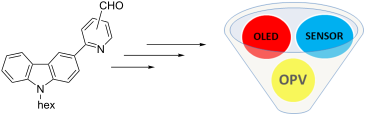
Graphical Abstract
Scheme 1: Synthesis of compounds 7a and 7b from carbazole 1. i) NBS, DMF, 0 °C to rt, 24 h. ii) n-hexyl bromi...
Figure 1: TGA (a) and DSC (b) curve of the compounds 7a and 7b.
Figure 2: Cyclic voltammograms of compounds 7a and 7b in dichloromethane under argon atmosphere at room tempe...
Figure 3: Energy levels of compounds 7a and 7b.
Figure 4: Normalised UV–vis and PL spectra of compounds 7a and 7b in dichloromethane.
Figure 5: Normalised UV–vis spectra of compounds 7a and 7b in different solvents.
Figure 6: PL spectra of compounds 7a and 7b in different solvents (A–H).
Beilstein J. Org. Chem. 2020, 16, 917–955, doi:10.3762/bjoc.16.83
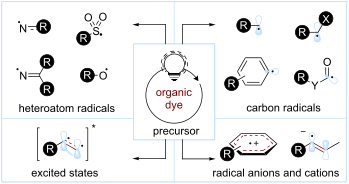
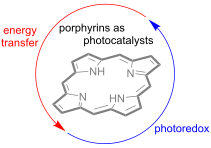
Graphical Abstract
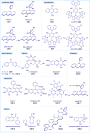
Figure 1: Chemical structures of the porphyrinoids and their absorption spectra: in bold are highlighted the ...
Figure 2: Photophysical and photochemical processes (Por = porphyrin). Adapted from [12,18].
Figure 3: Main dual photocatalysts and their oxidative/reductive excited state potentials, including porphyri...
Scheme 1: Photoredox alkylation of aldehydes with diazo acetates using porphyrins and a Ru complex. aUsing a ...
Scheme 2: Proposed mechanism for the alkylation of aldehydes with diazo acetates in the presence of TPP.
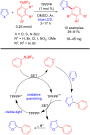
Scheme 3: Arylation of heteroarenes with aryldiazonium salts using TPFPP as photocatalyst, and corresponding ...
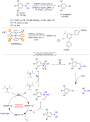
Scheme 4: A) Scope with different aryldiazonium salts and enol acetates. B) Photocatalytic cycles and compari...
Scheme 5: Photoarylation of isopropenyl acetate A) Comparison between batch and continuous-flow approaches an...
Scheme 6: Dehalogenation induced by red light using thiaporphyrin (STPP).
Scheme 7: Applications of NiTPP as both photoreductant and photooxidant.
Scheme 8: Proposed mechanism for obtaining tetrahydroquinolines by reductive quenching.
Scheme 9: Selenylation and thiolation of anilines.
Scheme 10: NiTPP as photoredox catalyst in oxidative and reductive quenching, in comparison with other photoca...
Scheme 11: C–O bond cleavage of 1-phenylethanol using a cobalt porphyrin (CoTMPP) under visible light.
Scheme 12: Hydration of terminal alkynes by RhIII(TSPP) under visible light irradiation.
Scheme 13: Regioselective photocatalytic hydro-defluorination of perfluoroarenes by RhIII(TSPP).
Scheme 14: Formation of 2-methyl-2,3-dihydrobenzofuran by intramolecular hydro-functionalization of allylpheno...
Scheme 15: Photocatalytic oxidative hydroxylation of arylboronic acids using UNLPF-12 as heterogeneous photoca...
Scheme 16: Photocatalytic oxidative hydroxylation of arylboronic acids using MOF-525 as heterogeneous photocat...
Scheme 17: Preparation of the heterogeneous photocatalyst CNH.
Scheme 18: Photoinduced sulfonation of alkenes with sulfinic acid using CNH as photocatalyst.
Scheme 19: Sulfonic acid scope of the sulfonation reactions.
Scheme 20: Regioselective sulfonation reaction of arimistane.
Scheme 21: Synthesis of quinazolin-4-(3H)-ones.
Scheme 22: Selective photooxidation of aromatic benzyl alcohols to benzaldehydes using Pt/PCN-224(Zn).
Scheme 23: Photooxidation of benzaldehydes to benzoic acids using Pt or Pd porphyrins.
Scheme 24: Photocatalytic reduction of various nitroaromatics using a Ni-MOF.
Scheme 25: Photoinduced cycloadditions of CO2 with epoxides by MOF1.
Figure 4: Electronic configurations of the species of oxygen. Adapted from [66].
Scheme 26: TPP-photocatalyzed generation of 1O2 and its application in organic synthesis. Adapted from [67-69].
Scheme 27: Pericyclic reactions involving singlet oxygen and their mechanisms. Adapted from [67].
Scheme 28: First scaled up ascaridole preparation from α-terpinene.
Scheme 29: Antimalarial drug synthesis using an endoperoxidation approach.
Scheme 30: Photooxygenation of colchicine.
Scheme 31: Synthesis of (−)-pinocarvone from abundant (+)-α-pinene.
Scheme 32: Seeberger’s semi-synthesis of artemisinin.
Scheme 33: Synthesis of artemisinin using TPP and supercritical CO2.
Scheme 34: Synthesis of artemisinin using chlorophyll a.
Scheme 35: Quercitol stereoisomer preparation.
Scheme 36: Photocatalyzed preparation of naphthoquinones.
Scheme 37: Continuous endoperoxidation of conjugated dienes and subsequent rearrangements leading to oxidized ...
Scheme 38: The Opatz group total synthesis of (–)-oxycodone.
Scheme 39: Biomimetic syntheses of rhodonoids A, B, E, and F.
Scheme 40: α-Photooxygenation of chiral aldehydes.
Scheme 41: Asymmetric photooxidation of indanone β-keto esters by singlet oxygen using PTC as a chiral inducer...
Scheme 42: Asymmetric photooxidation of both β-keto esters and β-keto amides by singlet oxygen using PTC-2 as ...
Scheme 43: Bifunctional photo-organocatalyst used for the asymmetric oxidation of β-keto esters and β-keto ami...
Scheme 44: Mechanism of singlet oxygen oxidation of sulfides to sulfoxides.
Scheme 45: Controlled oxidation of sulfides to sulfoxides using protonated porphyrins as photocatalysts. aIsol...
Scheme 46: Photochemical oxidation of sulfides to sulfoxides using PdTPFPP as photocatalyst.
Scheme 47: Controlled oxidation of sulfides to sulfoxides using SnPor@PAF as a photosensitizer.
Scheme 48: Syntheses of 2D-PdPor-COF and 3D-Pd-COF.
Scheme 49: Photocatalytic oxidation of A) thioanisole to methyl phenyl sulfoxide and B) various aryl sulfides,...
Scheme 50: General mechanism for oxidation of amines to imines.
Scheme 51: Oxidation of secondary amines to imines.
Scheme 52: Oxidation of secondary amines using Pd-TPFPP as photocatalyst.
Scheme 53: Oxidative amine coupling using UNLPF-12 as heterogeneous photocatalyst.
Scheme 54: Synthesis of Por-COF-1 and Por-COF-2.
Scheme 55: Photocatalytic oxidation of amines to imines by Por-COF-2.
Scheme 56: Photocyanation of primary amines.
Scheme 57: Synthesis of ᴅ,ʟ-tert-leucine hydrochloride.
Scheme 58: Photocyanation of catharanthine and 16-O-acetylvindoline using TPP.
Scheme 59: Photochemical α-functionalization of N-aryltetrahydroisoquinolines using Pd-TPFPP as photocatalyst.
Scheme 60: Ugi-type reaction with 1,2,3,4-tetrahydroisoquinoline using molecular oxygen and TPP.
Scheme 61: Ugi-type reaction with dibenzylamines using molecular oxygen and TPP.
Scheme 62: Mannich-type reaction of tertiary amines using PdTPFPP as photocatalyst.
Scheme 63: Oxidative Mannich reaction using UNLPF-12 as heterogeneous photocatalyst.
Scheme 64: Transformation of amines to α-cyanoepoxides and the proposed mechanism.
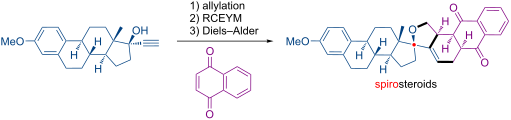
Beilstein J. Org. Chem. 2020, 16, 880–887, doi:10.3762/bjoc.16.79
Graphical Abstract
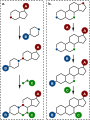
Scheme 1: Two diversity-oriented strategies: (a) Diversity installed during the construction of the skeleton;...
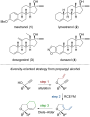
Figure 1: Structure of four 17-ethynyl-17-hydroxysteroids 1–4 (top) and how they could be used to generate di...
Scheme 2: Synthesis of spirocyclic steroid derivatives by the RCEYM reaction. Conditions: (a) NaH (2 equiv), ...
Figure 2: Structure of metathesis catalysts.
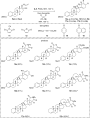
Scheme 3: One-pot RCEYM/Diels–Alder reaction strategy applied to the mestranol and lynestrenol cores. Notes: a...
Figure 3: Rationale for the observed stereochemistry: (a) NOESY correlations observed on compound 16b, showin...
Beilstein J. Org. Chem. 2020, 16, 791–797, doi:10.3762/bjoc.16.72
Graphical Abstract
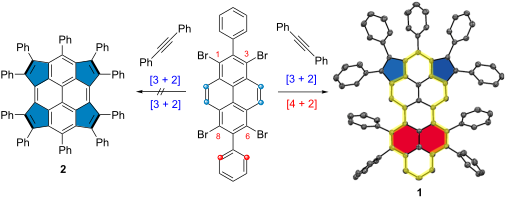
Scheme 1: Chemical structures of dicyclopenta-fused pyrene derivatives i–iii, peropyrene and the dicyclopenta...
Scheme 2: Synthetic route towards compound 1. a) B2pin2, dtbpy, [Ir(OMe)cod]2, cyclohexane, 70 °C, 20 h, 67%;...
Figure 1: High-resolution MALDI-TOF mass spectrum of 1. Inset: isotopic distribution compared to mass spectru...
Figure 2: Single-crystal X-ray structure of 1. (a) Top view and (b) side view of the (P,P) isomer. c) Crystal...
Figure 3: (a) UV–vis absorption spectra of precursor 5 and 1 in CH2Cl2 solution (10−5 M). Inset: photograph o...
Figure 4: Molecular orbitals of peropyrene derivative 6 and the dicyclopenta-fused peropyrene 1.
Beilstein J. Org. Chem. 2020, 16, 738–755, doi:10.3762/bjoc.16.68
Graphical Abstract
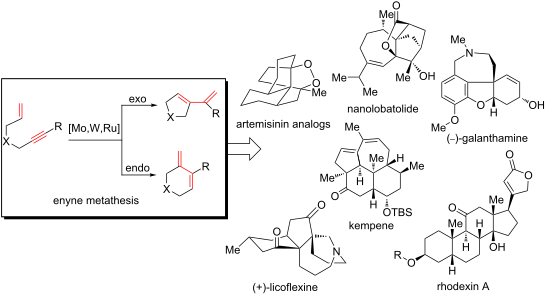
Scheme 1: Intramolecular (A) and intermolecular (B) enyne metathesis reactions.
Scheme 2: Ene–yne and yne–ene mechanisms for intramolecular enyne metathesis reactions.
Scheme 3: Metallacarbene mechanism in intermolecular enyne metathesis.
Scheme 4: The Oguri strategy for accessing artemisinin analogs 1a–c through enyne metathesis.
Scheme 5: Access to the tetracyclic core of nanolobatolide (2) via tandem enyne metathesis followed by an Eu(...
Scheme 6: Synthesis of (−)-amphidinolide E (3) using an intermolecular enyne metathesis as the key step.
Scheme 7: Synthesis of amphidinolide K (4) by an enyne metathesis route.
Scheme 8: Trost synthesis of des-epoxy-amphidinolide N (5) [72].
Scheme 9: Enyne metathesis between the propargylic derivative and the allylic alcohol in the synthesis of the...
Scheme 10: Synthetic route to amphidinolide N (6a).
Scheme 11: Synthesis of the stereoisomeric precursors of amphidinolide V (7a and 7b) through alkyne ring-closi...
Scheme 12: Synthesis of the anthramycin precursor 8 from ʟ-methionine by a tandem enyne metathesis–cross metat...
Scheme 13: Synthesis of (−)‐clavukerin A (9) and (−)‐isoclavukerin A (10) by an enyne metathesis route startin...
Scheme 14: Synthesis of (−)-isoguaiene (11) through an enyne metathesis as the key step.
Scheme 15: Synthesis of erogorgiaene (12) by a tandem enyne metathesis/cross metathesis sequence using the sec...
Scheme 16: Synthesis of (−)-galanthamine (13) from isovanilin by an enyne metathesis.
Scheme 17: Application of enyne metathesis for the synthesis of kempene diterpenes 14a–c.
Scheme 18: Synthesis of the alkaloid (+)-lycoflexine (15) through enyne metathesis.
Scheme 19: Synthesis of the AB subunits of manzamine A (16a) and E (16b) by enyne metathesis.
Scheme 20: Jung's synthesis of rhodexin A (17) by enyne metathesis/cross metathesis reactions.
Scheme 21: Total synthesis of (−)-flueggine A (18) and (+)-virosaine B (19) from Weinreb amide by enyne metath...
Scheme 22: Access to virgidivarine (20) and virgiboidine (21) by an enyne metathesis route.
Scheme 23: Enyne metathesis approach to (−)-zenkequinone B (22).
Scheme 24: Access to C-aryl glycoside 23 by an intermolecular enyne metathesis/Diels–Alder cycloaddition.
Scheme 25: Synthesis of spiro-C-aryl glycoside 24 by a tandem intramolecular enyne metathesis/Diels–Alder reac...
Scheme 26: Pathways to (−)-exiguolide (25) by Trost’s Ru-catalyzed enyne cross-coupling and cross-metathesis [94].
Beilstein J. Org. Chem. 2020, 16, 645–656, doi:10.3762/bjoc.16.61
Graphical Abstract
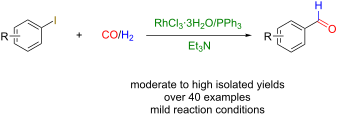
Figure 1: Rhodium-catalyzed reductive carbonylation of iodobenzene with CO and H2 to afford benzaldehyde. a) ...
Scheme 1: Scaled-up experiment of the reductive carbonylation of iodobenzene to benzaldehyde under the optimi...
Scheme 2: Catalytic species participating in the catalytic process.
Scheme 3: Substrate scope for the Rh-catalyzed reductive carbonylation of aryl iodides using CO and H2. React...
Scheme 4: Isotope-labeling experiments.
Scheme 5: Proposed reaction mechanism for the Rh-catalyzed reductive carbonylation of aryl iodides using CO a...
Beilstein J. Org. Chem. 2020, 16, 628–637, doi:10.3762/bjoc.16.59
Graphical Abstract
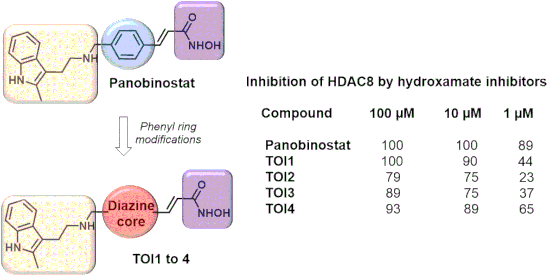
Figure 1: Chemical structures of the target diazine-based surrogates for the central core of panobinostat.
Figure 2: Docking pose for panobinostat and panobinostat derivatives in the HDAC8 receptor. (a) Overlay of al...
Figure 3: General building blocks for the visualized targets.
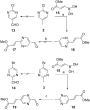
Scheme 1: Reaction conditions: a) MeOH, H2SO4 (5 drops), MS 4 Å (2 pieces), 68 °C, 8 h, 81%; b) DIBAL-H (1.2 ...
Scheme 2: Reaction conditions: a) boronic acid 15 (1.3 equiv), PdCl2(PPh3)2 (0.1 equiv), dioxane/H2O (3:1), Na...
Scheme 3: Reaction conditions: a) 5-bromo-2-chloropyrimidine (1 equiv), ethyl formate (1.5 equiv), THF (20 mL...
Scheme 4: Reaction conditions: a) boronic acid 15 (1.3 equiv), PdCl2(PPh3)2 (0.1 equiv), dioxane/H2O (8:2, Na2...
Beilstein J. Org. Chem. 2020, 16, 551–586, doi:10.3762/bjoc.16.52
Graphical Abstract
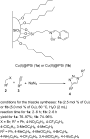
Scheme 1: Chemical structure of the catalysts 1a and 1b and their catalytic application in CuAAC reactions.
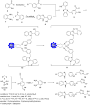
Scheme 2: Synthetic route to the catalyst 11 and its catalytic application in CuAAC reactions.
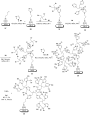
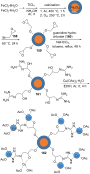
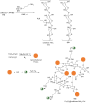
Scheme 3: Synthetic route of dendrons, illustrated using G2-AMP 23.
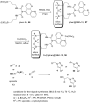
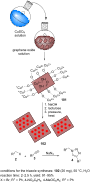
Scheme 4: The catalytic application of CuYAu–Gx-AAA–SBA-15 in a CuAAC reaction.
Scheme 5: Synthetic route to the catalyst 36.
Scheme 6: Application of the catalyst 36 in CuAAC reactions.
Scheme 7: The synthetic route to the catalyst 45 and catalytic application of 45 in “click” reactions.
Scheme 8: Synthetic route to the catalyst 48 and catalytic application of 48 in “click” reactions.
Scheme 9: Synthetic route to the catalyst 58 and catalytic application of 58 in “click” reactions.
Scheme 10: Synthetic route to the catalyst 64 and catalytic application of 64 in “click” reactions.
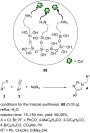
Scheme 11: Chemical structure of the catalyst 68 and catalytic application of 68 in “click” reactions.
Scheme 12: Chemical structure of the catalyst 69 and catalytic application of 69 in “click” reactions.
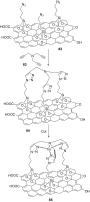
Scheme 13: Synthetic route to, and chemical structure of the catalyst 74.
Scheme 14: Application of the cayalyst 74 in “click” reactions.
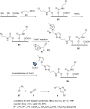
Scheme 15: Synthetic route to, and chemical structure of the catalyst 78 and catalytic application of 78 in “c...
Scheme 16: Synthetic route to the catalyst 85.
Scheme 17: Application of the catalyst 85 in “click” reactions.
Scheme 18: Synthetic route to the catalyst 87 and catalytic application of 87 in “click” reactions.
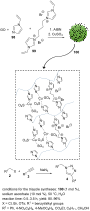
Scheme 19: Chemical structure of the catalyst 88 and catalytic application of 88 in “click” reactions.
Scheme 20: Synthetic route to the catalyst 90 and catalytic application of 90 in “click” reactions.
Scheme 21: Synthetic route to the catalyst 96 and catalytic application of 96 in “click” reactions.
Scheme 22: Synthetic route to the catalyst 100 and catalytic application of 100 in “click” reactions.
Scheme 23: Synthetic route to the catalyst 102 and catalytic application of 23 in “click” reactions.
Scheme 24: Synthetic route to the catalysts 108–111.
Scheme 25: Catalytic application of 108–111 in “click” reactions.
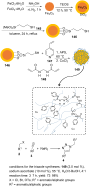
Scheme 26: Synthetic route to the catalyst 121 and catalytic application of 121 in “click” reactions.
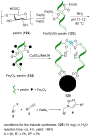
Scheme 27: Synthetic route to 125 and application of 125 in “click” reactions.
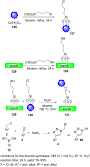
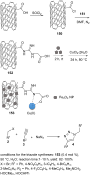
Scheme 28: Synthetic route to the catalyst 131 and catalytic application of 131 in “click” reactions.
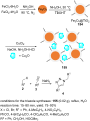
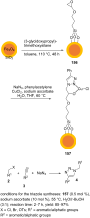
Scheme 29: Synthetic route to the catalyst 136.
Scheme 30: Application of the catalyst 136 in “click” reactions.
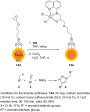
Scheme 31: Synthetic route to the catalyst 141 and catalytic application of 141 in “click” reactions.
Scheme 32: Synthetic route to the catalyst 144 and catalytic application of 144 in “click” reactions.
Scheme 33: Synthetic route to the catalyst 149 and catalytic application of 149 in “click” reactions.
Scheme 34: Synthetic route to the catalyst 153 and catalytic application of 153 in “click” reactions.
Scheme 35: Synthetic route to the catalyst 155 and catalytic application of 155 in “click” reactions.
Scheme 36: Synthetic route to the catalyst 157 and catalytic application of 157 in “click” reactions.
Scheme 37: Synthetic route to the catalyst 162.
Scheme 38: Application of the catalyst 162 in “click” reactions.
Scheme 39: Synthetic route to the catalyst 167 and catalytic application of 167 in “click” reactions.
Scheme 40: Synthetic route to the catalyst 169 and catalytic application of 169 in “click” reactions.
Scheme 41: Synthetic route to the catalyst 172.
Scheme 42: Application of the catalyst 172 in “click” reactions.
Beilstein J. Org. Chem. 2020, 16, 482–491, doi:10.3762/bjoc.16.43
Graphical Abstract
Scheme 1: Formation of sulfonyltriazoles and sulfonamidines.
Figure 1: Catalytic systems used in this study.
Scheme 2: Synthetic access to complexes 4–6 [30].
Scheme 3: Variation of sulfonylazides. Reaction conditions: phenylacetylene (0.5 mmol), sulfonyl azide (0.6 m...
Scheme 4: Variation of alkynes. Reaction conditions: alkyne (0.5 mmol), tosyl azide (0.6 mmol), diisopropylam...
Scheme 5: Variation of the amine substrate. Reaction conditions: phenylacetylene (0.5 mmol), tosyl azide (0.6...
Scheme 6: Reactivity of “non-sulfonyl” azide [33]. Reaction conditions: phenylacetylene (0.5 mmol), benzyl azide ...
Scheme 7: Reactivity of diphenylphosphoryl azide. Reaction conditions: phenylacetylene (0.5 mmol), diphenylph...
Scheme 8: Proposed mechanism for the formation of sulfonamidine.
Scheme 9: Stoichiometric reaction between 6 and 8.
Scheme 10: Synthesis of copper-acetylide intermediate A via [Cu(Cl)(Triaz)].
Scheme 11: Catalytic reaction involving copper-acetylide complex A.
Beilstein J. Org. Chem. 2020, 16, 362–383, doi:10.3762/bjoc.16.35
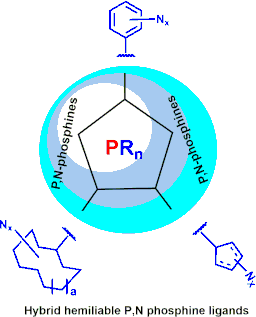
Graphical Abstract
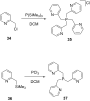
Scheme 1: Synthesis of pyridylphosphine ligands.
Figure 1: Pyridylphosphine ligands.
Scheme 2: Synthesis of piperidyl- and oxazinylphosphine ligands.
Scheme 3: Synthesis of linear multi-chelate pyridylphosphine ligands.
Scheme 4: Synthesis of chiral acetal pyridylphosphine ligands.
Scheme 5: Synthesis of diphenylphosphine-substituted triazine ligands.
Scheme 6: Synthesis of (pyridine-2-ylmethyl)phosphine ligands.
Scheme 7: Synthesis of diphosphine pyrrole ligands.
Scheme 8: Synthesis of 4,5-diazafluorenylphosphine ligands.
Scheme 9: Synthesis of thioether-containing pyridyldiphosphine ligands starting from ethylene sulfide and dip...
Scheme 10: Synthesis of monoterpene-derived phosphine pyridine ligands.
Scheme 11: Synthesis of N-phenylphosphine-substituted imidazole ligands.
Scheme 12: Synthesis of triazol-4-ylphosphine ligands.
Scheme 13: Synthesis of phosphanyltriazolopyridines and product selectivity depending on the substituents’ eff...
Scheme 14: Synthesis of PTA-phosphine ligands.
Scheme 15: Synthesis of isomeric phosphine dipyrazole ligands by varying the reaction temperature.
Scheme 16: Synthesis of N-tethered phosphine imidazolium ligands (route A) and diphosphine imidazolium ligands...
Scheme 17: Synthesis of {1-[2-(pyridin-2-yl)- (R = CH) and {1-[2-(pyrazin-2-yl)quinazolin-4-yl]naphthalen-2-yl...
Scheme 18: Synthesis of oxazolylindolylphosphine ligands 102.
Scheme 19: Synthesis of pyrrolylphosphine ligands.
Scheme 20: Synthesis of phosphine guanidinium ligands.
Scheme 21: Synthesis of a polydentate aminophosphine ligand.
Scheme 22: Synthesis of quinolylphosphine ligands.
Scheme 23: Synthesis of N-(triazolylmethyl)phosphanamine ligands.
Figure 2: Triazolylphosphanamine ligands synthesized by Wassenaar’s method [22].
Scheme 24: Synthesis of oxazaphosphorines.
Scheme 25: Synthesis of paracyclophane pyridylphosphine ligands.
Scheme 26: Synthesis of triazolylphosphine ligands.
Figure 3: Click-phosphine ligands.
Scheme 27: Ferrocenyl pyridylphosphine imine ligands.
Scheme 28: Synthesis of phosphinooxazolines (PHOX).
Scheme 29: Synthesis of ferrocenylphosphine oxazoles.
Beilstein J. Org. Chem. 2020, 16, 337–350, doi:10.3762/bjoc.16.33
Graphical Abstract
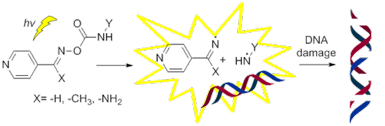
Figure 1: General structures of oxime derivatives with possible DNA photocleavage ability. Left: Oxime carbox...
Scheme 1: Synthesis of O-carbamoyl amidoximes (8–13), ethanone oximes (15–20) and aldoximes (22–27). Oxime 1 ...
Figure 2: UV–vis spectra of CT DNA ([DNA] = 1.1 × 10⁻⁴ M) in buffer solution in the absence or presence of in...
Figure 3: Relative viscosity (η/η0)1/3 of CT DNA (0.1 mM) in buffer solution in the presence of compounds 11 ...
Figure 4: Plot of EB-DNA relative fluorescence emission intensity at λ = 592 nm (I/I0, %) vs r (= [compound]/...
Figure 5: DNA photocleavage of amidoxime carbamates at a concentration of 500 μM and mechanistic studies of a...
Figure 6: Potential energy curve for the dissociation of 12 in the first excited triplet state, T1. For compo...
Scheme 2: Photodissociation reaction of the derivative 12 in the T1 state and the formation of ground state r...
Scheme 3: Decarboxylation reaction of the p-chlorophenylcarbamoyloxyl radical.
Figure 7: Proposed scheme showing a possible energy transfer from acetophenone sensitizer to oxime carbamate ...
Figure 8: DNA photocleavage of compounds 8–10 and 12–13 at concentration of 500 μM, at 365 nm, in the absence...
Figure 9: DNA photocleavage of compound 12 at a concentration of 500 μM, at 312 nm, in the absence and presen...
Beilstein J. Org. Chem. 2020, 16, 78–87, doi:10.3762/bjoc.16.10
Graphical Abstract
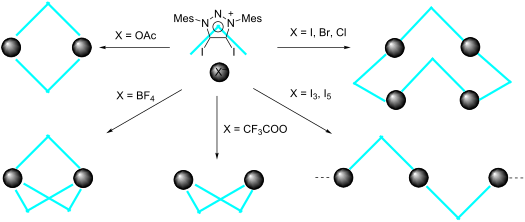
Figure 1: 1,2,3-Triazole based XB donors: 1,2,3-triazole A, 1,2,3-triazolium B, 1,2,3-triazolylidene C and di...
Scheme 1: Synthesis of 4,5-diiodo-1,3-dimesityl-1,2,3-triazolium with iodide, Mes: 2,4,6-Me3C6H2.
Scheme 2: Synthesis of 4,5-diiodo-1,3-dimesityl-1,2,3-triazolium with different anion.
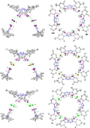
Figure 2: Packing structure of 2-I (top), 2-Br (middle) and 2-Cl (bottom). Hydrogen atoms have been omitted f...
Figure 3: Packing structure of 2-BF4. Hydrogen atoms have been omitted for clarity.
Figure 4: Packing structure of 2-OAc. Hydrogen atoms and solvent molecules have been omitted for clarity.
Figure 5: Packing structure of 2-TFA. Hydrogen atoms and disorder of fluorine atoms have been omitted for cla...
Figure 6: Packing structure of 2-I.1.5I2. Hydrogen atoms have been omitted for clarity.
Figure 7: Packing structure of 2-I.3.5I2. Hydrogen atoms have been omitted for clarity.
Figure 8: Packing structure of 2-BF4.0.5bpy. Hydrogen atoms and dichloromethane have been omitted for clarity....
Figure 9: 1,2,3-Triazole-based halogen model calculation: electrostatic potential surfaces mapped on total de...
Beilstein J. Org. Chem. 2019, 15, 2801–2811, doi:10.3762/bjoc.15.273
Graphical Abstract
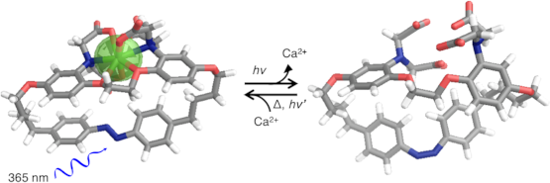
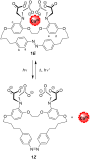
Figure 1: Azobenzene-BAPTA 1E and 1Z (a, b, c, d and e denote specific protons), showing idealized Ca2+ uptak...
Scheme 1: Synthesis of azobenzene-tethered BAPTA 1.
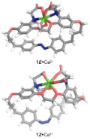
Figure 2: Energy-minimized molecular modelling structures of 1E•Ca2+ and 1Z•Ca2+ (PM6).
Figure 3: Electronic absorption spectra showing changes associated with photoisomerization of 1E (40 μM) to 1Z...
Figure 4: 1H NMR spectra (300 MHz) recorded at room temperature (298 K) in D2O of a) the thermodynamically st...
Figure 5: a) Multiple trans–cis cycles of 1E (40 μM) indicated by absorption changes at 362 nm in aqueous 0.0...
Figure 6: Electronic absorption spectra changes of 1E (42 μM) (a) and 1Z (43 μM) (b) in aqueous 0.03 M MOPS b...
Figure 7: a) Reversible Ca2+ exchange between photoregulated host 1 and turn-“on” fluorescent probe 3. b) Blu...
Beilstein J. Org. Chem. 2019, 15, 2790–2797, doi:10.3762/bjoc.15.271
Graphical Abstract
Figure 1: Chemical structure of Notum inhibitor LP-922056 (1).
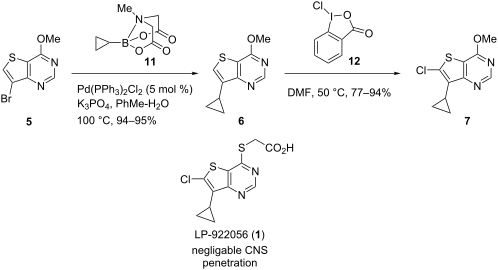
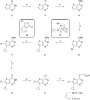
Scheme 1: Synthesis of LP-922056 (1). Reagents and conditionsa: (a) (COCl)2 (3.3 equiv), DMF, CH2Cl2, 55 °C ,...
Scheme 2: Chlorination of 6 with N-chlorosuccinimide (NCS). Reagents and conditions: (a) NCS (1.2 equiv), AcO...
Scheme 3: Improved synthesis of 5. Reagents and conditions: (a) NaOMe (5 equiv), 1,4-dioxane, 0 °C then rt, 1...
Figure 2: Concentrations of 1 in mouse following oral administration (p.o.) at 10 mg/kg.
Scheme 4: Preparation of amides 17. Representative reagents and conditionsa: (a) HBTU (1.1 equiv), iPr2NEt (2...
Beilstein J. Org. Chem. 2019, 15, 2612–2622, doi:10.3762/bjoc.15.254
Graphical Abstract
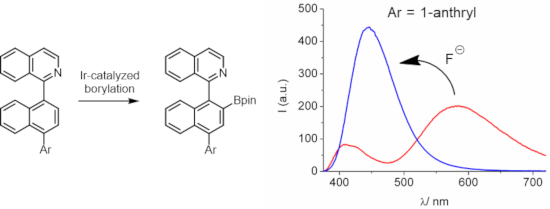
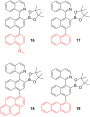
Figure 1: Structures of the dyes 16–19.
Scheme 1: Synthesis of the precursors 2, 3, and 5.
Scheme 2: Synthesis of the precursor triflates 8–11.
Scheme 3: Synthesis of 12–15 and the organoboron dyes 16–19.
Figure 2: UV–vis absorption (solid line) and fluorescence (dashed line) spectra of a) 16, b) 17, c) 18, and d...
Scheme 4: Jablonski diagram representing the photophysical processes in the dyes 16–19.
Figure 3: Transient absorption spectrum (600 ns delay) of dye 17 in nitrogen-purged acetonitrile on excitatio...
Figure 4: Fluorescence titrations of the dyes (ca. 4–11 μM) with Bu4NF in acetonitrile. a) 16 (up to 156 equi...
Beilstein J. Org. Chem. 2019, 15, 2590–2602, doi:10.3762/bjoc.15.252
Graphical Abstract
Figure 1: Terpene constituents 1–9 found in geranium and bergamot oils and specified odours of individual com...
Figure 2: Other selected mono- and sesquiterpenes (10–26) as fragrance materials [6].
Figure 3: Main constituents of natural iris oil: irone (27).
Scheme 1: First synthesis of ionone (30) [11].
Scheme 2: First synthesis of Ambrelux (32) [14].
Scheme 3: Industrial synthesis of myrcene (1) by pyrolysis of β-pinene (8).
Scheme 4: First synthesis of Iso E Super® (33), Iso E Super Plus® (34) and Georgywood® (35) as a mixture of i...
Figure 4: Iso E Super® region of GC spectra of Molecule 01 (left, 75 €–100 € per 100 mL; march 2019), a low-p...
Scheme 5: First synthetic route to (−)-Georgywood® (35) by Corey and Hong [33].
Scheme 6: First synthetic route to the odour-active (+)-enantiomer of Iso E Super Plus® (+)-34 [33].
Scheme 7: Analysis of the isomerisation process and formation of products. Most importantly, Iso E Super® (33...
Scheme 8: Isomerisation using additives such as alcohols or carboxylic acids. The product with the γ-position...
Scheme 9: Iso E Super Plus® (34) can undergo a third cyclisation to tetrahydrofuran 59 through compound rac-53...
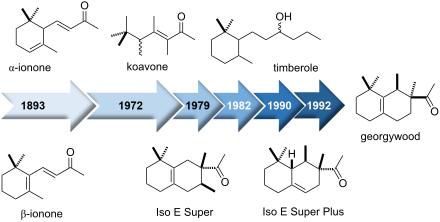
Figure 5: (Adapted from ref. [8]) Ionone (30, 1893, odour threshold: 0.8 ng L−1), koavone (1982, odour threshold...
Figure 6: Branched, terpene-like cyclohexene derivatives, that are synthetic fragrance components: 60: Iso da...
Scheme 10: New unnatural terpenoid 70 from unnatural farnesyl pyrophosphate derivative 69 and comparison with ...
Beilstein J. Org. Chem. 2019, 15, 2524–2533, doi:10.3762/bjoc.15.245
Graphical Abstract
Figure 1: Some hydroxamic acid-based anti-tumor drugs.
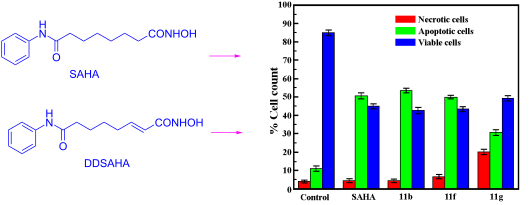
Scheme 1: Synthesis of SAHA and DDSAHA.
Figure 2: Cell viability from MTT assay for SAHA, 11b, 11f and 11g on HeLa after 24 h treatment.
Figure 3: Percent of cell death by LDH assay at a GI50 dose of SAHA, 11b, 11f and 11g after 24 h incubation a...
Figure 4: ROS generation by DCFDA.
Figure 5: The quantitative results of bivariate FITC-Annexin V/PI FCM of HeLa cells after treatment with 11b ...
Figure 6: Fluorescence microscopic images of 11b at different concentrations (8.9, and 14.2 µM, respectively)...
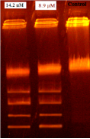
Figure 7: DNA Ladder formation in a gel electrophoresis study of 11b at different concentrations (at 8.9, and...
Beilstein J. Org. Chem. 2019, 15, 2419–2427, doi:10.3762/bjoc.15.234
Graphical Abstract
Figure 1: Oxazolone pseudodipeptide 1 and tetrapeptide 2a.
Scheme 1: Synthesis of linear azido ester dipeptide 5 and tetrapeptide 7.
Scheme 2: Synthesis of oxazolone pseudopeptides 1, 2a and 2b.
Figure 2: Characteristic NOEs of 2a.
Figure 3: DMSO titration study of 2a.
Figure 4: 1H NMR temperature study of 2a.
Figure 5: Optimized helical conformations of (A) 2a, (B) 2b and (C) 9.
Figure 6: Ion transport activity (A) for 1, (B) for 2a, across EYPC-LUVs HPTS.
Figure 7: Cation (A) and anion (B) transport activity of 2a.
Figure 8:
Comparison of the ion transport activity of 2a and 2b at 20 µM across EYPC-LUVslucigenin (A). Conce...
Beilstein J. Org. Chem. 2019, 15, 2408–2418, doi:10.3762/bjoc.15.233
Graphical Abstract
Scheme 1: The stiff stilbene photoisomerization from Z to E and vice versa by irradiation at 300 nm and 360 n...
Figure 1: The investigated SS-macrocycles (Z)-1a–d.
Scheme 2: Synthetic route to SS-macrocycles. i. (1) Triflic acid (3 equiv), DCM (dry), Ar atmosphere, MW (110...
Scheme 3: The photoisomerization of the stiff stilbene macrocycles, showing the stretching of the linker (gre...
Scheme 4: Noncyclic stiff stilbene diester 7 used as reference in the photoisomerization study.
Figure 2: The photoisomerization of the SS-macrocycles shows a clear correlation between the Z/E ratio in the...
Figure 3: Gibbs free energy differences (ΔG) between Z- and E-isomers of 1a–d and of the reference compound 7...
Figure 4: Ring strain for E and Z-isomers of 1a–d expressed as the Gibbs free energy difference to an acyclic...
Figure 5: The differences in ring strain between the E- and Z-isomers show an exponential correlation to the ...
Figure 6: Conformer ensembles for the macrocyclic stiff stilbene diethers 1a–d. Dihedral angles between the t...
Figure 7: Distances derived from NOE buildup experiments. Distances between pairs of protons or groups of pro...
Figure 8: Numbering of carbons in compounds 6a–d, showing 6d as an example.
Figure 9: Numbering of carbons in compounds (Z)-1a–d, showing (Z)-1d as an example.
Beilstein J. Org. Chem. 2019, 15, 2271–2276, doi:10.3762/bjoc.15.219
Graphical Abstract
Figure 1: Selected members of the acremine family [3-5].
Scheme 1: Retrosynthetic analysis of acremine F (5).
Scheme 2: Total synthesis of acremine F (5).
Scheme 3: Synthesis of acremines A and B through selective oxidation of acremine F.
Scheme 4: Proposed biomimetic dimerization of 5.
Scheme 5: Attempted intramolecular cyclization of 23.
Scheme 6: Attempted photochemical cyclization of 25.
Beilstein J. Org. Chem. 2019, 15, 2092–2104, doi:10.3762/bjoc.15.207
Graphical Abstract
Figure 1: Sketch of the currently known prototypical examples of handcuff-derived architectures.
Figure 2: Chemical drawing of the known bis-calix[6]arene 1 and its handcuff pseudorotaxane architectures 32+...
Scheme 1: Synthesis of triple-calix[6]arene host 6.
Scheme 2:
Formation of the 7+6, (7+)2
6, (7+)3
6 pseudorotaxane architectures by multiple-threading of 6 with 7+...
Figure 3:
(Bottom) Portion of the ESI-FT-ICR mass spectrum of 7+6. (Top a–c) Significant portions of: (a) 1H ...
Figure 4: 1H NMR titration of 6 with 7+·TFPB– (CDCl3 , 298 K, 600 MHz). Significant portions of the 1H NMR sp...
Figure 5:
ESI-FT-ICR-MS and HR-ESI-FT-ICR-CID mass spectrum of (7+)26.
Figure 6:
Different views of the minimized structures of (7+)36 obtained by molecular mechanics calculations.
Scheme 3:
Formation of the 4+6, (4+)2
6, (4+)3
6 pseudorotaxane architectures by multiple-threading of 6 with 4+...
Figure 7: (a–d) 1H NMR titration of 6 with 4+·TFPB− (CDCl3, 298 K, 600 MHz). Significant portions of the 1H N...
Figure 8:
Different views of the minimized structures of (4+)36 obtained by molecular mechanics calculations.
Figure 9: (Top) Possible endo-benzyl and endo-alkyl stereoisomers obtainable by directional threading of cali...
Figure 10:
(Left) HR-ESI-FT-ICR mass spectrum of 8+6. (Right) HR-ESI-FT-ICR-CID mass spectrum of (8+)2
6.
Figure 11: (a–d) 1H NMR titration of 6 with 8+·TFPB− (CDCl3 , 298 K, 600 MHz). Significant portions of the 1H ...
Beilstein J. Org. Chem. 2019, 15, 1933–1944, doi:10.3762/bjoc.15.189
Graphical Abstract
Figure 1: The structure of the sesquiterpene lactones archangelolide (1) and trilobolide (2).
Scheme 1: Reagents and conditions: a) MeOH, TEA, 48 h, yield 32%; b) (i) 5-azidopentanoic acid, DCC, DCM, 90 ...
Figure 2: Intracellular localization of archangelolide-dansyl (5) in human cells from osteosarcoma (U-2 OS). ...
Figure 3: Co-localization of dansylarchangelolide 5 with a marker of endoplasmic reticulum (top row) and with...
Figure 4: Cartoon representation of sarco/endoplasmic reticulum Ca2+ ATPase binding pocket with A, C) archang...
Figure 5: Molecular surface representation of sarco/endoplasmic reticulum Ca2+ ATPase binding pocket with A) ...
Figure 6: Structural formulae of (i) thapsigargin, (ii) trilobolide (2), and (iii) archangelolide (1). Red pa...
Figure 7: Viability of rat peritoneal cells treated with archangelolide (1), dansylarchangelolide 5 and dansy...
Figure 8: NO production in primary rat macrophages. The cells were treated with archangelolide (1) and dansyl...
Figure 9: Evaluation of cytokine TNF-α secretion in rat peritoneal cells. Stimulation of primary cells was in...
Figure 10: Structure of laserolide.
Beilstein J. Org. Chem. 2019, 15, 1795–1804, doi:10.3762/bjoc.15.173
Graphical Abstract
Figure 1: Structures and proton designations of hosts H1–5 and guests G1–4.
Scheme 1: Synthesis of hosts H3–5.
Figure 2: Partial 1H NMR spectra (400 MHz CDCl3/acetone-d6 1:2 (v/v), 298 K) of (a) free H1, (b) H1 with 1.0 ...
Figure 3: Partial 1H NMR spectra (400 MHz, CD2Cl2, 298 K) of (a) free H1, (b) H1 with 1.0 equiv G4, (c) free ...
Figure 4: Crystal structure of complex H1·G1. (a) Top view, (b) side view, and (c) packing viewed along c-axi...
Figure 5: Crystal structure of complex H5·G1. (a) Top view, (b) side view, and (c) packing viewed along the a-...
Figure 6: Calculated structures of the complexes at the B3LYP/6-31G level of theory. (a) Top view and (b) sid...
Figure 7: Schematic representation of the acid–base controlled complexation process and partial 1H NMR spectr...
Beilstein J. Org. Chem. 2019, 15, 1722–1757, doi:10.3762/bjoc.15.168
Graphical Abstract
Figure 1: Examples of three-carbon chirons.
Figure 2: Structures of derivatives of N-(1-phenylethyl)aziridine-2-carboxylic acid 5–8.
Figure 3: Synthetic equivalency of aziridine aldehydes 6.
Scheme 1: Synthesis of N-(1-phenylethyl)aziridine-2-carboxylates 5. Reagents and conditions: a) TEA, toluene,...
Scheme 2: Absolute configuration at C2 in (2S,1'S)-5a. Reagents and conditions: a) 20% HClO4, 80 °C, 30 h the...
Scheme 3: Major synthetic strategies for a 2-ketoaziridine scaffold [R* = (R)- or (S)-1-phenylethyl; R′ = Alk...
Scheme 4: Synthesis of cyanide (2S,1'S)-13. Reagents and conditions: a) NH3, EtOH/H2O, rt, 72 h; b) Ph3P, CCl4...
Scheme 5: Synthesis of key intermediates (R)-16 and (R)-17 for (R,R)-formoterol (14) and (R)-tamsulosin (15)....
Scheme 6: Synthesis of mitotic kinesin inhibitors (2R/S,1'R)-23. Reagents and conditions: a) H2, Pd(OH)2, EtO...
Scheme 7: Synthesis of (R)-mexiletine ((R)-24). Reagents and conditions: a) TsCl, TEA, DMAP, CH2Cl2, rt, 1 h;...
Scheme 8: Synthesis of (−)-cathinone ((S)-27). Reagents and conditions: a) PhMgBr, ether, 0 °C; b) H2, 10% Pd...
Scheme 9: Synthesis of N-Boc-norpseudoephedrine ((1S,2S)-(+)-29) and N-Boc-norephedrine ((1R,2S)-29). Reagent...
Scheme 10: Synthesis of (−)-ephedrine ((1R,2S)-31). Reagents and conditions: a) TfOMe, MeCN then NaBH3CN, rt; ...
Scheme 11: Synthesis of xestoaminol C ((2S,3R)-35), 3-epi-xestoaminol C ((2S,3S)-35) and N-Boc-spisulosine ((2S...
Scheme 12: Synthesis of ʟ-tryptophanol ((S)-41). Reagents and conditions: a) CDI, MeCN, rt, 1 h then TMSI, MeC...
Scheme 13: Synthesis of ʟ-homophenylalaninol ((S)-42). Reagents and conditions: a) NaH, THF, 0 °C to −78 °C, 1...
Scheme 14: Synthesis of ᴅ-homo(4-octylphenyl)alaninol ((R)-47) and a sphingolipid analogue (R)-48. Reagents an...
Scheme 15: Synthesis of florfenicol ((1R,2S)-49). Reagents and conditions: a) (S)-1-phenylethylamine, TEA, MeO...
Scheme 16: Synthesis of natural tyroscherin ((2S,3R,6E,8R,10R)-55). Reagents and conditions: a) I(CH2)3OTIPS, t...
Scheme 17: Syntheses of (−)-hygrine (S)-61, (−)-hygroline (2S,2'S)-62 and (−)-pseudohygroline (2S,2'R)-62. Rea...
Scheme 18: Synthesis of pyrrolidine (3S,3'R)-68, a fragment of the fluoroquinolone antibiotic PF-00951966. Rea...
Scheme 19: Synthesis of sphingolipid analogues (R)-76. Reagents and conditions: a) BnBr, Mg, THF, reflux, 6 h;...
Scheme 20: Synthesis of ᴅ-threo-PDMP (1R,2R)-81. Reagents and conditions: a) TMSCl, NaI, MeCN, rt, 1 h 50 min,...
Scheme 21: Synthesis of the sphingolipid analogue SG-14 (2S,3S)-84. Reagents and conditions: a) LiAlH4, THF, 0...
Scheme 22: Synthesis of the sphingolipid analogue SG-12 (2S,3R)-88. Reagents and conditions: a) 1-(bromomethyl...
Scheme 23: Synthesis of sphingosine-1-phosphate analogues DS-SG-44 and DS-SG-45 (2S,3R)-89a and (2S,3R)-89a. R...
Scheme 24: Synthesis of N-Boc-safingol ((2S,3S)-95) and N-Boc-ᴅ-erythro-sphinganine ((2S,3R)-95). Reagents and...
Scheme 25: Synthesis of ceramide analogues (2S,3R)-96. Reagents and conditions: a) NaBH4, ZnCl2, MeOH, −78 °C,...
Scheme 26: Synthesis of orthogonally protected serinols, (S)-101 and (R)-102. Reagents and conditions: a) BnBr...
Scheme 27: Synthesis of N-acetyl-3-phenylserinol ((1R,2R)-105). Reagents and conditions: a) AcOH, CH2Cl2, refl...
Scheme 28: Synthesis of (S)-linezolid (S)-107. Reagents and conditions: a) LiAlH4, THF, 0 °C to reflux; b) Boc2...
Scheme 29: Synthesis of (2S,3S,4R)-2-aminooctadecane-1,3,4-triol (ᴅ-ribo-phytosphingosine) (2S,3S,4R)-110. Rea...
Scheme 30: Syntheses of ᴅ-phenylalanine (R)-116. Reagents and conditions: a) AcOH, CH2Cl2, reflux, 4 h; b) MsC...
Scheme 31: Synthesis of N-Boc-ᴅ-3,3-diphenylalanine ((R)-122). Reagents and conditions: a) PhMgBr, THF, −78 °C...
Scheme 32: Synthesis of ethyl N,N’-di-Boc-ʟ-2,3-diaminopropanoate ((S)-125). Reagents and conditions: a) NaN3,...
Scheme 33: Synthesis of the bicyclic amino acid (S)-(+)-127. Reagents and conditions: a) BF3·OEt2, THF, 60 °C,...
Scheme 34: Synthesis of lacosamide, (R)-2-acetamido-N-benzyl-3-methoxypropanamide (R)-130. Reagents and condit...
Scheme 35: Synthesis of N-Boc-norfuranomycin ((2S,2'R)-133). Reagents and conditions: a) H2C=CHCH2I, NaH, THF,...
Scheme 36: Synthesis of MeBmt (2S,3R,4R,6E)-139. Reagents and conditions: a) diisopropyl (S,S)-tartrate (E)-cr...
Scheme 37: Synthesis of (+)-polyoxamic acid (2S,3S,4S)-144. Reagents and conditions: a) AD-mix-α, MeSO2NH2, t-...
Scheme 38: Synthesis of the protected 3-hydroxy-ʟ-glutamic acid (2S,3R)-148. Reagents and conditions: a) LiHMD...
Scheme 39: Synthesis of (+)-isoserine (R)-152. Reagents and conditions: a) AcCl, MeCN, rt, 0.5 h then Na2CO3, ...
Scheme 40: Synthesis of (3R,4S)-N3-Boc-3,4-diaminopentanoic acid (3R,4S)-155. Reagents and conditions: a) Ph3P...
Scheme 41: Synthesis of methyl (2S,3S,4S)-4-(dimethylamino)-2,3-dihydroxy-5-methoxypentanoate (2S,3S,4S)-159. ...
Scheme 42: Syntheses of methyl (3S,4S) 4,5-di-N-Boc-amino-3-hydroxypentanoate ((3S,4S)-164), methyl (3S,4S)-4-N...
Scheme 43: Syntheses of (3R,5S)-5-(aminomethyl)-3-(4-methoxyphenyl)dihydrofuran-2(3H)-one ((3R,5S)-168). Reage...
Scheme 44: Syntheses of a series of imidazolin-2-one dipeptides 175–177 (for R' and R'' see text). Reagents an...
Scheme 45: Syntheses of (2S,3S)-N-Boc-3-hydroxy-2-hydroxymethylpyrrolidine ((2S,3S)-179). Reagents and conditi...
Scheme 46: Syntheses of enantiomers of 1,4-dideoxy-1,4-imino-ʟ- and -ᴅ-lyxitols (2S,3R,4S)-182 and (2R,3S,4R)-...
Scheme 47: Synthesis of 1,4-dideoxy-1,4-imino-ʟ-ribitol (2S,3S,4R)-182. Reagents and conditions: a) AcOH, CH2Cl...
Scheme 48: Syntheses of 1,4-dideoxy-1,4-imino-ᴅ-arabinitol (2R,3R,4R)-182 and 1,4-dideoxy-1,4-imino-ᴅ-xylitol ...
Scheme 49: Syntheses of natural 2,5-imino-2,5,6-trideoxy-ʟ-gulo-heptitol ((2S,3R,4R,5R)-184) and its C4 epimer...
Scheme 50: Syntheses of (−)-dihydropinidine ((2S,6R)-187a) (R = C3H7) and (2S,6R)-isosolenopsins (2S,6R)-187b ...
Scheme 51: Syntheses of (+)-deoxocassine ((2S,3S,6R)-190a, R = C12H25) and (+)-spectaline ((2S,3S,6R)-190b, R ...
Scheme 52: Synthesis of (−)-microgrewiapine A ((2S,3R,6S)-194a) and (+)-microcosamine A ((2S,3R,6S)-194b). Rea...
Scheme 53: Syntheses of ʟ-1-deoxynojirimycin ((2S,3S,4S,5R)-200), ʟ-1-deoxymannojirimycin ((2S,3S,4S,5S)-200) ...
Scheme 54: Syntheses of 1-deoxy-ᴅ-galacto-homonojirimycin (2R,3S,4R,5S)-211. Reagents and conditions: a) MeONH...
Scheme 55: Syntheses of 7a-epi-hyacinthacine A1 (1S,2R,3R,7aS)-220. Reagents and conditions: a) TfOTBDMS, 2,6-...
Scheme 56: Syntheses of 8-deoxyhyacinthacine A1 ((1S,2R,3R,7aR)-221). Reagents and conditions: a) H2, Pd/C, PT...
Scheme 57: Syntheses of (+)-lentiginosine ((1S,2S,8aS)-227). Reagents and conditions: a) (EtO)2P(O)CH2COOEt, L...
Scheme 58: Syntheses of 8-epi-swainsonine (1S,2R,8S,8aR)-231. Reagents and conditions: a) Ph3P=CHCOOMe, MeOH, ...
Scheme 59: Synthesis of a protected vinylpiperidine (2S,3R)-237, a key intermediate in the synthesis of (−)-sw...
Scheme 60: Synthesis of a modified carbapenem 245. Reagents and conditions: a) AcOEt, LiHMDS, THF, −78 °C, 1.5...
Beilstein J. Org. Chem. 2019, 15, 1612–1704, doi:10.3762/bjoc.15.165
Graphical Abstract
Figure 1: Various drugs having IP nucleus.
Figure 2: Participation percentage of various TMs for the syntheses of IPs.
Scheme 1: CuI–NaHSO4·SiO2-catalyzed synthesis of imidazo[1,2-a]pyridines.
Scheme 2: Experimental examination of reaction conditions.
Scheme 3: One-pot tandem reaction for the synthesis of 2-haloimidazopyridines.
Scheme 4: Mechanistic scheme for the synthesis of 2-haloimidazopyridine.
Scheme 5: Copper-MOF-catalyzed three-component reaction (3-CR) for imidazo[1,2-a]pyridines.
Scheme 6: Mechanism for copper-MOF-driven synthesis.
Scheme 7: Heterogeneous synthesis via titania-supported CuCl2.
Scheme 8: Mechanism involving oxidative C–H functionalization.
Scheme 9: Heterogeneous synthesis of IPs.
Scheme 10: One-pot regiospecific synthesis of imidazo[1,2-a]pyridines.
Scheme 11: Vinyl azide as an unprecedented substrate for imidazo[1,2-a]pyridines.
Scheme 12: Radical pathway.
Scheme 13: Cu(I)-catalyzed transannulation approach for imidazo[1,5-a]pyridines.
Scheme 14: Plausible radical pathway for the synthesis of imidazo[1,5-a]pyridines.
Scheme 15: A solvent-free domino reaction for imidazo[1,2-a]pyridines.
Scheme 16: Cu-NPs-mediated synthesis of imidazo[1,2-a]pyridines.
Scheme 17: CuI-catalyzed synthesis of isoxazolylimidazo[1,2-a]pyridines.
Scheme 18: Functionalization of 4-bromo derivative via Sonogashira coupling reaction.
Scheme 19: A plausible reaction pathway.
Scheme 20: Cu(I)-catalyzed intramolecular oxidative C–H amidation reaction.
Scheme 21: One-pot synthetic reaction for imidazo[1,2-a]pyridine.
Scheme 22: Plausible reaction mechanism.
Scheme 23: Cu(OAc)2-promoted synthesis of imidazo[1,2-a]pyridines.
Scheme 24: Mechanism for aminomethylation/cycloisomerization of propiolates with imines.
Scheme 25: Three-component synthesis of imidazo[1,2-a]pyridines.
Figure 3: Scope of pyridin-2(1H)-ones and acetophenones.
Scheme 26: CuO NPS-promoted A3 coupling reaction.
Scheme 27: Cu(II)-catalyzed C–N bond formation reaction.
Scheme 28: Mechanism involving Chan–Lam/Ullmann coupling.
Scheme 29: Synthesis of formyl-substituted imidazo[1,2-a]pyridines.
Scheme 30: A tandem sp3 C–H amination reaction.
Scheme 31: Probable mechanistic approach.
Scheme 32: Dual catalytic system for imidazo[1,2-a]pyridines.
Scheme 33: Tentative mechanism.
Scheme 34: CuO/CuAl2O4/ᴅ-glucose-promoted 3-CCR.
Scheme 35: A tandem CuOx/OMS-2-based synthetic strategy.
Figure 4: Biomimetic catalytic oxidation in the presence of electron-transfer mediators (ETMs).
Scheme 36: Control experiment.
Scheme 37: Copper-catalyzed C(sp3)–H aminatin reaction.
Scheme 38: Reaction of secondary amines.
Scheme 39: Probable mechanistic pathway.
Scheme 40: Coupling reaction of α-azidoketones.
Scheme 41: Probable pathway.
Scheme 42: Probable mechanism with free energy calculations.
Scheme 43: MCR for cyanated IP synthesis.
Scheme 44: Substrate scope for the reaction.
Scheme 45: Reaction mechanism.
Scheme 46: Probable mechanistic pathway for Cu/ZnAl2O4-catalyzed reaction.
Scheme 47: Copper-catalyzed double oxidative C–H amination reaction.
Scheme 48: Application towards different coupling reactions.
Scheme 49: Reaction mechanism.
Scheme 50: Condensation–cyclization approach for the synthesis of 1,3-diarylated imidazo[1,5-a]pyridines.
Scheme 51: Optimized reaction conditions.
Scheme 52: One-pot 2-CR.
Scheme 53: One-pot 3-CR without the isolation of chalcone.
Scheme 54: Copper–Pybox-catalyzed cyclization reaction.
Scheme 55: Mechanistic pathway catalyzed by Cu–Pybox complex.
Scheme 56: Cu(II)-promoted C(sp3)-H amination reaction.
Scheme 57: Wider substrate applicability for the reaction.
Scheme 58: Plausible reaction mechanism.
Scheme 59: CuI assisted C–N cross-coupling reaction.
Scheme 60: Probable reaction mechanism involving sp3 C–H amination.
Scheme 61: One-pot MCR-catalyzed by CoFe2O4/CNT-Cu.
Scheme 62: Mechanistic pathway.
Scheme 63: Synthetic scheme for 3-nitroimidazo[1,2-a]pyridines.
Scheme 64: Plausible mechanism for CuBr-catalyzed reaction.
Scheme 65: Regioselective synthesis of halo-substituted imidazo[1,2-a]pyridines.
Scheme 66: Synthesis of 2-phenylimidazo[1,2-a]pyridines.
Scheme 67: Synthesis of diarylated compounds.
Scheme 68: CuBr2-mediated one-pot two-component oxidative coupling reaction.
Scheme 69: Decarboxylative cyclization route to synthesize 1,3-diarylimidazo[1,5-a]pyridines.
Scheme 70: Mechanistic pathway.
Scheme 71: C–H functionalization reaction of enamines to produce diversified heterocycles.
Scheme 72: A plausible mechanism.
Scheme 73: CuI-promoted aerobic oxidative cyclization reaction of ketoxime acetates and pyridines.
Scheme 74: CuI-catalyzed pathway for the formation of imidazo[1,2-a]pyridine.
Scheme 75: Mechanistic pathway.
Scheme 76: Mechanistic rationale for the synthesis of products.
Scheme 77: Copper-catalyzed synthesis of vinyloxy-IP.
Scheme 78: Regioselective product formation with propiolates.
Scheme 79: Proposed mechanism for vinyloxy-IP formation.
Scheme 80: Regioselective synthesis of 3-hetero-substituted imidazo[1,2-a]pyridines with different reaction su...
Scheme 81: Mechanistic pathway.
Scheme 82: CuI-mediated synthesis of 3-formylimidazo[1,2-a]pyridines.
Scheme 83: Radical pathway for 3-formylated IP synthesis.
Scheme 84: Pd-catalyzed urea-cyclization reaction for IPs.
Scheme 85: Pd-catalyzed one-pot-tandem amination and intramolecular amidation reaction.
Figure 5: Scope of aniline nucleophiles.
Scheme 86: Pd–Cu-catalyzed Sonogashira coupling reaction.
Scheme 87: One-pot amide coupling reaction for the synthesis of imidazo[4,5-b]pyridines.
Scheme 88: Urea cyclization reaction for the synthesis of two series of pyridines.
Scheme 89: Amidation reaction for the synthesis of imidazo[4,5-b]pyridines.
Figure 6: Amide scope.
Scheme 90: Pd NPs-catalyzed 3-component reaction for the synthesis of 2,3-diarylated IPs.
Scheme 91: Plausible mechanistic pathway for Pd NPs-catalyzed MCR.
Scheme 92: Synthesis of chromenoannulated imidazo[1,2-a]pyridines.
Scheme 93: Mechanism for the synthesis of chromeno-annulated IPs.
Scheme 94: Zinc oxide NRs-catalyzed synthesis of imidazo[1,2-a]azines/diazines.
Scheme 95: Zinc oxide-catalyzed isocyanide based GBB reaction.
Scheme 96: Reaction pathway for ZnO-catalyzed GBB reaction.
Scheme 97: Mechanistic pathway.
Scheme 98: ZnO NRs-catalyzed MCR for the synthesis of imidazo[1,2-a]azines.
Scheme 99: Ugi type GBB three-component reaction.
Scheme 100: Magnetic NPs-catalyzed synthesis of imidazo[1,2-a]pyridines.
Scheme 101: Regioselective synthesis of 2-alkoxyimidazo[1,2-a]pyridines catalyzed by Fe-SBA-15.
Scheme 102: Plausible mechanistic pathway for the synthesis of 2-alkoxyimidazopyridine.
Scheme 103: Iron-catalyzed synthetic approach.
Scheme 104: Iron-catalyzed aminooxygenation reaction.
Scheme 105: Mechanistic pathway.
Scheme 106: Rh(III)-catalyzed double C–H activation of 2-substituted imidazoles and alkynes.
Scheme 107: Plausible reaction mechanism.
Scheme 108: Rh(III)-catalyzed non-aromatic C(sp2)–H bond activation–functionalization for the synthesis of imid...
Scheme 109: Reactivity and selectivity of different substrates.
Scheme 110: Rh-catalyzed direct C–H alkynylation by Li et al.
Scheme 111: Suggested radical mechanism.
Scheme 112: Scandium(III)triflate-catalyzed one-pot reaction and its mechanism for the synthesis of benzimidazo...
Scheme 113: RuCl3-assisted Ugi-type Groebke–Blackburn condensation reaction.
Scheme 114: C-3 aroylation via Ru-catalyzed two-component reaction.
Scheme 115: Regioselective synthetic mechanism.
Scheme 116: La(III)-catalyzed one-pot GBB reaction.
Scheme 117: Mechanistic approach for the synthesis of imidazo[1,2-a]pyridines.
Scheme 118: Synthesis of imidazo[1,2-a]pyridine using LaMnO3 NPs under neat conditions.
Scheme 119: Mechanistic approach.
Scheme 120: One-pot 3-CR for regioselective synthesis of 2-alkoxy-3-arylimidazo[1,2-a]pyridines.
Scheme 121: Formation of two possible products under optimization of the catalysts.
Scheme 122: Mechanistic strategy for NiFe2O4-catalyzed reaction.
Scheme 123: Two-component reaction for synthesizing imidazodipyridiniums.
Scheme 124: Mechanistic scheme for the synthesis of imidazodipyridiniums.
Scheme 125: CuI-catalyzed arylation of imidazo[1,2-a]pyridines.
Scheme 126: Mechanism for arylation reaction.
Scheme 127: Cupric acetate-catalyzed double carbonylation approach.
Scheme 128: Radical mechanism for double carbonylation of IP.
Scheme 129: C–S bond formation reaction catalyzed by cupric acetate.
Scheme 130: Cupric acetate-catalyzed C-3 formylation approach.
Scheme 131: Control experiments for signifying the role of DMSO and oxygen.
Scheme 132: Mechanism pathway.
Scheme 133: Copper bromide-catalyzed CDC reaction.
Scheme 134: Extension of the substrate scope.
Scheme 135: Plausible radical pathway.
Scheme 136: Transannulation reaction for the synthesis of imidazo[1,5-a]pyridines.
Scheme 137: Plausible reaction pathway for denitrogenative transannulation.
Scheme 138: Cupric acetate-catalyzed C-3 carbonylation reaction.
Scheme 139: Plausible mechanism for regioselective C-3 carbonylation.
Scheme 140: Alkynylation reaction at C-2 of 3H-imidazo[4,5-b]pyridines.
Scheme 141: Two-way mechanism for C-2 alkynylation of 3H-imidazo[4,5-b]pyridines.
Scheme 142: Palladium-catalyzed SCCR approach.
Scheme 143: Palladium-catalyzed Suzuki coupling reaction.
Scheme 144: Reaction mechanism.
Scheme 145: A phosphine free palladium-catalyzed synthesis of C-3 arylated imidazopyridines.
Scheme 146: Palladium-mediated Buchwald–Hartwig cross-coupling reaction.
Figure 7: Structure of the ligands optimized.
Scheme 147: Palladium acetate-catalyzed direct arylation of imidazo[1,2-a]pyridines.
Scheme 148: Palladium acetate-catalyzed mechanistic pathway.
Scheme 149: Palladium acetate-catalyzed regioselective arylation reported by Liu and Zhan.
Scheme 150: Mechanism for selective C-3 arylation of IP.
Scheme 151: Pd(II)-catalyzed alkenylation reaction with styrenes.
Scheme 152: Pd(II)-catalyzed alkenylation reaction with acrylates.
Scheme 153: A two way mechanism.
Scheme 154: Double C–H activation reaction catalyzed by Pd(OAc)2.
Scheme 155: Probable mechanism.
Scheme 156: Palladium-catalyzed decarboxylative coupling.
Scheme 157: Mechanistic cycle for decarboxylative arylation reaction.
Scheme 158: Ligand-free approach for arylation of imidazo[1,2-a]pyridine-3-carboxylic acids.
Scheme 159: Mechanism for ligandless arylation reaction.
Scheme 160: NHC-Pd(II) complex assisted arylation reaction.
Scheme 161: C-3 arylation of imidazo[1,2-a]pyridines with aryl bromides catalyzed by Pd(OAc)2.
Scheme 162: Pd(II)-catalyzed C-3 arylations with aryl tosylates and mesylates.
Scheme 163: CDC reaction for the synthesis of imidazo[1,2-a]pyridines.
Scheme 164: Plausible reaction mechanism for Pd(OAc)2-catalyzed synthesis of imidazo[1,2-a]pyridines.
Scheme 165: Pd-catalyzed C–H amination reaction.
Scheme 166: Mechanism for C–H amination reaction.
Scheme 167: One-pot synthesis for 3,6-di- or 2,3,6-tri(hetero)arylimidazo[1,2-a]pyridines.
Scheme 168: C–H/C–H cross-coupling reaction of IPs and azoles catalyzed by Pd(II).
Scheme 169: Mechanistic cycle.
Scheme 170: Rh-catalyzed C–H arylation reaction.
Scheme 171: Mechanistic pathway for C–H arylation of imidazo[1,2-a]pyridine.
Scheme 172: Rh(III)-catalyzed double C–H activation of 2-phenylimidazo[1,2-a]pyridines and alkynes.
Scheme 173: Rh(III)-catalyzed mechanistic pathway.
Scheme 174: Rh(III)-mediated oxidative coupling reaction.
Scheme 175: Reactions showing functionalization of the product obtained by the group of Kotla.
Scheme 176: Mechanism for Rh(III)-catalyzed oxidative coupling reaction.
Scheme 177: Rh(III)-catalyzed C–H activation reaction.
Scheme 178: Mechanistic cycle.
Scheme 179: Annulation reactions of 2-arylimidazo[1,2-a]pyridines and alkynes.
Scheme 180: Two-way reaction mechanism for annulations reaction.
Scheme 181: [RuCl2(p-cymene)]2-catalyzed C–C bond formation reaction.
Scheme 182: Reported reaction mechanism.
Scheme 183: Fe(III) catalyzed C-3 formylation approach.
Scheme 184: SET mechanism-catalyzed by Fe(III).
Scheme 185: Ni(dpp)Cl2-catalyzed KTC coupling.
Scheme 186: Pd-catalyzed SM coupling.
Scheme 187: Vanadium-catalyzed coupling of IP and NMO.
Scheme 188: Mechanistic cycle.
Scheme 189: Selective C3/C5–H bond functionalizations by mono and bimetallic systems.
Scheme 190: rGO-Ni@Pd-catalyzed C–H bond arylation of imidazo[1,2-a]pyridine.
Scheme 191: Mechanistic pathway for heterogeneously catalyzed arylation reaction.
Scheme 192: Zinc triflate-catalyzed coupling reaction of substituted propargyl alcohols.