


Search results
Search for "transition states" in Full Text gives 224 result(s) in Beilstein Journal of Organic Chemistry. Showing first 200.
The influence of the cationic carbenes on the initiation kinetics of ruthenium-based metathesis catalysts; a DFT study
Beilstein J. Org. Chem. 2018, 14, 2872–2880, doi:10.3762/bjoc.14.266
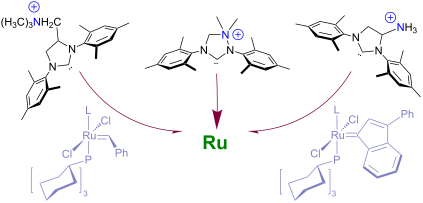
- transition states). In the second step we performed solvation energy calculations using the Poisson–Boltzmann self-consistent polarizable continuum method as implemented in Jaguar v.7.9 (Schrodinger, 2013) to represent dichloromethane, using the dielectric constant of 8.93 and the effective radius 2.33 Å


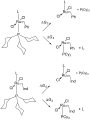
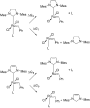

A challenging redox neutral Cp*Co(III)-catalysed alkylation of acetanilides with 3-buten-2-one: synthesis and key insights into the mechanism through DFT calculations
Beilstein J. Org. Chem. 2018, 14, 2366–2374, doi:10.3762/bjoc.14.212
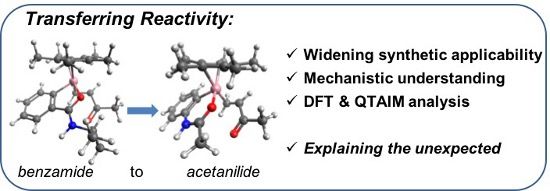
- M06/def2-TZVP [38][39][40][41]. Frequencies calculations approximated the ZPE correction and entropic contributions to the free energy term as well as confirming all intermediate were true with no imaginary modes and all transition states had the correct critical frequency of decomposition (imaginary


Recent advances in hypervalent iodine(III)-catalyzed functionalization of alkenes
Beilstein J. Org. Chem. 2018, 14, 1813–1825, doi:10.3762/bjoc.14.154
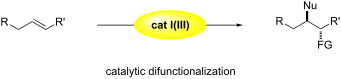
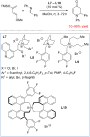
- enantioselectivity (52 vs 53). Moreover, the more electron-deficient 3,4,5-trifluorophenyl analog 54 was found to be less enantioselective. The authors proposed that the benzylic groups can stabilize the cationic intermediates and/or transition states through cation–π interactions, which play an important role in


DFT calculations on the mechanism of copper-catalysed tandem arylation–cyclisation reactions of alkynes and diaryliodonium salts
Beilstein J. Org. Chem. 2018, 14, 1743–1749, doi:10.3762/bjoc.14.148
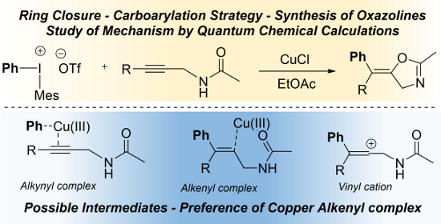
- intermediate states had only positive frequencies. The transition states have been verified having a single imaginary frequency and connecting the corresponding intermediate structures. The discussions are based on Gibbs free energies obtained within the ideal-gas model using the rigid-rotor harmonic
- reaction routes for the oxazoline formation explored by computations. The schemes indicate the possible stereochemical outcomes. For the definition of the labels of intermediates and transition states see Scheme 3. Free energy profiles for the possible reaction routes. The final energy state (−50.5 kcal


Cobalt-catalyzed C–H cyanations: Insights into the reaction mechanism and the role of London dispersion
Beilstein J. Org. Chem. 2018, 14, 1537–1545, doi:10.3762/bjoc.14.130
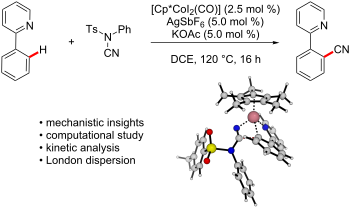
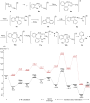
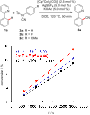
- intermediates and transition states. Keywords: catalysis; C–H activation; density functional theory; London dispersion; reaction mechanisms; Introduction For a long time, large and bulky substituents have intuitively been considered to act through unfavorable steric interactions, although London dispersion
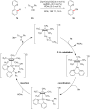
- . Selected intermediates and transition states are shown in Figure 2. The computational analysis starts with the catalytically active cobalt(III) acetate complex 4 which is generated in situ from the precatalyst [Cp*CoI2(CO)], AgSbF6, and KOAc. While the iodine ions are captured by Ag+, carbon monoxide
- coordination of acetic acid leads to intermediate 11a. No transition states could be obtained for the following β-elimination and proto-demetalation resulting in product 3a, the cobalt(III) acetate complex 4, and N-phenyl-p-toluenesulfonamide. All attempts starting from different potential transition state





Synthesis of chiral 3-substituted 3-amino-2-oxindoles through enantioselective catalytic nucleophilic additions to isatin imines
Beilstein J. Org. Chem. 2018, 14, 1349–1369, doi:10.3762/bjoc.14.114

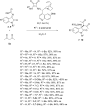
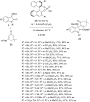
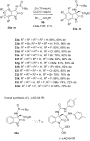
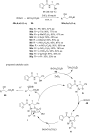
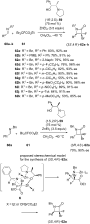
- of these processes (Scheme 11 and Scheme 12) can be explained by the favored transition states proposed in Scheme 12 based on the fact that the proton transfer constitutes the rate-determining step in the aza-Morita–Baylis–Hillman reaction [58][59][60]. Indeed, in these favored transition states, the











[3 + 2]-Cycloaddition reaction of sydnones with alkynes
Beilstein J. Org. Chem. 2018, 14, 1317–1348, doi:10.3762/bjoc.14.113
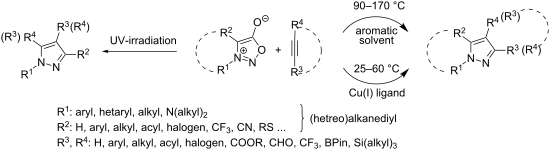
- -diphenyl-1H-pyrazole. The calculated difference in energies of transition states leading to 1,3- and 1,4-diphenyl-1H-pyrazole (4.1 kcal·mol−1 = 17.2 kJ·mol−1) predicts at 140 °C the ratio ≈99:1 which corresponds well with found experimental value >95:5 (see entry 3 in Table 4 [83]). There are only some
- quantum chemical calculations (DFT/B3LYP-6-31G*) [81] steric effects were identified as the main factor influencing the ratio of both regioisomers. These calculations clearly proved the almost apolar character of both possible transition states giving 3- and 4-BPin substituted pyrazoles through bicyclic
- sydnone through the Cu atom in the transition state. This suggestion was supported by Gomez-Bengoa and Harrity et al. [92] who performed thorough quantum calculation of various transition states involving different modes of interaction between 3-phenylsydnone and Cu(I) phenylacetylide (Scheme 16) and


Phosphodiester models for cleavage of nucleic acids
Beilstein J. Org. Chem. 2018, 14, 803–837, doi:10.3762/bjoc.14.68
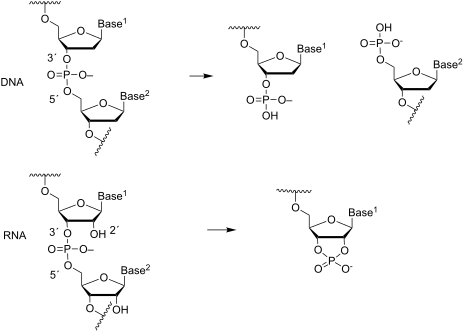
- transfer and metal ion binding, for stabilization of transition states may be elucidated and systematic variation of the basicity of the entering or departing nucleophile enables determination of the position of the transition state on the reaction coordinate. Such data is important on analyzing enzyme
- residues that participate in substrate binding or contribute to formation of high-energy intermediates or transition states during the PO-bond cleavage by protein nucleases [8] or ribozymes [9][10]. Based on this data, energetics of various pathways from the reactants to products may be compared by
- , for stabilization of transition states may be elucidated and systematic variation of the basicity of the entering and departing nucleophile enables determination of the position of the transition state on the reaction coordinate. Such data is important on analyzing enzyme mechanisms based on



Mannich base-connected syntheses mediated by ortho-quinone methides
Beilstein J. Org. Chem. 2018, 14, 560–575, doi:10.3762/bjoc.14.43
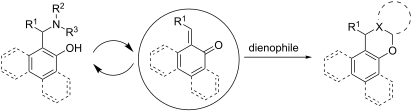
- ]. As reported in both papers, Mannich bases formed 9a–t were isolated in good yields. Plausible reaction pathways were described and the energetic values of the transition states were calculated. In one of the latest publications with respect to this topic, Priya et al. disclosed the synthesis of a


Oxidative cycloaddition of hydroxamic acids with dienes or guaiacols mediated by iodine(III) reagents
Beilstein J. Org. Chem. 2018, 14, 531–536, doi:10.3762/bjoc.14.39
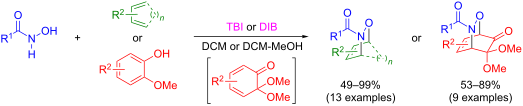
- high endo selectivities of 1,2-oxadines 3aa–3ca, 3ab, and 6 would depend on the avoidance of electrostatic repulsion between the nitrogen lone pairs of acylnitroso species with π-electrons of the electron-rich dienes in the exo transition states (exo-lone-pair effect) [36]. Furthermore, the


Syn-selective silicon Mukaiyama-type aldol reactions of (pentafluoro-λ6-sulfanyl)acetic acid esters with aldehydes
Beilstein J. Org. Chem. 2018, 14, 373–380, doi:10.3762/bjoc.14.25

- silylacetals) 5 in the aldol reactions (Scheme 2). From this enolate, two transition states A and B can be formed for the aldol reactions. B should be less favored due to the steric (and may be also electronic) repulsion of the aryl and the SF5 groups. Consequently, the syn-products resulting from transition


Recent developments in the asymmetric Reformatsky-type reaction
Beilstein J. Org. Chem. 2018, 14, 325–344, doi:10.3762/bjoc.14.21
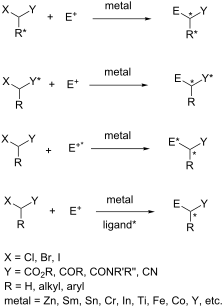
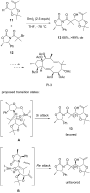
- high stereoselectivity of the process could be explained by to the exclusive formation of the pentacoordinated transition states A and B (Scheme 5). Indeed, steric repulsion between the auxiliary and the bulky dimethyl group prevented a Re attack through transition state B, thus forcing the system to
- last few years, further efforts are required to improve limited substrate scopes, yields, and enantioselectivities. In the future, the involvement of other types of ligands will have to be investigated in these reactions with better understanding of the transition states. More generally, only limited









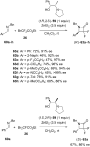
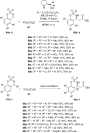


CF3SO2X (X = Na, Cl) as reagents for trifluoromethylation, trifluoromethylsulfenyl-, -sulfinyl- and -sulfonylation. Part 1: Use of CF3SO2Na
Beilstein J. Org. Chem. 2017, 13, 2764–2799, doi:10.3762/bjoc.13.272
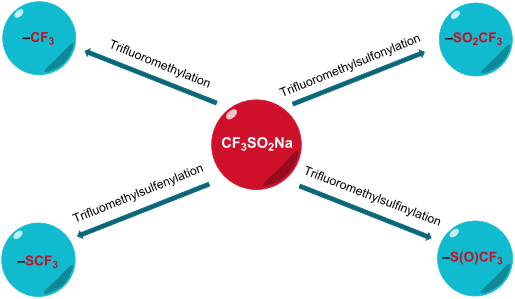
- in the presence of an aryl or an alkyl group. The number of methylene units between the alkene and the tertiary alcohol function was studied: n = 0, 2, and 3 were suitable for generating thermodynamically favoured 3, 5, and 6-membered cyclic transition states; the reaction failed with n = 1, 4


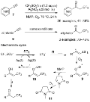

















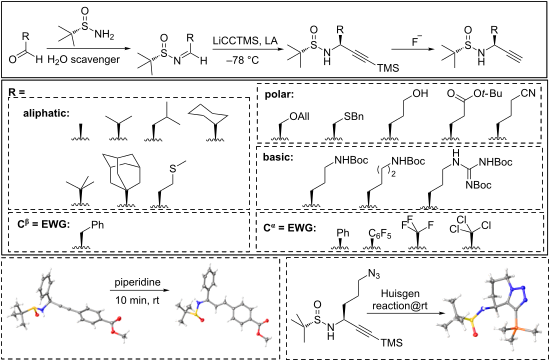
Asymmetric synthesis of propargylamines as amino acid surrogates in peptidomimetics
Beilstein J. Org. Chem. 2017, 13, 2428–2441, doi:10.3762/bjoc.13.240
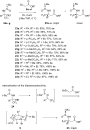
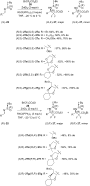
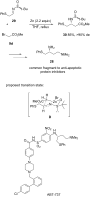
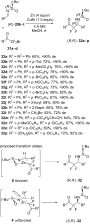
- Kuduk et al. [96], remained unsuccessful. The (S)-configuration of the newly generated chiral center of amine 10k was determined by X-ray structure analysis (Figure 7), suggesting two possible transition states for the ligand transfer. Whereas transition state TII requires only one equivalent of AlMe3
- transition states TI and TII for the transfer of the methyl moiety from AlMe3 to the imino moiety. b) X-ray crystal structure analysis of the methyl transfer product 10k. Base-induced rearrangement of propargylamines bearing electron-withdrawing substituents. Base-catalyzed rearrangement of propargylamines


A mechanochemical approach to access the proline–proline diketopiperazine framework
Beilstein J. Org. Chem. 2017, 13, 2169–2178, doi:10.3762/bjoc.13.217
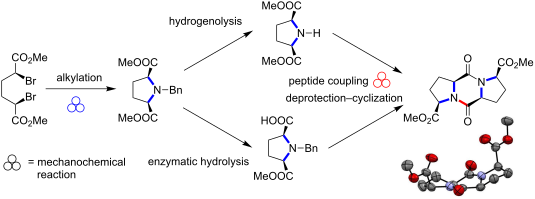
- a concerted C–N bond formation and C–OMe bond cleavage mediated by a solvent methanol molecule acting as both a proton acceptor from N–H and a proton donor to OMe. All the alternative pathways were associated to transition states lying at significantly higher energy not to be observed experimentally
- participation of one solvent molecule. Most H atoms were omitted for clarity. Optimized geometries for the transition states associated to alternate position of the methanol molecule. Most H atoms were omitted for clarity. Retrosynthesis of the Pro–Pro DKP framework. Coupling with N-hydroxysuccinimide-activated


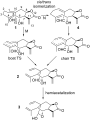
Are boat transition states likely to occur in Cope rearrangements? A DFT study of the biogenesis of germacranes
Beilstein J. Org. Chem. 2017, 13, 1969–1976, doi:10.3762/bjoc.13.192
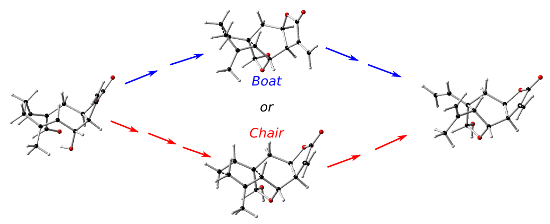
- [64]. The stability of the wave functions of all the transition states was checked. An unrestricted wave function was used to calculate the activation energy of the cis/trans isomerization of the (Z,E)-germacranolide. All energies were reported with zero-point energy corrections and all TS geometries



Enzymatic synthesis of glycosides: from natural O- and N-glycosides to rare C- and S-glycosides
Beilstein J. Org. Chem. 2017, 13, 1857–1865, doi:10.3762/bjoc.13.180
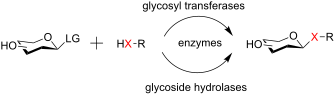
- displacement, both via two distinct oxocarbenium-like transition states [16]. In all three mechanisms, the nucleophilic attack of the acceptor is enhanced by the deprotonation – either by an acid/base residue, like in inverting GT and two-step displacement retaining GT, or the phosphate donor (in an SNi-like
- retention of configuration (Figure 5) as first described by Koshland [53]. However, in the case of GHs, the mechanism generally implies the intervention of two amino acid side chains, typically glutamate or aspartate, and goes through oxocarbenium ion-like transition states. Inverting GHs operate via a




Nucleophilic and electrophilic cyclization of N-alkyne-substituted pyrrole derivatives: Synthesis of pyrrolopyrazinone, pyrrolotriazinone, and pyrrolooxazinone moieties
Beilstein J. Org. Chem. 2017, 13, 825–834, doi:10.3762/bjoc.13.83
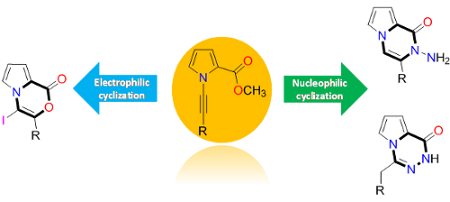
- DFT calculations. Geometrical parameters of reactants, transition states (TS), and products were fully optimized in dichloromethane with the M06 method using the GEN basis set combination 6-31+G(d) and LANL2DZ in the Gaussian 09 software package [33]. Computational details are given in Supporting




How and why kinetics, thermodynamics, and chemistry induce the logic of biological evolution
Beilstein J. Org. Chem. 2017, 13, 665–674, doi:10.3762/bjoc.13.66
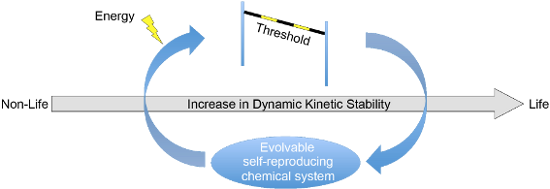
- held far from equilibrium through the energy-fuelled supply of reactive units. Kinetic control. In many chemical reactions leading to different products, the final composition is determined by the height of the kinetic barriers corresponding to transition states (TS‡1 and TS‡2) rather than by the



Exploring endoperoxides as a new entry for the synthesis of branched azasugars
Beilstein J. Org. Chem. 2017, 13, 644–647, doi:10.3762/bjoc.13.63
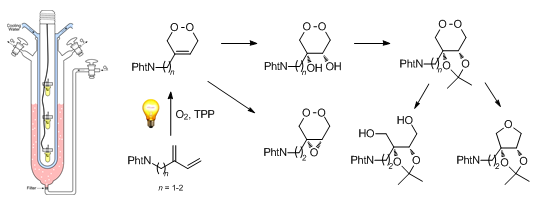
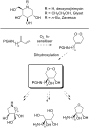
- hydrolysis transition states as well as having many other interesting properties. They are found in nature as pyrrolidines, piperidines, indolizidines, pyrrolizidines or nortropane alkaloids with a variety of ring substituents, typically hydroxy groups, carboxylic acids and amides [1]. The ability of



Dimerization reactions of aryl selenophen-2-yl-substituted thiocarbonyl S-methanides as diradical processes: a computational study
Beilstein J. Org. Chem. 2017, 13, 410–416, doi:10.3762/bjoc.13.44

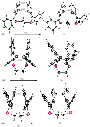
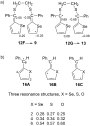
- (12E →12F→ TS3 → 9) with a value of 12.7 kcal/mol. These results are in accordance with the observed formation of the twelve-membered ring of dimer 9 formed in the reaction of 8 [13]. The order of the free energies of the transition states (TS3 < TS4 ≈ TS5) reflects the steric requirement to reach the


The synthesis of α-aryl-α-aminophosphonates and α-aryl-α-aminophosphine oxides by the microwave-assisted Pudovik reaction
Beilstein J. Org. Chem. 2017, 13, 76–86, doi:10.3762/bjoc.13.10
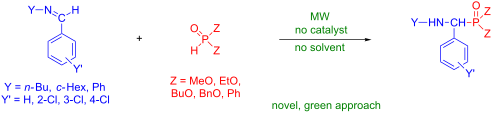
- formed in a single concerted step, via five-membered transition states TS 2, 4, and 5 (Table 9) and the additions are in all cases exothermic. The reactions with dimethyl phosphite are more favorable than those with diphenylphosphine oxide. It can also be seen that the additions to N-benzylideneaniline


New approaches to organocatalysis based on C–H and C–X bonding for electrophilic substrate activation
Beilstein J. Org. Chem. 2016, 12, 2834–2848, doi:10.3762/bjoc.12.283
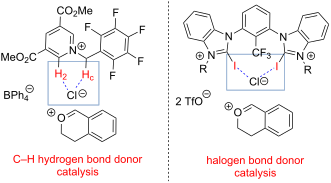
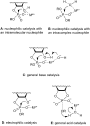
- mimic enzymatic reactions through the electrostatic substrate activation or stabilization of charged transition states or reaction intermediates. At the same time, recent studies highlight the importance of other types of non-covalent interactions such as the activation through the formation of C–H···A








Synthesis of spiro[isoindole-1,5’-isoxazolidin]-3(2H)-ones as potential inhibitors of the MDM2-p53 interaction
Beilstein J. Org. Chem. 2016, 12, 2793–2807, doi:10.3762/bjoc.12.278
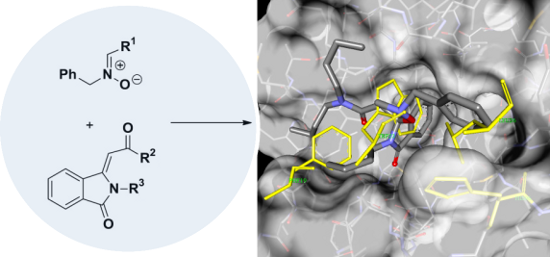
- Thrular’s functional M06 [44] and 6-31+G(d,p) basis set. A simplified model, able to correctly mimic the system, was considered and the reaction between dipolarophile 8 (Z and E) and nitrone 4 (Scheme 3) was studied. The reaction pathway was considered and the transition states leading to the (R,R)-9 or (R


Direct arylation catalysis with chloro[8-(dimesitylboryl)quinoline-κN]copper(I)
Beilstein J. Org. Chem. 2016, 12, 2757–2762, doi:10.3762/bjoc.12.272
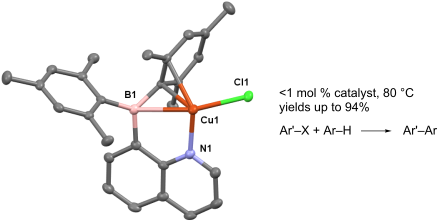
- centers have been proposed by Bacon [68] and were elaborated by Litvak [69] who proposed SET within the 4-membered transition state. It is noteworthy that modern DFT calculations [63] also produce cyclic transition states. Conclusion In conclusion, we observe direct arylation reactions (C–X/C–H; X
- = halogen) catalyzed by a Cu(I) center stabilized by an ambiphilic ligand. The activation of stable sp2 C–H bonds in benzene and naphthalene occurs as a result of the catalysis. We favor a mechanism involving 4-membered cyclic transition states for metalation–deprotonation followed by concerted oxidative





