Search results
Search for "C–H bond" in Full Text gives 223 result(s) in Beilstein Journal of Organic Chemistry. Showing first 200.
Conformational impact of structural modifications in 2-fluorocyclohexanone
Beilstein J. Org. Chem. 2017, 13, 1781–1787, doi:10.3762/bjoc.13.172

- organofluorine compounds affects conformational properties, since it can induce stereoelectronic effects, such as σC–H to σ*C–F hyperconjugative interactions in case of an antiparallel oriented C–H bond. This is the origin of the so-called 'gauche effect', because electronegative C–X bonds do not participate in
- such hyperconjugative interactions and therefore often give way to the C–H bond in occupying the antiperiplanar orientation relative to the C–F bond [2][3][4][5][6]. The electrostatic fluorine gauche effect has also been introduced in cases where the partially negative fluorine interacts with a


Oxidative dehydrogenation of C–C and C–N bonds: A convenient approach to access diverse (dihydro)heteroaromatic compounds
Beilstein J. Org. Chem. 2017, 13, 1670–1692, doi:10.3762/bjoc.13.162
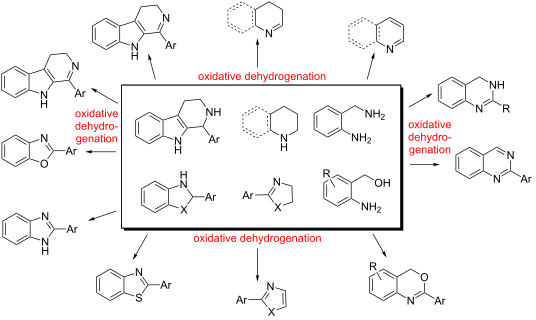
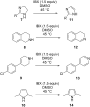
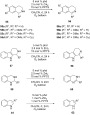
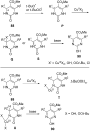
- and when 40b was reacted with 2 equivalents of the same reagent, it afforded 41. The ester functionality on 40b facilitated the complete aromatization of the ring to afford the desired products (Scheme 11). It is always a tedious effort to activate a sp3 C–H bond towards any transformation. A method








Direct catalytic arylation of heteroarenes with meso-bromophenyl-substituted porphyrins
Beilstein J. Org. Chem. 2017, 13, 1524–1532, doi:10.3762/bjoc.13.152
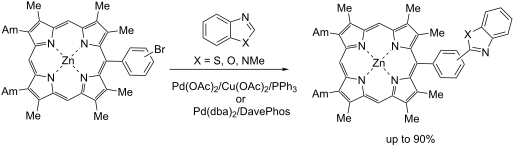
- the use of dioxane instead of DMF and the decrease in the reaction temperature down to 100 °C, did not notably change the yield of 3 (34%, Table 1, entry 3). The use of porphyrin in excess diminished the yield (Table 1, entry 4). The reaction of benzoxazole with a more acidic C–H bond resulted in a
- high yield of the coupling product 4 (83%, Table 1, entry 5), though equimolar amounts of starting compounds were used. It means that the nature of the C–H bond is crucial for the result of the coupling and the nature of the catalytic system including the solvent should be adjusted to the certain pair


Synthesis of alkynyl-substituted camphor derivatives and their use in the preparation of paclitaxel-related compounds
Beilstein J. Org. Chem. 2017, 13, 1230–1238, doi:10.3762/bjoc.13.122
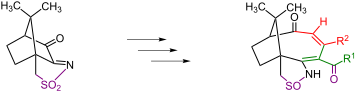
- all atoms of the starting material are found in the product, and thus fulfil an important requirement of “green chemistry” [31]. However, a different Pt(II)-catalysed reaction cascade was observed for 4c, with adamantyl groups at the alkynes. Here, the annulation step is followed by a C–H bond


Regioselective (thio)carbamoylation of 2,7-di-tert-butylpyrene at the 1-position with iso(thio)cyanates
Beilstein J. Org. Chem. 2017, 13, 1032–1038, doi:10.3762/bjoc.13.102
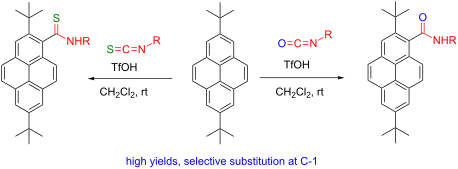
- syntheses of various products (especially heterocycles) [21][22]. Furthermore, aromatic amides undergo a variety of directed C–H bond functionalizations [23]. Herein we report that the reaction of 2 with aliphatic isocyanates and isothiocyanates proceeds regioselectively at the 1-position (Scheme 1




Transition-metal-catalyzed synthesis of phenols and aryl thiols
Beilstein J. Org. Chem. 2017, 13, 589–611, doi:10.3762/bjoc.13.58

- investigation revealed that HFIP participated in the catalytic cycle before the activation of C–H bond. 1.2.2.2 Carboxylic acid, ketone and their derivatives as directing groups: In 2009, the Yu group used Pd(OAc)2 and accomplished the direct ortho-hydroxylation of benzoic acid [69]. Their developed protocol
- hydroxylation of arenes: In 2012, Ackermann and co-workers used [Ru(O2CMes)2(p-cymene)] as catalyst to achieve the C–H bond oxygenation of N-substituted benzamides in TFA/TFAA. The reaction proceeded in the presence of PhI(OAc)2 as oxidant at 120 °C (Scheme 46) [75]. A broad scope of functional groups could be


The reductive decyanation reaction: an overview and recent developments
Beilstein J. Org. Chem. 2017, 13, 267–284, doi:10.3762/bjoc.13.30
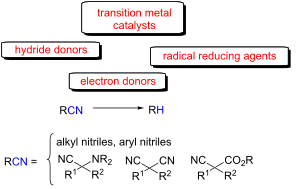
- removal of a beneficial functional group. The electron-withdrawing properties of the nitrile functional group appear beneficial in a variety of reactions [1][2]. This group coordinates metal complexes and can be used as a directing group for C–H bond activation reactions catalyzed by transition metals [3


New approaches to organocatalysis based on C–H and C–X bonding for electrophilic substrate activation
Beilstein J. Org. Chem. 2016, 12, 2834–2848, doi:10.3762/bjoc.12.283
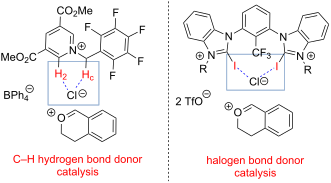
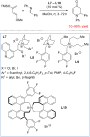
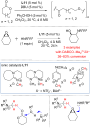
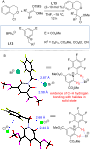
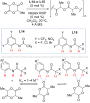
- evidence for two hydrogen bonds formed between the halide or bromide anion and C–H2/C–Hc bonds of another cation L13. Mixed N–H/C–H hydrogen bond donors as organocatalysts The involvement of the ortho C–H bond in the binding event with Lewis-basic sites was proposed by Etter in the late 1980s and later






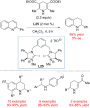


Direct arylation catalysis with chloro[8-(dimesitylboryl)quinoline-κN]copper(I)
Beilstein J. Org. Chem. 2016, 12, 2757–2762, doi:10.3762/bjoc.12.272
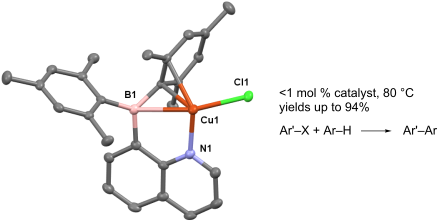
- addition/reductive elimination. The scope of reactivity, including functional group tolerance on the reactants, types of C–H bonds that can be activated, selectivity of C–H bond activation, further optimization studies, and new catalyst design will be topics for further study. The initial results are very


Copper-catalyzed asymmetric sp3 C–H arylation of tetrahydroisoquinoline mediated by a visible light photoredox catalyst
Beilstein J. Org. Chem. 2016, 12, 2636–2643, doi:10.3762/bjoc.12.260
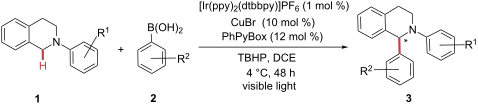
- process despite the advances that have been made in this field [1]. The directing group strategies are widely used and developed to achieve enantioselective metal-catalyzed C–H bond functionalizations in recent years. Unactivated alkyl C–H bond activation (i.e., without any directing group) is of great
- allow us to design a visible-light-mediated photoredox asymmetric arylation of tetrahydroisoquinolines (THIQs) [15][16][17][18][19][20]. During the last decade, numerous examples of sp3 C–H bond arylation procedures have been developed [1][21][22][23][24][25][26][27][28][29]. In 2008, our group




Radical polymerization by a supramolecular catalyst: cyclodextrin with a RAFT reagent
Beilstein J. Org. Chem. 2016, 12, 2495–2502, doi:10.3762/bjoc.12.244
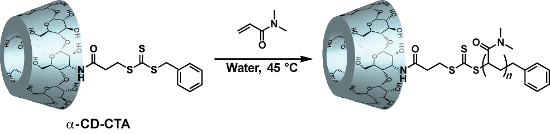
- , including hydrolysis reactions [10][11][12][13][14][15], C–H bond activation [34][35][36], olefin epoxidation [37][38][39], Diels–Alder reactions [40][41][42], 1,3-dipole cycloadditions [43][44], and polymerizations [45][46][47], among others. Selective substrate recognition and activation are essential


Regiocontroled Pd-catalysed C5-arylation of 3-substituted thiophene derivatives using a bromo-substituent as blocking group
Beilstein J. Org. Chem. 2016, 12, 2197–2203, doi:10.3762/bjoc.12.210
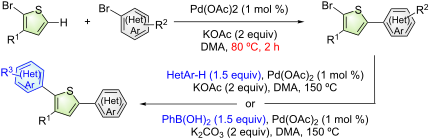
- “green” access to arylated thiophene derivatives as it reduces the number of steps to prepare these compounds and also the formation of wastes. Keywords: aryl bromides; C–H bond activation; catalysis; direct arylation; palladium; thiophenes; Introduction Thiophene derivatives bearing aryl substituents




Experimental and theoretical investigations on the high-electron donor character of pyrido-annelated N-heterocyclic carbenes
Beilstein J. Org. Chem. 2016, 12, 1884–1896, doi:10.3762/bjoc.12.178
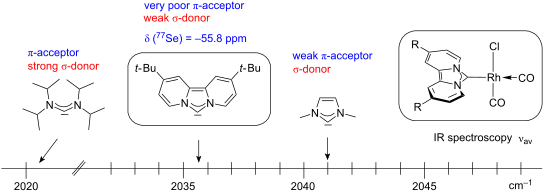
- -donor character (deduced directly from the larger 1JCH coupling constant of the respective imidazolium salts that correlates with the higher s-character in the C–H bond). Therefore, we expected the average CO stretching frequencies to lie about 15 cm−1 higher at around 2050 cm−1 for complexes 2a and 2b


Cp2TiCl/D2O/Mn, a formidable reagent for the deuteration of organic compounds
Beilstein J. Org. Chem. 2016, 12, 1585–1589, doi:10.3762/bjoc.12.154
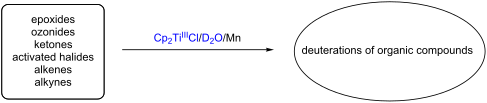
- for both species, which in turn, is dependent upon the zero point for the vibrational energy of both isotopic molecules. As the mass of deuterium is about twice the mass of hydrogen there is a larger activation energy for the C–D bond dissociation than for the C–H bond [4]. The KIE observed allows


Reactivity studies of pincer bis-protic N-heterocyclic carbene complexes of platinum and palladium under basic conditions
Beilstein J. Org. Chem. 2016, 12, 1334–1339, doi:10.3762/bjoc.12.126
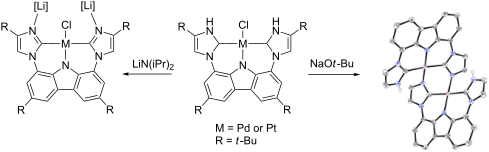
- and of the C–H bond of acetylene. The same ligand in CpRu complexes 2 and 3 showed heterolysis of dihydrogen [13]. 1 had a much faster ligand exchange rate after ionization as compared to the Cp*Ir analog (ethylene bound in 5 min at rt (CpRu) instead of 16 h at 70 °C (Cp*Ir)). Species 1 could be


Synthesis of 2-substituted tetraphenylenes via transition-metal-catalyzed derivatization of tetraphenylene
Beilstein J. Org. Chem. 2016, 12, 1302–1308, doi:10.3762/bjoc.12.122
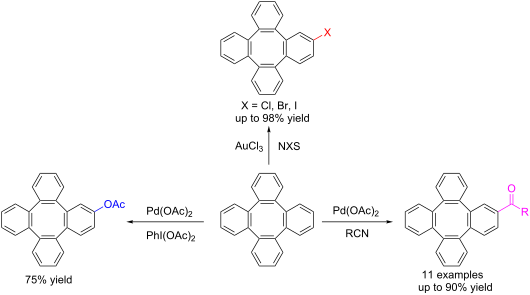
- into other functionalities [58][59]. The Larock group reported a novel Pd-catalyzed addition of nitriles to an arene C–H bond for the synthesis of aryl ketones [60][61]. Following the Larock’s conditions, we investigated the carbonylation of tetraphenylene (1) and the carbonylated product 5a was


Conjugate addition–enantioselective protonation reactions
Beilstein J. Org. Chem. 2016, 12, 1203–1228, doi:10.3762/bjoc.12.116
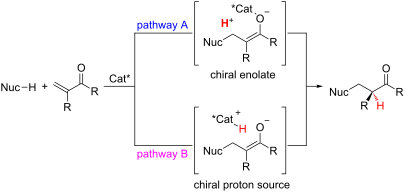
- ). Insertion into the C–H bond of 65 provides intermediate 70, which then undergoes migratory insertion into acrylate 66 to give 71. β-Hydride elimination to give the α,β-disubstituted acrylate 72 followed by enantioselective hydride transfer generates the chiral tertiary center in 73. Finally


Synthesis of β-arylated alkylamides via Pd-catalyzed one-pot installation of a directing group and C(sp3)–H arylation
Beilstein J. Org. Chem. 2016, 12, 1122–1126, doi:10.3762/bjoc.12.108
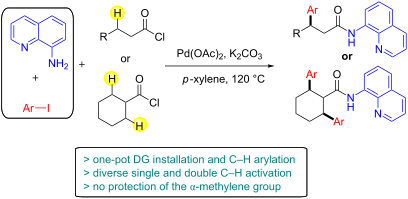
- .12.108 Abstract The synthesis of β-arylated alkylamides via alkyl C–H bond arylation has been realized by means of direct one-pot reactions of acyl chlorides, aryl iodides and 8-aminoquinoline. Depending on the structure of the starting materials, both single and double β-arylated alkylamides could be


Cationic Pd(II)-catalyzed C–H activation/cross-coupling reactions at room temperature: synthetic and mechanistic studies
Beilstein J. Org. Chem. 2016, 12, 1040–1064, doi:10.3762/bjoc.12.99
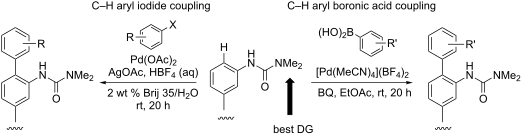
- transformations. Three approaches (Figure 1) have generally been employed to enhance the reactivity and promote the key metalation/C–H bond cleavage step: (1) tuning of the reaction conditions through inclusion of various additives such as metal salts [1][2][3][4][5][6][7][8][9][10][11][12][13][14][15][16][17][18
- [72][73][74][75][76][77][78][79]. Literature studies have suggested that certain anionic ligands on palladium, such as acetate or carbonate, may assist C–H bond cleavage by acting as internal bases as part of a concerted metalation–deprotonation (CMD) pathway, particularly in the case of less electron
- Although aromatic C–H bond activation through palladacycle [214] generation is a critical step in the ortho-directed, activation/cross-coupling sequence, many of its specific mechanistic features are still controversial. Previous studies with arylureas [73][206][215] have formulated a palladacycle as the






Catalytic asymmetric synthesis of biologically important 3-hydroxyoxindoles: an update
Beilstein J. Org. Chem. 2016, 12, 1000–1039, doi:10.3762/bjoc.12.98
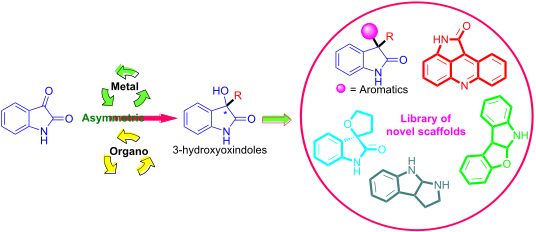
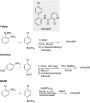
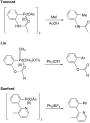
- Recently, iridium has emerged as a powerful catalyst for C–H bond functionalization [20][21][22][23]. In 2014, Yamamoto and co-workers reported a cationic iridium complex catalyzed asymmetric intramolecular hydroarylation of α-ketoamides, yielding 3-substituted 3-hydroxy-2-oxindoles with high
- plausible catalytic cycle was proposed as shown in Scheme 8: [Ir(cod)2](BArF4) and the ligand L4 formed the [Ir] precatalyst in situ, which then activated a C–H bond of the substrate to generate aryl–iridium complex A. Subsequent intramolecular asymmetric hydroarylation of intermediate B produced iridium




The synthesis of functionalized bridged polycycles via C–H bond insertion
Beilstein J. Org. Chem. 2016, 12, 985–999, doi:10.3762/bjoc.12.97
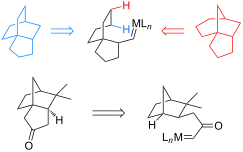
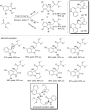
- via C–H bond insertion by carbenes and nitrenes. Applications to natural product synthesis, a description of the essential elements in substrate-controlled reactions, and mechanistic details of transformations are presented. Overall, these transformations allow the construction of important ring
- systems rapidly and efficiently, though additional catalyst development is needed. Keywords: bridged rings; carbene; cascade reaction; C–H bond insertion; nitrene; Introduction Bridged polycyclic natural products are an inviting challenge to the synthetic chemist for their rich display of functional
- access to multiple targets from a single intermediate produced on large scale that may be stored until needed [17]. The C–H bond insertion has great potential as a method to access different polycyclic isomers (e.g., 1 or 3) through C–C or C–N bond formation from a carbene or nitrene, respectively




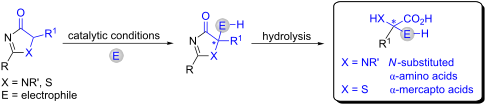
1H-Imidazol-4(5H)-ones and thiazol-4(5H)-ones as emerging pronucleophiles in asymmetric catalysis
Beilstein J. Org. Chem. 2016, 12, 918–936, doi:10.3762/bjoc.12.90
- being necessary for catalyst activity (Figure 4a) [87][88][89]. In 2010 Zhong proposed that the presence of the ortho C–H bond of the aryl group could be the key for success because it could participate together with the thiourea function in the activation of the electrophile [90]. This proposal was in








Recent advances in C(sp3)–H bond functionalization via metal–carbene insertions
Beilstein J. Org. Chem. 2016, 12, 796–804, doi:10.3762/bjoc.12.78

- development of intermolecular C–H insertion in the application of C(sp3)–H bond functionalizations, especially for light alkanes, is reviewed. The challenging problem of regioselectivity in C–H bond insertions has been tackled by the use of sterically bulky metal catalysts, such as metal porphyrins and silver
- (I) complexes. In some cases, high regioselectivity and enantioselectivity have been achieved in the C–H bond insertion of small alkanes. This review highlights the most recent accomplishments in this field. Keywords: alkane; diazo compounds; C–H bond functionalization; C–H bond insertion; metal
- has witnessed some exciting advances along this line. Thus, it would be an appropriate time to summarize the field in connection with direct C–H bond functionalization. Since catalytic metal–carbene C(sp3)–H bond insertions have been discussed in a series of excellent reviews [1][2][3][4][5][6][7][8


Opportunities and challenges for direct C–H functionalization of piperazines
Beilstein J. Org. Chem. 2016, 12, 702–715, doi:10.3762/bjoc.12.70
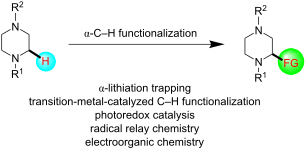
- , path b). Although there have been major advancements made in the field of direct sp3 C–H bond activation and functionalization adjacent to nitrogen in saturated N-heterocycles and acyclic amines [25][26][27], C–H functionalization of piperazines has been a daunting challenge. In comparison to the well
- -studied pyrrolidine and piperidine systems, the existence of the second ring-bound nitrogen in piperazines either causes various side reactions or inhibits or diminishes the reactivity of the C–H bond. This review summarizes the current status and challenges of direct C–H bond functionalization of
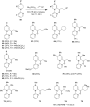
- . Transition-metal-catalyzed α-C–H functionalization Transition-metal-catalyzed direct sp3 C–H bond functionalization at the α-carbon of both cyclic and acyclic amines have been a fertile research field [45][46][47]. In the case of saturated N-heterocycles however, most of the efforts have been focused on




Cascade alkylarylation of substituted N-allylbenzamides for the construction of dihydroisoquinolin-1(2H)-ones and isoquinoline-1,3(2H,4H)-diones
Beilstein J. Org. Chem. 2016, 12, 301–308, doi:10.3762/bjoc.12.32
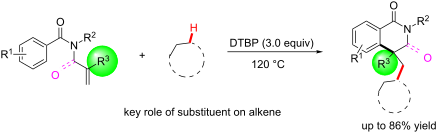
- )-diones in good yield. Keywords: C(sp3)–H bond functionalization; cyclization; dihydroisoquinolin-1(2H)-one; N-allylbenzamides; oxidation; Introduction The direct and selective functionalization of an unactivated sp3 C–H bond, which belongs to an effective strategic approach in green and sustainable