


Search results
Search for "alcohol" in Full Text gives 1191 result(s) in Beilstein Journal of Organic Chemistry. Showing first 200.
Polymer degrading marine Microbulbifer bacteria: an un(der)utilized source of chemical and biocatalytic novelty
Beilstein J. Org. Chem. 2024, 20, 1635–1651, doi:10.3762/bjoc.20.146
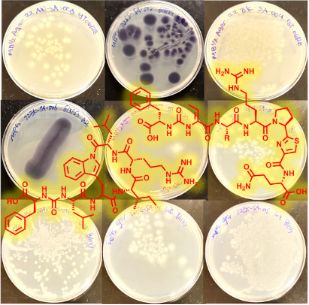
- alcohol, isopropyl alcohol, and toluene) increased the reactivity of MtCh509 relative to the aqueous system, representing the first solvent‑tolerant chitinase from Microbulbifer species and its potential applications in industrial processes [50]. rChi1602 exhibited maximal activity at 60 °C and over a




Benzylic C(sp3)–H fluorination
Beilstein J. Org. Chem. 2024, 20, 1527–1547, doi:10.3762/bjoc.20.137

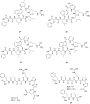
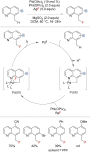
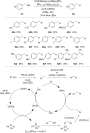
- optimisation campaign. The fluorinated alcohol HFIP was used to dissolve caesium fluoride allowing for the electrochemical benzylic fluorination by Fuchigami, Inagi and co-workers in 2021 (Figure 40) [98]. The HFIP/CsF system functioned as both a fluoride source and as supporting electrolyte, enabling the
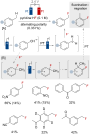
- PEG and CsF. Electrochemical benzylic C(sp3)–H fluorination with caesium fluoride and fluorinated alcohol HFIP. Electrochemical secondary and tertiary benzylic C(sp3)–H fluorination. GF = graphite felt. DCE = 1,2-dichloroethane. Electrochemical primary benzylic C(sp3)–H fluorination of electron-poor








Selectfluor and alcohol-mediated synthesis of bicyclic oxyfluorination compounds by Wagner–Meerwein rearrangement
Beilstein J. Org. Chem. 2024, 20, 1462–1467, doi:10.3762/bjoc.20.129
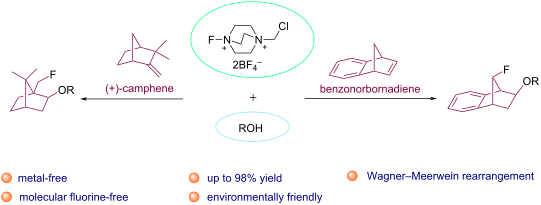
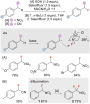
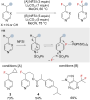
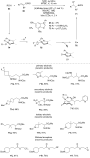
- benzonorbornadiene (1a), the reactions of benzonorbornadiene (1a) with selectfluor and 10 different alcohol derivatives were examined (Scheme 1). Under optimum conditions, fluoroalkoxy compounds 3a–j were obtained in excellent yields (91–98%) by the reaction of benzonorbornadiene (1a) with selectfluor and alcohols
- selectfluor and a carbocation is formed by bonding with fluorine. Subsequently, fluoroalkoxy compound 4 is formed by Wagner–Meerwein rearrangement followed by alcohol addition and deprotonation. Conclusion New bicyclic fluoroalkoxy compounds were synthesized by a molecular fluorine and metal-free methodology
- mmol of benzonorbornadiene (1a), 0.6 mmol of selectfluor, and 1.2 mmol alcohol in 2 mL of CH3CN at 90 °C for 2 h. Isolated yields. Oxyfluorination of (+)-camphene (1b) with selectfluor and alcohols. All reactions were carried out using 0.5 mmol of (+)-camphene, 0.6 mmol of selectfluor, and 1.2 mmol


Challenge N- versus O-six-membered annulation: FeCl3-catalyzed synthesis of heterocyclic N,O-aminals
Beilstein J. Org. Chem. 2024, 20, 1412–1420, doi:10.3762/bjoc.20.123
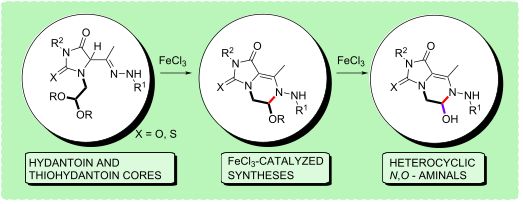
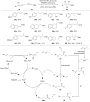
- , in this case, the formation of carbinolamine 6a becomes predominant (45%), despite a small quantity of N,O-aminal 5j (14%) is also produced, by virtue of the alcohol released from the starting acetal 4j. Probably, the higher water concentration in acetonitrile shifts the equilibrium in favour of 6a
- over the time (Scheme 4). Within our proposed catalytic cycle, when compound 4j is utilized, methanol is released, due to the presence of a dimethyl acetal residue. Therefore, using molecular sieves (MS 4 Å) little alcohol molecules, such as MeOH, can be potentially trapped, allowing the insertion of a
- more encumbered alcohol, such as benzyl alcohol, which is not sequestered by MS 4 Å. As a matter of fact, the new benzylated N,O-aminal 7 was successfully obtained in 70% isolated yield as the sole product (experiment D, Scheme 5). In this latter case, the benzyl alcohol presumably reacts with the


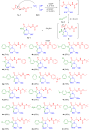


Synthetic applications of the Cannizzaro reaction
Beilstein J. Org. Chem. 2024, 20, 1376–1395, doi:10.3762/bjoc.20.120
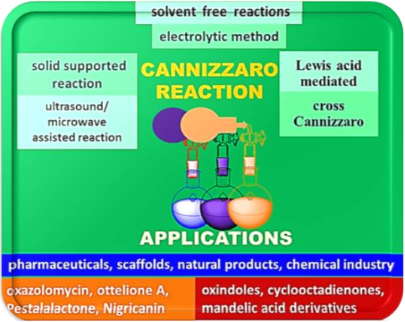
- synthetic tool for the construction of functionalized molecules. Dating back to the 19th century, this reaction, though initially used for the synthesis of an alcohol and acid functionality from aldehydes, has henceforth proven useful to generate diverse molecular entities using both intermolecular and
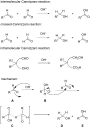
- aldehyde molecules, forming an alcohol and an acid [1][2][3][4]. Since its discovery in 1853, the Cannizzaro reaction has emerged as an important reaction in synthetic organic chemistry with intermolecular, crossed, and intramolecular versions as demonstrated by numerous applications. Notably, the
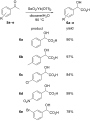
- produce a carboxylic acid (R1CO2H) and a primary alcohol (R1CH2OH). When a mixture of formaldehyde (HCHO) and a non-enolizable aldehyde (R1CHO) is treated with a strong base, the latter is preferentially reduced to the alcohol (R1CH2OH) while formaldehyde is oxidized to formic acid (HCO2H). Herein excess








Generation of alkyl and acyl radicals by visible-light photoredox catalysis: direct activation of C–O bonds in organic transformations
Beilstein J. Org. Chem. 2024, 20, 1348–1375, doi:10.3762/bjoc.20.119
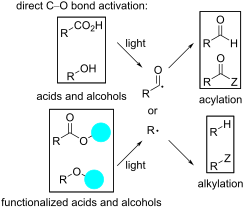
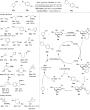
- (Scheme 16). This one-pot strategy involved the reaction of xanthates formed in situ with electron-deficient alkenes under visible-light photoredox conditions in the presence of PPh3. This approach did not require multistep synthesis of starting materials. In addition, alcohol groups in polyols could be
- converted rather selectively in the order tertiary alcohol< secondary alcohol < primary alcohol. They also proposed a mechanism, which is outlined in Scheme 16. The first step involves deprotonation of alcohol in the presence of base and nucleophilic attack of CS2 to generate a xanthate salt intermediate
- , functionalization of alcohols is required, which requires an additional step. Therefore, it is quite interesting to directly employ alcohols for creating carbon-centered radicals that facilitate photomediated organic transformations. In this section, we will discuss some methods where alcohol C–O bonds were








Computation-guided scaffold exploration of 2E,6E-1,10-trans/cis-eunicellanes
Beilstein J. Org. Chem. 2024, 20, 1320–1326, doi:10.3762/bjoc.20.115

- implies that protonation and cyclization may be concerted for that conformer (Figure S4, Supporting Information File 1). We previously transformed 2 into the trans,trans-6/6/6-tricyclic C6 alcohol 8 using mCPBA to epoxidize the C6–C7 alkene [7]. Under the same conditions, epoxidation of 1 yielded the 6,7


Domino reactions of chromones with activated carbonyl compounds
Beilstein J. Org. Chem. 2024, 20, 1256–1269, doi:10.3762/bjoc.20.108
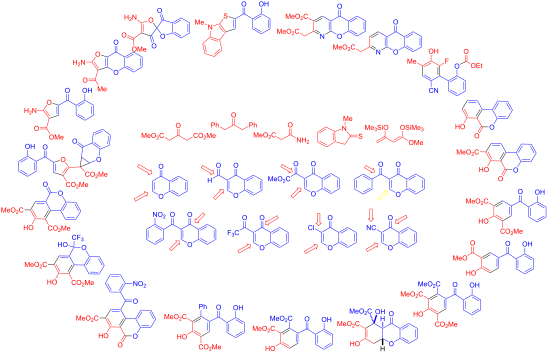
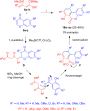
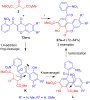
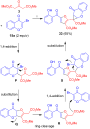
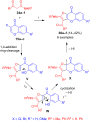
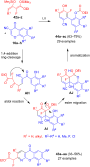
- alcohol and oxidation of the latter resulted in formation of the final product. The reason for the change of the regioselectivity of cyclization, as compared to the formation of products 36, remains unclear at present. The reaction of 3-halochromones with 3H-indole-2-thiones (thiooxindoles) 38a–c afforded









Stability trends in carbocation intermediates stemming from germacrene A and hedycaryol
Beilstein J. Org. Chem. 2024, 20, 1189–1197, doi:10.3762/bjoc.20.101
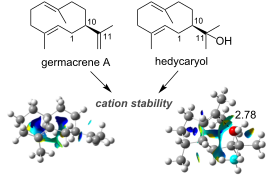
- in a terpene hydrocarbon, or through nucleophilic water attack, yielding a terpene alcohol [5]. To date, about 80,000 terpenes and terpenoids have been discovered [3], approx. 10% of which are sesquiterpenes, composed of 15-carbon skeletons [6][7]. Sesquiterpenes are mainly distributed in plants and
- (Scheme 1) [16]. As an alternative to deprotonation, the germacradienyl cation can be captured by water to yield the sesquiterpene alcohol hedycaryol, which is an important intermediate towards the synthesis of sesquiterpene alcohols [17]. The reprotonation of (R)-(+)-1 germacrene A or hedycaryol at the


Bismuth(III) triflate: an economical and environmentally friendly catalyst for the Nazarov reaction
Beilstein J. Org. Chem. 2024, 20, 1167–1178, doi:10.3762/bjoc.20.99
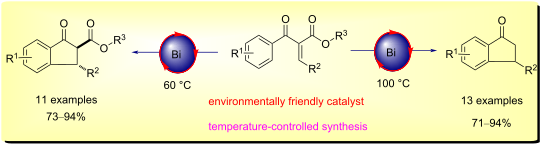
- synthesis has been reported for several transformations, such as epoxide opening [56], ketal formation and deprotection [57][58], Mannich reaction [59], intramolecular Sakurai cyclization [60], alcohol oxidation [61], aromatic hydrocarbon nitration [62], imine allylation [63], Knoevenagel condensation [64
- according to well-established protocols [71][72][73][74]. The β-ketoesters were obtained employing a sequence of two reactions, the formation of the benzylic alcohol derivative, through a Reformatsky reaction using In(0), followed by a pyridinium chlorochromate (PCC) oxidation, giving the β-ketoesters 7a–g




Manganese-catalyzed C–C and C–N bond formation with alcohols via borrowing hydrogen or hydrogen auto-transfer
Beilstein J. Org. Chem. 2024, 20, 1111–1166, doi:10.3762/bjoc.20.98
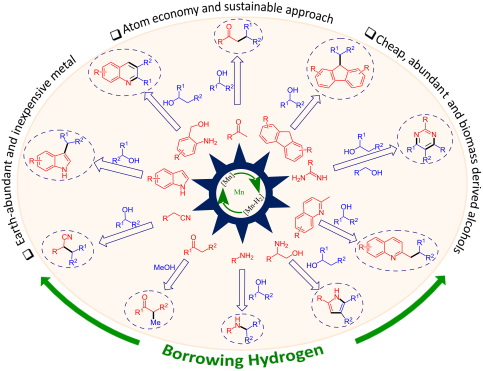
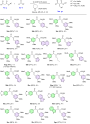
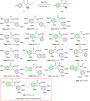
- friendly and atom-economical process for C–C and C–N bond formations utilizing alcohol as an alkylating agent and hydrogen donor, producing water as the only side-product [6][7][8][9]. Notably, alcohols are inexpensive, abundant and can be obtained from biomass, which makes this method even more attractive
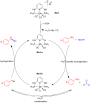
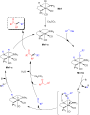
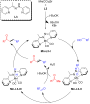
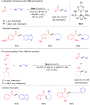
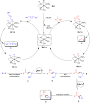
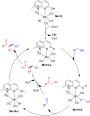
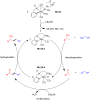
- to the scientific community [10][11][12]. In this process, first, the metal-catalyzed dehydrogenation of the alcohol provides a reactive substrate for coupling with nucleophiles and the active metal hydride species. Later, the borrowed hydrogen is used in the final step to reduce unsaturated
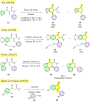
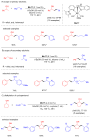
- synthesis of amines and imines using Mn-pincer catalyst [37]. When t-BuOK (1 equiv) was used as a base, alkylated amine products were observed selectively using alcohol as an alkylating agent, whereas when t-BuONa (1.5 equiv) was used as base, alkylated imine products were isolated (Scheme 6). This























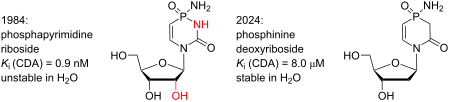
Synthesis of 1,4-azaphosphinine nucleosides and evaluation as inhibitors of human cytidine deaminase and APOBEC3A
Beilstein J. Org. Chem. 2024, 20, 1088–1098, doi:10.3762/bjoc.20.96
- phosphinic acid 7 was further protected with benzyl alcohol by a procedure adopted from reference [67] using TBTU and Et3N in refluxing dichloroethane. Compound 8 was obtained in 65% yield after silica gel column chromatography. To synthesise a nucleobase for nucleosides Va and Vb, we first obtained
- dichlorophosphane 9 from commercially available PCl3 and ethyl vinyl ether using a previously published procedure [68]. Compound 9 reacted with 1 equiv of benzyl alcohol in absolute Et2O and pyridine at −78 °C, followed by quenching of the reaction mixture with H2O. This procedure provided phosphinate 10 in more


Carbonylative synthesis and functionalization of indoles
Beilstein J. Org. Chem. 2024, 20, 973–1000, doi:10.3762/bjoc.20.87
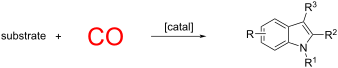
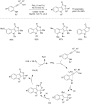
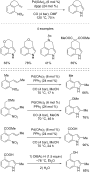
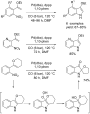
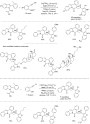
- functionalization of indoles to 3-substituted indoles Functionalization through direct C–H alkoxycarbonylation The transition-metal-catalyzed carbonylation of aryl halides, triflates, and tosylates with carbon monoxide and an alcohol was first pioneered by Heck and co-workers in 1974 [64][65]. Since then, this












Innovative synthesis of drug-like molecules using tetrazole as core building blocks
Beilstein J. Org. Chem. 2024, 20, 950–958, doi:10.3762/bjoc.20.85
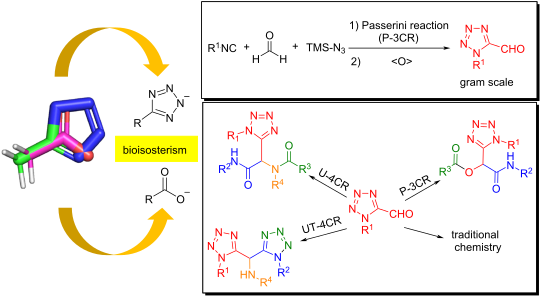
- of tetrazole building blocks which provides the handle of alcohol functionality and further oxidation serves as an oxo component in subsequent MCRs (Figure 1d). The synthesis of oxo-tetrazoles was targeted because of the prevalence of the aldehyde substrate in MCRs and their use in medicinal
- isocyanide) in the developed methodology provides multiple opportunities for various further chemical manipulations, easy access of 1H-tetrazole moieties, and great orthogonal functional group compatibility. First, the tetrazole building blocks were prepared on a multi‐gram scale to access the free alcohol




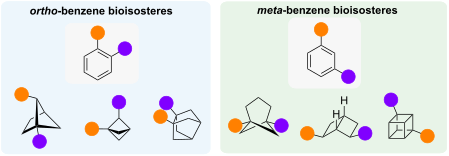
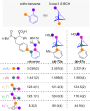
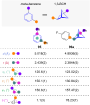
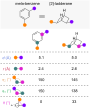
(Bio)isosteres of ortho- and meta-substituted benzenes
Beilstein J. Org. Chem. 2024, 20, 859–890, doi:10.3762/bjoc.20.78
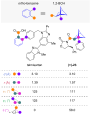
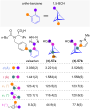
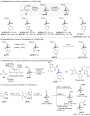
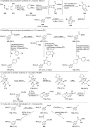
- itself accessible in good yields from allyl chloride 1 using a route based on that reported by Schlüter [28]. Bifunctional 1,2-BCP (±)-4 bearing orthogonally protected alcohol functionalities was obtained from 3a through a three-step sequence of strain-release radical ring-opening with iodochloromethane
- , deiodination at the bridgehead position, and nucleophilic substitution at the alkyl chloride. From 1,2-BCP (±)-4, a variety of 1,2-BCPs were prepared through basic chemical transformations (Scheme 1B) [26]. Selective deprotection gave access to free alcohol-containing 1,2-BCPs (±)-5 and (±)-8. Oxidation and
- esterification of alcohol (±)-5 gave redox active ester (±)-6, which was itself shown to be a suitable substrate for nickel-catalysed decarboxylative cross coupling reactions to aryl-substituted BCPs (±)-7. Oxidation of alcohol (±)-8 gave acid (±)-9 which yielded amine (±)-10 after a Curtius rearrangement














Skeletal rearrangement of 6,8-dioxabicyclo[3.2.1]octan-4-ols promoted by thionyl chloride or Appel conditions
Beilstein J. Org. Chem. 2024, 20, 823–829, doi:10.3762/bjoc.20.74
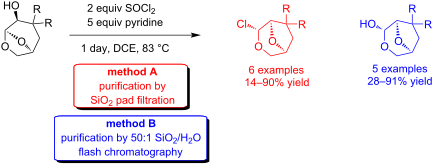
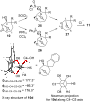
- the acetal in 3 and 6 to the neighbouring C4-position (Figure 1) [19][20]. A variety of products were reported resulting from fluorination as well as the skeletal rearrangement, with the reaction outcome highly substrate-dependent. A key finding in this work was that the configuration of the alcohol
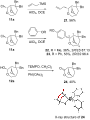
- biological ribosides. This prompted an investigation of the scope of the SOCl2-mediated rearrangement, with the aim of producing useful chiral materials for synthesis. Results and Discussion The set of bicyclic systems 10a–f with a C4 alcohol were prepared starting with cyrene (2) by alkylation and then
- the exo-face. This process was used to prepare the known compounds 10a–c, and the novel materials 10d–f [9]. Thus, the reaction of o-dibromoxylene with cyrene gave the alcohol 10d in 71% yield over two-steps through the spirocyclic ketone 9d. Alkylation of 2 with methyl iodide gave an inseparable


Discovery and biosynthesis of bacterial drimane-type sesquiterpenoids from Streptomyces clavuligerus
Beilstein J. Org. Chem. 2024, 20, 815–822, doi:10.3762/bjoc.20.73
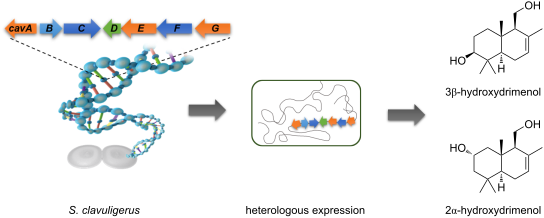
- DL10092 displayed a new peak in its HPLC profile compared to the control of wild-type E. coli BL21 (DE3) (see Figure S9 in Supporting Information File 1). The fermented product appeared as an alcohol, likely due to the activity of the endogenous hydrolase in E. coli. The retention time of the new peak was


Advancements in hydrochlorination of alkenes
Beilstein J. Org. Chem. 2024, 20, 787–814, doi:10.3762/bjoc.20.72
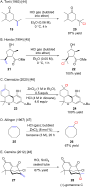
- solution of HCl, even in the presence of secondary alcohol and ester functionalities (Scheme 5B) [45]. An application in the synthesis of Δ9-tetrahydrocannabutol, the butyl homologue of Δ9-tetrahydrocannabinol (Δ9-THC), is outlined in Scheme 5C [46]. In this case, ZnCl2 was employed as a catalyst, but
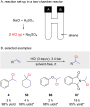
- potential safety hazards, especially in large-scale reactions [53]. Instead of acetyl chlorides, various other reagents, including pivaloyl chloride, oxalyl chloride, SOCl2, and TMSCl, can be employed to generate HCl. Numerous proton donors, such as water, alcohol, phenol, or acidic C–H groups, have been
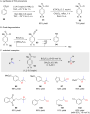
- 18A). The reaction worked exclusively for reactive alkenes such as 1,1-disubstituted or trisubstituted alkenes. No conversion was observed for terminal alkenes and 1,2-substituted alkenes. When exposing citronellol (122) to the reaction conditions, the alcohol was rapidly converted to the acetate and






Substrate specificity of a ketosynthase domain involved in bacillaene biosynthesis
Beilstein J. Org. Chem. 2024, 20, 734–740, doi:10.3762/bjoc.20.67
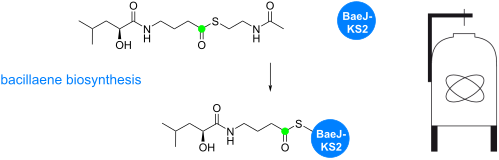
- are suggested not to catalyse elongations, but the KS domains of modules 5 and 9 may only act in the translocation of the intermediate from the ACP of the previous module to the ACP of modules 5 and 9, respectively. Modules 5 and 9 then only catalyse the dehydration of the alcohol functions installed
- benzyl alcohol to obtain the unlabelled ester 5 with a quantitative yield over two steps. After having established this method, (5-13C)glutamic acid (3) was converted analogously into (1-13C)-5, unfortunately with a little lower, but still very good yield of 83%. By employing Yamaguchi conditions, the


Chemoenzymatic synthesis of macrocyclic peptides and polyketides via thioesterase-catalyzed macrocyclization
Beilstein J. Org. Chem. 2024, 20, 721–733, doi:10.3762/bjoc.20.66
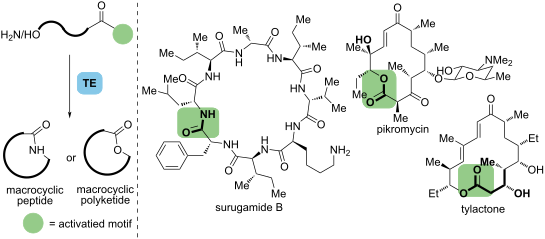
- TE-catalyzed marcolactonization [69]. The synthesis of linear peptide 34 commenced with the lactone opening of 26 to afford Weinreb amide 27. Following primary alcohol protection and amide reduction, the aldehyde 28 was coupled with iodide 29 to afford 30 via Nozaki–Hiyama–Kishi coupling, which was
- then transformed into aldehyde 31 through several protecting group adjustments and the corresponding alcohol and Ley oxidation. After the preparation of 33 using Evans syn-aldol condensation as a critical step, 34 was produced by thioester formation, desilylation, and allylic oxidation. Incubating 34
- epoxidation with enzymatic macrocyclization in 2020 as shown in Scheme 8 [85]. According to their previous report [86], the production of fragments 61 was initiated by Evans’ asymmetric aldol and alcohol protection to generate 57. Six-step route transformations, including cross metathesis, afforded aldehyde


SOMOphilic alkyne vs radical-polar crossover approaches: The full story of the azido-alkynylation of alkenes
Beilstein J. Org. Chem. 2024, 20, 701–713, doi:10.3762/bjoc.20.64
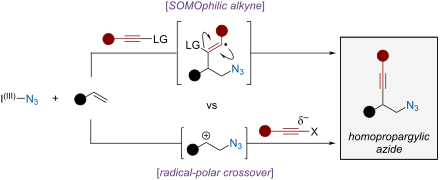
- presence of transition metal catalysts [11][12][13][14]. Currently, this motif is synthesized by sequential introduction of the two functional groups [11][12][13]. Addition of a lithium acetylide to an epoxide affords the corresponding homopropargylic alcohol which can then undergo a sequence of mesylation


New variochelins from soil-isolated Variovorax sp. H002
Beilstein J. Org. Chem. 2024, 20, 692–700, doi:10.3762/bjoc.20.63
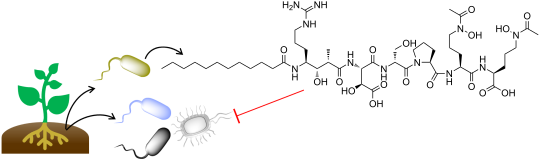
- for 1 h with 10 mg/mL lysozyme. After 10% SDS was added to the tube, the mixture was incubated at room temperature, 60 °C, and then 0 °C, for 5 min durations. AcOK (5 M) and phenol/CHCl3/isoamyl alcohol (25:24:1) were then added, and the resulting solution was gently mixed by inversion and centrifuged


Palladium-catalyzed three-component radical-polar crossover carboamination of 1,3-dienes or allenes with diazo esters and amines
Beilstein J. Org. Chem. 2024, 20, 661–671, doi:10.3762/bjoc.20.59
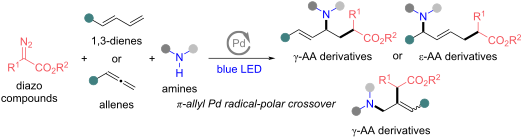
- , amoxapine, an ibrutinib derivative, N-desmethyl sildenafil, silodosin, and lapatinib (4d–k, 35–67%). The late-stage modification of these drug agents and their derivatives in this MCR underlined the synthetic value and high functional group tolerance (e.g., aromatic amine, amide, alcohol, heterocycle). We



Chemical and biosynthetic potential of Penicillium shentong XL-F41
Beilstein J. Org. Chem. 2024, 20, 597–606, doi:10.3762/bjoc.20.52
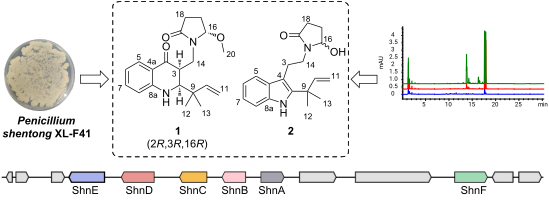
- , such as medium-chain alcohol dehydrogenase (CpDCS), esterase (CpDCE), P450 and O-methyltransferase (CpOMT1) (Figure S37). Through genome excavation and analysis of Penicillium shentong XL-F41, a significant difference was discovered between the key enzymes involved in the formation of product compound




Entry to new spiroheterocycles via tandem Rh(II)-catalyzed O–H insertion/base-promoted cyclization involving diazoarylidene succinimides
Beilstein J. Org. Chem. 2024, 20, 561–569, doi:10.3762/bjoc.20.48
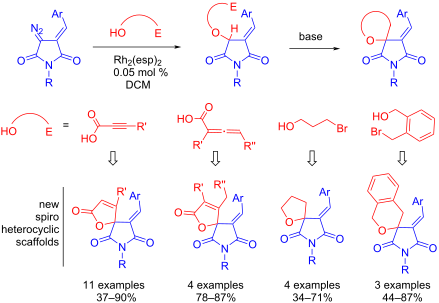
- of compound 4b has been confirmed by single crystal X-ray data. The next step was to investigate the possibility of obtaining six-membered oxygen-containing spiroheterocycles by interaction of DAS 1 with 2-(bromomethyl)benzyl alcohol (15) (Scheme 6). The synthesis was carried out under the conditions
- summarized in Scheme 8). The first pathway is realized in the formation of five-membered (in the case of 3-bromopropanol) and six-membered (in the case of 2-(bromomethyl)benzyl alcohol) cycles – the cyclization of the anion is faster than its reverse protonation. The same applies to substrates with activated
- alcohol followed by base-promoted cyclization. The procedures developed allow to obtain derivatives of such sought-after scaffolds in the field of medicinal chemistry as Δα,β-butenolides, tetrahydrofurans, and pyrans spiro-conjugated with a pyrrolidine ring. The tandem approach proposed is characterized





