Search for "anilines" in Full Text gives 211 result(s) in Beilstein Journal of Organic Chemistry. Showing first 200.
Beilstein J. Org. Chem. 2017, 13, 648–658, doi:10.3762/bjoc.13.64
Graphical Abstract
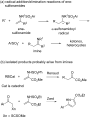
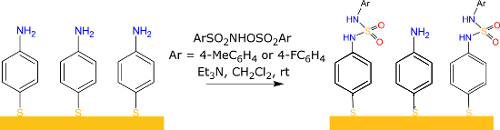
Scheme 1: General strategy for surface functionalization based on sulfamide chemistry.
Scheme 2: Synthesis of the reference molecule sulfamide 1.
Figure 1: Contact angles of the gold surface, the 4-ATP SAM, the 4-ATP SAM after reaction with ArSO2NHOSO2Ar ...
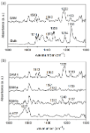
Figure 2: (a) IR spectra of sulfamide 1 in bulk (solid state) (bottom) and adsorbed on gold (top). (b) PM-IRR...
Figure 3: High resolution S2p and N1s XPS spectra of the 4-ATP SAM, the 4-ATP SAM after reaction with 4-FC6H4...
Figure 4: High resolution S2p and N1s XPS spectra of the SAM 1 before (top) and after hydrolysis (bottom). Ri...
Beilstein J. Org. Chem. 2017, 13, 589–611, doi:10.3762/bjoc.13.58

Graphical Abstract
Figure 1: Examples of drugs bearing phenol or aryl thiol as central structural motifs.
Scheme 1: Hydroxylation of aryl halides using biphenylphosphine as ligand.
Scheme 2: Hydroxylation of aryl halides using tert-butylphosphine as ligand.
Scheme 3: Hydroxylation of aryl halides using imidazole typed phosphine ligands.
Scheme 4: [Pd(cod)(CH2SiMe3)2] catalyzed hydroxylation of aryl halides.
Scheme 5: Pd/PANI catalyzed hydroxylation of hydroxylation of aryl halides.
Scheme 6: MCM-41-dzt-Pd catalyzed hydroxylation of aryl halides.
Scheme 7: Hydroxylation of aryl halides using dibenzoylmethane as ligand.
Scheme 8: Hydroxylation of aryl halides using 2,2’-bipyridine as ligand.
Scheme 9: Hydroxylation of aryl bromides using imidazolyl pyridine as ligand.
Scheme 10: Hydroxylation of aryl halides using DMEDA as ligand.
Scheme 11: Hydroxylation of aryl halides using PAO as ligand.
Scheme 12: Hydroxylation of aryl halides using D-glucose as ligand.
Scheme 13: Hydroxylation of aryl halides using INDION-770 as ligand.
Scheme 14: PEG-400 mediated hydroxylation of aryl halides.
Scheme 15: Hydroxylation of aryl halides using glycolic acid as ligand.
Scheme 16: Hydroxylation of aryl halides using L-sodium ascorbate as ligand.
Scheme 17: Difunctionalized ethanes mediated hydroxylation of aryl iodides.
Scheme 18: Hydroxylation of aryl halides using 2-methyl-8-hydroxylquinoline as ligand.
Scheme 19: Hydroxylation of aryl halides using 8-hydroxyquinolin-N-oxide as ligand.
Scheme 20: Hydroxylation of aryl halides using lithium pipecolinate as ligand.
Scheme 21: Hydroxylation of aryl halides using L-lithium prolinate.
Scheme 22: Hydroxylation of aryl halides using triethanolamine as ligand.
Scheme 23: CuI-nanoparticle-catalyzed hydroxylation of aryl halides.
Scheme 24: Cu-g-C3N4-catalyzed hydroxylation of aryl bromides.
Scheme 25: Cu(OAc)2-mediated hydroxylation of (2-pyridyl)arenes.
Scheme 26: Removable pyridine moiety directed hydroxylation of arenes.
Scheme 27: Removable quinoline moiety directed hydroxylation of arenes.
Scheme 28: CuCl2 catalyzed hydroxylation of benzimidazoles and benzoxazoles.
Scheme 29: Disulfide-directed C–H hydroxylation.
Scheme 30: Pd(OAc)2-catalyzed hydroxylation of diarylpyridines.
Scheme 31: PdCl2-catalyzed hydroxylation of 2-arylpyridines.
Scheme 32: PdCl2-catalyzed hydroxylation of 2-arylpyridines.
Scheme 33: Pd(OAc)2-catalyzed hydroxylation of 2-arylpyridines.
Scheme 34: Pd(CH3CN)2Cl2-catalyzed hydroxylation of 2-arylpyridines.
Scheme 35: Pd(OAc)2-catalyzed hydroxylation of benzothiazolylarenes.
Scheme 36: Pd(OAc)2 catalyzed hydroxylation of benzimidazolylarenes.
Scheme 37: Dioxane mediated hydroxylation of 2-heteroarylarenes.
Scheme 38: Hydroxylation of oxime methyl ester.
Scheme 39: CN-directed meta-hydroxylation.
Scheme 40: Pd(OAc)2-catalyzed hydroxylation of benzoic acids.
Scheme 41: Pd(OAc)2-catalyzed hydroxylation of biaryl or aryl alkyl ketones.
Scheme 42: Pd(OAc)2 and Pd(TFA)2 catalyzed hydroxylation of aryl ketones.
Scheme 43: Pd(OAc)2 catalyzed hydroxylation of aryl ketones.
Scheme 44: Pd(TFA)2-catalyzed hydroxylation of aryl phosphonates.
Scheme 45: Hydroxy group directed hydroxylation.
Scheme 46: [Ru(O2CMes)2(p-cymene)] catalyzed hydroxylation of benzamides and aryl ketones.
Scheme 47: [RuCl2(p-cymene)]2-catalyzed hydroxylation of benzamides and carbamates.
Scheme 48: [RuCl2(p-cymene)]2 catalyzed hydroxylation of benzaldehydes.
Scheme 49: [RuCl2(p-cymene)]2 catalyzed hydroxylation of ethyl benzoates, benzamides and carbamates.
Scheme 50: Different regioselective ortho-hydroxylation.
Scheme 51: Ruthenium-complex-catalyzed hydroxylation of flavones.
Scheme 52: Vanadium-catalyzed hydroxylation of arenes.
Scheme 53: VOSiW-catalyzed hydroxylation of arenes.
Scheme 54: Synthesis of aryl thiols using thiourea as thiol source.
Scheme 55: Synthesis of aryl thiols using alkyl thiol as thiol source.
Scheme 56: Synthesis of 1-thionaphthol using HS-TIPS as thiol source.
Scheme 57: Synthesis of aryl thiols using sodium thiosulfate as thiol source.
Scheme 58: Synthesis of thiophenol using thiobenzoic acid as thiol source.
Scheme 59: Synthesis of aryl thiols using sulfur powder as thiol source.
Scheme 60: CuI-nanoparticles catalyzed synthesis of aryl thiols.
Scheme 61: Synthesis of aryl thiols using Na2S·5H2O as thiol source.
Scheme 62: Synthesis of aryl thiols using 1,2-ethanedithiol as thiol source.
Beilstein J. Org. Chem. 2016, 12, 2906–2915, doi:10.3762/bjoc.12.290
Graphical Abstract
Scheme 1: Synthesis of allylphosphonates from acyclic MBH adducts.
Scheme 2: Synthesis of γ-ketoallylphosphonates from cyclic MBH adducts.
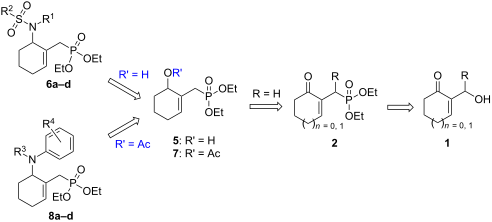
Scheme 3: Proposed mechanism for DMAP-mediated direct nucleophilic α-substitution of MBH alcohol 1a.
Scheme 4: Direct conversion of acyclic MBH alcohols 3a–c into γ-ketoallylphosphonates 4a–f.
Scheme 5: I2-Catalyzed direct synthesis of γ-tosylaminophosphonates 6 from alcohol 5.
Scheme 6: Proposed mechanism for I2-catalyzed direct nucleophilic substitution of γ-hydroxyallylphosphonate 5...
Scheme 7: Ce(III)-mediated conversion of acetate 7 into γ-aminophosphonates 8a–d.
Beilstein J. Org. Chem. 2016, 12, 2614–2619, doi:10.3762/bjoc.12.257
Graphical Abstract
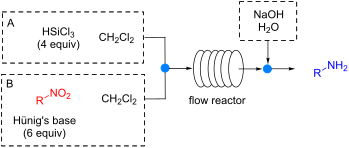
Scheme 1: Continuous flow reduction of 4-nitrobenzophenone using a 0.5 mL PTFE flow reactor.
Scheme 2: Continuous flow reduction of aromatic nitro compounds.
Scheme 3: Continuous-flow reduction of aliphatic nitro compounds.
Scheme 4: Synthesis of 2-(4’-chlrophenyl)aniline (4) with a 5 mL flow reactor.
Scheme 5: Synthesis of intermediate 6, a direct precursor of the drug baclofen.
Scheme 6: Continuous-flow reduction of 1a and in-line extraction.
Beilstein J. Org. Chem. 2016, 12, 2490–2494, doi:10.3762/bjoc.12.243
Graphical Abstract
Figure 1: Natural indolo[3,2-a]carbazole alkaloids.
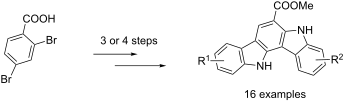
Scheme 1: Retrosynthetic analysis of indolo[3,2-a]carbazoles.
Scheme 2: Reagents and conditions: (a) H2SO4, MeOH; (b) Ar-NH2, Pd(OAc)2, BINAP, dioxane, 100 °C; (c) 5 mol %...
Scheme 3: Substrate scope for Pd-catalyzed twofold annulations.
Beilstein J. Org. Chem. 2016, 12, 1598–1607, doi:10.3762/bjoc.12.156
Graphical Abstract
Scheme 1: Comparison of early C–N and C–O coupling reactions.
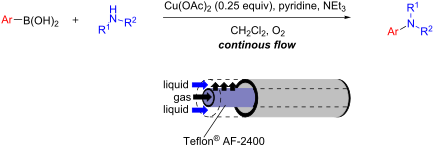
Figure 1: General flow scheme for catalytic Chan–Lam reaction.
Figure 2: Observed trend for the effect of changing oxygen pressure on the NMR yield of 19.
Figure 3: Comparison of 1H NMR spectra of non-purified (top) and QP-DMA purified (bottom) continuous flow syn...
Scheme 2: Scope of the catalytic Chan–Lam reaction in continuous flow.
Scheme 3: Syntheses of substrate 39.
Figure 4: NOESY NMR spectrum for 30 with the characteristic NOESY signal encircled.
Figure 5: NOESY NMR spectrum for 33 with the characteristic NOESY signal encircled.
Figure 6: NOESY NMR spectrum for 35 with the characteristic NOESY signal encircled.
Figure 7: Substrates that gave no products in flow.
Scheme 4: Scale-up procedure for 19.
Beilstein J. Org. Chem. 2016, 12, 1269–1301, doi:10.3762/bjoc.12.121
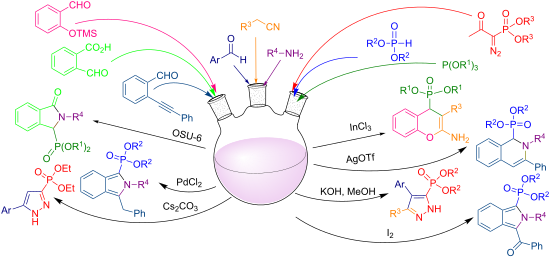
Graphical Abstract
Scheme 1: The Biginelli condensation.
Scheme 2: The Biginelli reaction of β-ketophosphonates catalyzed by ytterbium triflate.
Scheme 3: Trimethylchlorosilane-mediated Biginelli reaction of diethyl (3,3,3-trifluoropropyl-2-oxo)phosphona...
Scheme 4: Biginelli reaction of dialkyl (3,3,3-trifluoropropyl-2-oxo)phosphonate with trialkyl orthoformates ...
Scheme 5: p-Toluenesulfonic acid-promoted Biginelli reaction of β-ketophosphonates, aryl aldehydes and urea.
Scheme 6: General Kabachnik–Fields reaction for the synthesis of α-aminophosphonates.
Scheme 7: Phthalocyanine–AlCl catalyzed Kabachnik–Fields reaction of N-Boc-piperidin-4-one with diethyl phosp...
Scheme 8: Kabachnik–Fields reaction of isatin with diethyl phosphite and benzylamine.
Scheme 9: Magnetic Fe3O4 nanoparticle-supported phosphotungstic acid-catalyzed Kabachnik–Fields reaction of i...
Scheme 10: The Mg(ClO4)2-catalyzed Kabachnik–Fields reaction of 1-tosylpiperidine-4-one.
Scheme 11: An asymmetric version of the Kabachnik–Fields reaction for the synthesis of α-amino-3-piperidinylph...
Scheme 12: A classical Kabachnik–Fields reaction followed by an intramolecular ring-closing reaction for the s...
Scheme 13: Synthesis of (S)-piperidin-2-phosphonic acid through an asymmetric Kabachnik–Fields reaction.
Scheme 14: A modified diastereoselective Kabachnik–Fields reaction for the synthesis of isoindolin-1-one-3-pho...
Scheme 15: A microwave-assisted Kabachnik–Fields reaction toward isoindolin-1-ones.
Scheme 16: The synthesis of 3-arylmethyleneisoindolin-1-ones through a Horner–Wadsworth–Emmons reaction of Kab...
Scheme 17: An efficient one-pot method for the synthesis of ethyl (2-alkyl- and 2-aryl-3-oxoisoindolin-1-yl)ph...
Scheme 18: FeCl3 and PdCl2 co-catalyzed three-component reaction of 2-alkynylbenzaldehydes, anilines, and diet...
Scheme 19: Three-component reaction of 6-methyl-3-formylchromone (75) with hydrazine derivatives or hydroxylam...
Scheme 20: Three-component reaction of 6-methyl-3-formylchromone (75) with thiourea, guanidinium carbonate or ...
Scheme 21: Three-component reaction of 6-methyl-3-formylchromone (75) with 1,4-bi-nucleophiles in the presence...
Scheme 22: One-pot three-component reaction of 2-alkynylbenzaldehydes, amines, and diethyl phosphonate.
Scheme 23: Lewis acid–surfactant combined catalysts for the one-pot three-component reaction of 2-alkynylbenza...
Scheme 24: Lewis acid catalyzed cyclization of different Kabachnik–Fields adducts.
Scheme 25: Three-component synthesis of N-arylisoquinolone-1-phosphonates 119.
Scheme 26: CuI-catalyzed three-component tandem reaction of 2-(2-formylphenyl)ethanones with aromatic amines a...
Scheme 27: Synthesis of 1,5-benzodiazepin-2-ylphosphonates via ytterbium chloride-catalyzed three-component re...
Scheme 28: FeCl3-catalyzed four-component reaction for the synthesis of 1,5-benzodiazepin-2-ylphosphonates.
Scheme 29: Synthesis of indole bisphosphonates through a modified Kabachnik–Fields reaction.
Scheme 30: Synthesis of heterocyclic bisphosphonates via Kabachnik–Fields reaction of triethyl orthoformate.
Scheme 31: A domino Knoevenagel/phospha-Michael process for the synthesis of 2-oxoindolin-3-ylphosphonates.
Scheme 32: Intramolecular cyclization of phospha-Michael adducts to give dihydropyridinylphosphonates.
Scheme 33: Synthesis of fused phosphonylpyrans via intramolecular cyclization of phospha-Michael adducts.
Scheme 34: InCl3-catalyzed three-component synthesis of (2-amino-3-cyano-4H-chromen-4-yl)phosphonates.
Scheme 35: Synthesis of phosphonodihydropyrans via a domino Knoevenagel/hetero-Diels–Alder process.
Scheme 36: Multicomponent synthesis of phosphonodihydrothiopyrans via a domino Knoevenagel/hetero-Diels–Alder ...
Scheme 37: One-pot four-component synthesis of 1,2-dihydroisoquinolin-1-ylphosphonates under multicatalytic co...
Scheme 38: CuI-catalyzed four-component reactions of methyleneaziridines towards alkylphosphonates.
Scheme 39: Ruthenium–porphyrin complex-catalyzed three-component synthesis of aziridinylphosphonates and its p...
Scheme 40: Copper(I)-catalyzed three-component reaction towards 1,2,3-triazolyl-5-phosphonates.
Scheme 41: Three-component reaction of acylphosphonates, isocyanides and dialkyl acetylenedicarboxylate to aff...
Scheme 42: Synthesis of (4-imino-3,4-dihydroquinazolin-2-yl)phosphonates via an isocyanide-based three-compone...
Scheme 43: Silver-catalyzed three-component synthesis of (2-imidazolin-4-yl)phosphonates.
Scheme 44: Three-component synthesis of phosphonylpyrazoles.
Scheme 45: One-pot three-component synthesis of 3-carbo-5-phosphonylpyrazoles.
Scheme 46: A one-pot two-step method for the synthesis of phosphonylpyrazoles.
Scheme 47: A one-pot method for the synthesis of (5-vinylpyrazolyl)phosphonates.
Scheme 48: Synthesis of 1H-pyrrol-2-ylphosphonates via the [3 + 2] cycloaddition of phosphonate azomethine yli...
Scheme 49: Three-component synthesis of 1H-pyrrol-2-ylphosphonates.
Scheme 50: The classical Reissert reaction.
Scheme 51: One-pot three-component synthesis of N-phosphorylated isoquinolines.
Scheme 52: One-pot three-component synthesis of 1-acyl-1,2-dihydroquinoline-2-phosphonates and 2-acyl-1,2-dihy...
Scheme 53: Three-component reaction of pyridine derivatives with ethyl propiolate and dialkyl phosphonates.
Scheme 54: Three-component reactions for the phosphorylation of benzothiazole and isoquinoline.
Scheme 55: Three-component synthesis of diphenyl [2-(aminocarbonyl)- or [2-(aminothioxomethyl)-1,2-dihydroisoq...
Scheme 56: Three-component stereoselective synthesis of 1,2-dihydroquinolin-2-ylphosphonates and 1,2-dihydrois...
Scheme 57: Diphosphorylation of diazaheterocyclic compounds via a tandem 1,4–1,2 addition of dimethyl trimethy...
Scheme 58: Multicomponent reaction of alkanedials, acetamide and acetyl chloride in the presence of PCl3 and a...
Scheme 59: An oxidative domino three-component synthesis of polyfunctionalized pyridines.
Scheme 60: A sequential one-pot three-component synthesis of polysubstituted pyrroles.
Scheme 61: Three-component decarboxylative coupling of proline with aldehydes and dialkyl phosphites for the s...
Scheme 62: Three-component domino aza-Wittig/phospha-Mannich sequence for the phosphorylation of isatin deriva...
Scheme 63: Stereoselective synthesis of phosphorylated trans-1,5-benzodiazepines via a one-pot three-component...
Scheme 64: One-pot three-component synthesis of phosphorylated 2,6-dioxohexahydropyrimidines.
Beilstein J. Org. Chem. 2016, 12, 1203–1228, doi:10.3762/bjoc.12.116
Graphical Abstract
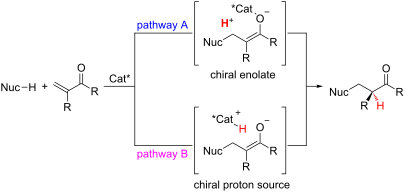
Figure 1: Two general pathways for conjugate addition followed by enantioselective protonation.
Scheme 1: Tomioka’s enantioselective addition of arylthiols to α-substituted acrylates.
Scheme 2: Sibi’s enantioselective hydrogen atom transfer reactions.
Scheme 3: Mikami’s addition of perfluorobutyl radical to α-aminoacrylate 11.
Scheme 4: Reisman’s Friedel–Crafts conjugate addition–enantioselective protonation approach toward tryptophan...
Scheme 5: Pracejus’s enantioselective addition of benzylmercaptan to α-aminoacrylate 20.
Scheme 6: Kumar and Dike’s enantioselective addition of thiophenol to α-arylacrylates.
Scheme 7: Tan’s enantioselective addition of aromatic thiols to 2-phthalimidoacrylates.
Scheme 8: Glorius’ enantioselective Stetter reactions with α-substituted acrylates.
Scheme 9: Dixon’s enantioselective addition of thiols to α-substituted acrylates.
Figure 2: Chiral phosphorous ligands.
Scheme 10: Enantioselective addition of arylboronic acids to methyl α-acetamidoacrylate.
Scheme 11: Frost’s enantioselective additions to dimethyl itaconate.
Scheme 12: Darses and Genet’s addition of potassium organotrifluoroborates to α-aminoacrylates.
Scheme 13: Proposed mechanism for enantioselective additions to α-aminoacrylates.
Scheme 14: Sibi’s addition of arylboronic acids to α-methylaminoacrylates.
Scheme 15: Frost’s enantioselective synthesis of α,α-dibenzylacetates 64.
Scheme 16: Rovis’s hydroheteroarylation of α-substituted acrylates with benzoxazoles.
Scheme 17: Proposed mechanism for the hydroheteroarylation of α-substituted acrylates with benzoxazoles.
Scheme 18: Sodeoka’s enantioselective addition of amines to N-benzyloxycarbonyl acrylamides 75 and 77.
Scheme 19: Proposed catalytic cycle for Sodeoka’s enantioselective addition of amines.
Scheme 20: Sibi’s enantioselective Friedel–Crafts addition of pyrroles to imides 84.
Scheme 21: Kobayashi’s enantioselective addition of malonates to α-substituted N-acryloyloxazolidinones.
Scheme 22: Chen and Wu’s enantioselective addition of thiophenol to N-methacryloyl benzamide.
Scheme 23: Tan’s enantioselective addition of secondary phosphine oxides and thiols to N-arylitaconimides.
Scheme 24: Enantioselective addition of thiols to α-substituted N-acryloylamides.
Scheme 25: Kobayashi’s enantioselective addition of thiols to α,β-unsaturated ketones.
Scheme 26: Feng’s enantioselective addition of pyrazoles to α-substituted vinyl ketones.
Scheme 27: Luo and Cheng’s addition of indoles to vinyl ketones by enamine catalysis.
Scheme 28: Curtin–Hammett controlled enantioselective addition of indole.
Scheme 29: Luo and Cheng’s enantioselective additions to α-branched vinyl ketones.
Scheme 30: Lou’s reduction–conjugate addition–enantioselective protonation.
Scheme 31: Luo and Cheng’s primary amine-catalyzed addition of indoles to α-substituted acroleins.
Scheme 32: Luo and Cheng’s proposed mechanism and transition state.
Figure 3: Shibasaki’s chiral lanthanum and samarium tris(BINOL) catalysts.
Scheme 33: Shibasaki’s enantioselective addition of 4-tert-butyl(thiophenol) to α,β-unsaturated thioesters.
Scheme 34: Shibasaki’s application of chiral (S)-SmNa3tris(binaphthoxide) catalyst 144 to the total synthesis ...
Scheme 35: Shibasaki’s cyanation–enantioselective protonation of N-acylpyrroles.
Scheme 36: Tanaka’s hydroacylation of acrylamides with aliphatic aldehydes.
Scheme 37: Ellman’s enantioselective addition of α-substituted Meldrum’s acids to terminally unsubstituted nit...
Scheme 38: Ellman’s enantioselective addition of thioacids to α,β,β-trisubstituted nitroalkenes.
Scheme 39: Hayashi’s enantioselective hydroarylation of diphenylphosphinylallenes.
Scheme 40: Hayashi’s enantioselective hydroarylation of diphenylphosphinylallenes.
Figure 4: Togni’s chiral ferrocenyl tridentate nickel(II) and palladium(II) complexes.
Scheme 41: Togni’s enantioselective hydrophosphination of methacrylonitrile.
Scheme 42: Togni’s enantioselective hydroamination of methacrylonitrile.
Beilstein J. Org. Chem. 2016, 12, 462–495, doi:10.3762/bjoc.12.48
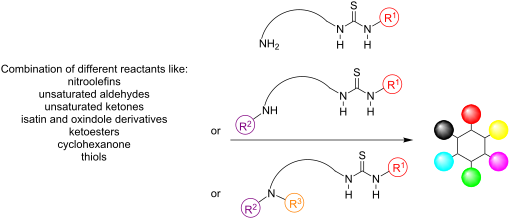
Graphical Abstract
Scheme 1: Activation of carbonyl compounds via enamine and iminium intermediates [2].
Scheme 2: Electronic and steric interactions present in enamine activation mode [2].
Scheme 3: Electrophilic activation of carbonyl compounds by a thiourea moiety.
Scheme 4: Asymmetric synthesis of dihydro-2H-pyran-6-carboxylate 3 using organocatalyst 4 [16].
Scheme 5: Possible hydrogen-bonding for the reaction of (E)-methyl 2-oxo-4-phenylbut-3-enoate [16].
Scheme 6: Asymmetric desymmetrization of 4,4-cyclohexadienones using the Michael addition reaction with malon...
Scheme 7: The enantioselective synthesis of α,α-disubstituted cycloalkanones using catalyst 11 [18].
Scheme 8: The enantioselective synthesis of indolo- and benzoquinolidine compounds through aza-Diels–Alder re...
Scheme 9: Enantioselective [5 + 2] cycloaddition [20].
Scheme 10: Asymmetric synthesis of oxazine derivatives 26 [21].
Scheme 11: Asymmetric synthesis of bicyclo[3.3.1]nonadienone, core 30 present in (−)-huperzine [22].
Scheme 12: Asymmetric inverse electron-demand Diels-Alder reaction catalyzed by amine-thiourea 34 [23].
Scheme 13: Asymmetric entry to morphan skeletons, catalyzed by amine-thiourea 37 [24].
Scheme 14: Asymmetric transformation of (E)-2-nitroallyl acetate [25].
Scheme 15: Proposed way of activation.
Scheme 16: Asymmetric synthesis of nitrobicyclo[3.2.1]octan-2-one derivatives [26].
Scheme 17: Asymmetric tandem Michael–Henry reaction catalyzed by 50 [27].
Scheme 18: Asymmetric Diels–Alder reactions of 3-vinylindoles 51 [29].
Scheme 19: Proposed transition state and activation mode of the asymmetric Diels–Alder reactions of 3-vinylind...
Scheme 20: Desymmetrization of meso-anhydrides by Chin, Song and co-workers [30].
Scheme 21: Desymmetrization of meso-anhydrides by Connon and co-workers [31].
Scheme 22: Asymmetric intramolecular Michael reaction [32].
Scheme 23: Asymmetric addition of malonate to 3-nitro-2H-chromenes 67 [33].
Scheme 24: Intramolecular desymmetrization through an intramolecular aza-Michael reaction [34].
Scheme 25: Enantioselective synthesis of (−)-mesembrine [34].
Scheme 26: A novel asymmetric Michael–Michael reaction [35].
Scheme 27: Asymmetric three-component reaction catalyzed by Takemoto’s catalyst 77 [46].
Scheme 28: Asymmetric domino Michael–Henry reaction [47].
Scheme 29: Asymmetric domino Michael–Henry reaction [48].
Scheme 30: Enantioselective synthesis of derivatives of 3,4-dihydro-2H-pyran 89 [49].
Scheme 31: Asymmetric addition of α,α-dicyano olefins 90 to 3-nitro-2H-chromenes 91 [50].
Scheme 32: Asymmetric three-component reaction producing 2,6-diazabicyclo[2.2.2]octanones 95 [51].
Scheme 33: Asymmetric double Michael reaction producing substituted chromans 99 [52].
Scheme 34: Enantioselective synthesis of multi-functionalized spiro oxindole dienes 106 [53].
Scheme 35: Organocatalyzed Michael aldol cyclization [54].
Scheme 36: Asymmetric synthesis of dihydrocoumarins [55].
Scheme 37: Asymmetric double Michael reaction en route to tetrasubstituted cyclohexenols [56].
Scheme 38: Asymmetric synthesis of α-trifluoromethyl-dihydropyrans 121 [58].
Scheme 39: Tyrosine-derived tertiary amino-thiourea 123 catalyzed Michael hemiaketalization reaction [59].
Scheme 40: Enantioselective entry to bicyclo[3.2.1]octane unit [60].
Scheme 41: Asymmetric synthesis of spiro[4-cyclohexanone-1,3’-oxindoline] 126 [61].
Scheme 42: Kinetic resolution of 3-nitro-2H-chromene 130 [62].
Scheme 43: Asymmetric synthesis of chromanes 136 [63].
Scheme 44: Wang’s utilization of β-unsaturated α-ketoesters 87 [64,65].
Scheme 45: Asymmetric entry to trifluoromethyl-substituted dihydropyrans 144 [66].
Scheme 46: Phenylalanine-derived thiourea-catalyzed domino Michael hemiaketalization reaction [67].
Scheme 47: Asymmetric synthesis of α-trichloromethyldihydropyrans 149 [68].
Scheme 48: Takemoto’s thiourea-catalyzed domino Michael hemiaketalization reaction [69].
Scheme 49: Asymmetric synthesis of densely substituted cyclohexanes [70].
Scheme 50: Enantioselective synthesis of polysubstituted chromeno [4,3-b]pyrrolidine derivatines 157 [71].
Scheme 51: Enantioselective synthesis of spiro-fused cyclohexanone/5-oxazolone scaffolds 162 [72].
Scheme 52: Utilizing 2-mercaptobenzaldehydes 163 in cascade processes [73,74].
Scheme 53: Proposed transition state of the initial sulfa-Michael step [74].
Scheme 54: Asymmetric thiochroman synthesis via dynamic kinetic resolution [75].
Scheme 55: Enantioselective synthesis of thiochromans [76].
Scheme 56: Enantioselective synthesis of chromans and thiochromans synthesis [77].
Scheme 57: Enantioselective sulfa-Michael aldol reaction en route to spiro compounds [78].
Scheme 58: Enantioselective synthesis of 4-aminobenzo(thio)pyrans 179 [79].
Scheme 59: Asymmetric synthesis of tetrahydroquinolines [80].
Scheme 60: Novel asymmetric Mannich–Michael sequence producing tetrahydroquinolines 186 [81].
Scheme 61: Enantioselective synthesis of biologically interesting chromanes 190 and 191 [82].
Scheme 62: Asymmetric tandem Henry–Michael reaction [83].
Scheme 63: An asymmetric synthesis of substituted cyclohexanes via a dynamic kinetic resolution [84].
Scheme 64: Three component-organocascade initiated by Knoevenagel reaction [85].
Scheme 65: Asymmetric Michael reaction catalyzed by catalysts 57 and 211 [86].
Scheme 66: Proposed mechanism for the asymmetric Michael reaction catalyzed by catalysts 57 and 211 [86].
Scheme 67: Asymmetric facile synthesis of hexasubstituted cyclohexanes [87].
Scheme 68: Dual activation catalytic mechanism [87].
Scheme 69: Asymmetric Michael–Michael/aldol reaction catalyzed by catalysts 57, 219 and 214 [88].
Scheme 70: Asymmetric synthesis of substituted cyclohexane derivatives, using catalysts 57 and 223 [89].
Scheme 71: Asymmetric synthesis of substituted piperidine derivatives, using catalysts 223 and 228 [90].
Scheme 72: Asymmetric synthesis of endo-exo spiro-dihydropyran-oxindole derivatives catalyzed by catalyst 232 [91]....
Scheme 73: Asymmetric synthesis of carbazole spiroxindole derivatives, using catalyst 236 [92].
Scheme 74: Enantioselective formal [2 + 2] cycloaddition of enal 209 with nitroalkene 210, using catalysts 23 ...
Scheme 75: Asymmetric synthesis of polycyclized hydroxylactams derivatives, using catalyst 242 [94].
Scheme 76: Asymmetric synthesis of product 243, using catalyst 246 [95].
Scheme 77: Formation of the α-stereoselective acetals 248 from the corresponding enol ether 247, using catalys...
Scheme 78: Selective glycosidation, catalyzed by Shreiner’s catalyst 23 [97].
Beilstein J. Org. Chem. 2016, 12, 144–153, doi:10.3762/bjoc.12.16
Graphical Abstract
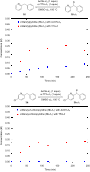
Figure 1: Hydrogen–deuterium exchange through acid-catalyzed imine–enamine tautomerization of 3h (0.5 M) and ...
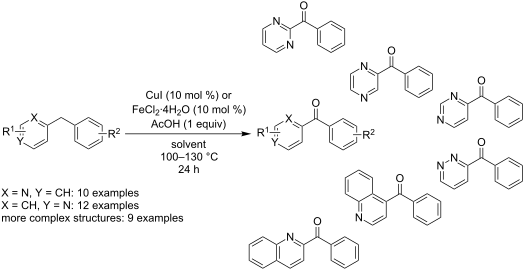
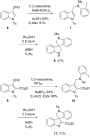
Scheme 1: Benzylic oxygenation of benzoannulated azines and diazines (5).
Scheme 2: Classical (top) and new formal (bottom) synthesis of Mefloquine.
Scheme 3: Iron-catalyzed aerobic oxidation of papaverine (15).
Beilstein J. Org. Chem. 2015, 11, 2696–2706, doi:10.3762/bjoc.11.290
Graphical Abstract
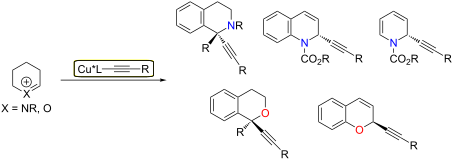
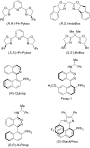
Figure 1: Chiral ligands utilized in copper-catalyzed alkynylations of cyclic iminium and oxocarbenium ions.
Scheme 1: Li’s alkynylation of acyclic N-arylimines.
Scheme 2: Knochel’s alkynylation of acyclic N-alkylenamines.
Scheme 3: Li’s CDC of tetrahydroisoquinolines and alkynes.
Scheme 4: Li’s alkynylation of N-aryldihydroisoquinolinium ions.
Scheme 5: Schreiber’s alkynylation of N-alkylisoquinolinium ions.
Scheme 6: Ma’s alkynylation of pyridium ions.
Scheme 7: Arndtsen’s alkynylation of cyclic iminium ions.
Scheme 8: Maruoka’s alkynylation of azomethine imines.
Scheme 9: Su’s CDC of tetrahydroisoquinolines and alkynes under ball milling conditions.
Scheme 10: Ma’s A3-coupling.
Scheme 11: Li’s CDC reaction using photoredox catalysis.
Scheme 12: Liu’s CDC reaction of N-carbamoyltetrahydroisoquinolines. T+BF4– = 2,2,6,6-tetramethylpiperidine N-...
Scheme 13: Aponick’s alkynylation of N-carbomoylquinolinium ions using StackPhos as ligand.
Scheme 14: Carreira’s enantioselective, catalytic alkynylation of aldehydes.
Scheme 15: Watson’s alkynylation of isochroman oxocarbenium ions.
Scheme 16: Watson’s alkynylation of chromene oxocarbenium ions.
Scheme 17: Watson’s alkynylation to set diaryl tetrasubstituted stereocenters.
Beilstein J. Org. Chem. 2015, 11, 2171–2178, doi:10.3762/bjoc.11.235
Graphical Abstract
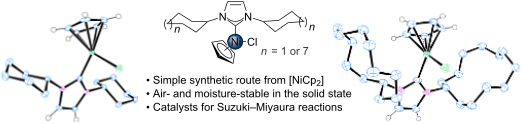
Scheme 1: Synthesis of [Ni(η1-Cp)(η5-Cp)(IMes)] (1) and [NiCl(Cp)(IMes)] (2).
Scheme 2: Synthesis of [NiCl(Cp)(ICy)] using conventional heating.
Scheme 3: Synthesis of (a) [NiCl(Cp)(ICy)] (3) and (b) [NiCl(Cp)(IDD)] (4) with microwave heating.
Figure 1: Molecular structures of complexes [NiCl(Cp)(ICy)] (3) (left) and [NiCl(Cp)(IDD)] (4) (right) as det...
Scheme 4: Model Suzuki–Miyaura reaction for the evaluation of the new complexes as cross-coupling pre-catalys...
Beilstein J. Org. Chem. 2015, 11, 2132–2144, doi:10.3762/bjoc.11.230
Graphical Abstract
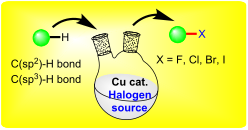
Scheme 1: Copper-catalyzed C–H bond halogenation of 2-arylpyridine.
Scheme 2: ortho-Chlorination of 2-arylpridines with acyl chlorides.
Scheme 3: Copper-catalyzed chlorination of 2-arylpyridines using LiCl.
Scheme 4: Copper-catalyzed C–H halogenation of 2-arylpyridines using LiX.
Scheme 5: Copper-mediated selective C–H halogenations of 2-arylpyridine.
Scheme 6: Copper-catalyzed C–H o-halogenation using removable DG.
Scheme 7: Copper-catalyzed C–H halogenations using PIP as DG.
Scheme 8: Copper-catalyzed quinoline C–H chlorination.
Scheme 9: Copper-catalyzed arene C–H fluorination of benzamides.
Scheme 10: Copper-catalyzed arene C–H iodination of 1,3-azoles.
Scheme 11: Copper-catalyzed C–H halogenations of phenols.
Scheme 12: Proposed mechanism for the C–H halogenation of phenols.
Scheme 13: Copper-catalyzed halogenation of electron enriched arenes.
Scheme 14: Copper-catalyzed C–H bromination of arenes.
Scheme 15: CuI-mediated synthesis of iododibenzo[b,d]furans via C–H functionalization.
Scheme 16: Cu-Mn spinel oxide-catalyzed phenol and heteroarene halogenation.
Scheme 17: Copper-catalyzed halogenations of 2-amino-1,3thiazoles.
Scheme 18: Copper-mediated chlorination and bromination of indolizines.
Scheme 19: Copper-catalyzed three-component synthesis of bromoindolizines.
Scheme 20: Copper-mediated C–H halogenation of azacalix[1]arene[3]pyridines.
Scheme 21: Copper-mediated cascade synthesis of halogenated pyrrolones.
Scheme 22: Copper-mediated alkene C–H chlorination in spirothienooxindole.
Scheme 23: Copper-catalyzed remote C–H chlorination of alkyl hydroperoxides.
Scheme 24: Copper-catalyzed C–H fluorination of alkanes.
Scheme 25: Copper-catalyzed or mediated C–H halogenations of active C(sp3)-bonds.
Beilstein J. Org. Chem. 2015, 11, 1823–1832, doi:10.3762/bjoc.11.198
Graphical Abstract
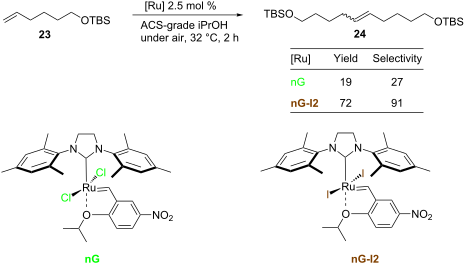
Figure 1: The diversity of Hoveyda-type complexes (Mes – 2,4,6-trimethylphenyl, DIPP – 2,6-diisopropylphenyl)....
Scheme 1: Modifications of the 2nd generation alkylidene complexes.
Scheme 2: Synthesis of iodide-containing nitro-Grela type catalysts.
Figure 2: Reaction profiles for RCM of DEDAM; toluene, 0.2 M, 18 °C, [Ru] 0.15 mol %; conversion determined b...
Figure 3: RCM of 1 (toluene, 0.05 M, 25 °C, [Ru] 0.01 mol %); blue diamonds – original (pre)catalysts; red sq...
Figure 4: RCM of 1 (toluene, 0.05 M, 25 °C, [Ru] 0.01 mol %): top – productive RCM and possible non-productiv...
Beilstein J. Org. Chem. 2015, 11, 1649–1655, doi:10.3762/bjoc.11.181
Graphical Abstract
Figure 1: (a) Radical reactions of ene-sulfonamides give diverse isolated products; (b) these products are of...
Figure 2: Isolation of stable imines strengthens the case for sulfonyl radical elimination.
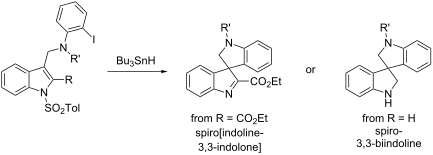
Scheme 1: Cyclizations of N-sulfonylindole 3 occur with retention or elimination of the sulfonyl group depend...
Scheme 2: Aryl radical cyclization to N-sulfonylindoles.
Figure 3: Mechanistic aspects of cyclizations shown in Scheme 2; (a) mechanism for formation of 7; (b) possible reaso...
Figure 4: Substrate design by swapping radical precursor and acceptor.
Scheme 3: Synthesis and cyclization of precursors 22–24.
Figure 5: ORTEP representation of the crystal structure of 27.
Figure 6: Proposed hydration/retro-Claisen path to formamides.
Beilstein J. Org. Chem. 2015, 11, 1494–1502, doi:10.3762/bjoc.11.162
Graphical Abstract
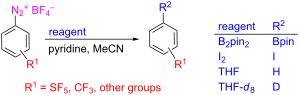
Scheme 1: Borylation of aryldiazonium tetrafluoroborates 3. Reaction conditions: 3 (1 mmol), B2pin2 (1 mmol),...
Scheme 2: Proposed reaction mechanism.
Scheme 3: Reaction of diazonium salt 3i under borylation conditions.
Scheme 4: Suzuki–Miyaura reaction of boronates 2a and 2b with aryl iodides. Reaction conditions: 2 (1 mmol), ...
Scheme 5: Syntesis of boronic acid 8b and trifluoroborates 9. Reaction conditions for the synthesis of 8b: 2 ...
Scheme 6: Iodination of aryldiazonium tetrafluoroborates 3. Reaction conditions: 3 (1 mmol), I2 (1.1 mmol), p...
Beilstein J. Org. Chem. 2015, 11, 1129–1135, doi:10.3762/bjoc.11.127
Graphical Abstract
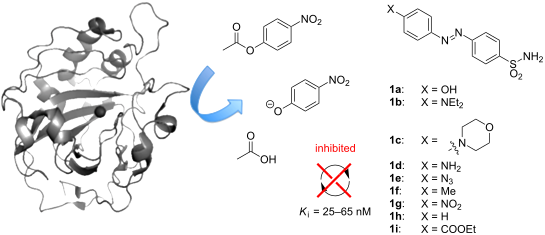
Figure 1: Function and inhibition of hCAII. a) hCAII (pdb: 2vva [7]) catalyzes the hydration of carbon dioxide t...
Scheme 1: Synthesis and characterization of azobenzene-containing aryl sulfonamides by different strategies. ...
Figure 2: Crystal structures for compounds 1a–i (co-solvents and/or multiple molecules in the asymmetric cell...
Figure 3: Crystal structure of hCAII bound to 1d (pdb: 5byi). a) The terminal amine of 1d is solvent-exposed,...
Figure 4: Inhibition of hCAII by electronically different azobenzene sulfonamides and AAZ. a) Endpoint measur...
Beilstein J. Org. Chem. 2015, 11, 1008–1016, doi:10.3762/bjoc.11.113
Graphical Abstract
Figure 1: Natural products and drugs featuring imide core.
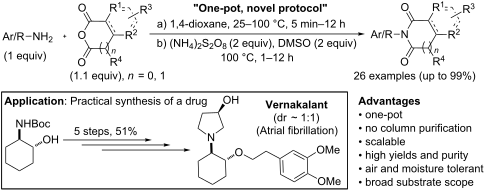
Scheme 1: Attempted methodology and its outcome (reaction conditions: (a) Pd(OAc)2 (10 mol %), ammonium persu...
Scheme 2: A practical synthesis of vernakalant (11).
Figure 2: Radical trapping experiment.
Beilstein J. Org. Chem. 2015, 11, 530–562, doi:10.3762/bjoc.11.60
Graphical Abstract
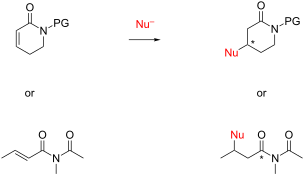
Scheme 1: Generic mechanism for the conjugate addition reaction.
Figure 1: Methods to activate unsaturated amide/lactam systems.
Scheme 2: DCA of Grignard reagents to an L-ephedrine derived chiral α,β–unsaturated amide.
Figure 2: Chiral auxiliaries used in DCA reactions.
Scheme 3: Comparison between auxiliary 5 and the Oppolzer auxiliary in a DCA reaction.
Scheme 4: Use of Evans auxiliary in a DCA reaction.
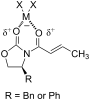
Figure 3: Lewis acid complex of the Evans auxiliary [43].
Scheme 5: DCA reactions of α,β-unsaturated amides utilizing (S,S)-(+)-pseudoephedrine and the OTBS-derivative...
Figure 4: Proposed model accounting for the diastereoselectivity observed in the 1,4-addition of Bn2NLi to α,...
Scheme 6: An example of a tandem conjugate addition–α-alkylation reaction of an α,β-unsaturated amide utilizi...
Scheme 7: Conjugate addition to an α,β-unsaturated bicyclic lactam leading to (+)-paroxetine and (+)-femoxeti...
Scheme 8: Intramolecular conjugate addition reaction to α,β-unsaturated amide.
Scheme 9: Conjugate addition to an α,β-unsaturated pyroglutamate derivative.
Scheme 10: Cu(I)–NHC-catalyzed asymmetric silylation of α,β-unsaturated lactams and amides.
Scheme 11: Asymmetric copper-catalyzed 1,4-borylation of an α,β-unsaturated amide.
Scheme 12: Asymmetric cross-coupling 49 to phenyl chloride.
Scheme 13: Rhodium-catalyzed asymmetric 1,4-arylation of an α,β-unsaturated lactam.
Scheme 14: Rhodium-catalyzed asymmetric 1,4-arylation of an α,β-unsaturated amide.
Scheme 15: Rhodium-catalyzed asymmetric 1,4-arylation of an α,β-unsaturated amide using a chiral bicyclic dien...
Scheme 16: Synthesis of (R)-(−)-baclofen through a rhodium-catalyzed asymmetric 1,4-arylation of lactam 58.
Scheme 17: Rhodium-catalyzed asymmetric 1,4-arylation of an α,β-unsaturated amide and lactam employing organo[...
Scheme 18: Rhodium-catalyzed asymmetric 1,4-arylation of an α,β-unsaturated lactam employing benzofuran-2-ylzi...
Figure 5: Further chiral ligands that have been used in rhodium-catalyzed 1,4-additions of α,β-unsaturated am...
Scheme 19: Palladium-catalyzed asymmetric 1,4-arylation of arylsiloxanes to a α,β-unsaturated lactam.
Scheme 20: SmI2-mediated cyclization of α,β-unsaturated Weinreb amides.
Figure 6: Chiral Lewis acid complexes used in the Mukaiyama–Michael addition of α,β-unsaturated amides.
Scheme 21: Mukaiyama–Michael addition of thioester silylketene acetal to α,β-unsaturated N-alkenoyloxazolidino...
Scheme 22: Asymmetric 1,4-addition of aryl acetylides to α,β-unsaturated thioamides.
Scheme 23: Asymmetric 1,4-addition of alkyl acetylides to α,β-unsaturated thioamides.
Scheme 24: Asymmetric vinylogous conjugate additions of unsaturated butyrolactones to α,β-unsaturated thioamid...
Scheme 25: Gd-catalyzed asymmetric 1,4-cyanation of α,β-unsaturated N-acylpyrroles [205].
Scheme 26: Lewis acid-catalyzed asymmetric 1,4-cyanation of α,β-unsaturated N-acylpyrazole 107.
Scheme 27: Lewis acid mediated 1,4-addition of dibenzyl malonate to α,β-unsaturated N-acylpyrroles.
Scheme 28: Chiral Lewis acid mediated 1,4-radical addition to α,β-unsaturated N-acyloxazolidinone [224].
Scheme 29: Aza-Michael addition of O-benzylhydroxylamine to an α,β-unsaturated N-acylpyrazole.
Scheme 30: An example of the aza-Michael addition of secondary aryl amines to an α,β-unsaturated N-acyloxazoli...
Scheme 31: Aza-Michael additions of anilines to a α,β-unsaturated N-alkenoyloxazolidinone catalyzed by palladi...
Scheme 32: Aza-Michael additions of aniline to an α,β-unsaturated N-alkenoylbenzamide and N-alkenoylcarbamate ...
Scheme 33: Difference between aza-Michael addition ran using the standard protocol versus the slow addition pr...
Scheme 34: Aza-Michael additions of aryl amines salts to an α,β-unsaturated N-alkenoyloxazolidinone catalyzed ...
Scheme 35: Aza-Michael addition of N-alkenoyloxazolidiniones catalyzed by samarium diiodide [244].
Scheme 36: Asymmetric aza-Michael addition of p-anisidine to α,β-unsaturated N-alkenoyloxazolidinones catalyze...
Scheme 37: Asymmetric aza-Michael addition of O-benzylhydroxylamine to N-alkenoyloxazolidinones catalyzed by i...
Scheme 38: Asymmetric 1,4-addition of purine to an α,β-unsaturated N-alkenoylbenzamide catalyzed by (S,S)-(sal...
Scheme 39: Asymmetric 1,4-addition of phosphites to α,β-unsaturated N-acylpyrroles.
Scheme 40: Asymmetric 1,4-addition of phosphine oxides to α,β-unsaturated N-acylpyrroles.
Scheme 41: Tandem Michael-aldol reaction catalyzed by a hydrogen-bonding organocatalyst.
Scheme 42: Examples of the sulfa-Michael–aldol reaction employing α,β-unsaturated N-acylpyrazoles.
Scheme 43: Example of the sulfa-Michael addition of α,β-unsaturated N-alkenoyloxazolidinones.
Figure 7: Structure of cinchona alkaloid-based squaramide catalyst.
Scheme 44: Asymmetric intramolecular oxa-Michael addition of an α,β-unsaturated amide.
Scheme 45: Formal synthesis atorvastatin.
Beilstein J. Org. Chem. 2015, 11, 499–503, doi:10.3762/bjoc.11.56
Graphical Abstract
Figure 1: Structures of the glycosylated heterocyclic GP inhibitors and corresponding Ki values against RMGPb....
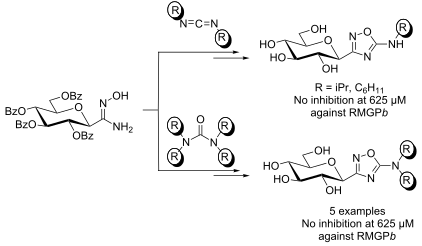
Figure 2: Structures of the two targeted 3-glucosyl-5-amino-1,2,4-oxadiazoles.
Scheme 1: Synthesis of 3-glucosyl-5-amino-1,2,4-oxadiazoles.
Beilstein J. Org. Chem. 2015, 11, 358–362, doi:10.3762/bjoc.11.41
Graphical Abstract
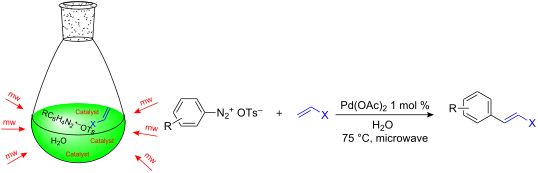
Scheme 1: Arylation of methyl acrylate (1a) with arenediazonium tosylate 2a.
Scheme 2: Arylation of alkenes with ADT.
Beilstein J. Org. Chem. 2015, 11, 92–146, doi:10.3762/bjoc.11.13
Graphical Abstract
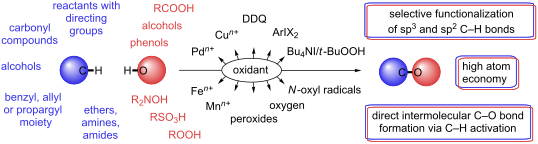
Scheme 1: Cross-dehydrogenative coupling.
Scheme 2: Cross-dehydrogenative C–O coupling.
Scheme 3: Regioselective ortho-acetoxylation of meta-substituted arylpyridines and N-arylamides.
Scheme 4: ortho-Acyloxylation and alkoxylation of arenes directed by pyrimidine, benzoxazole, benzimidazole a...
Scheme 5: Cu(OAc)2/AgOTf/O2 oxidative system in the ortho-alkoxylation of arenes.
Scheme 6: Pd(OAc)2/persulfate oxidative system in the ortho-alkoxylation and acetoxylation of arenes with nit...
Scheme 7: ortho-Acetoxylation and methoxylation of O-methyl aryl oximes, N-phenylpyrrolidin-2-one, and (3-ben...
Scheme 8: Ruthenium-catalyzed ortho-acyloxylation of acetanilides.
Scheme 9: Acetoxylation and alkoxylation of arenes with amide directing group using Pd(OAc)2/PhI(OAc)2 oxidat...
Scheme 10: Alkoxylation of azoarenes, 2-aryloxypyridines, picolinamides, and N-(1-methyl-1-(pyridin-2-yl)ethyl...
Scheme 11: Acetoxylation of compounds containing picolinamide and quinoline-8-amine moieties using the Pd(OAc)2...
Scheme 12: (CuOH)2CO3 catalyzed oxidative ortho-etherification using air as oxidant.
Scheme 13: Copper-catalyzed aerobic alkoxylation and aryloxylation of arenes containing pyridine-N-oxide moiet...
Scheme 14: Cobalt-catalyzed aerobic alkoxylation of arenes and alkenes containing pyridine N-oxide moiety.
Scheme 15: Non-symmetric double-fold C–H ortho-acyloxylation.
Scheme 16: N-nitroso directed ortho-alkoxylation of arenes.
Scheme 17: Selective alkoxylation and acetoxylation of alkyl groups.
Scheme 18: Acetoxylation of 2-alkylpyridines and related compounds.
Scheme 19: Acyloxylation and alkoxylation of alkyl fragments of substrates containing amide or sulfoximine dir...
Scheme 20: Palladium-catalyzed double sp3 C–H alkoxylation of N-(quinolin-8-yl)amides for the synthesis of sym...
Scheme 21: Copper-catalyzed acyloxylation of methyl groups of N-(quinolin-8-yl)amides.
Scheme 22: One-pot acylation and sp3 C–H acetoxylation of oximes.
Scheme 23: Possible mechanism of oxidative esterification catalyzed by N-heterocyclic nucleophilic carbene.
Scheme 24: Oxidative esterification employing stoichiometric amounts of aldehydes and alcohols.
Scheme 25: Selective oxidative coupling of aldehydes with alcohols in the presence of amines.
Scheme 26: Iodine mediated oxidative esterification.
Scheme 27: Oxidative C–O coupling of benzyl alcohols with methylarenes under the action of Bu4NI/t-BuOOH syste...
Scheme 28: Oxidative coupling of methyl- and ethylarenes with aromatic aldehydes under the action of Bu4NI/t-B...
Scheme 29: Cross-dehydrogenative C–O coupling of aldehydes with t-BuOOH in the presence of Bu4NI.
Scheme 30: Bu4NI-catalyzed α-acyloxylation reaction of ethers and ketones with aldehydes and t-BuOOH.
Scheme 31: Oxidative coupling of aldehydes with N-hydroxyimides and hexafluoroisopropanol.
Scheme 32: Oxidative coupling of alcohols with N-hydroxyimides.
Scheme 33: Oxidative coupling of aldehydes and primary alcohols with N-hydroxyimides using (diacetoxyiodo)benz...
Scheme 34: Proposed mechanism of the oxidative coupling of aldehydes and N-hydroxysuccinimide under action of ...
Scheme 35: Oxidative coupling of aldehydes with pivalic acid (172).
Scheme 36: Oxidative C–O coupling of aldehydes with alkylarenes using the Cu(OAc)2/t-BuOOH system.
Scheme 37: Copper-catalyzed acyloxylation of C(sp3)-H bond adjacent to oxygen in ethers using benzyl alcohols.
Scheme 38: Oxidative C–O coupling of aromatic aldehydes with cycloalkanes.
Scheme 39: Ruthenium catalyzed cross-dehydrogenative coupling of primary and secondary alcohols.
Scheme 40: Cross-dehydrogenative C–O coupling reactions of β-dicarbonyl compounds with sulfonic acids, acetic ...
Scheme 41: Acyloxylation of ketones, aldehydes and β-dicarbonyl compounds using carboxylic acids and Bu4NI/t-B...
Scheme 42: Acyloxylation of ketones using Bu4NI/t-BuOOH system.
Scheme 43: Cross-dehydrogenative C–O coupling of β-dicarbonyl compounds and their heteroanalogues with N-hydro...
Scheme 44: Cross-dehydrogenative C–O coupling of β-dicarbonyl compounds and their heteroanalogues with t-BuOOH....
Scheme 45: Oxidative C–O coupling of 2,6-dialkylphenyl-β-keto esters and thioesters with tert-butyl hydroxycar...
Scheme 46: α’-Acyloxylation of α,β-unsaturated ketones using KMnO4.
Scheme 47: Possible mechanisms of the acetoxylation at the allylic position of alkenes by Pd(OAc)2.
Scheme 48: Products of the oxidation of terminal alkenes by Pd(II)/AcOH/oxidant system.
Scheme 49: Acyloxylation of terminal alkenes with carboxylic acids.
Scheme 50: Synthesis of linear E-allyl esters by cross-dehydrogenative coupling of terminal alkenes wih carbox...
Scheme 51: Pd(OAc)2-catalyzed acetoxylation of Z-vinyl(triethylsilanes).
Scheme 52: α’-Acetoxylation of α-acetoxyalkenes with copper(II) chloride in acetic acid.
Scheme 53: Oxidative acyloxylation at the allylic position of alkenes and at the benzylic position of alkylare...
Scheme 54: Copper-catalyzed alkoxylation of methylheterocyclic compounds using di-tert-butylperoxide as oxidan...
Scheme 55: Oxidative C–O coupling of methylarenes with β-dicarbonyl compounds or phenols.
Scheme 56: Copper-catalyzed esterification of methylbenzenes with cyclic ethers and cycloalkanes.
Scheme 57: Oxidative C–O coupling of carboxylic acids with toluene catalyzed by Pd(OAc)2.
Scheme 58: Oxidative acyloxylation at the allylic position of alkenes with carboxylic acids using the Bu4NI/t-...
Scheme 59: Cross-dehydrogenative C–O coupling of carboxylic acids with alkylarenes using the Bu4NI/t-BuOOH sys...
Scheme 60: Oxidative C–O cross-coupling of methylarenes with ethyl or isopropylarenes.
Scheme 61: Phosphorylation of benzyl C–H bonds using the Bu4NI/t-BuOOH oxidative system.
Scheme 62: Selective C–H acetoxylation of 2,3-disubstituted indoles.
Scheme 63: Acetoxylation of benzylic position of alkylarenes using DDQ as oxidant.
Scheme 64: C–H acyloxylation of diarylmethanes, 3-phenyl-2-propen-1-yl acetate and dimethoxyarene using DDQ.
Scheme 65: Cross-dehydrogenative C–O coupling of 1,3-diarylpropylenes and 1,3-diarylpropynes with alcohols.
Scheme 66: One-pot azidation and C–H acyloxylation of 3-chloro-1-arylpropynes.
Scheme 67: Cross-dehydrogenative C–O coupling of 1,3-diarylpropylenes, (E)-1-phenyl-2-isopropylethylene and is...
Scheme 68: Cross-dehydrogenative C–O coupling of alkylarenes and related compounds with N-hydroxyphthalimide.
Scheme 69: Acetoxylation at the benzylic position of alkylarenes mediated by N-hydroxyphthalimide.
Scheme 70: C–O coupling of methylarenes with aromatic carboxylic acids employing the NaBrO3/NaHSO3 system.
Scheme 71: tert-Butyl peroxidation of allyl, propargyl and benzyl ethers catalyzed by Fe(acac)3.
Scheme 72: Cross-dehydrogenative C–O coupling of ethers with carboxylic acids mediated by Bu4NI/t-BuOOH system....
Scheme 73: Oxidative acyloxylation of dimethylamides and dioxane with 2-aryl-2-oxoacetic acids accompanied by ...
Scheme 74: tert-Butyl peroxidation of N-benzylamides and N-allylbenzamide using the Bu4NI/t-BuOOH system.
Scheme 75: Cross-dehydrogenative C–O coupling of aromatic carboxylic acids with ethers using Fe(acac)3 as cata...
Scheme 76: Cross-dehydrogenative C–O coupling of cyclic ethers with 2-hydroxybenzaldehydes using iron carbonyl...
Scheme 77: Cross-dehydrogenative C–O coupling of ethers with β-dicarbonyl compounds and phenols using copper c...
Scheme 78: Cross-dehydrogenative C–O coupling of 2-hydroxybenzaldehyde with dioxane catalyzed by Cu2(BPDC)2(BP...
Scheme 79: Ruthenium chloride-catalyzed acyloxylation of β-lactams.
Scheme 80: Ruthenium-catalyzed tert-butyl peroxydation amides and acetoxylation of β-lactams.
Scheme 81: PhI(OAc)2-mediated α,β-diacetoxylation of tertiary amines.
Scheme 82: Electrochemical oxidative methoxylation of tertiary amines.
Scheme 83: Cross-dehydrogenative C–O coupling of ketene dithioacetals with carboxylic acids in the presence of...
Scheme 84: Cross-dehydrogenative C–O coupling of enamides with carboxylic acids using iodosobenzene as oxidant....
Scheme 85: Oxidative alkoxylation, acetoxylation, and tosyloxylation of acylanilides using PhI(O(O)CCF3)2 in t...
Scheme 86: Proposed mechanism of the oxidative C–O coupling of actetanilide with O-nucleophiles in the presenc...
Scheme 87: Three-component coupling of aldehydes, anilines and alcohols involving oxidative intermolecular C–O...
Scheme 88: Oxidative coupling of phenols with alcohols.
Scheme 89: 2-Acyloxylation of quinoline N-oxides with arylaldehydes in the presence of the CuOTf/t-BuOOH syste...
Scheme 90: Cross-dehydrogenative C–O coupling of azoles with primary alcohols.
Scheme 91: Oxidation of dipyrroles to dipyrrins and subsequent oxidative alkoxylation in the presence of Na3Co...
Scheme 92: Oxidative dehydrogenative carboxylation of alkanes and cycloalkanes to allylic esters.
Scheme 93: Pd-catalyzed acetoxylation of benzene.
Beilstein J. Org. Chem. 2015, 11, 66–73, doi:10.3762/bjoc.11.10
Graphical Abstract
Scheme 1: Nucleophilic radical addition to imines mediated by titanium salts.
Scheme 2: Radical domino approach to the synthesis of β-aminoacohols triggered by titanium salts.
Scheme 3: Competitive imine formation from THF.
Scheme 4: Reaction mechanism.
Scheme 5: Domino reaction in the presence of ethanol.
Beilstein J. Org. Chem. 2014, 10, 2930–2954, doi:10.3762/bjoc.10.312
Graphical Abstract
Scheme 1: The Grignard-based synthesis of 6-alkyl phenanthridine.
Scheme 2: Radical-mediated synthesis of 6-arylphenanthridine [14].
Scheme 3: A t-BuO• radical-assisted homolytic aromatic substitution mechanism proposed for the conversion of ...
Scheme 4: Synthesis of 5,6-unsubstituted phenanthridine starting from 2-iodobenzyl chloride and aniline [17].
Scheme 5: Phenanthridine synthesis initiated by UV-light irradiation photolysis of acetophenone O-ethoxycarbo...
Scheme 6: PhI(OAc)2-mediated oxidative cyclization of 2-isocyanobiphenyls with CF3SiMe3 [19,20].
Scheme 7: Targeting 6-perfluoroalkylphenanthridines [21,22].
Scheme 8: Easily accessible biphenyl isocyanides reacting under mild conditions (room temp., visible light ir...
Scheme 9: Microwave irradiation of Diels–Alder adduct followed by UV irradiation of dihydrophenanthridines yi...
Scheme 10: A representative palladium catalytic cycle.
Scheme 11: The common Pd-catalyst for the biphenyl conjugation results simultaneously in picolinamide-directed...
Scheme 12: Pd(0)-mediated cyclisation of imidoyl-selenides forming 6-arylphenanthridine derivatives [16]. The inse...
Scheme 13: Palladium-catalysed phenanthridine synthesis.
Scheme 14: Aerobic domino Suzuki coupling combined with Michael addition reaction in the presence of a Pd(OAc)2...
Scheme 15: Rhodium-catalysed alkyne [2 + 2 + 2] cycloaddition reactions [36].
Scheme 16: The O-acetyloximes derived from 2′-arylacetophenones underwent N–O bond cleavage and intramolecular ...
Scheme 17: C–H arylation with aryl chloride in the presence of a simple diol complex with KOt-Bu (top) [39]; for s...
Scheme 18: The subsequent aza-Claisen rearrangement, ring-closing enyne metathesis and Diels–Alder reaction – ...
Scheme 19: Phenanthridine central-ring cyclisation with simultaneous radical-driven phosphorylation [42].
Scheme 20: Three component reaction yielding the benzo[a]phenanthridine core in excellent yields [44].
Scheme 21: a) Reaction of malononitrile and 1,3-indandione with BEP to form the cyclised DPP products; b) pH c...
Figure 1: Schematic presentation of the intercalative binding mode by the neighbour exclusion principle and i...
Figure 2: Urea and guanidine derivatives of EB with modified DNA interactions [57].
Figure 3: Structure of mono- (3) and bis-biguanide (4) derivative. Fluorescence (y-axis normalised to startin...
Scheme 22: Bis-phenanthridinium derivatives (5–7; inert aliphatic linkers, R = –(CH2)4– or –(CH2)6–): rigidity...
Figure 4: Series of amino acid–phenanthridine building blocks (general structure 10; R = H; Gly) and peptide-...
Figure 5: General structure of 45 bis-ethidium bromide analogues. Reproduced with permission from [69]. Copyright...
Scheme 23: Top: Recognition of poly(U) by 12 and ds-polyAH+ by 13; bottom: Recognition of poly(dA)–poly(dT) by ...
Figure 6: The bis-phenanthridinium–adenine derivative 15 (LEFT) showed selectivity towards complementary UMP;...
Figure 7: The neomycin–methidium conjugate targeting DNA:RNA hybrid structures [80].
Figure 8: Two-colour RNA intercalating probe for cell imaging applications: Left: Chemical structure of EB-fl...
Figure 9: The ethidium bromide nucleosides 17 (top) and 18 (bottom). DNA duplex set 1 and 2 (E = phenanthridi...
Figure 10: Left: various DNA duplexes; DNA1 and DNA2 used to study the impact on the adjacent basepair type on...
Figure 11: Structure of 4,9-DAP derivative 19; Rright: MIAPaCa-2 cells stained with 10 μM 19 after 60 and 120 ...
Figure 12: Examples of naturally occurring phenanthridine analogues.
Beilstein J. Org. Chem. 2014, 10, 2858–2873, doi:10.3762/bjoc.10.303
Graphical Abstract
Figure 1: Common types of electrochemically induced cyclization reactions.
Scheme 1: Principle of indirect electrolysis.
Scheme 2: Anodic intramolecular cyclization of olefines in methanol.
Scheme 3: Anodic cyclization of olefines in CH2Cl2/DMSO.
Scheme 4: Intramolecular coupling of 1,6-dienes in CH2Cl2/DMSO.
Scheme 5: Cyclization of bromopropargyloxy ester 12.
Scheme 6: Proposed mechanism for the radical cyclization of bromopropargyloxy ester 12.
Scheme 7: Preparation of pyrrolidines and tetrahydrofurans via Kolbe-type electrolysis of unsaturated carboxy...
Scheme 8: Anodic cyclization of chalcone oximes 19.
Scheme 9: Generation of N-acyliminium (23) and alkoxycarbenium species (24) from amides and ethers with and w...
Scheme 10: Anodic cyclization of dipeptide 25.
Scheme 11: Anodic cyclization of a dipeptide using an electroauxiliary.
Scheme 12: Anodic cyclization of hydroxyamino compound 29.
Scheme 13: Cyclization of unsaturated thioacetals using the ArS(ArSSAr)+ mediator.
Scheme 14: Cyclization of biaryl 35 to carbazol 36 as key-step of the synthesis of glycozoline (37).
Scheme 15: Electrosynthesis of 39 as part of the total synthesis of alkaloids 40 and 41.
Scheme 16: Wacker-type cyclization of alkenyl phenols 42.
Scheme 17: Cathodic synthesis of indol derivatives.
Scheme 18: Fluoride mediated anodic cyclization of α-(phenylthio)acetamides.
Scheme 19: Synthesis of 2-substituted benzoxazoles from Schiff bases.
Scheme 20: Synthesis of euglobal model compounds via electrochemically induced Diels–Alder cycloaddition.
Scheme 21: Cycloaddition of anodically generated N-acyliminium species 58 with olefins and alkynes.
Scheme 22: Electrochemical aziridination of olefins.
Scheme 23: Proposed mechanism for the aziridination reaction.
Scheme 24: Electrochemical synthesis of benzofuran and indole derivatives.
Scheme 25: Anodic anellation of catechol derivatives 66 with different 1,3-dicarbonyl compounds.
Scheme 26: Electrosynthesis of 1,2-fused indoles from catechol and ketene N,O-acetals.
Scheme 27: Reaction of N-acyliminium pools with olefins having a nucleophilic substituent.
Scheme 28: Synthesis of thiochromans using the cation-pool method.
Scheme 29: Electrochemical synthesis and diversity-oriented modification of 73.