Search results
Search for "derivatization" in Full Text gives 254 result(s) in Beilstein Journal of Organic Chemistry. Showing first 200.
Efficient synthesis of 4-substituted-ortho-phthalaldehyde analogues: toward the emergence of new building blocks
Beilstein J. Org. Chem. 2019, 15, 721–726, doi:10.3762/bjoc.15.67
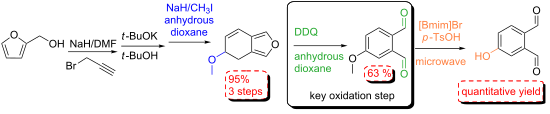
- dialdehydes in fluorometric methods with regard to the analysis of amino acids and biogenic amines [1][2][3]. It is also used as a derivatization reagent in order to quantify hydrazine by gas chromatography coupled with a mass spectrometer detector [4]. Recently, it was adopted for the analysis of γ


Synthesis and biological investigation of (+)-3-hydroxymethylartemisinin
Beilstein J. Org. Chem. 2019, 15, 567–570, doi:10.3762/bjoc.15.51
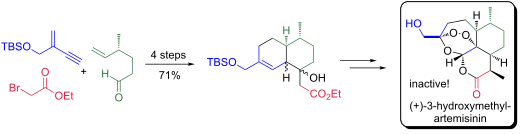
- artemisinin synthesis that addresses these challenges and pave the way for derivatization of the (+)-artemisinin skeleton at positions not accessible using current methodology [14]. Based on our approach we report here on the synthesis and biological activity of the title compound (+)-3


Aqueous olefin metathesis: recent developments and applications
Beilstein J. Org. Chem. 2019, 15, 445–468, doi:10.3762/bjoc.15.39
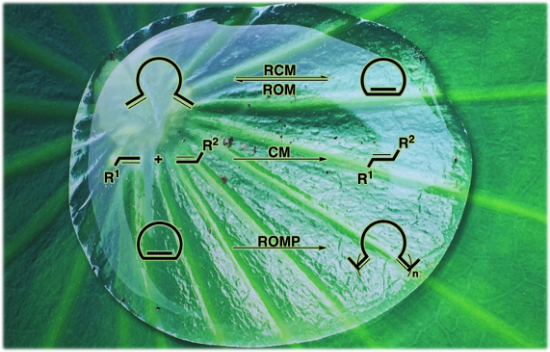
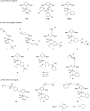
- some of the most representative catalysts developed for aqueous metathesis. Water-soluble catalysts are obtained by derivatization of classical catalysts G-II and HG-II (Figure 1a), resulting from the introduction of ionic tags and highly polar groups such as ammonium tags (Figure 1b) and PEGs (Figure




Study on the regioselectivity of the N-ethylation reaction of N-benzyl-4-oxo-1,4-dihydroquinoline-3-carboxamide
Beilstein J. Org. Chem. 2019, 15, 388–400, doi:10.3762/bjoc.15.35
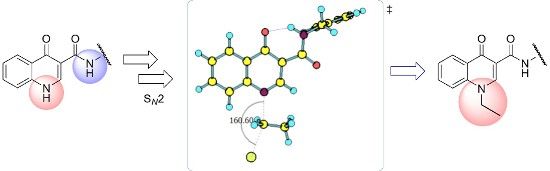
- , accomplished through temperatures above 200 °C, any derivatization afterwards should maintain the N–H carboxamide group intact, in order to provide the hydrogen bond donor group attached to C-3, which is usually related to the bioactivity of such compounds (Figure 2) [3][23]. In order to obtain an N1-alkylated


Sigmatropic rearrangements of cyclopropenylcarbinol derivatives. Access to diversely substituted alkylidenecyclopropanes
Beilstein J. Org. Chem. 2019, 15, 333–350, doi:10.3762/bjoc.15.29
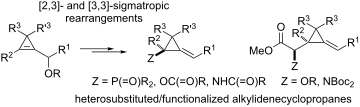
- rearrangement of cyanate 27 into isocyanate 28 (Scheme 15) [53]. All attempts to isolate isocyanate 28 were unsuccessful but derivatization of this latter reactive intermediate could be achieved in situ by addition of a broad range of nucleophiles, which were either used as co-solvents or added in excess. Thus
- derivatization in the case of other substrates devoid of a pyridine ring, several 3,3-dimethylcyclopropenylcarbinyl carbamates were engaged in the dehydration–[3,3]-sigmatropic rearrangement sequence under the previously used conditions but trifluoroacetic anhydride (1.5 equiv) and pyridine (1.5 equiv) were then

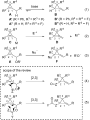






Unexpected loss of stereoselectivity in glycosylation reactions during the synthesis of chondroitin sulfate oligosaccharides
Beilstein J. Org. Chem. 2019, 15, 137–144, doi:10.3762/bjoc.15.14
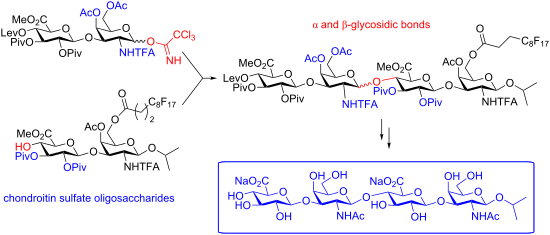
- oligosaccharides in order to improve the glycosylation efficiency [20][21]. In this approach, glucose instead of GlcA residues were employed in the oligosaccharide assembly and final oxidation and derivatization was carried out at the oligomer stage. Syndecan-1 glycopeptide containing a CS type A sequence was also


Asymmetric synthesis of a high added value chiral amine using immobilized ω-transaminases
Beilstein J. Org. Chem. 2019, 15, 60–66, doi:10.3762/bjoc.15.6
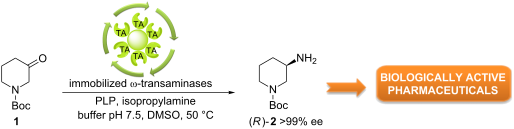
- °C. The eluent was H2O/CH3CN/DEA 70:30:0.1. Authentic standards were analyzed before analysis of the reaction mixtures. The enantiomeric excesses were determined after derivatization. An aliquot (50 mg) of the crude sample and 100 mg K2CO3 were added to a 15 mL volumetric flask and dissolved in 1 mL


N-Acylated amino acid methyl esters from marine Roseobacter group bacteria
Beilstein J. Org. Chem. 2018, 14, 2964–2973, doi:10.3762/bjoc.14.276
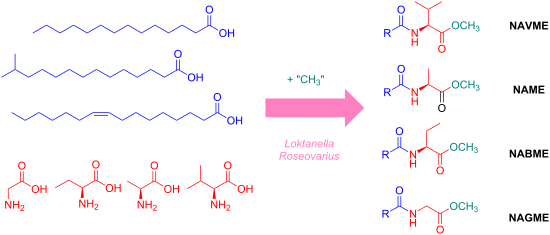
- analysis, and structural proposals were derived from the mass spectra and by derivatization. Verification of compound structures was performed by synthesis. NABMEs, NAVMEs and NAGMEs are produced in low amounts only, making mass spectrometry the method of choice for their detection. The analysis of both EI
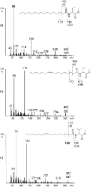
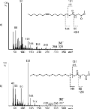
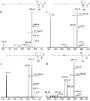
- 1). Localization of the double bond was established via DMDS derivatization as described previously [23]. Due to the low amounts no double bond position could be established for C14:1-NAME, while the double bond of C18:1 NAME was located at C-11. Similar as in AHLs, the double bond location in
- therefore proposed to be N-(hexadecanoyl)-2-aminobutyric acid methyl ester (7), while the earlier eluting J with m/z 353 compound was likely N-[(Z)-hexadec-9-enoyl]-2-aminobutyric acid methyl ester (8). The double bond position was determined by DMDS derivatization. The structures of both K and J were





Protein–protein interactions in bacteria: a promising and challenging avenue towards the discovery of new antibiotics
Beilstein J. Org. Chem. 2018, 14, 2881–2896, doi:10.3762/bjoc.14.267
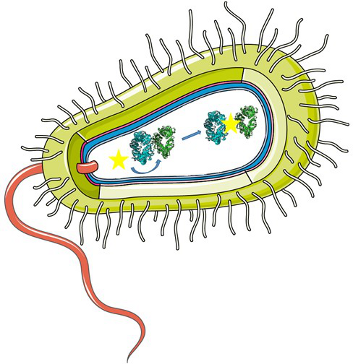
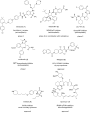
- library of small molecules whose inhibition properties were measured by a fluorescence polarization competition assay [89]. Derivatization of the indole nitrogen atom of lead compound 36 (Figure 8) returned the interesting indole analogue 37 (Figure 8). The authors then confirmed that the compounds were




Enhanced single-isomer separation and pseudoenantiomer resolution of new primary rim heterobifunctionalized α-cyclodextrin derivatives
Beilstein J. Org. Chem. 2018, 14, 2829–2837, doi:10.3762/bjoc.14.261
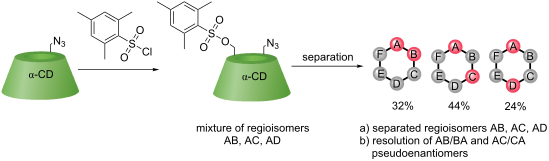
- prepared all possible regioisomers of primary rim-disubstituted α-CD derivatives using the most common CD intermediates by commonly used derivatization (bromination, tosylation and capping). The three positional isomers (AB, AC, AD) were separated by ad hoc-developed HPLC methods, and the regioisomeric


Synthesis of pyrrolidine-based hamamelitannin analogues as quorum sensing inhibitors in Staphylococcus aureus
Beilstein J. Org. Chem. 2018, 14, 2822–2828, doi:10.3762/bjoc.14.260
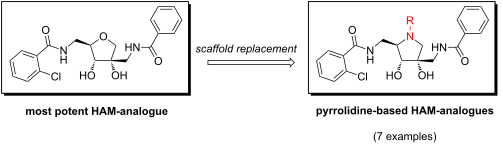
- developed and delivered the pyrrolidine analogue in 17 steps in high yield. Chemoselective derivatization of the pyrrolidine nitrogen atom resulted in 6 more compounds. The synthesized compounds were evaluated in a biofilm model, but were all inactive. Keywords: hamamelitannin; iminosugar; pyrrolidine
- pyrrolidine-based hamamelitannin analogues is depicted in Scheme 1. The synthesis of 4 as a key intermediate allows to gain access to a diverse set of analogues by chemoselective late-stage derivatization of the pyrrolidine nitrogen. Previously, we used the iminosugar 5 to prepare a series of 2


Dispersion-mediated steering of organic adsorbates on a precovered silicon surface
Beilstein J. Org. Chem. 2018, 14, 2715–2721, doi:10.3762/bjoc.14.249
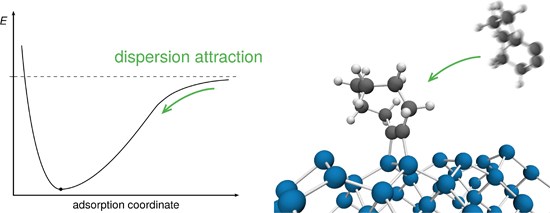
- missing a second functional group necessary for the LbL approach, previous studies have shown that synthetic routes exist for derivatization and that the reactivity of the strained triple bond of 1 with the surface is not affected by the second functional group [4][5][9]. Studying the adsorption behaviour


Assembly of fully substituted triazolochromenes via a novel multicomponent reaction or mechanochemical synthesis
Beilstein J. Org. Chem. 2018, 14, 2689–2697, doi:10.3762/bjoc.14.246
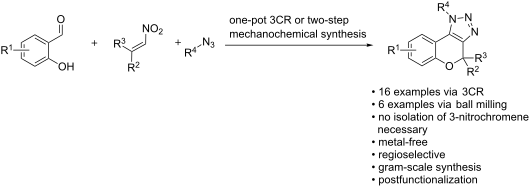
- substituents on the chromene core and 1,2,3-triazole offer a lot of possibilities for further derivatization and optimization towards biologically relevant structures such as flavonoid structures. Our group developed a Knoevenagel-assisted three-component reaction of (protected) salicylaldehyde, ethyl
- yielding 13 in 51% yield. Since aldehydes are interesting and versatile functional moieties for further derivatization, e.g., used in the synthesis of heterocyclic scaffolds [33][34][50], several multicomponent reactions [40][51][52][53], etc., we wished to convert dimethyl acetal 5j into aldehyde appended




Microwave-assisted synthesis of biologically relevant steroidal 17-exo-pyrazol-5'-ones from a norpregnene precursor by a side-chain elongation/heterocyclization sequence
Beilstein J. Org. Chem. 2018, 14, 2589–2596, doi:10.3762/bjoc.14.236
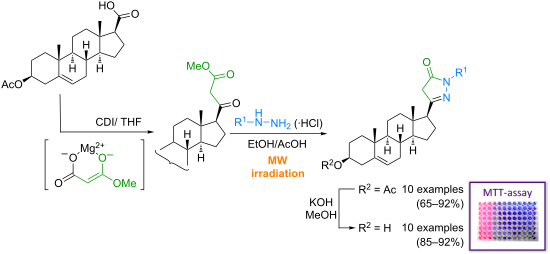
- , a subsequent derivatization with acetic anhydride in pyridine to afford 8, allowed its structure verification indirectly. This derivatization did not only improve the solubility of the compound, but also eliminated the possibility of prototropic tautomerism through acetylation of both the amino and


Cobalt- and rhodium-catalyzed carboxylation using carbon dioxide as the C1 source
Beilstein J. Org. Chem. 2018, 14, 2435–2460, doi:10.3762/bjoc.14.221
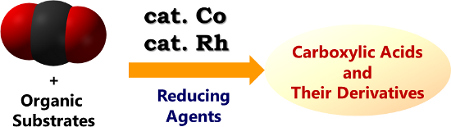
- -phenanthroline) and Mn powder (3.0 equiv) in N,N-dimethylacetamide (DMA) under an atmospheric pressure of CO2 at room temperature (Scheme 1). Under optimized reaction conditions, the carboxylated product 2a-Me was obtained in 83% yield after derivatization to the corresponding methyl ester. In the absence of the
- (Scheme 7) [35][36]. When the reaction of 5-phenylpent-2-enenitrile (7a) was performed in the presence of catalytic Co(acac)2 and with Et2Zn as the reductant, the carboxylation proceeded to yield 8a-Me after its derivatization to the corresponding methyl ester. In these reactions, the selection of the
- -catalyzed carboxylation of 11a. Scope of the carboxylation of allylarenes 11. Scope of the carboxylation of 1,4-diene derivatives 14. Plausible reaction mechanism for the Co-catalyzed C(sp3)–H carboxylation of allylarenes. Optimization of the Co-catalyzed carboxyzincation of 16a. Derivatization of the



Stereoselective total synthesis and structural revision of the diacetylenic diol natural products strongylodiols H and I
Beilstein J. Org. Chem. 2018, 14, 2313–2320, doi:10.3762/bjoc.14.206
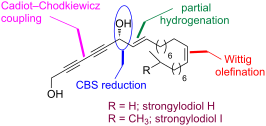
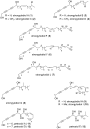
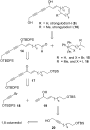
- 3) [32]. After derivatization and determination through Mosher’s ester analysis [33][34][35], the absolute configuration of the newly generated secondary hydroxy group-bearing carbon center (C6) was determined as R configuration (see Supporting Information File 1). The NMR analysis of the Mosher’s



Functionalization of graphene: does the organic chemistry matter?
Beilstein J. Org. Chem. 2018, 14, 2018–2026, doi:10.3762/bjoc.14.177
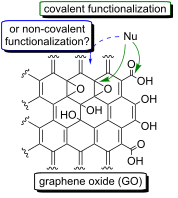
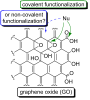
- constitutes a nucleophilic partner in a reaction with a carboxyl group (COOH). As a result of derivatization, an amide or ester bond is formed between a graphene-family material and a given chemical. The nature of the derivatization of carboxyl functionalities onto the graphene sheet is directly associated
- material applies for the derivatization of GO and RGO based on heating or mixing a carbon nanostructure with an amine or hydroxy-containing component [24][25][26]. For example [24], it is not clear whether the word “amination” refers to the formation of the amide (NH–CO) bond or to the reaction that the


Strong binding and fluorescence sensing of bisphosphonates by guanidinium-modified calix[5]arene
Beilstein J. Org. Chem. 2018, 14, 1840–1845, doi:10.3762/bjoc.14.157
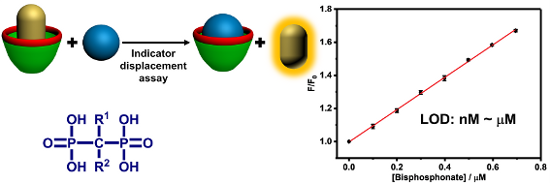
- molecules [9]. However, this method will greatly reduce the life of the column [10]. Moreover, the absence of a chromophore in most BPs lead to the employment of derivatization by an UV–vis light-absorbing or fluorescence label for detection [11][12]. However, directly labeling BPs in biological media is


Acyl-group specificity of AHL synthases involved in quorum-sensing in Roseobacter group bacteria
Beilstein J. Org. Chem. 2018, 14, 1309–1316, doi:10.3762/bjoc.14.112
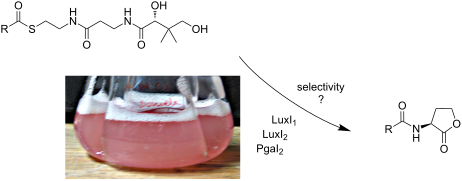
- addition. The location of the double bond of the major acids was determined by dimethyl disulfide (DMDS) derivatization [32][34]. The fragment ions at m/z 145 and 161 of the DMDS-derivative and the secondary fragments obtained by loss of the methyl ester group (m/z 129) located the position of the double


Investigations of alkynylbenziodoxole derivatives for radical alkynylations in photoredox catalysis
Beilstein J. Org. Chem. 2018, 14, 1215–1221, doi:10.3762/bjoc.14.103
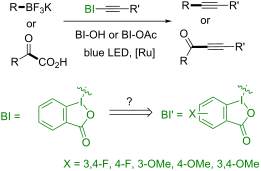
- investigate their reactivity toward alkyl radical and acyl radical additions in photoredox catalysis. The mechanistic investigations were carried out to study the derivatization of BI-alkynes in radical acceptor and oxidative quencher reactivity, and the electron-rich benziodoxole derivatives demonstrated
- BI-alkyne derivatization. We envision these alkynylbenziodoxole derivatives will provide alternative radical alkynylation reagents in photoredox catalysis and other synthetic applications. Investigation of alkynylbenziodoxole derivatives for radical alkynylations. Synthesis and characterization of BI


On the design principles of peptide–drug conjugates for targeted drug delivery to the malignant tumor site
Beilstein J. Org. Chem. 2018, 14, 930–954, doi:10.3762/bjoc.14.80
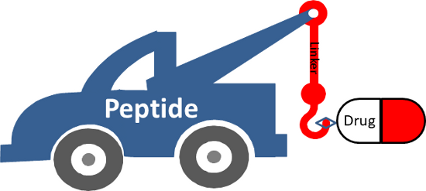
- intrinsic functional group for direct conjugation with the peptide/linker (Figure 4) or a functional group able to be derivatized for further conjugation (i.e., click chemistry [86]). In the latter case, the site of derivatization has to be carefully selected so that the biological activity of the drug and


Stimuli-responsive oligonucleotides in prodrug-based approaches for gene silencing
Beilstein J. Org. Chem. 2018, 14, 436–469, doi:10.3762/bjoc.14.32
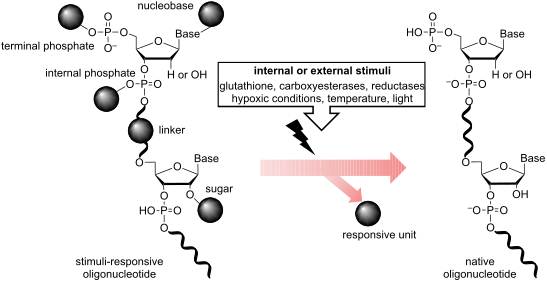
- inhibited until photoirradiation releases the native DNAzyme [77]. In phosphate-caged siRNAs, chemical derivatization of phosphates either in the phosphodiester backbone [72] or at a terminal phosphate [73][74] of ON was performed following two different approaches: a) post-functionalization of ON with a


Syn-selective silicon Mukaiyama-type aldol reactions of (pentafluoro-λ6-sulfanyl)acetic acid esters with aldehydes
Beilstein J. Org. Chem. 2018, 14, 373–380, doi:10.3762/bjoc.14.25

- [22]. There are not many transformations of aliphatic SF5 compounds described in the literature. Among them are the preparation and derivatization of SF5-aldehydes [23], Diels–Alder reactions [24][25][26], the “click reaction” of SF5-acetylenes with azides to form triazoles [27], and 1,3-dipolar


One-pot preparation of 4-aryl-3-bromocoumarins from 4-aryl-2-propynoic acids with diaryliodonium salts, TBAB, and Na2S2O8
Beilstein J. Org. Chem. 2018, 14, 345–353, doi:10.3762/bjoc.14.22
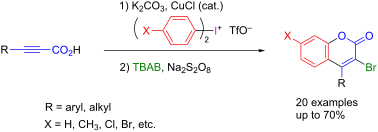
- preparation of 3-bromo-4-phenylcoumarins 3a from 3-phenyl-2-propynoic acid (1a) with daryliodonium triflates B–E. Derivatization of 3-bromo-4-phenylcoumarin. Possible reaction pathway. O-Phenylation of 3-phenyl-2-propynoic acid (1a) with diphenyliodonium triflate (A). Halocyclization of phenyl 3-phenyl-2



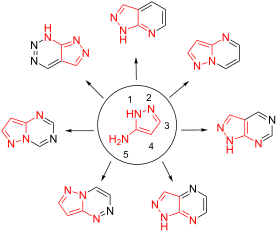
5-Aminopyrazole as precursor in design and synthesis of fused pyrazoloazines
Beilstein J. Org. Chem. 2018, 14, 203–242, doi:10.3762/bjoc.14.15