Search results
Search for "iron" in Full Text gives 275 result(s) in Beilstein Journal of Organic Chemistry. Showing first 200.
Enantioselective Diels–Alder reaction of anthracene by chiral tritylium catalysis
Beilstein J. Org. Chem. 2019, 15, 1304–1312, doi:10.3762/bjoc.15.129
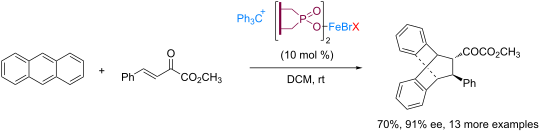
- combination, affording adduct 5a in 91% ee and 70% yield at room temperature (Table 1, entries 17 and 18). In a control experiment, we found that chiral iron salt 2f itself turned out to be ineffective to catalyze the reaction in the absence of trityl chloride (Table 1, entry 19), indicating that the reaction
- used, the reaction showed high yield (93% for 5o) but low enantioselectivity (23% ee, Scheme 3a). Surprisingly, the chiral iron salt 2f itself in the absence of trityl chloride also promoted the reaction, showing a relatively lower activity with 85% yield of 5o but opposite chiral induction (−65% ee
- , Scheme 3a). The electron-rich nature of dimethylanthracene may account for catalysis with the iron salts. On the other hand, an opposite chiral induction in this case is a clear indication of distinctive carbocation catalysis instead of metal Lewis acid catalysis in the presence of trityl chloride. In


Genomics-inspired discovery of massiliachelin, an agrochelin epimer from Massilia sp. NR 4-1
Beilstein J. Org. Chem. 2019, 15, 1298–1303, doi:10.3762/bjoc.15.128
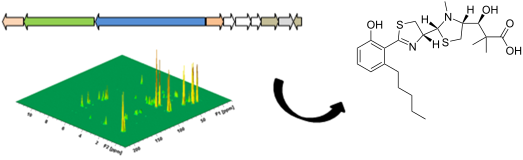
- -producing bacterium Massilia sp. NR 4-1 and predicted to direct the biosynthesis of a molecule that is structurally related to the thiazoline-containing siderophore micacocidin. In order to track this compound, we analyzed the metabolic profiles of Massilia cultures grown under different iron concentrations
- . A compound which was found to be predominantly produced under iron deficiency was subsequently isolated. Its structural characterization by spectroscopic and bioinformatic analyses revealed a previously not known diastereomer of the cytotoxic alkaloid agrochelin. The structure of this natural
- domain organization of the two corresponding biosynthetic assembly lines further indicated that Massilia sp. NR 4-1 does not produce micacocidin, but a derivative of this secondary metabolite. The isolation of siderophores from microorganisms is usually straightforward due to their iron-dependent


Mechanochemical synthesis of hyper-crosslinked polymers: influences on their pore structure and adsorption behaviour for organic vapors
Beilstein J. Org. Chem. 2019, 15, 1154–1161, doi:10.3762/bjoc.15.112
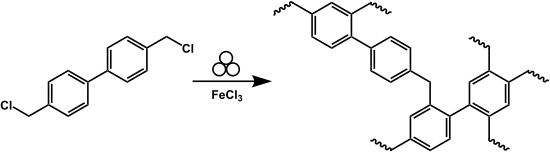
- ’-biphenyl) and six equiv of anhydrous iron(III) chloride as mediator into a 45 mL zirconium oxide milling vessel filled with 22 balls (10 mm, 3.19 ± 0.05 g) of the same material (Figure 1). Consequently, the vessel was transferred into a (Pulverisette 7) premium line (Fritsch GmbH) and milled at 500 rpm for
- recent past we have already observed this behaviour for other reactions including iron(III) chloride [42][44], and thus we have proposed several countermeasures which greatly reduce the vessel pressure during such reactions. For this polymerization reaction we decided to add small quantities of liquid to
- procedure HCP was synthesised through a mechanochemical reaction. This was accomplished by transferring 0.821 g 4,4’-bis(chloromethyl)-1,1’-biphenyl (Sigma-Aldrich) and 3.179 g (six equiv) of anhydrous iron(III) chloride (Sigma-Aldrich) as mediator into a 45 mL zirconium oxide milling vessel filled with 22


Mechanochemistry of supramolecules
Beilstein J. Org. Chem. 2019, 15, 881–900, doi:10.3762/bjoc.15.86
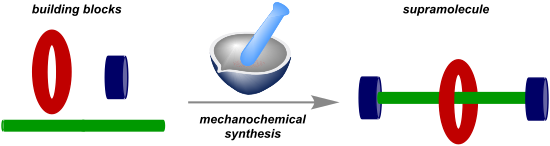
- chemistry of that self-assembled Fe(II) cage [4][12][83]. In 2015, Mal’s group successfully reproduced the synthesis of Nitschke’s tetrahedral iron-cage molecule under solvent-free mechano-milling conditions [84]. Subcomponent self-assembly from components A, B, C, D and Fe(II) in a solvent-free environment


Synthesis of acylglycerol derivatives by mechanochemistry
Beilstein J. Org. Chem. 2019, 15, 811–817, doi:10.3762/bjoc.15.78
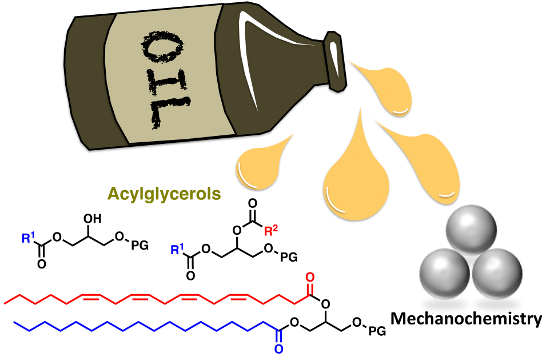
- catalysts such as iron(III) chloride or bismuth(III) triflate was reported. However, the implementation of these protocols in the ball mill only led to trace amounts (less than 5% yield) of the protected monoacylglycerol 4a. Finally, one of the well-established Jacobsen catalysts for the epoxide ring


Synthesis of polydicyclopentadiene using the Cp2TiCl2/Et2AlCl catalytic system and thin-layer oxidation of the polymer in air
Beilstein J. Org. Chem. 2019, 15, 733–745, doi:10.3762/bjoc.15.69
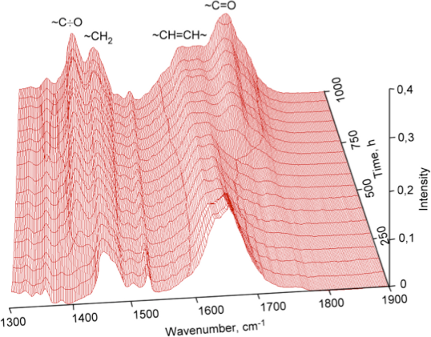
- , those of iron and copper, peroxy and carbonyl group-containing compounds. Unlike the initiation, the steps of chain propagation during polymers oxidation are well studied [28]. The first step of chain propagation consists of the interaction of the free R• radical with oxygen (Scheme 6) and occurs at an




Synthesis and biological investigation of (+)-3-hydroxymethylartemisinin
Beilstein J. Org. Chem. 2019, 15, 567–570, doi:10.3762/bjoc.15.51
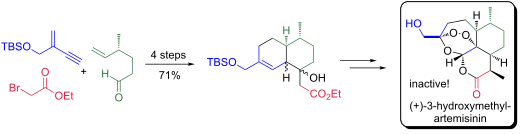
- inactivity against Plasmodium. Furthermore, in cellular systems free ferrous iron [19] as well as haem [20][21] have been proposed to be the main iron sources for artemisinin activation. However, the results on that matter remain controversial [4][22]. Our results challenge the radical hypothesis of


Sigmatropic rearrangements of cyclopropenylcarbinol derivatives. Access to diversely substituted alkylidenecyclopropanes
Beilstein J. Org. Chem. 2019, 15, 333–350, doi:10.3762/bjoc.15.29
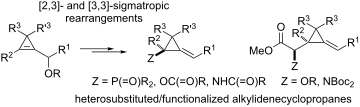
- iron salt) [28][29][30]. Another representative transformation is the copper-catalyzed addition of Grignard reagents to secondary unprotected cyclopropenylcarbinols which proceeds with high levels of chirality transfer to afford alkylidenecyclopropanes possessing a quaternary stereocenter at C2 [31][33







Repurposing the anticancer drug cisplatin with the aim of developing novel Pseudomonas aeruginosa infection control agents
Beilstein J. Org. Chem. 2018, 14, 3059–3069, doi:10.3762/bjoc.14.284
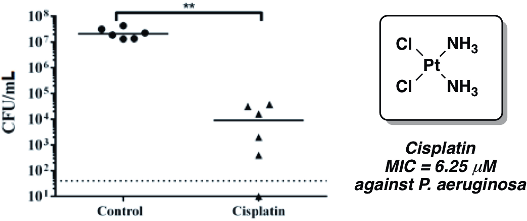
- distinct from other conventional antibiotics, which may offer alternative therapeutic approaches towards persistent infections. In recent years, metal-containing compounds have been identified as antimicrobial agents. Gallium was shown to disrupt the iron metabolism of P. aeruginosa and efficiently kill




Organometallic vs organic photoredox catalysts for photocuring reactions in the visible region
Beilstein J. Org. Chem. 2018, 14, 3025–3046, doi:10.3762/bjoc.14.282
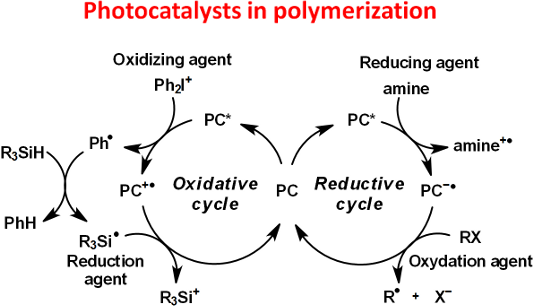
- -cost metals such as copper complexes or iron complexes which will be described in detail in the paragraph below. 2.1.2 The second generation of metal-based PCs: copper and iron complexes: Due to their earth-abundant property, iron and copper have received increasing attention and development of Fe and
- observed after a strong absorption of the complex centered at 380 nm (Table 4). Thus, it can react through a redox cycle with similar reaction than the Ru-based complexes under irradiation by different visible light such as a halogen lamp, laser diodes (405 and 457 nm) or LEDs (405 and 455 nm) [63]. Iron
- oxide photoredox catalysts have been also developed but not for polymer applications [65]. Iron oxide can offer the same advantages than TiO2 but with a lower gap between its HOMO and its LUMO which enable visible light excitation and thus, wide applications in heterogeneous photocatalysis for example



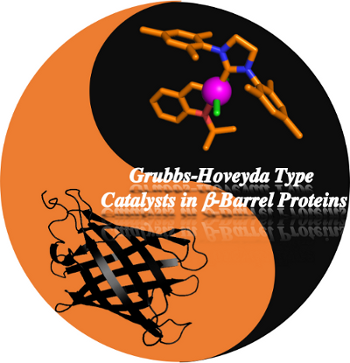
Olefin metathesis catalysts embedded in β-barrel proteins: creating artificial metalloproteins for olefin metathesis
Beilstein J. Org. Chem. 2018, 14, 2861–2871, doi:10.3762/bjoc.14.265
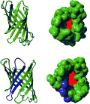
- catalysts. Ferric hydroxamate uptake protein component A (FhuA) is naturally located in the outer membrane of E. coli, where it is involved in cellular iron import. It has a robust β-barrel structure consisting of 22 antiparallel β-strands [57]. By genetic engineering, Braun and co-workers modified this
- transporter and removed the cork domain that is responsible for the iron transport [58]. This generated an “empty” barrel offering sufficient space to incorporate bulky organometallic catalysts. The variant lacking the cork domain is termed FhuA Δ1-159 (amino acids from 1 to 159 are deleted compared to the


Synthesis of mono-functionalized S-diazocines via intramolecular Baeyer–Mills reactions
Beilstein J. Org. Chem. 2018, 14, 2799–2804, doi:10.3762/bjoc.14.257

- hydroxylamine and subsequently in situ oxidized to the nitroso compound using iron(III) chloride. After addition of acetic acid the reaction was allowed to proceed for several hours at room temperature to form the azo bond. For the benzyl alcohol-functionalized S-diazocine 5, the carboxylic acid of the


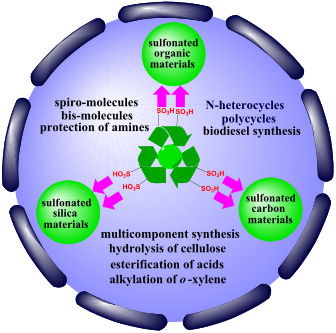
An overview on recent advances in the synthesis of sulfonated organic materials, sulfonated silica materials, and sulfonated carbon materials and their catalytic applications in chemical processes
Beilstein J. Org. Chem. 2018, 14, 2745–2770, doi:10.3762/bjoc.14.253
- 1 h [67]. The hypercrosslinked supermicroporous polymer (HMP-1, 113) was also designed and prepared by iron(III) chloride catalyzed Friedel–Crafts alkylation of carbazole (111) with α,α′-dibromo-p-xylene (112). In the next step, HMP-1 (113) was sulfonated by Cl-SO3H to form HMP-1-SO3H material 114


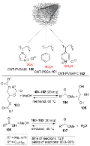


Synthesis and biological evaluation of 1,2-disubstituted 4-quinolone analogues of Pseudonocardia sp. natural products
Beilstein J. Org. Chem. 2018, 14, 2680–2688, doi:10.3762/bjoc.14.245

- antibiotics, bacterial signalling and iron metabolism [1]. Structural optimisation of quinolones possessing intriguing properties can lead to the discovery of important drug classes, as demonstrated by the fluoroquinolone antibiotics, which were inspired by the observation of an antibacterial quinolone side

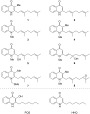


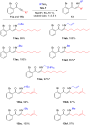


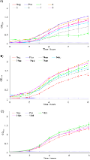

The design and synthesis of an antibacterial phenothiazine–siderophore conjugate
Beilstein J. Org. Chem. 2018, 14, 2646–2650, doi:10.3762/bjoc.14.242
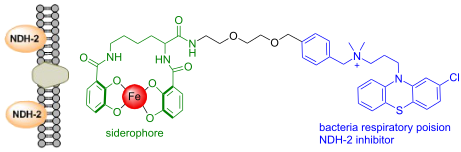
- functionalised phenothiazine demonstrated an equipotent MIC value in direct comparison to the parent phenothiazine from which it was derived. The final conjugate was synthesised by amide bond formation between the two components and global deprotection of the PMB protecting groups to unmask the catechol iron
- infections [1]. To meet this challenge there is a desperate need for new antibiotics, antibiotic targets and strategies to enhance the efficacy of current antibiotics [2]. One novel strategy which is receiving significant interest is the manipulation of bacterial iron transport pathways to deliver
- antibiotics to the bacterial cell [3]. Iron is essential for bacterial survival and bacteria secrete high affinity iron chelating molecules to scavenge and solubilise Fe3+ from the extracellular environment [3]. The siderophore–Fe complex is recognised by specific receptor proteins on the outer membrane of


Targeting the Pseudomonas quinolone signal quorum sensing system for the discovery of novel anti-infective pathoblockers
Beilstein J. Org. Chem. 2018, 14, 2627–2645, doi:10.3762/bjoc.14.241
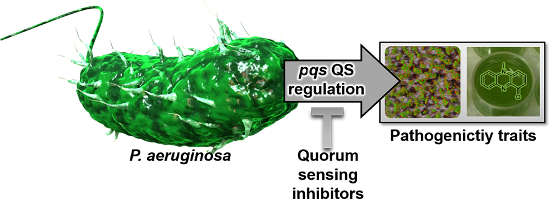
- effects are mediated either through direct PqsR-dependent action or by PqsR-independent mechanisms, which are most likely due to the iron-chelating as well as antioxidant properties of PQS [33]. Furthermore, it has been unravelled that the thioesterase PqsE, whose biosynthetic function is dispensable due
- molecule [34]. This autoinducer has been described to mediate iron acquisition, cytotoxicity, outer-membrane vesicle biogenesis, and to exert host immune modulatory effects [34][35]. Interestingly, PQS as well as HHQ are able to interfere with nuclear transcription factor-κB and hypoxia-inducible factor 1


Microwave-assisted synthesis of biologically relevant steroidal 17-exo-pyrazol-5'-ones from a norpregnene precursor by a side-chain elongation/heterocyclization sequence
Beilstein J. Org. Chem. 2018, 14, 2589–2596, doi:10.3762/bjoc.14.236
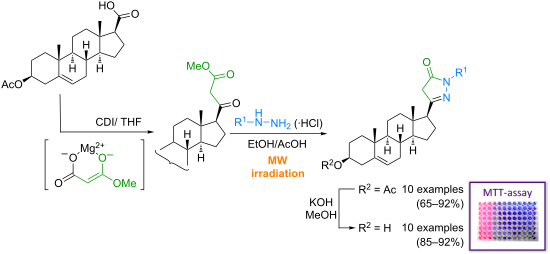
- -bulky heterocycle containing O, N or S atoms attached to position C-17 of the sterane skeleton with the lone electron pairs capable of coordinating with the heme iron at the active site; (ii) a N atom at either position 3′ or 4′ relative to the atom through which the heterocyclic ring is connected to


Synthesis of aryl sulfides via radical–radical cross coupling of electron-rich arenes using visible light photoredox catalysis
Beilstein J. Org. Chem. 2018, 14, 2520–2528, doi:10.3762/bjoc.14.228
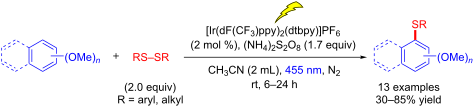
- triflates [8], and diazonium salts [9]. Typical metals used are palladium [10][11][12][13], copper [14][15][16][17][18][19][20][21], nickel [22][23][24], iron [25][26][27][28][29], cobalt [30][31][32], and rhodium [33][34]. Aryl sulfides are also synthesized by cross coupling of thiols and aryl Grignard


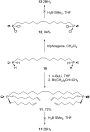
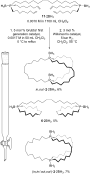
Non-metal-templated approaches to bis(borane) derivatives of macrocyclic dibridgehead diphosphines via alkene metathesis
Beilstein J. Org. Chem. 2018, 14, 2354–2365, doi:10.3762/bjoc.14.211
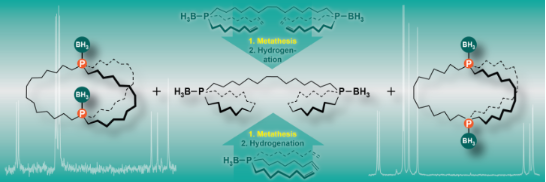
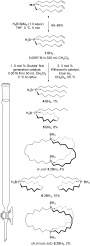
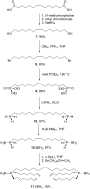
- such as K2Pt(CN)4 or RhCl(PMe3)3, we have nonetheless sought to develop more economical protocols. The analogous Fe(CO)3 adducts are easily prepared [1][2][3][4], but in efforts to date it has not been possible to efficiently remove the dibridgehead diphosphine ligands from the low cost iron fragment





The enzymes of microbial nicotine metabolism
Beilstein J. Org. Chem. 2018, 14, 2295–2307, doi:10.3762/bjoc.14.204
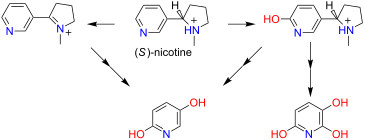
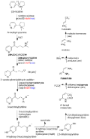
- molybdopterin enzymes that also includes xanthine oxidoreductase and aldehyde oxidase [8]. Comparison of the pAO1 sequence with that of xanthine oxidoreductase identified ndhs, ndhm, and ndhl (initially designated ndhABC) as coding for three proteins: a 14.9 kDa subunit containing an iron–sulfur cluster, a 30
- two electrons produced are transferred through the iron–sulfur subunit to the FAD and thence to the final electron acceptor. L-6-Hydroxynicotine oxidase (LHNO) catalyzes the subsequent oxidation of L-6-hydroxynicotine to 6-hydroxy-N-methylmysomine [12]. Purified LHNO contains non-covalently bound FAD
- characterized. Hpo catalyzes the Fe(II)-dependent formation of N-formylmaleamate from 2,5-dihydroxypyridine in the absence of other cofactors or substrates; it was designated DHP dioxygenase. Both oxygen atoms in the product come from O2 and mutagenesis of the predicted iron ligand His257, His310, or Asp312




Cobalt bis(acetylacetonate)–tert-butyl hydroperoxide–triethylsilane: a general reagent combination for the Markovnikov-selective hydrofunctionalization of alkenes by hydrogen atom transfer
Beilstein J. Org. Chem. 2018, 14, 2259–2265, doi:10.3762/bjoc.14.201

- corresponding metal alkyl complex. This radical then undergoes addition to a second reagent (SOMOphile) to form the functionalized product (Scheme 1). A wide range of manganese, cobalt, or iron-based complexes containing diverse supporting ligands have found use in these reactions. To the best of our knowledge
- , the iron oxalate–sodium borohydride system, introduced by Boger and co-workers [8], is the only reagent combination shown to accommodate a broad range of SOMOphiles. However, the cobalt–salen complexes that are commonly employed [10][11][13][15][16][30][31][32][36][37][48] contain many different


A general and atom-efficient continuous-flow approach to prepare amines, amides and imines via reactive N-chloramines
Beilstein J. Org. Chem. 2018, 14, 2220–2228, doi:10.3762/bjoc.14.196
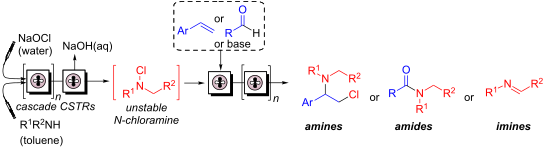
- ][33]. Improved methods for the formation of amides remain an important goal for the pharma industry. In this regard, the reaction of N-chloramine with aldehydes, t-BuO2H and iron or copper catalysts to give secondary and tertiary amides was reported in batch recently [33][34], though safety concerns


Two new 2-alkylquinolones, inhibitory to the fish skin ulcer pathogen Tenacibaculum maritimum, produced by a rhizobacterium of the genus Burkholderia sp.
Beilstein J. Org. Chem. 2018, 14, 1446–1451, doi:10.3762/bjoc.14.122
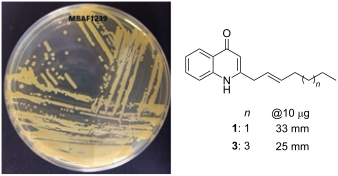
- Pseudomonas aeruginosa. A series of chemoecological studies of P. aeruginosa has uncovered multifunctional roles of this quinolone class as antibacterial, antifungal, iron-chelating, and autoinducer agents to assist the survival of the producing organisms [32]. Additionally, drug discovery attempts have


Atom-economical group-transfer reactions with hypervalent iodine compounds
Beilstein J. Org. Chem. 2018, 14, 1263–1280, doi:10.3762/bjoc.14.108
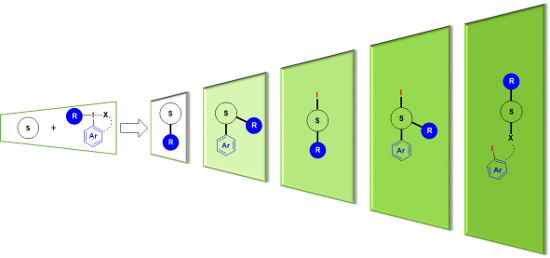
- , azidobenziodoxolones 36b (ABX), could be utilized for atom-economical reactions. Gillaizeau and co-workers developed an iron-catalysed oxyazidation of enamides 45 using ABX derivatives 36b (Scheme 24) [58]. The reaction proceeds with complete regio- and stereoselectivity introducing the azide group in C2 and the ester
- . Oxyalkynylation of diazo compounds 42. Enantioselective oxyalkynylation of diazo compounds 42’. Iron-catalysed oxyazidation of enamides 45. Acknowledgements A.B. is thankful for a scholarship from the Fonds der Chemischen Industrie. P.F. is thankful for a postdoctoral scholarship from the German Academic






One hundred years of benzotropone chemistry
Beilstein J. Org. Chem. 2018, 14, 1120–1180, doi:10.3762/bjoc.14.98
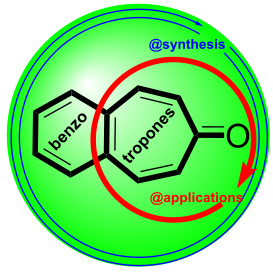
- -benzotropone (11) with SOCl2 in a quantitative yield (Scheme 23) [77][78]. However, all attempts to synthesize 144 from 135 have failed. 7-Bromo-5H-benzo[7]annulene (22) was also used as a key molecule in the synthesis of benzo[7]annulenylidene–iron complexes 147 and 148 (Scheme 24) [129]. The monobromide 22
- the thermal and electron impact-induced decarbonylation reaction of 12 (Scheme 36) [131]. Tajiri’s group reported the resolution and determination of the kinetic parameters of the optically active 2,3-benzotropone(tricarbonyl)iron complex 221 using high-performance liquid chromatography (HPLC) and