


Search results
Search for "microwave irradiation" in Full Text gives 252 result(s) in Beilstein Journal of Organic Chemistry. Showing first 200.
Synthesis of alkynyl-substituted camphor derivatives and their use in the preparation of paclitaxel-related compounds
Beilstein J. Org. Chem. 2017, 13, 1230–1238, doi:10.3762/bjoc.13.122
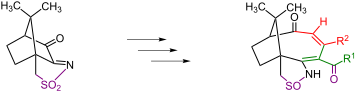
- applied, but CDCl3 was used as solvent. Within 10 hours, compound 21a converts cleanly into product 22a without the observation of intermediates or side products. Under microwave irradiation, the reaction is complete within 30 min at 80 °C, without impairing the selectivity. The structure of 22a is


Ultrasound-promoted organocatalytic enamine–azide [3 + 2] cycloaddition reactions for the synthesis of ((arylselanyl)phenyl-1H-1,2,3-triazol-4-yl)ketones
Beilstein J. Org. Chem. 2017, 13, 694–702, doi:10.3762/bjoc.13.68
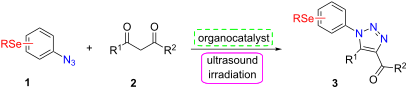
- organic synthesis (sonochemistry) is well documented and is generally considered as an environmentally sound energy source, comparatively less energy intensive to conventional heating and microwave irradiation, also able to reduce the number and quantities of side reaction products [62][63][64][65][66][67


Fluorescent carbon dots from mono- and polysaccharides: synthesis, properties and applications
Beilstein J. Org. Chem. 2017, 13, 675–693, doi:10.3762/bjoc.13.67
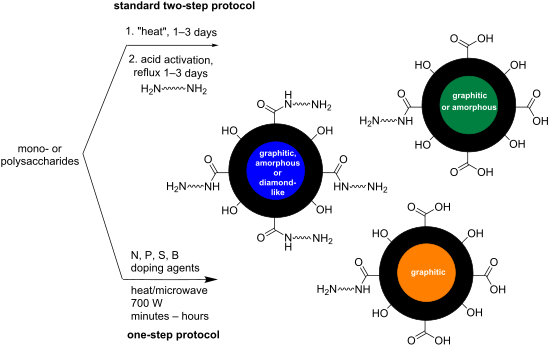
- tuneable synthesis of FCDs by selecting a different inorganic ion and carbohydrate combinations using microwave irradiation as the heating source, demonstrating that both the starting material and dehydrating agent of choice can allow tuning/manipulation of the fluorescence properties of the system [31
- stabilised. Hence a turn-on of the CD fluorescence is indicative of enzyme activity. More recently, Galan et al. reported the 3 min one-step synthesis of blue-emitting CDs from glucosamine hydrochloride in the presence of TTDDA using microwave irradiation with QYs of up to 17% (Scheme 16) [46]. While most
- selected area electron diffraction (SAED) in the TEM analysis of the CD surface. CDs from chitosan hydrogels have also been reported by Chowdhury et al. [55]. The hydrogels were synthesised from a mixture of acetic acid, glycerol and chitosan, as a more stable starting material for CDs. Microwave


N-Propargylamines: versatile building blocks in the construction of thiazole cores
Beilstein J. Org. Chem. 2017, 13, 625–638, doi:10.3762/bjoc.13.61
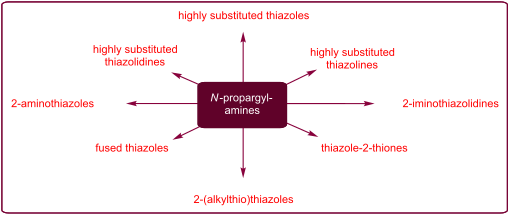
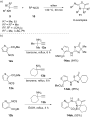
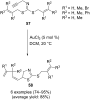
- of p-toluenesulfonic acid (PTSA) as catalyst under microwave irradiation was developed by Castagnolo et al. Following this route, several 4-substituted 5-methylthiazol-2-amines 22 were synthesized from terminal N-propargylamines 20 and isothiocyanates 21 in DMF at 160 °C. Interestingly, when internal
- syntheses of a series of multiply substituted thiazolidines 33 via the cyclization reaction of secondary N-propargylamines 32 with blocked N-isothiocyanate precursors 31. The desired N-isocyanates A are produced in situ upon heating or treatment with a base, in acetonitrile under microwave irradiation




Transition-metal-catalyzed synthesis of phenols and aryl thiols
Beilstein J. Org. Chem. 2017, 13, 589–611, doi:10.3762/bjoc.13.58

- catalyzed protocol for converting aryl halides to phenols [45]. Aided by 200 W microwave irradiation, the conversion was accomplished within 40 minutes in the presence of (n-Bu)4NBr and KOH (Scheme 21). Using this reaction system, moderate yields of phenols could be obtained from both aryl iodides and aryl


NMR reaction monitoring in flow synthesis
Beilstein J. Org. Chem. 2017, 13, 285–300, doi:10.3762/bjoc.13.31
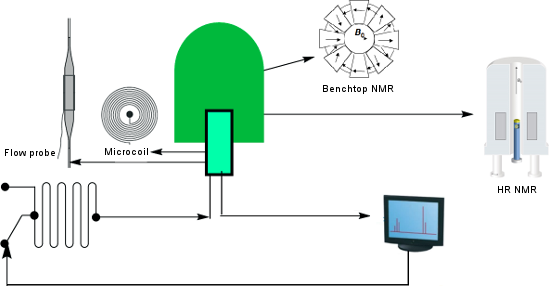
- -deuterated solvents. This result showed how the synergistic interaction of microwave irradiation as the energy source and the rapid reaction characterization available with NMR and flow techniques can be used for rapid optimization in a single experiment in short time and with very small solvent volumes


Synthesis of spiro[isoindole-1,5’-isoxazolidin]-3(2H)-ones as potential inhibitors of the MDM2-p53 interaction
Beilstein J. Org. Chem. 2016, 12, 2793–2807, doi:10.3762/bjoc.12.278
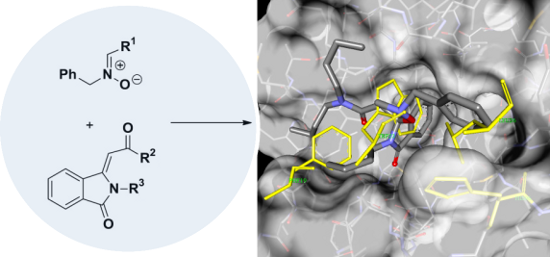
- -dipolar cycloaddition in toluene at 110 °C for 4 h, under microwave irradiation: cycloadducts 6a–e have been isolated in 38–60% yield, as major isomers, together with isomers 7 as minor adducts and unreacted isoindolinones 2a–e mainly in E configuration (Scheme 2, Table 1). The cycloaddition reaction of


Electron-transfer-initiated benzoin- and Stetter-like reactions in packed-bed reactors for process intensification
Beilstein J. Org. Chem. 2016, 12, 2719–2730, doi:10.3762/bjoc.12.268
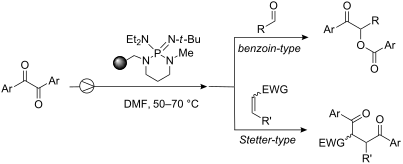
- further increase of temperature (100 °C) and the use of microwave irradiation at 120 °C (1 h) were not beneficial for the reaction outcome (Table 2, entries 4 and 5). The model Stetter-like reaction was finally optimized by varying the 1a/9a ratio (Table 2, entries 6 and 7) and the best yield of 10aa (68


Catalytic Wittig and aza-Wittig reactions
Beilstein J. Org. Chem. 2016, 12, 2577–2587, doi:10.3762/bjoc.12.253
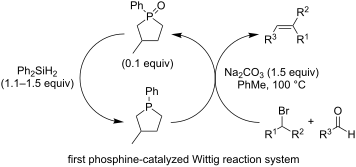
- reactions butylene oxide was used as a base precursor, phenylsilane was the reducing reagent, and the reactions were performed using microwave irradiation (MWI). Subsequently, Werner et al. reported the scope and limitations of such microwave-assisted catalytic Wittig reactions using tributylphosphine




Selective and eco-friendly procedures for the synthesis of benzimidazole derivatives. The role of the Er(OTf)3 catalyst in the reaction selectivity
Beilstein J. Org. Chem. 2016, 12, 2410–2419, doi:10.3762/bjoc.12.235
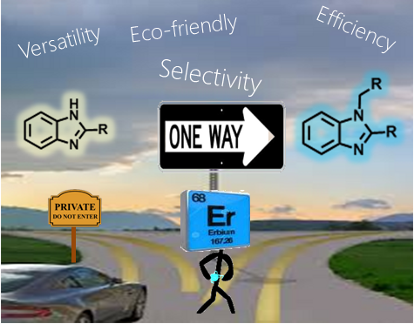
- benzaldehyde (1:2 ratio) selectively afforded 1-benzyl-2-phenyl-1H-benzimidazole (1b) (72% yield), using both microwave irradiation and conventional heating for 15 minutes (Table 1, entries 1 and 3). In the absence of the catalyst, the same reaction afforded a mixture of products 1a and 1b using both
- conditions. Namely, under microwave irradiation, 41% of 1a and 51% of 1b were formed (Table 1, entry 2). While, using conventional heating, 52% of 1a and 40% of 1b were formed (Table 1, entry 4). To shorten the reaction time, the catalyzed reaction was carried out during 5 minutes at room temperature. Using


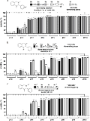
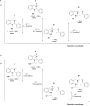
Experimental and theoretical investigations into the stability of cyclic aminals
Beilstein J. Org. Chem. 2016, 12, 2280–2292, doi:10.3762/bjoc.12.221
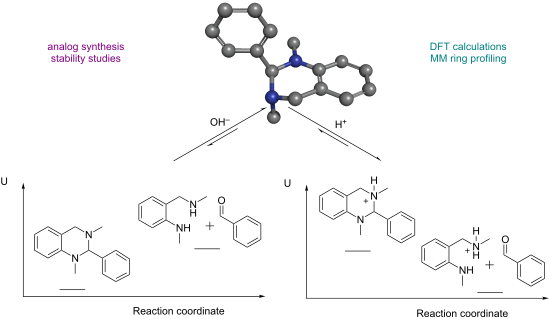
- structures with various applications in medicinal chemistry [20][21]. The syntheses of tetrahydroquinazolines are well described using different approaches: the majority relies on the direct α-amination of o-aminobenzaldehydes with heating or microwave irradiation [22][23][24], by condensation of diamines





Stereoselective synthesis of fused tetrahydroquinazolines through one-pot double [3 + 2] dipolar cycloadditions followed by [5 + 1] annulation
Beilstein J. Org. Chem. 2016, 12, 2204–2210, doi:10.3762/bjoc.12.211
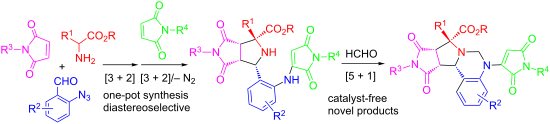
- microwave irradiation at 115 °C for 25 min. Upon the completion of the reaction as monitored by LC–MS, maleimide 6 (1.0 mmol) was added to the reaction mixture and then heated by microwave irradiation at 125 °C for 25 min. The concentrated reaction mixture was isolated on a semi-preparative HPLC with a C18


Microwave-assisted cyclizations promoted by polyphosphoric acid esters: a general method for 1-aryl-2-iminoazacycloalkanes
Beilstein J. Org. Chem. 2016, 12, 2026–2031, doi:10.3762/bjoc.12.190
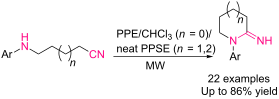
- sensitive substrates. Results and Discussion The ω-arylaminonitrile precursors were obtained by reaction of the corresponding ω-halonitrile and arylamines, as previously reported by our group [44]. We examined first the cyclization of 4-(p-tolylamino)butyronitrile (1a) with PPE under microwave irradiation


Synthesis and properties of fluorescent 4′-azulenyl-functionalized 2,2′:6′,2″-terpyridines
Beilstein J. Org. Chem. 2016, 12, 1812–1825, doi:10.3762/bjoc.12.171
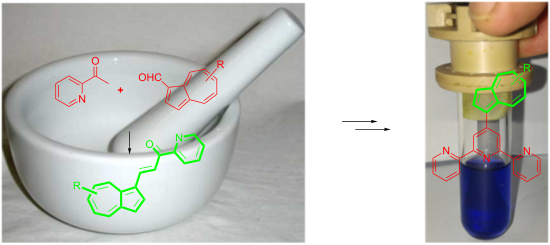
- high temperature and pressure, they decompose very rapidly. Alternatively, the chalcones 2 can be isolated following the conventional synthetic route, namely the reaction of equimolar amounts of the azulene-carbaldehyde with 2-acetylpyridine in ethanol, at room temperature or, by microwave irradiation
- reacted with excess ammonium acetate in acetic acid under microwave irradiation at 160 °C for 5 minutes. The target terpyridines are isolated in satisfactory yields varying from 42% in the case of compound 4a to 35% for 4b, respectively. If the reaction is performed under refluxing conditions for 4–6


Experimental and theoretical insights in the alkene–arene intramolecular π-stacking interaction
Beilstein J. Org. Chem. 2016, 12, 1616–1623, doi:10.3762/bjoc.12.158
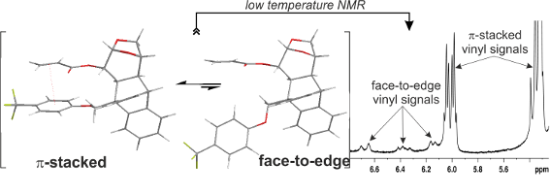
- chemical transformations under microwave irradiation [17], affording the cycloadducts 3a,b in very good yields (76–81%) after irradiating a THF solution of 1 and 2 at 150 °C during 4 hours. The reduction of the ketone group in 3 with NaBH4 produced alcohols 4 and 5 in excellent yields and a ratio of about




Multicomponent reactions: A simple and efficient route to heterocyclic phosphonates
Beilstein J. Org. Chem. 2016, 12, 1269–1301, doi:10.3762/bjoc.12.121
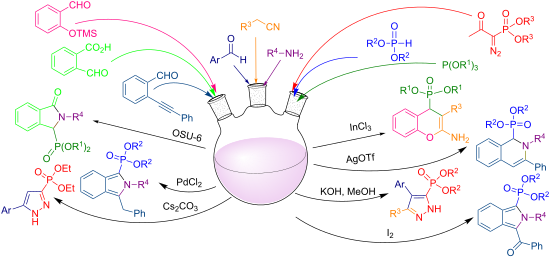
- afforded the desired isoindolin-1-one-3-phosphonates 60 in only 14% yields after five days. Noteworthy, the treatment of the same reaction mixture under microwave irradiation at 90 °C gave the expected product 60 in 77% yields after several minutes. Subsequently, the isoindolin-1-one-3-phosphonates 60 were
- phosphorylated quinazoline 203 through reductive elimination. A silver-catalyzed three-component reaction of α-isocyanophosphonates 206, ketones 205 and amines 204 under microwave irradiation to afford (2-imidazolin-4-yl)phosphonates 210 has recently been reported (Scheme 43) [81]. The yields of the products
- corresponding products 271 and 272 were isolated in 52–61% yields and their nOe analysis revealed the geometry of the alkene bonds to be E . A tandem 1,4–1,2 addition of dimethyl trimethylsilyl phosphite (DMPTMS, 273) to diazaheterocyclic compounds under microwave irradiation in acidic medium led to


Stereoselective synthesis of tricyclic compounds by intramolecular palladium-catalyzed addition of aryl iodides to carbonyl groups
Beilstein J. Org. Chem. 2016, 12, 1236–1242, doi:10.3762/bjoc.12.118
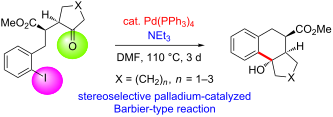
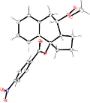
- sample of 5b afforded compound 15b in 45% yield as a single isomer. These results were obtained employing microwave irradiation (400 W) that allowed considerably shorter reaction times, however, the yields were not strongly influenced by this modification. From both product diastereomers crystals




Enabling technologies and green processes in cyclodextrin chemistry
Beilstein J. Org. Chem. 2016, 12, 278–294, doi:10.3762/bjoc.12.30
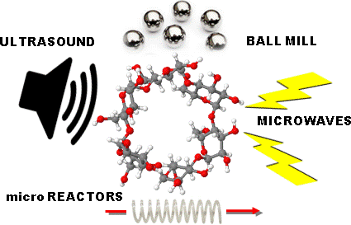
- CD derivatives. Several examples of sonochemical selective modification of native α-, β- and γ-CDs have been reported including heterogeneous phase Pd- and Cu-catalysed hydrogenations and couplings. Microwave irradiation has emerged as the technique of choice for the production of highly substituted




Tandem processes promoted by a hydrogen shift in 6-arylfulvenes bearing acetalic units at ortho position: a combined experimental and computational study
Beilstein J. Org. Chem. 2016, 12, 260–270, doi:10.3762/bjoc.12.28
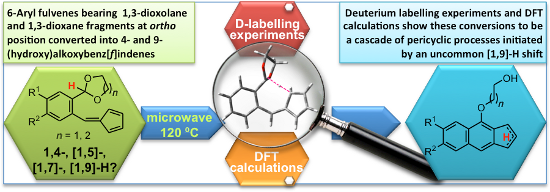
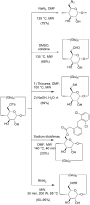
- to isolate the benz[f]indenes 5a and 6a, in a relative 2:1 ratio and a poor global yield (34%). We next tested the same and similar processes in a microwave apparatus. As presumed, conversions of a series of acetal-fulvenes 3a–f under 120 W microwave irradiation at 120 °C in DMSO required much
- present cases with the formal β-elimination of a methanol or ethanol molecule. These results show that non-cyclic acetalic units are as effective as the cyclic ones on achieving the conversion of acetal-fulvenes into the corresponding benz[f]indenes under microwave irradiation. Computational study With


Efficient synthetic protocols for the preparation of common N-heterocyclic carbene precursors
Beilstein J. Org. Chem. 2015, 11, 2318–2325, doi:10.3762/bjoc.11.252
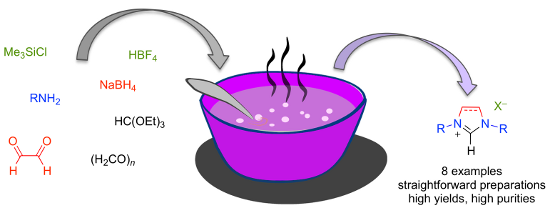
- derivatives, whereas the use of triethyl orthoformate under microwave irradiation was most appropriate for the fast and efficient synthesis of imidazolinium salts. This strategy was applied to the synthesis of six common N-heterocyclic carbene precursors, namely, 1,3-dimesitylimidazolium chloride (IMes·HCl
- toward completion. In 2006, we found that microwave irradiation allowed to dramatically reduce the reaction time from hours to minutes, while affording very high yields of pure products [66]. We have applied this procedure to the synthesis of a wide range of cyclic amidinium salts differing by their ring
- under microwave irradiation was most appropriate for the fast and efficient synthesis of imidazolinium salts. With the possible exception of a monomodal microwave reactor, all the equipment and glassware needed to carry out the syntheses outlined in this report are widely available in chemical


Easy access to heterobimetallic complexes for medical imaging applications via microwave-enhanced cycloaddition
Beilstein J. Org. Chem. 2015, 11, 2202–2208, doi:10.3762/bjoc.11.239
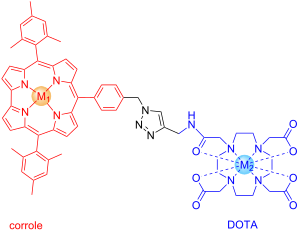
- ” reaction, has been applied to the synthesis of a range of triazole-linked porphyrin/corrole to DOTA/NOTA derivatives. Microwave irradiation significantly accelerates the reaction. The synthesis of heterobimetallic complexes was easily achieved in up to 60% isolated yield. Heterobimetallic complexes were
- future use of radioactive isotopes possessing short life times (e.g. Cu2+ and In3+). Microwave irradiation, known to accelerate the polarization of the starting materials to promote the reactions, was investigated. A mixture of azidocorrole 8a, Gd propargyl DOTA 10a, CuI, DIPEA and DMF were irradiated in


Half-sandwich nickel(II) complexes bearing 1,3-di(cycloalkyl)imidazol-2-ylidene ligands
Beilstein J. Org. Chem. 2015, 11, 2171–2178, doi:10.3762/bjoc.11.235
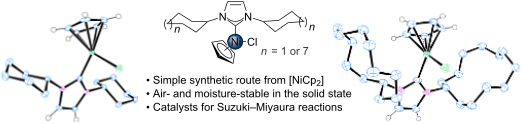
- using a convenient procedure where nickelocene, the NHC·HBF4 salts, and [Et4N]Cl were heated in THF using microwave irradiation. The resulting [NiCl(Cp)(NHC)] complexes are air- and moisture stable in the solid state, and represent two new members of this valuable and practical class of nickel catalysts
- obtained from Sigma-Aldrich and sparged with argon before use. [Et4N]Cl was purchased from Alfa Aesar and dried by heating under vacuum. Reactions under microwave irradiation were carried out using a Biotage apparatus in crimp-cap microwave vials equipped with magnetic stirrer bars. NMR spectra were


Investigation on the reactivity of α-azidochalcones with carboxylic acids: Formation of α-amido-1,3-diketones and highly substituted 2-(trifluoromethyl)oxazoles
Beilstein J. Org. Chem. 2015, 11, 2021–2028, doi:10.3762/bjoc.11.219
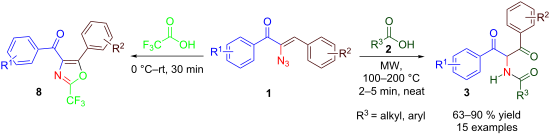
- Abstract The reaction of α-azidochalcones with carboxylic acids has been investigated resulting in the formation of α-amido-1,3-diketones under microwave irradiation via in situ formation of 2H-azirine intermediates. An interesting reaction is described wherein, with trifluoroacetic acid at lower
- (34%) was noticed with undesirable side products. Due to operational simplicity and efficiency, microwave irradiation in organic synthesis has become more popular as an environmental friendly way [30][31][32]. Thus, to increase the product yield, the investigation was continued by treatment of α
- microwave oven. The vial was sealed with a pressure cap and subjected to microwave irradiation. The irradiation was programmed between 100–200 °C, 120 W, 5 bar, for 5 min depending on the boiling point/melting point of the respective carboxylic acids. The reaction was monitored by TLC using petroleum ether


Synthesis of constrained analogues of tryptophan
Beilstein J. Org. Chem. 2015, 11, 1997–2006, doi:10.3762/bjoc.11.216
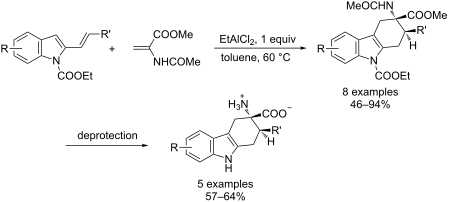
- -acetamidoacrylate (2) and its congeners with cyclic/acyclic dienes and azadienes occur under conventional heating or microwave irradiation [24]. Moreover, the use of titanium tetrachloride as Lewis acidic promoter has been reported [25]. Finally, simple functionalization reactions of indoles with 2 are reported in


Influence of bulky yet flexible N-heterocyclic carbene ligands in gold catalysis
Beilstein J. Org. Chem. 2015, 11, 1809–1814, doi:10.3762/bjoc.11.196
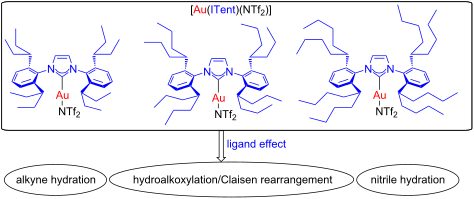
- influence of the ITent ligands in the hydration of nitriles promoted by monogold species. The reactions were conducted in a 1:1 mixture THF/water and heated at 140 °C under microwave irradiation [60]. Low catalyst loadings were employed in order to observe the differences between the four catalysts studied





