


Search results
Search for "organocatalysis" in Full Text gives 205 result(s) in Beilstein Journal of Organic Chemistry. Showing first 200.
Supported bifunctional thioureas as recoverable and reusable catalysts for enantioselective nitro-Michael reactions
Beilstein J. Org. Chem. 2016, 12, 628–635, doi:10.3762/bjoc.12.61
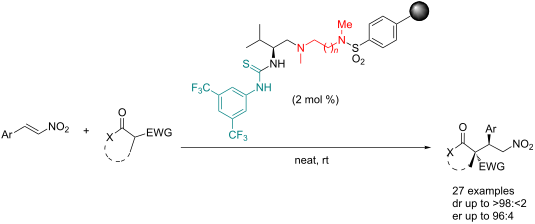
- the thiourea derived from (L)-valine and 1,6-hexanediamine. The catalysts can be used in only 2 mol % loading, and reused for at least four cycles in neat conditions. The ball milling promoted additions also worked very well. Keywords: bifunctional organocatalysts; organocatalysis; stereoselective


The aminoindanol core as a key scaffold in bifunctional organocatalysts
Beilstein J. Org. Chem. 2016, 12, 505–523, doi:10.3762/bjoc.12.50
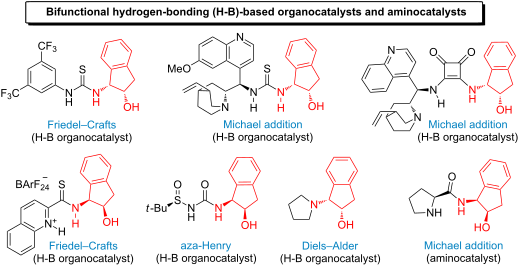
- ; bifunctional; organocatalysis; hydrogen bonding; Introduction The structural and chemical properties of the 1,2-aminoindanol scaffold 1 have transformed aminoindanol derivatives into versatile building blocks for the construction of catalysts and the efficient induction of chirality in asymmetric processes
- trifluoroethylamine moiety [3][4][5]. However, it is in the field of asymmetric organocatalysis [6][7][8] where the aminoindanol core has gained more importance, being a recurrent structural motif in several organocatalytic species. Some examples are (a) the enantioselective reduction of ketones through the in situ
- the high catalytic potential that this versatile motif exhibits [14]. The concept of bifunctionality has been extensively explored in organocatalysis in the last decade [15][16]. The bifunctional organocatalyst contains two chemical groups that interact simultaneously with the substrates. This mode of


(Thio)urea-mediated synthesis of functionalized six-membered rings with multiple chiral centers
Beilstein J. Org. Chem. 2016, 12, 462–495, doi:10.3762/bjoc.12.48
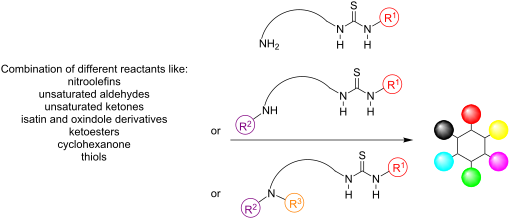
- Giorgos Koutoulogenis Nikolaos Kaplaneris Christoforos G. Kokotos Department of Chemistry, National and Kapodestrian University of Athens, Panepistimiopolis 15771, Athens, Greece 10.3762/bjoc.12.48 Abstract Organocatalysis, now running its second decade of life, is being considered one of the
- chiral centers; organocatalysis; six-membered ring; thiourea; urea; Introduction During the last 15 years, organocatalysis has flourished and has been established as one of the three major pillars of asymmetric synthesis [1][2][3]. Among the modes of activation of organic molecules that have been
- )ureas have been synthesized in order to utilize both hydrogen bonding interactions and enamine formation. In the last 10 years the field has witnessed the development of some new activation modes, such as SOMO catalysis [8] and photoredox organocatalysis [9]. Six-membered rings are found in many natural


Recent advances in N-heterocyclic carbene (NHC)-catalysed benzoin reactions
Beilstein J. Org. Chem. 2016, 12, 444–461, doi:10.3762/bjoc.12.47
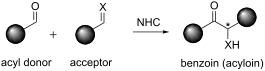
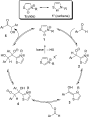
- ; benzoin reaction; N-heterocyclic carbenes; organocatalysis; umpolung; Introduction The benzoin reaction (or condensation) is named after the product it furnishes via a catalytic assembly of two molecules of aromatic aldehydes. One molecule of the aldehyde functions as an acyl anion and the other as a
- that the cyanide anion can catalyze the union of two molecules of aromatic aldehydes to afford α-hydroxy ketones [1]. More than a century later, a thiazolium salt-catalysed benzoin reaction was reported by Ukai [2]. This may be regarded as an early example of organocatalysis using an azolium salt
- reaction remained elusive due to a variety of reasons, the toxicity of cyanide catalysts being one of them. Breslow’s discovery in 1958 of the thiazolylidene-catalysed benzoin condensation via polarity reversal of aldehydes formed the conceptual basis for the later development of NHC-organocatalysis. The



Cupreines and cupreidines: an established class of bifunctional cinchona organocatalysts
Beilstein J. Org. Chem. 2016, 12, 429–443, doi:10.3762/bjoc.12.46
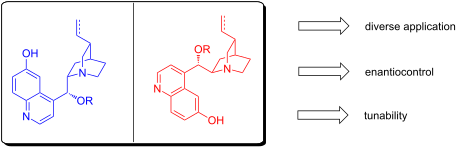
- asymmetric organocatalysis. This fascinating class of bifunctional catalyst offers a genuine alternative to the more commonly used thiourea systems and because of the different spacing between the functional groups, can control enantioselectivity where other organocatalysts have failed. In the main, this
- . Keywords: bifunctional; cupreidine; cinchona; cupreine; organocatalysis; Introduction The cinchona alkaloids, comprising quinine (QN), quinidine (QD), cinchonidine (CD), cinchonine (CN, Figure 1), and their derivatives have revolutionized asymmetric catalysis owing to their privileged structures. The
- their derivatives in asymmetric organocatalysis over the last five years or so [13][14]. The review is organized by reaction type, beginning with the Morita–Baylis–Hillman process – one of the first reactions to utilize 6’-OH-cinchona alkaloid derivatives in asymmetric organocatalysis. The focus will


Organocatalytic asymmetric Henry reaction of 1H-pyrrole-2,3-diones with bifunctional amine-thiourea catalysts bearing multiple hydrogen-bond donors
Beilstein J. Org. Chem. 2016, 12, 295–300, doi:10.3762/bjoc.12.31
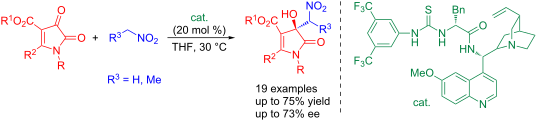
- -pyrrol-2(3H)-ones bearing quaternary stereocenters were obtained in acceptable yield (up to 75%) and enantioselectivity (up to 73% ee). Keywords: asymmetric catalysis; bifunctional catalysts; Henry reaction; organocatalysis; 1H-pyrrole-2,3-diones; Introduction Asymmetric organocatalysis has been


Base metal-catalyzed benzylic oxidation of (aryl)(heteroaryl)methanes with molecular oxygen
Beilstein J. Org. Chem. 2016, 12, 144–153, doi:10.3762/bjoc.12.16
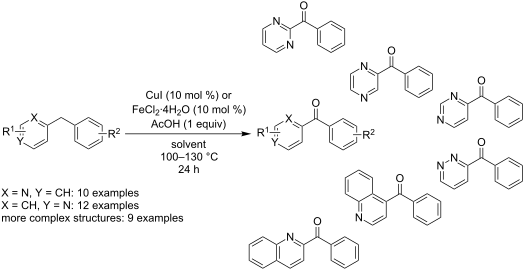
- organocatalysis in combination with molecular oxygen has received a great deal of attention from the scientific community [4][5][6][7]. Molecular oxygen is considered to be the greenest oxidant available and it is already widely employed by the commodity chemical industry [8]. However, when looking at the



Direct estimate of the internal π-donation to the carbene centre within N-heterocyclic carbenes and related molecules
Beilstein J. Org. Chem. 2015, 11, 2727–2736, doi:10.3762/bjoc.11.294
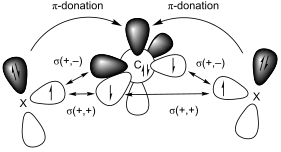
- last two decades, these versatile compounds have been widely employed in transition metal [9][10][11][12][13] and organocatalysis [14][15][16], organometallic [17][18][19] and main group synthesis [20][21][22][23][24][25][26], and activation of small molecules [27][28]. NHCs possess a divalent C(II


Organocatalytic and enantioselective Michael reaction between α-nitroesters and nitroalkenes. Syn/anti-selectivity control using catalysts with the same absolute backbone chirality
Beilstein J. Org. Chem. 2015, 11, 2577–2583, doi:10.3762/bjoc.11.277
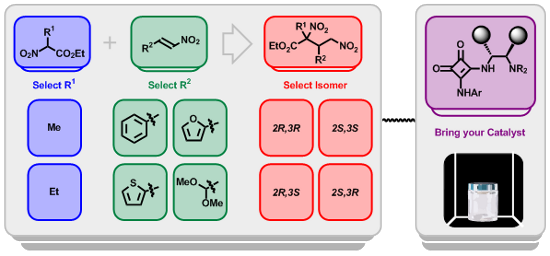
- all cases. Keywords: asymmetric diastereodivergent; enantioselective; Michael addition; nitroalkenes; nitroesters; organocatalysis; squaramides; Introduction The absolute stereochemistry of a molecule has a paramount influence on the properties that this compound will have when interacting with


Convenient preparation of high molecular weight poly(dimethylsiloxane) using thermally latent NHC-catalysis: a structure-activity correlation
Beilstein J. Org. Chem. 2015, 11, 2261–2266, doi:10.3762/bjoc.11.246
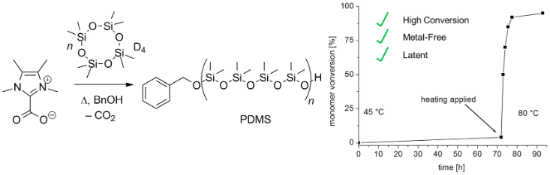
- , 1.6 < ÐM < 2.5) in yields >95%, using low catalyst loadings (0.2–0.1 mol %). Furthermore, the results suggest that a nucleophilic, zwitterionic mechanism is in operation, in preference to purely anionic polymerization. Keywords: latency; N-heterocyclic carbenes; ring-opening organocatalysis


A facile synthetic route to benzimidazolium salts bearing bulky aromatic N-substituents
Beilstein J. Org. Chem. 2015, 11, 1656–1666, doi:10.3762/bjoc.11.182
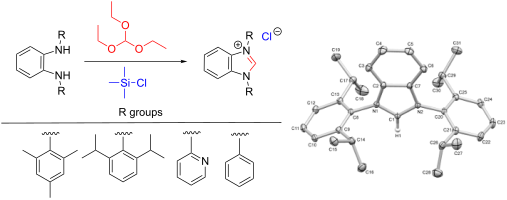
- tunable, strongly binding ligand units in complexes in the search for new materials [1][2][3][4][5] and for catalysts of homogeneous catalysis [6][7][8][9][10]. Besides that NHCs have great potential in organocatalysis [11][12][13][14][15], their electronic properties, σ-donor ability and π-back donation


Synthesis of γ-hydroxypropyl P-chirogenic (±)-phosphorus oxide derivatives by regioselective ring-opening of oxaphospholane 2-oxide precursors
Beilstein J. Org. Chem. 2015, 11, 1332–1339, doi:10.3762/bjoc.11.143
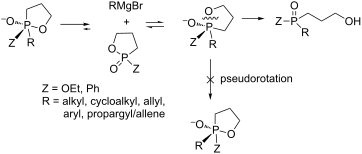
- once binded to metals which favor a six-membered ring geometry. Moreover, these compounds could be advantageously used in organocatalysis and are commonly embedded in inorganic or organic matrix for various heterogeneous applications. Chemical structures of 2-methoxy-1,3,2-dioxaphospholane 2-oxide (1


Multivalent polyglycerol supported imidazolidin-4-one organocatalysts for enantioselective Friedel–Crafts alkylations
Beilstein J. Org. Chem. 2015, 11, 730–738, doi:10.3762/bjoc.11.83
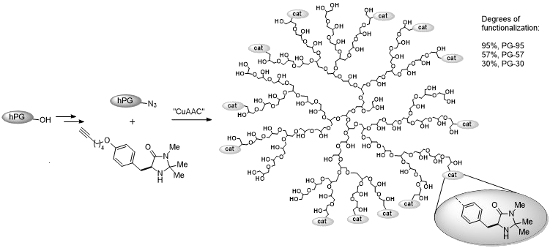
- organocatalysis has allowed for selective C–C bond formation by using small organic molecules [25][26][27][28][29][30][31]. In contrast to metal complexes, chiral or achiral organocatalysts are easily attached on supports. They do not suffer from metal leaching and they can be reused more readily [32][33][34][35
- support in asymmetric organocatalysis. The use of chiral imidazolidinones in organocatalysis has been extensively reported for a wide range of enantioselective reactions involving α,β-unsaturated aldehydes, such as the Diels–Alder reactions [50], 1,3-dipolar cycloadditions [51] and Friedel–Crafts
- immobilization of imidazolidin-4-one onto hyperbranched polyglycerol (hPG) and its application as multivalent organocatalyst. Results and Discussion To explore the synthetic utility of hPG in organocatalysis, we here report the synthesis and application of a series of three multivalent dendronized imidazolidin-4


Chemoselective O-acylation of hydroxyamino acids and amino alcohols under acidic reaction conditions: History, scope and applications
Beilstein J. Org. Chem. 2015, 11, 446–468, doi:10.3762/bjoc.11.51
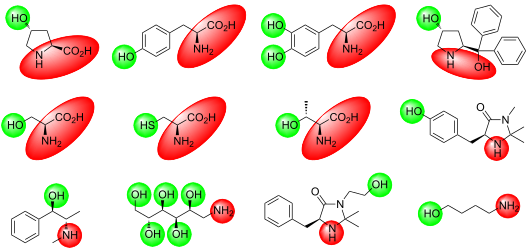
- ; organocatalysis; serine; threonine; tyrosine; Introduction Any adept researcher within the field of organic synthetic chemistry will be mindful of the outstanding importance of amino acids as inexpensive chiral starting materials in the synthesis of a nearly infinite variety of synthetic end products. This
- considerable period of time, having its origins in biochemical studies, but has not become widespread until recent developments related to organocatalysis further improved and popularized its application. Hopefully, the present work will convince chemists unfamiliar with the procedure how it in many cases can
- asymmetric organocatalysis In the previous section, the developmental history of acidic acylation methodologies for chemoselective O-acylation of hydroxyamino acids has been chronicled, from its inception in the early 1940s until the 1990s. In particular, the identification and application of suitable


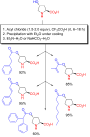


Indium-mediated allylation in carbohydrate synthesis: A short and efficient approach towards higher 2-acetamido-2-deoxy sugars
Beilstein J. Org. Chem. 2014, 10, 2230–2234, doi:10.3762/bjoc.10.231
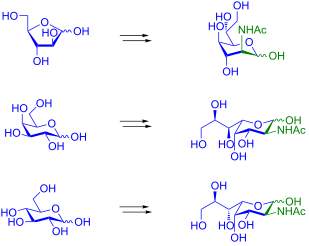
- azide reduction followed by final deacetylation using methanolic sodium methoxide furnishes the title compounds. Keywords: allylation; carbohydrates; epoxidation; indium; multivalent glycosystems; organocatalysis; Introduction The indium-mediated allylation of carbonyl compounds has proven to be a


Chiral phosphines in nucleophilic organocatalysis
Beilstein J. Org. Chem. 2014, 10, 2089–2121, doi:10.3762/bjoc.10.218
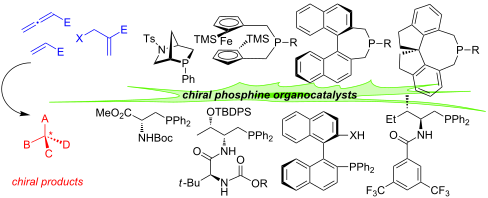
- carbonates, Michael additions, γ-umpolung additions, and acylations of alcohols. Keywords: asymmetric catalysis; chiral phosphine; nucleophilic; organocatalysis; organophosphorus; synthesis; Introduction During the past two decades, tertiary phosphine catalysts have been applied extensively in a wide range
- , and generally display poor enantioselectivities for phosphine organocatalysis. For example, 2,2´-bis(diphenylphosphino)-1,1´-binaphthyl (BINAP) is an excellent chiral diphosphine ligand for metal-catalyzed asymmetric reactions, but it displays extremely poor reactivity and enantioselectivity in many
- nucleophilic phosphine-catalyzed reactions. For these reasons, effective chiral catalysts for nucleophilic phosphine catalysis are scarce, seriously limiting the development of asymmetric variants. At present, the synthesis of new chiral phosphines designed specifically for nucleophilic organocatalysis remains


Organophosphorus chemistry
Beilstein J. Org. Chem. 2014, 10, 2087–2088, doi:10.3762/bjoc.10.217
- inhibitors. More specifically, the Thematic Series spans new methods in C–P bond formation, chiral phosphines in nucleophilic organocatalysis, chiral N-phosphinyl auxiliaries, cyclic phosphonamide reagents in the total synthesis of natural products, phosphinate-containing heterocycles, new routes to
A new charge-tagged proline-based organocatalyst for mechanistic studies using electrospray mass spectrometry
Beilstein J. Org. Chem. 2014, 10, 2027–2037, doi:10.3762/bjoc.10.211
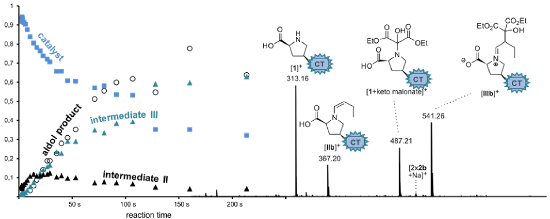
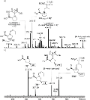
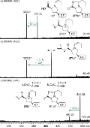
- temporal evolution has been followed using a microreactor continuous-flow technique. Keywords: charge tag; electrospray; mass spectrometry; organocatalysis; proline; template; Introduction Electrospray ionization (ESI) mass spectrometry [1] has not only developed into a standard characterization method
- reactions with high efficiency and selectivity are nowadays known so that organocatalysis complements current catalytic fields such as organometallic or enzymatic catalysis as an independent subdomain [24][25][26][27][28][29][30]. Parallel to the enormous growth of organocatalytic applications in synthesis



Facile synthesis of 1-alkoxy-1H-benzo- and 7-azabenzotriazoles from peptide coupling agents, mechanistic studies, and synthetic applications
Beilstein J. Org. Chem. 2014, 10, 1919–1932, doi:10.3762/bjoc.10.200
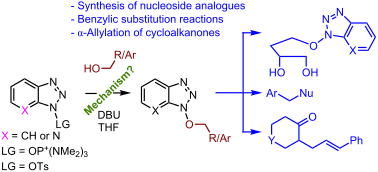
- no reaction was observed [37]. With these data in mind, we decided to evaluate a few reactions of cinnamyloxy benzotriazolyl derivative 1g. However, instead of using preformed enamines, we chose to utilize a combination of metal- and organocatalysis, wherein the enamine is formed in situ [38


Visible-light photoredox catalyzed synthesis of pyrroloisoquinolines via organocatalytic oxidation/[3 + 2] cycloaddition/oxidative aromatization reaction cascade with Rose Bengal
Beilstein J. Org. Chem. 2014, 10, 1233–1238, doi:10.3762/bjoc.10.122
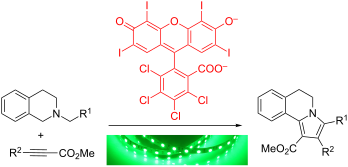
- /oxidative aromatization cascade using Rose Bengal as an organo-photocatalyst. A variety of pyrroloisoquinolines have been obtained in good yields under mild and metal-free reaction conditions. Keywords: alkaloids; [3 + 2] cycloaddition; organocatalysis; oxidation; photochemistry; photoredox catalysis; Rose


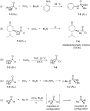
Atherton–Todd reaction: mechanism, scope and applications
Beilstein J. Org. Chem. 2014, 10, 1166–1196, doi:10.3762/bjoc.10.117

- analogues) was the first phosphoramide derivative that was extensively studied as an organocatalyst [98][99]. However, HMPA was classified as a human carcinogen [100]. One of the first examples of the use of chiral phosphoramide ligands (Scheme 32-i) in organocatalysis was described by Denmark et al. who




Preparation of phosphines through C–P bond formation
Beilstein J. Org. Chem. 2014, 10, 1064–1096, doi:10.3762/bjoc.10.106
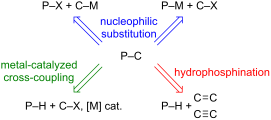
- reagent for organocatalysis [1]. The methods most widely used for the synthesis of phosphines include the reaction of organometallic compounds with halophosphines, the reaction of metal phosphides with alkyl halides, the reduction of other phosphorus compounds and the hydrophosphination [2]. Research in


On the mechanism of photocatalytic reactions with eosin Y
Beilstein J. Org. Chem. 2014, 10, 981–989, doi:10.3762/bjoc.10.97
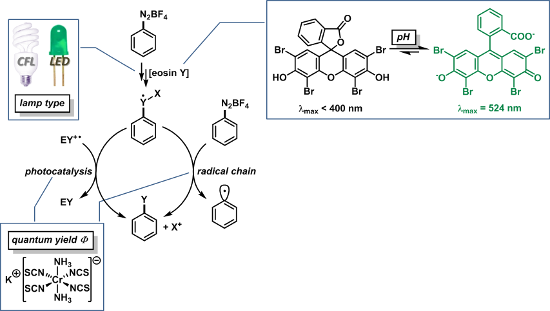
- discussed on the basis of pH, solvent polarity, lamp type, absorption properties, and quantum yields. Determination of the latter proved to be an especially valuable tool for the distinction between radical chain and photocatalytic reactions. Keywords: mechanism; organocatalysis; photocatalysis; photoredox


Primary-tertiary diamine-catalyzed Michael addition of ketones to isatylidenemalononitrile derivatives
Beilstein J. Org. Chem. 2014, 10, 929–935, doi:10.3762/bjoc.10.91
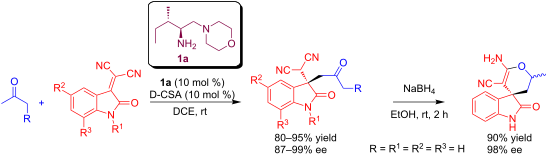
- -component version of the reaction by a domino Knoevenagel–Michael sequence. The Michael adduct 4a was transformed into spirooxindole 6 by a reduction with sodium borohydride in a highly enantioselective manner. Keywords: 3,3'-disubstituted oxindoles; Michael reaction; organocatalysis; primary-tertiary


New hydrogen-bonding organocatalysts: Chiral cyclophosphazanes and phosphorus amides as catalysts for asymmetric Michael additions
Beilstein J. Org. Chem. 2014, 10, 224–236, doi:10.3762/bjoc.10.18
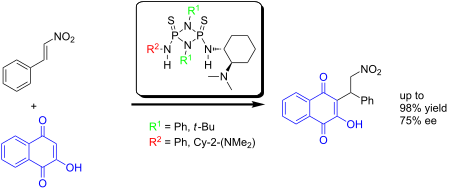
- almost quantitative yields of up to 98% and enantiomeric excesses of up to 51%. The cyclodiphosphazane catalysts show the same high activity and give improved enantiomeric excesses of up to 75%, thus representing the first successful application of a cyclodiphosphazane in enantioselective organocatalysis
- the catalyst. Keywords: DFT computations; hydrogen bonding; Michael addition; organocatalysis; phosphazanes; Introduction Organocatalysis has gained great impact in promoting highly enantioselective [1][2][3][4] and eco-friendly [5] reactions. Within the field of organocatalysis hydrogen-bonding (HB
- donors such as (thio)ureas in the tested Michael addition. A fine tuning of the structural motifs might improve enantioselectivity even further. Especially the rigid and sterically crowded PV-cyclodiphosphazane structures will have a high potential for future catalyst designs not only in organocatalysis





