Search results
Search for "organocatalytic" in Full Text gives 192 result(s) in Beilstein Journal of Organic Chemistry.
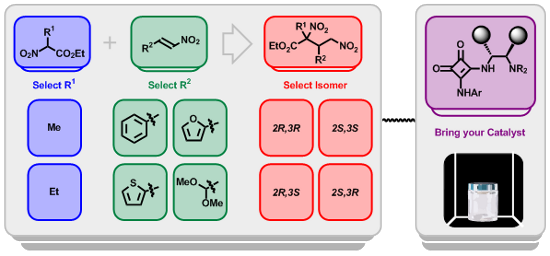
Organocatalytic and enantioselective Michael reaction between α-nitroesters and nitroalkenes. Syn/anti-selectivity control using catalysts with the same absolute backbone chirality
Beilstein J. Org. Chem. 2015, 11, 2577–2583, doi:10.3762/bjoc.11.277


Efficient synthetic protocols for the preparation of common N-heterocyclic carbene precursors
Beilstein J. Org. Chem. 2015, 11, 2318–2325, doi:10.3762/bjoc.11.252
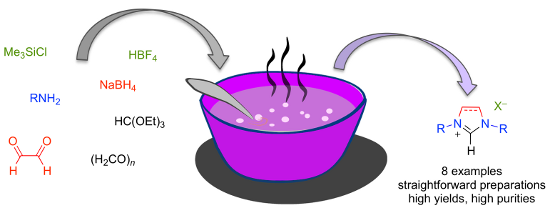
- interested in the preparation of IMes·HBF4 because imidazolium tetrafluoroborates are usually less hygroscopic and easier to crystallize than chlorides [45]. Moreover, when imidazolium salts are used to generate NHCs in situ, for instance to accomplish organocatalytic transformations, the exact nature of the


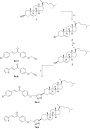
Synthesis, antimicrobial and cytotoxicity evaluation of new cholesterol congeners
Beilstein J. Org. Chem. 2015, 11, 1922–1932, doi:10.3762/bjoc.11.208
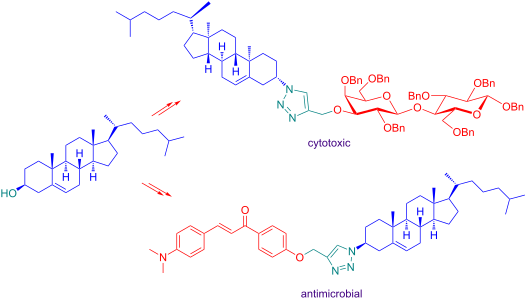
- this mechanism, synthetic polycarbonates arising from organocatalytic ring-opening polymerization of cholesterol monomers were reported to create self-assemblies possessing high interior charge density and wide spectrum antimicrobial activity [6]. Interestingly, the causative vector of human gastritis




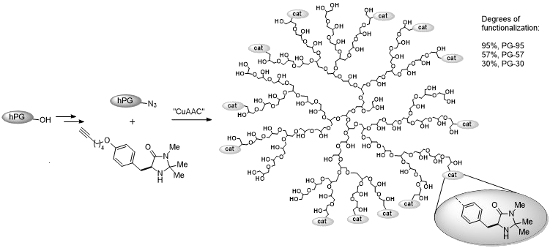
Multivalent polyglycerol supported imidazolidin-4-one organocatalysts for enantioselective Friedel–Crafts alkylations
Beilstein J. Org. Chem. 2015, 11, 730–738, doi:10.3762/bjoc.11.83
- ][36]. Moreover, their stability allows to perform reactions under mild and aerobic conditions and in the presence of water, both as co-solvent or the only solvent [37]. In the last years, several reports on water effects in organocatalytic reactions were published [38][39][40][41][42]. The use of


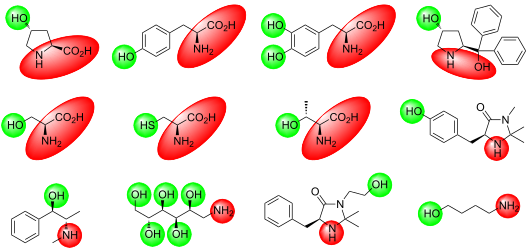
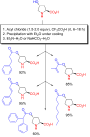
Chemoselective O-acylation of hydroxyamino acids and amino alcohols under acidic reaction conditions: History, scope and applications
Beilstein J. Org. Chem. 2015, 11, 446–468, doi:10.3762/bjoc.11.51
- [69], magnetic core-shell nanoparticles (with magnetite cores and polyacrylate shells) [70], and thermoresponsive block copolymers [71]. Such catalytic systems can exhibit excellent organocatalytic activity under aqueous conditions, and many of them can be recycled and reused. A rather unique property
- starting point [47][70]. A potential obstacle to the application of organocatalytic systems based on naturally occurring trans-4-hydroxy-L-proline as the catalytic moiety is how to access both series of enantiomeric products, since the enantiomer of the naturally occurring hydroxyproline is not easily




Morita–Baylis–Hillman reaction of acrylamide with isatin derivatives
Beilstein J. Org. Chem. 2014, 10, 2975–2980, doi:10.3762/bjoc.10.315
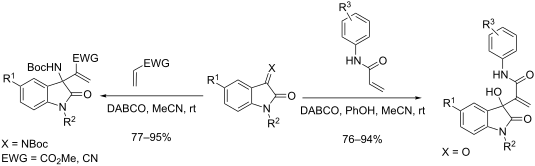
- coupling of an activated alkene with an electrophile (usually aldehydes or imines) in the presence of a catalyst (Figure 1). The reaction is organocatalytic, atomically economical and operationally simple in nature. Most importantly, it results in the synthesis of densely functionalized molecules, also


Preparation of neuroprotective condensed 1,4-benzoxazepines by regio- and diastereoselective domino Knoevenagel–[1,5]-hydride shift cyclization reaction
Beilstein J. Org. Chem. 2014, 10, 2594–2602, doi:10.3762/bjoc.10.272
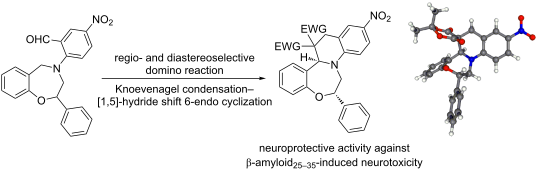
- ] or organocatalytic [16][17] reactions and the mechanism of the stereospecific hydride transfer have been recently studied by several research groups. The synthetic potential of the diastereoselective domino Knoevenagel–[1,5]-hydride shift cyclization reaction was exploited in our present work for the


Chiral phosphines in nucleophilic organocatalysis
Beilstein J. Org. Chem. 2014, 10, 2089–2121, doi:10.3762/bjoc.10.218
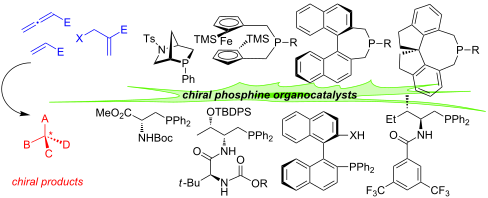
- phosphines possessing various chiral skeletons that have been used in asymmetric nucleophilic organocatalytic reactions, including annulations of allenes, alkynes, and Morita–Baylis–Hillman (MBH) acetates, carbonates, and ketenes with activated alkenes and imines, allylic substitutions of MBH acetates and
- organocatalytic asymmetric domino reactions allow the rapid construction of structurally complex molecules from readily available starting materials in two or more steps in a single operation, they have attracted much attention. Bifunctional chiral phosphines are ideal chiral catalysts for tandem reactions. In


A new charge-tagged proline-based organocatalyst for mechanistic studies using electrospray mass spectrometry
Beilstein J. Org. Chem. 2014, 10, 2027–2037, doi:10.3762/bjoc.10.211
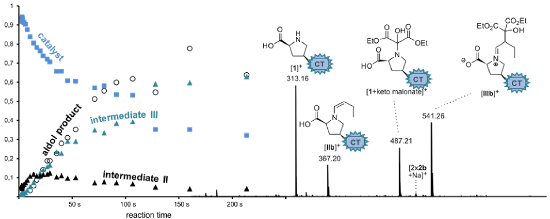
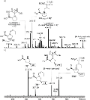
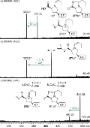
- reactions with high efficiency and selectivity are nowadays known so that organocatalysis complements current catalytic fields such as organometallic or enzymatic catalysis as an independent subdomain [24][25][26][27][28][29][30]. Parallel to the enormous growth of organocatalytic applications in synthesis
- , mechanistic studies on organocatalytic reactions [31][32][33][34][35][36][37][38] using ESI mass spectrometry [20][39][40][41][42][43][44][45][46][47][48][49] have been reported. The pioneering studies of List and Barbas [50] revealed that the amino acid L-proline is an effective catalyst for a great variety



Cyclization–endoperoxidation cascade reactions of dienes mediated by a pyrylium photoredox catalyst
Beilstein J. Org. Chem. 2014, 10, 1272–1281, doi:10.3762/bjoc.10.128
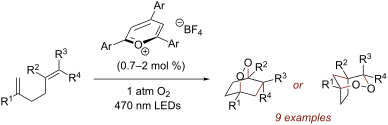
- the reactivity of the diene with respect to its structure to better predict the mode of diene cation radical cyclization (5-exo vs 6-endo). Herein is reported an organocatalytic photoredox-mediated strategy for the endoperoxidation of 1,5-dienes using 3O2 to rapidly generate complex endoperoxide


Visible-light photoredox catalyzed synthesis of pyrroloisoquinolines via organocatalytic oxidation/[3 + 2] cycloaddition/oxidative aromatization reaction cascade with Rose Bengal
Beilstein J. Org. Chem. 2014, 10, 1233–1238, doi:10.3762/bjoc.10.122


Preparation of phosphines through C–P bond formation
Beilstein J. Org. Chem. 2014, 10, 1064–1096, doi:10.3762/bjoc.10.106
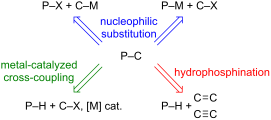
- papers appeared reporting on organocatalyzed asymmetric hydrophosphinations. The organocatalytic process has the advantage that in contrast to a metal-catalyzed method, it cannot undergo product inhibition as a result of the coordination ability of phosphorus to a metal catalyst. The addition of


Primary-tertiary diamine-catalyzed Michael addition of ketones to isatylidenemalononitrile derivatives
Beilstein J. Org. Chem. 2014, 10, 929–935, doi:10.3762/bjoc.10.91
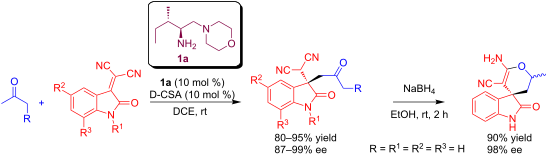
- attention as novel substrates for the enantioselective synthesis of 3,3'-disubstituted oxindoles [18][19][20][21][22]. The organocatalytic Michael addition of ketones to isatylidenemalononitriles via enamine-catalysis has emerged as a useful tool for the synthesis of 3,3'-disubstituted oxindoles, which


Addition of H-phosphonates to quinine-derived carbonyl compounds. An unexpected C9 phosphonate–phosphate rearrangement and tandem intramolecular piperidine elimination
Beilstein J. Org. Chem. 2014, 10, 883–889, doi:10.3762/bjoc.10.85
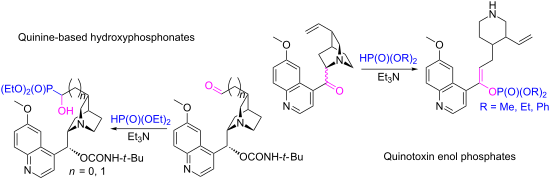
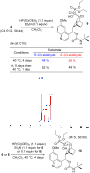
- ; Introduction Medicinal, organocatalytic and stereoselective properties of quinine make it the most prominent representative of Cinchona alkaloids [1], a group of natural compounds of a unique three-dimensional structure. The structure involves a particular arrangement of two rigid heterocyclic fragments




Isocyanide-based multicomponent reactions towards cyclic constrained peptidomimetics
Beilstein J. Org. Chem. 2014, 10, 544–598, doi:10.3762/bjoc.10.50

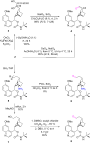
- imines and chiral isocyanides (Scheme 16) [59]. The chiral isocyanides were prepared following an organocatalytic phase-transfer Mannich-type reaction [59], whereas the chiral imines 52a,b were obtained from a bio-catalytic protocol [60]. In particular, the rigid bicyclic imines are powerful starting


Concise, stereodivergent and highly stereoselective synthesis of cis- and trans-2-substituted 3-hydroxypiperidines – development of a phosphite-driven cyclodehydration
Beilstein J. Org. Chem. 2014, 10, 369–383, doi:10.3762/bjoc.10.35
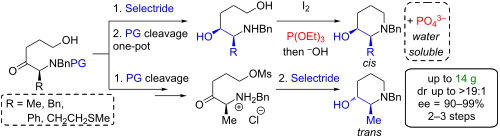
- enantioselective lithiation and subsequent hydroxyalkylation. 4. Recently, Pansare [40] reported the synthesis of L-733,060, CP-99,994 and a hydroxypipecolic acid through asymmetric organocatalytic vinylogous aldol addition as the key step. While the syntheses by Charette [38] and Pansare [40] are restricted to


Organocatalytic asymmetric fluorination of α-chloroaldehydes involving kinetic resolution
Beilstein J. Org. Chem. 2014, 10, 323–331, doi:10.3762/bjoc.10.30
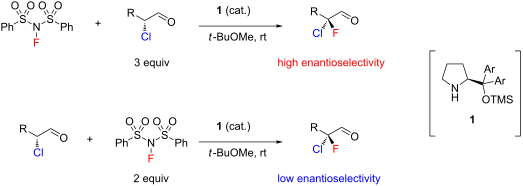
- stereogenic center(s), are fascinating building blocks for new drug candidates. Organocatalytic α-fluorination of aldehydes is known to be an efficient strategy for the enantioselective construction of fluorinated chiral carbon centers [3][4][5][6]; however, very few successful studies have been published on
- the fluorination of α-branched aldehydes [7]. During the course of our study on the enantioselective construction of such fluorinated stereogenic centers, we developed a method for the enantioselective synthesis of α-chloro-α-fluoroaldehydes via the organocatalytic α-fluorination of α-alkyl-α
- yielded 4a having the R configuration (Scheme 1). An investigation of the substrate scope of the organocatalytic fluorination of α-chloroaldehydes was performed as shown in Table 1. The reaction of 2a with 3 equiv of NFSI yielded 4a in 87% ee along with monochloro alcohol 5a in 37% ee (Table 1, entry 2


New hydrogen-bonding organocatalysts: Chiral cyclophosphazanes and phosphorus amides as catalysts for asymmetric Michael additions
Beilstein J. Org. Chem. 2014, 10, 224–236, doi:10.3762/bjoc.10.18
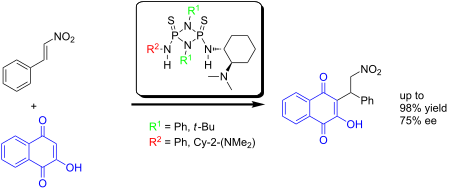
- -triamide III and cyclodiphosphazane IV and their comparison to the “classic” motifs I and II suggest a slightly larger spacing and are reported herein. We furthermore report the synthesis of chiral variants of the catalyst motifs III and IV and their successful application in the organocatalytic addition
- has been reported for 9-epi-aminoquinine-based thiourea catalysts in other organocatalytic reactions [46]. Indeed the yields are slightly higher (70%), however the enantioselectivity is low (11% ee). Altering the ligand backbone to the corresponding 9-epi-amino derivatives dramatically improves the


Multicomponent reactions II
Beilstein J. Org. Chem. 2014, 10, 115–116, doi:10.3762/bjoc.10.7
- again presents a snap shot of this highly dynamic field. With the traditional formats of letters, full papers, and reviews it spans the broad range of modern chemistry, including organocatalytic, organometallic, transition metal-catalyzed, radical reactions, condensation and isonitrile-based MCR
Stereoselectively fluorinated N-heterocycles: a brief survey
Beilstein J. Org. Chem. 2013, 9, 2696–2708, doi:10.3762/bjoc.9.306
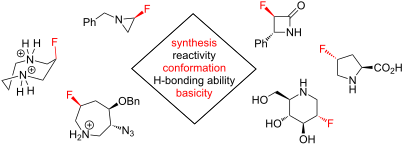
- the context of organocatalysis. Fluorination of proline itself, as well as related N-heterocycles, has been shown to increase enantioselectivity in certain organocatalytic processes [13]. For example, Alexakis and co-workers found that the non-fluorinated catalyst 13 (Scheme 2) catalysed an alkylation


A combined continuous microflow photochemistry and asymmetric organocatalysis approach for the enantioselective synthesis of tetrahydroquinolines
Beilstein J. Org. Chem. 2013, 9, 2457–2462, doi:10.3762/bjoc.9.284
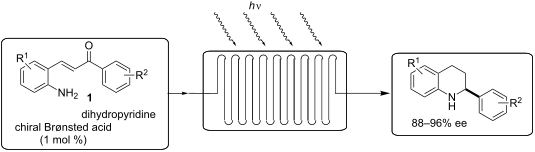
- Erli Sugiono Magnus Rueping Institute of Organic Chemistry, RWTH Aachen University, Landoltweg 1, D-52074 Aachen, Germany 10.3762/bjoc.9.284 Abstract A continuous-flow asymmetric organocatalytic photocyclization–transfer hydrogenation cascade reaction has been developed. The new protocol allows


Total synthesis of (−)-epimyrtine by a gold-catalyzed hydroamination approach
Beilstein J. Org. Chem. 2013, 9, 2042–2047, doi:10.3762/bjoc.9.242
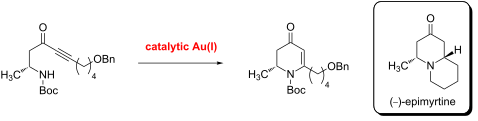
- of (−)-epimyrtine have been described to date including the intramolecular allylsilane N-acyliminium ion cyclization [6], the organocatalytic aza-Michael reaction [7], the intramolecular Mannich reaction [8], and the iminium ion cascade reaction [9][10]. More efficient, convenient and highly


Organocatalyzed enantioselective desymmetrization of aziridines and epoxides
Beilstein J. Org. Chem. 2013, 9, 1677–1695, doi:10.3762/bjoc.9.192
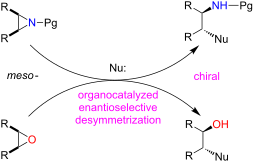
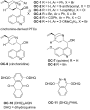
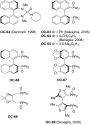
- organocatalysts. Cinchona alkaloid derivatives The first organocatalytic enantioselective desymmetrization of meso-aziridines was discovered by Hou and co-workers in 2007 [40] with various arylthiols as nucleophiles in CCl4 at 0 °C in the presence of cinchonine-derived phase-transfer catalysts (PTCs, Figure 2, OC
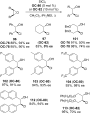
- (3% ee). The usage of Boc for the N-protected group in aziridine resulted in no enantioselectivity under the optimum conditions. The organocatalytic enantioselective ring-opening of N-protected aziridines by β-ketoesters by means of cinchona alkaloid-derived PTCs (Figure 3, OC-12 to OC-19) for
- asymmetric ring-opening of epoxides remained stagnant for sixteen years. In 1997, Fu [79] and colleagues have developed a phosphaferrocene OC-56 for the organocatalytic ring-opening of epoxides with trimethylsilyl chloride (TMSCl) to provide trans O-TMS protected vicinal chlorohydrins in quantitative yields








Bioinspired total synthesis of katsumadain A by organocatalytic enantioselective 1,4-conjugate addition
Beilstein J. Org. Chem. 2013, 9, 1601–1606, doi:10.3762/bjoc.9.182
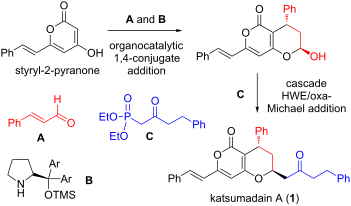
- neuraminidase (NA) inhibitor, was synthesized by using a bioinspired, organocatalytic enantioselective 1,4-conjugate addition of styryl-2-pyranone with cinnamaldehyde, followed by a tandem Horner–Wadsworth–Emmons/oxa Michael addition. Keywords: bioinspired synthesis; catalysis; katsumadain A; natural product
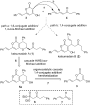
- ; organocatalytic 1,4-conjugate addition; Introduction 2-Pyranone is a privilege structure that is often present in natural products and pharmaceuticals, many of which exhibit diverse molecular architectures and biological profiles [1][2]. For example, katsumadain A (1) and B (2), which were isolated from Alpinia
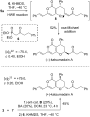
- strategy was designed as a fallback, in which katsumadain A could be accessed from the lactol 5a and phosphonate 6 via a tandem Horner–Wadsworth–Emmons (HWE)/oxa-Michael addition reaction [16]. In turn, 5a could be derived from 3 and cinnamaldehyde (7) by an organocatalytic enantioselective 1,4-conjugate


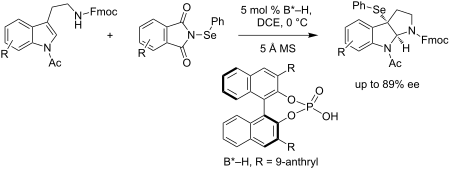
Organocatalytic asymmetric selenofunctionalization of tryptamine for the synthesis of hexahydropyrrolo[2,3-b]indole derivatives
Beilstein J. Org. Chem. 2013, 9, 1559–1564, doi:10.3762/bjoc.9.177