Search results
Search for "triazole" in Full Text gives 305 result(s) in Beilstein Journal of Organic Chemistry. Showing first 200.
Attempted synthesis of a meta-metalated calix[4]arene
Beilstein J. Org. Chem. 2019, 15, 1996–2002, doi:10.3762/bjoc.15.195
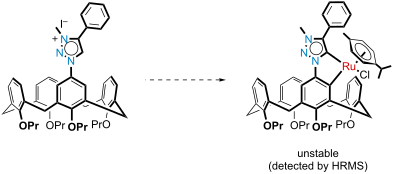
- yielding transformations to azide and 1,2,3-triazole derivatives which may have application in other areas of research. Keywords: calixarene; inherent chirality; mesoionic carbene; mononitration; ruthenacycle; Introduction Calix[4]arenes are a class of diverse macrocyclic compounds which have been the
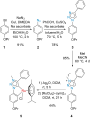
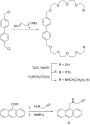
- Ullmann-type coupling to give aryl azide 2, which readily reacted with phenylacetylene in a copper-catalyzed Huisgen 1,3-dipolar cycloaddition to give 1,2,3-triazole 3 (Scheme 1). The formation of the ruthenacycle was then achieved using Albrecht’s method involving regioselective methylation of triazole 3
- our case column chromatography was only used once (to purify the monoazidocalix[4]arene 7), whilst the other procedure needed chromatography at each step. Introduction of the triazole moiety onto the upper rim of the calix[4]arene was then achieved with a copper-catalyzed Huisgen 1,3-dipolar




Synthesis of a [6]rotaxane with singly threaded γ-cyclodextrins as a single stereoisomer
Beilstein J. Org. Chem. 2019, 15, 1829–1837, doi:10.3762/bjoc.15.177
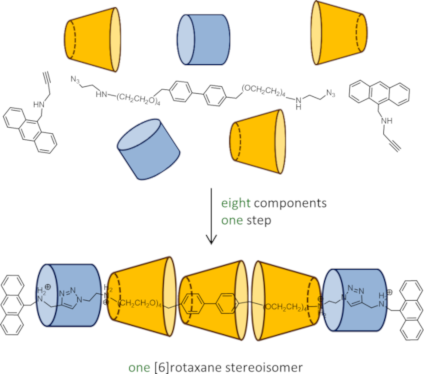
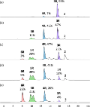
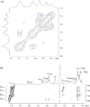
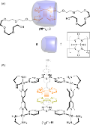
- . The 1H spectrum of 6R contains one set of sharp signals, suggesting that the [6]rotaxane is adopting a relatively rigid and symmetrical structure in solution (Figure 2a). NOE cross peaks between the triazole and CB[6] protons, and also Ha of the anthracene stoppers and CB[6] protons were observed
- , suggesting that the two CB[6] are interlocking at the triazole which is consistent with the strong binding of the CB[6] to the ammoniums (Figure S18 in Supporting Information File 1). Due to the severe peak overlapping in the aliphatic region at 3.5–4.5 ppm, NOE cross peaks in that regions cannot be
- specific and orthogonal interactions of the macrocycles with different part of the axle. More interestingly, only one set of signals was observed for both the triazole and CB[6] protons in 6R. This observation is suggesting that 1) 6R is adopting a structure that the CB[6] at the termini are far from the





N-(1-Phenylethyl)aziridine-2-carboxylate esters in the synthesis of biologically relevant compounds
Beilstein J. Org. Chem. 2019, 15, 1722–1757, doi:10.3762/bjoc.15.168

- )-5a was reacted with 3-bromo-5-methoxy-1H-1,2,4-triazole (128) to give N-protected bicyclic amino ester 129 which was next converted into (S)-(+)-127 in two standard steps (Scheme 33) [17]. Its enantiomer was prepared from (2R,1′S)-5a. Lacosamide ((R)-130) is a derivative of ᴅ-serine and has found


Recent advances on the transition-metal-catalyzed synthesis of imidazopyridines: an updated coverage
Beilstein J. Org. Chem. 2019, 15, 1612–1704, doi:10.3762/bjoc.15.165
- product. This was an unprecedented report for the synthesis of a library of targeted moieties using a nano-click catalyst. The triazole precursor was also synthesized by the group using nano-copper oxide in an aqueous medium. The reaction has well tolerated variedly substituted starting materials whether


Synthesis of ([1,2,4]triazolo[4,3-a]pyridin-3-ylmethyl)phosphonates and their benzo derivatives via 5-exo-dig cyclization
Beilstein J. Org. Chem. 2019, 15, 1563–1568, doi:10.3762/bjoc.15.159
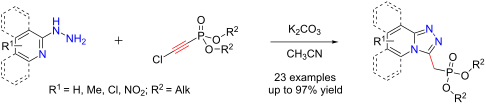
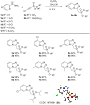
- , hypervalent iodine reagents, etc. The synthetic methods towards diverse [1,2,4]triazolo[3,4-a]pyridines have been reviewed in detail [12][13]. It should be noted that the use of acetylene species to create this heterocycle (including triazole ring) is presented only by few examples. There has been reported
- the phosphoryl unit resonating at 3.75–4.19 ppm with 2JHP = 20 Hz. At lower field, the signals of 6 protons of the (iso)quinoline rings are present at 7.1–8.7 ppm. In the 13C NMR spectra, the methylene and methine carbons of the triazole ring resonate as doublet signals with characteristic constants
- available N-unsubstituted 2-hydrazinylpyridines and 2(1)-hydrazinyl(iso)quinolines. Due to the presence of the fused [1,2,4]triazole hetaryl pharmacophore fragment and a phosphoryl group in the obtained compounds they are of great interest as promising substances with potential biological activity




Stereo- and regioselective hydroboration of 1-exo-methylene pyranoses: discovery of aryltriazolylmethyl C-galactopyranosides as selective galectin-1 inhibitors
Beilstein J. Org. Chem. 2019, 15, 1046–1060, doi:10.3762/bjoc.15.102
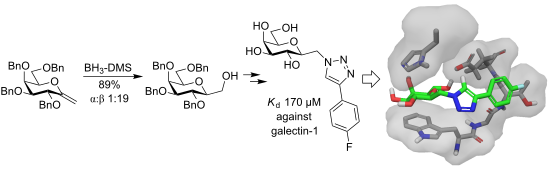
- ; galectin-1; hydroboration; inhibition; selective; triazole; Introduction Galectins are defined by a typically about 130 amino acid carbohydrate recognition domain (CRD) that binds to carbohydrates with at least one β-galactose subunit within a binding pocket large enough to accommodate a tetrasaccharide
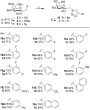
- those of lactose and LacNAc for galectin-3 and also to have selectivity over other galectin-1 [22][23]. Later, combining non-natural thiophenyl aglycons with C3-triazole groups at D-galactose led to the discovery of high affinity and selective galectin-3 inhibitors [24]. In this work, we present a
- -Glu71 groove may, in addition to a more favorable steric complementarity, benefit from the electron-poor triazole hydrogen sampling positions close to the Glu71 carboxylate and the electron-rich triazole nitrogens sampling positions close to the rim of Trp68 side chain. This hypothesis may also explain



New α- and β-cyclodextrin derivatives with cinchona alkaloids used in asymmetric organocatalytic reactions
Beilstein J. Org. Chem. 2019, 15, 830–839, doi:10.3762/bjoc.15.80
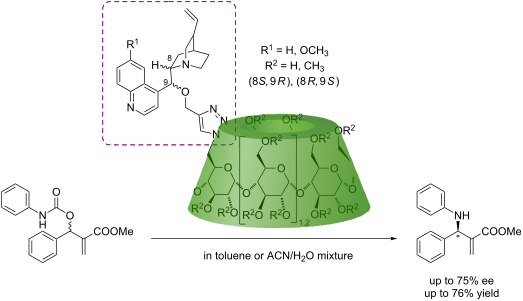
- as the promoter (not in a catalytic amount) of a Henry reaction and obtained the product with 99% ee. Subsequently, Doyagüez et al. [17] attached L-proline to β-CD via different linkers (including a triazole linker) and used the resulting organocatalysts in an aldol reaction in water, albeit with a
- triazole (8.21 ppm), thus confirming the successful attachment of the cinchona alkaloid to the CD skeleton through the CuAAC click reaction. The second part of the 1H NMR spectrum comprises the resolved signal for the double bond on the quinuclidine skeleton of the cinchona alkaloid (5.93 ppm). The third
- identified in the region around 2.00–1.20 ppm. Subsequently, 13C NMR, DEPT-edited HSQC and HMBC spectra also confirmed the substitution on the primary rim of the CD skeleton (Figure 4). The C-6 atom of the substituted glucose unit is correlated with the hydrogen signal of the triazole ring (50.41 ppm of C-6I


An efficient and concise access to 2-amino-4H-benzothiopyran-4-one derivatives
Beilstein J. Org. Chem. 2019, 15, 703–709, doi:10.3762/bjoc.15.65
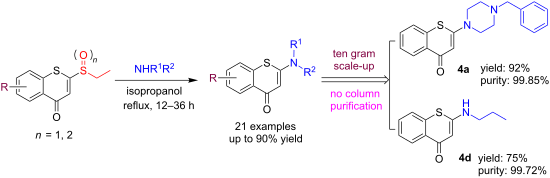
- in the presence of bases such as NaH, K2CO3, etc. However, for this reaction an adjacent electron-withdrawing group such as a carbonyl or triazole group is required at the 3-position of the thiochromone ring (method D and E, Scheme 1) [3][4]. Very recently, our group obtained a series of 2


Polyaminoazide mixtures for the synthesis of pH-responsive calixarene nanosponges
Beilstein J. Org. Chem. 2019, 15, 633–641, doi:10.3762/bjoc.15.59
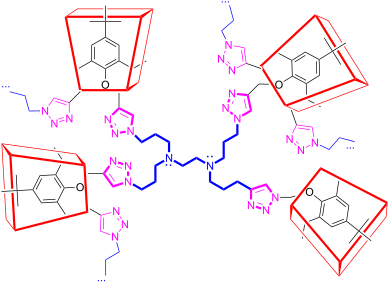
- azide stretching of the reticulating agent, respectively. On the other hand, a tiny signal at 3140 cm−1 appears, which can be attributed to the Csp2–H stretching typical of the newly formed 1,2,3-triazole ring. The occurrence of the triazole ring is also accounted for by tiny signals at 1244, 1204, 1050
- NMR spectra (Figure 3) it is possible to recognize the peculiar cluster of four signals in the C-aromatic region, centered at ca. 127, 134, 146 and 154 ppm, due to the aromatic C atoms of the calixarene and triazole units. On the other hand, the aliphatic region shows a main signal centered at ca. 32


Synthesis and fluorescent properties of N(9)-alkylated 2-amino-6-triazolylpurines and 7-deazapurines
Beilstein J. Org. Chem. 2019, 15, 474–489, doi:10.3762/bjoc.15.41
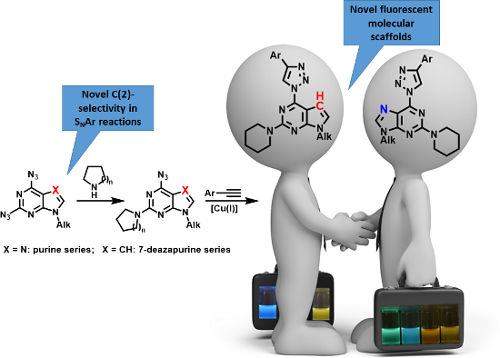
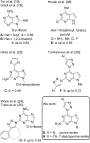
- heterocycles, which were additionally extended by triazole moieties, the compounds with electron-donating groups showed intramolecular charge transfer character (ICT/TICT) of the excited states which was proved by solvatochromic dynamics and supported by DFT calculations. In the 7-deazapurine series this led
- towards 2-amino-6-triazolylpurine derivatives was performed in a more atom economic way. The latter synthesis does not require a double cycloaddition followed by replacement of one of the triazole moieties. The final structural proof for the compounds of the series 7a–f and 8a–f was obtained by spectral
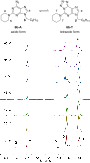
- comparison between compound 8a and regioisomeric compound 5. The 1H NMR comparison showed two main differences in the spectra (Figure 3): 1) the H–C(triazole) signal of product 8a is shifted downfield from 8.69 to 9.10 ppm and 2) the appearance of a CH2 signal near the N atom is changed from multiplet at




Olefin metathesis in multiblock copolymer synthesis
Beilstein J. Org. Chem. 2019, 15, 218–235, doi:10.3762/bjoc.15.21

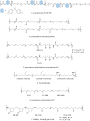
- multiple click reactions of the diazido-telechelic PBD with a dialkynyl-containing azobenzene chromophore. The newly formed triazole moieties can tune and improve the photoresponsive properties of PBD. α,ω-Functional telechelic polymers also can be synthesized by acyclic diene metathesis (ADMET




Thermophilic phosphoribosyltransferases Thermus thermophilus HB27 in nucleotide synthesis
Beilstein J. Org. Chem. 2018, 14, 3098–3105, doi:10.3762/bjoc.14.289
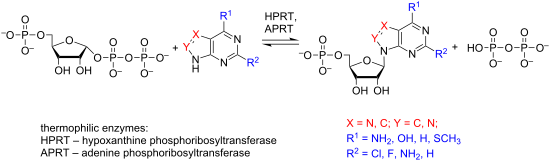
- APRT limits the number of possible nucleotides that can be synthesized. Thus, for Thermus thermophilus HB27 APRT (TthAPRT), nucleotide synthesis is limited to the closest structural homologs of adenine (Table 1) [1]. Unfortunately, 1,2,4-triazole-3-carboxamide, its analogues, guanine, hypoxanthine, and
- phosphoribosyltransferase only [2]. Unfortunately, we did not find any product in reactions with compounds based on 1,2,4-triazole-3-carboxamide, which was also observed for E. сoli HPRT [15][16]. However, allopurinol and 8-azaguanine are substrates for TthHPRT, and 2-chloroadenine is a substrate for TthAPRT. For 2


Copper(I)-catalyzed tandem reaction: synthesis of 1,4-disubstituted 1,2,3-triazoles from alkyl diacyl peroxides, azidotrimethylsilane, and alkynes
Beilstein J. Org. Chem. 2018, 14, 2916–2922, doi:10.3762/bjoc.14.270
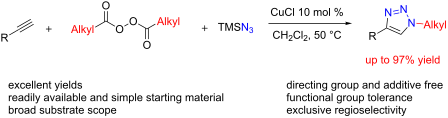
- available lauroyl peroxide (2a), and TMSN3 (Table 1). In a preliminary experiment, the reaction of 1a with 2a in the presence of 10 mol % of CuCl in THF at 50 °C afforded 1,4-disubstituted 1,2,3-triazole 3a in 65% isolated yield (Table 1, entry 1). Surprisingly, under these conditions no CuAAC product
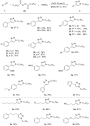
- , and 3ll). Remarkably, the chlorodiacyl peroxide also tolerated the reaction conditions to afford chloro-substituted triazole 3ee with good yield. Moreover, alkyl diacyl peroxides bearing a phenyl group, cyclopentyl group, or a cyclohexyl group also afforded good yields (3cc, 3mm, and 3nn




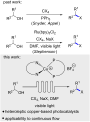
Photocatalyic Appel reaction enabled by copper-based complexes in continuous flow
Beilstein J. Org. Chem. 2018, 14, 2730–2736, doi:10.3762/bjoc.14.251
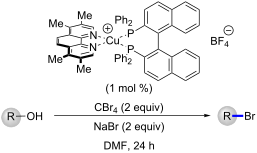
- complexes were poor catalysts, while when considering the diamine ligands the dq and bathophenthroline catalysts provided poor to modest yields. Also, BINAP and Xantphos-based catalysts tended to afford higher yields of 2, while amongst the diamines, the triazole-based complexes were almost all efficient at




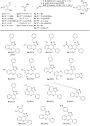
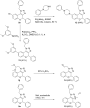
Assembly of fully substituted triazolochromenes via a novel multicomponent reaction or mechanochemical synthesis
Beilstein J. Org. Chem. 2018, 14, 2689–2697, doi:10.3762/bjoc.14.246
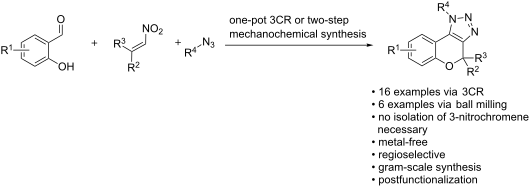
- -triazole; Introduction Chromenes are important structural motifs and are omnipresent in nature and drugs for medicinal applications [1][2][3][4]. Vitamin E [5][6][7][8], arahypin-5 [9][10], THC and other cannabinoids [11][12][13][14] are only a few examples of biologically relevant chromenes. Hence, the
- , which enables them to undergo a high variety of reactions and functionalizations [15]. Combining the chromene core with the 1,2,3-triazole structural motif has led to some interesting new molecules [16][17][18][19][20][21][22][23][24][25][26][27][28][29][30][31]. Very recently, spiro-fused
- ], via intramolecular cyclization of a diazomethane group and a nitrile [23], or via our recently reported NH-triazole synthesis starting from 6-methoxyflavanone [24]. Furthermore, 1,4,5-trisubstituted 1,2,3-triazole annulated chromenes have been reported via an intramolecular arylation reaction of 1,2,3




Nucleoside macrocycles formed by intramolecular click reaction: efficient cyclization of pyrimidine nucleosides decorated with 5'-azido residues and 5-octadiynyl side chains
Beilstein J. Org. Chem. 2018, 14, 2404–2410, doi:10.3762/bjoc.14.217
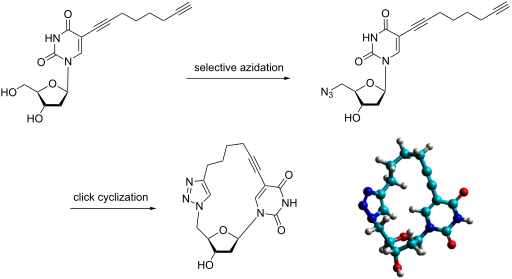
- macrocyclic systems [18][19][20][21][22][23][24][25]. DNA mimics with triazole linkages were constructed [26][27]. The click reaction was used to generate a cyclic ADP-ribose second messenger mimic [28]. Modelling studies using MM+ energy minimization showed that pyrimidine nucleosides are useful synthons for
- upfield shift (3–4 ppm) of the C4’-carbon signal was observed when the 5’-OH group was replaced by an azido group or a triazole moiety (Supporting Information File 1, Table S1). Irradiation of the triazole-H of 4 and 8, resulted in strong NOE’s at H-6, indicating that the Watson–Crick recognition sites of
- is observed (Supporting Information File 1, Figure S2). This might go back to stacking interactions of the nucleobase and the triazole residue. A similar relationship exists in the dC series with values of 4.2 for dC and 3.0 for 1 [35]. In contrast the pKa for cyclic dC 4 (3.2) did not further


Catalyst-free synthesis of 4-acyl-NH-1,2,3-triazoles by water-mediated cycloaddition reactions of enaminones and tosyl azide
Beilstein J. Org. Chem. 2018, 14, 2348–2353, doi:10.3762/bjoc.14.210
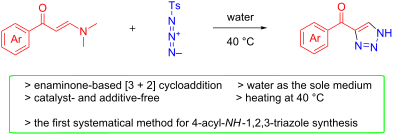
- , authentically mild conditions (40 °C stirring) as well as practical scalability. Keywords: additive-free; catalyst-free; cycloaddition; enaminones; on water; 1,2,3-triazole; Introduction Discovering sustainable chemical syntheses constitutes one central issue of modern organic chemistry. A large number of
- , including those reactions involving valuable C–C [7][8][9][10][11], C–heteroatom [12][13][14][15][16], heteroatom–heteroatom [17][18] bond formation as well as divergent cascade reactions [19][20][21][22][23], are presently taking place to guide the progress of sustainable organic synthesis. 1,2,3-Triazole
- development of these metal-catalyzed cycloaddition strategies [33][34][35]. Alongside the vast progress happened in MAAC-based 1,2,3-triazole synthesis, the past decade has witnessed the emergence of another powerful cycloaddition tool for the 1,2,3-triazole synthesis: the metal-free cycloaddition of azides


Tetrathiafulvalene – a redox-switchable building block to control motion in mechanically interlocked molecules
Beilstein J. Org. Chem. 2018, 14, 2163–2185, doi:10.3762/bjoc.14.190
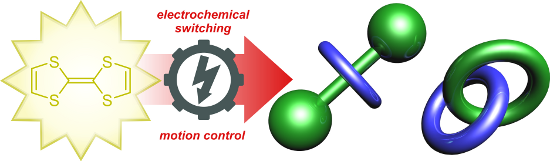
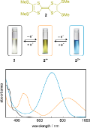
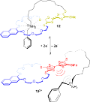
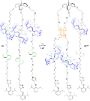
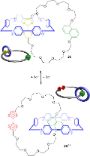
- TTF is preferred as a station for the wheel over the triazole unit. However, after oxidation, the more hydrophilic dication TTF2+ is less favored and the ring moves to the triazole. Both switching states were fully characterized by UV–vis, 1H,1H-NOESY NMR spectroscopy, and cyclic voltammetry. The











Revisiting ring-degenerate rearrangements of 1-substituted-4-imino-1,2,3-triazoles
Beilstein J. Org. Chem. 2018, 14, 2098–2105, doi:10.3762/bjoc.14.184
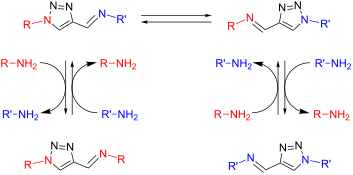
- James T. Fletcher Matthew D. Hanson Joseph A. Christensen Eric M. Villa Department of Chemistry, Creighton University, 2500 California Plaza, Omaha, NE 68178, U.S.A. 10.3762/bjoc.14.184 Abstract The 1-substituted-4-imino-1,2,3-triazole motif is an established component of coordination compounds
- four imine products via a dynamic equilibrium of condensation, rearrangement and hydrolysis steps. Kinetic studies utilizing 1-(4-nitrophenyl)-1H-1,2,3-triazole-4-carbaldehyde with varying amines showed rearrangement rates sensitive to both steric and electronic factors. Such measurements were
- facilitated by a high throughput colorimetric assay to directly monitor the generation of a 4-nitroaniline byproduct. Keywords: colorimetric assay; condensation; imine exchange; rearrangement; 1,2,3-triazole; Introduction Examples of multidentate chelators comprised of 1,2,3-triazole units have surged in


Synthesis and supramolecular self-assembly of glutamic acid-based squaramides
Beilstein J. Org. Chem. 2018, 14, 2065–2073, doi:10.3762/bjoc.14.180
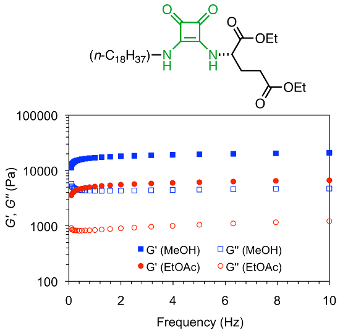
- concentrations and gel-to-sol transition temperatures were also determined for each case. In addition, the superior squaramide diester gelator was compared with an analogue triazole-based gelator in terms of critical gelation concentration, gelation kinetics and thermal phase transition. Keywords: glutamic acid
- properties of supramolecular gels [33]. Specifically, we exchanged the amide group of N-stearoyl-L-glutamic acid (1, Figure 1), a known LMW gelator [34], by its non-classical isostere [35][36] 1,4-disubstituted 1,2,3-triazole 2 (Figure 1). This approach enabled us to fine-tuning the gelation capacity and the
- due to the delicate equilibrium between metastable gel and thermodynamically stable crystalline phases [39][40]. Squaramide 3 formed stable gels in the same number of solvents than the analogue triazole-based gelator 2, which was previously found to be superior to the amide 1 [33]. Similarly to 3, CGC


Applications of organocatalysed visible-light photoredox reactions for medicinal chemistry
Beilstein J. Org. Chem. 2018, 14, 2035–2064, doi:10.3762/bjoc.14.179
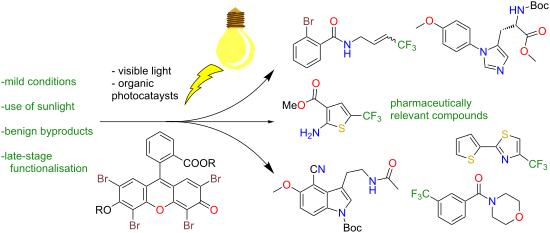
- carbamates, urea and non-basic heterocycles (Scheme 11) [54]. The scope covers a multitude of electron-poor and electron-rich arenes which can be reacted with carbamates, urea, pyrazole and triazole derivatives to furnish aminated products. The authors address the various reactivities observed with respect
- group report are scaffolds and moieties seen in typical medicinal chemistry syntheses. There are numerous examples of amino acid-derived substrates, either as the methoxybenzene electrophile (tyrosine type derivatives) or as the nucleophile (histidine and related structures such as the depicted triazole


Synthesis of new p-tert-butylcalix[4]arene-based polyammonium triazolyl amphiphiles and their binding with nucleoside phosphates
Beilstein J. Org. Chem. 2018, 14, 1980–1993, doi:10.3762/bjoc.14.173
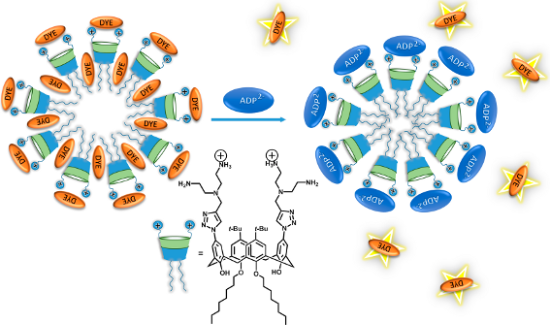
- was elaborated for the naked-eye detection of ADP with a detection limit of 0.5 mM. Keywords: ADP; amphiphile; ATP; calix[4]arene; CuAAC; eosin Y probe; molecular recognition; polydiacetylene; self-assembly; triazole; Introduction During the last two decades many researcher groups have paid much
- target BOC-protected products 9a,b and 11a,b were isolated in good yields. The appearance of a new signal of triazole ring protons and a new set of signals of the methylene group protons between the triazole ring and the tertiary nitrogen atom as well as the signals of the ethylene fragments and BOC


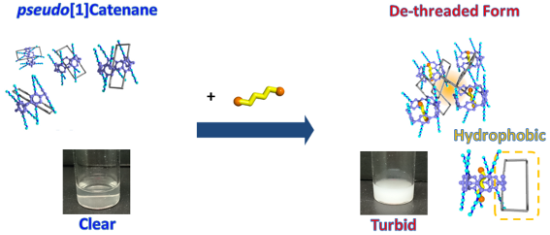
An amphiphilic pseudo[1]catenane: neutral guest-induced clouding point change
Beilstein J. Org. Chem. 2018, 14, 1937–1943, doi:10.3762/bjoc.14.167
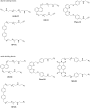
- , triazole), 7.15 (s, 2H, phenyl), 6.93 (s, 2H, phenyl), 6.89 (s, 2H, phenyl), 6.80 (s, 2H, phenyl), 6.62 (s, 2H, phenyl), 5.21 (dd, 4H, methylene), 3.50–4.14 (m, 110H, methylene), 3.34–3.36 (m, 24H, methyl), −0.27–0.72 (br, 20H, methylene of alkyl chain) ppm; 13C NMR (125 MHz, CDCl3) δ 150.4, 149.8, 149.7


Efficient catenane synthesis by cucurbit[6]uril-mediated azide–alkyne cycloaddition
Beilstein J. Org. Chem. 2018, 14, 1846–1853, doi:10.3762/bjoc.14.158
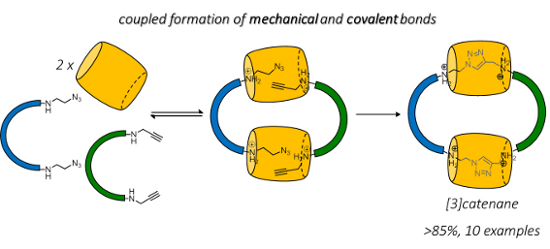
- proximity and their cycloaddition will be facilitated. As the cycloaddition is preceded by CB[6] binding, triazole formation will therefore ensure the interlocking of the CB[6]. A [1 + 1] macrocyclization of the diazide and dialkyne will then result in the exclusive formation of the [3]catenane with no
- interactions are preserved under the MS conditions. Inclusion of the triazole in the CB[6] cavity was evidenced by the upfield shifted triazole resonance from 8.5 ppm to 6.4 ppm when compared with that of free triazole in non-interlocked system [22][24][25]. NOE cross peaks between the triazole and CB[6
- upfield shifted triazole 1H NMR resonances of Cat-2–Cat-10 at ca. 6.4 ppm are consistent with the inclusion of the triazole in the CB[6] cavity [22][24][25]. The ESIMS, HRMS and MS2 spectra are all consistent with the [3]catenanes with a similar fragmentation behavior as that of Cat-1. The 1H NMR, 13C NMR



Synthesis of new tricyclic 5,6-dihydro-4H-benzo[b][1,2,4]triazolo[1,5-d][1,4]diazepine derivatives by [3+ + 2]-cycloaddition/rearrangement reactions
Beilstein J. Org. Chem. 2018, 14, 1826–1833, doi:10.3762/bjoc.14.155
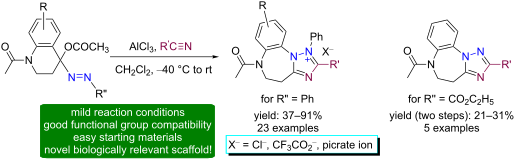
- furnishing the tricyclic 1,2,4-triazole-fused 1,4-benzodiazepines. Keywords: 1,4-benzodiazepine (BDZ); cyclization; hydrazones; oxidation; rearrangement; Introduction Heterocyclic compounds comprising a 1,4-benzodiazepine (BDZ) ring have been a topic of continued interest as they exhibit a wide spectrum of
- achieved when a third heterocycle, especially a 1,2,4-triazolo moiety, was attached to the seven-membered ring as part of 1,4-benzodiazepine [13][14]. Among various reported 1,2,4-triazole-annulated 1,4-benzodiazepines, triazolam (I), estazolam (II), alprazolam (III) and pyrazolam (IV) are prominent
- . Conclusion In summary, an appealing series of 1,2,4-triazole-fused 1,4-benzodiazepines 10 and 13 were prepared via the [3+ + 2]-cycloaddition reaction followed by a cationic [1,2]-rearrangement reaction. The procedure is general and has several advantages such as ready availability of starting materials