Search results
Search for "cyclizations" in Full Text gives 218 result(s) in Beilstein Journal of Organic Chemistry. Showing first 200.
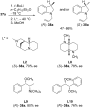
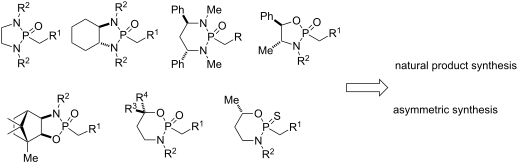
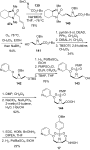
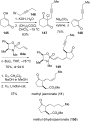
Application of cyclic phosphonamide reagents in the total synthesis of natural products and biologically active molecules
Beilstein J. Org. Chem. 2014, 10, 1848–1877, doi:10.3762/bjoc.10.195








Triazol-substituted titanocenes by strain-driven 1,3-dipolar cycloadditions
Beilstein J. Org. Chem. 2014, 10, 1630–1637, doi:10.3762/bjoc.10.169

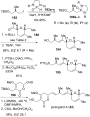
- with classical organic acylation reactions (Friedel–Crafts reaction, esterification, amide synthesis, Scheme 1). Some of these complexes have been used as organometallic gelators [19][20], as a novel class of cytostatic compounds [26], and catalysts for unusual radical cyclizations [27][28][29][30][31
- ] cyclizations [56][57][58]. Carboxylates employed as titanocene starting materials for azide-substituted complexes. Azides employed in this study and conditions for their synthesis. Most active titanocenes of this study and their AC50 values. Modular titanocene synthesis via acylation reactions [24]. Synthesis


Site-selective covalent functionalization at interior carbon atoms and on the rim of circumtrindene, a C36H12 open geodesic polyarene
Beilstein J. Org. Chem. 2014, 10, 956–968, doi:10.3762/bjoc.10.94
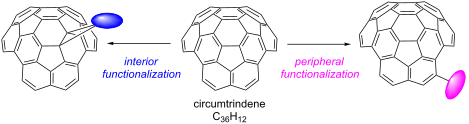
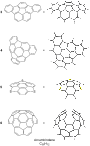
- (Heck-type cyclization), unfortunately, were unsuccessful. Heck-type cyclizations work nicely with planar PAHs and even on moderately curved PAHs, such as corannulene [15][23][24]. Nonetheless, when applied to the indenocircumtrindene synthesis, the reaction did not give any ring-closed products




Isocyanide-based multicomponent reactions towards cyclic constrained peptidomimetics
Beilstein J. Org. Chem. 2014, 10, 544–598, doi:10.3762/bjoc.10.50

- before a follow-up cyclization event can take place. An example of this is the use of N-Boc protected amino acids in the Ugi reaction. Subsequent deprotection of the linear Ugi-product allows cyclization and reactions of this type are classified as Ugi Deprotection–Cyclizations (UDC, Scheme 4). Moreover
- , cyclizations can also be initiated by activation of the Ugi-product via an Ugi Activation–Cyclization procedure and involves the use of convertible isocyanides as Ugi-substrates. An example of a convertible isonitrile is Armstrong’s isocyanide which can be cleaved after acidic treatment (Scheme 5). A
- disadvantage that cyclization of the linear dipeptide unit is difficult. Instead of relatively easy ester cyclizations, the Ugi-product contains a C-terminal amide that is more difficult to cyclize. Therefore, Ugi MCRs towards diketopiperazines require subsequent post-condensation modifications such as Ugi


Silver and gold-catalyzed multicomponent reactions
Beilstein J. Org. Chem. 2014, 10, 481–513, doi:10.3762/bjoc.10.46


The Flögel-three-component reaction with dicarboxylic acids – an approach to bis(β-alkoxy-β-ketoenamides) for the synthesis of complex pyridine and pyrimidine derivatives
Beilstein J. Org. Chem. 2014, 10, 394–404, doi:10.3762/bjoc.10.37
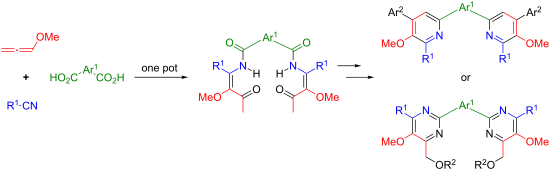
- nitriles is retained during this reaction [40]. In the present report we describe our efforts to further broaden the substrate scope of this multicomponent reaction and the subsequent cyclizations by employing aromatic dicarboxylic acids. This extension should allow a rapid access to fairly complex
- -methoxy-β-ketoenamides). With these products of a multicomponent reaction we performed cyclizations to rapidly construct symmetrically and unsymmetrically substituted pyridine and pyrimidine derivatives. Hence a very short approach to fairly complex functionalized oligoaromatic systems was established. In


Diversity-oriented synthesis of dihydrobenzoxazepinones by coupling the Ugi multicomponent reaction with a Mitsunobu cyclization
Beilstein J. Org. Chem. 2014, 10, 209–212, doi:10.3762/bjoc.10.16

- derivatives. Keywords: benzoxazepines; diversity-oriented synthesis; multicomponent reactions; Mitsunobu reaction; Ugi reaction; Introduction Although the classical Ugi 4-component reaction (U-4CR) leads to acyclic peptide-like compounds, post-condensation cyclizations can afford a huge variety of drug-like


Recent applications of the divinylcyclopropane–cycloheptadiene rearrangement in organic synthesis
Beilstein J. Org. Chem. 2014, 10, 163–193, doi:10.3762/bjoc.10.14
- -exo-dig fashion. Radical quenching gave cis-arylvinylcyclopropane 238. Arylvinylcyclopropane rearrangement was followed by rearomatization to give tetracycle 239 (see Scheme 29). Padwa and coworkers [201] discovered an intermediate DVCPR during their investigation of rhodium-catalyzed cyclizations of




Synthesis of five- and six-membered cyclic organic peroxides: Key transformations into peroxide ring-retaining products
Beilstein J. Org. Chem. 2014, 10, 34–114, doi:10.3762/bjoc.10.6
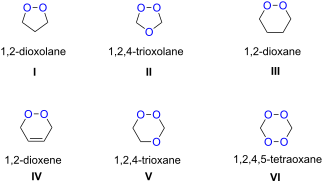
- synthesized in a similar way starting with the peroxidation of 2-methyl-2-(3-methylbut-3-enyl)oxetane (222), followed by oxetane-ring opening in triethyl(2-methyl-4-(2-methyloxetan-2-yl)butan-2-ylperoxy)silane (223) (Scheme 63) [250]. Dioxanes can also be synthesized by inramolecular cyclizations with the
- acetate-catalyzed synthesis of cyclic peroxides [336]. 3.10. Acid-mediated cyclizations of peroxides The intramolecular cyclization of unsaturated peroxyacetals 273a–d in the presence of TiCl4 or SnCl4 occurs via formation of peroxycarbenium ions to give methoxy- and chlorine-containing dioxanes 274a–d as






The renaissance of organic radical chemistry – deja vu all over again
Beilstein J. Org. Chem. 2013, 9, 2778–2780, doi:10.3762/bjoc.9.312

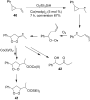
- of organic radical chemistry that delivered groundbreaking results, especially in organic synthesis. By the 1990’s, radical reactions (especially cyclizations) were broadly recognized as powerful tools to make molecules. This Renaissance I in organic radical chemistry was built on prior renaissances
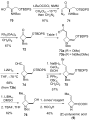
Garner’s aldehyde as a versatile intermediate in the synthesis of enantiopure natural products
Beilstein J. Org. Chem. 2013, 9, 2641–2659, doi:10.3762/bjoc.9.300
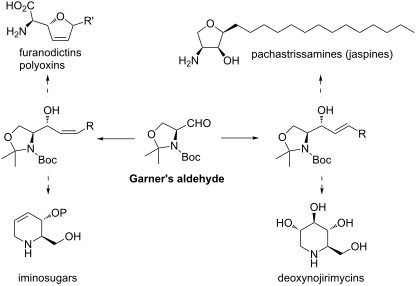
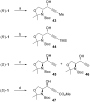
- with Red-Al. Both isomers B and C can also be directly accessed from 1 with the corresponding cis- and trans-vinyl nucleophiles. Allylic alcohol B can be used as an intermediate in the synthesis of various natural products or intermediates thereof. The cis-double bond allows cyclizations to five- or




Gold(I)-catalyzed domino cyclization for the synthesis of polyaromatic heterocycles
Beilstein J. Org. Chem. 2013, 9, 2625–2628, doi:10.3762/bjoc.9.297
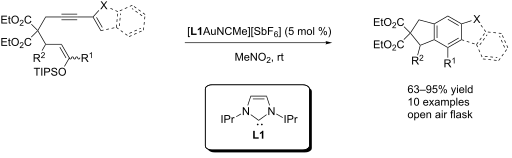
- cyclizations of the enol ether 11a (R1 = p-BrC6H4, R2 = H) gave the corresponding benzothiophene 12a in 83% yield. The use of electron-poor silyl enol ether 11b (R1 = p-NO2C6H4, R2 = H) gave the desired product 12b, albeit in lower yield of 63%. Di- and trisubstituted silyl enol ethers 11c (R1 and R2 = H) and


Gold(I)-catalyzed enantioselective cycloaddition reactions
Beilstein J. Org. Chem. 2013, 9, 2250–2264, doi:10.3762/bjoc.9.264
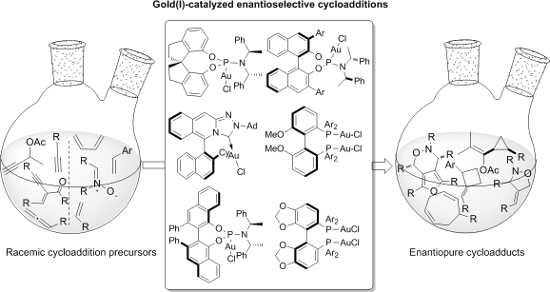
- , aldol reactions, 1,3-dipolar cycloadditions, and cyclizations [13][14][15]. Other gold-promoted asymmetric induction strategies rely on the use of chiral counterions. Indeed, it has been shown that a tight chiral ion pair with the gold cation is able to induce excellent levels of asymmetry in certain
- cyclizations [16]. Cycloaddition reactions are very important synthetic processes that allow the transformation of simple acyclic precursors into complex cyclic or polycyclic adducts in a rapid and efficient way [17][18], usually providing a rapid increase in skeletal and stereochemical complexity. Moreover


Gold(I)-catalyzed formation of furans from γ-acyloxyalkynyl ketones
Beilstein J. Org. Chem. 2013, 9, 1774–1780, doi:10.3762/bjoc.9.206
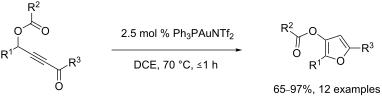
- construct the furan motif [4][5]. Among them, late transition metal-catalyzed intra- or intermolecular cyclizations of oxygenated functionalities on unsaturated carbon–carbon bonds proved to be powerful synthetic methods due to their mildness, efficiency and diversity [6][7]. In the last decade, gold


Gold-catalyzed cyclization of allenyl acetal derivatives
Beilstein J. Org. Chem. 2013, 9, 1751–1756, doi:10.3762/bjoc.9.202
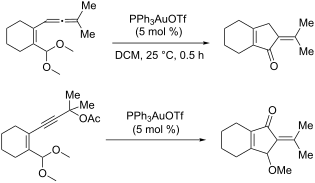
- intermediates I encourages us to understand their behavior in the absence of a dipolarophile. This work reports gold-catalyzed intramolecular cyclizations of these allenyl acetals [19]. Results and Discussion We first tested the intramolecular cyclizations of allenyl acetal 1a with PPh3AuCl/AgSbF6 (5 mol
- highlights the diversified mechanism of such oxidative cyclizations. We prepared the additional substrates 5b–5g bearing an acetate group to examine the scope of the reaction, results are shown in Table 3. This gold-catalyzed cyclization was applicable to compound 5b bearing a cyclopentyl bridge, giving the


Anodic coupling of carboxylic acids to electron-rich double bonds: A surprising non-Kolbe pathway to lactones
Beilstein J. Org. Chem. 2013, 9, 1630–1636, doi:10.3762/bjoc.9.186
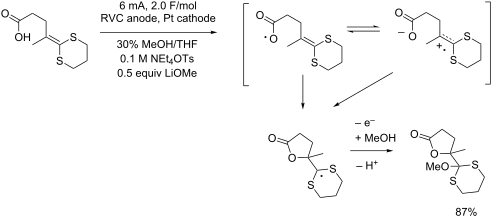
- form product 9. No product from sulfonamide trapping (8) was observed. However, when the reaction was run under more basic conditions (0.5 equivalents of lithium methoxide) cyclic voltammetry data indicated that the oxidative cyclizations were initiated by the oxidation of sulfonamide anion. This led
- to initial formation of N-localized radical 6. Depending on the reaction conditions, the experiment favoured either a sulfonamide or alcohol based cyclization. Density functional theory (DFT) calculations suggested that sulfonamide based cyclizations proceed by addition of the N-localized radical to
- the ketene dithioacetal in the absence of a trapping group [21]. The anodic coupling of a carboxylic acid group with a vinyl sulfide and an enol ether were also examined (Table 2). As with earlier alcohol and amine based cyclizations, reactions with the vinyl sulfide coupling partner proceeded much


Computational study of the rate constants and free energies of intramolecular radical addition to substituted anilines
Beilstein J. Org. Chem. 2013, 9, 1620–1629, doi:10.3762/bjoc.9.185

- the addition is about as fast as the 6-endo cyclization of the hexenyl radical. Such reactions and other even slower cyclizations are well documented in titanocene mediated and catalyzed radical processes [61][62][63][64][65][66][67][68][69]. Therefore, the relatively high computational rate constant


Mechanistic studies on the CAN-mediated intramolecular cyclization of δ-aryl-β-dicarbonyl compounds
Beilstein J. Org. Chem. 2013, 9, 1472–1479, doi:10.3762/bjoc.9.167
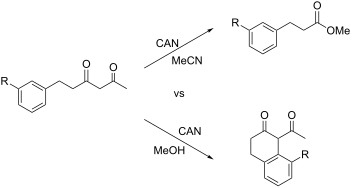
- functionalized aromatic substrates undergo intramolecular cyclizations generating 2-tetralone derivatives in moderate to good yields. DFT computational studies indicate that successful formation of 2-tetralones from δ-aryl-β-dicarbonyl radicals is dependent on the stability of the subsequent cyclohexadienyl
- group was at the meta position (Table 2, entry 4). For substrates 1e and 1f with the methoxy group at either the ortho or para position, respectively, methyl esters 2e and 2f (Table 2, entries 2 and 3) were the major products. Additionally, intramolecular cyclizations with electron-deficient δ-aryl
- explain the site-selective radical cyclizations with m-methoxylated rings, the selectivity of naphthyl substrates was not investigated. The energy values for the cyclization of all substituents are given in Table 3, and their corresponding energy diagrams are given in Figure 1. For unsubstituted 1a’, the


Exploration of an epoxidation–ring-opening strategy for the synthesis of lyconadin A and discovery of an unexpected Payne rearrangement
Beilstein J. Org. Chem. 2013, 9, 1179–1184, doi:10.3762/bjoc.9.132
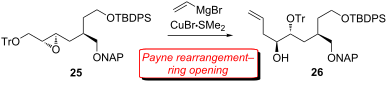
- efficiently furnish its bicyclo[5.4.0]undecane system, which is shown in bold in Figure 1. Subsequent to this observation, we performed model studies that demonstrated the viability of highly stereoselective 7-exo-trig acyl radical–6-exo-trig alkyl radical cyclizations as a means of preparing bicyclo[5.4.0


Cascade radical reaction of substrates with a carbon–carbon triple bond as a radical acceptor
Beilstein J. Org. Chem. 2013, 9, 1148–1155, doi:10.3762/bjoc.9.128
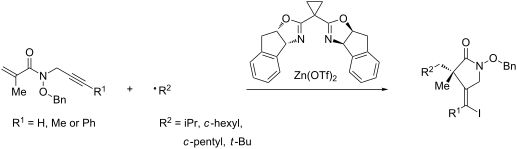
- (Figure 1) [37][38][39][40][41][42][43]. Enantioselective radical reactions have been intensively studied over the past fifteen years. Compared with stereocontrol studies on intermolecular radical reactions, the enantioselective stereocontrol in radical cyclizations still remains a major challenge [44][45
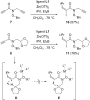
- addition–cyclization–trapping reaction of substrates with a carbon–carbon triple bond as a radical acceptor as well as the scope and limitation of hydroxamate ester as a coordination site with a chiral Lewis acid. Synthetic strategies involving enantioselective radical cyclizations would be desirable tools




Tandem dinucleophilic cyclization of cyclohexane-1,3-diones with pyridinium salts
Beilstein J. Org. Chem. 2013, 9, 1119–1126, doi:10.3762/bjoc.9.124
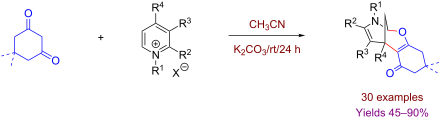
- access to a number of bicyclic systems. Some of these reactions, such as the cyclization with quinazolinium salts, proceeded as one-pot cyclizations. Other cyclizations, such as the reaction with isoquinolinium salts, had to be carried out in two steps (formation of open-chained condensation products
- . Further studies to extend the scope of the synthetic utility of these cyclizations are in progress in both of our laboratories. Experimental General Information Solvents were purchased from ACROS and directly used without further purification. Analytical thin-layer chromatography was performed on 0.20 mm




Gold-catalyzed oxycyclization of allenic carbamates: expeditious synthesis of 1,3-oxazin-2-ones
Beilstein J. Org. Chem. 2013, 9, 818–826, doi:10.3762/bjoc.9.93
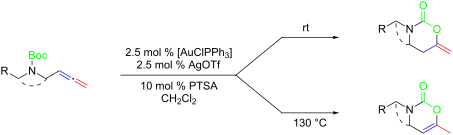
- ][37][38][39][40][41]. The Boc protective group has been widely used in allene chemistry, being an inert and recommended partner in gold- and palladium-catalyzed aminocyclizations of allenes [42]. On the other hand, reports of gold-catalyzed cyclizations leading to heterocycles that contain more than



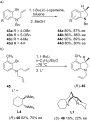
Intramolecular carbolithiation cascades as a route to a highly strained carbocyclic framework: competition between 5-exo-trig ring closure and proton transfer
Beilstein J. Org. Chem. 2013, 9, 537–543, doi:10.3762/bjoc.9.59
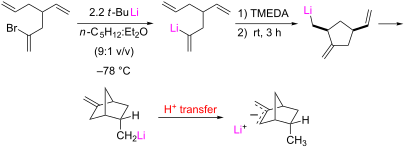
- intramolecular 5-exo-trig ring closure has been well documented, and the absence of proton transfers that would compromise such cyclizations is a hallmark of this chemistry. In an effort to explore the limitations of this approach to more highly strained systems, the preparation of a stellane (tricyclo
- [3.3.0.03,7]octane) framework by an intramolecular carbolithiation cascade involving three coupled 5-exo-trig cyclizations of the vinyllithium derived from 2-bromo-4-vinyl-1,6-heptadiene by lithium–bromine exchange was investigated. The cascade does not afford the stellane; rather, the cascade is terminated
- after two cyclizations by a proton transfer that occurs by an intermolecular process catalyzed by trace amounts of endo-5-methyl-2-methylenebicyclo[2.2.1]heptane present in reaction mixtures as a consequence of inadvertent quenching of an intermediate alkyllithium during prolonged reaction times at room


Microwave-assisted three-component domino reaction: Synthesis of indolodiazepinotriazoles
Beilstein J. Org. Chem. 2013, 9, 401–405, doi:10.3762/bjoc.9.41
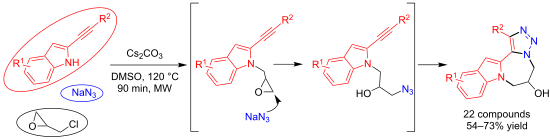
- 1,3-dipolar cycloaddition reactions have been also applied by us and others with the view to synthesize triazole-annulated polyheterocycles. Although these cyclizations have been successfully carried out in either one-pot [22][23][24] or multistep format [25][26][27][28], reports involving their


Inter- and intramolecular enantioselective carbolithiation reactions
Beilstein J. Org. Chem. 2013, 9, 313–322, doi:10.3762/bjoc.9.36

- , the aryllithium intermediate undergoes a tandem carbolithiation–γ-elimination leading to enantioenriched 2-cyclopropylphenols [51]. As shown, these enantioselective intramolecular cyclizations are mostly employed for the formation of five-membered rings. The 6-exo cyclization of an aryllithium