


Search results
Search for "magnesium" in Full Text gives 236 result(s) in Beilstein Journal of Organic Chemistry. Showing first 200.
Streptopyridines, volatile pyridine alkaloids produced by Streptomyces sp. FORM5
Beilstein J. Org. Chem. 2014, 10, 1421–1432, doi:10.3762/bjoc.10.146
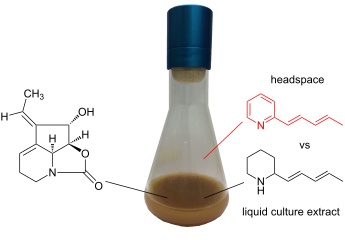
- magnesium chloride solution, 20 g/L agar only for plates) at 28 °C for 3 days. SM-agar plates were then inoculated with 300 µL of the preculture and cultivated for 6 days at 28 °C. Then the culture was analyzed by closed-loop stripping analysis at room temperature [7]. In this system, air is continuously


Selective allylic hydroxylation of acyclic terpenoids by CYP154E1 from Thermobifida fusca YX
Beilstein J. Org. Chem. 2014, 10, 1347–1353, doi:10.3762/bjoc.10.137
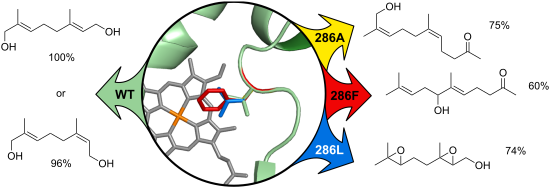
- a procedure by Fringuelli et al. [39] nerol (2) was treated with magnesium monoperoxyphthalate (MPPA) in the presence of NaOH to give 2,3-epoxynerol (6) in 77% yield together with 20% of reisolated starting material 2 (see Supporting Information File 1). According to a method by McMurry [24
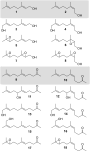
- hindrance were selected. Terpene substrates (grey background) and their oxidised derivatives. a) Ac2O, pyridine, room temperature, 24 h; b) SeO2, t-BuOOH, CH2Cl2, 0 °C, 5 h; c) K2CO3, MeOH, room temperature, 2.5 h; d) MPPA, NaOH, H2O, room temperature, 5 h (MPPA = magnesium monoperoxyphthalate). a) SeO2, t




Magnesium bis(monoperoxyphthalate) hexahydrate as mild and efficient oxidant for the synthesis of selenones
Beilstein J. Org. Chem. 2014, 10, 1267–1271, doi:10.3762/bjoc.10.127
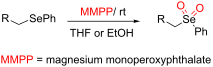
- Abstract A new, efficient and mild method for the direct oxidation of selenides to selenones using magnesium bis(monoperoxyphthalate) hexahydrate (MMPP) has been developed. Noteworthy this transformation proceeds at room temperature, employs a cheap and safety oxidant and has a broad functional group
- investigated the use of magnesium bis(monoperoxyphthalate) hexahydrate (MMPP) as a new oxidant for the straightforward conversion of selenides 1 to selenones 2 under mild experimental conditions. Magnesium bis(monoperoxyphthalate) hexahydrate is a cheap commercially available, relatively stable and easy to use
- corresponding selenone in 68% yield. It is noteworthy that the reaction byproduct magnesium phthalate is water soluble and easy to separate during work-up; acidification of the water phase and extraction with dichloromethane allows to recover the pure phthalic acid in excellent yield. This protocol was then


Amino acid motifs in natural products: synthesis of O-acylated derivatives of (2S,3S)-3-hydroxyleucine
Beilstein J. Org. Chem. 2014, 10, 1135–1142, doi:10.3762/bjoc.10.113
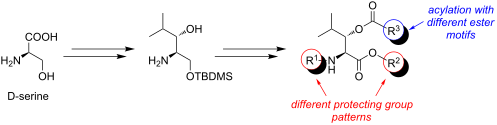
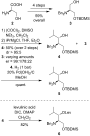
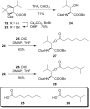
- derivative with limited stability, which was immediately converted into alcohol 4 by diastereoselective Felkin–Anh type Grignard addition with isopropyl magnesium chloride (50% yield over 2 steps from 3, dr > 95:5). However, we could not confirm that the use of diethyl ether as co-solvent in the Grignard
- acyclic D-serinal derivatives for the addition of nucleophiles to amino acid-derived aldehydes [33][34]. However, Zhu and co-workers have pointed out that Garner’s aldehyde surprisingly furnishes the syn diastereomer as the major product from its reaction with isopropyl magnesium chloride [32], thus
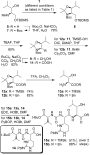
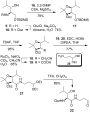
- formation of 8 in moderate to good yields (Table 1, entries 4–6). Finally, when 2,2-DiMP was used as solvent with catalytic amounts of CSA in the presence of magnesium sulfate, 8 could be isolated in a very good yield of 93% (Table 1, entry 7). After TBAF-mediated cleavage of the silyl ether, the resultant




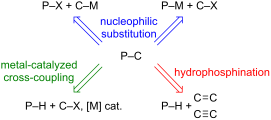
Preparation of phosphines through C–P bond formation
Beilstein J. Org. Chem. 2014, 10, 1064–1096, doi:10.3762/bjoc.10.106


A new building block for DNA network formation by self-assembly and polymerase chain reaction
Beilstein J. Org. Chem. 2014, 10, 1037–1046, doi:10.3762/bjoc.10.104
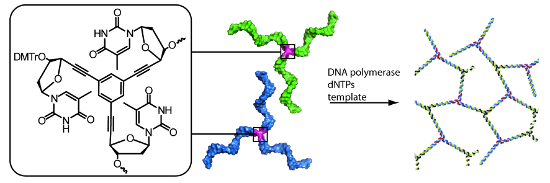
- denaturation studies (cf. Figure 2). The self-complementary oligonucleotides (5 μM) were annealed in 10 mM triethylammonium acetate buffer at pH 7 in the presence of sodium chloride (150 mM), sodium chloride and magnesium chloride (150 mM and 100 mM, respectively) or in the absence of salts. The solutions were
- melting in all buffers tested (data not shown). In magnesium ion-containing buffer the CG 2-mer (ODN-sc-I) shows a higher melting temperature (37.6 °C) as the ODN-sc-II 4-mer (24.3 °C). The GC-rich 4-mer ODN-sc-III shows high melting temperatures even in the presence of only sodium chloride (58.0 °C) and
- an even higher melting temperature in the presence of additional magnesium (73.0 °C). The melting temperature in presence of sodium chloride and magnesium is even higher than the respective melting temperature of the 6-mer ODN-sc-IV (50.7 °C). All in all, one can conclude that the self-assembly of GC


N-Alkylated dinitrones from isosorbide as cross-linkers for unsaturated bio-based polyesters
Beilstein J. Org. Chem. 2014, 10, 902–909, doi:10.3762/bjoc.10.88
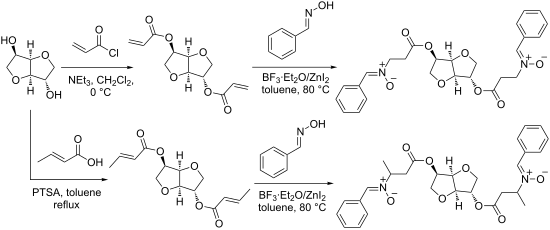
- product was received after drying of the organic layer over magnesium sulfate and subsequent removal of the solvent under reduced pressure. Yield: 94%. 1H NMR (300 MHz, CDCl3) δ (ppm) 6.58–6.33 (m, 2H, H2C=CH-), 6.22–6.01 (m, 2H, H2C=CH-), 5.89–5.80 (m, 2H, H2C=CH-), 5.29–5.16 (m, 2H, -CH-O-CO-), 4.87 (t
- solution and the organic layer was dried over magnesium sulfate. The pure product was obtained by evaporation of the solvent. Yield: 92%. 1H NMR (300 MHz, CDCl3) δ (ppm) 7.11–6.94 (m, H3C-HC=CH-), 5.96–5.79 (m, 1H, H3C-HC=CH-), 5.33–5.08 (m, 2H, -CH-O-CO-), 4.86 (t, 3J = 5 Hz, 1H, -CH-CH-), 4.53 (d, 3J


Structure elucidation of female-specific volatiles released by the parasitoid wasp Trichogramma turkestanica (Hymenoptera: Trichogrammatidae)
Beilstein J. Org. Chem. 2014, 10, 767–773, doi:10.3762/bjoc.10.72
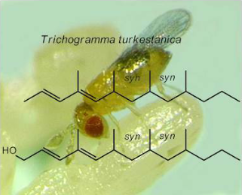
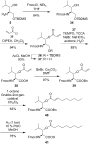
- , 10 h; c: p-TsCl, DMAP, TEA, DCM, −20 °C to rt, 12 h; d: (3-methylbutyl)magnesium bromide, CuI, THF, −90 °C to rt, 16 h; e: TBAF, THF, rt, 14 h; f: PDC, MS 4 Å, DCM, −20 °C, 90 min; g: (3-methylbut-2-en-1-yl)triphenylphosphonium bromide, n-BuLi, THF, −40 °C to rt 16 h; h: 1) NaH, THF, −20 °C to rt, 1



Synthesis of chiral N-phosphinyl α-imino esters and their application in asymmetric synthesis of α-amino esters by reduction
Beilstein J. Org. Chem. 2014, 10, 653–659, doi:10.3762/bjoc.10.57
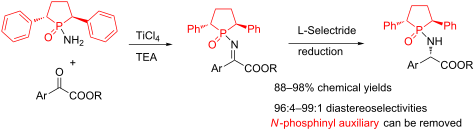
- phosphinyl amide 1 (Table 1). Common dehydrating reagents, like 4 Å molecular sieves and magnesium sulfate, resulted in no desired product neither at room temperature nor under reflux (Table 1, entries 1–4). Very poor chemical yields of α-imino ester 3a were detected when tetraethoxytitanium or


Synthesis of complex intermediates for the study of a dehydratase from borrelidin biosynthesis
Beilstein J. Org. Chem. 2014, 10, 634–640, doi:10.3762/bjoc.10.55
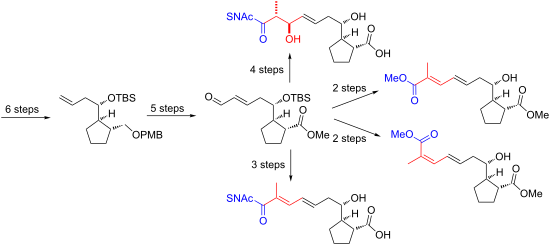
- presence of a methyl ester function. Amongst others, we tested Paterson’s lactate-derived benzoyl auxiliary, Evans’ magnesium-catalyzed direct aldol reaction, and an Abiko–Masamune-like aldol reaction by using a thiodesoxy variant of the norephedrine-derived auxiliary on simplified model aldehydes as well


Silver and gold-catalyzed multicomponent reactions
Beilstein J. Org. Chem. 2014, 10, 481–513, doi:10.3762/bjoc.10.46
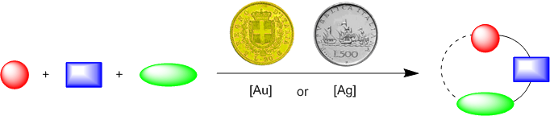
- catalysts for coupling arylaldehydes, piperidine and phenylacetylene in toluene at 100 °C. One year later, the same research group obtained comparable results under identical reaction conditions by using gold(0) nanoparticles stabilized by nanocristalline magnesium oxide [28]. In this work, the scope was
- G–NH2 groups under palladium/copper [61][62], copper [63][64], copper/magnesium [65], or base [66] catalysis have been reported. When tosylhydrazide (41) is used as G–NH2 component, the silver promoted MCR can afford 2-amino-1,3-disubstituted-1,2-dihydroquinolines and, when the third component (Nu


Synthesis of the B-seco limonoid core scaffold
Beilstein J. Org. Chem. 2014, 10, 194–208, doi:10.3762/bjoc.10.15
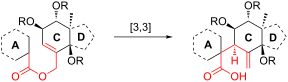
- envisaged to be constructed by 1,2-addition, using the free β-hydroxy functionality in 63 as directing group. Several conditions with allyl boronates, stannanes, silanes, indium, magnesium bromide, cerium, zinc bromide and other reagents have been screened. Finally, the best result was achieved with




Continuous-flow Heck synthesis of 4-methoxybiphenyl and methyl 4-methoxycinnamate in supercritical carbon dioxide expanded solvent solutions
Beilstein J. Org. Chem. 2013, 9, 2886–2897, doi:10.3762/bjoc.9.325
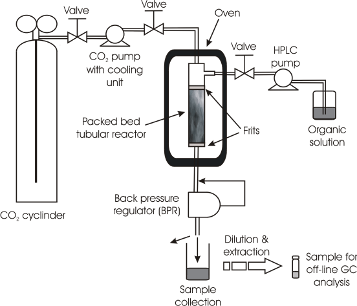
- susceptible to decomposition. Unfortunately, an excess of phosphine reduces the reaction rate, while higher quantities of palladium result in potentially significant increased production costs [33]. Palladium on a magnesium–lanthanum mixed oxide support (Pd/MgLaO) was reported to be an efficient, thermally
- . The resulting organic mixture (top layer) was then withdrawn and dried over magnesium sulfate then analysed by gas chromatography using a Varian 3900 GC with reference to standard solutions of trans-4-methoxystilbene. Continuous flow reactions Particles of the catalyst, 2% Pd on silica, (250 mg


N,N'-(Hexane-1,6-diyl)bis(4-methyl-N-(oxiran-2-ylmethyl)benzenesulfonamide): Synthesis via cyclodextrin mediated N-alkylation in aqueous solution and further Prilezhaev epoxidation
Beilstein J. Org. Chem. 2013, 9, 2834–2840, doi:10.3762/bjoc.9.318
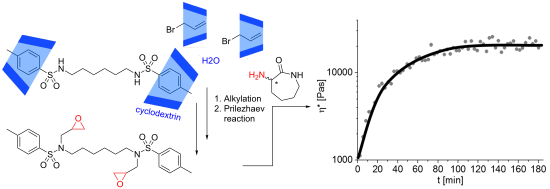
- % sodium bisulfite. Then, the organic phase was treated twice with 50 mL each of sodium hydrogen carbonate solution and stirred for 1.5 h. Subsequently, the organic phase was dried over magnesium sulfate and the solvent removed under reduced pressure to obtain 1.7 mmol (57% yield, not optimized) of 6. 1H


Oligomeric epoxide–amine adducts based on 2-amino-N-isopropylacetamide and α-amino-ε-caprolactam: Solubility in presence of cyclodextrin and curing properties
Beilstein J. Org. Chem. 2013, 9, 2803–2811, doi:10.3762/bjoc.9.315
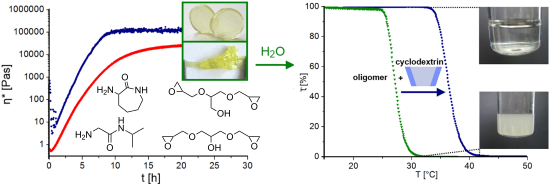
- refluxed for 3 h and stirred at room temperature overnight. The phases were separated, the aqueous phase was washed twice with 30 mL of methylene chloride and the organic phases were combined. After drying over magnesium sulfate and filtration thereof methylene chloride was distilled off under reduced




Diastereoselectivity in the Staudinger reaction of pentafluorosulfanylaldimines and ketimines
Beilstein J. Org. Chem. 2013, 9, 2675–2680, doi:10.3762/bjoc.9.303

- converted to the corresponding imine 5 in dichloromethane using anhydrous magnesium sulfate as a dehydrating agent (Scheme 2). Other desiccants, especially inherently basic materials, such as potassium carbonate lead to little imine formation. While the crude imine solution likely contained unreacted amine


Garner’s aldehyde as a versatile intermediate in the synthesis of enantiopure natural products
Beilstein J. Org. Chem. 2013, 9, 2641–2659, doi:10.3762/bjoc.9.300
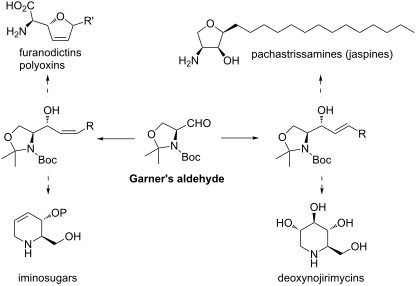
- a moderate 5:1 anti/syn-selectivity. By changing the metal to magnesium (vinylMgBr) the selectivity slightly dropped to 3:1 (anti/syn) still favouring adduct 20. Addition of a Lewis acid (TiCl4) did not affect the diastereoselectivity with vinyllithium species. The addition of vinyllithium to (S)-1


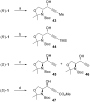


Cu-catalyzed trifluoromethylation of aryl iodides with trifluoromethylzinc reagent prepared in situ from trifluoromethyl iodide
Beilstein J. Org. Chem. 2013, 9, 2404–2409, doi:10.3762/bjoc.9.277
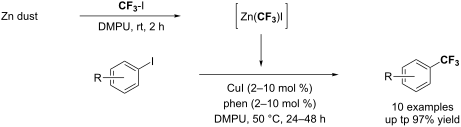
- organometallic reagents such as lithium and magnesium, which are widely utilized in non-fluorine organic synthesis, cannot be used. These trifluoromethyl metal reagents are generally too unstable to prepare even at low temperature because of facile α-fluoro elimination generating the singlet difluoromethylene


An overview of the synthetic routes to the best selling drugs containing 6-membered heterocycles
Beilstein J. Org. Chem. 2013, 9, 2265–2319, doi:10.3762/bjoc.9.265
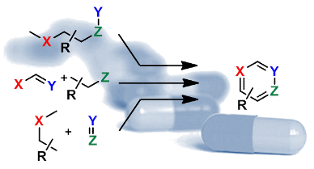
- thiazolidinedione 1.48 in the presence of a catalytic amount of piperidinium acetate reportedly leads to the exclusive formation of the desired Z-isomer product. Interestingly, the newly installed double bond was efficiently reduced using magnesium in methanol thus circumventing catalyst poisoning issues pertaining
- circumventing the problem describes the use of bench stable magnesium nitride, a solid material which upon hydrolysis liberates the required ammonia in situ (Scheme 23) [64]. However, there have been several reports on explosions caused by runaway reactions so extreme care must be administrated when using this


Post-Ugi gold-catalyzed diastereoselective domino cyclization for the synthesis of diversely substituted spiroindolines
Beilstein J. Org. Chem. 2013, 9, 2097–2102, doi:10.3762/bjoc.9.246
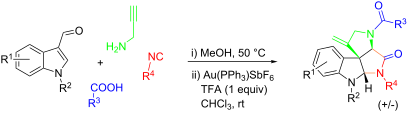
- mL). The organic layer was washed with brine (50 mL), dried over magnesium sulfate, and evaporated under reduced pressure. The obtained residue was purified by silica gel column chromatography (10% diethyl ether in dichloromethane) to afford compound 6a–q. Gold-catalyzed approaches towards


The chemistry of isoindole natural products
Beilstein J. Org. Chem. 2013, 9, 2048–2078, doi:10.3762/bjoc.9.243
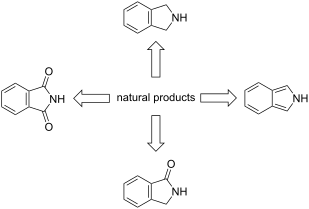
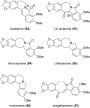
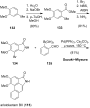
- reduction, acetylation and a magnesium sulfate induced rearrangement of the epoxide to the allylic alcohol. The synthesis of cytochalasin B 52 (15 steps from 73) proceeded in a similar fashion and was highlighted in detail by Hertweck [44]. The authors state that this approach is highly diversifiable and




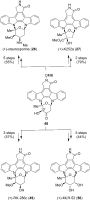








Organocatalyzed enantioselective desymmetrization of aziridines and epoxides
Beilstein J. Org. Chem. 2013, 9, 1677–1695, doi:10.3762/bjoc.9.192
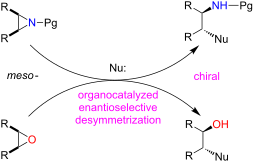
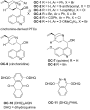
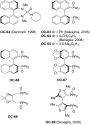
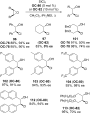
- with aq HCl to generate metal-free chiral phosphoric acid OC-21, which was reused as the catalyst, and the corresponding ring-opening products were obtained in moderate yields as racemates. By using a 1:1 mixture of calcium and magnesium phosphate salts of OC-21 as the catalyst, the corresponding ring
- -opening product 28 was produced in 94% yield and 91% ee. Therefore, calcium and magnesium phosphate salts of OC-21 proved to be the true catalysts in these processes. The author suggested that these metal phosphates may be generated through the purification of OC-21 on silica gel column. A dual Lewis-base








Controlled synthesis of poly(3-hexylthiophene) in continuous flow
Beilstein J. Org. Chem. 2013, 9, 1492–1500, doi:10.3762/bjoc.9.170
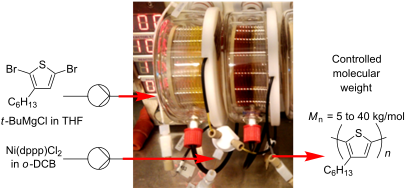
- thiophene Grignard monomer 2 is prepared from the magnesium exchange reaction of an alkyl Grignard reagent and 2,5-dibromo-3-hexylthiophene (1, Scheme 1a). It should be noted here that a mixture of Grignard monomers 2a and 2b is produced in this step, typically in a ratio of 75:25. Only 2a participates in



Hypervalent iodine/TEMPO-mediated oxidation in flow systems: a fast and efficient protocol for alcohol oxidation
Beilstein J. Org. Chem. 2013, 9, 1437–1442, doi:10.3762/bjoc.9.162
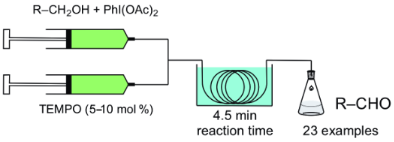
- time of 4.5 min. The reaction mixture exiting the flow reactor was quenched with water and, after completion of the reaction, extracted with CH2Cl2. The combined organic layers were dried over magnesium sulfate and the solvents were removed in vacuo. Direct analysis with GC allowed the determination of
- had been achieved, 200 mL of the reaction solution was collected in a flask containing water (20 mL) as a quenching agent. After completion of the reaction, the organic phase was removed and the aqueous phase was extracted with CH2Cl2 (3 × 20 mL). The combined organic layers were dried over magnesium
- . After the completion of the reaction the solvent was evaporated, and the reaction mixture was extracted with CH2Cl2 and water. The organic layers were dried over magnesium sulfate and the solvents were removed in vacuo. The 1H NMR analysis showed a clean spectrum of the condensation product. Flow setup


Total synthesis of ochnaflavone
Beilstein J. Org. Chem. 2013, 9, 1346–1351, doi:10.3762/bjoc.9.152
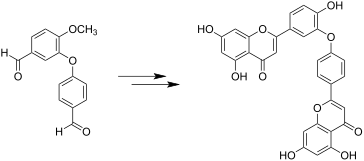
- was added, and the mixture was extracted with 3 × 20 mL CHCl3. The organic layer was dried over anhydrous magnesium sulfate, and the solvent was removed in vacuo. The residue obtained was purified by silica-gel column chromatography (EtOAc/hexanes, 3:7) as eluent to yield 748 mg (89%) of 4 as a light
- added, followed by extraction with 3 × 20 mL CHCl3. The obtained organic layer was dried over anhydrous magnesium sulfate, and the solvent was removed in vacuo. The residue was purified by silica gel column chromatography (EtOAc/hexanes, 1:9) to afford 5 (291 mg, 50%) as a white solid. 1H NMR (400 MHz
- anhydrous magnesium sulfate. CH2Cl2 was removed in vacuo and the resulting residue was purified by silica-gel column chromatography with EtOAc/hexanes (1:1) to afford 100 mg (25%) of the ether-linked biflavanone 8 as a light-yellow solid. 1H NMR (400 MHz, CDCl3) δH 7.40 (d, J = 8.5 Hz, 2H), 7.26 (dd, J





