


Search results
Search for "orientation" in Full Text gives 530 result(s) in Beilstein Journal of Organic Chemistry. Showing first 200.
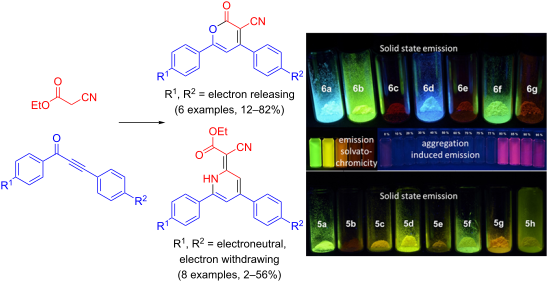
Emission solvatochromic, solid-state and aggregation-induced emissive α-pyrones and emission-tuneable 1H-pyridines by Michael addition–cyclocondensation sequences
Beilstein J. Org. Chem. 2019, 15, 2684–2703, doi:10.3762/bjoc.15.262
- excited state [59]. Plotting Stokes shifts Δν̃ against the orientation polarizabilities Δƒ of the respective solvents (Lippert plot) [60] gives a reasonable linear correlation with a moderate fit of r2 = 0.970 (Figure 13). The orientation polarizabilities Δƒ were calculated according to Equation 1 where




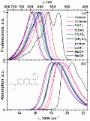
Probing of local polarity in poly(methyl methacrylate) with the charge transfer transition in Nile red
Beilstein J. Org. Chem. 2019, 15, 2552–2562, doi:10.3762/bjoc.15.248

- polarization (rearrangement of atomic bonds and valence angles) a certain dipolar orientation degree of freedom take place in PMMA within the lifetime of excited state of NR. The restriction of the orientational relaxation causes an inhomogeneous broadening of the fluorescence spectrum of NR and its excitation




Self-assembled coordination thioether silver(I) macrocyclic complexes for homogeneous catalysis
Beilstein J. Org. Chem. 2019, 15, 2465–2472, doi:10.3762/bjoc.15.239
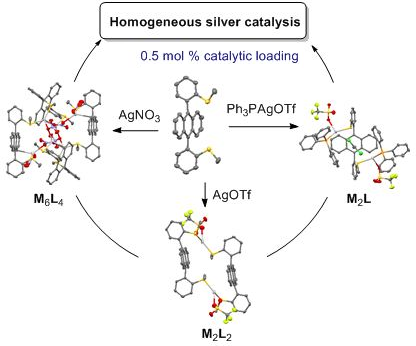
- bis-alkylaryl thioether ligand to control the directionality and spatial orientation of its coordination to silver(I). Besides, 9,10-diphenylanthracenes (DPA) with ortho-substituted 9- and 10-aryl groups can exist as syn- or anti-atropisomers whose rotational barrier [46][47] ranges from 21 (ortho-H


Sugar-derived oxazolone pseudotetrapeptide as γ-turn inducer and anion-selective transporter
Beilstein J. Org. Chem. 2019, 15, 2419–2427, doi:10.3762/bjoc.15.234
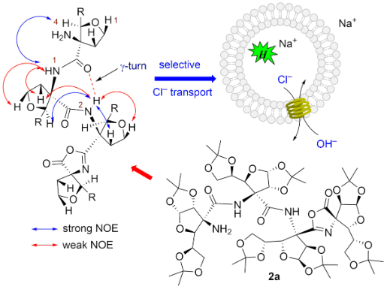
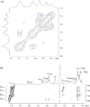
- presence of oxazolone ring in 2b. Conformational study of 2a The downfield shift of amide NH protons δ > 7.5 ppm in 2a suggested the possible involvement of intramolecular hydrogen bonding [25]. The observed NOESY cross peaks of NH(I)↔NH2 indicated closer proximity and orientation on the same side (Figure
- 2). This is likely to involve (I)NH···NH2 weak intramolecular hydrogen bonding. The amide NH(II) showed strong cross peaks with H-2, H-5 of ring C, H-4 of ring B and weak cross peaks with H-1, H-6 of ring C indicating closer proximity and orientation of these protons on the same side. Appearance of
- strong NOE between NH(II)↔H-4 and weak NOE between NH(II)↔H-2 of ring B indicated the orientation of NH(II) towards the carbonyl group of ring A with the formation of intramolecular hydrogen bonding in a seven-membered ring leading to the γ-turn conformation (Figure 2). The involvement of amide NHs in


![[Graphic 2]](/bjoc/content/inline/1860-5397-15-234-i4.svg?max-width=637&scale=1.18182) lucigenin (A). Conce...
lucigenin (A). Conce...
In water multicomponent synthesis of low-molecular-mass 4,7-dihydrotetrazolo[1,5-a]pyrimidines
Beilstein J. Org. Chem. 2019, 15, 2390–2397, doi:10.3762/bjoc.15.231
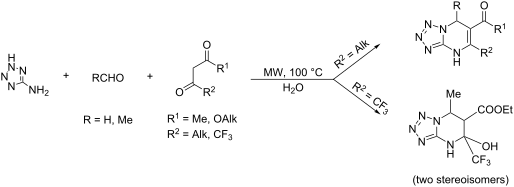
- for both isomers (4.4 Hz for A and 11.2 Hz for B) are indicative of different relative orientations of these protons and suggested that these protons in isomer B have trans-orientation, whereas those in isomer A have cis-orientation. Further, NOE between methyl and hydroxy groups for B isomer and a
- merely weak NOE for those groups in isomer A further allowed to propose a cis-orientation of these substituents for isomer B and the opposite one for A (Scheme 4). Antioxidant properties of 9, 11, 14 Among the methods for the antioxidant activity (AOA) estimation, using 1,1-diphenyl-2-picrylhydrazyl


Excited state dynamics for visible-light sensitization of a photochromic benzil-subsituted phenoxyl-imidazolyl radical complex
Beilstein J. Org. Chem. 2019, 15, 2369–2379, doi:10.3762/bjoc.15.229
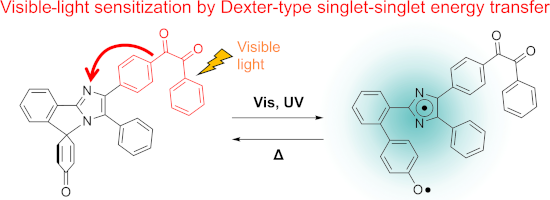
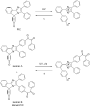
- constant of 38 ps. Although the clear mechanism is not yet elucidated at the present stage of the investigation, the reason for the two relaxation pathways (energy transfer and ISC) from the S1 state of the benzil unit of Benzil-PIC might be due to the difference in the mutual orientation of benzil and PIC
- units including the structural isomers (isomer A and isomer B). As was discussed above, the energy transfer is due to the overlap of the wave function of the both units, of which mechanism might be sensitive to the difference in the mutual orientation. Effect of triplet–triplet energy transfer Ultrafast



Perspective isomorphs – a new classification of molecular structures based on artistic and chemical concepts
Beilstein J. Org. Chem. 2019, 15, 2319–2326, doi:10.3762/bjoc.15.224
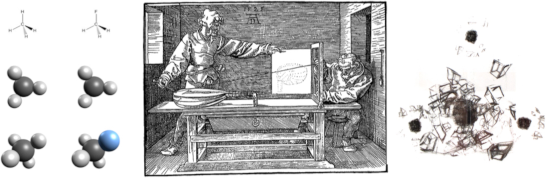
- equivalent from one standpoint in a specific orientation. We termed such a group of such molecules perspective isomorphs. The general concept is outlined together with a nomenclature system. Furthermore, this concept has been visualized by artistic representations of molecules. The concept of perspective
- molecules (sub-nm) such direct observations of chemical compounds by the human eye are not possible. This results in a different understanding of the spatial relations of these objects and the observer. Because a molecule’s interaction with its environment differs depending on its position and orientation
- ] between molecules or specific parts within molecules, are highly dependent on the orientation of the interacting entities. In contrast, considerations of space on a supramolecular scale [7][8] or even the integration of an actual human viewer are mostly excluded in models of chemical concepts. The


Fluorescent phosphorus dendrimers excited by two photons: synthesis, two-photon absorption properties and biological uses
Beilstein J. Org. Chem. 2019, 15, 2287–2303, doi:10.3762/bjoc.15.221
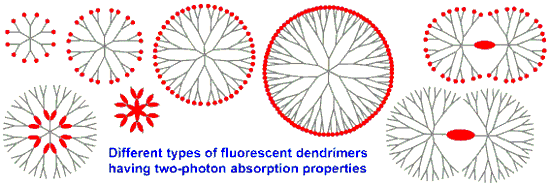
- , thanks to through-space interactions. Modelling suggested that changing the relative orientation/distance of the chromophores would allow cooperative TPA enhancement to be achieved [51]. Thus, multistilbazole molecular structures of different topologies and number of dipolar chromophores, including small
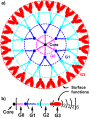
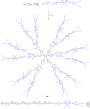
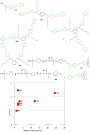
- changes in the topology, relative orientation, and packing of the fluorophores [62]. Another example of fluorophores at two levels concerned the branches and the surface, as depicted in Figure 8. The fluorophore of the branches is the one shown in Figure 6, and the fluorophore of the surface is the one








Harnessing enzyme plasticity for the synthesis of oxygenated sesquiterpenoids
Beilstein J. Org. Chem. 2019, 15, 2184–2190, doi:10.3762/bjoc.15.215
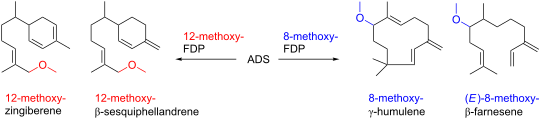
- previously [29]. However, the presence of monocyclic products indicates that this second ring closure does not occur with 12-methoxy-FDP (12). It is suggested that the 12-methoxy group enforces an orientation of the distal 10,11-double bond that is not conducive to the second ring closure. Subsequent


Azologization and repurposing of a hetero-stilbene-based kinase inhibitor: towards the design of photoswitchable sirtuin inhibitors
Beilstein J. Org. Chem. 2019, 15, 2170–2183, doi:10.3762/bjoc.15.214
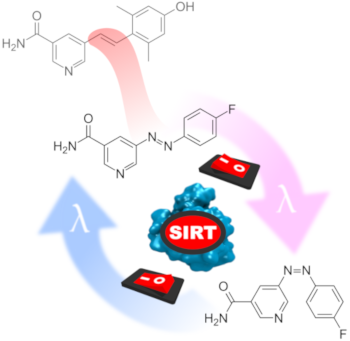
- derivatives very fast and thus disable photoisomerization [63]. However, in our enzyme assay no such reducing agents were present, which is why we assume that the photoswitchable diazeno group should still be intact in the enzyme assay mixture. Even if the change in space orientation does not alter binding


1,2,3-Triazolium macrocycles in supramolecular chemistry
Beilstein J. Org. Chem. 2019, 15, 2142–2155, doi:10.3762/bjoc.15.211
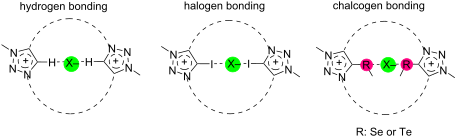
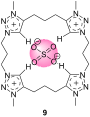
- effective molarity and the favorable orientation of the substrates inside the cavity [61]. Thus, a nanometer-sized macrocyclic receptor based on a photoactive porphyrin unit and anion-binding pyridinium and 1,2,3-triazolium units 15 was reported by Li and co-workers This receptor was synthesized via well




Multiple threading of a triple-calix[6]arene host
Beilstein J. Org. Chem. 2019, 15, 2092–2104, doi:10.3762/bjoc.15.207
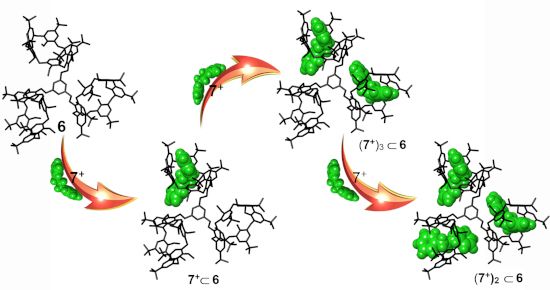
- evidences for the formation of the (4+)36 pseudo[4]rotaxanes was obtained by a 1H NMR study (Figure 8d). A careful analysis of the ArCH2Ar region of these spectra evidenced again a syn orientation of the aromatic rings of calix[6]-wheels corresponding to a cone conformation, which was also confirmed by the


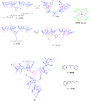


![[Graphic 2]](/bjoc/content/inline/1860-5397-15-207-i6.svg?max-width=637&scale=1.18182) 6, (7+)2
6, (7+)2


α-Photooxygenation of chiral aldehydes with singlet oxygen
Beilstein J. Org. Chem. 2019, 15, 2076–2084, doi:10.3762/bjoc.15.205
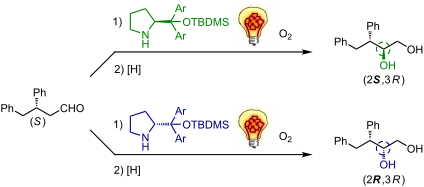
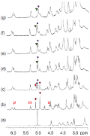
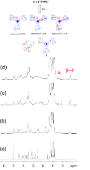
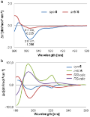
- fragments of molecule) in the antiperiplanar orientation as a result of steric repulsion, the absolute configuration at position 2 was assigned as (2R) in both compounds syn-6 and anti’-6 (Figure 1a). The absolute configuration of the second stereocenter at C3 with the phenyl substituent was determined



Synthesis and anion binding properties of phthalimide-containing corona[6]arenes
Beilstein J. Org. Chem. 2019, 15, 1976–1983, doi:10.3762/bjoc.15.193
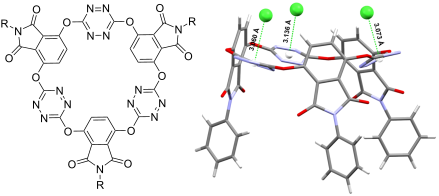
- with their adjacent tetrazine rings rather than with the phthalimide units. Most noticeably, the three phthalimide moieties are not cis-configured. The orientation of one phthalimide was just opposite to that of the other two phthalimide segments. It is important to note that corona[3]arene[3


Archangelolide: A sesquiterpene lactone with immunobiological potential from Laserpitium archangelica
Beilstein J. Org. Chem. 2019, 15, 1933–1944, doi:10.3762/bjoc.15.189
- , the potent SERCA inhibitors, manual docking of compound 1 into SERCA followed by MD simulation (1–10 ns) was performed. For this simulation, four different complexes of SERCA and SL were chosen: i) compound 1 positioned correspondingly to the orientation of DTB in the SERCA binding cavity (simulation
- 1); ii) compound 1 rotated by 180° (simulation 2); iii) compound 2 (for comparison) used as a ligand with the orientation equal to DTB (simulation 3); iv) SERCA positioned in a phospholipid membrane to reflect the fact that it is a transmembrane protein, with compound 2 as a ligand (simulation 4
- pronounced in the case of compound 1 rotated by 180°. Therefore, we are convinced that especially the orientation and positions of the side chains of compound 1 are very important for its affinity to SERCA or the lack thereof. Winther and co-workers [22] reported that the dissociation constant of




Inherent atomic mobility changes in carbocation intermediates during the sesterterpene cyclization cascade
Beilstein J. Org. Chem. 2019, 15, 1890–1897, doi:10.3762/bjoc.15.184

- tightly fixed by the enzyme. As we reported previously, the initial conformation of GFPP, in particular the orientation of six methyl groups (C20–C25), is critical. Therefore, we focused on these methyl groups. While the C20, C21 and C23 methyl groups are quite static in phase I, the other three methyl


Nanopatterns of arylene–alkynylene squares on graphite: self-sorting and intercalation
Beilstein J. Org. Chem. 2019, 15, 1848–1855, doi:10.3762/bjoc.15.180
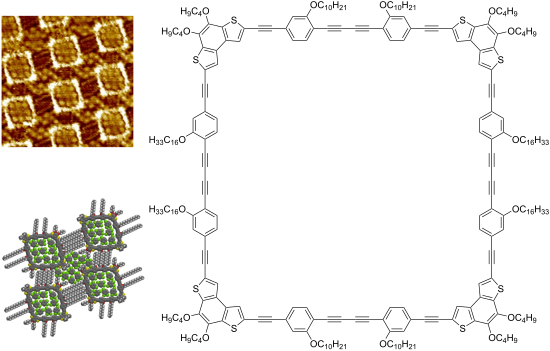
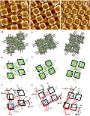
- oriented relative to the HOPG main axis directions with γ(a,d1) = γ(b,d2) = (7 ± 2)°. The backbones are oriented with γ(c,d1) = (30 ± 4)° relative to the HOPG main axis direction d1. An additional nomenclature describes the orientation of the intermolecularly interdigitating OC16H33 (and OC10H21) side
- ), as expected for an electrically more insulating surface region. Therefore, we assume that the side chains are either aligned along one of the HOPG main axis directions, or, as an effect of lacking an interaction partner, are mobile to some extent. Moreover, the relative orientation of the
- shown for clarity). Enlarged areas of Figure 3a (shown in Figure 3b and c) show two template macrocycles 1a (of similar orientation), each of which is filled with one molecule of 2 that appears as a bright hexagon – however, with different orientations. The hexagons of the nanographene 2 in Figure 3c




Synthesis of a [6]rotaxane with singly threaded γ-cyclodextrins as a single stereoisomer
Beilstein J. Org. Chem. 2019, 15, 1829–1837, doi:10.3762/bjoc.15.177
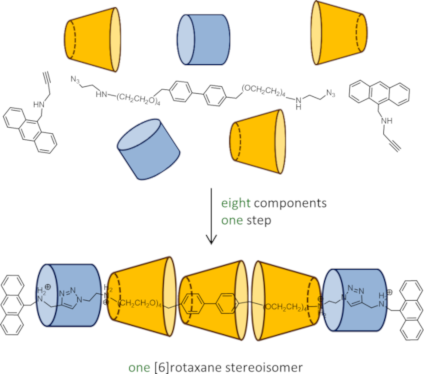
- orientation, possibly due to inter-ring interactions with the CB[6], to give the [6]rotaxane as one single stereoisomer. Considering the ability of γ-CD to form stable 1:2 inclusion complexes, these singly threaded [n]rotaxanes could serve as an entry point to other high order interlocked structures by
- macrocycles in 6R that results in a cooperative interaction so that the formation of 6R is stereoselective. With one less γ-CD in 5R, interactions between the axle and the macrocycles alone are only enough for interlocking the macrocycle, but not sufficient to drive a specific orientation of all the γ-CD
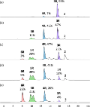
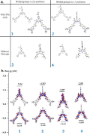
- MHz, D2O, 298 K) of (a) 6R; (b) 5R; and (c) 4R. (a) All the possible sequences of a [6]rotaxane with two CB[6] and three γ-CD interlocked on an axle. Only the sequence on the top left was observed in 6R (with the orientation of the γ-CD disregarded). (b) The four possible relative orientations of the





Norbornadiene-functionalized triazatriangulenium and trioxatriangulenium platforms
Beilstein J. Org. Chem. 2019, 15, 1815–1821, doi:10.3762/bjoc.15.175
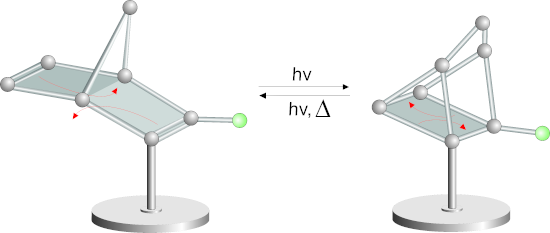
- and enforces an upright orientation of the free standing functional groups [6]. The length and the nature of the spacer is used to tune the distance and electronic coupling of the functional system on top [1]. Preliminary experiments proved that the electronic coupling to the surface is the decisive


Functional panchromatic BODIPY dyes with near-infrared absorption: design, synthesis, characterization and use in dye-sensitized solar cells
Beilstein J. Org. Chem. 2019, 15, 1758–1768, doi:10.3762/bjoc.15.169
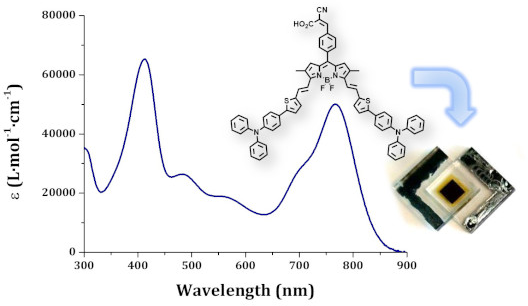
- the close to orthogonal orientation of the anchoring groups induced by steric effects in 2 and 4. As a result, while the LUMO orbital largely extends through the BODIPY unit towards the cyanoacrylic acid anchors in the case of 1 and 3, it is completely confined to the BODIPY-vinylthiophene core in 2




Synthesis, photophysical and electrochemical properties of pyridine, pyrazine and triazine-based (D–π–)2A fluorescent dyes
Beilstein J. Org. Chem. 2019, 15, 1712–1721, doi:10.3762/bjoc.15.167
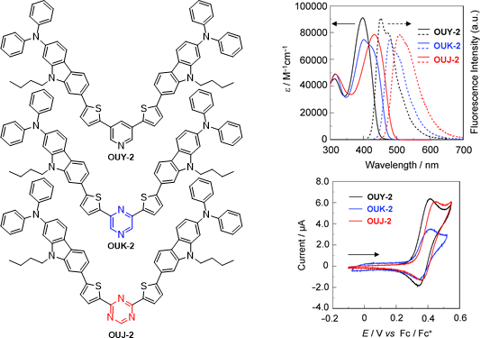
- , OUK-2 and OUJ-2, respectively, estimated from DFT calculation at the B3LYP/6-31G(d,p) level of theory [47]), Δf is the orientation polarizability, ε is the static dielectric constant, and n is the refractive index of the solvent. The Lippert–Mataga plots (Figure 3) for the three dyes show high
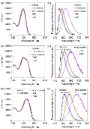
- in various solvents. Correlation of the Stokes shift (νst) and the orientation polarizability (Δf) according to Equation 1 and Equation 2, respectively, for OUY-2, OUK-2 and OUJ-2; solvent (ε, n, Δf): toluene (2.38, 1.4969, 0.0132), 1,4-dioxane (2.21, 1.4224, 0.0205), ethyl acetate (6.02, 1.3724




Water inside β-cyclodextrin cavity: amount, stability and mechanism of binding
Beilstein J. Org. Chem. 2019, 15, 1592–1600, doi:10.3762/bjoc.15.163
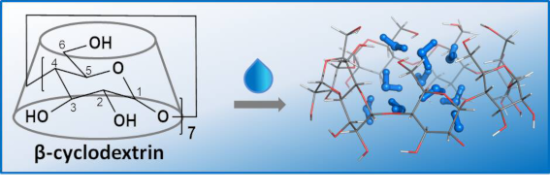
- orientation of the narrow rim hydrogen bonds is CCW; (B) structure with “open” narrow rim; and (C) energy difference between these two configurations at the M062X/6-311++G(d,p)//M062X/6-31G(d,p) level of theory. Schematic representation of β-CD–nH2O complexes (where n = 1–12) with water molecules/clusters


Synthesis and conformational preferences of short analogues of antifreeze glycopeptides (AFGP)
Beilstein J. Org. Chem. 2019, 15, 1581–1591, doi:10.3762/bjoc.15.162
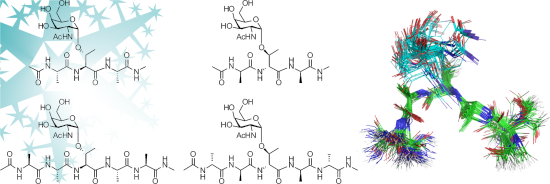
- peptide 3 (see Table 3 and Figure 4). Such situation is the result of numerous well defined intra- and interresidual NOE signals of sugar moiety protons (see Table S6, Supporting Information File 1). Although the orientation of the galactose ring is highly ordered, as shown the value of the temperature
- coefficient (see Table 1), its arrangement is not stabilized by an intramolecular hydrogen bond formed by the GalNAc amide proton. Instead, as revealed by the results of the structural calculation, the orientation of the galactose ring probably is locked due to interaction of the Ala4 amide proton and the
- side chain oxygen of Thr3. In case of peptide 3, due to weaker intramolecular hydrogen bonds combined with a high flexibility of the peptide main chain, the fixed orientation of the galactose ring is not observed (see Figure 3 and Figure 4). Such conclusion seems to be confirmed by the small value of


Molecular basis for the plasticity of aromatic prenyltransferases in hapalindole biosynthesis
Beilstein J. Org. Chem. 2019, 15, 1545–1551, doi:10.3762/bjoc.15.157
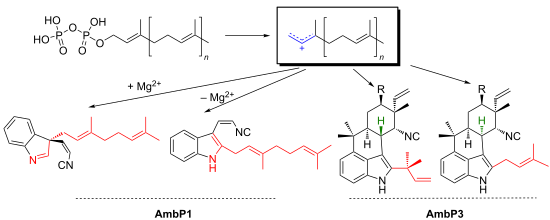
- HU and HA were located at the same position, but their orientations were completely different. These data indicated that the hydrophobic interaction between the enzyme and the terpenoid moiety is important to support the prenyl acceptor, and the orientation can be altered dependently on their steric
- structures. The indole of HU, W117, and Y168 formed a cation shield [27][28], which stabilizes the cation intermediate after the removal of the phosphate from DMAPP in the HU structure, and Y225 was substituted with Y168 in the HA structure (Figure 5). The orientation of W117 changed in accordance with the
- orientation of the indole in HU and HA. As expectedly, W117 was shown to be important for the reaction through a point mutation study, in which W117A and W117F completely lost the catalytic activity. In the HU structure, the distance between C-2 of HU and C-3 of DMSPP (Figure 5A, a: 3.6 Å) is shorter than


An azobenzene container showing a definite folding – synthesis and structural investigation
Beilstein J. Org. Chem. 2019, 15, 1534–1544, doi:10.3762/bjoc.15.156
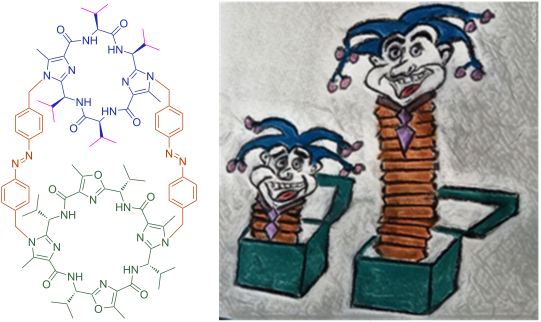
- the high dispersion energy in the compact cis,cis-isomer. Keywords: azobenzene; macrocycles; molecular switch; Introduction In supramolecular chemistry rigid scaffolds are required to arrange different recognition units in predefined distances and spatial orientation to each other [1]. One example
- for such rigid systems are macrocycles which stem from Lissoclinum cyclopeptide alkaloids (Figure 1) [2][3]. Here, the required recognition units can be introduced via the amino acid side chains or via the side chains of the azole rings. The orientation and the distance between the recognition units
- is the design of artificial Lissoclinum cyclopeptides which can be switched by the incorporation of a suitable switching unit into the scaffold. A switching process would allow to vary the orientation and the distance between the recognition units. Examples for such switching units are photochromic





