Search results
Search for "purification" in Full Text gives 1652 result(s) in Beilstein Journal of Organic Chemistry. Showing first 200.
Discovery of antimicrobial peptides clostrisin and cellulosin from Clostridium: insights into their structures, co-localized biosynthetic gene clusters, and antibiotic activity
Beilstein J. Org. Chem. 2024, 20, 1800–1816, doi:10.3762/bjoc.20.159

- biosynthetic enzymes hold promise as novel entities with untapped bioactive potential. Expression and purification of the CloA1 precursor peptide, CloA2 precursor peptide, and C39 peptidase domain We could not access the producing microorganisms, so the gene sequences reported in public databases (Supporting
- was co-expressed with the corresponding precursor peptide in the same E. coli strain (expected size 150 kDa). The precursor peptides and the peptidase domain of CloPt1 were fused with a 6xHis tag at their N-terminal end for purification purposes (Figure S7 in Supporting Information File 1). After
- purification, we estimated mature peptide and peptidase yields based on SDS-PAGE densitometry between 0.8 and 1.5 g/L of culture for all products. The heat liability of the peptide products challenged the purification, and when trying to perform several purification cycles to increase their purity, we obtained




Ugi bisamides based on pyrrolyl-β-chlorovinylaldehyde and their unusual transformations
Beilstein J. Org. Chem. 2024, 20, 1773–1784, doi:10.3762/bjoc.20.156
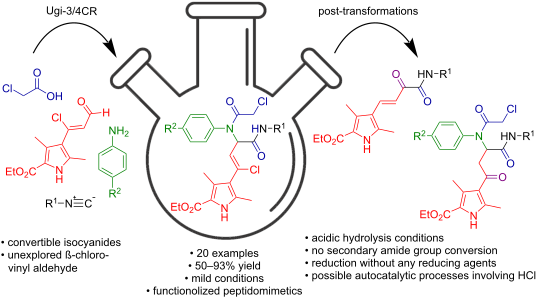
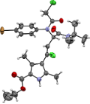
- reaction step for the synthesis and purification of the starting azomethines 9, we cannot propose the Ugi-3CR approach as more suitable compared to the Ugi-4CR approach. The structure of the Ugi bisamides 5–8 were proved by X-ray diffraction study on the example of substance 8c (Figure 2), according to




Synthesis and characterization of 1,2,3,4-naphthalene and anthracene diimides
Beilstein J. Org. Chem. 2024, 20, 1767–1772, doi:10.3762/bjoc.20.155
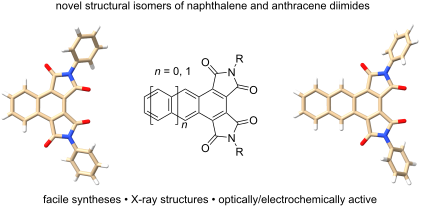
- sodium hydroxide, followed by acidification with HCl, yielded a mixture of carboxylic acids and anhydrides 5, as evidenced by 1H NMR spectroscopy (Figure S13 in Supporting Information File 1). Gratifyingly, purification of these mixtures was not necessary as they could be used directly for imidization


Harnessing unprotected deactivated amines and arylglyoxals in the Ugi reaction for the synthesis of fused complex nitrogen heterocycles
Beilstein J. Org. Chem. 2024, 20, 1758–1766, doi:10.3762/bjoc.20.154
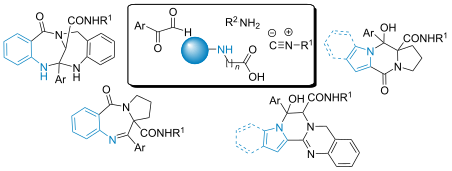
- corresponding pyrrolopiperazinoquinazolines 13 with high yields. Interestingly, despite the acidic medium and high temperatures, the hemiaminal group was conserved, showing the high stability of these systems. On the other hand, the reduction of the N-phenylglycine derivative 10c, used without purification
- dipyrrolopiperazinone 12 quantitatively. In view of the interest of these structures and the poor global yield obtained because of the purification in the first step, we tried the synthesis of these polycyclic systems in a one-pot sequence. In this way, after performing the Ugi reaction for 24 h, the reaction mixture
- , without purification, was treated with caesium carbonate (1 equiv) and heated to reflux for an hour. Gratefully, the dipyrrolopiperazinone derivatives 12 were obtained with high yields and complete diastereoselectivity in an efficient and simple way (Scheme 11, Table 6). The structure of these systems was


Synthesis of polycyclic aromatic quinones by continuous flow electrochemical oxidation: anodic methoxylation of polycyclic aromatic phenols (PAPs)
Beilstein J. Org. Chem. 2024, 20, 1746–1757, doi:10.3762/bjoc.20.153
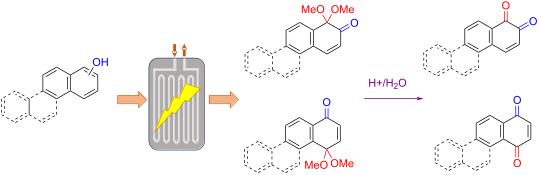
- purification. Further experimental details are given in Supporting Information File 1. The best result was obtained at 6 F/mol equivalents, giving 47% of quinone 4b (Table 2, entry 4). These experiments, where the reaction mixture was passed through the cell a single time, gave rather low yields. This may be
- acetals. However, the methoxylated products from electrochemical oxidation of chrysen-1-ol (3b) and chrysen-6-ol (3d) rapidly hydrolysed to quinones during purification and could not be isolated. The attempted electrochemical oxidation of naphthalene-1-ol (1b) was unsuccessful; only small traces of




Syntheses and medicinal chemistry of spiro heterocyclic steroids
Beilstein J. Org. Chem. 2024, 20, 1713–1745, doi:10.3762/bjoc.20.152
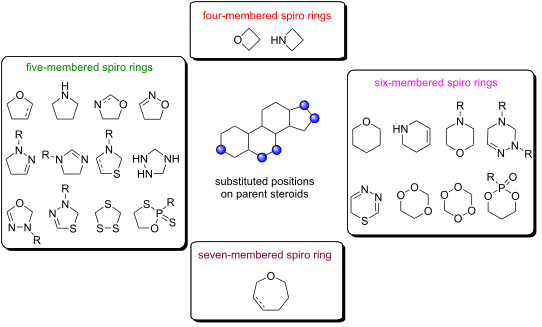
- . Chromatographic purification was not required post-reaction. Some spiro products exhibited high binding affinity towards DNA, while others showed good cytotoxicity against different cancer cells (A545, MCF-7, HeLa, HL-60, SW480, HepG2, HT-29, and A549) with IC50 values within the micromolar range (2.18–18.54 µM


New triazinephosphonate dopants for Nafion proton exchange membranes (PEM)
Beilstein J. Org. Chem. 2024, 20, 1623–1634, doi:10.3762/bjoc.20.145

- , purification of the crude product by column chromatography led to the decomposition of compound TP7. Another strategy was devised to obtain the desired triazinephosphonate TP7: The first step was the nucleophilic substitution of the chlorine atoms of triazine 1 by 4-hydroxybenzaldehyde (12), followed by the
- were used as received, without further purification. Solvents and air-sensitive reagents were distilled under a dry nitrogen atmosphere. Dry THF was distilled from sodium benzophenone ketyl. A Nafion N115 film was acquired from FuelCell Store and a 20 wt % mixture in lower aliphatic alcohols and water
- (34%) of Nafion perfluorinated resin solution was purchased from Sigma-Aldrich. Purification of reaction products was done by column chromatography on silica gel (230–400 mesh) with the appropriate eluent mixture and using a positive pressure of nitrogen. Spectroscopic characterization The




Electrocatalytic hydrogenation of cyanoarenes, nitroarenes, quinolines, and pyridines under mild conditions with a proton-exchange membrane reactor
Beilstein J. Org. Chem. 2024, 20, 1560–1571, doi:10.3762/bjoc.20.139
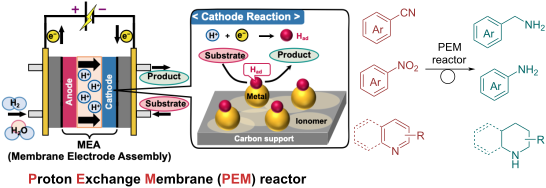
- for a supporting electrolyte, which is necessary for conventional organic electrolysis, reduces the environmental impact, and facilitates product purification. In addition, using nanoparticles in the catalyst layer, which serve as the electrode, results in a large specific surface area and efficient


Mining raw plant transcriptomic data for new cyclopeptide alkaloids
Beilstein J. Org. Chem. 2024, 20, 1548–1559, doi:10.3762/bjoc.20.138

- additional purification step using an HPLC system (Agilent) with a C18 column (C18 250 × 4.6 mm Luna Omega 5 5 µm C18 100 Å) and gradient of 55–70% B was employed. Structure elucidation of ceanothine B Ceanothine B was analyzed by 1D and 2D NMR in methanol-d4 in 5 mm NMR tubes (Wilmad LabGlass). NMR





Tetrabutylammonium iodide-catalyzed oxidative α-azidation of β-ketocarbonyl compounds using sodium azide
Beilstein J. Org. Chem. 2024, 20, 1510–1517, doi:10.3762/bjoc.20.135
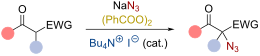
- was carried out using Davisil LC 60 Å 70-200 MICRON silica gel. All chemicals were purchased from commercial suppliers and used without further purification unless otherwise stated. General α-azidation procedure Sodium azide (7.8 mg, 120 µmol, 1.2 equiv) and TBAI (7.4 mg, 20 µmol, 20 mol %) were
- vacuo. In most cases the products were already obtained in sufficiently high purity (>95%) after this work up. If necessary, further purification by silica gel column chromatography can be carried out. Safety considerations: It is known that the combination of inorganic azides and halogenated compounds
- the extracts were then filtered consecutively through a pad of anhydr. sodium sulfate and deactivated silica gel. The solvents were removed in vacuo. In most cases the products were already obtained in sufficient purity (>95%) after this work up. If necessary, further purification can be achieved by


Towards an asymmetric β-selective addition of azlactones to allenoates
Beilstein J. Org. Chem. 2024, 20, 1504–1509, doi:10.3762/bjoc.20.134
- L1000 at 589 nm ([α]D values are listed in deg/(dm(g/cm3)); concentration c is given in g/100 mL). Unless otherwise stated, all chemicals were purchased from commercial suppliers and used without further purification. Dry solvents were obtained from an MBraun-SPS-800 solvent purification system. All


Photoswitchable glycoligands targeting Pseudomonas aeruginosa LecA
Beilstein J. Org. Chem. 2024, 20, 1486–1496, doi:10.3762/bjoc.20.132
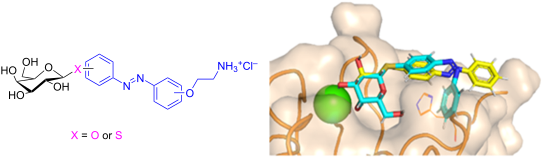
- binding of one isomer only. Experimental General experimental details. Commercially available solvents and reagents were used without further purification. Reactions carried out under anhydrous conditions are performed under argon in glassware previously dried in an oven. DMF and THF were previously dried
- with 10% H2SO4 in EtOH and heating about 30 s at 400–600 °C. Column chromatography purification was performed on CombiFlash® Rf+ and RediSep® RF or RF Gold normal phase silica columns (with UV detection at 254 and 350 nm for all azobenzene derivatives), or by flash column chromatography employing
- was stirred at room temperature until total deprotection. The solution was neutralized using Amberlite IR-120 (H), filtered, concentrated and the crude material used without further purification to give the desired product in quantitative yield. (A) Selected monovalent inhibitors for PA LecA and (B


Synthesis of substituted triazole–pyrazole hybrids using triazenylpyrazole precursors
Beilstein J. Org. Chem. 2024, 20, 1396–1404, doi:10.3762/bjoc.20.121
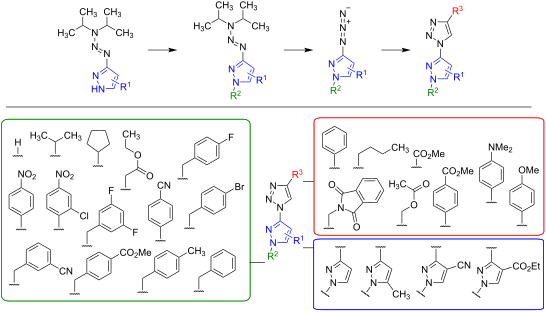
- 21gd could be isolated in quantitative yield with this technique, avoiding additional purification steps for the azide intermediate without any losses in product formation. The developed procedure was exemplarily transferred to solid-phase synthesis. In quantitative yields, 5-methyl-1H-pyrazol-3-amine
- . It offers the additional benefits of chemistry on solid support: straightforward purification of the resin-bound intermediates by washing steps and a high throughput that allows for faster derivatization. Further research is necessary to establish a protocol for the cleavage of 4-substituted




Synthetic applications of the Cannizzaro reaction
Beilstein J. Org. Chem. 2024, 20, 1376–1395, doi:10.3762/bjoc.20.120
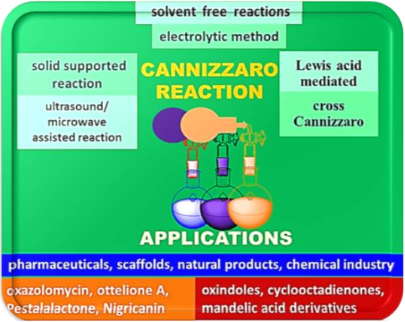
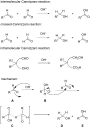
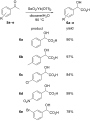
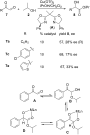
- also simplifies product isolation and purification and improves the overall sustainability of the process [23][24]. However; specific reaction requirements ensure efficient and selective utilization of solvents. Marvi and Talakoubi carried out the Cannizzaro reaction [25] using montmorillonite K-10 and








Computation-guided scaffold exploration of 2E,6E-1,10-trans/cis-eunicellanes
Beilstein J. Org. Chem. 2024, 20, 1320–1326, doi:10.3762/bjoc.20.115

- minor products and mostly starting material, hence we decided these products were not worth further purification. The minor isomers of the halogenated derivatives were presumably detected but in too low yields to purify. Since 6/6/6-tricyclic diterpenes are known to show cytotoxicity [26], we tested our


Sustainable tandem acylation/Diels–Alder reaction toward versatile tricyclic epoxyisoindole-7-carboxylic acids in renewable green solvents
Beilstein J. Org. Chem. 2024, 20, 1308–1319, doi:10.3762/bjoc.20.114
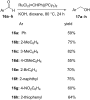
- precipitation with a hexane–ether mixture and was found to be of sufficient purity for spectroscopic analysis. If desired, the product can be crystallized from an EtOAc–MeOH mixture for further purification. On the other hand, compound 2a has also been previously investigated for its potential covalent prolyl
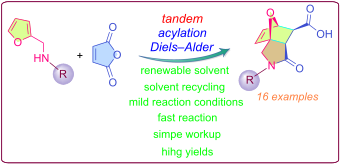
- transformations is the purification of the synthesized product, since these oils are non-volatile and non-polar. However, in this study, the choice of these materials as green solvents allows convenient isolation of the cycloadducts by precipitation followed by filtration with hexane or diethyl ether. Thus, IMDAF
- . Louis, MO), or Acros Organics (Thermo Fisher Scientific, Geel, Belgium) and used without further purification. Thin-layer chromatography was performed using silica gel (60 F254, Merck, Darmstadt, Germany) plates. Melting points were recorded by Büchi melting point B-540 apparatus (Büchi Labortechnik AG


Diameter-selective extraction of single-walled carbon nanotubes by interlocking with Cu-tethered square nanobrackets
Beilstein J. Org. Chem. 2024, 20, 1298–1307, doi:10.3762/bjoc.20.113
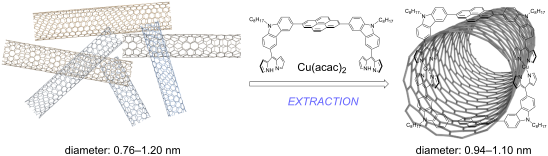
- chromatographic purification due to much lower solubility of 4b compared to 4a. The metal complex of 4b with copper(II) was prepared, because copper(II) exhibited better extraction and separation abilities than cobalt(II) and palladium(II) in the case of Cu-tethered rectangular nanobrackets 1a [11]. Before SWNT
- ) spectroscopies after chromatographic purification. The mass spectrum clearly indicates that the detected mass number is matched with that of 1b. In the absorption spectrum, the absorption bands at 300–340 nm and 430 nm can be assigned to pyrene and dipyrrin moieties for 4b, respectively [18][19]. After
- Sigma-Aldrich Co., Nacalai Tesque Co., Tokyo Chemical Industry Co., Ltd., FUJIFILM Wako Pure Chemical Industries, Ltd. All organic solvents are purchased from Nacalai Tesque Co., FUJIFILM Wako Pure Chemical Industries, Ltd. and were used without purification unless indicated otherwise. The silica gel 60




Synthesis and optical properties of bis- and tris-alkynyl-2-trifluoromethylquinolines
Beilstein J. Org. Chem. 2024, 20, 1246–1255, doi:10.3762/bjoc.20.107
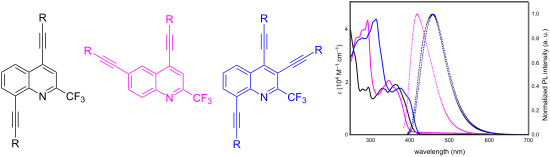
- dehalogenation at position 3. In particular, the side-product 6b was isolated in 25% yield during the purification of 12b. The structure of product 12d was proven by X-ray crystallography (Figure 4). All three phenyl rings are found to be nearly in plane with the quinoline core, showing only a slight twist of 5




Competing electrophilic substitution and oxidative polymerization of arylamines with selenium dioxide
Beilstein J. Org. Chem. 2024, 20, 1221–1235, doi:10.3762/bjoc.20.105
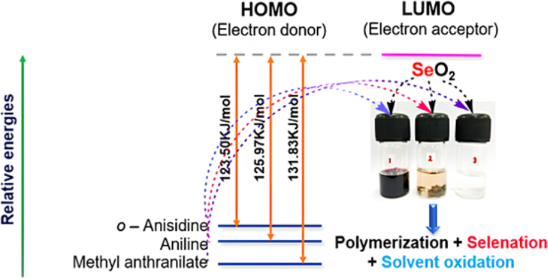
- environment. Acetonitrile (99.9%) was bought from Avra Chemicals Private Ltd. and used without any further purification. Selenium dioxide and a range of reactants were purchased from Sigma-Aldrich. TLC was performed using silica-gel-coated aluminum sheets (TLC silica gel 60 F254). 1H, 13C, and 77Se NMR (500


Cofactor-independent C–C bond cleavage reactions catalyzed by the AlpJ family of oxygenases in atypical angucycline biosynthesis
Beilstein J. Org. Chem. 2024, 20, 1198–1206, doi:10.3762/bjoc.20.102
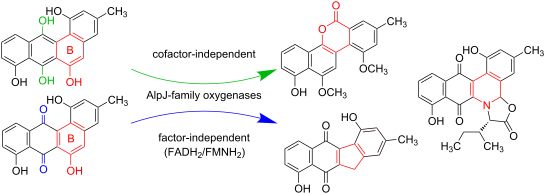
- , competent cell preparation, and transformation were performed as described previously [42]. Protein expression and purification The alpG gene was amplified by PCR from S. ambofaciens ΔΔalpW genomic DNA using primers 5’-ggaattccatATGGAAGGGACAACGGCGGACAC-3’ and 5’-cccaagcttTCAGCGGGCGGGGCCGAA-3’, digested with




Bismuth(III) triflate: an economical and environmentally friendly catalyst for the Nazarov reaction
Beilstein J. Org. Chem. 2024, 20, 1167–1178, doi:10.3762/bjoc.20.99
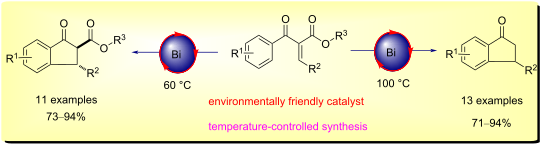
- different compounds containing the indanone moiety. Synthesis of unsaturated β-ketoesters (Knoevenagel derivatives). aIsolated yield after purification using silica gel column chromatography. Synthesis of 3-aryl-2-ethoxycarbonyl-1-indanones mediated by bismuth triflate. aIsolated yield after purification
- decarboxylation directed by bismuth triflate at 100 °C. Synthesis of 3-aryl-1-indanones. aIsolated yield after purification using silica gel column chromatography. bReaction performed at 60 °C. cFrom tert-butyl Knoevenagel derivative. Basic protocol: The Knoevenagel product 9 (0.5 mmol), dry acetonitrile (2 mL


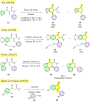


Kinetically stabilized 1,3-diarylisobenzofurans and the possibility of preparing large, persistent isoacenofurans with unusually small HOMO–LUMO gaps
Beilstein J. Org. Chem. 2024, 20, 1099–1110, doi:10.3762/bjoc.20.97
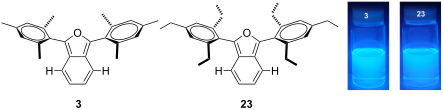
- obtained using a solvent purification system (Innovative Technologies, Inc.) and handled under a nitrogen atmosphere, unless otherwise noted. Flash chromatography was performed using SiliaFlash® F60 40–63 µm (230–400 mesh) 60 Å silica from Silicycle Inc. and RediSep® Rf Silica Flash Columns (12 g, 24 g or


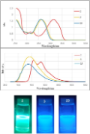


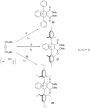


Synthesis of 1,4-azaphosphinine nucleosides and evaluation as inhibitors of human cytidine deaminase and APOBEC3A
Beilstein J. Org. Chem. 2024, 20, 1088–1098, doi:10.3762/bjoc.20.96
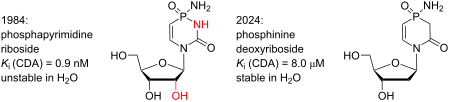
- basic conditions. Compound 3 was obtained nearly on a 20 g scale in 89% yield after purification by sublimation in vacuo. In the presence of a catalytic amount of AIBN, compound 3 reacted with bis(trimethylsiloxy)phosphine (4) that was prepared in situ [66]. Treatment of the reaction mixture with MeOH
- obtained in 84% yield after silica gel purification. Removal of the Boc protecting group from 6 in the presence of trifluoroacetic acid in DCM at room temperature overnight, followed by cyclisation in boiling pyridine/triethylamine, led to 4-hydroxy-1,4-azaphosphinan-2,4-dione (7) in 84% yield. The free
- than 90% purity, as determined by 31P NMR. Compound 10 was used in the next step without further purification. A linear amide 11 was obtained in 47% yield by reacting phosphinate 10 with chloroacetamide in the presence of a large excess of HMDS in acetonitrile at 70 °C for two days. A cyclisation of


Mild and efficient synthesis and base-promoted rearrangement of novel isoxazolo[4,5-b]pyridines
Beilstein J. Org. Chem. 2024, 20, 1069–1075, doi:10.3762/bjoc.20.94
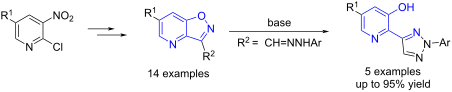
- , for example a formyl group. Thus, the key isonitroso compounds 7 were synthesized from chlorides 1a–c via in situ formation of pyridylacetoacetic esters 2a–c followed by decarbonylation to give 2-methyl-3-nitropyridines 5a–c [24] which were used in the next step without purification. Their reactions


Structure–property relationships in dicyanopyrazinoquinoxalines and their hydrogen-bonding-capable dihydropyrazinoquinoxalinedione derivatives
Beilstein J. Org. Chem. 2024, 20, 1037–1052, doi:10.3762/bjoc.20.92
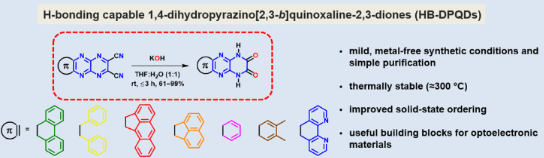
- 13. The solvent 1,4-dioxane is crucial to the synthesis and purification in the initial two steps as other solvents such as THF make the purification process more intricate. This sequence is followed by SNAr with ammonia (29% v/v) to obtain building block diaminopyrazine 12. The synthesis of
- 12 under standard boiling acetic acid conditions, as reported in Scheme 1. The crude product could be collected via vacuum filtration, followed by additional purification via recrystallization from boiling DMF to afford golden crystals of 4a in moderate yields. In order to access 5a and 6a, a
- pressure worked well for the purification step to achieve an excellent 80% yield. To our delight, 5a did not require any additional purification under the same reaction conditions. Next, several unsuccessful synthetic efforts were made to access 7a using starting material 7e and building block 12, listed