Search results
Search for "safe" in Full Text gives 201 result(s) in Beilstein Journal of Organic Chemistry. Showing first 200.
Highly selective electrochemical fluorination of dithioacetal derivatives bearing electron-withdrawing substituents at the position α to the sulfur atom using poly(HF) salts
Beilstein J. Org. Chem. 2015, 11, 85–91, doi:10.3762/bjoc.11.12
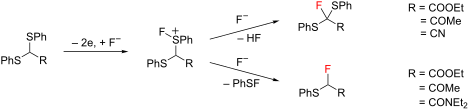
- , selective fluorination of organic compounds is becoming significantly important. Although the selective fluorination has been extensively studied, highly efficient and safe fluorination methods are still demanded [7][8]. With these facts in mind, we have developed a selective electrochemical fluorination


Come-back of phenanthridine and phenanthridinium derivatives in the 21st century
Beilstein J. Org. Chem. 2014, 10, 2930–2954, doi:10.3762/bjoc.10.312

- , characterised by the specific fluorescence band sensitive to the pH as well as on the interactions with ds-DNA. Interestingly, all peptide-based phenanthridines revealed excellent water solubility combined with low in vitro toxicity, thus being good candidates for development of new safe fluorimetric DNA and


Cyclodextrin–polysaccharide-based, in situ-gelled system for ocular antifungal delivery
Beilstein J. Org. Chem. 2014, 10, 2903–2911, doi:10.3762/bjoc.10.308
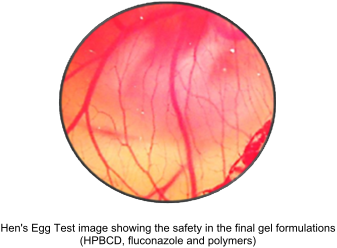
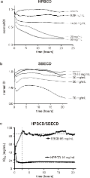
- frames, substantial areas of research are currently focused on achieving non-toxic concentrations of ocular products able to keep the tissue intact [21]. In this regard, large hydrophilic cyclodextrins such as HPBCD and SBECD have been considered as safe materials for the formulation of aqueous eye drop
- components are considered suitable for ocular use from an irritation study point of view. Ion-sensitive ophthalmic gel Because both cyclodextrin derivatives were shown to be safe, non-irritant and able to form complexes with fluconazole (with similar stability properties), both substances were considered as
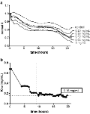
- situ-gelled vehicle and CDs containing high doses of fluconazole. An ophthalmic gel containing HPBCDs was demonstrated to be safe and bioadhesive. In the presence of simulated tear solution, the in situ-gelled vehicle was able to form a strong gel following the phase transition that allows controlled




Recent advances in the electrochemical construction of heterocycles
Beilstein J. Org. Chem. 2014, 10, 2858–2873, doi:10.3762/bjoc.10.303
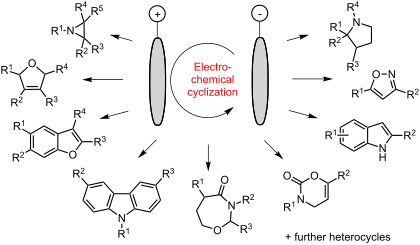
- considered to be a safe and environmentally friendly methodology [21][22][23][24][25]. A further interesting feature is that electrochemical reactions are feasible under very mild conditions; since the reaction rate is determined by the electrode potential, reactions with high activation energies can be




Electrocarboxylation: towards sustainable and efficient synthesis of valuable carboxylic acids
Beilstein J. Org. Chem. 2014, 10, 2484–2500, doi:10.3762/bjoc.10.260
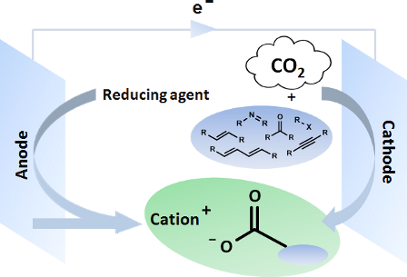
- Electrochemical reduction is an efficient approach to activate thermodynamically stable CO2 under relatively mild and safe conditions. Electrocarboxylation allows the production of valuable carboxylic acids, through incorporation of CO2 in a wide range of organic chemicals. This way, polymer building blocks are


An economical and safe procedure to synthesize 2-hydroxy-4-pentynoic acid: A precursor towards ‘clickable’ biodegradable polylactide
Beilstein J. Org. Chem. 2014, 10, 1365–1371, doi:10.3762/bjoc.10.139
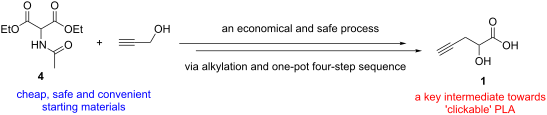
- . However, both of starting materials are expensive and unstable; especially, propargyl bromide is shock-sensitive and subjected to thermal explosive decomposition, which makes the preparation of 1 impractical with high cost and high risk of explosion. Herein, we report a simple, economical and safe
- hydroxylation of propargylic malonate 5 without work-up of any intermediate. Keywords: alkylation; ‘click’ chemistry; ‘clickable’ polylactide; decomposition; diethyl 2-acetamidomalonate; 2-hydroxy-4-pentynoic acid; one-pot; optimization; propargyl bromide; propargyl tosylate; safe and economical; Introduction
- risk of explosion. Thus, efforts were taken to develop a safe and practical synthetic route for precursor 1. Our first successful effort in the synthesis of 1 gave a good overall yield (50%) after removal of the trimethylsilyl protecting group and hydrolysis of ester 3, generated from diethylaluminum


Automated solid-phase peptide synthesis to obtain therapeutic peptides
Beilstein J. Org. Chem. 2014, 10, 1197–1212, doi:10.3762/bjoc.10.118
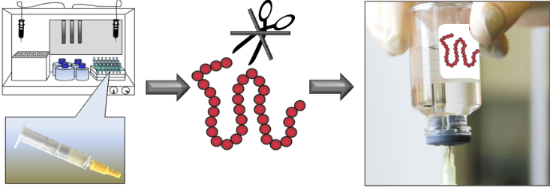
- stability against various conditions as well as easy and safe removal [29]. For SPPS, two major protecting groups for the Nα-amino function have been established: Boc (tert-butyloxycarbonyl) [30] and Fmoc [31]. The initial method applied by Merrifield was based on the use of the Boc group as temporary
- -bond formation as an alternative to the well-established HOBt. This introduction was essential because of the inherent explosive potential of HOBt. Moreover, COMU ((1-cyano-2-ethoxy-2-oxoethylidenaminooxy)dimethylamino-morpholino-carbenium hexafluorophosphate) [61] has been identified as a safe and


Nonanebis(peroxoic acid): a stable peracid for oxidative bromination of aminoanthracene-9,10-dione
Beilstein J. Org. Chem. 2014, 10, 921–928, doi:10.3762/bjoc.10.90
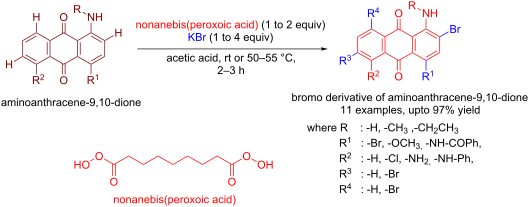
- bromination reaction proceeds under mild conditions with high yield and purity. The peracid used here is stable, safe and easy to handle and thus can be a good attractive alternative to the conventional peracids. Further study on nonanebis(peroxoic acid) is under progress. Experimental General information All


Continuous flow nitration in miniaturized devices
Beilstein J. Org. Chem. 2014, 10, 405–424, doi:10.3762/bjoc.10.38
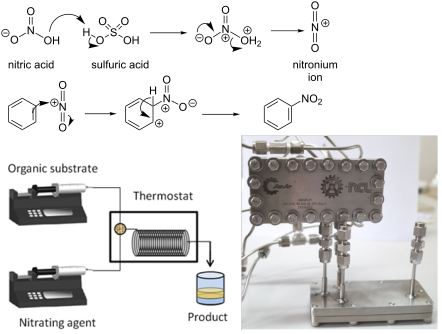
- quenched in a tank containing cold water. In another study, Kulkarni et al. [35] showed that the nitration of benzaldehyde (16) can be carried out in a safe manner in a continuous mode using a microreactor system (Scheme 6). The performance of this two phase reaction critically depended on the choice of a
- step to isolate the product. However, since the large-scale synthesis of nitropyrazoles is not a safe reaction under batch conditions, the continuous flow synthesis is the process of choice. Henke and Winterbauer [46] reported a corrosion resistant microreactor built up of PTFE and tantalum for the
- by means of an ice condenser followed by a gas–liquid separator. Similar to the aforementioned study, Löwe et al. [38] reported the vapor phase nitration of propane in a multistep microreactor in a highly sophisticated and safe system. Different steps in the process are integrated in a single reactor


Flow microreactor synthesis in organo-fluorine chemistry
Beilstein J. Org. Chem. 2013, 9, 2793–2802, doi:10.3762/bjoc.9.314
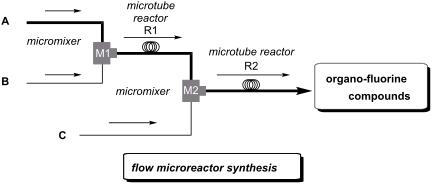
- ][40]. Direct fluorination of aromatics in microreactor system took place cleanly [36]. As another splendid example for safe handling of hazardous fluorinating reagents, the flow microreactor synthesis using diethylaminosulfur trifluoride (Et2NSF3, abbreviated as DAST) was demonstrated. DAST is a


Stereoselectively fluorinated N-heterocycles: a brief survey
Beilstein J. Org. Chem. 2013, 9, 2696–2708, doi:10.3762/bjoc.9.306
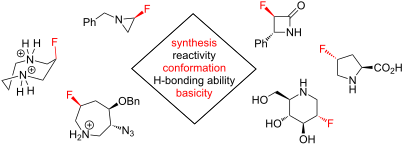
- ]. More generally however, it seems safe to predict that the unique properties of stereoselectively fluorinated N-heterocycles will ensure that their importance and utility continue to grow in the future. Fluorination alters the reactivity of aziridines. The ring pucker in azetidine derivatives can be


Biosynthesis of rare hexoses using microorganisms and related enzymes
Beilstein J. Org. Chem. 2013, 9, 2434–2445, doi:10.3762/bjoc.9.281
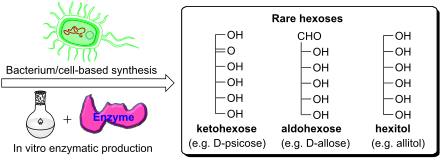
- rare sugar synthesis are from non-generally regarded as safe (GRAS) sources, which may stimulate an increasing demand for introducing related enzymes into GRAS microorganisms; 2) many biosynthetic methods involve a chemical equilibrium (isomerization or epimerization) between two or more sugars that


One-pot sequential synthesis of isocyanates and urea derivatives via a microwave-assisted Staudinger–aza-Wittig reaction
Beilstein J. Org. Chem. 2013, 9, 2378–2386, doi:10.3762/bjoc.9.274
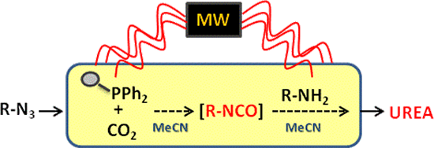
- results have been obtained under MW irradiation in a closed vessel also with gaseous reagents. The optimized procedure benefited from the use of a quasi-stoichiometric amount of PS-PPh2 and can be applied for the efficient, safe, rapid, and cost-effective production of urea derivative libraries


A protecting group-free synthesis of the Colorado potato beetle pheromone
Beilstein J. Org. Chem. 2013, 9, 2374–2377, doi:10.3762/bjoc.9.273
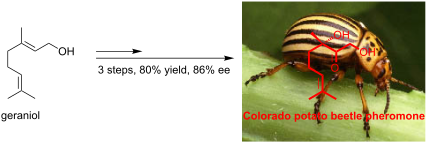
- synthesized in 80% overall yield and 86% ee over 3 steps from geraniol. Nerol turned out to be less suitable as starting material as its asymmetric epoxidation provided a lower ee. It has been shown that (S)-1 with an ee of 92% is as active as enantiopure (S)-1 (99% ee), therefore it is probably safe to


An overview of the synthetic routes to the best selling drugs containing 6-membered heterocycles
Beilstein J. Org. Chem. 2013, 9, 2265–2319, doi:10.3762/bjoc.9.265


Temperature measurements with two different IR sensors in a continuous-flow microwave heated system
Beilstein J. Org. Chem. 2013, 9, 2079–2087, doi:10.3762/bjoc.9.244
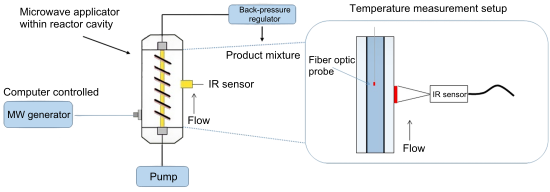
- popular in organic and medicinal chemistry [4][5][6], mostly owing to the development of computer-controlled dedicated reactors [7][8][9][10] that allow safe and rapid heating to high temperatures and elevated pressures. Microwave radiation directly heats the reaction mixture through two mechanisms


Gold-catalyzed regioselective oxidation of propargylic carboxylates: a reliable access to α-carboxy-α,β-unsaturated ketones/aldehydes
Beilstein J. Org. Chem. 2013, 9, 1925–1930, doi:10.3762/bjoc.9.227
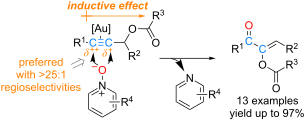
- permits a safe and efficient access to α-oxo gold carbenes without resorting to the dediazotization strategy [3][4][5] using hazardous and potentially explosive diazo substrates (Scheme 1). Since then an array of versatile synthetic methods has been developed based on the general approach by us [2][6][7


Ethyl diazoacetate synthesis in flow
Beilstein J. Org. Chem. 2013, 9, 1813–1818, doi:10.3762/bjoc.9.211

- used on lab scale. Its highly explosive nature, however, severely limits its use in industrial processes. The in-line coupling of microreactor synthesis and separation technology enables the synthesis of this compound in an inherently safe manner, thereby making it available on demand in sufficient
- chemical synthesis is performed. In particular continuous-flow microreactor technology offers multiple advantages over batch chemistry, including the inherently safe conducting of reactions due to the small reactor dimensions, efficient heat transport and excellent control over the reaction conditions [6
- variety of reactions e.g. cyclopropanation, X–H insertion, cycloaddition and ylide formation [13][15], and more recently, in the synthesis of valuable compound classes such as β-keto esters [16] and β-hydroxy-α-diazocarbonyl compounds [17], we aimed to develop an inherently safe continuous-flow EDA


Efficient continuous-flow synthesis of novel 1,2,3-triazole-substituted β-aminocyclohexanecarboxylic acid derivatives with gram-scale production
Beilstein J. Org. Chem. 2013, 9, 1508–1516, doi:10.3762/bjoc.9.172
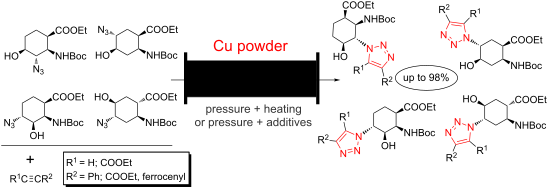
- safe and straightforward way. The obtained 1,2,3-triazole-substituted β-aminocyclohexanecarboxylates can be regarded as interesting precursors for drugs with possible biological effects. Keywords: β-amino acids; click chemistry; continuous-flow; copper; flow chemistry; triazoles; Introduction In
- to be environmentally benign technologies [48]. In consequence of these benefits, flow chemistry-based techniques have exerted a significant impact on modern synthetic chemistry, ranging from laboratory-based experiments to industrial-scale production. Here, we describe a safe and efficient CF
- setup is safe, even with unstable reactants such as azides (Figure 3). To maximize the CF triazole synthesis reaction rates, it appeared easiest to use high-temperature conditions initially. The application of elevated pressure in CuAAC is also beneficial, as it can promote the product formation in



Controlled synthesis of poly(3-hexylthiophene) in continuous flow
Beilstein J. Org. Chem. 2013, 9, 1492–1500, doi:10.3762/bjoc.9.170
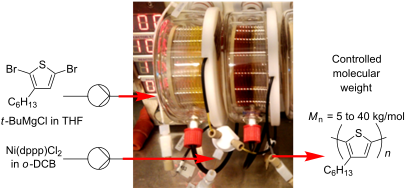
- mixing of reagents, boosting reaction rates, and safe handling of reactive intermediates. Using a commercial continuous-flow tube reactor [19], we have already demonstrated multigram synthesis of fullerene derivatives by cycloaddition reactions [11] as well as rapid conjugated-polymer synthesis using



Metal-free aerobic oxidations mediated by N-hydroxyphthalimide. A concise review
Beilstein J. Org. Chem. 2013, 9, 1296–1310, doi:10.3762/bjoc.9.146
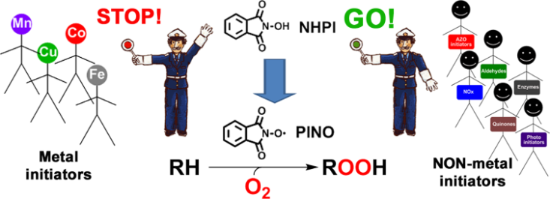
- the O2-mediated selective oxidation of organic compounds and looking for environmentally safe alternatives to metal catalysis. Keywords: autoxidation; free-radicals; metal-free; molecular oxygen; N-hydroxyphthalimide; Introduction The development of efficient and cheap catalytic systems for the


Simple and rapid hydrogenation of p-nitrophenol with aqueous formic acid in catalytic flow reactors
Beilstein J. Org. Chem. 2013, 9, 1156–1163, doi:10.3762/bjoc.9.129
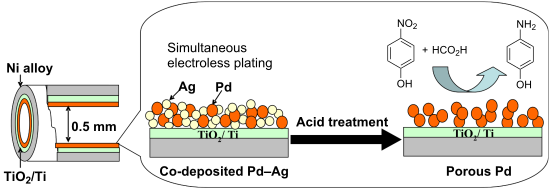
- catalyzed with core–shell Au–Pd NPs and Au NPs [23][24][25][26]. Formic acid is another attractive H2 source because it is safe, easy to handle, and requires no high-pressure equipment. Formic acid and formate have been used as effective H2 donors in the catalytic transfer hydrogenation of aromatic nitro


Amyloid-β probes: Review of structure–activity and brain-kinetics relationships
Beilstein J. Org. Chem. 2013, 9, 1012–1044, doi:10.3762/bjoc.9.116
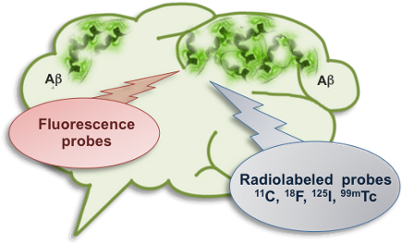
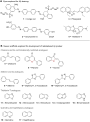
- (2.9% ID/g at 2 min) and fast washout (0.2% ID/g at 60 min) in normal mice. These kinetic properties represented improvements over both 58a and 94 [92]. Safety, biodistribution, and dosimetry studies of [123I]IMPY, the [123I]-labeled counterpart of 140e, have indicated it may be a safe radiotracer with









Formal synthesis of (−)-agelastatin A: an iron(II)-mediated cyclization strategy
Beilstein J. Org. Chem. 2013, 9, 860–865, doi:10.3762/bjoc.9.99
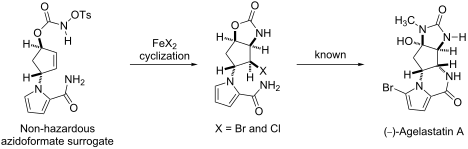
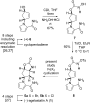
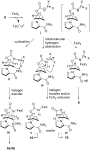
- have developed a new approach to key compounds 5a/5b for (−)-agelastatin A (1) synthesis, which features the iron(II)-mediated radical cyclization of N-tosyloxycarbamate, a safe azidoformate surrogate. Although somewhat moderate chemical yields of the compounds were obtained in this study, the





Some aspects of radical chemistry in the assembly of complex molecular architectures
Beilstein J. Org. Chem. 2013, 9, 557–576, doi:10.3762/bjoc.9.61

- discussed for lack of space, but the interested reader is directed to a recent review for a more complete description [21]. Experimentally, the procedures are simple and safe, and the reagents are cheap and readily available. In the present context, two properties are especially noteworthy: (a) The reaction