


Search results
Search for "silicon" in Full Text gives 203 result(s) in Beilstein Journal of Organic Chemistry. Showing first 200.
Development of an additive-controlled, SmI2-mediated stereoselective sequence: Telescoped spirocyclisation, lactone reduction and Peterson elimination
- Brice Sautier,
- Karl D. Collins and
- David J. Procter
Beilstein J. Org. Chem. 2013, 9, 1443–1447, doi:10.3762/bjoc.9.163

- to “switch on” individual steps mediated by the electron transfer reagent. The sequence involves the use of two activated SmI2 reagent systems and a silicon stereocontrol element that exerts complete diastereocontrol over the cyclisation and is removed during the final stage of the sequence by
- ” individual steps: spirocyclisation, lactone reduction and Peterson elimination allow rapid access to functionalised cyclopentanols, containing two vicinal quaternary stereocentres, from simple starting materials. The sequence involves the use of two activated SmI2 reagent systems, and a silicon stereocontrol
- elimination of triols 3 would result in removal of the silicon stereocontrol element used to control the stereochemical course of C–C bond formation. In early studies, treatment of triol 3b with t-BuOK gave vinyl cyclopentanol 5b in moderate yield [45], but the reaction suffered from poor reproducibility

Graphical Abstract

Scheme 1: SmI2-mediated cyclisations directed by a C–Si bond.

Scheme 2: Reduction of a spirocyclic lactone using SmI2−H2O−Et3N.
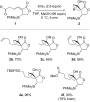
Scheme 3: Stereoselective spirocyclisation of functionalised keto-lactone substrates directed by a C–Si bond.

Scheme 4: Telescoped stereoselective spirocyclisation/lactone reduction.

Scheme 5: Telescoped stereoselective spirocyclisation/lactone reduction/Peterson elimination.
α-Bromodiazoacetamides – a new class of diazo compounds for catalyst-free, ambient temperature intramolecular C–H insertion reactions
- Åsmund Kaupang and
- Tore Bonge-Hansen
Beilstein J. Org. Chem. 2013, 9, 1407–1413, doi:10.3762/bjoc.9.157

- leaves the diazo function intact [4]. Among the reported transformations are substitutions of the diazomethyl hydrogen for electrophiles based on boron [5][6][7], nitrogen (NO2+) [8][9][10][11][12], silicon [13][14][15], phosphorous [16][17][18], sulfur [19][20][21] and halogens [10][22][23][24][25][26

Graphical Abstract

Scheme 1: Preparation of the diazoacetamides.

Scheme 2: Bromination of the diazoacetamides 3a–f and thermolysis of the α-bromodiazoacetamides 4a–f.
True and masked three-coordinate T-shaped platinum(II) intermediates
- Manuel A. Ortuño,
- Salvador Conejero and
- Agustí Lledós
Beilstein J. Org. Chem. 2013, 9, 1352–1382, doi:10.3762/bjoc.9.153
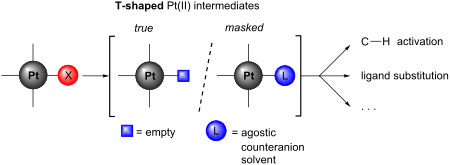
- in THF solution, since an interaction with the BF4− counteranion is not observed, although the elemental analysis evidences the lack of the THF molecule in the solid state [89]. Contrarily, the naphthyl derivative S17 was found together with the BF4− adduct C8 (Figure 9) [53]. For silicon-related

Graphical Abstract
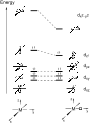
Figure 1: Qualitative orbital diagram for a d8 metal in ML4 square-planar and ML3 T-shaped complexes.

Figure 2: Walsh diagram for the d-block of a d8 ML3 complex upon bending of one L–M–L angle.

Figure 3: Neutral Y-shaped Pt complex Y1 [15]. Angles are given in degrees.

Figure 4: General classification of T-shaped Pt(II) structures according to the fourth coordination site.

Figure 5: Hydride, boryl and borylene true T-shaped Pt(II) complexes.

Figure 6: NHC-based true T-shaped Pt(II) complexes.

Figure 7: Phosphine-based agostic T-shaped Pt(II) complexes. Compounds in brackets correspond with hydrido–al...

Figure 8: Phenylpyridine and NHC-based agostic T-shaped Pt(II) complexes.

Figure 9: Counteranion coordination in T-shaped Pt(II) complexes.

Figure 10: Phosphine-based solvento Pt(II) complexes.

Figure 11: Nitrogen-based solvento Pt(II) complexes.

Figure 12: Pincer-based solvento Pt(II) complexes.
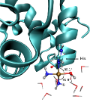
Figure 13: Structure of the QM/MM optimized cisplatin–protein adduct [94].

Figure 14: NMR coupling constants used for the characterization of three-coordinate Pt(II) species.

Figure 15: The chemical formula of the complexes discussed in Table 2.

Scheme 1: Halogen abstraction from 1.

Scheme 2: Halogen abstraction from 2 forming the dicationic complex T3 [22].

Scheme 3: Hydrogenation of complexes A5a and A5b [39].

Scheme 4: Hydrogenation of complexes 3 and A5c [40].

Scheme 5: Intermolecular C–H bond activation from T5a [28].

Scheme 6: Protonation of complexes 4 [35,36].

Scheme 7: Cyclometalation of 5 [43].

Scheme 8: Protonation of 6.

Scheme 9: Reductive elimination of ethane from 7.

Scheme 10: Reductive elimination of methane from six-coordinate Pt(IV) complexes.

Scheme 11: Proposed dissociative mechanism for the fluxional motion of dmphen in [Pt(Me)(dmphen)(PR3)]+ comple...

Figure 16: Feasible interactions for unsaturated intermediates 11b (left) and 12b (right) during fluxional mot...

Scheme 12: Halogen abstraction from 13a,b and subsequent cyclometalation to yield complexes A5a,b [39].

Scheme 13: Proposed mechanism for the acid-catalyzed cyclometalation of 14 via intermediate 15 [41].

Scheme 14: Proposed mechanism for the formation of 19 [102].

Scheme 15: Cyclometalation of 20 via thioether dissociation [117].

Figure 17: Gibbs energy profile (in chloroform solvent) for the cyclometalation of 23 [120].

Scheme 16: Coordination of tmtu to 29 and subsequent C–H bond activation via three-coordinate species 31 and 32...

Scheme 17: Cyclometalation process of NHC-based Pt(II) complexes [28,44].

Scheme 18: Cyclometalation process of complex A9 [43].

Scheme 19: “Rollover” reaction of 38 and subsequent oligomerization [123].

Scheme 20: Proposed mechanism for the formation of cyclometalated species 44 [124].

Scheme 21: Self-assembling process of 45 by “rollover” reaction [126].

Scheme 22: “Rollover” reaction of A9. Energies (solvent) in kcal mol−1 [127].

Scheme 23: Proposed mechanisms for the “rollover” cyclometalation of 52 in gas-phase ion-molecule reactions [128].

Scheme 24: β-H elimination and 1,2-insertion equilibrium involving A1d and the subsequent generation of 57 [35].

Scheme 25: Proposed mechanism for thermolysis of 7b and 7c in benzene-d6 and cyclohexane-d12 solvents [101].

Scheme 26: β-H elimination process of A11a [28].

Scheme 27: Intermolecular C–H bond activation from 62 [95].

Scheme 28: Reductive elimination of methane from 65 followed by CD3CN coordination or C–D bond-activation proc...

Figure 18: DFT-optimized structures describing the κ2 (69, left) and κ3 (69’, right) coordination modes of [Pt...

Scheme 29: Intermolecular arene C–H bond activation from NHC-based complexes [28].

Figure 19: Energy profiles (in benzene solvent) for the benzene C–H bond activation from A11a, A11b, T5a and T...

Scheme 30: Intermolecular arene C–H bond activation from PNP-based complex 71 [12].

Scheme 31: Intermolecular C–H bond-activation by gas-phase ion-molecule reactions of 74 [7,142].

Scheme 32: Dihydrogen activation through complexes A5a, A5b [39], A5c [40] and S1a [54].

Scheme 33: Dihydrogen activation through complexes A7 and 16 [41]. For a: see Scheme 13.

Scheme 34: Br2 and I2 bond activations through complexes A11a and T5a [143].

Scheme 35: Detection and isolation of the Pt(III) complex 81a [143].

Scheme 36: Cl2 bond activation through complexes 82 and 83 [144].

Scheme 37: cis–trans Isomerization mechanism of the solvento Pt(II) complexes S5 [2,61].

Figure 20: Energy profiles for the isomerization of complexes [Pt(R)(PMe3)2(NCMe)]+ where R means Me (85a, red...

Figure 21: DFT-optimized structure of intermediate 86 [62]. Bond distances in angstrom and angles in degrees.

Scheme 38: Proposed dissociative ligand-substitution mechanism of cis-[Pt(R)2S2] complexes (87) [117].

Scheme 39: Proposed mechanisms for the ligand substitution of the dinuclear species 91 [146].
Preparation of optically active bicyclodihydrosiloles by a radical cascade reaction
- Koichiro Miyazaki,
- Yu Yamane,
- Ryuichiro Yo,
- Hidemitsu Uno and
- Akio Kamimura
Beilstein J. Org. Chem. 2013, 9, 1326–1332, doi:10.3762/bjoc.9.149
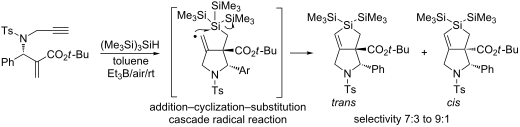
- -carbonyl radical that underwent radical cyclization to a terminal alkyne unit. The resulting vinyl radical attacked the silicon atom in an SHi manner to give dihydrosilole. The reaction preferentially formed trans isomers of bicyclosiloles with an approximately 7:3 to 9:1 selectivity. Keywords
- similar cascade SHi reaction, because there were several reports so far that show such SHi reaction on silicon atoms progressing efficiently [23][24][25][26][27][28]. In this paper, we report a new synthesis of chiral bicyclodihydrosiloles through an addition–cyclization–SHi cascade reaction in one-pot

Graphical Abstract

Figure 1: ORTEP structure of trans-2a.

Scheme 1: Formation of bicyclic dihydrosilole 2a under high concentration conditions.

Scheme 2: Plausible reaction mechanism.

Scheme 3: Reaction 1a with Et3GeH.
Synthesis and spectroscopic properties of 4-amino-1,8-naphthalimide derivatives involving the carboxylic group: a new molecular probe for ZnO nanoparticles with unusual fluorescence features
- Laura Bekere,
- David Gachet,
- Vladimir Lokshin,
- Wladimir Marine and
- Vladimir Khodorkovsky
Beilstein J. Org. Chem. 2013, 9, 1311–1318, doi:10.3762/bjoc.9.147
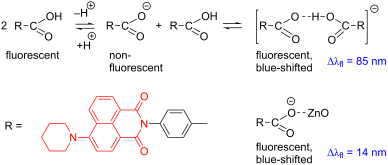
- consecutive pulses to 126 ns. The generated femtosecond pulses illuminated a 1 cm quartz cell containing the solution under study. The photo-excited fluorescence was collected in a 90° geometry and sent into a subtractive double-monochromator (DH10, Jobin-Yvon) before being detected by a silicon avalanche

Graphical Abstract

Scheme 1: Synthesis and structures of 1,8-naphthalimides.

Figure 1: Normalized absorption (solid curves) and fluorescence (dashed curves) spectra of 4: (1) in cyclohex...

Figure 2: Normalized fluorescence spectra of 4 in ethanol (5 × 10⁻⁵ M): (solid line) neutral solution; (dashe...

Figure 3: Normalized fluorescence spectra of 4 in ethanol at different concentrations: (solid line) 10−4 M; (...

Scheme 2: Possible ionization and complexation of 4 in ethanol.

Figure 4: Fluorescence decay profile of 4 from a 10−5 M solution in ethanol (excitation at 450 nm, detection ...

Figure 5: Normalized one- and two-photon spectra of dye 4 in toluene. Solid curves: one-photon absorption and...

Figure 6: (a) HOMO and (b) LUMO of 4.

Figure 7: Fluorescence spectra of 4 ethanol (5 × 10⁻⁵ M) (dashed curve) before and after the addition of ZnO ...
3D-printed devices for continuous-flow organic chemistry
- Vincenza Dragone,
- Victor Sans,
- Mali H. Rosnes,
- Philip J. Kitson and
- Leroy Cronin
Beilstein J. Org. Chem. 2013, 9, 951–959, doi:10.3762/bjoc.9.109
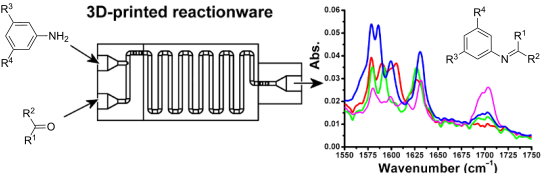
- devices [7]. All this is important in chemistry, and in particular for the realization of micro- and millifluidic devices. Microfluidic devices compatible with a wide range of organic solvents and reagents are usually made of silicon or glass, which requires specialized manufacturing techniques and are

Graphical Abstract

Figure 1: Schematic representation of the 3D-printed reactionware devices employed in this work showing the i...
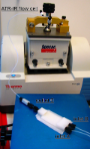
Figure 2: Flow system setup, where a R1 is connected to the syringe pumps and the ATR-IR flow cell with stand...

Figure 3: Carbonyl compounds and primary amines used in the syntheses reported in this work. Carbonyl compoun...

Figure 4: ATR-IR spectra of the synthesis of compounds 3b (on the left) and 3d (on the right). The spectrum o...

Figure 5: (a) IR spectra of benzaldehyde at different concentrations. The solvent peak at 1022 cm−1 remains c...

Figure 6: Comparison of the IR spectra of imine 3a, derived from benzaldehyde (1a) and aniline (2a), synthesi...

Figure 7: Representation of the setup for the two-step flow reaction employed in this work. The first reactor...

Figure 8: Example of an ATR-IR graph in which an imine spectrum is compared with the reduced imine spectrum.
Ring-opening reaction of 2,5-dioctyldithieno[2,3-b:3',2'-d]thiophene in the presence of aryllithium reagents
- Hao Zhong,
- Jianwu Shi,
- Jianxun Kang,
- Shaomin Wang,
- Xinming Liu and
- Hua Wang
Beilstein J. Org. Chem. 2013, 9, 767–774, doi:10.3762/bjoc.9.87
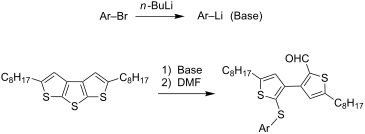
- packing (right). Carbon, silicon, oxygen and sulfur atoms are depicted with thermal ellipsoids set at 50% probability level, and all hydrogen atoms are omitted for clarity. The ring-opening reaction of symmetric 2,5-disubstituted-dithieno[2,3-b:3',2'-d]thiophenes in the presence of n-BuLi in THF. The ring

Graphical Abstract

Scheme 1: The ring-opening reaction of symmetric 2,5-disubstituted-dithieno[2,3-b:3',2'-d]thiophenes in the p...

Scheme 2: The ring-opening reaction of 1 in the presence of n-BuLi and t-BuLi employed for metal–halogen exch...

Figure 1: Crystallographic structure of 3i (left, top view) and crystal packing (right). Carbon, silicon, oxy...
Enantioselective reduction of ketoimines promoted by easily available (S)-proline derivatives
- Martina Bonsignore,
- Maurizio Benaglia,
- Laura Raimondi,
- Manuel Orlandi and
- Giuseppe Celentano
Beilstein J. Org. Chem. 2013, 9, 633–640, doi:10.3762/bjoc.9.71
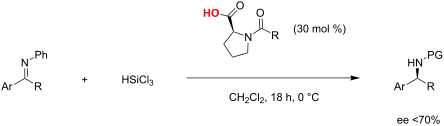
- selectivity was achieved by tuning the metal catalyst. In the trichlorosilane-mediated reductions in this work we aimed to exploit the imine activation by the acid proton of the carboxylic group, which can act at the same time as a Lewis basic site to coordinate the silicon atom and hopefully control the
- coordination ability to the silicon atom, leading to multiple possible coordination modes of trichlorosilane, which are detrimental for the determination of a well-defined activation of the reducing agent and a control of the stereoselectivity. Notably, catalyst 5, with the pivaloyl group at the nitrogen atom

Graphical Abstract

Figure 1: Catalysts of types A–D.

Figure 2: Catalysts of types E–H.

Figure 3: Proposed approach in this work.

Scheme 1: Stereoselective reduction of ketones.

Figure 4: Catalysts synthesized and studied in this work.

Figure 5: Calculated transition states for catalyst 6.
Thermotropic and lyotropic behaviour of new liquid-crystalline materials with different hydrophilic groups: synthesis and mesomorphic properties
- Alexej Bubnov,
- Miroslav Kašpar,
- Věra Hamplová,
- Ute Dawin and
- Frank Giesselmann
Beilstein J. Org. Chem. 2013, 9, 425–436, doi:10.3762/bjoc.9.45
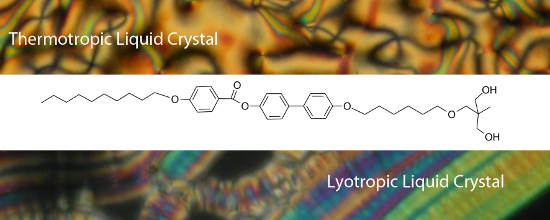
- well-defined thickness (fixed by spherical glass spacers, Figure 5a) were also used. A special silicon glue stable up to 250 °C was used for sealing (Figure 5c) preventing evaporation of the solvent (usually water or DG). Mesomorphic lyotropic behaviour TL1–TL5 were tested for lyotropic behaviour by

Graphical Abstract

Figure 1: Microphotographs of the textures obtained in the polarized optical microscope on planar samples (PS...

Figure 2: DSC plot on heating/cooling runs (indicated by horizontal arrows) for indicated nonchiral compounds...

Figure 3: DSC plot on heating/cooling runs (indicated by horizontal arrows) for indicated chiral compounds: T...
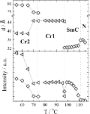
Figure 4: Temperature dependence of the layer spacing d, and intensity of the scattered X-ray beam measured a...

Figure 5: Schematic contact preparation used for detection and study of lyotropic behaviour.

Figure 6: Microphotographs of the contact preparation of TL4 with diethylene glycol (DG): (a) texture of the ...
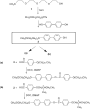
Scheme 1: General procedure for the synthesis of (a) nonchiral 4'-(2,5,8,11-tetraoxatridecan-13-yloxy)bipheny...

Scheme 2: General procedure for synthesis of 2-(1-(6-(4'-(6-(3-hydroxy-2-(hydroxymethyl)-2-methylpropoxy)hexy...

Scheme 3: General procedure for the synthesis of chiral (E)-2-methyl-2-((2-(2-(2-(4-((4-((4-(2-methylbutoxy)p...
Spin state switching in iron coordination compounds
- Philipp Gütlich,
- Ana B. Gaspar and
- Yann Garcia
Beilstein J. Org. Chem. 2013, 9, 342–391, doi:10.3762/bjoc.9.39
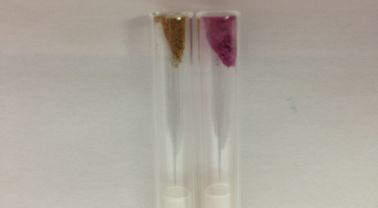
- recently, special hydrostatic pressure cells for magnetic and Mössbauer measurements have been developed, in which silicon oil is used as the pressure-transmitting medium [166][167]. The influence of pressure on SCO properties, for instance the critical ST temperature and shape and position of hysteresis

Graphical Abstract

Figure 1: Change of electron distribution between HS and LS states of an octahedral iron(II) coordination com...

Figure 2: Types of spin transition curves in terms of the molar fraction of HS molecules, γHS(T), as a functi...
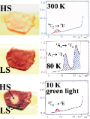
Figure 3: Single crystal UV–vis spectra of the spin crossover compound [Fe(ptz)6](BF4)2 (ptz = 1-propyltetraz...
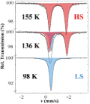
Figure 4: Thermal spin crossover in [Fe(ptz)6](BF4)2 (ptz = 1-propyltetrazole) recorded at three different te...

Figure 5: (a) Mössbauer spectra of the LS compound [Fe(phen)3]X2 recorded over the temperature range 300–5 K....

Figure 6: (left) Demonstration of light-induced spin state trapping (LIESST) in [Fe(ptz)6]BF4)2 with 57Fe Mös...

Figure 7: Schematic representation of the pressure influence (p2 > p1) on the LS and HS potential wells of an...

Figure 8: χMT versus T curves at different pressures for [Fe(phen)2(NCS)2], polymorph II. (Reproduced with pe...

Figure 9: Molecular structure (a) and γHS(T) curves at different pressures for [CrI2(depe)2] (b) (Reproduced ...

Figure 10: HS molar fraction γHS versusT at different pressures for [Fe(phy)2](BF4)2. The hysteresis loop broa...

Figure 11: Proposed structure of the polymeric [Fe(4R-1,2,4-triazole)3]2+ spin crossover cation (a) and plot o...

Figure 12: Temperature dependence of the HS fraction γHS(T), determined from Mössbauer spectra of [Fe(II)xZn1-x...
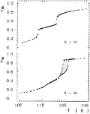
Figure 13: Influence of the noncoordinated anion on the spin transition curve γHS(T) near the transition tempe...

Figure 14: Spin transition curves γHS(T) for different solvates of the SCO complexes. [Fe(II)(2-pic)3]Cl2·Solv...
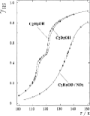
Figure 15: ST curves γHS(T) of the deuterated solvates of [Fe(II)(2-pic)3]Cl2·Solv with Solv = C2D5OH and C2H5...

Figure 16: Sketch of the two-step spin transition; [LS–LS] pair is diamagnetic, [LS–HS] is paramagnetic and th...

Figure 17: (left) Temperature dependence of χMT for {[Fe(L)(NCX)2]2bpym}(L = bpym or bt and X = S or Se). (rig...

Figure 18: Temperature dependence of χMT for [bpym, NCS−] (left) and [bpym, NCSe−] (right) at different pressu...

Figure 19: 57Fe Mössbauer spectra of [bpym, NCSe−] measured at 4.2 K at zero field (a) and at 5 T (b) (see tex...

Figure 20: Temperature dependence of χMT for [Fe2(L)3](ClO4)4·2H2O showing a complete two-step spin conversion...

Figure 21: (a) View of the dinuclear unit in the crystal structure of [Fe2(Hsaltrz)5(NCS)4]·4MeOH. (b) Tempera...

Figure 22: (left) AFM pattern recorded in tapping mode at room temperature on hexagonal single crystals of [Fe3...

Figure 23: (right) Stepwise SCO in an Fe4 [2 × 2] grid, which reveals a smooth magnetic profile under ambient ...

Figure 24: (left) View of the discrete nanoball made of Fe(II) SCO units as well as Cu(I) building blocks. (ri...

Figure 25:
(left) Linear dependency between T1/2 in the heating (Δ) and cooling (![[Graphic 1]](/bjoc/content/inline/1860-5397-9-39-i3.png?max-width=637&scale=1.18182) ) modes versus the anion volu...
) modes versus the anion volu...

Figure 26: (left) View of the linear chain structure of [Fe(1,2-bis(tetrazol-1-yl)propane)3]2+ along the a axi...

Figure 27: (left) View of the 2D layered structure of [Fe(btr)2(NCS)2]·H2O (at 293 K). The water molecules (in...

Figure 28: (left) Three interpenetrated square networks for [Fe(bpb)2(NCS)2]·MeOH. (right) χMT versus T plot s...

Figure 29: Part of the crystal structure of [Fe{N(entz)3}](BF4)2 (T = 293 K) [335,336]. (Reproduced with permission fro...

Figure 30: (left) Projection of the crystal structure of [Fe(btr)3](ClO4)2 along the c axis revealing a 3D str...

Figure 31: Size-dependent SCO properties in [Fe(pz)Pt(CN)4] (left), change of color upon spin state transition...

Figure 32: Schematic showing the epitaxial growth of polymer {Fe(pz)[Pt(CN)4]} and the spin transition propert...

Figure 33: Microcontact printing (μCP) of nanodots on Si-wafer of [Fe(ptz)6](BF4)2 after deposition of crystal...

Figure 34: (left) Projection of the two independent cations of [Fe(C6–trenH)]2+ with atom numbering scheme (15...
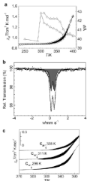
Figure 35: (a) χMT versus T for [Fe(C16-trenH)]Cl2·0.5H2O and variation of the distance d with temperature (T)...

Figure 36: Schematic illustration of the structure of compounds [Fe(Cn-tba)3]X2 adopting a columnar mesophase ...

Figure 37: Temperature dependence of the magnetic moment (M) at 1000 Oe and DSC profiles (inset; 5 °C/min) of ...

Figure 38: Porous structure of the SCO-PMOFs {Fe(pz)[M(II)(CN)4]} (left), representation of the host–guest int...

Figure 39: Porous structure of the guest-free SCO-PMOF’s {Fe(pz)[M(II)(CN)4]} (left), magnetic properties of t...

Figure 40: (left) The 3D porous structure of {Fe(pz)[Pt(CN)4]}·0.5(CS(NH2)2) (1) and {Fe(pz)[Pd(CN)4]}·1.5H2O·...
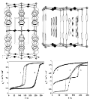
Figure 41: Top: The 3D porous structure of {Fe(dpe)[Pt(CN)4]}·phenazine in a direction close to [101] emphasiz...

Figure 42: View of the segregated stacking of [Ni(dmit)2]− and [Fe(sal2-trien)]+ in [Fe(qsal)2][Ni(dmit)2]3·CH3...

Figure 43: Thin films based on Fe(III) compounds coordinated to Terthienyl-substituted QsalH ligands [434] together...

Figure 44: Left: Temperature-dependent emission spectra for [Fe2(Hsaltrz)5(NCS)4]·4MeOH at λex = 350 nm over t...
Recent advances in transition-metal-catalyzed intermolecular carbomagnesiation and carbozincation
- Kei Murakami and
- Hideki Yorimitsu
Beilstein J. Org. Chem. 2013, 9, 278–302, doi:10.3762/bjoc.9.34
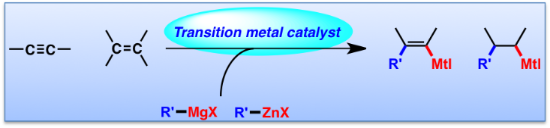
- -pyridyl)silyl-substituted alkynes. The key intermediate 2h was prepared by copper-catalyzed arylmagnesiation of 2g, in which the 2-pyridyl group on silicon efficiently worked as a strong directing group (Scheme 11) [69]. Furthermore, they accomplished a short and efficient synthesis of tamoxifen from 2g

Graphical Abstract

Scheme 1: Variation of substrates for carbomagnesiation and carbozincation in this article.

Scheme 2: Copper-catalyzed arylmagnesiation and allylmagnesiation of alkynyl sulfone.

Scheme 3: Copper-catalyzed four-component reaction of alkynyl sulfoxide with alkylzinc reagent, diiodomethane...

Scheme 4: Rhodium-catalyzed reaction of aryl alkynyl ketones with arylzinc reagents.

Scheme 5: Allylmagnesiation of propargyl alcohol, which provides the anti-addition product.

Scheme 6: Negishi’s total synthesis of (Z)-γ-bisabolene by allylmagnesiation.

Scheme 7: Iron-catalyzed syn-carbomagnesiation of propargylic or homopropargylic alcohol.

Scheme 8: Mechanism of iron-catalyzed carbomagnesiation.

Scheme 9: Regio- and stereoselective manganese-catalyzed allylmagnesiation.

Scheme 10: Vinylation and alkylation of arylacetylene-bearing hydroxy group.

Scheme 11: Arylmagnesiation of (2-pyridyl)silyl-substituted alkynes.

Scheme 12: Synthesis of tamoxifen from 2g.

Scheme 13: Controlling regioselectivity of carbocupration by attaching directing groups.

Scheme 14: Rhodium-catalyzed carbozincation of ynamides.

Scheme 15: Synthesis of 4-pentenenitriles through carbometalation followed by aza-Claisen rearrangement.

Scheme 16: Uncatalyzed carbomagnesiation of cyclopropenes.

Scheme 17: Iron-catalyzed carbometalation of cyclopropenes.

Scheme 18: Enantioselective carbozincation of cyclopropenes.

Scheme 19: Copper-catalyzed facially selective carbomagnesiation.

Scheme 20: Arylmagnesiation of cyclopropenes.

Scheme 21: Enantioselective methylmagnesiation of cyclopropenes without catalyst.

Scheme 22: Copper-catalyzed carbozincation.

Scheme 23: Enantioselective ethylzincation of cyclopropenes.

Scheme 24: Nickel-catalyzed ring-opening aryl- and alkenylmagnesiation of a methylenecyclopropane.

Scheme 25: Reaction mechanism.

Scheme 26: Nickel-catalyzed carbomagnesiation of arylacetylene and dialkylacetylene.

Scheme 27: Nickel-catalyzed carbozincation of arylacetylenes and its application to the synthesis of tamoxifen....

Scheme 28: Bristol-Myers Squibb’s nickel-catalyzed phenylzincation.

Scheme 29: Iron/NHC-catalyzed arylmagnesiation of aryl(alkyl)acetylene.

Scheme 30: Iron/copper-cocatalyzed alkylmagnesiation of aryl(alkyl)acetylenes.

Scheme 31: Iron-catalyzed hydrometalation.

Scheme 32: Iron/copper-cocatalyzed arylmagnesiation of dialkylacetylenes.

Scheme 33: Chromium-catalyzed arylmagnesiation of alkynes.

Scheme 34: Cobalt-catalyzed arylzincation of alkynes.

Scheme 35: Cobalt-catalyzed formation of arylzinc reagents and subsequent arylzincation of alkynes.

Scheme 36: Cobalt-catalyzed benzylzincation of dialkylacetylene and aryl(alkyl)acetylenes.

Scheme 37: Synthesis of estrogen receptor antagonist.

Scheme 38: Cobalt-catalyzed allylzincation of aryl-substituted alkynes.

Scheme 39: Silver-catalyzed alkylmagnesiation of terminal alkyne.

Scheme 40: Proposed mechanism of silver-catalyzed alkylmagnesiation.

Scheme 41: Zirconium-catalyzed ethylzincation of terminal alkenes.

Scheme 42: Zirconium-catalyzed alkylmagnesiation.

Scheme 43: Titanium-catalyzed carbomagnesiation.

Scheme 44: Three-component coupling reaction.

Scheme 45: Iron-catalyzed arylzincation reaction of oxabicyclic alkenes.

Scheme 46: Reaction of allenyl ketones with organomagnesium reagent.

Scheme 47: Regio- and stereoselective reaction of a 2,3-allenoate.

Scheme 48: Three-component coupling reaction of 1,2-allenoate, organozinc reagent, and ketone.

Scheme 49: Proposed mechanism for a rhodium-catalyzed arylzincation of allenes.

Scheme 50: Synthesis of skipped polyenes by iterative arylzincation/allenylation reaction.

Scheme 51: Synthesis of 1,4-diorganomagnesium compound from 1,2-dienes.

Scheme 52: Synthesis of tricyclic compounds.

Scheme 53: Manganese-catalyzed allylmagnesiation of allenes.

Scheme 54: Copper-catalyzed alkylmagnesiation of 1,3-dienes and 1,3-enynes.

Scheme 55: Chromium-catalyzed methallylmagnesiation of 1,6-diynes.

Scheme 56: Chromium-catalyzed allylmagnesiation of 1,6-enynes.

Scheme 57: Proposed mechanism of the chromium-catalyzed methallylmagnesiation.
Intramolecular carbolithiation of N-allyl-ynamides: an efficient entry to 1,4-dihydropyridines and pyridines – application to a formal synthesis of sarizotan
- Wafa Gati,
- Mohamed M. Rammah,
- Mohamed B. Rammah and
- Gwilherm Evano
Beilstein J. Org. Chem. 2012, 8, 2214–2222, doi:10.3762/bjoc.8.250
- presence of secondary or primary alkyl chains such as cyclohexyl (5/6i) or n-hexyl (5/6j) groups did not afford the cyclized products, which could also not be obtained either when starting from a TIPS-protected primary ynamide (5/6k), the silicon protecting group being readily cleaved under the reaction

Graphical Abstract

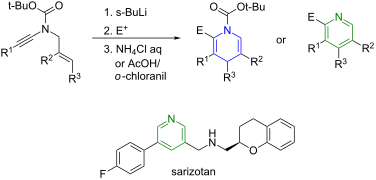
Scheme 1: Strategy for the synthesis of (1,4-dihydro)pyridines by deprotonation/intramolecular carbolithiatio...

Scheme 2: Feasibility of the deprotonation/intramolecular carbolithiation.

Scheme 3: Synthesis of the starting N-allyl-ynamides.
Scheme 4: Intramolecular carbolithiation of N-allyl-ynamides to 1,4-dihydropyridines and pyridines.

Scheme 5: 2,3-Disubstituted pyridines by trapping of the intermediate metallated 1,4-dihydropyridine.

Scheme 6: Formal synthesis of the anti-dyskinesia agent, 5-HT1A receptor agonist, dopamine D2 receptor ligand...
Flow photochemistry: Old light through new windows
- Jonathan P. Knowles,
- Luke D. Elliott and
- Kevin I. Booker-Milburn
Beilstein J. Org. Chem. 2012, 8, 2025–2052, doi:10.3762/bjoc.8.229

Graphical Abstract

Figure 1: An immersion-well batch reactor with 125 W medium pressure Hg lamp.

Figure 2: Transmission profile of a 0.05 M solution, ε = 200 M−1 cm−1.

Figure 3: Schematic of a typical microflow photochemical reactor (above) and detail of a triple-channel micro...

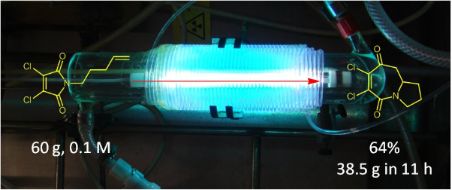
Figure 4: Schematic of a typical macroflow photochemical reactor (above) and images of the FEP photochemical ...

Scheme 1: [2 + 2] photocycloadditions of enones with enol derivatives.

Scheme 2: Competing reactions in an intramolecular [2 + 2] photocycloaddition.

Scheme 3: Diastereocontrolled cycloaddition of a cyclic enone with cyclopentene.

Scheme 4: Comparison of yields and reaction times for a batch reactor with a microflow system.

Scheme 5: Intramolecular [2 + 2] photocycloaddition.

Scheme 6: Paterno–Büchi reaction of benzophenone with an allylic alcohol.

Scheme 7: Photooxygenation of cyclopentadiene.

Scheme 8: Preparation of the anthelmintic ascaridole 23.

Scheme 9: Production of rose oxide 27 from (−)-β-citronellol (24).

Scheme 10: Photocatalytic alkylation of benzylamine.

Scheme 11: Photocatalytic reduction of 4-nitroacetophenone.

Scheme 12: Conversion of L-lysine to L-pipecolinic acid.

Scheme 13: Photocatalytic hydrodehalogenation.

Scheme 14: Photocatalytic aza-Henry reactions.

Scheme 15: Photocatalytic α-alkylation of aliphatic ketones.

Scheme 16: Decarboxylative photochemical additions.

Scheme 17: Photochemical addition of isopropanol to furanones.

Scheme 18: Photochemical addition of methanol to limonene.

Scheme 19: Light-promoted reduction of flavone.

Scheme 20: Photoreduction of benzophenone with benzhydrol.

Scheme 21: Barton reaction in a microflow system.

Scheme 22: Microflow synthesis of vitamin D3.

Scheme 23: photochemical chlorination of cyclohexane.

Scheme 24: photochemical cyanation of pyrene.

Scheme 25: Intermolecular [2 + 2] cycloaddition of maleimide (76) and intramolecular [2 + 2] cycloaddition of ...

Scheme 26: Intramolecular [5 + 2] cycloaddition of maleimide under flow conditions.

Scheme 27: Intramolecular [5 + 2] cycloaddition as a key step in the synthesis of (±)-neostenine.

Scheme 28: In situ generation of a thioaldehyde by photolysis of a phenacyl sulfide.

Scheme 29: Photodimerisation of maleic anhydride.

Scheme 30: [2 + 2] cycloaddition of a chiral enone with ethylene.

Scheme 31: Intramolecular [2 + 2] cycloaddition of a cyclopentenone.

Scheme 32: Photochemical Wolff rearrangement and cyclisation to β-lactams.

Scheme 33: Photochemical rearrangement of aryl azides.

Scheme 34: Rearrangement of quinoline N-oxides to quinolones.

Scheme 35: Photochemical rearrangement of cyclobutenones.

Scheme 36: Photoisomerisation en route to a vitamin-D derivative.

Scheme 37: Schematic of the Seeberger photooxygenation apparatus and sensitised photooxygenation of citronello...

Scheme 38: Sensitised photooxygenation of dihydroartemisinic acid.

Scheme 39: Photochemical preparation of CpRu(MeCN)3PF6.

Scheme 40: In situ photochemical generation and reaction of a [CpRu]+ catalyst.

Scheme 41: Intermolecular alkene–alkyne coupling with photogenerated catalyst.

Scheme 42: PET deoxygenation of nucleosides.

Scheme 43: Photochemical defluorination of DABFT.

Scheme 44: Aromatic azide reduction by visible-light-mediated photocatalysis.

Scheme 45: Examples of visible-light-mediated reactions.

Scheme 46: Visible-light-mediated formation of iminium ions.

Scheme 47: Examples of visible-light-mediated photocatalytic reactions.

Scheme 48: Anhydride formation from a visible-light-mediated process.

Scheme 49: Light-mediated conjugate addition of glycosyl bromide 141 to acrolein.

Scheme 50: Visible-light-mediated photocyclisation to [5]helicene.
The chemistry of bisallenes
- Henning Hopf and
- Georgios Markopoulos
Beilstein J. Org. Chem. 2012, 8, 1936–1998, doi:10.3762/bjoc.8.225
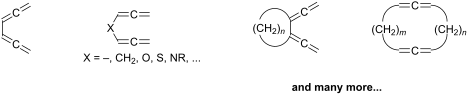
- hexachloro derivative 94 was treated by Gilman and co-workers with excess dimethylsilyl chloride and magnesium in THF, the hexasilylated derivative 95 was produced and again a ring-opening reaction to a conjugated bisallene had taken place (Scheme 23) [70]. In closing this section on silicon-substituted

Graphical Abstract

Figure 1: Loschmidt’s structure proposal for benzene (1) (Scheme 181 from [3]) and the corresponding modern stru...

Figure 2: The first isolated bisallenes.

Figure 3: Carbon skeletons of selected bisallenes discussed in this review.

Scheme 1: The preparation of 1,2,4,5-hexatetraene (2).

Scheme 2: The preparation of a conjugated bisallene by the DMS-protocol.

Scheme 3: Preparation of the 3-deuterio- and 3,4-dideuterio derivatives of 24.

Scheme 4: A versatile method to prepare alkylated conjugated bisallenes and other allenes.

Scheme 5: A preparation of 3,4-dimethyl-1,2,4,5-hexatetraene (38).

Scheme 6: A (C6 + 0)-approach to 1,2,4,5-hexatetraene (2).

Scheme 7: The preparation of a fully alkylated bisallenes from a 2,4-hexadiyne-1,6-diol diacetate.

Scheme 8: The preparation of the first phenyl-substituted conjugated bisallenes 3 and 4.

Scheme 9: Selective hydrogenation of [5]cumulenes to conjugated bisallenes: another (C6 + 0)-route.

Scheme 10: Aryl-substituted conjugated bisallenes by a (C3 + C3)-approach.

Scheme 11: Hexaphenyl-1,2,4,5-hexatetraene (59) by a (C3 + C3)-approach.

Scheme 12: An allenation route to conjugated bisallenes.

Scheme 13: The preparation of 3,4-difunctionalized conjugated bisallenes.

Scheme 14: Problems during the preparation of sulfur-substituted conjugated bisallenes.

Scheme 15: The preparation of 3,4-dibromo bisallenes.

Scheme 16: Generation of allenolates by an oxy-Cope rearrangement.

Scheme 17: A linear trimerization of alkynes to conjugated bisallenes: a (C2 + C2 + C2)-protocol.

Scheme 18: Preparation of a TMS-substituted conjugated bisallene by a C3-dimerization route.

Scheme 19: A bis(trimethylsilyl)bisallene by a C3-coupling protocol.

Scheme 20: The rearrangement of highly substituted benzene derivatives into their conjugated bisallenic isomer...

Scheme 21: From fully substituted benzene derivatives to fully substituted bisallenes.

Scheme 22: From a bicyclopropenyl to a conjugated bisallene derivative.

Scheme 23: The conversion of a bismethylenecyclobutene into a conjugated bisallene.

Scheme 24: The preparation of monofunctionalized bisallenes.

Scheme 25: Preparation of bisallene diols and their cyclization to dihydrofurans.

Scheme 26: A 3,4-difunctionalized conjugated bisallene by a C3-coupling process.

Scheme 27: Preparation of a bisallenic diketone by a coupling reaction.

Scheme 28: Sulfur and selenium-substituted bisallenes by a [2.3]sigmatropic rearrangement.

Scheme 29: The biallenylation of azetidinones.

Scheme 30: The preparation of a fully ferrocenylated conjugated bisallene.

Scheme 31: The first isomerization of a 1,5-hexadiyne to a 1,2,4,5-hexatetraene.

Scheme 32: The preparation of alkynyl-substituted bisallenes by a C3-dimerization protocol.

Scheme 33: Preparation of another completely ferrocenylated bisallene.

Scheme 34: The cyclization of 1,5-hexadiyne (129) to 3,4-bismethylenecyclobutene (130) via 1,2,4,5-hexatetraen...
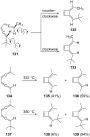
Scheme 35: Stereochemistry of the thermal cyclization of bisallenes to bismethylenecyclobutenes.

Scheme 36: Bisallene→bismethylenecyclobutene ring closures in the solid state.

Scheme 37: A bisallene cyclization/dimerization reaction.

Scheme 38: A selection of Diels–Alder additions of 1,2,4,5-hexatetraene with various double-bond dienophiles.

Scheme 39: The stereochemistry of the [2 + 4] cycloaddition to conjugated bisallenes.

Scheme 40: Preparation of azetidinone derivatives from conjugated bisallenes.

Scheme 41: Cycloaddition of heterodienophiles to a conjugated bisallene.

Scheme 42: Addition of triple-bond dienophiles to conjugated bisallenes.

Scheme 43: Sulfur dioxide addition to conjugated bisallenes.

Scheme 44: The addition of a germylene to a conjugated bisallene.

Scheme 45: Trapping of conjugated bisallenes with phosphinidenes.

Scheme 46: The cyclopropanantion of 1,2,4,5-hexatetraene (2).

Scheme 47: Photochemical reactions involving conjugated bisallenes.

Scheme 48: Base-catalyzed isomerizations of conjugated bisallenes.

Scheme 49: Ionic additions to a conjugated bisallene.

Scheme 50: Oxidation reactions of a conjugated bisallene.
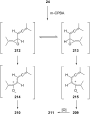
Scheme 51: The mechanism of oxidation of the bisallene 24.

Scheme 52: CuCl-catalyzed cyclization of 1,2,4,5-hexatetraene (2).

Scheme 53: The conversion of conjugated bisallenes into cyclopentenones.

Scheme 54: Oligomerization of a conjugated bisallene by nickel catalysts.
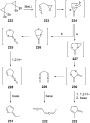
Scheme 55: Generation of 1,2,5,6-heptatetraene (229) as a reaction intermediate.

Scheme 56: The preparation of a stable derivative of 1,2,5,6-heptatetraene.

Scheme 57: A bisallene with a carbonyl group as a spacer element.

Scheme 58: The first preparation of 1,2,6,7-octatetraene (242).

Scheme 59: Preparation of 1,2,6,7-octatetraenes by (C4 + C4)-coupling of enynes.

Scheme 60: Preparation of 1,2,6,7-octatetraenes by (C4 + C4)-coupling of homoallenyl bromides.

Scheme 61: Preparation of 1,2,6,7-octatetraenes by alkylation of propargylic substrates.

Scheme 62: Preparation of two highly functionalized 1,2,6,7-octatetraenes.

Scheme 63: Preparation of several higher α,ω-bisallenes.

Scheme 64: Preparation of different alkyl derivatives of α,ω-bisallenes.

Scheme 65: The preparation of functionalized 1,2,7,8-nonatetraene derivatives.

Scheme 66: Preparation of functionalized α,ω-bisallenes.

Scheme 67: The preparation of an α,ω-bisallene by direct homologation of an α,ω-bisalkyne.

Scheme 68: The gas-phase pyrolysis of 4,4-dimethyl-1,2,5,6-heptatetraene (237).
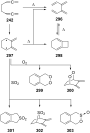
Scheme 69: Gas-phase pyrolysis of 1,2,6,7-octatetraene (242).

Scheme 70: The cyclopropanation of 1,2,6,7-octatetraene (242).

Scheme 71: Intramolecular cyclization of 1,2,6,7-octatetraene derivatives.

Scheme 72: The gas-phase pyrolysis of 1,2,7,8-nonatetraene (265) and 1,2,8,9-decatetraene (266).

Scheme 73: Rh-catalyzed cyclization of a functionalized 1,2,7,8-nonatetraene.

Scheme 74: A triple cyclization involving two different allenic substrates.

Scheme 75: Bicyclization of keto derivatives of 1,2,7,8-nonatetraene.

Scheme 76: The preparation of complex organic compounds from functionalized bisallenes.

Scheme 77: Cycloisomerization of an α,ω-bisallene containing a C9 tether.

Scheme 78: Organoborane polymers from α,ω-bisallenes.

Scheme 79: Preparation of trans- (337) and cis-1,2,4,6,7-octapentaene (341).

Scheme 80: The preparation of 4-methylene-1,2,5,6-heptatetraene (349).

Scheme 81: The preparation of acetylenic bisallenes.

Scheme 82: The preparation of derivatives of hydrocarbon 351.

Scheme 83: The construction of macrocyclic alleno-acetylenes.

Scheme 84: Preparation and reactions of 4,5-bismethylene-1,2,6,7-octatetraene (365).

Scheme 85: Preparation of 1,2-bis(propadienyl)benzene (370).

Scheme 86: The preparation of 1,4-bis(propadienyl)benzene (376).

Scheme 87: The preparation of aromatic and heteroaromatic bisallenes by metal-mediated coupling reactions.

Scheme 88: Double cyclization of an aromatic bisallene.

Scheme 89: Preparation of an allenic [15]paracyclophane by a ring-closing metathesis reaction of an aromatic α...

Scheme 90: Preparation of a macrocyclic ring system containing 1,4-bis(propadienyl)benzene units.

Scheme 91: Preparation of copolymers from 1,4-bis(propadienyl)benzene (376).

Scheme 92: A boration/copolymerization sequence of an aromatic bisallene and an aromatic bisacetylene.

Scheme 93: Formation of a layered aromatic bisallene.

Figure 4: The first members of the semicyclic bisallene series.

Scheme 94: Preparation of the first bis(vinylidene)cyclobutane derivative.
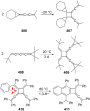
Scheme 95: Dimerization of strain-activated cumulenes to bis(vinylidene)cyclobutanes.

Scheme 96: Photodimerization of two fully substituted butatrienes in the solid state.

Scheme 97: Preparation of the two parent bis(vinylidene)cyclobutanes.

Scheme 98: The preparation of 1,3-bis(vinylidene)cyclopentane and its thermal isomerization.

Scheme 99: The preparation of the isomeric bis(vinylidene)cyclohexanes.

Scheme 100: Bi- and tricyclic conjugated bisallenes.
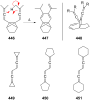
Scheme 101: A selection of polycyclic bisallenes.

Scheme 102: The first endocyclic bisallenes.

Figure 5: The stereochemistry of 1,2,6,7-cyclodecatetraene.

Scheme 103: The preparation of several endocyclic bisallenes.

Scheme 104: Synthesis of diastereomeric derivatives of 1,2,6,7-cyclodecatetraene.

Scheme 105: Preparation of a derivative of 1,2,8,9-cyclotetradecatetraene.

Scheme 106: The preparation of keto derivatives of cyclic bisallenes.

Scheme 107: The preparation of cyclic biscumulenic ring systems.

Scheme 108: Cyclic bisallenes in natural- and non-natural-product chemistry.

Scheme 109: The preparation of iron carbonyl complexes from cyclic bisallenes.

Figure 6: A selection of unknown exocyclic bisallenes that should have interesting chemical properties.

Scheme 110: The thermal isomerization of 1,2-diethynylcyclopropanes and -cyclobutanes.

Scheme 111: Intermediate generation of a cyclooctapentaene.

Scheme 112: Attempted preparation of a cyclodecahexaene.

Scheme 113: The thermal isomerization of 1,5,9-cyclododecatriyne (511) into [6]radialene (514).

Scheme 114: An isomerization involving a diketone derived from a conjugated bisallene.

Scheme 115: Typical reaction modes of heteroorganic bisallenes.

Scheme 116: Generation and thermal behavior of acyclic hetero-organic bisallenes.

Scheme 117: Generation of bis(propadienyl)thioether.

Scheme 118: The preparation of a bisallenic sulfone and its thermal isomerization.

Scheme 119: Bromination of the bisallenic sulfone 535.

Scheme 120: Metalation/hydrolysis of the bisallenic sulfone 535.

Scheme 121: Aromatic compounds from hetero bisallenes.

Scheme 122: Isomerization/cyclization of bispropargylic ethers.

Scheme 123: The preparation of novel aromatic systems by base-catalyzed isomerization of bispropargyl ethers.

Scheme 124: The isomerization of bisacetylenic thioethers to bicyclic thiophenes.

Scheme 125: Aromatization of macrocyclic bispropargylic sulfides.

Scheme 126: Preparation of ansa-compounds from macrocyclic bispropargyl thioethers.

Scheme 127: Alternate route for cyclization of a heterorganic bisallene.
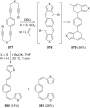
Scheme 128: Multiple isomerization/cyclization of “double” bispropargylic thioethers.

Scheme 129: Preparation of a bisallenyl disulfide and its subsequent bicyclization.

Scheme 130: Thermal cyclization of a bisallenyl thiosulfonate.

Scheme 131: Some reactions of heteroorganic bisallenes with two sulfur atoms.

Scheme 132: Further methods for the preparation of heteroorganic bisallenes.

Scheme 133: Cyclization reactions of heteroorganic bisallenes.

Scheme 134: Thermal cycloadditions of bisallenic tertiary amines.

Scheme 135: Cyclization of a bisallenic tertiary amine in the presence of a transition-metal catalyst.

Scheme 136: A Pauson–Khand reaction of a bisallenic ether.

Scheme 137: Formation of a 2:1adduct from two allenic substrates.

Scheme 138: A ring-forming silastannylation of a bisallenic tertiary amine.

Scheme 139: A three-component cyclization involving a heterorganic bisallene.

Scheme 140: Atom-economic construction of a complex organic framework from a heterorganic α,ω-bisallene.
Metal–ligand multiple bonds as frustrated Lewis pairs for C–H functionalization
- Matthew T. Whited
Beilstein J. Org. Chem. 2012, 8, 1554–1563, doi:10.3762/bjoc.8.177
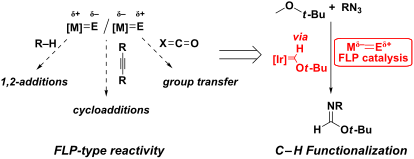
- explored by Tilley, often have substantial positive character at the silicon site (especially in cationic complexes), leading to reactivity that is dominated by the electrophilicity of silicon, with the metal playing a secondary role [17]. Prominent examples include the formation of base-stabilized
- , indicating that the metal center is not itself very reactive. However, the ability to stabilize the metallacycle is clearly derived from an enhanced transfer of electron density from ruthenium to silicon through an intervening heterocumulene. Unfortunately, retrocycloaddition to give silylene-group transfer

Graphical Abstract

Scheme 1: Heterolytic cleavage of H2 by a phosphine/borane FLP by H2 polarization in the P–B cavity [5,11].

Scheme 2: Insertion of carbon dioxide into a phosphine/borane FLP [14].

Figure 1: Simplified frontier-molecular-orbital diagrams for (a) Mδ+═Eδ− and (b) Mδ−═Eδ+ FLPs (n = 1 for line...

Figure 2: Quenching of M═E FLPs by dimerization: (a) generic Mδ+═Eδ− case, and (b) Bergman's arylimido zircon...

Scheme 3: Oxygen-atom extrusion from CO2 by a Ta(V) neopentylidene [27].

Scheme 4: Oxygen-atom transfer from acetone at a Zr(IV) imide [28].

Scheme 5: Alkyne cycloaddition at a Zr(IV) imide [38].

Scheme 6: Nitrile-alkyne cross metathesis at a W(VI) nitride [40,41].

Scheme 7: C–H and H–H addition across a zirconium(IV) imide [42].

Scheme 8: Formal [2 + 2] cycloaddition of methyl isocyanate at a ruthenium silylene [58].

Scheme 9: Oxygen-atom transfer from phenyl isocyanate to a cationic terminal borylene [60].

Scheme 10: Coupling of a phosphorus ylide with an iridium methylene [62].

Scheme 11: Reactions of (PNP)Ir═C(H)Ot-Bu with oxygen-containing heterocumulenes [71].

Scheme 12: Reductive coupling of two CS2 units at (PNP)Ir═C(H)Ot-Bu [73].
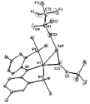
Figure 3: Single-crystal X-ray structure of a silver(I) triflate adduct of (PNP)Ir═C(H)Ot-Bu with most H atom...

Scheme 13: Possible routes to C–H functionalization by 1,2-addition across a polarized metal–element multiple ...

Scheme 14: Alkoxycarbene formation by double C–H activation at (PNP)Ir [88].

Scheme 15: Catalytic oxidation of MTBE by multiple C–H activations and nitrene-group transfer to a Mδ−═Eδ+ FLP ...
Influence of cyclodextrin on the solubility of a classically prepared 2-vinylcyclopropane macromonomer in aqueous solution
- Helmut Ritter,
- Jia Cheng and
- Monir Tabatabai
Beilstein J. Org. Chem. 2012, 8, 1528–1535, doi:10.3762/bjoc.8.173
- ) instrument equipped with a He–Ne-laser and an Avalanche photodiode detector. The turbidity measurements were carried out using a power-regulated semiconductor laser (λ = 670 nm) and a silicon photodiode in a TP1 turbidity photometer from TEPPER-Analytik. Glass-transition temperatures (Tg) were measured using

Graphical Abstract

Scheme 1: Mechanism of free radical ring-opening polymerization of 2-VCPs (In: initiator) [29-31].

Scheme 2: Synthesis of diethyl 2-vinyl-1,1-cyclopropanedicarboxylate [33].

Scheme 3: Two-step synthesis of the macromonomer 5 (In: Initiator, TEA: triethylamine).

Figure 1: MALDI-TOF MS of amino-terminated poly(NiPAAm) 3.

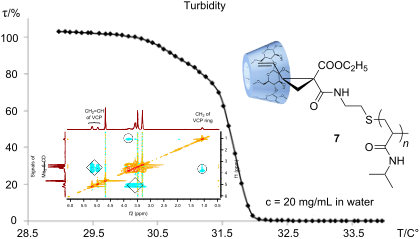
Figure 2: Optical transmittance of aqueous solutions (c = 20 mg/mL) of 3, 6 und 8 during heating.

Figure 3: 2D ROESY NMR spectrum of a 5/Me2-β-CD deuterated water solution.

Figure 4: Temperature-dependent transparency measurements of aqueous solution of the supramolecular complex 7...

Scheme 4: Homo- and copolymerization of macromonomer 5.
Synthesis and characterization of low-molecular-weight π-conjugated polymers covered by persilylated β-cyclodextrin
- Aurica Farcas,
- Ana-Maria Resmerita,
- Andreea Stefanache,
- Mihaela Balan and
- Valeria Harabagiu
Beilstein J. Org. Chem. 2012, 8, 1505–1514, doi:10.3762/bjoc.8.170
- scanning probe microscope (NT-MDT, Zelenograd, Moscow, Russia), in atomic force microscopy (AFM) configuration. The scan area was 2 × 2 µm2. Rectangular silicon cantilevers NSG10 (NT-MDT, Russia) with tips of high aspect ratio were used. All images were acquired in air, at room temperature (23 °C), in

Graphical Abstract
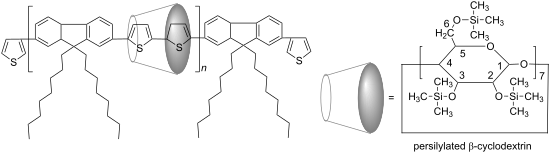
Scheme 1: Synthesis of PDOF-BT and PDOF-BTc copolymers.

Figure 1: 1H NMR spectrum (CDCl3) of the BTc inclusion complex.

Figure 2: FTIR spectra (KBr pellet) of PDOF-BT (A) and PDOF-BTc (B) copolymers.

Figure 3: 1H NMR spectrum of PDOF-BT copolymer (CDCl3).

Figure 4: 1H NMR spectrum of PDOF-BTc copolymer (CDCl3).

Figure 5: DSC curves of BTc and PDOF-BTc from second-heating DSC measurements.

Figure 6: Thermogravimetric curves (TG) for BTc, PDOF-BT, and PDOF-BTc compounds.

Figure 7: High-resolution tapping-mode AFM images and cross-section plots (along the solid line in the images...
Organocatalytic C–H activation reactions
- Subhas Chandra Pan
Beilstein J. Org. Chem. 2012, 8, 1374–1384, doi:10.3762/bjoc.8.159
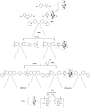
- activation is well-known in the literature [26][27][28][29][30]. Stoichiometric amounts of a radical source, such as tributyltin hydride and tris(trimethylsilyl)silicon hydride [31], or irradiation [32] were also utilized for biaryl synthesis from unactivated arenes. However, organocatalysts have not been

Graphical Abstract

Scheme 1: Triflic acid-catalysed synthesis of cyclic aminals.

Scheme 2: PTSA-catalysed synthesis of cyclic aminals.

Scheme 3: Plausible mechanism for cyclic aminal synthesis.

Scheme 4: Annulation cascade reaction with double nucleophiles.

Scheme 5: Mechanism for the indole-annulation cascade reaction.

Scheme 6: Synthesis of N-alkylpyrroles and δ-hydroxypyrroles.
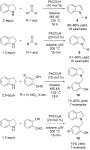
Scheme 7: Synthesis of N-alkylindoles 9 and N-alkylindolines 10.

Scheme 8: Mechanistic study for the N-alkylpyrrole formation.
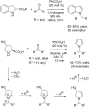
Scheme 9: Benzoic acid catalysed decarboxylative redox amination.
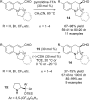
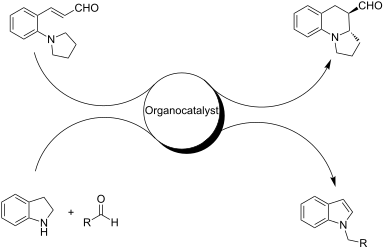
Scheme 10: Organocatalytic redox reaction of ortho-(dialkylamino)cinnamaldehydes.

Scheme 11: Mechanism for aminocatalytic redox reaction of ortho-(dialkylamino)cinnamaldehydes.

Scheme 12: Asymmetric synthesis of tetrahydroquinolines having gem-methyl ester groups.

Scheme 13: Asymmetric synthesis of tetrahydroquinolines from chiral substrates 18.

Scheme 14: Organocatalytic biaryl synthesis by Kwong, Lei and co-workers.

Scheme 15: Organocatalytic biaryl synthesis by Shi and co-workers.

Scheme 16: Organocatalytic biaryl synthesis by Hayashi and co-workers.

Scheme 17: Proposed mechanism for organocatalytic biaryl synthesis.
An intramolecular inverse electron demand Diels–Alder approach to annulated α-carbolines
- Zhiyuan Ma,
- Feng Ni,
- Grace H. C. Woo,
- Sie-Mun Lo,
- Philip M. Roveto,
- Scott E. Schaus and
- John K. Snyder
Beilstein J. Org. Chem. 2012, 8, 829–840, doi:10.3762/bjoc.8.93
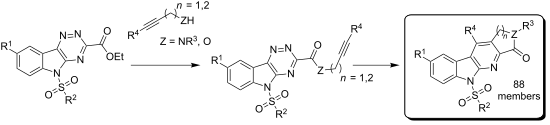
- 5). Little reaction occurred in toluene under microwave irradiation (Table 3, entry 6) unless silicon carbide chips were added as a microwave facilitator (Table 3, entry 7) [87]. Upon further exploration of the reaction conditions, it was discovered that the amidation/cycloaddition sequence could be

Graphical Abstract

Figure 1: Natural products with α-carboline subunits.

Scheme 1: Retrosynthetic inverse electron Diels–Alder approach to α-carbolines.

Scheme 2: Condensation of isatins with ethyl oxaloamidrazonate to form triazines.

Scheme 3: Amidation of triazine ester 8a.

Scheme 4: Microwave-promoted IEDDA reaction of isatin derived triazines.

Scheme 5: One-pot amidation/cycloaddition of triazine ester 8a.

Scheme 6: Amidation/cycloaddition forming α-carbolines 14.

Scheme 7: Intramolecular hydrogen bonding prevents IEDDA cycloaddition of 14b.

Scheme 8: Preparation of unprotected triazine 15, and its lack of reactivity in cycloadditions.

Scheme 9: Transesterification and subsequent cycloaddition of 17a.
Synthesis and antifungal properties of papulacandin derivatives
- Marjolein van der Kaaden,
- Eefjan Breukink and
- Roland J. Pieters
Beilstein J. Org. Chem. 2012, 8, 732–737, doi:10.3762/bjoc.8.82
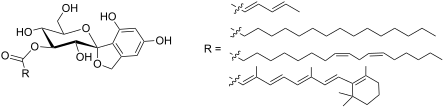
- 20, but in our hands a more complicated mixture resulted. We concluded that under our conditions deprotonation of the protecting group (protons α to silicon) may be competitive with the desired α-lithiation next to oxygen. Use of the more substituted TIPS silyl protecting group in 19 indeed solved

Graphical Abstract
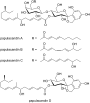
Figure 1: The papulacandins.

Scheme 1: (a) H2SO4, MeOH, reflux, 18 h, 3: 98%; (b) BnBr, K2CO3, acetone, reflux, 18 h; (c) LiAlH4, THF, rt,...

Scheme 2: (a) NaOMe in MeOH, MeOH, rt, 1 h, 96%; (b) (t-Bu)2Si(OTf)2, pyridine, DMF, −40 °C to rt, 2 h, 90%; ...

Scheme 3: (a) Pd2(dba)3∙CHCl3, NaOt-Bu, toluene, 50 °C, 6–20 h, 23: 72%, 24: 79%, 25: 62%; (b) DiBAL-H, CH2Cl2...

Scheme 4: (a) Pd/C, NaHCO3, H2, THF, rt, 1.5 h, 98%; (b) MOMCl, DiPEA, DMAP, CH2Cl2, rt, 4 d, 78%; (c) TBAHF,...
Facile isomerization of silyl enol ethers catalyzed by triflic imide and its application to one-pot isomerization–(2 + 2) cycloaddition
- Kazato Inanaga,
- Yu Ogawa,
- Yuuki Nagamoto,
- Akihiro Daigaku,
- Hidetoshi Tokuyama,
- Yoshiji Takemoto and
- Kiyosei Takasu
Beilstein J. Org. Chem. 2012, 8, 658–661, doi:10.3762/bjoc.8.73

- counter anion, Tf2N−, could attack the silicon atom of 2 to produce silyl triflic imide (R3SiNTf2) [8][9][10][11][12] and the corresponding ketone 3. Therefore, the use of a large amount of Tf2NH causes decomposition into 3 (Table 1, entry 2). We have previously reported the Tf2NH catalyzed (2 + 2

Graphical Abstract

Scheme 1: Plausible mechanism for Tf2NH-catalyzed isomerization of silyl enol ethers.

Scheme 2: Regioselective formation of bicyclo[4.2.0]octanes from the same substrates by the isomerization–(2 ...

Scheme 3: Formation of bicyclo[5.2.0]octane from the regioisomeric mixture of silyl enol ethers.
Fifty years of oxacalix[3]arenes: A review
- Kevin Cottet,
- Paula M. Marcos and
- Peter J. Cragg
Beilstein J. Org. Chem. 2012, 8, 201–226, doi:10.3762/bjoc.8.22
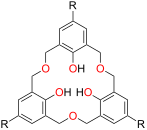
- independent of the group in the para-position. A silylated p-tert-butyloxacalix[3]arene 27 was characterized by X-ray crystallography to confirm that it was in the partial-cone conformation as shown in Figure 10. These derivatives could serve as reaction intermediates, due to the ease with which the silicon

Graphical Abstract

Figure 1: Calixarenes and expanded calixarenes: p-tert-Butylcalix[4]arene (1), p-tert-butyldihomooxacalix[4]a...

Figure 2: Conventional nomenclature for oxacalix[n]arenes.

Scheme 1: Synthesis of oxacalix[3]arenes: (i) Formaldehyde (37% aq), NaOH (aq), 1,4-dioxane; glacial acetic a...

Figure 3: p-tert-Butyloctahomotetraoxacalix[4]arene (4a) [16].

Figure 4: X-ray crystal structure of 3a showing phenolic hydrogen bonding (IUCr ID AS0508) [17].

Scheme 2: Stepwise synthesis of asymmetric oxacalix[3]arenes: (i) MOMCl, Adogen®464; (ii) 2,2-dimethoxypropan...
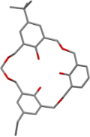
Figure 5: X-ray crystal structure of heptahomotetraoxacalix[3]arene 5 (CCDC ID 166088) [21].

Scheme 3: Oxacalix[3]arene synthesis by reductive coupling: (i) Me3SiOTf, Et3SiH, CH2Cl2; R1, R2 = I, Br, ben...

Scheme 4: Oxacalix[3]naphthalene: (i) HClO4 (aq), wet CHCl3 (R = tert-butyl, 6a, H, 6b) [20].

Figure 6: Conformers of 3a.

Scheme 5: Origin of the 25:75 cone:partial-cone statistical distribution of O-substituted oxacalix[3]arenes (p...

Scheme 6: Synthesis of alkyl ethers 7–10: (i) Alkyl halide, NaH, DMF [24].

Scheme 7: Synthesis of a pyridyl derivative 11a: (i) Picolyl chloride hydrochloride, NaH, DMF [26,27].

Figure 7: X-ray crystal structure of partial-cone 11a (CCDC ID 150580) [26].

Scheme 8: Lower-rim ethyl ester synthesis: (i) Ethyl bromoacetate, NaH, t-BuOK or alkali metal carbonate, THF...

Scheme 9: Forming chiral receptor 13: (i) Ethyl bromoacetate, NaH, THF; (ii) NaOH, H2O/1,4-dioxane; (iii) S-P...
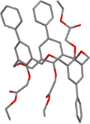
Figure 8: X-ray crystal structure of 16 (IUCr ID PA1110) [32].

Scheme 10: Lower rim N,N-diethylamide 17a: (i) N,N-Diethylchloroacetamide, NaH, t-BuOK or alkali metal carbona...

Scheme 11: Capping the lower rim: (i) N,N-Diethylchloroacetamide, NaH, THF; (ii) NaOH, H2O/1,4-dioxane; (iii) ...

Figure 9: X-ray crystal structure of 18 (CCDC ID 142599) [33].

Scheme 12: Extending the lower rim: (i) Glycine methyl ester, HOBt, dicyclohexycarbodiimide (DCC), CH2Cl2; (ii...

Scheme 13: Synthesis of N-hydroxypyrazinone derivative 23: (i) 1-[3-(Dimethylamino)propyl]-3-ethylcarbodiimide...

Scheme 14: Synthesis of 24: (i) 1-Adamantyl bromomethyl ketone, NaH, THF [39].

Scheme 15: Synthesis of 25 and 26: (i) (Diphenylphosphino)methyl tosylate, NaH, toluene; (ii) phenylsilane, to...

Figure 10: X-ray crystal structure of 27 in the partial-cone conformer (CCDC ID SUP 90399) [41].

Scheme 16: Synthesis of strapped oxacalix[3]arene derivatives 28 and 29: (i) N,N’-Bis(chloroacetyl)-1,2-ethyle...

Figure 11: A chiral oxacalix[3]arene [45].

Figure 12: X-ray crystal structure of asymmetric oxacalix[3]arene 30 incorporating t-Bu, iPr and Et groups (CC...

Scheme 17: Reactions of an oxacalix[3]arene incorporating an upper-rim Br atom with (i) Pd(OAc)2, PPh3, HCO2H,...

Scheme 18: Synthesis of acid 39: (i) NaOH, EtOH/H2O, HCl (aq) [47].

Figure 13: Two forms of dimeric oxacalix[3]arene 40 [47].

Scheme 19: Capping the upper rim: (i) t-BuLi, THF, −78 °C; (ii) NaBH4, THF/EtOH; (iii) 1,3,5-tris(bromomethyl)...

Figure 14: Oxacalix[3]arene capsules 46 and 47 formed through coordination chemistry [52,53].

Figure 15: X-ray crystal structure of the 3b-vanadyl complex (CCDC ID 240185) [57].

Scheme 20: Effect of Ti(IV)/SiO2 on 3a: (i) Ti(OiPr)4, toluene; (ii) triphenylsilanol, toluene; (iii) partiall...

Figure 16: X-ray crystal structures of oxacalix[3]arene complexes with rhenium: 3b∙Re(CO)3 (CCDC ID 620981, le...

Figure 17: X-ray crystal structure of the La2·3a2 complex (CSD ID TIXXUT) [60].

Figure 18: X-ray crystal structures of [3a∙UO2]− with a cavity-bound cation (CCDC ID 135575, left) and without...
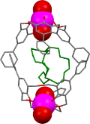
Figure 19: X-ray crystal structure of a supramolecule comprising two [3g·UO2]− complexes that encapsulate a di...

Figure 20: X-ray crystal structure of oxacalix[3]arene 49 capable of chiral selectivity (CSD ID HIGMUF) [65].
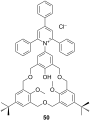
Figure 21: The structure of derivative 50 incorporating a Reichardt dye [66].

Figure 22: Phosphorylated oxacalix[3]arene complexes with transition metals: (Left to right) 26∙Au, 26∙Mo(CO)3...
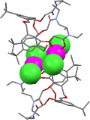
Figure 23: X-ray crystal structure of [17a·HgCl2]2 (CCDC ID 168653) [69].

Figure 24: X-ray crystal structures of 3f with C60 (CCDC ID 182801, left) [76] and a 1,4-bis(9-fluorenyl) C60 deri...

Figure 25: X-Ray crystal structure of 3i and 6a encapsulating C60 (CCDC ID 102473 and 166077) [23,79].
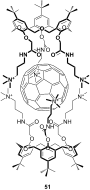
Figure 26: A C60 complexing cationic oxacalix[3]arene 51 [81].

Figure 27: An oxacalix[3]arene-C60 self-associating system 53 [87].

Scheme 21: Synthesis of fluorescent pyrene derivative 55: (i) Propargyl bromide, acetone; (ii) CuI, 1-azidomet...

Scheme 22: Synthesis of responsive rhodamine derivative 57: (i) DCC, CH2Cl2 [91].

Scheme 23: Synthesis of nitrobenzyl derivative 58: (i) 1-Bromo-4-nitrobenzyl acetate, K2CO3, refluxing acetone...

Figure 28: X-ray crystal structure of [Na2∙17a](PF6)2 (CCDC ID 116656) [97].
Coupled chemo(enzymatic) reactions in continuous flow
- Ruslan Yuryev,
- Simon Strompen and
- Andreas Liese
Beilstein J. Org. Chem. 2011, 7, 1449–1467, doi:10.3762/bjoc.7.169
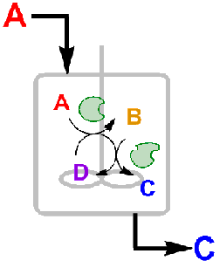
- D-28 by a transketolase-catalyzed reaction with added D,L-25. Catalase was used to regenerate the reduced cofactor FADH by oxidation with oxygen. In order to decrease enzyme deactivation caused by shear forces, a bubble-free aeration through a silicon membrane was implemented. A space-time yield of
- biofilm membrane reactor (Scheme 24) [52][53]. Cells of Pseudomonas sp. were grown in a biofilm attached to the inner surface of a silicon tube, through which a nutrient solution was constantly pumped. In a specially designed hermetic reaction compartment the tube was partially submerged into liquid 73
Graphical Abstract

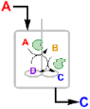
Figure 1: Metabolic pathways in a living cell as an example of efficient coupled-reaction processes. A: Subst...

Figure 2: Four generations of biotransformations. I: Single-reaction processes; II: Single-reaction processes...

Scheme 1: Production of L-leucine (3) in a continuously operating enzyme membrane reactor (EMR). E1: L-Leucin...

Scheme 2: Production of D-mandelic acid (5) in a continuously operating enzyme membrane reactor. E1: D-(−)-Ma...

Scheme 3: Simultaneous synthesis of gluconic acid (9) and glutamic acid (8) in a continuously operated membra...

Scheme 4: Production of L-tert-leucine (11) in a continuously operated enzyme membrane reactor equipped with ...

Scheme 5: Continuous oxidation of lactose (12) to lactobionic acid (13) in a dynamic membrane-aerated reactor...

Scheme 6: Production of N-acetylneuraminic acid (17) in a continuously operated enzyme membrane reactor. E1: ...

Scheme 7: Chemo-enzymatic epoxidation of 1-methylcyclohexene (18) in a packed-bed reactor (PBR) containing No...

Scheme 8: Continuous production of (R)-1-phenylethyl propionate (24) by dynamic kinetic resolution of (rac)-1...

Scheme 9: Synthesis of D-xylulose (28) from D,L-serine (26) and D,L-glyceraldehyde (25) in a continuously ope...

Scheme 10: Continuous production of L-alanine (31) from fumarate (29) in a two-stage enzyme membrane reactor. ...

Scheme 11: Continuous synthesis of 1-phenyl-(1S,2S)-propanediol (35) in a cascade of two enzyme membrane react...

Scheme 12: Production of a dipeptide 39 in a cascade of two continuously operated membrane reactors. E1: Carbo...

Scheme 13: Continuous production of GDP-mannose (43) from mannose 1-phosphate (40) in a cascade of two enzyme ...

Scheme 14: Continuous solvent-free chemo-enzymatic synthesis of ethyl (S)-3-(benzylamino)butanoate (48) in a s...

Scheme 15: Continuous chemo-enzymatic synthesis of grossamide (52) in a cascade of packed-bed reactors. E: Per...

Scheme 16: Chemo-enzymatic synthesis of 2-aminophenoxazin-3-one (56) in a cascade of continuously operating pa...

Scheme 17: Continuous conversion of 3-phospho-D-glycerate (57) into D-ribulose 1,5-bisphosphate (58) in a casc...

Scheme 18: Continuous hydrolysis of 4-cyanopyridine (59) to isonicotinic acid (61) in a cascade of two packed-...

Scheme 19: Continuous fermentative production of ethanol (64) from hardwood lignocellulose (62) in a stirred-t...

Scheme 20: Production of hydrogen by anaerobic fermentation of glucose (7) using Clostridium acetobutylicum ce...

Scheme 21: Continuous production of (2R,5R)-hexanediol (67) in an enzyme membrane reactor containing whole cel...

Scheme 22: Synthesis of L-phenylalanine (69) in a continuously stirred tank reactor equipped with a hollow-fib...

Scheme 23: Continuous epoxidation of 1,7-octadiene (70) to (R)-7-epoxyoctene (72) by a strain of Pseudomonas o...

Scheme 24: Oxidation of styrene (73) to (S)-styrene oxide (74) in a continuously operated biofilm tube reactor...

Scheme 25: Reduction of estrone (75) to β-estradiol (76) by Saccharomyces cerevisiae in a cascade of two stirr...
Scaling up of continuous-flow, microwave-assisted, organic reactions by varying the size of Pd-functionalized catalytic monoliths
- Ping He,
- Stephen J. Haswell,
- Paul D. I. Fletcher,
- Stephen M. Kelly and
- Andrew Mansfield
Beilstein J. Org. Chem. 2011, 7, 1150–1157, doi:10.3762/bjoc.7.133
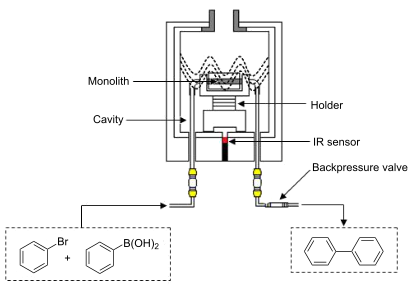
- any observable change in the reaction conversion. Results and Discussion Synthesis of silica monolith and Pd-supported silica monolith catalyst The reaction parameters, such as polymer concentration, acid strength, water content, amount of silicon alkoxide, reaction temperature and reaction time, all

Graphical Abstract

Figure 1: SEM image of silica monolith.

Scheme 1: Suzuki–Miyaura reaction of bromobenzene with phenylboronic acid.

Figure 2: Reactivity of the Pd-monolith-3.2 and Pd-monolith-6.4 for the Suzuki–Miyaura reaction between bromo...

Figure 3: Reactivity of the Pd-monolith-3.2 and Pd-monolith-6.4 for the Suzuki–Miyaura reaction between bromo...

Figure 4: TEM image of Pd-monolith catalyst (scale bar: 100 nm).
Intramolecular hydroamination of alkynic sulfonamides catalyzed by a gold–triethynylphosphine complex: Construction of azepine frameworks by 7-exo-dig cyclization
- Hideto Ito,
- Tomoya Harada,
- Hirohisa Ohmiya and
- Masaya Sawamura
Beilstein J. Org. Chem. 2011, 7, 951–959, doi:10.3762/bjoc.7.106
- mixture. The tube was sealed with a cap equipped with a Teflon-coated silicon rubber septum. The tube was taken from the glove box, and was placed in a water bath (25 °C). After the reaction was complete (as monitored by TLC), the reaction mixture was passed through a pad of silica gel and was

Graphical Abstract

Figure 1: Azepine frameworks found in natural products and pharmaceuticals.

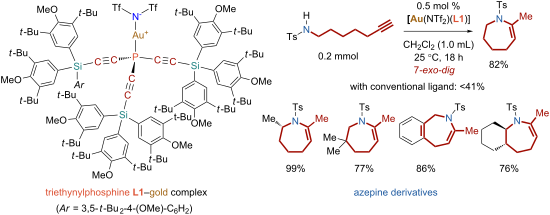
Figure 2: Semihollow-shaped triethynylphosphine L1.

Figure 3: Time–conversion profiles for the gold-catalyzed cyclization of 4a with L1, X-Phos and IPr ligands.

Scheme 1: 8-exo-dig cyclization of sulfonamide 9.

Scheme 2: Isomerization experiments of 6a.

Figure 4: Possible pathway for the gold-catalyzed conversion of 4a into 5a.



