


Search results
Search for "solid state" in Full Text gives 481 result(s) in Beilstein Journal of Organic Chemistry. Showing first 200.
Synthesis of new fluorescent molecules having an aggregation-induced emission property derived from 4-fluoroisoxazoles
Beilstein J. Org. Chem. 2020, 16, 1411–1417, doi:10.3762/bjoc.16.117
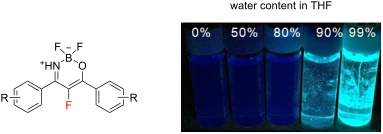
- light ray and the structures often include fluorescein, rhodamine, or 7-amino-4-methylcoumarin (7-AMC) scaffolds as fluorophores. These fluorophores usually exhibit strong fluorescence in dilute solutions, but most of their emissions are partially or completely quenched in the solid state or in highly
- concentrated solutions by aggregation-caused quenching (ACQ) [8]. On the other hand, there are molecules that exhibit strong emission even in poor solvents or in the solid state. This property is referred to as aggregation-induced emission (AIE) and has attracted much attention in the field of fluorescence


Recent synthesis of thietanes
Beilstein J. Org. Chem. 2020, 16, 1357–1410, doi:10.3762/bjoc.16.116
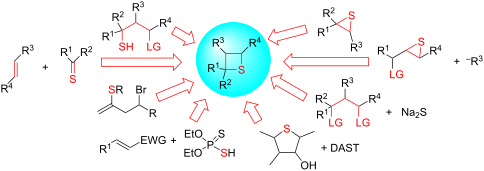
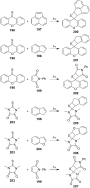
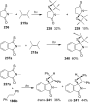
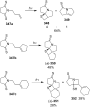
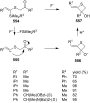
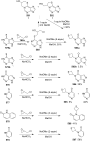
- photochemical [2 + 2] cycloaddition reaction was performed both in benzene solution and in the solid state, affording 78% yield with a ratio of syn/trans 8.7:1 and 61% de for syn-isomers at 15 °C in crystals, while no diastereoselectivity could be observed in benzene solution [16] (Scheme 72). In 2001, they
- 355a afforded the desired product 356a in 70% yield with 40% ee at −45 °C and 75% yield with 10% ee at 0 °C, respectively, in the solid state [98] (Scheme 73). Compared with cyclic thioetherification reactions, the photochemical cycloadditions of thiocarbonyl compounds and olefins are highly suitable














Synthesis and properties of quinazoline-based versatile exciplex-forming compounds
Beilstein J. Org. Chem. 2020, 16, 1142–1153, doi:10.3762/bjoc.16.101
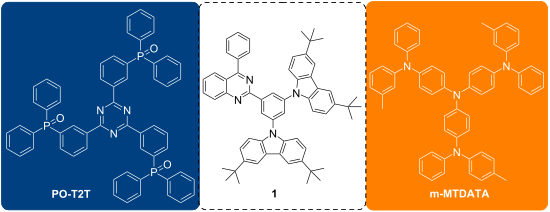
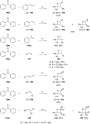
- ) which is usually detected for materials exhibiting low-intensity emissions [22][23]. Exciplex-forming properties Since compound 1 was characterized by the most blue-shifted fluorescence in the solid-state and a high first triplet energy level of 2.97 eV (Figure 5a and Figure 7a), this compound was
- regarded as a promising candidate for blue exciplex formation in the solid state. Indeed, compound 1 formed a sky-blue emitting exciplex (501 nm) in a solid mixture with the acceptor 2,4,6-tris[3-(diphenylphosphinyl)phenyl]-1,3,5-triazine (PO-T2T). Moreover, an orange exciplex emission with a PL spectrum
- , CDCl3) δ 8.28–8.22 (m, 2H), 8.16 (d, J = 9.1 Hz, 2H), 7.96–7.84 (m, 3H), 7.61 (dd, J = 9.5, 6.6 Hz, 4H), 6.94 (tt, J = 8.6, 2.4 Hz, 1H); 13C NMR (101 MHz, CDCl3) δ 165.01, 161.01, 156.01, 149.40, 134.00, 133.90, 133.10, 129.24, 128.8, 128.66, 127.76, 127.4, 127.14, 104.70; ATR-IR (solid state on ATR, cm


Synthesis of esters of diaminotruxillic bis-amino acids by Pd-mediated photocycloaddition of analogs of the Kaede protein chromophore
Beilstein J. Org. Chem. 2020, 16, 1111–1123, doi:10.3762/bjoc.16.98
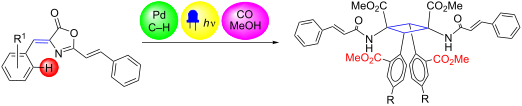
- ][21]. Another drawback of these reactions is the selectivity, because good selectivity is achieved in photocycloadditions in solid state provided that the topochemical Schmidt's conditions are met [22][23][24], but the selectivity in solution is usually not as high [25][26]. Our group is interested in


Aryl-substituted acridanes as hosts for TADF-based OLEDs
Beilstein J. Org. Chem. 2020, 16, 989–1000, doi:10.3762/bjoc.16.88
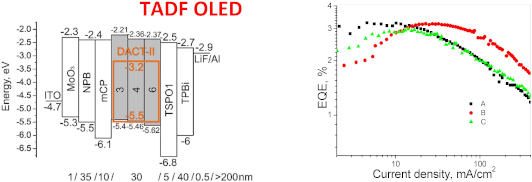
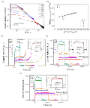
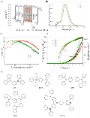
- from the acridan unit. Slightly higher IPPES values were obtained by PES measurements for compounds 3–6 in comparison to those estimated by CV and can apparently be explained by a more difficult removal of electrons from materials in the solid state than in solution due to the strong intermolecular


Synthesis of new asparagine-based glycopeptides for future scanning tunneling microscopy investigations
Beilstein J. Org. Chem. 2020, 16, 888–894, doi:10.3762/bjoc.16.80
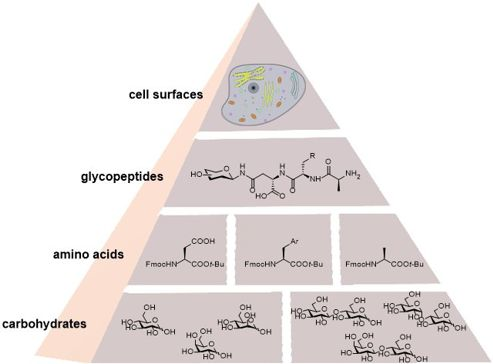
- for Solid State Research for help in the field of ES-IBD. We also thank http://www.pixabay.com for providing parts of our graphical abstract. Funding We would like to thank the Baden-Württemberg Stiftung for financial support.


Towards triptycene functionalization and triptycene-linked porphyrin arrays
Beilstein J. Org. Chem. 2020, 16, 763–777, doi:10.3762/bjoc.16.70
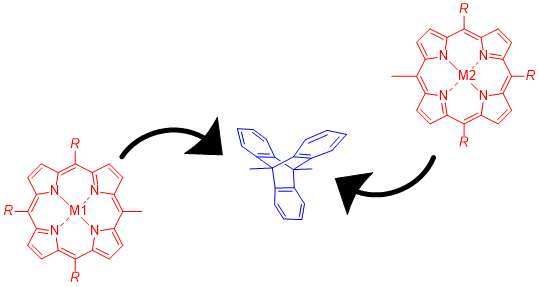
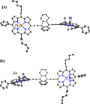
- the tight packing observed for the homo π-stacking. Similarly, a mixture between the homo and hetero π-stacking would cause a more amorphous crystal and would be the least likely to form in a solid state a crystal suitable for determination by X-ray diffraction. The driving force for this crystal





Synthesis of C70-fragment buckybowls bearing alkoxy substituents
Beilstein J. Org. Chem. 2020, 16, 681–690, doi:10.3762/bjoc.16.66
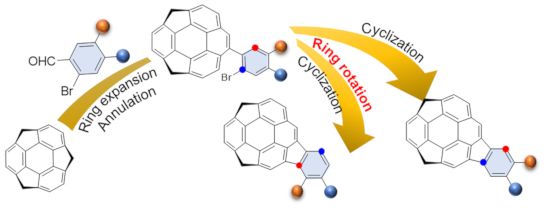
- revealed there nature in the solid state to form a 1-dimensional columnar structure stabilised by π–π and/or CH∙∙∙π interactions with full or partial overlap of the molecular skeleton as seen in the crystal structure of 1, however, each packing fashion is different depending on the substituent. UV–vis and


Regioselectively α- and β-alkynylated BODIPY dyes via gold(I)-catalyzed direct C–H functionalization and their photophysical properties
Beilstein J. Org. Chem. 2020, 16, 587–595, doi:10.3762/bjoc.16.53
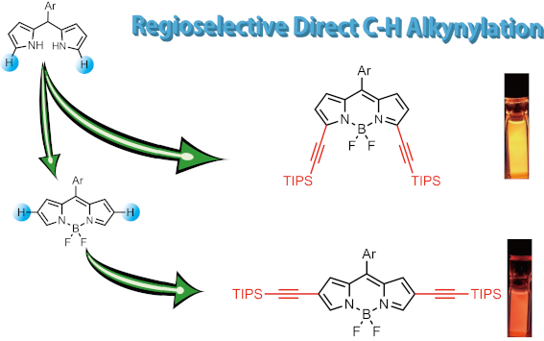
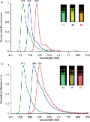
- of TIPS-ethynyl-substituted BODIPY derivatives 3–6 were characterized by 1H and 19F NMR spectroscopy, high-resolution mass spectrometry, and X-ray crystallographic analysis. The solid-state structures of the diethynyl-substituted BODIPYs were unambiguously elucidated by X-ray diffraction analysis (3a



A systematic review on silica-, carbon-, and magnetic materials-supported copper species as efficient heterogeneous nanocatalysts in “click” reactions
Beilstein J. Org. Chem. 2020, 16, 551–586, doi:10.3762/bjoc.16.52
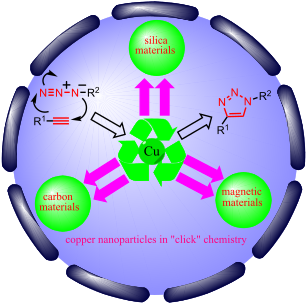
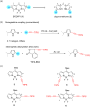
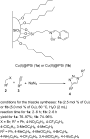
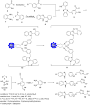
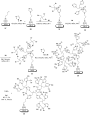
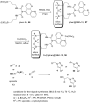
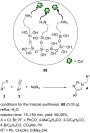
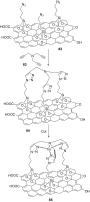
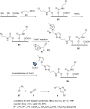
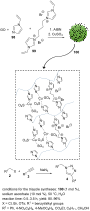
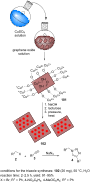
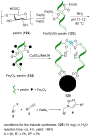
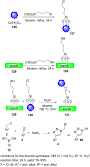
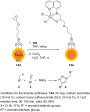
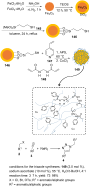
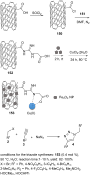
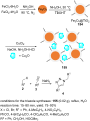
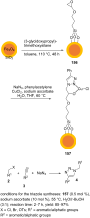
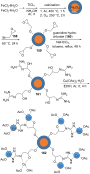
- ), respectively (Scheme 1). The catalysts were characterized by a series of analytical techniques. The solid-state 13C NMR of IPSi showed nine peaks at 10, 24, 43, 63, 121, 136, 148, 155, and 162 ppm, respectively. SEM analysis displayed an irregular shape for 1a and 1b. The catalytic activity of Cu(I)@IPSi (1a

















Synthesis and circularly polarized luminescence properties of BINOL-derived bisbenzofuro[2,3-b:3’,2’-e]pyridines (BBZFPys)
Beilstein J. Org. Chem. 2020, 16, 325–336, doi:10.3762/bjoc.16.32
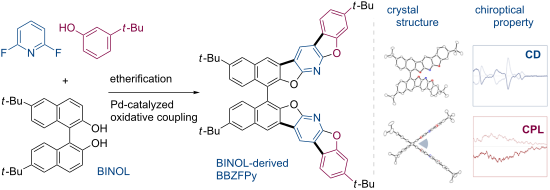
- characteristics in the solid state. The crystal structures of the coupling products were also evaluated by single crystal X-ray analysis and the well-ordered intermolecular stacking arrangements appeared to be responsible for the enhanced CPL. Keywords: BINOL; C–H activation; circularly polarized luminescence
- an interesting aggregation-induced enhancement of CPL in the solid state with considerably higher dissymmetry factors compared to those in solution. Results and Discussion Synthesis of BINOL-derived BBFPys The study was initiated with the synthesis of 2,6-diaryloxypyridines 3 bearing a 1,1
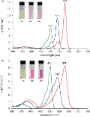
- 0.37–0.40. The emission bands of 4a–c in their solid state were considerably red-shifted as compared to that of 6, suggesting that these compounds displayed the appreciable effect of molecular aggregation. Interestingly, 4b and 4c, bearing the additional terminal tert-butyl substituents, were more red


The use of isoxazoline and isoxazole scaffolding in the design of novel thiourea and amide liquid-crystalline compounds
Beilstein J. Org. Chem. 2020, 16, 175–184, doi:10.3762/bjoc.16.20
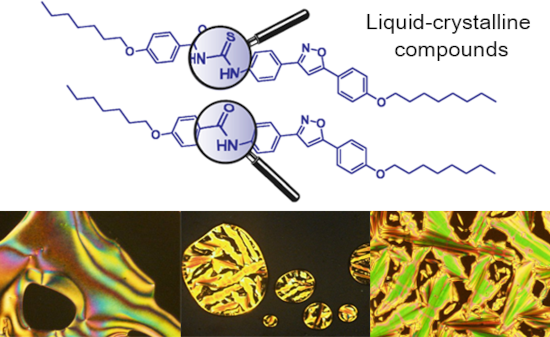
- containing isoxazoline rings 17a–c and isoxazoles 18a–c, as well as LCs amides 19–22 and 24. All compounds listed in Table 1 are capable of self-organization by hydrogen bonds, either in their solid state or in solution. Solubility in protic or aprotic polar solvent is restricted at room temperature. However
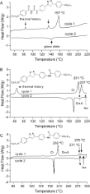
- DSC graphs. This finding is detailed on the DSC graph for compounds 17a, 19 and 20 (see Figure 3). The thermal changes in DSC may be interpreted by intermolecular hydrogen bonds, which can be established between thiourea molecules in their solid state or in the liquid crystal mesophases. Liquid



Synthesis of 3-alkenylindoles through regioselective C–H alkenylation of indoles by a ruthenium nanocatalyst
Beilstein J. Org. Chem. 2020, 16, 140–148, doi:10.3762/bjoc.16.16
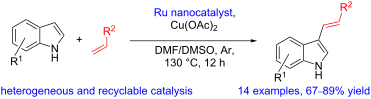
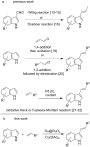
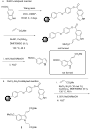
- -carboxylic acid was anchored to Wang resin and then subjected to the conditions for the alkenylation reaction with 2a using the solid catalyst (3 mg) for 48 h. After that, the reaction mixture was worked up, and the solid product was isolated and subjected to solid-state NMR spectroscopy. The results were




Reversible photoswitching of the DNA-binding properties of styrylquinolizinium derivatives through photochromic [2 + 2] cycloaddition and cycloreversion
Beilstein J. Org. Chem. 2020, 16, 111–124, doi:10.3762/bjoc.16.13
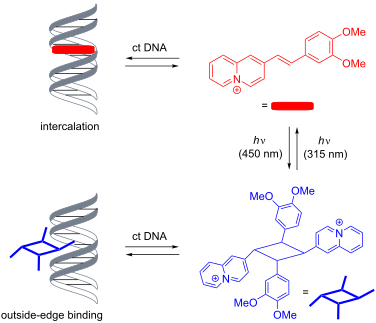
- accomplished. However, it is well known that [2 + 2] photodimerizations can also be performed in the solid state or with a thoroughly stirred suspension [37][43][78]. Therefore, suspensions of 3b und 3c in water were irradiated with an LED lamp at 450–470 nm to give the 2,2'-(2,4-diphenyl-1,3-cyclobutanediyl
- reminiscent of the high stereoselectivity observed for [2 + 2] photodimerizations in organized media or in the solid state [37][38][39][40][41]. Considering the pronounced donor–acceptor interplay in 3b and 3c and the resulting strong dipole moment, it may be proposed that these compounds form dimeric
- aggregates in the solid state and even in solution through dipole–dipole interactions and directional π stacking (Scheme 2), as observed, for example, with donor-substituted benzoquinolizinium derivatives [79] or donor-substituted styrylpyridinium derivatives [80][81][82]. Hence, an ideal overlap of the π




Synthesis and optoelectronic properties of benzoquinone-based donor–acceptor compounds
Beilstein J. Org. Chem. 2019, 15, 2914–2921, doi:10.3762/bjoc.15.285

- photoluminescence quantum yield (ΦPL) of 3 is poor at 4%. We next investigated the solid-state PL behavior of 3 in a 10 wt %-doped thin film using PMMA as host matrix. The PL spectrum of 3 exhibited two bands, one at 550 nm, corresponding to the emission of 3 and a second high-energy band at 450 nm that was
- attributed to the PMMA host matrix [39]. The narrower emission profile of 3 in the solid state than in DCM solution could be due to the suppression of various nonradiative vibrational modes in the inert host matrix PMMA. Compound 3 showed a low ΦPL of 6% under nitrogen atmosphere. Time-resolved PL


Carbazole-functionalized hyper-cross-linked polymers for CO2 uptake based on Friedel–Crafts polymerization on 9-phenylcarbazole
Beilstein J. Org. Chem. 2019, 15, 2856–2863, doi:10.3762/bjoc.15.279
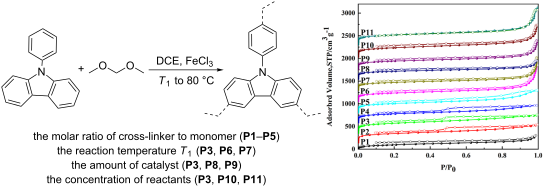
- ) were similar to the ones for P1–P5. P1–P11 are polymers with very similar chemical structure, which have been proved by FTIR. In addition, we performed solid state 1H NMR and solid state 13C NMR on P3 as a representative sample. The solid state 1H NMR showed peaks in the range of 1.5–3.5 ppm for the
- saturated protons (Supporting Information File 1, Figure S2). Also, the solid state 13C NMR (Figure 2) showed peaks between 25–50 ppm, indicating sp3 carbons [9][16]. The peaks about 139 ppm belong to the substituted aromatic carbon, the peaks about 128 ppm were attributed to the unsubstituted aromatic
- carbon. Based on the above peaks in the solid state NMR, the Friedel–Crafts polymerization product was confirmed. TGA analysis The thermal stability of HCPs was investigated by TGA tests (Figure 3 and Supporting Information File 1, Figure S3). A slight weight loss at 100 °C was observed for P2, P4, P5


One-pot synthesis of substituted pyrrolo[3,4-b]pyridine-4,5-diones based on the reaction of N-(1-(4-hydroxy-6-methyl-2-oxo-2H-pyran-3-yl)-2-oxo-2-arylethyl)acetamide with amines
Beilstein J. Org. Chem. 2019, 15, 2840–2846, doi:10.3762/bjoc.15.277
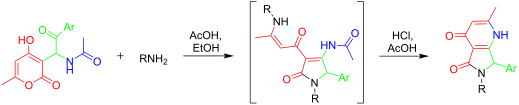
- fragments proceeds first, followed by intramolecular cyclization (Scheme 4B). The structure of the 4-chloro-substituted pyrrolopyrimidinone 1e was proven by single crystal X-ray analysis (Figure 1). Despite the unambiguous dominance of the pyridone-based conformation in the solid state of 1e, two tautomers


A combinatorial approach to improving the performance of azoarene photoswitches
Beilstein J. Org. Chem. 2019, 15, 2753–2764, doi:10.3762/bjoc.15.266
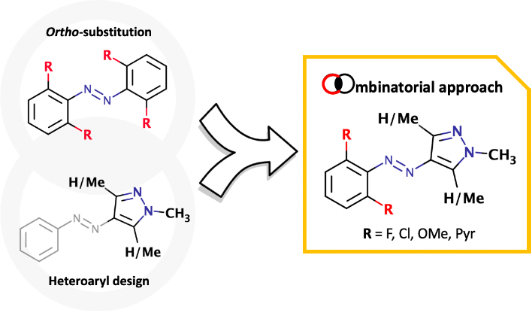
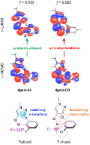
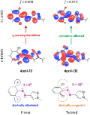
- calculations, the E-isomer of 4pzMe-F2 possesses a fully coplanar structure. Unexpectedly, for 4pzMe-OMe2 the pyrazole and benzene rings occupy two separate planes. Thus, in the solid state, the structure of the E-isomer 4pzMe-OMe2 becomes even more twisted (calculated dihedral angle of 49° versus 78° in the
- crystal structure). We attribute this to a packing effect in the solid state. To the best of our knowledge, an E-isomer azo photoswitch with this type of solid state packing is unprecedented and may open new possibilities in solid state photoswitchable materials applications. The benzene ring in 4pzH-F2
- fluorine atoms, sterics are unlikely to play a role for 4pzH-F2 and we would expect a planar E-isomer, as noted by Hecht and co-workers in their o‑fluoroazobenzenes [13][14]. Thus, once again, solid state packing of these derivatives is surprising. The experimental photoswitching performance of the




Emission solvatochromic, solid-state and aggregation-induced emissive α-pyrones and emission-tuneable 1H-pyridines by Michael addition–cyclocondensation sequences
Beilstein J. Org. Chem. 2019, 15, 2684–2703, doi:10.3762/bjoc.15.262
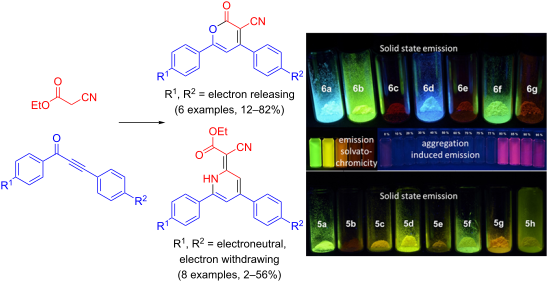
- well as on the electronic substitution pattern of the alkynone. While electron-donating groups furnish α-pyrones as main products, electron-withdrawing groups predominantly give the corresponding 1H-pyridines. Both heterocycle classes fluoresce in solution and in the solid state. In particular
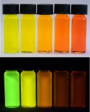
- , dimethylamino-substituted α-pyrones, as donor–acceptor systems, display remarkable photophysical properties, such as strongly red-shifted absorption and emission maxima with daylight fluorescence and fluorescence quantum yields up to 99% in solution and around 11% in the solid state, as well as pronounced
- increasingly used in OLEDs [6][7][8][9][10] and LCDs [11][12][13] of mobile phones [14]. Fluorescent compounds often intensively emit in solution but only weakly or not in the solid state [15]. Dyes which fluoresce both in the solid state and in solution are still relatively rare, due to the fact that often




Synthesis of aryl-substituted thieno[3,2-b]thiophene derivatives and their use for N,S-heterotetracene construction
Beilstein J. Org. Chem. 2019, 15, 2678–2683, doi:10.3762/bjoc.15.261
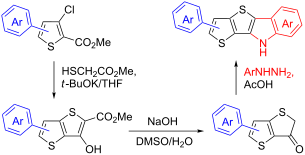
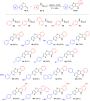
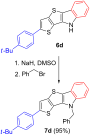
- transfer because of their tendency to π-stack, with non-bonded sulfur–sulfur interactions in the solid state, which results in large intermolecular orbital coupling of HOMOs and, as a consequence, enhanced carrier transport properties [10]. However, there is a problem of poor solubility of a number of S



AgNTf2-catalyzed formal [3 + 2] cycloaddition of ynamides with unprotected isoxazol-5-amines: efficient access to functionalized 5-amino-1H-pyrrole-3-carboxamide derivatives
Beilstein J. Org. Chem. 2019, 15, 2623–2630, doi:10.3762/bjoc.15.255
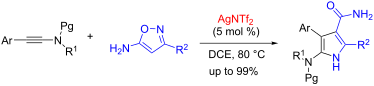
- %) in DCE (2.0 mL) at 80 °C, unless otherwise noted. Isolated yields are provided. Scope with regard to the 5-aminoisoxazole 8 (see Figure 2). aReaction conditions: 2.0 equiv of 8e, 100 °C. Molecular structure in the solid state of compound 10ad. Two modes of reactions of alkynes by silver catalysis


1,5-Phosphonium betaines from N-triflylpropiolamides, triphenylphosphane, and active methylene compounds
Beilstein J. Org. Chem. 2019, 15, 2603–2611, doi:10.3762/bjoc.15.253

- vinylogues of recently reported acylphosphonium zwitterions [25]. Structural studies The solid-state molecular structures of betaines E-3a, E-3b, E-3e and Z-3e were determined by single-crystal X-ray diffraction analysis and are shown in Figures 2–5. Some data characterizing the bonding geometry of the P+–C1
- triflamide anion departs, remain to be answered. Phosphonium betaines 3 prepared. An E:Z ratio of 100:0 means that only the E-isomer was observed in the NMR spectra. Solid-state structure of E-3a (ORTEP plot), two symmetry-independent molecules in the triclinic unit cell. Solid-state structure of E-3b·CH2Cl2
- (ORTEP plot); CH2Cl2 solvate molecule not shown. Solid-state structure of E-3e·H2O·CH2Cl2 (ORTEP plot). The CH2Cl2 solvate molecule is disordered. Hydrogen-bonded H2O molecule: O1···O2 2.907(2) Å, angle O1···H–O2 169(3)°. Solid-state structure of Z-3e (ORTEP plot). Stable betaines I–IV. Reactions of N


Anion-driven encapsulation of cationic guests inside pyridine[4]arene dimers
Beilstein J. Org. Chem. 2019, 15, 2486–2492, doi:10.3762/bjoc.15.241
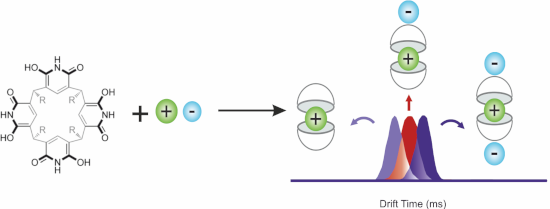
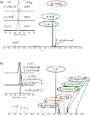
- "through-wall" electrostatic interactions. Results and Discussion We have previously shown that tetraisobutylpyridine[4]arene forms hydrogen-bonded dimers with eight intermolecular N–H···O(amide) hydrogen bonds in the solid state, in solution and in the gas phase [11]. Resorcinarene capsules of similar
- similar affinity towards the Me4N+ cation as 2. Also, all our attempts to obtain a solid-state single crystal structure of 1 with a cationic guest were unsuccessful. It is possible that the observation of such complexes requires special conditions present in the ESI source. To obtain more detailed




Experimental and computational electrochemistry of quinazolinespirohexadienone molecular switches – differential electrochromic vs photochromic behavior
Beilstein J. Org. Chem. 2019, 15, 2473–2485, doi:10.3762/bjoc.15.240
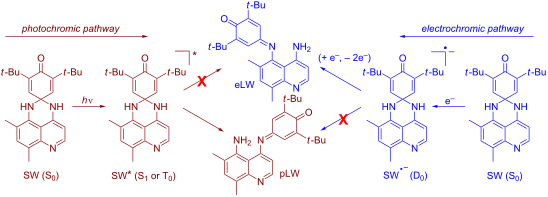
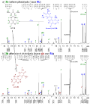
- the solid state [21]), in solution showed the expected 3a chemical shifts but also smaller peaks (ca. 20% relative to 3a) with similar splitting and chemical shifts as those for photogenerated 4a (to which we initially erroneously attributed them [21]). However, the frequencies for this solvatochromic




Self-assembled coordination thioether silver(I) macrocyclic complexes for homogeneous catalysis
Beilstein J. Org. Chem. 2019, 15, 2465–2472, doi:10.3762/bjoc.15.239
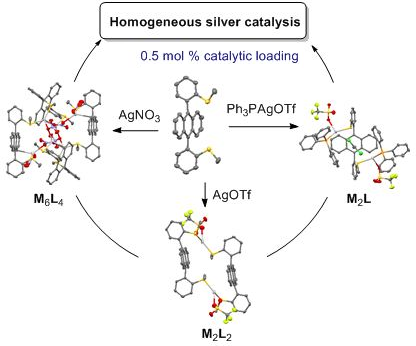
- . These silver(I) complexes adopted similar structures in solution and in the solid state. As each sulfur atom in the ligand is prochiral, macrocycles L2M2 were obtained as mixtures of diastereoisomers, depending on the configurations of the sulfur atoms coordinated to silver cations. The X-ray structures
- the coordinated ligands (head-to-head or head-to-tail) resulting into different spatial arrangements. In solution, the architectures of silver(I) complexes with ligand syn-1 seemed to be similar to the solid-state structures. The silver(I) complexes were evaluated as homogeneous catalysts in two





