Search results
Search for "transformations" in Full Text gives 1184 result(s) in Beilstein Journal of Organic Chemistry. Showing first 200.
Regioselective alkylation of a versatile indazole: Electrophile scope and mechanistic insights from density functional theory calculations
Beilstein J. Org. Chem. 2024, 20, 1940–1954, doi:10.3762/bjoc.20.170
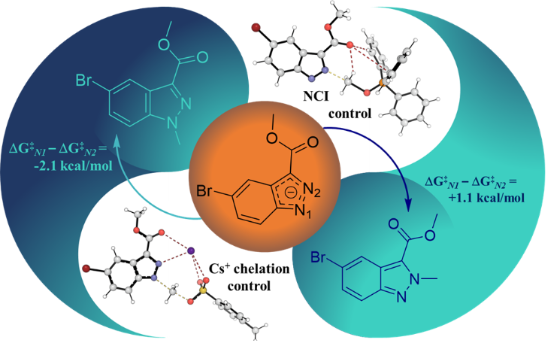
- employed as nucleophiles in chemical transformations, and a mixture of both N1- and N2-alkylated products is formed, depending on the reaction conditions, with little selectivity in regards to substituent effects [27][28][29][30][31][32][33]. Considering the importance of indazoles as a widely used


A new platform for the synthesis of diketopyrrolopyrrole derivatives via nucleophilic aromatic substitution reactions
Beilstein J. Org. Chem. 2024, 20, 1933–1939, doi:10.3762/bjoc.20.169
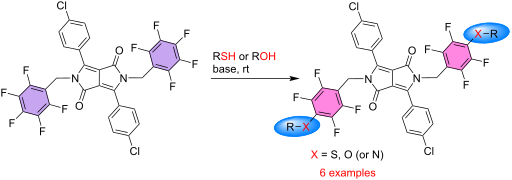
- or novel properties can be prepared by conventional chemical modifications of simple DPP derivatives [3][18]. The most frequently used transformations include: i) N-alkylation with adequately functionalized alkyl groups [19][20][21][22], ii) N-arylation [23][24][25], and functionalization at the 3,6
- purposes. This study not only contributes to the expansion of accessible N-substituted DPP derivatives but also reveals that such transformations can be achieved with outstanding efficiency and environmental sensitivity by employing mild reaction conditions. Experimental Chemicals and instrumentation The


Novel oxidative routes to N-arylpyridoindazolium salts
Beilstein J. Org. Chem. 2024, 20, 1906–1913, doi:10.3762/bjoc.20.166
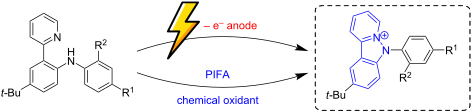
- [13][14][15][16][17][18][19], N,N-diarylbenzidines [20][21], N,N-diaryldihydrophenazines [20][21] and some others. Therefore, the selectivity issue is of primary importance. The guidelines for prediction of the dominant reaction path in the competing oxidative transformations of variously substituted


The Groebke–Blackburn–Bienaymé reaction in its maturity: innovation and improvements since its 21st birthday (2019–2023)
Beilstein J. Org. Chem. 2024, 20, 1839–1879, doi:10.3762/bjoc.20.162
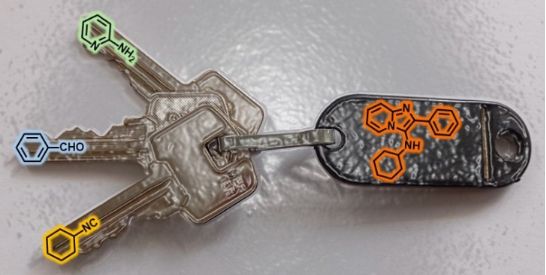
- generation of new scaffolds by coupling the GBB reaction with other transformations; d) the study of the biological and pharmacological properties of these fused heterocycles; e) the study of the photophysical properties of the GBB adducts. At the end of this overview, conclusions will be drawn about the
- -free conditions at room temperature for 2 h [16]. Although thiamine had already been reported to be effective in other chemical transformations and its role in carbonyl activation in vivo through its thiazole ring is well known, no mechanism of action in the GBB condensation was proposed by the authors
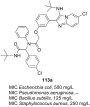
- afforded a heterogeneous nanoreactor that could be employed in acid-catalyzed transformations. The GBB reactions were performed with 1 mol % catalyst at 35 °C under solvent-free conditions. A synergistic catalytic effect between polyoxometalate and LDH was evidenced by a higher catalytic activity of the






Chiral bifunctional sulfide-catalyzed enantioselective bromolactonizations of α- and β-substituted 5-hexenoic acids
Beilstein J. Org. Chem. 2024, 20, 1794–1799, doi:10.3762/bjoc.20.158
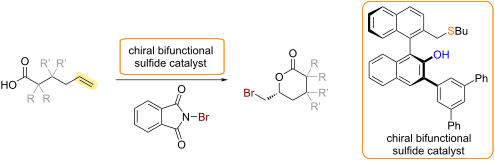
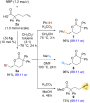
- substrate was also examined to give a dihydroisocoumarin product 3o in high yield with moderate enantioselectivity. The absolute stereochemistry of the bromolactonization product 3o was confirmed by comparison with reported data [24]. The transformations of the optically active bromolactonization product 3a
- product 3a for further transformations. Comparable yield and enantioselectivity were observed relative to those of the smaller-scale reaction (0.1 mmol scale, Scheme 4). The bromomethyl group in 3a readily undergoes nucleophilic substitution reactions, leading to the formation of optically active δ
- were obtained in moderate to good levels of enantioselectivity. The utility of the prepared optically active bromolactonization products was demonstrated in the transformations to functionalized δ-valerolactones and epoxy-esters. These transformations proceeded with no loss of optical purity. This


Ugi bisamides based on pyrrolyl-β-chlorovinylaldehyde and their unusual transformations
Beilstein J. Org. Chem. 2024, 20, 1773–1784, doi:10.3762/bjoc.20.156
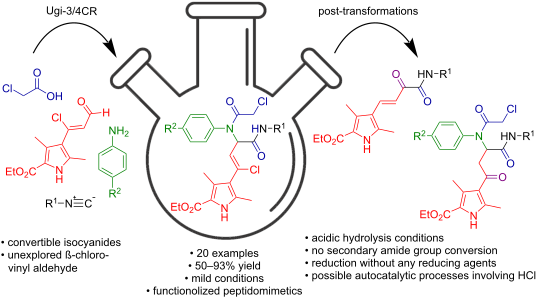
- University, Svobody sq., 4, 61022, Kharkiv, Ukraine 10.3762/bjoc.20.156 Abstract By one-pot four- and three-component Ugi reactions involving convertible isocyanides and unexplored pyrrole-containing β-chlorovinylaldehyde, a small library of 20 bisamides with unusual behavior in post-Ugi transformations was
- component, after the formation of the expected Ugi bisamide products, subsequent post-transformations allow the synthesis of products of intramolecular cyclization [19][20][21][22] and/or products of a tandem combination of several reactions (Scheme 1) [22][23][24][25][26]. At the same time, the use of so
- which the Z-configuration of the chlorovinyl fragment was detected. Post-Ugi transformations As previously mentioned [32], the introduction of the convertible 2‑bromo-6-isocyanopyridine into the Ugi bisamide structure allows the conversion of the newly formed amide into a carboxylic acid fragment after




Syntheses and medicinal chemistry of spiro heterocyclic steroids
Beilstein J. Org. Chem. 2024, 20, 1713–1745, doi:10.3762/bjoc.20.152
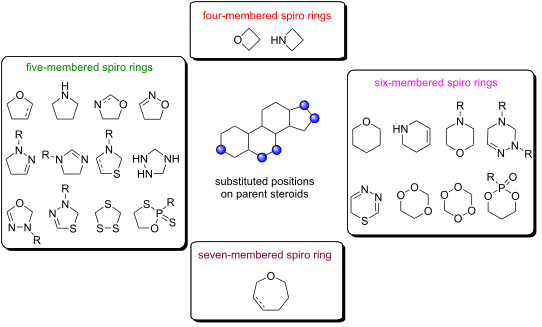
- the future design of more potent and selective drugs. Keywords: biological activity; drug development; heterocycle; spiro steroid; synthetic transformations; Introduction Small-ring heterocycles constitute valuable scaffolds in medicinal chemistry for generating biologically active derivatives


Chemo-enzymatic total synthesis: current approaches toward the integration of chemical and enzymatic transformations
Beilstein J. Org. Chem. 2024, 20, 1693–1712, doi:10.3762/bjoc.20.151
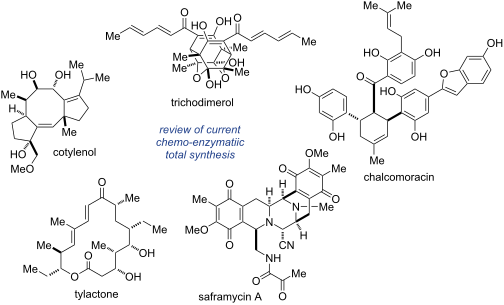
- biosynthetic enzymatic transformations with chemical conversions. This review focuses on the total synthesis of natural products and classifies the enzymatic reactions into three categories. The total synthesis of five natural products: cotylenol, trichodimerol, chalcomoracin, tylactone, and saframycin A, as
- pathways are described with a focus on the biosynthetic intermediates and enzymatic transformations that enable cascade reactions and pinpoint modifications. This focus highlights how these biosynthetic pathways are applicable to the development of streamlined chemo-enzymatic synthesis processes. The
- comprehensive understanding of the chemo-enzymatic synthetic approach, we refer the reader to recent excellent reviews that provide multiple perspectives on the topic [1][2][3][4][5][6][7][8][9][10]. Review Late-stage oxidative transformations of natural product scaffolds: cotylenol and brassicicenes Chemo




Oxidation of benzylic alcohols to carbonyls using N-heterocyclic stabilized λ3-iodanes
Beilstein J. Org. Chem. 2024, 20, 1677–1683, doi:10.3762/bjoc.20.149
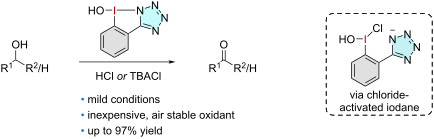
- established in several oxidative transformations including the synthesis of complex molecules and drugs [12][13]. The most prominent examples are the pentavalent derivatives 2-iodoxybenzoic acid (IBX) and Dess–Martin periodinane (DMP) [14][15]. Although mild and selective oxidants, these highly oxidized λ5
- them group transfer reactions [21] and as building blocks [22][23][24]. The synthetic potential of NHIs has been previously studied in model transformations such as thioanisole oxygenation, oxidative lactonization, or diacetoxylation of alkenes [25][26][27][28]. In this work, we want to apply NHIs in a




Ring opening of photogenerated azetidinols as a strategy for the synthesis of aminodioxolanes
Beilstein J. Org. Chem. 2024, 20, 1671–1676, doi:10.3762/bjoc.20.148
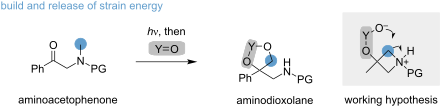
- , endergonic transformations can be realized [3]. A promising strategy for the synthesis of complex products lies in the combination of photochemical cyclization and strain-release reaction (Scheme 1a) [4]. In this ‘build and release approach’, a simple precursor is cyclized upon irradiation. Subsequently, a



pKalculator: A pKa predictor for C–H bonds
Beilstein J. Org. Chem. 2024, 20, 1614–1622, doi:10.3762/bjoc.20.144
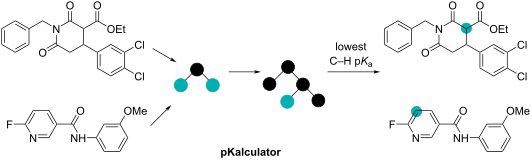
- bond to create new connections has attracted increasing interest [1]. While past methods allowed for C–H transformations in simple molecules, recent synthetic protocols [2] enable selective C–H activation and diversification in larger molecules. This has, for example, attracted the pharmaceutical
- industry to implement such C–H transformations to diversify different types of molecules ranging from small drug-like molecules to intermediates and lead compounds. Especially late-stage functionalization is a promising emerging field that allows chemists to efficiently explore the chemical space in


![[Graphic 9]](/bjoc/content/inline/1860-5397-20-144-i12.svg?max-width=637&scale=1.3000021)


Supramolecular assemblies of amphiphilic donor–acceptor Stenhouse adducts as macroscopic soft scaffolds
Beilstein J. Org. Chem. 2024, 20, 1590–1603, doi:10.3762/bjoc.20.142
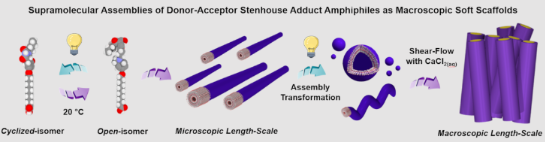
- revealed by X-ray diffraction analysis. Upon visible-light irradiation, significant transformations of the DA geometry enabled transformations of the supramolecular assemblies on a microscopic scale, subsequently disassembling macroscopic soft scaffolds of DAs. The current work shows promising use for the
- , ions, and heat [15][16][17][18][19][20][21][22]. Light enables noninvasive stimulation with high spatial and temporal precision to control structural transformations of supramolecular assemblies in organic and aqueous media [19][23][24][25]. Various photochromic and photoresponsive moieties, such as
- artificial muscle-like functions [17][43][44]. To tackle poor biocompatibility observed in UV-driven supramolecular assemblies of photoresponsive molecular amphiphiles, visible-light-active supramolecular systems enabling transformations across multiple length scales are urgently required. Some visible-light




Electrocatalytic hydrogenation of cyanoarenes, nitroarenes, quinolines, and pyridines under mild conditions with a proton-exchange membrane reactor
Beilstein J. Org. Chem. 2024, 20, 1560–1571, doi:10.3762/bjoc.20.139
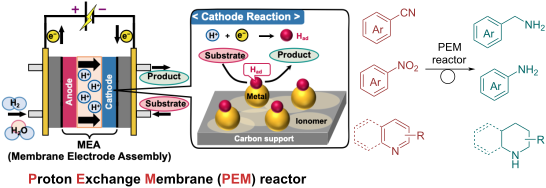
- ; quinoline; Introduction Nitrogen-containing molecules are important bioactive compounds and intermediates in chemical synthesis. Therefore, the chemical transformations of nitrogen-containing compounds have been widely studied in the field of organic synthesis [1][2][3][4]. For instance, the reduction of
- pharmaceuticals, and the reductive syntheses of these heterocycles from pyridines and quinolines have been well studied [12]. Although these transformations have been studied intensively, such reductive reactions usually require harsh reaction conditions such as high reaction temperatures and high pressure of
- reactions. As PEM reactors are flow reactors, they have an advantage over batch reactors in terms of continuous production. Several reductive transformations taking advantage of the characteristics of the PEM reactor have been reported in recent years. For example, Atobe et al. reported the electrocatalytic


Benzylic C(sp3)–H fluorination
Beilstein J. Org. Chem. 2024, 20, 1527–1547, doi:10.3762/bjoc.20.137

- . This review aims to give context to these transformations and strategies, highlighting the different tactics to achieve fluorination of benzylic C–H bonds. Keywords: benzylic; C–H functionalization; fluorination; photoredox catalysis; Introduction The development of new fluorination methodologies is








Tetrabutylammonium iodide-catalyzed oxidative α-azidation of β-ketocarbonyl compounds using sodium azide
Beilstein J. Org. Chem. 2024, 20, 1510–1517, doi:10.3762/bjoc.20.135
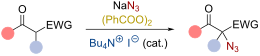
- catalysis concept for such transformations [32][33][34][35][36]. These oxidative approaches, which usually proceed via the in situ formation of catalytically-competent ammonium hypoiodite species, can normally be carried out under operationally simple conditions, thus allowing for the use of easily


Predicting bond dissociation energies of cyclic hypervalent halogen reagents using DFT calculations and graph attention network model
Beilstein J. Org. Chem. 2024, 20, 1444–1452, doi:10.3762/bjoc.20.127
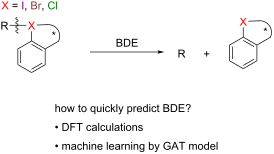
- the core framework, incorporating ten selected atomic descriptors as local information within the graph structure. Effective molecular transformations into molecular graphs (Figure 4b) were achieved using the RDKit and Deep Graph Library [87]. The dataset was randomly divided into training and testing
- Chemical Transformations for computational resources. Funding This work was supported by the Ministry of Science and Technology of China (2021YFF0701700), the National Natural Science Foundation of China (Nos. 22122104, 22193012, and 21933004), the CAS Project for Young Scientists in Basic Research (grant


Challenge N- versus O-six-membered annulation: FeCl3-catalyzed synthesis of heterocyclic N,O-aminals
Beilstein J. Org. Chem. 2024, 20, 1412–1420, doi:10.3762/bjoc.20.123
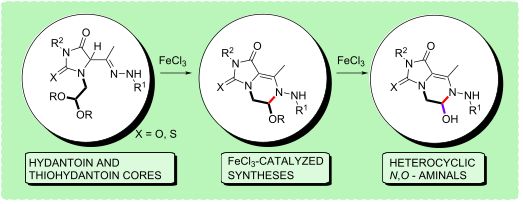
- preparation by using small building blocks and that lead, through appropriate transformations, to a product that becomes a substrate for another complexity-generating reaction, merit investigation [13][14][15]. Herein, we report a 3-CR-based synthesis of new properly decorated (thio)hydantoin framework able
- transformations in a single reactor, reducing the number of steps and the amount of waste with consequent benefits of cost and environmental impact [42][43]. Representative examples of relevant N-fused heterocycles. Different acid-catalyzed six-membered ring cyclizations. Substrate scope for the assembly of




Hypervalent iodine-catalyzed amide and alkene coupling enabled by lithium salt activation
Beilstein J. Org. Chem. 2024, 20, 1405–1411, doi:10.3762/bjoc.20.122

- development of chiral hypervalent iodines by Wirth, Kita, Ishihara, Muñiz, and many others, have firmly established these reagents as useful catalysts for a wide variety of chemical transformations [6][7][8][9][10][11][12][13][14][15][16][17]. A number of features, including low toxicity, high stability, ease



Synthetic applications of the Cannizzaro reaction
Beilstein J. Org. Chem. 2024, 20, 1376–1395, doi:10.3762/bjoc.20.120
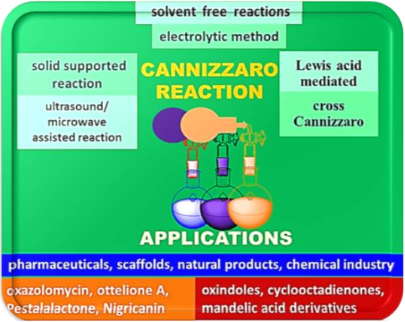
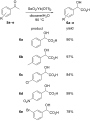
- ytterbium triflate, ZrO2, Cu(OT)2, MgBr2, LiBr, AlCl3, Fe and Ru catalysts have gained attention [40][41][42][43]. The Cannizzaro reaction has also found extensive use in the synthesis of bioactive and drug molecules [44][45][46]. Moreover, enzymatic transformations have been also observed for the synthesis
- flavoring agents, it plays a vital role for the development of unique sensory compounds [56][57]. The Cannizzaro disproportionation has also been observed in several electrochemical transformations [58] and during the electrocatalytic reduction of carbon dioxide [59]. A recent study by Liu et al. witnessed
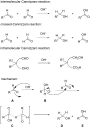
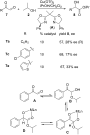
- [87]. The sequence of transformations commencing from the aldehyde 64 afforded the desymmetrized biaryl derivative 66 and proceeded towards the final natural product 67 (Scheme 20). Applying crossed-Cannizzaro reaction: Mondal and coauthors demonstrated an efficient application of the aldol/crossed




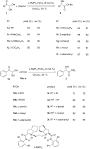


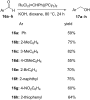


Generation of alkyl and acyl radicals by visible-light photoredox catalysis: direct activation of C–O bonds in organic transformations
Beilstein J. Org. Chem. 2024, 20, 1348–1375, doi:10.3762/bjoc.20.119
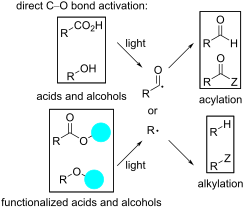
- radicals by activation of C–O bonds using visible-light photoredox catalysis offers a mild and environmentally benign approach to useful chemical transformations. Alcohols, carboxylic acids, anhydrides, xanthates, oxalates, N-phthalimides, and thiocarbonates are some examples of alkyl and acyl precursors
- that can produce reactive radicals by homolysis of the C–O bond. These radicals can then go through a variety of transformations that are beneficial for the construction of synthetic materials that are otherwise difficult to access. This study summarizes current developments in the use of organic
- synthesis [4][5][6][7][8][9]. In the context of sustainable catalysis, visible-light-mediated chemistry is becoming a prominent viable option for radical transformations in the synthesis of biologically useful compounds due to the energy efficiency and environmental friendliness [10][11]. Recently, the








Transition-metal-catalyst-free electroreductive alkene hydroarylation with aryl halides under visible-light irradiation
Beilstein J. Org. Chem. 2024, 20, 1327–1333, doi:10.3762/bjoc.20.116
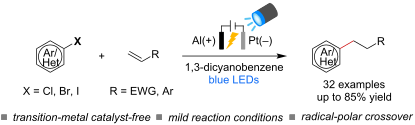
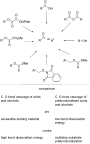
- intermediates through a single-electron transfer process [26][27][28][29][30][31]. In particular, electroreductive transformations have recently received renewed attention from modern synthetic chemists as a safer protocol than conventional methods using chemical reductants such as metal hydride species [32][33
- 3pa and 3qa, respectively. In addition to the successful transformations of heteroaryl iodides with indole or pyridine cores (3ra, 3sa), the electroreductive synthesis of methaqualone derivatives was also achieved (3ta). Pleasingly, a series of electron-deficient alkene and styrene derivatives were

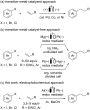
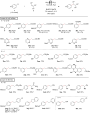
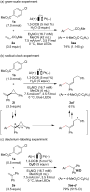

Computation-guided scaffold exploration of 2E,6E-1,10-trans/cis-eunicellanes
Beilstein J. Org. Chem. 2024, 20, 1320–1326, doi:10.3762/bjoc.20.115

- -eunicellane skeletons, respectively. Although the structures of these diterpenes only differed in their configuration at a single position, C1, they displayed distinct chemical and thermal reactivities. Here, we used a combination of quantum chemical calculations and chemical transformations to probe their
- when the C6–C7 alkene of 2 was oxidized by mCPBA oxidation, resulting in formation of the gersemianol derivative 8 [7]. Inspired by the reactivity of the trans-eunicellane skeleton, we conducted a series of chemical transformations to convert 2 into trans/trans-6/6/6 bicyclic skeletons with various
- appears to be the dominant form in nature (≈98%). Perhaps the inherent reactivity seen for 2E-trans-eunicellanes contributes to their presumed rarity in nature, as certain conditions or transformations, either enzymatic or spontaneous, may alter the hydrocarbon skeleton. This idea is supported by the


Sustainable tandem acylation/Diels–Alder reaction toward versatile tricyclic epoxyisoindole-7-carboxylic acids in renewable green solvents
Beilstein J. Org. Chem. 2024, 20, 1308–1319, doi:10.3762/bjoc.20.114
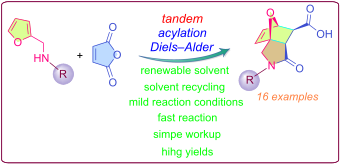
- second step of this reaction, regio- and stereochemically controlled intramolecular cyclization leads to the formation of versatile nitrogen-containing tricyclic systems. However, these useful organic transformations are usually carried out in highly toxic organic solvents such as benzene, toluene
- prediction that their resources will run out in the near future has led 'green chemists' to explore solvents that can be derived from renewable resources and used effectively in various organic transformations. In this context, we have shown for the first time that the 100% atom-economical tandem Diels–Alder
- applications [15][16]. These oils are of increasing interest for the production of a wide range of polymeric materials [17][18][19][20][21][22][23], drug delivery systems [24][25][26][27][28][29], less toxic anticancer drugs [30][31][32][33] and intermediates suitable for various organic transformations [14


Oxidative hydrolysis of aliphatic bromoalkenes: scope study and reactivity insights
Beilstein J. Org. Chem. 2024, 20, 1286–1291, doi:10.3762/bjoc.20.111
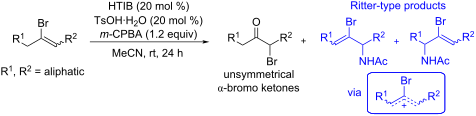
- alternative reaction pathway. Keywords: bromoalkenes; bromoketones; hypervalent iodine; oxidative hydrolysis; Ritter-type; Introduction Organic synthesis heavily relies on oxidative transformations to facilitate chemical reactions. One popular method for achieving these transformations is using redox-active
- transformations, cementing their position as a go-to option for organic chemists. Based on our continued interest in iodine(III)-mediated chemistry, we have explored numerous strategies in oxidative transformations such as direct α-tosyloxylation of ketones [12][13][14], and the oxidation of enol esters [15][16


The Ugi4CR as effective tool to access promising anticancer isatin-based α-acetamide carboxamide oxindole hybrids
Beilstein J. Org. Chem. 2024, 20, 1213–1220, doi:10.3762/bjoc.20.104
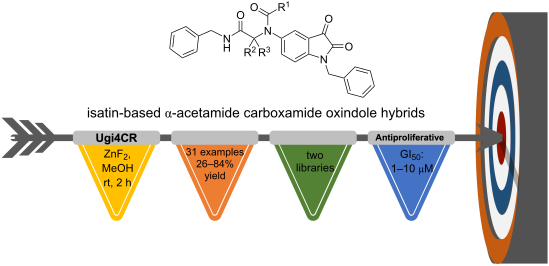
- aspects. Multicomponent reactions (MCRs) are remarkable tools which demonstrated great potential for more sustainable production of active pharmaceutical ingredients (API’s). These flexible and versatile one-pot transformations in which three or more reagents are combined to access a new complex scaffold