


Search results
Search for "Pd/C" in Full Text gives 318 result(s) in Beilstein Journal of Organic Chemistry. Showing first 200.
Efficient deprotection of F-BODIPY derivatives: removal of BF2 using Brønsted acids
Beilstein J. Org. Chem. 2015, 11, 37–41, doi:10.3762/bjoc.11.6
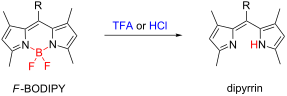
- and conditions: (a) (i) 2,4-dimethyl-1H-pyrrole (5), TFA, DCM, rt, overnight; (ii) DDQ, rt, 2 h; (iii) Et3N, BF3·OEt2, rt, overnight, 27%; (b) NH2NH2·H2O, 10% Pd/C, EtOH, reflux, 2 h, 90%; (c) (i) 1 M HCl (aq), CH3OH, NaNO2, H2O, 0 °C, 1 h; (ii) NaN3, H2O, rt, 2 h, 71%; (d) propargyl-tri-Boc cyclam 12


Synthetic strategies for the fluorescent labeling of epichlorohydrin-branched cyclodextrin polymers
Beilstein J. Org. Chem. 2014, 10, 3007–3018, doi:10.3762/bjoc.10.319
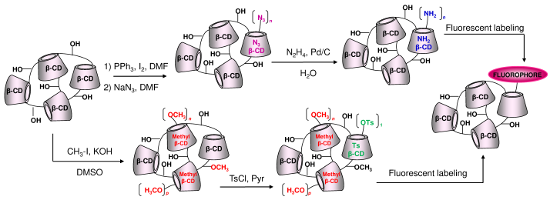
- branched β-CD-polymer is a difficult task. 2) Reduction of the azido groups to amino moieties There are several and selective ways to perform the azido→amino conversion [22] and for compound 1 the hydrogenolytic method [23] based on hydrazine, catalyzed by Pd/C (Scheme 2) was selected. The reaction using
- hydrazine-Pd/C is fast and exhaustive (based on the evaluation of the IR spectra, Figure 3), but because of the laborious work-up (filtration, centrifugation, membrane filtration) and the partial inefficacy of the dialysis purification, this method needed further development. The overall progress of the


(2R,1'S,2'R)- and (2S,1'S,2'R)-3-[2-Mono(di,tri)fluoromethylcyclopropyl]alanines and their incorporation into hormaomycin analogues
Beilstein J. Org. Chem. 2014, 10, 2844–2857, doi:10.3762/bjoc.10.302
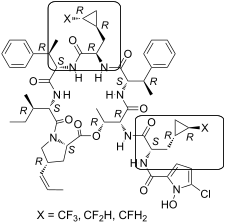
- -collidine, CH2Cl2, 4→20 °C, 14 h; v) FmocOSu, NaHCO3, acetone/water, 3 h; vi) H2, Pd/C, EtOAc, 20 °C, 2 h; vii) MeZOSu, NaHCO3, water/dioxane, 20 °C, 3 h; viii) All-Br, K2CO3, MeCN, 85 °C, 3 h, 60 °C, 16 h; ix) EDC, 4-pyrrolidinopyridine, CH2Cl2, 4→20 °C, 16 h; x) [Pd(PPh3)4], N-methylaniline, DME, 20 °C, 1




Synthesis of modified cyclic and acyclic dextrins and comparison of their complexation ability
Beilstein J. Org. Chem. 2014, 10, 2836–2843, doi:10.3762/bjoc.10.301
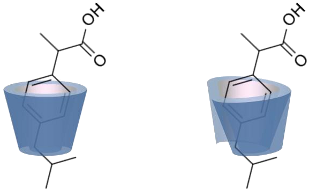
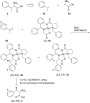
- /0.27 g (~65%). HP-maltooligomers according to [17]: 1-O-Benzyl-HP G6, G7 and G8 -maltooligomers (0.15 mmol) were suspended in EtOH (3 mL), ammonium formiate (0.75 mmol) and 10% Pd/C (0.1 g) were added and the solutions were boiled for 30 min. Catalysts were filtered off and washed with water and the


Stereoselective synthesis of perillaldehyde-based chiral β-amino acid derivatives through conjugate addition of lithium amides
Beilstein J. Org. Chem. 2014, 10, 2738–2742, doi:10.3762/bjoc.10.289

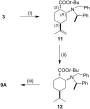
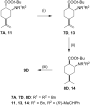
- steps. The selective reduction of the isopropenyl double bond over a Pt/C catalyst resulted in 8A–D. The subsequent removal of the benzyl groups by hydrogenolysis over palladium on carbon (Pd/C) in a 1:1 mixture of n-hexane/EtOAc for 24 h gave primary amino esters 9A–D in excellent yields. The final
- , dry THF, −78 °C, 6 h, then NH4Cl (aq), overall yield: 87% (isomeric mixture), ratio 7A:7B:7C:7D = 76:17:6:1; (ii) 5% Pt/C, n-hexane/EtOAc 1:1, 1 atm. H2, rt, 16 h, yield: 90–92%; (iii) 5% Pd/C, n-hexane/EtOAc 1:1, 1 atm H2, rt, 24 h, yield: 92–95%; (iv) 10% HCl (aq), rt, 24 h, yield: 90–94%. Reagents
- , yield: 91%; (iii) 5% Pd/C, n-hexane/EtOAc 1:1, 1 atm H2, rt, 16 h, yield: 90%. Reagents and conditions: (i) 0.2 equiv KOt-Bu/t-BuOH, 40 °C, 24 h, yield: 93% (7D), 91% (13); (ii) 5% Pt/C, n-hexane/EtOAc 1:1, 1 atm H2, rt, 16 h, yield: 90% (8D), 91% (14); (iii) 5% Pd/C, n-hexane/EtOAc 1:1, 1 atm H2, rt


Formal total syntheses of classic natural product target molecules via palladium-catalyzed enantioselective alkylation
Beilstein J. Org. Chem. 2014, 10, 2501–2512, doi:10.3762/bjoc.10.261
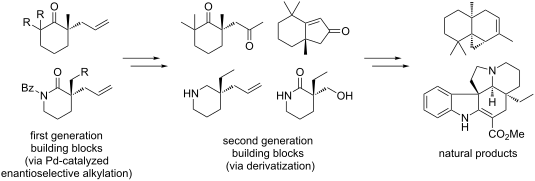
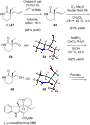
- was crossed with methyl vinyl ketone in 62% yield [34]. Reduction of enone 34 was achieved in the presence of Pd/C with H2 in EtOAc to furnish diketone 35 [34]. Chemoselective Wittig mono-olefination of 35 provided ω-enone (−)-32, spectroscopically identical to the material in Danishefsky’s racemic



A versatile δ-aminolevulinic acid (ΑLA)-cyclodextrin bimodal conjugate-prodrug for PDT applications with the help of intracellular chemistry
Beilstein J. Org. Chem. 2014, 10, 2414–2420, doi:10.3762/bjoc.10.251
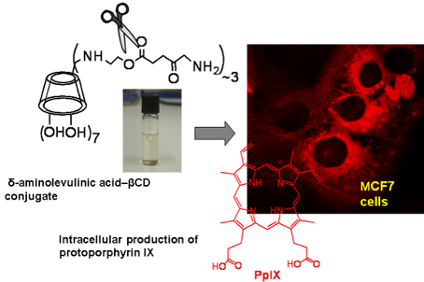
- conditions [(i) ΜeOH, Pd/C, H2, (ii) ΜeOH, formic acid, Pd/C, H2, (iii) ΜeOH, acetic acid, Pd/C, H2, (iv) ΜeOH, trifluoroacetic acid, Pd/C, H2]. A successful alternative was subsequently adopted comprising the linking of 4 to δ-azidolevulinic acid (8) (Scheme 2). The latter, having the nucleophilicity of the
- ), CF3COOH (250 μL) was added dropwise followed by addition of Pd/C (7.5 mg, 0.0071 mmol, 0.06 equiv). The mixture was hydrogenated with Η2 gas under stirring at rt for 48 h. Subsequently the catalyst was removed by repeated centrifugation cycles and the solution was evaporated to dryness, the residue re
- ) DCC, DMAP, DMF, 25–30 °C, 53%; vii) H2, Pd/C, 25–30 °C, 95%. Supporting Information Supporting Information File 580: Full experimental procedures and detailed analytical data for the synthesis of all precursor molecules of Scheme 1; additional NMR, IR and mass spectral data. Acknowledgements Funding


Synthesis and immunological evaluation of protein conjugates of Neisseria meningitidis X capsular polysaccharide fragments
Beilstein J. Org. Chem. 2014, 10, 2367–2376, doi:10.3762/bjoc.10.247
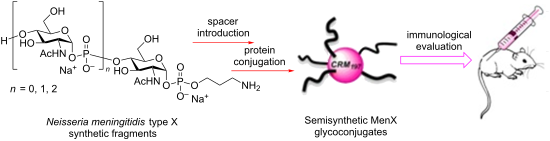
- ) NaOMe, MeOH; c) H2, Pd/C, MeOH/H2O, then H2O, Dowex 50W X8 resin (H+ form), then Dowex 50W X8 resin (Na+ form) (96% over two steps). Reagents and conditions: a) SIDEA, Et3N, DMSO: 11 (64%), 12 (49%), 13 (51%); b) CRM197, 100 mM NaPi pH 7.2. Characteristics of the synthesized glycoconjugates. rSBA titers


Derivatives of the triaminoguanidinium ion, 3. Multiple N-functionalization of the triaminoguanidinium ion with isocyanates and isothiocyanates
Beilstein J. Org. Chem. 2014, 10, 2255–2262, doi:10.3762/bjoc.10.234
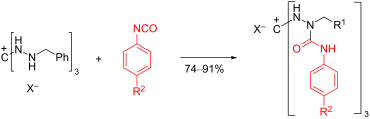
- ) N1···N7: N7–H 0.84 Å, N7···N1 2.584 Å, H···N1 2.12 Å, N7–H···N1 114.9°; b) N1···O1 (x, y+1, z): N1–H 0.85 Å, N1···O1 3.178 Å, H...O1 2.41 Å, N1–H···O1 150.8°. Conditions: a) benzaldehyde, ethanol/water, reflux, 1 h, 96% yield; b) H2, Pd/C (10%), MeOH, rt, 48 h, 78%; c) rac-Ph−CH(CH3)−CHO, water


N–O Cleavage reactions of heterobicycloalkene-fused 2-isoxazolines
Beilstein J. Org. Chem. 2014, 10, 2200–2205, doi:10.3762/bjoc.10.227
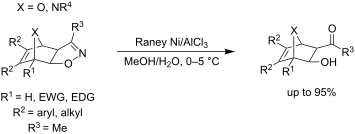
- observed a series of spots by TLC which were not separable by column chromatography. This prompted us to seek other reagents capable of inducing N–O cleavage. We subsequently attempted hydrogenation using Pd/C with various solvent systems (MeOH, MeOH/AcOH, AcOH/H2O) as well as hydrogen sources (H2
- moderate to excellent yields. We have investigated the efficacy of various cleavage conditions and found that although none of Mo(CO)6, Zn/AcOH, Fe/NH4Cl, Pd-C/H2, Pd(OH)2/H2 or Raney nickel/AcOH/H2 is suitable for cleavage of 2-isoxazolines fused to heterobicyclic frameworks, the combination of Raney


Synthesis of phosphoramidites of isoGNA, an isomer of glycerol nucleic acid
Beilstein J. Org. Chem. 2014, 10, 2131–2138, doi:10.3762/bjoc.10.220
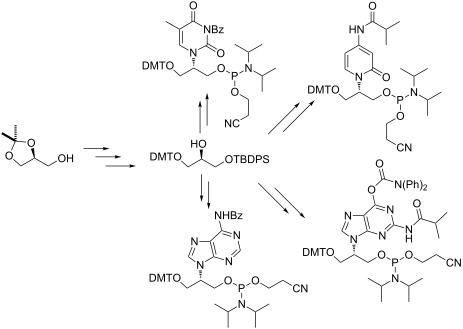
- failed under a variety of conditions (H2, 10% Pd/C, MeOH or EtOAc; Pd/C, DMF, cyclohexadiene; 10% Pd/C, NH4HCOO, acetone, reflux; 10% Pd-black, DMF, cyclohexadiene; (CH3)3SiI, CHCl3, 25 °C), for reasons that were not obvious to us. Consequently, we abandoned this approach and pursued a different




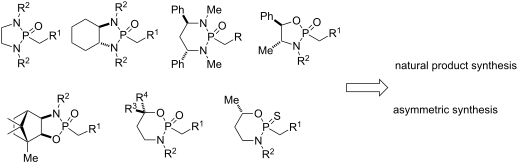
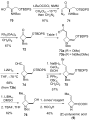
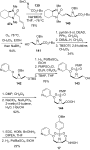
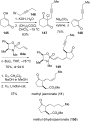
Application of cyclic phosphonamide reagents in the total synthesis of natural products and biologically active molecules
Beilstein J. Org. Chem. 2014, 10, 1848–1877, doi:10.3762/bjoc.10.195








Synthesis of rigid p-terphenyl-linked carbohydrate mimetics
Beilstein J. Org. Chem. 2014, 10, 1749–1758, doi:10.3762/bjoc.10.182
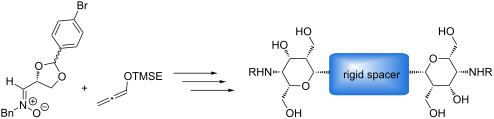
- derivatives 15a and 15b. Conditions: a) H2, Pd/C, MeOH, EtOAc, 20 h, rt; b) H2, Pd/C, iPrOH, EtOAc, NEt3, 18 h, rt. Suzuki cross-coupling of 15a leading to biphenyl derivative 18 and hydrogenolysis to 19. Conditions: a) phenylboronic acid, Pd(PPh3)4, 2 M Na2CO3 aq, THF, 70 °C, 48 h; b) H2, Pd/C, iPrOH, THF
- -coupling of compound 16. Conditions: Pd(PPh3)2Cl2, 2 M Na2CO3, DMF, 80 °C, 3 d. Hydrogenolysis of compound 27 and samarium diiodide-mediated reaction leading to compounds 30 and 31. Conditions: a) H2, Pd/C, TFA, HFIP, iPrOH, 8 h, rt; b) SmI2 (0.1 M in THF), MeOH, 30 min, rt. HFIP = hexafluoro-2-propanol


Multicomponent reactions in nucleoside chemistry
Beilstein J. Org. Chem. 2014, 10, 1706–1732, doi:10.3762/bjoc.10.179
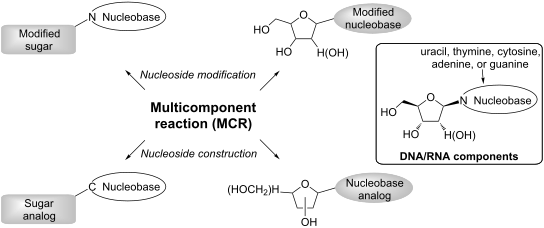
- H2O/EtOH, 60–100 °C, 7 h–10 d; ii. H2, Pd/C or PtO2; iii. (1) 4-methylbenzenethiol, (2) Ni-Ra; iv. (1) MeI, (2) NaBH4; v. (1) MeI, (2) nucleophile. Reagents and reaction conditions: i. H2O, 90 °C, overnight. Reagents and reaction conditions: i. AcOH, H2O, 60 °C, 12 h-5 d; ii. AcOH, H2O, 60 °C, 8 h
- , 4.5 h; ii. (1) H2, 5% Pd/C, MeOH, 55 °C, 5 h; (2) Dowex 50 W, MeOH, H2O, rt, 4 h. Reagents and reaction conditions: i. pyridine, MgSO4, 100 °C, 28 h, N2; ii. DMF, 70–90 °C, 22–30 h, N2, the cumulative yield of 108/109 from 55% to 96%. Reagents and reaction conditions: i. Montmorillonite K-10 clay


C–H-Functionalization logic guides the synthesis of a carbacyclopamine analog
Beilstein J. Org. Chem. 2014, 10, 1564–1569, doi:10.3762/bjoc.10.161
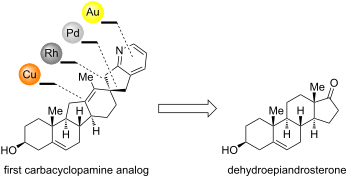
- . PPh3, Et3N, DMF, 70 °C, 64% yield). The hydrogenation of the so-obtained diene 4 (for its structure see Scheme 1) proceeded smoothly (H2, cat. Pd/C, MeOH, 25 °C, 82% yield) under concomitant removal of the triethylsilyl ether [31] in 12-position to give methyl ester 9 as a single diastereoisomer. At


Pd/C-catalyzed aerobic oxidative esterification of alcohols and aldehydes: a highly efficient microwave-assisted green protocol
Beilstein J. Org. Chem. 2014, 10, 1454–1461, doi:10.3762/bjoc.10.149
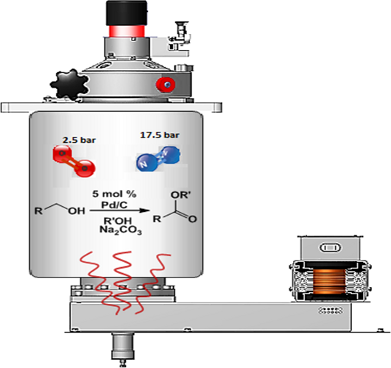
- friendly microwave-assisted oxidative esterification of alcohols and aldehydes in the presence of molecular oxygen and a heterogeneous catalysis (Pd/C, 5 mol %). This efficient and ligandless conversion procedure does not require the addition of an organic hydrogen acceptor. The reaction rate is strongly
- catalysts, the common Pd/C is easily handled and filtered off from the reaction mixture. It is remarkably stable under acidic and basic conditions and features a much higher surface area than alumina- and silica-supported catalysts [45]. Moreover, charcoal is rapidly heated under microwave (MW) irradiation
- versatility of these reactors in promoting reactions with gaseous reagents in a closed cavity [56]. In this present work, we report an efficient Pd/C-catalyzed aerobic oxidative esterification of aldehydes and alcohols in the presence of molecular oxygen in a closed MW reactor. The optimized procedure does



Stereoselective synthesis of carbocyclic analogues of the nucleoside Q precursor (PreQ0)
Beilstein J. Org. Chem. 2014, 10, 1333–1338, doi:10.3762/bjoc.10.135
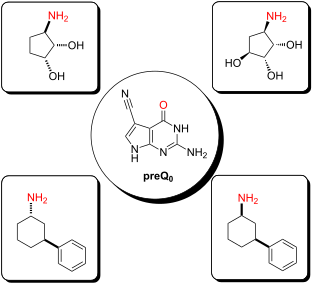
- %); (f) HCO2NH4, Pd/C, MeOH, 1.5 h, reflux, (trans- 92%, cis- 94%); (g) 9, Et3N, n-BuOH, 16 h, 130 °C; (h) KOH, n-BuOH/EtOH, 16 h, 80 °C, (trans- 38%, cis- 50%). Supporting Information Supporting Information File 160: General methods, experimental procedures and copies of 1H/13C NMR spectra and HPLC UV




Synthesis of ethoxy dibenzooxaphosphorin oxides through palladium-catalyzed C(sp2)–H activation/C–O formation
Beilstein J. Org. Chem. 2014, 10, 1220–1227, doi:10.3762/bjoc.10.120
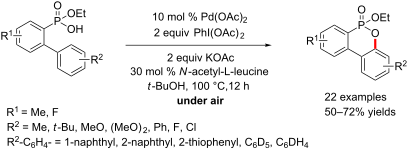
- and the LUMO of the Pd–C bond is unfavorable and the Pd–O bond has a significantly ionic character [18][19][20][21][22][23]. To expand this scope, we are interested in the development of C–H activation/C–O formation by means of new directing groups. Recently, a variety of C–H activations by using new


Preparation of phosphines through C–P bond formation
Beilstein J. Org. Chem. 2014, 10, 1064–1096, doi:10.3762/bjoc.10.106
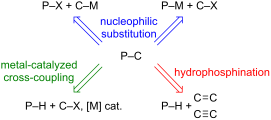
- corresponding triflate under similar conditions [196][197]. The reaction also proceeded under solvent-free conditions with slightly higher yields [198]. A heterogeneous Pd/C catalyst has been applied as well [199][200]. The group of Glueck has reported the first asymmetric palladium-catalyzed C–P bond formation


Olefin cross metathesis based de novo synthesis of a partially protected L-amicetose and a fully protected L-cinerulose derivative
Beilstein J. Org. Chem. 2014, 10, 1023–1031, doi:10.3762/bjoc.10.102
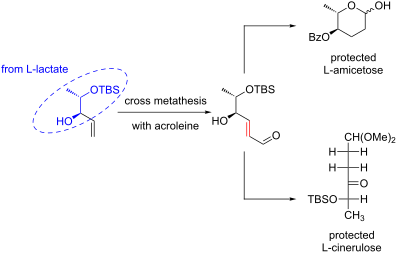
- successfully for the conjugate reduction of a related enoate [35], failed completely in this case and resulted only in the isolation of unreacted starting material. For these reasons we resumed to a hydrogenation catalyzed by Pd/C, in spite of the well-known capricious nature of these transformations [64
- ]. With a commercial sample of Pd on charcoal (10 wt %) a plethora of products was detected, four of which could be isolated and identified as the hydrogenated acetal 11, the methyl ether 13, and the two desilylated products 14 and 15 (Table 3, entry 1). Literature precedence exists for the Pd/C-induced
- dealkoxylation of acetals [65] and for desilylation reactions of silyl ethers [66]. With in situ generated Pd/C (obtained from Pd(OAc)2 and charcoal according to Felpin’s protocol) [67] an improved selectivity was observed as the cleavage of the silyl groups could be suppressed. However, reductive dealkoxylation


Molecular architecture with carbohydrate functionalized β-peptides adopting 314-helical conformation
Beilstein J. Org. Chem. 2014, 10, 948–955, doi:10.3762/bjoc.10.93
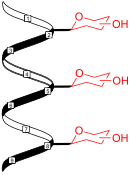
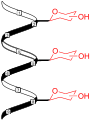
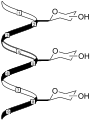
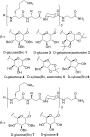
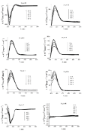
- groups still being protected (Figure 2). Further, oligomers 1 and 7 were debenzylated using H2, 10% Pd/C to β-glycopeptides 2 and 8, respectively. The acetonide groups in the galactosyl and xylosyl sugar units were deprotected simultaneously along with the Boc-groups and cleavage from solid support using


First synthesis of meso-substituted pyrrolo[1,2-a]quinoxalinoporphyrins
Beilstein J. Org. Chem. 2014, 10, 808–813, doi:10.3762/bjoc.10.76
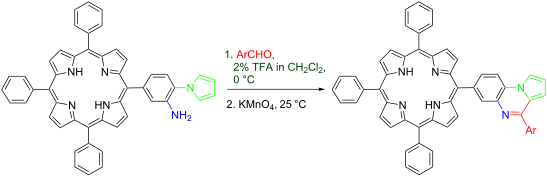
- -dimethoxytetrahydrofuran in toluene/acetic acid mixture afforded novel 5-(3-nitro-4-(pyrrol-1-yl)phenyl)-10,15,20-triphenylporphyrin (2) in 89% yield. The reduction of nitroporphyrin 2 was initially carried out by using Sn/HCl, SnCl2·2H2O/HCl, and Pd/C–NaBH4 as reducing agents but the reaction was found to be sluggish and


Domino reactions of 2H-azirines with acylketenes from furan-2,3-diones: Competition between the formation of ortho-fused and bridged heterocyclic systems
Beilstein J. Org. Chem. 2014, 10, 784–793, doi:10.3762/bjoc.10.74

- -system (4.56, 4.68 ppm). Attempts to initiate the reaction by UV-irradiation (at 20 or 50 °C) or catalysis by compounds of transition metals (Cu(acac)2, Fe(acac)3, Pd(bzac)2, Rh2(AcO)4, Cu(OTf)2, Pd/C) at 20 or 40 °C failed. Benzene was found to be a solvent of choice, and a 1:1 molar ratio of reagents


Structure elucidation of female-specific volatiles released by the parasitoid wasp Trichogramma turkestanica (Hymenoptera: Trichogrammatidae)
Beilstein J. Org. Chem. 2014, 10, 767–773, doi:10.3762/bjoc.10.72
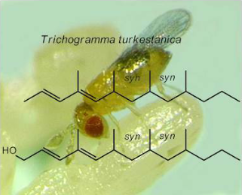
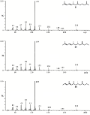
- h; 2) BnBr (1 equiv), n-Bu4NI, 0 °C to rt, 16 h; i: PCC, MS 4 Å, DCM, −20°C, 90 min; j: [(E)-1-methylbut-2-en-1-yl]triphenylphosphonium bromide, n-BuLi, THF, −40 °C, 14 h; k: H2, 20 bar, 10% Pd/C, pentane, rt, 18 h. 70 eV EIMS of synthetic tetramethyltrideca-2,4-dienes 8, 14 and 15. These spectra



A novel family of (1-aminoalkyl)(trifluoromethyl)- and -(difluoromethyl)phosphinic acids – analogues of α-amino acids
Beilstein J. Org. Chem. 2014, 10, 722–731, doi:10.3762/bjoc.10.66
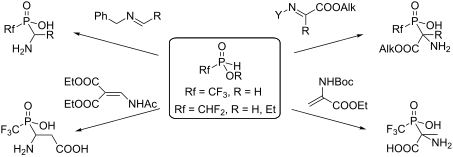
- did not form hydrochlorides under this procedure consistent with the strongly acidic nature of the CF3 phosphinic acid group. Catalytic hydrogenation of intermediates 13a,b with Pd/C removed the benzyl groups and produced the corresponding acids 14a,b in high yields. The hydrophosphinylation of
- catalytic hydrogenation conditions (II). To a solution of compounds, containing N-Bn fragment (5 mmol) in ethanol (10 mL) 10% Pd/C (0.05 g) was added, and the mixture was hydrogenated at room temperature and normal pressure. After ~3 h the precipitation commenced, and water (5 mL) was added to dissolve this
- , determined by 31P and 19F NMR: 13c (<10%). ii) H2, ethanol, catalysis 10% Pd/C, rt, normal pressure, yields: 14a (95%), 14b (90%). Interaction of the acid 1 with tert-butyl benzylidenecarbamate (21). Reagents and conditions: i) an equimolar mixture of reagents, DME, rt, 48 h, under argon atmosphere, 32





