Search results
Search for "Wittig" in Full Text gives 223 result(s) in Beilstein Journal of Organic Chemistry. Showing first 200.
A new synthetic protocol for coumarin amino acid
Beilstein J. Org. Chem. 2013, 9, 254–259, doi:10.3762/bjoc.9.30
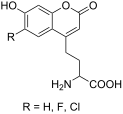
- will further improve the fluorescent property of the coumarin amino acids, or add new chemical handles to the coumarin ring for some specific investigations. The Horner–Wadsworth–Emmons reaction was applied to install the terminal alkene at the 4-position. Compared with the Wittig reaction, the Horner
- –Wadsworth–Emmons reaction has a significant advantage: The resulting phosphate byproduct can be readily separated, whereas the byproduct triphenylphosphine oxide generated in the Wittig reaction is difficult to remove [17]. The effect of the base used in the Horner–Wadsworth–Emmons reaction on the reaction


Alkenes from β-lithiooxyphosphonium ylides generated by trapping α-lithiated terminal epoxides with triphenylphosphine
Beilstein J. Org. Chem. 2012, 8, 1896–1900, doi:10.3762/bjoc.8.219
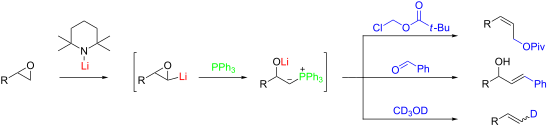
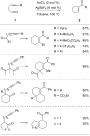
- with high regio- and stereocontrol (Scheme 1) [1][2][3][4][5][6][7][8][9]. These ylide intermediates can be generated by initiating a Wittig reaction between an aldehyde 1 and a phosphorane 2 at low temperature in the presence of lithium salts, which promote ring opening of the initially formed
- access ylides [26], although phosphonium ylides for carbonyl-olefination chemistry are usually prepared by deprotonation of phosphonium salts [1][2][3][4]. In fact, phosphine trapping of lithium carbenoids followed by carbonyl olefination has been little studied since Seyferth and Wittig independently
- their utility in Wittig–Schlosser and SCOOPY-type stereoselective olefination reactions [1][2][3][4][5][6][7][8][9][10][11][12][13][14][15][16][17][18][19]. Here we have shown a new and concise method to such valuable intermediates, directly from readily available terminal epoxides. Significantly, the


A new approach toward the total synthesis of (+)-batzellaside B
Beilstein J. Org. Chem. 2012, 8, 1831–1838, doi:10.3762/bjoc.8.210

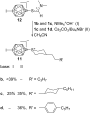
- corresponding alcohol, which was then subjected to reaction with 2,2-dimethoxypropane (2,2-DMP) in the presence of BF3·Et2O [24] to produce N,O-acetonide 10 in 93% yield over two steps. For the preparation of the E-isomer of α,β-unsaturated ester 11, Wittig–Horner reaction employing Garner’s aldehyde has been


Synthesis and ring openings of cinnamate-derived N-unfunctionalised aziridines
Beilstein J. Org. Chem. 2012, 8, 1747–1752, doi:10.3762/bjoc.8.199
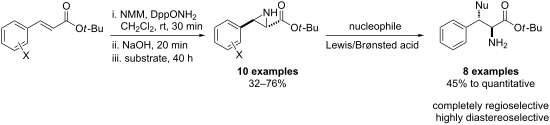
- aziridination. A range of ortho-, meta- and para-substituted cinnamates were synthesised via Wittig, Heck or esterification routes (for details, see Supporting Information File 1). Each substrate was subjected to two sets of aziridination conditions, with the optimum yields reported. Electron-rich substrates


A Wittig-olefination–Claisen-rearrangement approach to the 3-methylquinoline-4-carbaldehyde synthesis
Beilstein J. Org. Chem. 2012, 8, 1725–1729, doi:10.3762/bjoc.8.197

- important 3-methylquinoline-4-carbaldehydes 6a–h from o-nitrobenzaldehydes 1a–h employing a Wittig-olefination–Claisen-rearrangement protocol. The Wittig reaction of o-nitrobenzaldehydes with crotyloxymethylene triphenylphosphorane afforded crotyl vinyl ethers 2a–h, which on heating under reflux in xylene
- -carbaldehydes 6a–h in excellent yields. Therefore, an efficient method was developed for the preparation of 3-methylquinoline-4-carbaldehydes from o-nitrobenzaldehydes in a simple five-step procedure. Keywords: acetal; Claisen rearrangement; oxidative cleavage; ring-closure; Wittig olefination; Introduction
- method for the synthesis of 3-methylquinoline-4-carbaldehyde. It was considered that a properly substituted 2-(2-nitrophenyl)pent-4-enal [25][26][27] could be a fitting intermediate for this purpose. Such an intermediate is easily accessible through the Wittig-olefination–Claisen-rearrangement protocol


Enantioselective total synthesis of (R)-(−)-complanine
Beilstein J. Org. Chem. 2012, 8, 1695–1699, doi:10.3762/bjoc.8.192
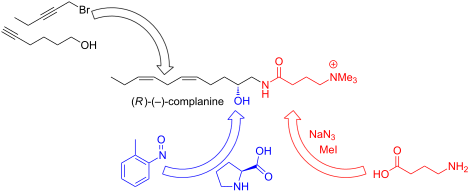
- organocatalytic O-nitrosoaldol as the key step. A retrosynthetic analysis for complanine is depicted in Scheme 1. The synthesis was initiated by preparation of homoconjugated all-Z-diene 1 (Scheme 2). Sequential olefin preparation by using Wittig chemistry, or selective polyyne reduction represent two traditional


Cyclization of ortho-hydroxycinnamates to coumarins under mild conditions: A nucleophilic organocatalysis approach
Beilstein J. Org. Chem. 2012, 8, 1630–1636, doi:10.3762/bjoc.8.186
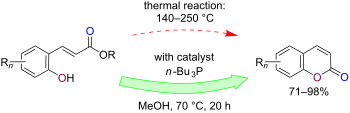
- use of tri-n-butylphosphane (20 mol %) as a nucleophilic organocatalyst in MeOH solution allows cyclization to take place under much milder conditions (60–70 °C). Several coumarins were prepared, starting from ortho-hydroxyarylaldehydes, by Wittig reaction with Ph3P=CHCO2Me to (E)-methyl ortho


Synthesis of diverse indole libraries on polystyrene resin – Scope and limitations of an organometallic reaction on solid supports
Beilstein J. Org. Chem. 2012, 8, 1191–1199, doi:10.3762/bjoc.8.132
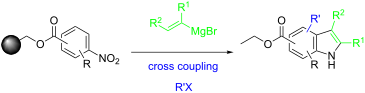
- ]. Organometallic reactions on solid supports are always particularly challenging [25]. In the past, indoles were synthesized by using, for example, Fischer indole synthesis [26][27][28][29][30], Bartoli indole synthesis, Nenitzescu synthesis [31], Wittig indole synthesis [32], Madelung indole synthesis [33


Highly selective synthesis of (E)-alkenyl-(pentafluorosulfanyl)benzenes through Horner–Wadsworth–Emmons reaction
Beilstein J. Org. Chem. 2012, 8, 1185–1190, doi:10.3762/bjoc.8.131
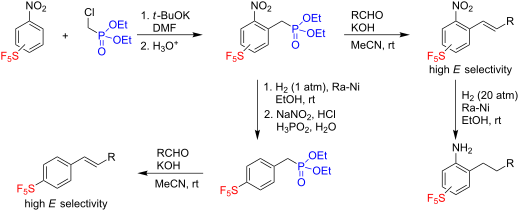
- reaction is a modification of the Wittig olefination in which a phosphoryl-stabilized carbanion reacts with an aldehyde or ketone to form an alkene and a water-soluble phosphate ester [23][24][25]. In general, this reaction preferentially gives more stable E-disubstituted alkenes, although several


Parallel and four-step synthesis of natural-product-inspired scaffolds through modular assembly and divergent cyclization
Beilstein J. Org. Chem. 2012, 8, 930–940, doi:10.3762/bjoc.8.105
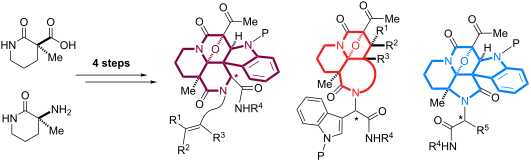
- and 4 (Scheme 2), as reported previously [22]. Due to the instability of the corresponding amine building block bearing the indole unit, azide 27 was employed as a precursor. Staudinger/aza-Wittig reaction [43] of 27 and 20 and subsequent condensation with 6 and 21 afforded the peptidyl product 28



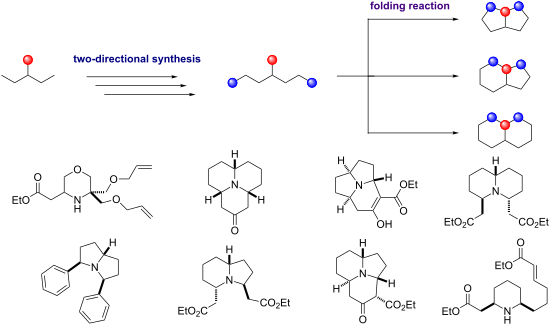
Two-directional synthesis as a tool for diversity-oriented synthesis: Synthesis of alkaloid scaffolds
Beilstein J. Org. Chem. 2012, 8, 850–860, doi:10.3762/bjoc.8.95
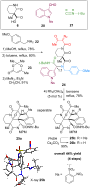
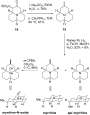
- EtOH and H2O under reflux to achieve ester saponification, which was followed by decarboxylation, proceeding smoothly to give the corresponding ketone in 76% yield. The ketone was then transformed to the exocyclic alkene 15 in 61% yield by Wittig reaction with the appropriate phosphonium salt. The



Synthesis of 2,6-disubstituted tetrahydroazulene derivatives
Beilstein J. Org. Chem. 2012, 8, 693–698, doi:10.3762/bjoc.8.77
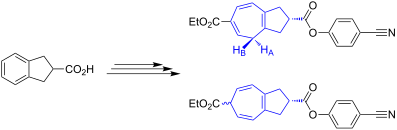
- ; ring expansion; Introduction Hydroazulene skeletons provide the basic ring systems of natural products, such as guaianolide sesquiterpenes [1][2] and the so-called furanether B series [3][4]. The stereoselective synthesis of trans-hydroazulene derivatives by a tandem Michael/intramolecular Wittig


Dioxane dibromide mediated bromination of substituted coumarins under solvent-free conditions
Beilstein J. Org. Chem. 2012, 8, 323–329, doi:10.3762/bjoc.8.35

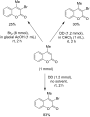
- [8], Et4N+Br− in the presence of hypervalent iodine reagents [9], and NBS in tetrabutylammonium bromide under molten salt conditions [10]. There is a recent report of the preparation of 3-bromocoumarins from acyclic precursors through bromination of a Wittig reagent with NBS followed by tandem Wittig




Synthesis of fused tricyclic amines unsubstituted at the ring-junction positions by a cascade condensation, cyclization, cycloaddition then decarbonylation strategy
Beilstein J. Org. Chem. 2012, 8, 107–111, doi:10.3762/bjoc.8.11
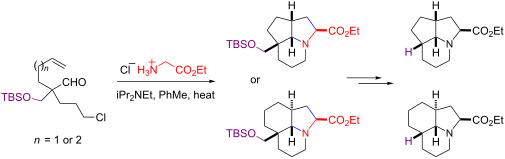
- chemistry for the construction of the core ring system found in alkaloid natural products. Wittig reaction with aldehyde 16 should be possible to provide the core ring system found in the alkaloids meloscine and scandine [26][27][28][29][30]. However, we chose to investigate a shorter reaction sequence
- without the need for protecting groups and to carry out the Wittig reaction at an earlier stage, as shown in Scheme 6. Olefination of aldehyde 6 with the anion formed from methyltriphenylphosphonium bromide gave alkene 17, which was reduced with DIBAL-H to give aldehyde 18. Heating this aldehyde with


Photochemical and thermal intramolecular 1,3-dipolar cycloaddition reactions of new o-stilbene-methylene-3-sydnones and their synthesis
Beilstein J. Org. Chem. 2011, 7, 1663–1670, doi:10.3762/bjoc.7.196
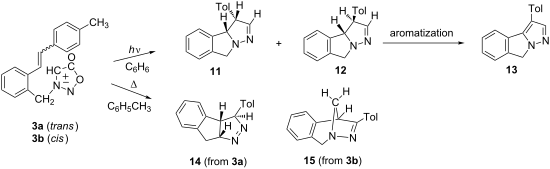
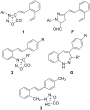
- -cyanotoluene (see Supporting Information File 1 for full experimental data). Bromination of o-cyanotoluene afforded 2-(bromomethyl)benzonitrile (4) [24], which was transformed to triphenylphosphonium salt 5 [25] followed by Wittig reaction with 4-methylbenzaldehyde to 2-(4-methylstyryl)benzonitrile (6a,b) [26




The application of a monolithic triphenylphosphine reagent for conducting Appel reactions in flow microreactors
Beilstein J. Org. Chem. 2011, 7, 1648–1655, doi:10.3762/bjoc.7.194
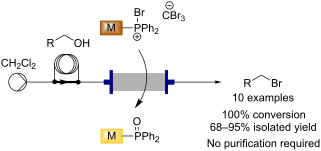
- interest in using monolithic supports to facilitate key chemical transformations [20][21][22][23][24][25][26][27][28][29][30][31]. We recently reported on the development of a new monolithic triphenylphosphine reagent and its use in the Staudinger aza-Wittig reaction in flow [32][33]. Here we discuss the


A new phenylethyl alkyl amide from the Ambrostoma quadriimpressum Motschulsky
Beilstein J. Org. Chem. 2011, 7, 1342–1346, doi:10.3762/bjoc.7.158
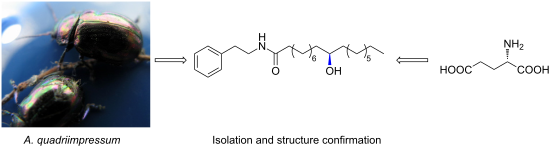
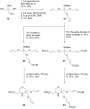
- chain was accomplished by the selective protection of the hydroxy groups and two-time implementation of the Wittig olefination reaction. Keywords: asymmetric synthesis; beetle; fatty acid amide; isolation; Introduction The leaf beetle Ambrostoma quadriimpressum Motschulsky (Coleoptera: Chrysomelidae
- disconnected into two fragments, 2 and 3. The intermediate fragment 2 would be readily prepared from the commercially available ε-caprolactone. The crucial fragment 3 would be constructed from the intermediate 4 through Wittig olefination. The polyhydroxy compound 4 would be obtained from L-glutamic acid by
- , resulted in the deprotection of the TBDPS group. Alternatively, the alcohol 9 could be obtained by reduction with diisobutylaluminium hydride (Dibal-H) in 86% yield, which was then converted to the corresponding aldehyde 10 by oxidation with PCC. Wittig olefination of aldehyde 10 with n


Bromine–lithium exchange: An efficient tool in the modular construction of biaryl ligands
Beilstein J. Org. Chem. 2011, 7, 1278–1287, doi:10.3762/bjoc.7.148
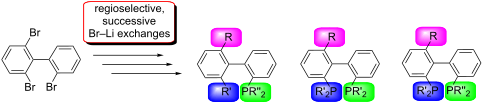
- certainly one of the most fundamental synthetic transformations [39]. Although this reaction was reported by C. S. Marvel in 1927 [40], G. Wittig [41] and H. Gilman [42][43][44] were the first to apply it in organic synthesis in the late thirties. Since then, this reaction has been considered as a mature


Functionalization of heterocyclic compounds using polyfunctional magnesium and zinc reagents
Beilstein J. Org. Chem. 2011, 7, 1261–1277, doi:10.3762/bjoc.7.147
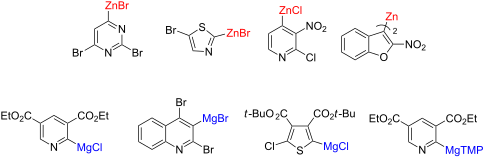
- corresponding zinc reagents. This makes their preparation especially important. 2.1 The preparation of heterocyclic magnesium reagents through a bromine- (or iodine-) magnesium exchange Compared to the halogen/lithium exchange, discovered in 1939 by Wittig and Gilman, the halogen/magnesium exchange is much


A simple and convenient one-pot synthesis of substituted isoindolin-1-ones via lithiation, substitution and cyclization of N'-benzyl-N,N-dimethylureas
Beilstein J. Org. Chem. 2011, 7, 1219–1227, doi:10.3762/bjoc.7.142
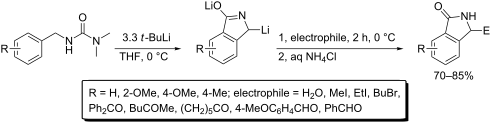
- [27], Wittig reagents [28], reduction processes [29][30], rearrangement processes [31] and photochemical reactions [32][33]. However, such methods generally require multiple reaction steps and are unsatisfactory both in yield and generality. In recent years several new approaches have been developed


Directed aromatic functionalization
Beilstein J. Org. Chem. 2011, 7, 1215–1218, doi:10.3762/bjoc.7.141
- since the independent discoveries by Gilman and Wittig, the directed ortho metalation (DoM) reaction has trickled into the armamentarium of the synthetic chemist (but not significantly into textbooks [8][14]), as a general and rational strategy for the construction of polysubstituted aromatics and

Toward an integrated route to the vernonia allenes and related sesquiterpenoids
Beilstein J. Org. Chem. 2011, 7, 937–943, doi:10.3762/bjoc.7.104
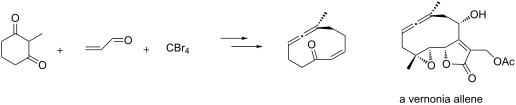
- the direct formation of 21 via bromomethyltriphenylphosphonium bromide (Scheme 4). This reaction was inefficient and gave both the (E)- and (Z)-bromoolefins as well as dibromoolefin 20. Bromo group scrambling under basic Wittig reaction conditions is known [63], and the usual procedure for Wittig
- the reaction profile, as did varying the ratio of Wittig reagent relative to aldehyde (1–3 equiv), solvent (THF and toluene), and aldehyde concentration (0.035–0.09 M). The yield of the reaction was low under all the conditions examined (13–26%) [66]. The known behavior of


Intraannular photoreactions in pseudo-geminally substituted [2.2]paracyclophanes
Beilstein J. Org. Chem. 2011, 7, 658–667, doi:10.3762/bjoc.7.78

- trans,trans-10 by a Wittig olefination, appears to be unstable in the solid state at room temperature, but in the refrigerator at −20 °C or in dilute (~0.1 M) solution in dichloromethane or chloroform it can be stored in the dark for at least 3 months without any detectable decomposition or
- product after 2 h of irradiation with a halogen 1 kW lamp, it appeared to be very unstable even below 0 °C, although it was stable enough for NMR identification. Wittig olefination of the irradiated mixture gave the divinylcyclobutane derivative 14 as the sole product and was isolable by column
- with the ylide prepared from cyclopropylcarbinyl triphenylphosphonium bromide and obtained in quantitative yield a product mixture consisting of the three possible diastereomers E,E-, E,Z- and Z,Z-22 (Scheme 8), the latter being the main product as is often observed in classical Wittig reactions


Construction of cyclic enones via gold-catalyzed oxygen transfer reactions
Beilstein J. Org. Chem. 2011, 7, 606–614, doi:10.3762/bjoc.7.71
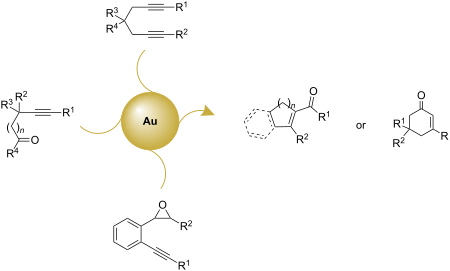
- conjugated enone substructure has attracted the interest of synthetic chemists for decades. Among numerous methodologies, aldol condensations and Wittig-type reactions have been widely utilized [9][10][11][12][13][14][15][16][17][18]. Recently, it was found that conjugated enones could be generated from the
- oxygen transfer from a carbonyl group to a carbon–carbon triple bond, the so-called alkyne–carbonyl metathesis. This methodology has sparked the attention of the synthetic community, because it could serve as an efficient and atom-economic alternative to the Wittig reaction by the formation of a new




The preparation of 3-substituted-1,5-dibromopentanes as precursors to heteracyclohexanes
Beilstein J. Org. Chem. 2011, 7, 386–393, doi:10.3762/bjoc.7.49
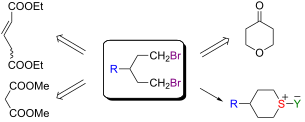
- addition of a Grignard reagent to tetrahydro-4H-pyran-4-one, elimination of water, and hydrogenation of the olefin (Method 2A). Typical yields for Method 2A range from 20–30% [39][40]. The second route is the Wittig olefination of tetrahydro-4H-pyran-4-one followed by hydrogenation (Method 2B). Yields for
- the Wittig olefination of tetrahydro-4H-pyran-4-one range from 35–75% [41][42][43]. The third route (Method 2C) begins from tetrahydropyran-4-carboxylic acid: The acid chloride is reacted with a Grignard reagent, and the resulting ketone reduced under Wolff–Kischner conditions. Typical yields for this
- propyl (1a), pentyl (1b), 2-(4-trans-pentylcyclohexyl)ethyl (1c), or 4-propylphenethyl (1d) substituents (Figure 2). We investigate the preparation of appropriate diols 2 starting from malonate (Method 1B, Scheme 1) and glutaconate diesters (Method 1C) as well as appropriate tetrahydropyrans 3 via Wittig