


Search results
Search for "bromination" in Full Text gives 240 result(s) in Beilstein Journal of Organic Chemistry. Showing first 200.
Deoxygenative gem-difluoroolefination of carbonyl compounds with (chlorodifluoromethyl)trimethylsilane and triphenylphosphine
Beilstein J. Org. Chem. 2014, 10, 344–351, doi:10.3762/bjoc.10.32
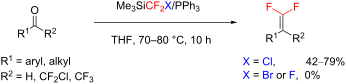
- TMSCF3 from fluoroform (CF3H), which paved the way for the synthetic applications of TMSCF3 [38][39]. Moreover, the preparation of TMSCF2Br either by fluoro–bromo exchange reaction of TMSCF3 [34] or by bromination of TMSCF2H [34][40] has also been disclosed. To obtain TMSCF2Cl, we tried the halogen


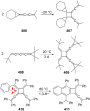
Recent applications of the divinylcyclopropane–cycloheptadiene rearrangement in organic synthesis
Beilstein J. Org. Chem. 2014, 10, 163–193, doi:10.3762/bjoc.10.14
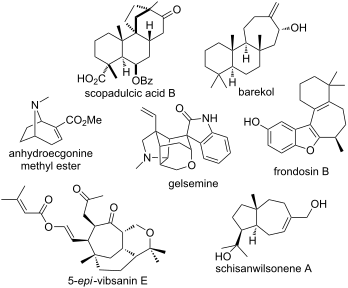
- to give pentacycle 172. Reduction of the nitro group was followed by Cbz-protection. Allylic alcohol 173 resulted from radical allylic bromination followed by displacement of bromine through water under silver-catalysis. Eschenmoser–Claisen rearrangement [148] led to the formation of the remaining




Synthesis and determination of the absolute configuration of (−)-(5R,6Z)-dendrolasin-5-acetate from the nudibranch Hypselodoris jacksoni
Beilstein J. Org. Chem. 2013, 9, 2925–2933, doi:10.3762/bjoc.9.329
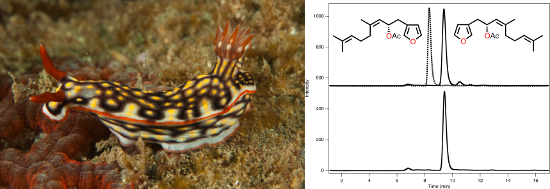
- . The overall synthesis (Scheme 1) was adapted from Tsubuki et al. [21]. Furan-3-ylmethanol (4) was prepared in 78% yield by reduction of 2-furoic acid with LiAlH4 in dry diethyl ether, whereas geranyl bromide (5) was obtained through bromination of geraniol with carbon tetrabromide and


Multigramme synthesis and asymmetric dihydroxylation of a 4-fluorobut-2E-enoate
Beilstein J. Org. Chem. 2013, 9, 2660–2668, doi:10.3762/bjoc.9.301
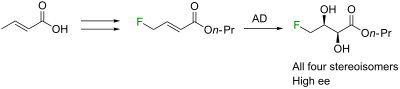
- purification. Bromination was carried out using the method of Lester et al. [17], and while it was effective at small scales, larger scale (>150 mmol) reactions were violently exothermic. A modification of the reaction order reported earlier by Gershon and coworkers solved the problem [18]. Chlorobenzene was




Stereodivergent synthesis of jaspine B and its isomers using a carbohydrate-derived alkoxyallene as C3-building block
Beilstein J. Org. Chem. 2013, 9, 2564–2569, doi:10.3762/bjoc.9.291
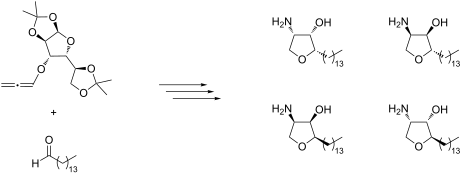
- dihydrofurans 14 and 15 by oxidative azidation (see above) only led to very low yields of the desired α-azidotetrahydrofuranones (6%). The conditions obviously cause decomposition of the auxiliary. As an alternative, the electrophilic bromination of 15 with NBS and the subsequent substitution with sodium azide
- . Subsequent functionalization using oxidative azidation, as shown for methoxy-substituted dihydrofuran 8, did not give the expected α-azidotetrahydrofuranones in acceptable yields, but electrophilic bromination and subsequent substitution with sodium azide turned out to be a good alternative for the synthesis


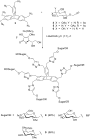
Synthesis of enantiopure sugar-decorated six-armed triptycene derivatives
Beilstein J. Org. Chem. 2013, 9, 2410–2416, doi:10.3762/bjoc.9.278
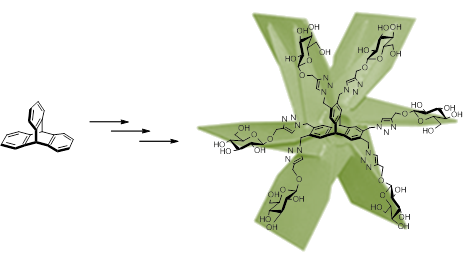
- from 9,10-dihydro-9,10-[1',2']benzenoanthracene-2,3,6,7,14,15-hexacarboxylic acid through its hexaethyl ester. However, their yields were very low, 17% in the first step and 26% in the subsequent LiAlH4 reduction/HBr bromination. Moreover 9,10-dihydro-9,10[1',2']-benzenoanthracene-2,3,6,7,14,15



An overview of the synthetic routes to the best selling drugs containing 6-membered heterocycles
Beilstein J. Org. Chem. 2013, 9, 2265–2319, doi:10.3762/bjoc.9.265
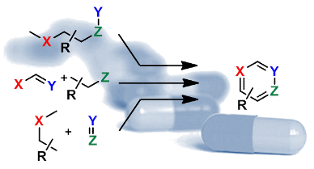
- Knoevenagel adduct 2.12 and methyl butynoate 2.13 (Scheme 25) [68]. The reaction is reported to progress in high regioselectivity (>50:1) albeit in moderate isolated yield. Following debenzylation of the Diels–Alder product a selective allylic bromination was achieved again in good selectivity (>80:20
- dihydropyridine. This regioselective bromination reaction was studied in some detail by the Warner–Lambert Company and is reported to give superior outcomes when compared to the direct Hantzsch synthesis of non-symmetrical dihydropyridines with respect to product yield (70–90% vs 10–30%) and ease of purification


Flexible synthesis of anthracycline aglycone mimics via domino carbopalladation reactions
Beilstein J. Org. Chem. 2013, 9, 2194–2201, doi:10.3762/bjoc.9.258
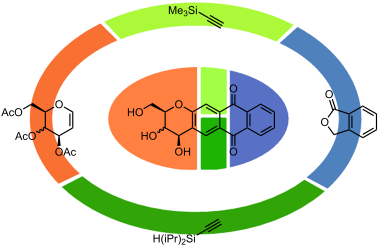
- NCS and NBS are able to convert the silane into a reactive species. However, the yields were low in all cases. Changing the bromination reagent to elemental bromine significantly improved the yields (Table 1, entries 4 and 5) [36]. Diethyl ether proved to be important as a solvent, the change to THF
- led to a total decomposition – most probably due to ring-opening reactions with bromosilanes [37]. Further, we investigated the influence of the amount of bromine on the reaction and concluded that stoichiometric quantities entirely fulfill the demands of the bromination (Table 1, entries 7 and 8

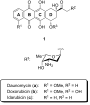


The chemistry of isoindole natural products
Beilstein J. Org. Chem. 2013, 9, 2048–2078, doi:10.3762/bjoc.9.243
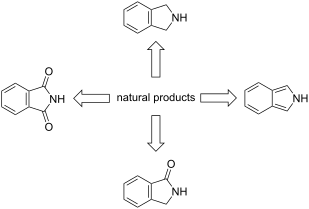
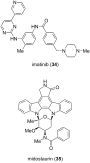
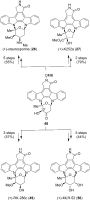
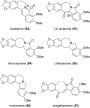
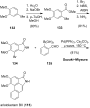
- ]. The synthesis commenced with the preparation of the isoindolinone building block 134. Friedel–Crafts acetylation of 132, followed by a Lieben haloform degradation gave the corresponding acid, which after methylation yielded 133. Bromination and lactam formation afforded isoindolinone 134. The
- in the total synthesis of 193 by Schmalz (Scheme 24) [149]. Reaction of lithiated 188 (three steps from commercially available 5-methylresorcinol) with the aldehyde 189 (double bromination of 3,5-dimethoxybenzaldehyde) gave the racemic alcohol 190. Oxidation to the benzophenone, installation of the












Total synthesis of (−)-epimyrtine by a gold-catalyzed hydroamination approach
Beilstein J. Org. Chem. 2013, 9, 2042–2047, doi:10.3762/bjoc.9.242
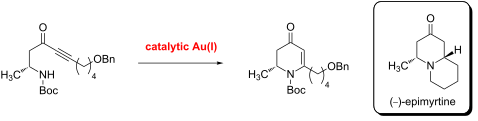
- stereospecifically the corresponding piperidone 4 in 80% yield. Subsequent bromination with CBr4 in the presence of PPh3 (Appel reaction) gave 5 in 84% yield. Finally, deprotection with 1 M SnCl4 in dichloromethane then neutralization by using K2CO3 afforded the final product (−)-epimyritine in a 80% yield. N-Cbz


Synthesis of enantiomerically pure (2S,3S)-5,5,5-trifluoroisoleucine and (2R,3S)-5,5,5-trifluoro-allo-isoleucine
Beilstein J. Org. Chem. 2013, 9, 2009–2014, doi:10.3762/bjoc.9.236
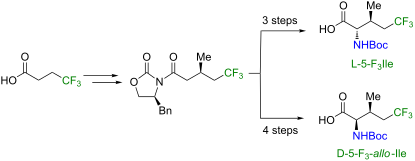
- auxiliary removal gave the N-Boc protected L-amino acid 7 (L-5-F3Ile). Likewise, the corresponding D-amino acid 10 (D-5-F3-allo-Ile) was prepared by α-bromination followed by nucleophilic azide displacement under stereochemical inversion (Scheme 2). The absolute configuration of the amino acids was


The application of a monolithic triphenylphosphine reagent for conducting Ramirez gem-dibromoolefination reactions in flow
Beilstein J. Org. Chem. 2013, 9, 1781–1790, doi:10.3762/bjoc.9.207
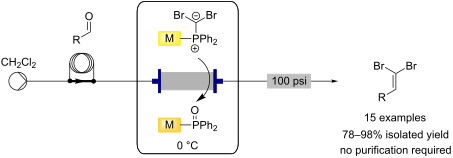
- possible to perform the Appel reaction using the same monolith and the relationship between the mechanisms of the two reactions is discussed. Keywords: bromination; flow chemistry; Ramirez gem-dibromoolefination reaction; solid-supported reagent; triphenylphosphine monolith; Introduction The advantages
- monolith, leaving the product bound to the polymer. Interestingly the batch bromination of 3-phenylpropiolaldehyde (Table 1, entry 7) requires the addition of 2.5 equivalents of 2,6-lutidine [60], however pleasingly, this was not required when the substrate was brominated using the flow procedure. It was


The preparation of several 1,2,3,4,5-functionalized cyclopentane derivatives
Beilstein J. Org. Chem. 2013, 9, 1705–1712, doi:10.3762/bjoc.9.195
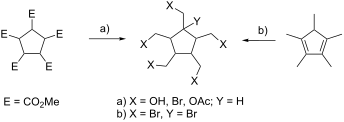
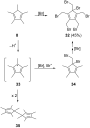
- . In principle these should be convertible by elimination reactions to the desired target molecule. Keywords: bromination; cyclopentanes; esterification; permethylcyclopentadiene; polyfunctional compounds; radialenes; Introduction Radialenes are cyclic cross-conjugated hydrocarbons that consist
- with various bromination reagents. Whenever possible we confirm the structures of intermediate compounds or byproducts by X-ray structural analysis. Results and Discussion cis,cis,cis,cis-1,2,3,4,5-Pentakis(hydroxymethyl)cyclopentane (16) and derivatives The pentaalcohol 16 is a known compound, having
- = 60.0, 63.2, and 65.5 ppm. The signals of the minor isomer(s) can hardly be differentiated from the noise. The bromination of 30 proceeded with varying results; most of the methods that were unsuccessfully used above in the case of 16 also fail for its isomer (HBr, PBr3, SOBr2 in different halogenated



Bromination of hydrocarbons with CBr4, initiated by light-emitting diode irradiation
Beilstein J. Org. Chem. 2013, 9, 1663–1667, doi:10.3762/bjoc.9.190
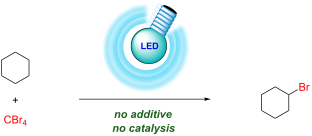
- Yuta Nishina Bunsho Ohtani Kotaro Kikushima Research Core for Interdisciplinary Science, Okayama University, Tsushimanaka, Kita-ku, Okayama 700-8530, Japan Catalysis Research Center, Hokkaido University, Sapporo 001-0021, Japan 10.3762/bjoc.9.190 Abstract The bromination of hydrocarbons with CBr4
- species for the bromination. The generation of CHBr3 was confirmed by NMR spectroscopy and GC–MS spectrometry analysis, indicating that the present bromination involves the homolytic cleavage of a C–Br bond in CBr4 followed by radical abstraction of a hydrogen atom from a hydrocarbon. Keywords
- : bromination; free radical; hydrocarbon; light-emitting diode; photo irradiation; Introduction Bromination reactions of organic compounds are fundamental reactions for providing a wide variety of organic precursors for industrial materials [1][2][3][4][5][6][7][8]. Generally, the bromination of saturated


α-Bromodiazoacetamides – a new class of diazo compounds for catalyst-free, ambient temperature intramolecular C–H insertion reactions
Beilstein J. Org. Chem. 2013, 9, 1407–1413, doi:10.3762/bjoc.9.157

- the halogenation of diazoacetamides. We report herein the bromination of the diazoacetamides derived from a selection of cyclic secondary amines, using DBU and N-bromophthalimide (NBP), as well as an investigation of the ability of the carbenes/carbenoids derived from the resulting α
- yields. Preparation of the diazoacetamides. Bromination of the diazoacetamides 3a–f and thermolysis of the α-bromodiazoacetamides 4a–f. Yieldsa of β-lactams 5a–f obtained by thermolysis of α-bromodiazoacetamides 4a–f. Supporting Information Supporting Information File 66: Detailed experimental


Incorporation of perfluorohexyl-functionalised thiophenes into oligofluorene-truxenes: synthesis and physical properties
Beilstein J. Org. Chem. 2013, 9, 1243–1251, doi:10.3762/bjoc.9.141
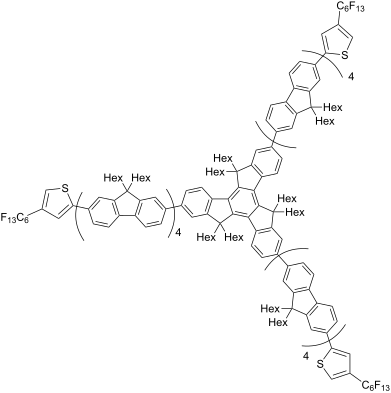
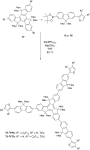
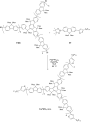
- -iodo-4-perfluorohexylthiophene, which was separated by column chromatography. Compound 4 then underwent Suzuki–Miyaura coupling with compound 5, which was synthesised according to our previously published method [17], and the product obtained, 6, was deprotected by bromination to give compound 7 and




Amyloid-β probes: Review of structure–activity and brain-kinetics relationships
Beilstein J. Org. Chem. 2013, 9, 1012–1044, doi:10.3762/bjoc.9.116

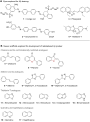








Synthesis and physicochemical characterization of novel phenotypic probes targeting the nuclear factor-kappa B signaling pathway
Beilstein J. Org. Chem. 2013, 9, 900–907, doi:10.3762/bjoc.9.103
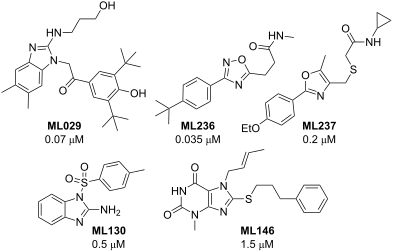
- ethyl xanthate in ethanol under reflux. Bromination of 1 led to the key intermediate 2-bromo-5,6-dimethylbenzimidazole (2), which reacted smoothly with 3-aminopropanol to give the amine 3 in high yield and purity after extraction. The solvent-free microwave process employed was superior to traditional


Reactions of salicylaldehyde and enolates or their equivalents: versatile synthetic routes to chromane derivatives
Beilstein J. Org. Chem. 2012, 8, 2166–2175, doi:10.3762/bjoc.8.244

- corresponding 2-aminochromene derivatives 22 and 37 in 92 and 82% yields respectively (Scheme 13) [26]. It is instructive to note that TBBDA is a versatile reagent in organic synthesis and has been reported to be efficient in oxidation of primary and secondary alcohols [27], in bromination of aromatic compounds


Flow photochemistry: Old light through new windows
Beilstein J. Org. Chem. 2012, 8, 2025–2052, doi:10.3762/bjoc.8.229


















Iridium-catalyzed intramolecular [4 + 2] cycloadditions of alkynyl halides
Beilstein J. Org. Chem. 2012, 8, 1765–1770, doi:10.3762/bjoc.8.201
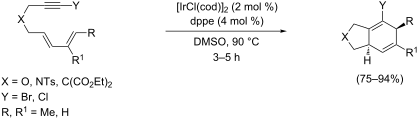
- ). Deprotonation of 8 with sodium hydride, followed by trapping with propargyl bromide provided 9 in 60% yield, and a Mitsunobu reaction between 8 and sulfonamide 10 (prepared as per reference [47]) provided 11 in 74% yield. Bromination of 9 and 11 provided diene-tethered alkynyl halides 1c (57%) and 1e (83
- bromination conditions to provide 1g in 77% yield. Compounds 1a–1g were then subjected to the optimized cycloaddition conditions (Table 3). In general, the Ir-catalyzed [4 + 2] cycloadditions occurred smoothly for all substrates, forming bicyclic products 2 in good yield (75–94%) (Table 3), and in each case a


trans-2-(2,5-Dimethoxy-4-iodophenyl)cyclopropylamine and trans-2-(2,5-dimethoxy-4-bromophenyl)cyclopropylamine as potent agonists for the 5-HT2 receptor family
Beilstein J. Org. Chem. 2012, 8, 1705–1709, doi:10.3762/bjoc.8.194
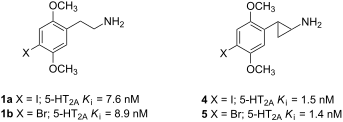
- precursor and subsequent bromination to provide both enantiomers of 5. Results and Discussion Racemic 4 and 5 were compared in radioligand competition assays against radiolabeled antagonists defined at the human 5-HT2A and 5-HT2C receptors and compared with racemic 1a and 1b. The results are shown in Table
- ester 7 followed by bromination of acid 9 using Br2-dioxane complex gave a good yield of bromo acid 10b. These acids were readily converted to their isocyanates using the Weinstock modification of the Curtius rearrangement [6]. Those isocyanates were heated with tert-butanol to afford the corresponding
- bromo compound 5 appeared somewhat more stable. We then followed a more efficient divergent approach to obtain the enantiomers of 5 that employed resolution of the cyclopropane carboxylic acid, followed by bromination, and then conversion to the cyclopropylamine (Scheme 3). We are aware that the use of


Stereoselective synthesis of trans-fused iridoid lactones and their identification in the parasitoid wasp Alloxysta victrix, Part I: Dihydronepetalactones
Beilstein J. Org. Chem. 2012, 8, 1246–1255, doi:10.3762/bjoc.8.140
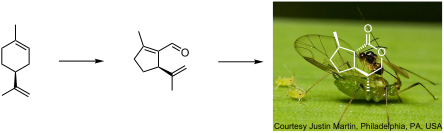
- -pulegenic acid 10 via bromination, Favorskii rearrangement, and subsequent elimination (Scheme 1). Stereoselective addition of hydrochloric acid afforded the chloride 11, and subsequent elimination of hydrochloric acid gave a mixture of the methyl esters 12 and 13 (methyl trans-pulegenate) [20][21][22


On the bromination of the dihydroazulene/vinylheptafulvene photo-/thermoswitch
Beilstein J. Org. Chem. 2012, 8, 958–966, doi:10.3762/bjoc.8.108
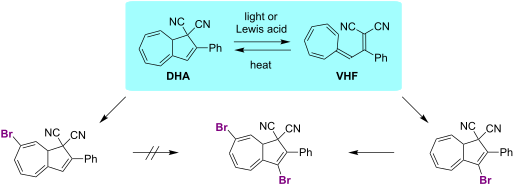
- dihydroazulene (DHA)/vinylheptafulvene (VHF) system (with two cyano groups at C1) functions as a photo-/thermoswitch. Direct ionic bromination of DHA has previously furnished a regioselective route to a 7,8-dibromide, which by elimination was converted to a 7-bromo-substituted DHA. This compound has served as a
- central building block for functionalization of the DHA by palladium-catalyzed cross-coupling reactions. The current work explores another bromination protocol for achieving the isomeric 3-bromo-DHA and also explores the outcome of additional bromination of this compound as well as of the known 7-bromo
- -DHA. Results: Radical bromination on two different VHFs by using N-bromosuccinimide/benzoyl peroxide and light, followed by a ring-closure reaction generated the corresponding 3-bromo-DHAs, as confirmed in one case by X-ray crystallography. According to a 1H NMR spectroscopic study, the ring closure





