


Search results
Search for "diene" in Full Text gives 349 result(s) in Beilstein Journal of Organic Chemistry. Showing first 200.
The chemistry and biology of mycolactones
- Matthias Gehringer and
- Karl-Heinz Altmann
Beilstein J. Org. Chem. 2017, 13, 1596–1660, doi:10.3762/bjoc.13.159
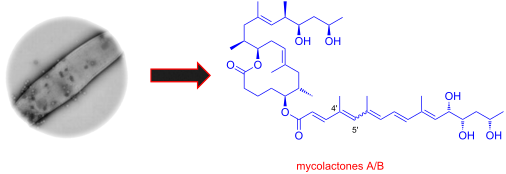

Graphical Abstract

Figure 1: Initial proposal for the core macrolactone structure (left) and the established complete structure ...
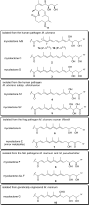
Figure 2: Mycolactone congeners and their origins.

Figure 3: Misassigned mycolactone E structure according to Small et al. [50] (11) and the correct structure (6) f...

Figure 4: Schematic illustration of Kishi’s improved mycolactone TLC detection method exploiting derivatizati...

Figure 5: Fluorescent probes derived from natural mycolactone A/B (1a,b) or its synthetic 8-desmethyl analogs...

Figure 6: Tool compounds used by Pluschke and co-workers for elucidating the molecular targets of mycolactone...

Figure 7: Synthetic strategies towards the extended mycolactone core. A) General strategies. B) Kishi’s appro...

Scheme 1: Kishi’s 1st generation approach towards the extended core structure of mycolactones. Reagents and c...

Scheme 2: Kishi’s 2nd generation approach towards the extended core structure of mycolactones. Reagents and c...

Scheme 3: Kishi’s 3rd generation approach towards the extended core structure of mycolactones. Reagents and c...

Scheme 4: Negishi’s synthesis of the extended core structure of mycolactones. Reagents and conditions: a) (i) ...

Scheme 5: Burkart’s (incomplete) 1st generation approach towards the extended core structure of mycolactones....
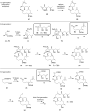
Scheme 6: Burkart’s (incomplete) 1st, 2nd and 3rd generation approach towards the extended mycolactone core s...

Scheme 7: Altmann’s synthesis of alkyl iodide 91. Reagents and conditions: a) (i) PMB-trichloroacetimidate, T...

Scheme 8: Final steps of Altmann’s synthesis of the extended core structure of mycolactones. Reagents and con...

Scheme 9: Basic principles of the Aggarwal lithiation–borylation homologation process [185,186].

Scheme 10: Aggarwal’s synthesis of the C1–C11 fragment of the mycolactone core. Reagents and conditions: a) Cl...

Scheme 11: Aggarwal’s synthesis of the linear C1–C20 fragment of the mycolactone core. Reagents and conditions...

Figure 8: Synthetic strategies towards the mycolactone A/B lower side chain.

Scheme 12: Gurjar and Cherian’s synthesis of the C1’–C8’ fragment of the mycolactone A/B pentaenoate side chai...

Scheme 13: Gurjar and Cherian’s synthesis of the benzyl-protected mycolactone A/B pentaenoate side chain. Reag...

Scheme 14: Kishi’s synthesis of model compounds for elucidating the stereochemistry of the C7’–C16’ fragment o...

Scheme 15: Kishi’s synthesis of the mycolactone A/B pentaenoate side chain. (a) (i) NaH, (EtO)2P(O)CH2CO2Et, T...

Scheme 16: Feringa and Minnaard's incomplete synthesis of mycolactone A/B pentaenoate side chain. Reagents and...

Scheme 17: Altmann’s approach towards the mycolactone A/B pentaenoate side chain. Reagents and conditions: a) ...

Scheme 18: Negishi’s access to the C1’–C7’ fragment of mycolactone A. Reagents and conditions: a) (i) n-BuLi, ...

Scheme 19: Negishi’s approach to the C1’–C7’ fragment of mycolactone B. Reagents and conditions: a) (i) DIBAL-...

Scheme 20: Negishi’s synthesis of the C8’–C16’ fragment of mycolactone A/B. Reagents and conditions: a) 142, BF...

Scheme 21: Negishi’s assembly of the mycolactone A and B pentaenoate side chains. Reagents and conditions: a) ...

Scheme 22: Blanchard’s approach to the mycolactone A/B pentaenoate side chain. a) (i) Ph3P=C(Me)COOEt, CH2Cl2,...

Scheme 23: Kishi’s approach to the mycolactone C pentaenoate side chain exemplified for the 13’R,15’S-isomer 1...

Scheme 24: Altmann’s (unpublished) synthesis of the mycolactone C pentaenoate side chain. Reagents and conditi...

Scheme 25: Blanchard’s synthesis of the mycolactone C pentaenoate side chain. Reagents and conditions: a) (i) ...

Scheme 26: Kishi’s synthesis of the tetraenoate side chain of mycolactone F exemplified by enantiomer 165. Rea...

Scheme 27: Kishi’s synthesis of the mycolactone E tetraenoate side chain. Reagents and conditions: a) (i) CH2=...

Scheme 28: Wang and Dai’s synthesis of the mycolactone E tetraenoate side chain. Reagents and conditions: a) (...

Scheme 29: Kishi’s synthesis of the dithiane-protected tetraenoate side chain of the minor oxo-metabolite of m...

Scheme 30: Kishi’s synthesis of the mycolactone S1 and S2 pentaenoate side chains. Reagents and conditions: a)...

Scheme 31: Kishi’s 1st generation and Altmann’s total synthesis of mycolactone A/B (1a,b) and Negishi’s select...

Scheme 32: Kishi’s 2nd generation total synthesis of mycolactone A/B (1a,b). Reagents and conditions: a) 2,4,6...

Scheme 33: Blanchard’s synthesis of the 8-desmethylmycolactone core. Reagents and conditions: a) (i) TsCl, TEA...

Scheme 34: Altmann’s (partially unpublished) synthesis of the C20-hydroxylated mycolactone core. Reagents and ...

Scheme 35: Altmann’s and Blanchard’s approaches towards the 11-isopropyl-8-desmethylmycolactone core. Reagents...

Scheme 36: Blanchard’s synthesis of the saturated variant of the C11-isopropyl-8-desmethylmycolactone core. Re...

Scheme 37: Structure elucidation of photo-mycolactones generated from tetraenoate 224.

Scheme 38: Kishi’s synthesis of the linear precursor of the photo-mycolactone B1 lower side chain. Reagents an...

Scheme 39: Kishi’s synthesis of the photo-mycolactone B1 lower side chain. Reagents and conditions: a) LiTMP, ...

Scheme 40: Kishi’s synthesis of a stabilized lower mycolactone side chain. Reagents and conditions: a) (i) TBD...
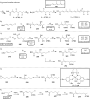
Scheme 41: Blanchard’s variation of the C12’,C13’,C15’ stereocluster. Reagents and conditions: a) (i) DIBAL-H,...

Scheme 42: Blanchard’s synthesis of aromatic mycolactone polyenoate side chain analogs. Reagents and condition...

Scheme 43: Small’s partial synthesis of a BODIPY-labeled mycolactone derivative and Demangel’s partial synthes...

Scheme 44: Blanchard’s synthesis of the BODIPY-labeled 8-desmethylmycolactones. Reagents and conditions: a) (i...
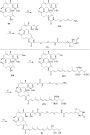
Scheme 45: Altmann’s synthesis of biotinylated mycolactones. Reagents and conditions: a) (i) CDI, THF, rt, 2 d...

Figure 9: Kishi’s elongated n-butyl carbamoyl mycolactone A/B analog.
Total synthesis of elansolids B1 and B2
- Liang-Liang Wang and
- Andreas Kirschning
Beilstein J. Org. Chem. 2017, 13, 1280–1287, doi:10.3762/bjoc.13.124
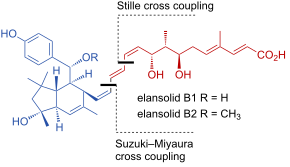
- functionalized alkene 14 which is suited for a sequential cross-coupling strategy (Scheme 2). Under the catalytic conditions, we did not encounter isomerization of the alkene and diene configurations in vinyl boronate 13. The preparation of the newly modified western fragment started from known IMDA product 9 [7

Graphical Abstract

Figure 1: Elansolids A1/A2, B1, B2 and A3 (1–4).

Scheme 1: IMDA to generate the tetrahydroindane unit of the elansolids by oxidation of benzyl ether 8 as prec...

Scheme 2: Stille cross-coupling reaction and formation of eastern fragment 13.
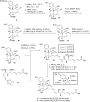
Scheme 3: Total synthesis of elansolids B1 (2) and B2 (3).
Total syntheses of the archazolids: an emerging class of novel anticancer drugs
- Stephan Scheeff and
- Dirk Menche
Beilstein J. Org. Chem. 2017, 13, 1085–1098, doi:10.3762/bjoc.13.108
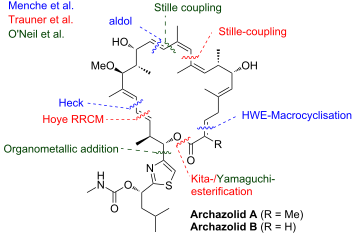
- three dimensional conformation of the archazolids by NMR methods, molecular modelling and chemical derivatizations [59][60]. During these studies, they became aware that C2–C5 diene of acyclic analogs would be very labile towards isomerization. However, such processes would be suppressed in the
- was planned which would likewise set the labile C2–C5 diene and thus concomitantly stabilize this functionality by macrocyclic constraints. Menche’s total synthesis of archazolid A Synthesis of the north-eastern fragment As shown in Scheme 3, the construction of the north-eastern fragment 5 relied on
- synthesis, also on highly elaborate substrates. Considerable efforts were invested before the challenging Heck coupling with the thiazole fragment 6 could be effected with useful selectivities. Besides the desired E,E-diene 34 formation of other double bond isomers both in the southern and northern part of

Graphical Abstract

Scheme 1: Molecular structures of the archazolids.

Scheme 2: Retrosynthetic analysis of archazolid A by the Menche group.

Scheme 3: Synthesis of north-eastern fragment 5 through a Paterson anti-aldol addition and multiple Still–Gen...

Scheme 4: Synthesis of 4 through an Abiko–Masamune anti-aldol addition.

Scheme 5: Thiazol construction and synthesis of the southern fragment 6.

Scheme 6: Completion of the total synthesis of archazolid A.

Scheme 7: Synthesis of archazolid B (2) by a ring closing Heck reaction of 38.

Scheme 8: Retrosynthetic analysis of archazolid B by the Trauner group.

Scheme 9: Synthesis of acid 40 from Roche ester 41 involving a highly efficient Trost–Alder ene reaction.

Scheme 10: Synthesis of precursor 39 for the projected relay RCM reaction.

Scheme 11: Final steps of Trauner’s total synthesis of archazolid B.

Scheme 12: Overview of the different retrosynthetic approaches for the synthesis of dihydroarchazolid B (3) re...

Scheme 13: Fragment synthesis of 69 towards the total synthesis of 3.

Scheme 14: Organometallic addition of the side chain to access free alcohol 75.
Opportunities and challenges for the sustainable production of structurally complex diterpenoids in recombinant microbial systems
- Katarina Kemper,
- Max Hirte,
- Markus Reinbold,
- Monika Fuchs and
- Thomas Brück
Beilstein J. Org. Chem. 2017, 13, 845–854, doi:10.3762/bjoc.13.85
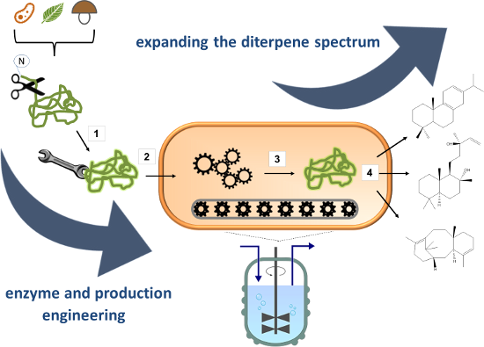
- synthase domain indicating different catalytical properties. The natural product of PaFS is fusicocca-2,10(14)-diene, an intermediate in the biosynthesis of the phytotoxin fusicoccin A by P. amygdali. Interestingly, a recent work by Qin and co-workers [71] even revealed the conversion of a fungal diterpene

Graphical Abstract

Scheme 1: Isoprenoid biosynthetic pathways and examples for their engineering in heterologous production syst...

Scheme 2: Mutational engineering of different classes of terpene synthases. Left side: The natural product of...
Figure 1: Implementation of a microbial cell factory. 1: Selection of enzymes from different species. P450 an...
Exploring endoperoxides as a new entry for the synthesis of branched azasugars
- Svenja Domeyer,
- Mark Bjerregaard,
- Henrik Johansson and
- Daniel Sejer Pedersen
Beilstein J. Org. Chem. 2017, 13, 644–647, doi:10.3762/bjoc.13.63
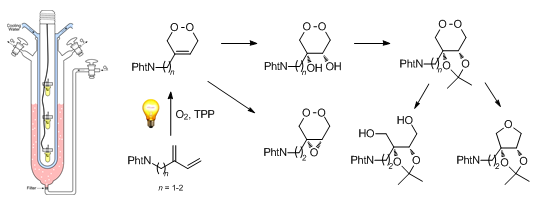
- + 2]-cycloaddition between a diene and singlet oxygen. The endoperoxides were dihydroxylated and protected to provide a series of endoperoxide building blocks for organic synthesis, with potential use as precursors for the synthesis of branched azasugars. Preliminary exploration of the chemistry of
- . Results and Discussion We set out to synthesise two diene substrates for a photochemical [4 + 2]-cycloaddition with singlet oxygen to provide two different endoperoxides (Scheme 1, n = 1–2). Based on literature precedent Boc-protection was utilised for the amino group (Scheme 2) [13][14]. Moreover, the
- TEMPO, whereas oxidation of 6 using the Parikh–Doering method gave a good yield of aldehyde 10. Next, aldehydes 7, 9 and 10 were subjected to a Mannich reaction using the method by Erkkilä and Pihko to give the α,β-unsaturated aldehydes 11–13 in good yields [20]. The final step of the diene synthesis

Graphical Abstract
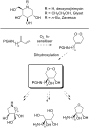
Scheme 1: Top: The natural product deoxynojirimycin and two analogues and marketed drugs Glyset and Zavesca. ...

Scheme 2: Synthesis of Boc- and Pht-protected diene substrates for endoperoxide synthesis. TBA-Cl = tetrabuty...

Scheme 3: Synthesis of endoperoxides 17–19 by [4 + 2]-cycloaddition of dienes 14–16 with singlet oxygen. The ...

Scheme 4: Dihydroxylation and protection of endoperoxides 18 and 19 to provide novel building blocks 20–23 fo...
Unpredictable cycloisomerization of 1,11-dien-6-ynes by a common cobalt catalyst
- Abdusalom A. Suleymanov,
- Dmitry V. Vasilyev,
- Valentin V. Novikov,
- Yulia V. Nelyubina and
- Dmitry S. Perekalin
Beilstein J. Org. Chem. 2017, 13, 639–643, doi:10.3762/bjoc.13.62
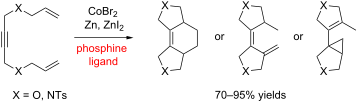
- cycloisomerization in the presence of the cobalt catalytic system CoBr2/phosphine ligand/Zn/ZnI2 giving cyclohexene, diene or cyclopropane structures depending on the type of the phosphine ligand. This unpredictable behaviour suggests that, although the availability of the cobalt catalytic system is appealing, the
- the diene compounds 3a,b in 90–95% yields. These compounds were also obtained using a 1,2-bis(diphenylphosphino)benzene (dppbz) ligand. Despite the extensive studies of enyne transformations, this type of cyclization has been achieved only recently, using a cyclobutadiene rhodium complex as a catalyst
- -membered metallacycle 7, which can undergo reductive elimination to give the cyclohexene 2, or β-hydride elimination followed by the reductive elimination to give the diene 3. It may be speculated that the steric crowding in the intermediate 7 determines the direction of the reaction. In contrast to the

Graphical Abstract

Scheme 1: Examples of metal-catalyzed transformations of 1,11-dien-6-ynes.
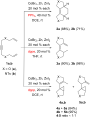
Scheme 2: Cobalt-catalyzed cycloisomerizations of 1,11-dien-6-ynes.

Scheme 3: Possible mechanism for formation of the compounds 2–5.

Scheme 4: Cycloisomerization of the substituted dienyne 1c.

Figure 1: The substituted 1,11-dien-6-ynes that did not undergo cycloisomerization in the presence of the cob...
Synthesis of 1-indanones with a broad range of biological activity
- Marika Turek,
- Dorota Szczęsna,
- Marek Koprowski and
- Piotr Bałczewski
Beilstein J. Org. Chem. 2017, 13, 451–494, doi:10.3762/bjoc.13.48
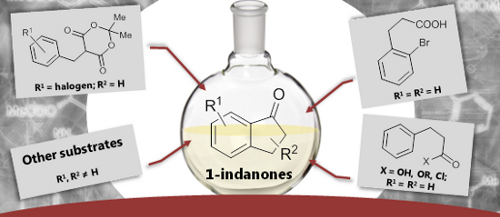
- , this compound polymerizes rapidly even at low temperatures, such as −50 °C. Therefore, until 1989 abicoviromycin (168) has not been successfully synthesized. The unit which probably determines the reactivity and unstability of abicoviromycin (168) is the diene-imine fragment. Due this fact, the authors
- similar way to synthesize 5-hydroxy substituted 1-indanone 250 by utilizing the 1,3-diene 248 and the sulfoxide 249, has been described by Danishefsky et al. [98]. As a result of the cycloaddition, 5-hydroxy-1-indanone (250) has been obtained in 68% yield (Scheme 69). Lee, Kim and Danishefsky have
- synthesized halogenated 1-indanones 253 from 2-halogenocyclopent-2-enones 252 and diene 251 [99]. As a result of the Diels–Alder reaction, bromo- and chloro-substituted 1-indanones 253a and 253b have been obtained in 91% and 72% yield, respectively (Scheme 70). Harmata et al. have synthesized 1-indanones 257

Graphical Abstract

Figure 1: Biologically active 1-indanones and their structural analogues.

Figure 2: Number of papers about (a) 1-indanones, (b) synthesis of 1-indanones.

Scheme 1: Synthesis of 1-indanone (2) from hydrocinnamic acid (1).

Scheme 2: Synthesis of 1-indanone (2) from 3-(2-bromophenyl)propionic acid (3).

Scheme 3: Synthesis of 1-indanones 5 from 3-arylpropionic acids 4.

Scheme 4: Synthesis of kinamycin (9a) and methylkinamycin C (9b).

Scheme 5: Synthesis of trifluoromethyl-substituted arylpropionic acids 12, 1-indanones 13 and dihydrocoumarin...

Scheme 6: Synthesis of 1-indanones 16 from benzoic acids 15.

Scheme 7: Synthesis of 1-indanones 18 from arylpropionic and 3-arylacrylic acids 17.

Scheme 8: The NbCl5-induced one-step synthesis of 1-indanones 22.

Scheme 9: Synthesis of biologically active 1-indanone derivatives 26.

Scheme 10: Synthesis of enantiomerically pure indatraline ((−)-29).

Scheme 11: Synthesis of 1-indanone (2) from the acyl chloride 30.

Scheme 12: Synthesis of the mechanism-based inhibitors 33 of coelenterazine.

Scheme 13: Synthesis of the indane 2-imidazole derivative 37.

Scheme 14: Synthesis of fluorinated PAHs 41.

Scheme 15: Synthesis of 1-indanones 43 via transition metal complexes-catalyzed carbonylative cyclization of m...

Scheme 16: Synthesis of 6-methyl-1-indanone (46).

Scheme 17: Synthesis of 1-indanone (2) from ester 48.

Scheme 18: Synthesis of benzopyronaphthoquinone 51 from the spiro-1-indanone 50.

Scheme 19: Synthesis of the selective endothelin A receptor antagonist 55.

Scheme 20: Synthesis of 1-indanones 60 from methyl vinyl ketone (57).

Scheme 21: Synthesis of 1-indanones 64 from diethyl phthalate 61.

Scheme 22: Synthesis of 1-indanone derivatives 66 from various Meldrum’s acids 65.

Scheme 23: Synthesis of halo 1-indanones 69.

Scheme 24: Synthesis of substituted 1-indanones 71.

Scheme 25: Synthesis of spiro- and fused 1-indanones 73 and 74.

Scheme 26: Synthesis of spiro-1,3-indanodiones 77.

Scheme 27: Mechanistic pathway for the NHC-catalyzed Stetter–Aldol–Michael reaction.

Scheme 28: Synthesis of 2-benzylidene-1-indanone derivatives 88a–d.

Scheme 29: Synthesis of 1-indanone derivatives 90a–i.

Scheme 30: Synthesis of 1-indanones 96 from o-bromobenzaldehydes 93 and alkynes 94.

Scheme 31: Synthesis of 3-hydroxy-1-indanones 99.

Scheme 32: Photochemical preparation of 1-indanones 103 from ketones 100.

Scheme 33: Synthesis of chiral 3-aryl-1-indanones 107.

Scheme 34: Photochemical isomerization of 2-methylbenzil 108.

Scheme 35: Synthesis of 2-hydroxy-1-indanones 111a–c.

Scheme 36: Synthesis of 1-indanone derivatives 113 and 114 from η6-1,2-dioxobenzocyclobutene complex 112.

Scheme 37: Synthesis of nakiterpiosin (117).

Scheme 38: Synthesis of 2-alkyl-1-indanones 120.

Scheme 39: Synthesis of fluorine-containing 1-indanone derivatives 123.

Scheme 40: Synthesis of 2-benzylidene and 2-benzyl-1-indanones 126, 127 from the chalcone 124.

Scheme 41: Synthesis of 2-bromo-6-methoxy-3-phenyl-1-indanone (130).

Scheme 42: Synthesis of combretastatin A-4-like indanones 132a–s.

Figure 3: Chemical structures of investigated dienones 133 and synthesized cyclic products 134–137.

Figure 4: Chemical structures of 1-indanones and their heteroatom analogues 138–142.

Scheme 43: Synthesis of 2-phosphorylated and 2-non-phosphorylated 1-indanones 147 and 148 from β-ketophosphona...

Scheme 44: Photochemical synthesis of 1-indanone derivatives 150, 153a, 153b.

Scheme 45: Synthesis of polysubstituted-1-indanones 155, 157.

Scheme 46: Synthesis of 1-indanones 159a–g from α-arylpropargyl alcohols 158 using RhCl(PPh3)3 as a catalyst.

Scheme 47: Synthesis of optically active 1-indanones 162 via the asymmetric Rh-catalyzed isomerization of race...

Scheme 48: Mechanism of the Rh-catalyzed isomerization of α-arylpropargyl alcohols 161 to 1-indanones 162.

Figure 5: Chemical structure of abicoviromycin (168) and its new benzo derivative 169.

Scheme 49: Synthesis of racemic benzoabicoviromycin 172.

Scheme 50: Synthesis of [14C]indene 176.

Scheme 51: Synthesis of indanone derivatives 178–180.

Scheme 52: Synthesis of racemic pterosin A 186.

Scheme 53: Synthesis of trans-2,3-disubstituted 1-indanones 189.

Scheme 54: Synthesis of 3-aryl-1-indanone derivatives 192.

Scheme 55: Synthesis of 1-indanone derivatives 194 from 3-(2-iodoaryl)propanonitriles 193.

Scheme 56: Synthesis of 1-indanones 200–204 by cyclization of aromatic nitriles.

Scheme 57: Synthesis of 1,1’-spirobi[indan-3,3’-dione] derivative 208.

Scheme 58: Total synthesis of atipamezole analogues 211.

Scheme 59: Synthesis of 3-[4-(1-piperidinoethoxy)phenyl]spiro[indene-1,1’-indan]-5,5’-diol hydrochloride 216.

Scheme 60: Synthesis of 3-arylindan-1-ones 219.

Scheme 61: Synthesis of 2-hydroxy-1-indanones 222.

Scheme 62: Synthesis of the 1-indanone 224 from the THP/MOM protected chalcone epoxide 223.

Scheme 63: Synthesis of 1-indanones 227 from γ,δ-epoxy ketones 226.

Scheme 64: Synthesis of 2-hydroxy-2-methylindanone (230).

Scheme 65: Synthesis of 1-indanone derivatives 234 from cyclopropanol derivatives 233.

Scheme 66: Synthesis of substituted 1-indanone derivatives 237.

Scheme 67: Synthesis of 7-methyl substituted 1-indanone 241 from 1,3-pentadiene (238) and 2-cyclopentenone (239...

Scheme 68: Synthesis of disubstituted 1-indanone 246 from the siloxydiene 244 and 2-cyclopentenone 239.

Scheme 69: Synthesis of 5-hydroxy-1-indanone (250) via the Diels–Alder reaction of 1,3-diene 248 with sulfoxid...

Scheme 70: Synthesis of halogenated 1-indanones 253a and 253b.

Scheme 71: Synthesis of 1-indanones 257 and 258 from 2-bromocyclopentenones 254.

Scheme 72: Synthesis of 1-indanone 261 from 2-bromo-4-acetoxy-2-cyclopenten-1-one (260) and 1,2-dihydro-4-viny...

Scheme 73: Synthesis of 1-indanone 265 from 1,2-dihydro-7-methoxy-4-vinylnaphthalene (262) and bromo-substitut...

Scheme 74: Synthesis of 1-indanone 268 from dihydro-3-vinylphenanthrene 266 and 4-acetoxy-2-cyclopenten-1-one (...

Scheme 75: Synthesis of 1-indanone 271 from phenylselenyl-substituted cyclopentenone 268.

Scheme 76: Synthesis of 1-indanone 272 from the trienone 270.

Scheme 77: Synthesis of the 1-indanone 276 from the aldehyde 273.

Scheme 78: Synthesis of 1-indanones 278 and 279.

Scheme 79: Synthesis of 1-indanone 285 from octa-1,7-diyne (282) and cyclopentenone 239.

Scheme 80: Synthesis of benz[f]indan-1-one (287) from cyclopentenone 239 and o-bis(dibromomethyl)benzene (286)....

Scheme 81: Synthesis of 3-methyl-substituted benz[f]indan-1-one 291 from o-bis(dibromomethyl)benzene (286) and...

Scheme 82: Synthesis of benz[f]indan-1-one (295) from the anthracene epidioxide 292.

Scheme 83: Synthesis of 1-indanone 299 from homophthalic anhydride 298 and cyclopentynone 297.

Scheme 84: Synthesis of cyano-substituted 1-indanone derivative 301 from 2-cyanomethylbenzaldehyde (300) and c...

Scheme 85: Synthesis of 1-indanone derivatives 303–305 from ketene dithioacetals 302.

Scheme 86: Synthesis of 1-indanones 309–316.

Scheme 87: Mechanism of the hexadehydro-Diels–Alder (HDDA) reaction.

Scheme 88: Synthesis of 1-indenone 318 and 1-indanones 320 and 321 from tetraynes 317 and 319.

Scheme 89: Synthesis of 1-indanone 320 from the triyn 319.

Scheme 90: Synthesis 1-indanone 328 from 2-methylfuran 324.

Scheme 91: Synthesis of 1-indanones 330 and 331 from furans 329.

Scheme 92: Synthesis of 1-indanone 333 from the cycloadduct 332.

Scheme 93: Synthesis of (S)-3-arylindan-1-ones 335.

Scheme 94: Synthesis of (R)-2-acetoxy-1-indanone 338.

Figure 6: Chemical structures of obtained cyclopenta[α]phenanthrenes 339.

Scheme 95: Synthesis of the benzoindanone 343 from arylacetaldehyde 340 with 1-trimethylsilyloxycyclopentene (...
Decarboxylative and dehydrative coupling of dienoic acids and pentadienyl alcohols to form 1,3,6,8-tetraenes
- Ghina’a I. Abu Deiab,
- Mohammed H. Al-Huniti,
- I. F. Dempsey Hyatt,
- Emma E. Nagy,
- Kristen E. Gettys,
- Sommayah S. Sayed,
- Christine M. Joliat,
- Paige E. Daniel,
- Rupa M. Vummalaneni,
- Andrew T. Morehead Jr,
- Andrew L. Sargent and
- Mitchell P. Croatt
Beilstein J. Org. Chem. 2017, 13, 384–392, doi:10.3762/bjoc.13.41
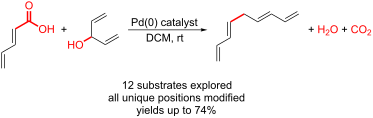
- 1,3,6,8-tetraenes. Contrary to related decarboxylative coupling reactions, an anion-stabilizing group is not required adjacent to the carboxyl group. Of mechanistic importance, it appears that both the diene of the acid and the diene of the alcohol are required for this reaction. To further understand
- this reaction, substitutions at every unique position of both coupling partners was examined and two potential mechanisms are presented. Keywords: decarboxylation; diene; dienoate; palladium; pentadienyl; tetraene; Introduction The construction of sp2–sp3 carbon–carbon bonds remains a difficult and
- ], nitro [26][27], or alkyne [21][28][29][30][31][32], Scheme 1), or use an aryl carboxylate [33][34] which typically requires the assistance of silver or copper(I) salts for the decarboxylative step. It is rare to use a pentadienyl electrophile [35], or to have a diene or simple alkene adjacent to the

Graphical Abstract

Scheme 1: Prior and current decarboxylative couplings.

Scheme 2: Esters examined in the decarboxylation reaction.

Scheme 3: Possible mechanistic pathways.

Figure 1: Calculated HOMO of transition state between E and F.
The reductive decyanation reaction: an overview and recent developments
- Jean-Marc R. Mattalia
Beilstein J. Org. Chem. 2017, 13, 267–284, doi:10.3762/bjoc.13.30
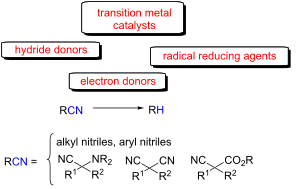
- . Rojas et al. proposed a convenient two-step pathway for the preparation of alkyl α,ω-dienes 3. These dienes are well-known precursors in ring-closing metathesis (RCM) and acyclic diene metathesis (ADMET) chemistry [32]. They first reported the quantitative α-alkylation of primary nitriles 1 [33]. In a
- second part of their work, they developed adequate conditions to carry out the decyanation reaction without olefin isomerization [18]. They explored several methods for the preparation of 12-butyltricosa-1,22-diene 3 (R = n-C4H9). The reaction was carried out in a slurry of K/Al2O3 in hexane, hexane

Graphical Abstract

Scheme 1: Mechanism for the reduction under metal dissolving conditions.

Scheme 2: Example of decyanation in metal dissolving conditions coupled with deprotection [30]. TBDMS = tert-buty...

Scheme 3: Preparation of α,ω-dienes [18,33].

Scheme 4: Cyclization reaction using a radical probe [18].

Scheme 5: Synthesis of (±)-xanthorrhizol (8) [39].

Scheme 6: Mechanism for the reduction of α-aminonitriles by hydride donors.

Scheme 7: Synthesis of phenanthroindolizidines and phenanthroquinolizidines [71].

Scheme 8: Two-step synthesis of 5-unsubstituted pyrrolidines (25 examples and 1 synthetic application, see be...

Scheme 9: Synthesis of (±)-isoretronecanol 19. DBU = 1,8-diazabicyclo[5.4.0]undec-7-ene [74].

Scheme 10: Proposed mechanism with 14a for the NaBH4 induced decyanation reaction (“BH3” = BH3·THF) [74].

Scheme 11: Reductive decyanation by a sodium hydride–iodide composite (26 examples) [81].

Scheme 12: Proposed mechanism for the reduction by NaH [81].

Scheme 13: Reductive decyanation catalyzed by nickel nanoparticles. Yields are given in weight % from GC–MS da...

Scheme 14: Decyanation of 2-cyanobenzo[b]thiophene [87].

Scheme 15: Simplified pathways involved in transition-metal-promoted reductive decyanations [93,95].

Scheme 16: Fe-catalyzed reductive decyanation. Numbers in square brackets represent turnover numbers. The TONs...

Scheme 17: Rh-catalyzed reductive decyanation of aryl nitriles (18 examples, 2 synthetic applications) [103].

Scheme 18: Rh-catalyzed reductive decyanation of aliphatic nitriles (15 examples, one synthetic application) [103].

Scheme 19: Ni-catalyzed reductive decyanation (method A: 28 examples and 2 synthetic applications; method B: 3...

Scheme 20: Reductive decyanation catalyzed by the nickel complex 58 (method A, 14 examples, yield ≥ 20% and 1 ...

Scheme 21: Proposed catalytic cycle for the nickel complex 58 catalyzed decyanation (method A). Only the cycle...

Scheme 22: Synthesis of bicyclic lactones [119,120].

Scheme 23: Reductive decyanation of malononitriles and cyanoacetates using NHC-boryl radicals (9 examples). Fo...

Scheme 24: Proposed mechanism for the reduction by NHC-boryl radicals. The other possible pathway (addition of ...

Scheme 25: Structures of organic electron-donors. Only the major Z isomer of 80 is shown [125,127].

Scheme 26: Reductive decyanation of malononitriles and cyanoacetates using organic electron-donors (method A, ...

Scheme 27: Photoreaction of dibenzylmalononitrile with 81 [128].

Scheme 28: Examples of decyanation promoted in acid or basic media [129,131,134,135].

Scheme 29: Mechanism proposed for the base-induced reductive decyanation of diphenylacetonitriles [136].

Scheme 30: Reductive decyanation of triarylacetonitriles [140].
Diels–Alder reactions of myrcene using intensified continuous-flow reactors
- Christian H. Hornung,
- Miguel Á. Álvarez-Diéguez,
- Thomas M. Kohl and
- John Tsanaktsidis
Beilstein J. Org. Chem. 2017, 13, 120–126, doi:10.3762/bjoc.13.15
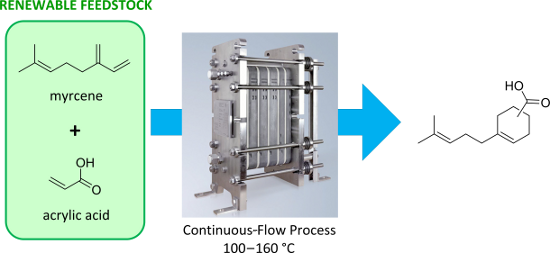
- fragrances are based on myrcene, such as geraniol, nerol, linalool, menthol, citral, citronellol or citronellal [3]. The terminal diene moiety present in myrcene allows for a reaction with a suitable dienophile following the Diels–Alder reaction mechanism. Dahill et al. describe the synthesis of the Diels
- . Results and Discussion The solution-phase Diels–Alder reactions presented herein follow the general reaction pathway shown in Scheme 1. The conjugated diene myrcene (1) was reacted with a series of dienophiles 2 to form the Diels–Alder adducts 3. Before investigating this reaction for continuous-flow

Graphical Abstract

Scheme 1: Diels–Alder reaction of myrcene (1), with various dienophiles 2.

Figure 1: Kinetic studies of the Diels–Alder reaction between myrcene (1) and acrylic acid (2b); a) for diffe...

Figure 2: Comparison of conversions in three different reactors for the Diels–Alder reaction of myrcene (1) w...
New approaches to organocatalysis based on C–H and C–X bonding for electrophilic substrate activation
- Pavel Nagorny and
- Zhankui Sun
Beilstein J. Org. Chem. 2016, 12, 2834–2848, doi:10.3762/bjoc.12.283
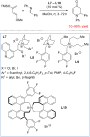
- catalysts for aza-Diels–Alder reactions of Danishefsky’s diene with imines (Scheme 5) [52]. A variety of ammonium salts (L7–L10) including chiral cinchonidine derivatives L7 and catalyst L10 were found to promote the reaction in low-to-good yields albeit with no enantioselectivity. Although it is perhaps
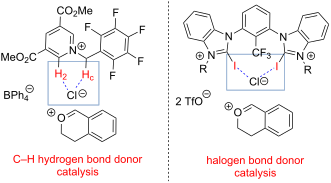
- atoms covalently bonded to a benzylic carbon (Scheme 8). In 2016 Maruoka and Shirakawa followed up the aforementioned studies by demonstrating that tetraalkylammonium salts L5, L6, L11 and L12 as well as TBAI could activate imines toward aza-Diels–Alder reaction with Danishefsky’s diene (Scheme 9) [51
- coordinating TfO− anion did not accelerate the cycloaddition. In 2015, Takeda, Minakata and co-workers demonstrated that 2-iodoimidazolium salt L24 could serve as an efficient catalyst of the aza-Diels−Alder reaction of aldimines and Danishefsky diene (Scheme 19) [90]. Other organohalides such as

Graphical Abstract

Figure 1: Electrophile Activation by Hydrogen Bond Donors [1-16].

Figure 2: Early examples of C–H hydrogen bonds and their recent use in supramolecular chemistry [18,19,32-34].

Scheme 1: Design of 1,2,3-triazole-based catalysts for trityl group transfer through chloride anion binding b...

Scheme 2: Examples of chiral triazole-based catalysts for anion activation designed by Mancheno and co-worker...

Scheme 3: Application of chiral triazole-based catalysts L3 and L4 for counterion activation of pyridinium, q...

Scheme 4: Ammonium salt anion binding via C–H hydrogen bonds in solid state [40-45,50,51].
Scheme 5: Early examples of ammonium salts being used for electrophilic activation of imines in aza-Diels–Ald...
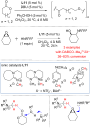
Scheme 6: Ammonium salts as hydrogen bond-donor catalysts by Bibal and co-workers [53,54].

Scheme 7: Tetraalkylammonium catalyst (L6)-catalyzed dearomatization of isoquinolinium salts [50].

Scheme 8: Tetraalkylammonium catalyst L6 complexation to halogen-containing substrates [51].

Scheme 9: Tetraalkylammonium-catalyzed aza-Diels–Alder reaction by Maruoka and co-workers [52].
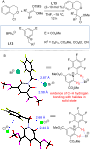
Scheme 10: (A) Alkylpyridinium catalysts L13-catalyzed reaction of 1-isochroman and silyl ketene acetals by Be...
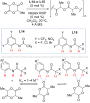
Scheme 11: Mixed N–H/C–H two hydrogen bond donors L14 and L15 as organocatalysts for ROP of lactide by Bibal a...

Scheme 12: Examples of stable complexes based on halogen bonding [68,69].

Scheme 13: Interaction between (−)-sparteine hydrobromide and (S)-1,2-dibromohexafluoropropane in the cocrysta...

Scheme 14: Iodine-catalyzed reactions that are computationally proposed to proceed through halogen bond to car...

Scheme 15: Transfer hydrogenation of phenylquinolines catalyzed by haloperfluoroalkanes by Bolm and co-workers ...

Scheme 16: Halogen bond activation of benzhydryl bromides by Huber and co-workers [82].

Scheme 17: Halogen bond-donor-catalyzed addition to oxocarbenium ions by Huber and co-workers [89].

Scheme 18: Halogen bond-donor activation of α,β-unsaturated carbonyl compounds in the [2 + 4] cycloaddition re...

Scheme 19: Halogen bond donor activation of imines in the [2 + 4] cycloaddition reaction of imine and Danishef...
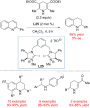
Scheme 20: Transfer hydrogenation catalyzed by a chiral halogen bond donor by Tan and co-workers [91].

Scheme 21: Allylation of benzylic alcohols by Takemoto and co-workers [92].

Scheme 22: NIS induced semipinacol rearrangement via C–X bond cleavage [93].
Identification, synthesis and mass spectrometry of a macrolide from the African reed frog Hyperolius cinnamomeoventris
- Markus Menke,
- Pardha Saradhi Peram,
- Iris Starnberger,
- Walter Hödl,
- Gregory F.M. Jongsma,
- David C. Blackburn,
- Mark-Oliver Rödel,
- Miguel Vences and
- Stefan Schulz
Beilstein J. Org. Chem. 2016, 12, 2731–2738, doi:10.3762/bjoc.12.269
- theoretically upper limit of 50%. We discovered that 6, sold by Acros Organics as racemic compound, was actually enriched in the desired (R)-enantiomer (see Supporting Information File 1 for optical rotation values). Diene (R)-9 was obtained by reduction of the epoxide 6 with LiAlH4 to form alcohol (R)-7

Graphical Abstract

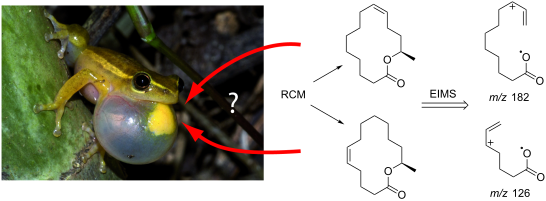
Figure 1: Macrolactones produced in scent glands of frogs: (Z)-Tetradec-5-en-13-olide (1) or (Z)-tetradec-9-e...

Figure 2: Total ion chromatogram of the gular gland extract of Hyperolius cinnamomeoventris. X: frog anaesthe...

Scheme 1: Synthesis of (9Z,13R)-tetradec-9-en-13-olide (2).

Scheme 2: Synthesis of (5Z,13R)-tetradec-5-en-13-olide ((R)-1). The enantiomer was obtained in a similar sequ...
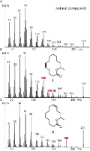
Figure 3: Mass spectra of A) the natural compound A, B) (Z)-tetradec-5-en-13-olide (1), and C) (Z)-tetradec-9...
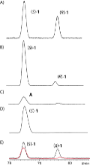
Figure 4: Total ion chromatogram of the enantiomer separation of (Z)-1 on a chiral β-TBDMS- Hydrodex phase. T...

Figure 5: Proposed mass spectrometric fragmentation of macrolides 1 and 2 leading to diagnostic ions of the i...
Synthesis of polyhydroxylated decalins via two consecutive one-pot reactions: 1,4-addition/aldol reaction followed by RCM/syn-dihydroxylation
- Michał Malik and
- Sławomir Jarosz
Beilstein J. Org. Chem. 2016, 12, 2602–2608, doi:10.3762/bjoc.12.255
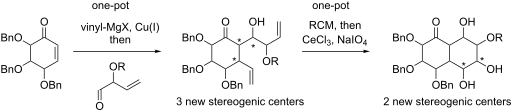
- 1,4-addition of vinylmagnesium bromide to sugar-derived cyclohexenone, followed by an aldol reaction with a derivative of but-3-enal. The obtained diene is then subjected to an assisted tandem catalytic sequence: ring-closing metathesis with the subsequent reuse of the Ru-catalyst in the syn

Graphical Abstract

Figure 1: General structures of mono- and bicyclic carbasugars.

Scheme 1: Approach to the synthesis of bicyclic carbasugars based on the use of sugar allyltins (previous wor...

Scheme 2: Approach to the synthesis of bicyclic decalins based on a 1,4-addition/aldol reaction followed by R...

Scheme 3: Reagents and conditions: (a) i. Zn, MeOH/H2O, 60 °C, 2 h, ii. Jones reagent, acetone, rt, 1 h, iii....

Scheme 4: Reagents and conditions: (a) i. BzCl, DCM, Et3N, DMAP, rt, 24 h, ii. HCl, MeOH/H2O, rt, 24 h, 55% (...

Scheme 5: Reagents and conditions: (a) TBAF∙3H2O, THF, rt, 24 h, 96% (19) or 94% (23); (b) i. BzCl, DCM, Et3N...

Scheme 6: Reagents and conditions: (a) vinyl-MgBr, CuBr∙Me2S, THF, −45 °C, 15 min, then (S)- or (R)-10, −45 °...

Scheme 7: Reagents and conditions: (a) Hoveyda–Grubbs II cat. (5 mol %), toluene, 50 °C, 2 h, then evaporatio...

Figure 2: Possible course of the syn-dihydroxylation leading to 27, 28, and 29.

Scheme 8: Reagents and conditions: (a) NaBH(OAc)3, MeCN/THF/AcOH, rt, 24 h, 67% (30, dr >99:1) or 74% (31 + 32...
Diels–Alder reactions in confined spaces: the influence of catalyst structure and the nature of active sites for the retro-Diels–Alder reaction
- Ángel Cantín,
- M. Victoria Gomez and
- Antonio de la Hoz
Beilstein J. Org. Chem. 2016, 12, 2181–2188, doi:10.3762/bjoc.12.208

- Diels–Alder reaction selectivity [28]. The DAR of cyclopentadiene with p-benzoquinone is a well-known example of cycloadditions, and some results can be found on the control of the selectivity to the different isomers. In homogeneous phase, equimolar amounts of diene and dienophile afford two isomers
- second molecule of the diene to give again the kinetic endo-endo isomer. It is remarkable that neither the thermodynamic exo isomer nor the secondary exo-endo and exo-exo products were detected under our reaction conditions. Thus, the observed products, endo-endo and endo-exo are obtained in different

Graphical Abstract

Scheme 1: Distribution of products in the Diels–Alder reaction between cyclopentadiene and p-benzoquinone.

Figure 1: Conversion in the DAR catalysed by silica Beta zeolites and Aerosil.

Figure 2: Effect of Lewis and Brønsted acid sites in the conversion (a) and selectivity (b) of the DAR.

Figure 3: Effect of pore size in the conversion (a) and selectivity (b) of the DAR.

Figure 4: Comparison of conversion (a) and selectivity (b) of the DAR catalysed by Al-Beta zeolite and MCM-41....

Figure 5: Comparison of conversion (a) and selectivity (b) of the DAR catalysed extra-large pore 3D zeolites.

Figure 6: Effect of the Si/Al ratio in the conversion (a) and selectivity (b) of the DAR.

Figure 7: Effect of the reutilization of the catalysts in the conversion (a) and selectivity (b) of the DAR.
The direct oxidative diene cyclization and related reactions in natural product synthesis
- Juliane Adrian,
- Leona J. Gross and
- Christian B. W. Stark
Beilstein J. Org. Chem. 2016, 12, 2104–2123, doi:10.3762/bjoc.12.200
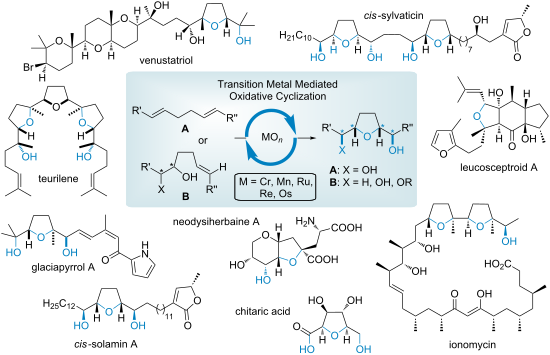
- . Likewise, syntheses of fragments of natural products applying an oxidative cyclization protocol [1][2] and sequential epoxidation/cyclization procedures [3] are not in the scope of this article and are therefore not covered. Previous review articles concerning oxidative diene cyclization chemistry can be
- = Ac) or neryl acetate but seemed to be fairly general to other 1,5-diene substrates. Finally, they speculated on possible intermediates which may account for the outcome and the overall stereoselectivity of this unusual reaction. A mechanism, however, was not provided (vide infra). To date it is
- protocols using the three different d0-metals are highly diastereoselective (vide infra) and have been shown over the past decades to be applicable to a broad range of starting materials. Mechanistic aspects, stereochemistry and substrate scope of the direct oxidative diene cyclization Intrigued by the

Graphical Abstract

Scheme 1: Putative structures of geraniol 1a (R = H) or 1b (R = H) (in 1924), their expected dihydroxylation ...

Scheme 2: Correlation between the substrate double bond geometry and relative stereochemistry of the correspo...

Scheme 3: Mechanisms and classification for the metal-mediated oxidative cyclizations to form 2,5-disubstitut...

Scheme 4: Synthesis of (+)-anhydro-D-glucitol and (+)-D-chitaric acid using an OsO4-mediated oxidative cycliz...

Scheme 5: Total synthesis of neodysiherbaine A via a Ru(VIII)- and an Os(VI)-catalyzed oxidative cyclization,...

Scheme 6: Formal synthesis of ionomycin by Kocienski and co-workers.

Scheme 7: Total synthesis of amphidinolide F by Fürstner and co-workers.

Scheme 8: Brown`s and Donohoe`s oxidative cyclization approach to cis-solamin A.
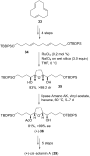
Scheme 9: Total synthesis of cis-solamin A using a Ru(VIII)-catalyzed oxidative cyclization and enzymatic des...
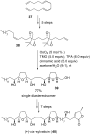
Scheme 10: Donohoe´s double oxidative cyclization approach to cis-sylvaticin.

Scheme 11: Permanganate-mediated approach to cis-sylvaticin by Brown and co-workers.

Scheme 12: Total synthesis of membranacin using a KMnO4-mediated oxidative cyclization.

Scheme 13: Total synthesis of membrarollin and its analogue 21,22-diepi-membrarollin.

Scheme 14: Total synthesis of rollidecin C and D using a late stage Re(VII)-catalyzed oxidative polycyclizatio...

Scheme 15: Co(II)-catalyzed oxidative cyclization in the total synthesis of asimilobin and gigantetrocin A.

Scheme 16: Mn(VII)-catalyzed oxidative cyclization of a 1,5-diene in the synthesis of trans-(+)-linalool oxide....

Scheme 17: Re(VII)-catalyzed oxidative cyclization in the total synthesis of teurilene.
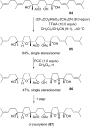
Scheme 18: Total synthesis of (+)-eurylene via Re(VII)- and Cr(VI)-mediated oxidative cyclizations.

Scheme 19: Synthesis of cis- and trans-THF Rings of eurylene via Mn(VII)-mediated oxidative cyclizations.

Scheme 20: Cr(VI)-catalyzed oxidative cyclization in the total synthesis of venustatriol by Corey et al.

Scheme 21: Ru(VIII)-catalyzed oxidative cyclization of a 1,5-diene in the synthesis and evaluation of its ster...

Scheme 22: Ru(VII)-catalyzed oxidative cyclization of a 5,6-dihydroxy alkene in the synthesis of the core stru...
Application of heterocyclic aldehydes as components in Ugi–Smiles couplings
- Katelynn M. Mason,
- Michael S. Meyers,
- Abbie M. Fox and
- Sarah B. Luesse
Beilstein J. Org. Chem. 2016, 12, 2032–2037, doi:10.3762/bjoc.12.191
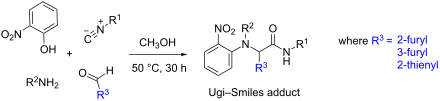
- standard Ugi–Smiles adducts 3 (Table 3). The lack of oxatricyclic epoxyisoindoline formation is not surprising, given the more remote relative proximity of the diene and dienophile. Propargylamine and 3-butenylamine were also satisfying partners with 3-furaldehyde in this process. Ugi–Smiles reactions with

Graphical Abstract

Scheme 1: N-Arylepoxyisoindolines via tandem Ugi–Smiles/IMDA reaction.

Scheme 2: Reaction monitoring by 1H NMR for production of 1b.

Scheme 3: Use of a thienyl-substituted aldehyde for Ugi–Smiles couplings.
Stereo- and regioselectivity of the hetero-Diels–Alder reaction of nitroso derivatives with conjugated dienes
- Lucie Brulíková,
- Aidan Harrison,
- Marvin J. Miller and
- Jan Hlaváč
Beilstein J. Org. Chem. 2016, 12, 1949–1980, doi:10.3762/bjoc.12.184
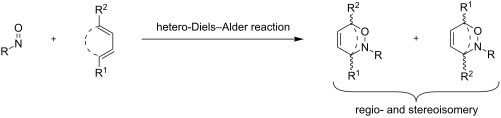
- , Czech Republic Department of Chemistry and Biochemistry, University of Notre Dame, Notre Dame, IN 46556, USA 10.3762/bjoc.12.184 Abstract The hetero-Diels–Alder reaction between a nitroso dienophile and a conjugated diene to give the 3,6-dihydro-2H-1,2-oxazine scaffold is useful for the synthesis of
- stereo- and regioselectivity for the synthesis of 1,2-oxazine scaffolds. Keywords: diene; hetero-Diels–Alder; nitroso compounds; regioselectivity; stereoselectivity; Review Introduction The hetero-Diels–Alder reaction represents one of the most important methods in organic synthesis, providing various
- biologically active compounds. It is a variant of the Diels–Alder reaction where either the diene or the dienophile contains a heteroatom. Hetero-Diels–Alder reactions between conjugated dienes and nitroso dienophiles affording 1,2-oxazines are utilized for the synthesis of many biologically active molecules

Graphical Abstract

Scheme 1: Nitroso hetero-Diels–Alder reaction.

Scheme 2: The hetero-Diels–Alder reaction between thebaine (4) and an acylnitroso dienophile 5.

Figure 1: Examples of nitroso dienophiles frequently used in hetero-Diels–Alder reaction studies.

Scheme 3: Synthesis of arylnitroso species by substitution of a trifluoroborate group [36].
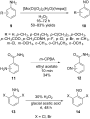
Scheme 4: Synthesis of arylnitroso compounds by amine oxidation.

Scheme 5: Synthesis of arylnitroso compounds by hydroxylamine oxidation.

Scheme 6: Synthesis of chloronitroso compounds by the treatment of a nitronate anion with oxalyl chloride.

Scheme 7: Non-oxidative routes to acylnitroso species.

Figure 2: RB3LYP/6-31G* computed energies (in kcal·mol−1) and bond lengths for exo and endo-transition states...

Scheme 8: Hetero-Diels–Alder cycloadditions of diene 28 and nitroso dienophiles 29.

Figure 3: Relative reactivity (ΔE#) and regioselectivity (Δ) for hetero-Diels–Alder of 28 and nitroso dienoph...

Scheme 9: Reaction of chiral 1-phosphono-1,3-butadiene 31 with nitroso dienophiles 32.

Scheme 10: Hetero-Diels–Alder reactions of hydroxamic acids 35 with various dienes 37.

Scheme 11: General regioselectivity of the nitroso hetero-Diels–Alder reaction observed with unsymmetrical die...

Scheme 12: Effect of the nitroso species on the regioselectivity for weakly directing 2-substituted dienes.

Scheme 13: Regioselectivity of 1,4-disubstituted dienes 51.

Scheme 14: Nitroso hetero-Diels–Alder reaction between Boc-nitroso compound 54 and dienes 55.

Scheme 15: Nitroso hetero-Diels–Alder reaction between Wightman reagent 58 and dienes 59.

Scheme 16: Regioselective reaction of 3-dienyl-2-azetidinones 62 with nitrosobenzene (47).

Scheme 17: The regioselective reaction of 1,3-butadienes 65 with various nitroso heterodienophiles 66.

Scheme 18: Catalysis of the nitroso hetero-Diels–Alder reaction by vanadium in the presence of the oxidant CHP...

Figure 4: 1,2-Oxazines synthesized in solution with moderate to high regioselectivity, showing the favored re...

Figure 5: 1,2-Oxazines synthesized in the solid phase with moderate to high regioselectivity, showing the fav...

Scheme 19: Regioselectivity of solution-phase nitroso hetero-Diels–Alder reaction with acyl and aryl nitroso d...

Scheme 20: Favored regioisomeric outcome for the solution and solid-phase reactions, giving hetero-Diels–Alder...

Figure 6: Favored regioisomers and regioisomeric ratios for 1,2-oxazines synthesized in solid phase (91, 93, ...

Scheme 21: Regiocontrol of the reaction between 3-dienyl-2-azetidinones and nitrosobenzene due to change in a ...

Scheme 22: Regiocontrol of the reaction between diene 111 and 2-methyl-6-nitrosopyridine (112) due to metal co...

Scheme 23: Asymmetric hetero-Diels–Alder reactions reported by Vasella [56].

Scheme 24: Asymmetric hetero-Diels–Alder reaction of cyclohexa-1,3-diene (120) with acylnitroso dienophile 119....

Scheme 25: Asymmetric induction with L-proline derivatives 124–126.

Scheme 26: Asymmetric cycloaddition of the acylnitroso compound 136 to diene 135.

Scheme 27: Asymmetric induction with arylmenthol-based nitroso dienophiles 142.

Scheme 28: Cycloaddition of silyloxycyclohexadiene 145 to the acylnitroso dienophile derived from (+)-camphors...

Scheme 29: Asymmetric reaction of O-isopropylidene-protected cis-cyclohexa-3,5-diene-1,2-diol 147 with mannofu...

Scheme 30: Synthesis of synthon 152 from 2-methoxyphenol 150 and chiral auxiliary 151.

Scheme 31: Asymmetric nitroso hetero-Diels–Alder reaction with Wightman chloronitroso reagent 58.

Scheme 32: Asymmetric 1,2-oxazine synthesis using chiral cyclic diene 157 and the application of this reaction...

Scheme 33: Asymmetric 1,2-oxazine synthesis using a chiral diene reported by Jones et al. [75]. aRegioisomeric rat...

Scheme 34: The nitroso hetero-Diels–Alder reaction of acyclic oxazolidine-substituted diene 170 and chiral 1-s...

Scheme 35: The nitroso hetero-Diels–Alder reaction of acyclic lactam-substituted diene 176 with various acylni...

Scheme 36: The hetero-Diels–Alder reaction of acylnitroso dienophile.

Scheme 37: The hetero-Diels–Alder reaction of arylnitroso dienophiles using Lewis acids.

Scheme 38: Asymmetric hetero-Diels–Alder reactions of chiral alkyl N-dienylpyroglutamates.

Scheme 39: Catalytic asymmetric arylnitroso reaction between mono-substituted 1,3-cyclohexadiene 196 and disub...

Figure 7: Plausible chelate intermediate complexes formed during the hetero-Diels–Alder reaction to give 1,2-...

Scheme 40: Catalytic asymmetric nitroso hetero-Diels–Alder between cyclic dienes and 2-nitrosopyridine.

Scheme 41: The reason for the increased enantioselectivity of stereoisomer 212 compared with stereoisomer 213.

Scheme 42: The copper-catalyzed nitroso hetero-Diels–Alder reaction of 6-methyl-2-nitrosopyridine (199) with p...

Scheme 43: Asymmetric nitroso hetero-Diels–Alder reaction of nitrosoarenes with dienylcarbamates catalyzed by ...

Scheme 44: The enantioselective hetero-Diels–Alder reaction between nitrosobenzene and (E)-2,4-pentadien-1-ol (...

Scheme 45: Asymmetric nitroso hetero-Diels–Alder reaction using tartaric acid ester chelation of the diene and...
Mechanistic investigations on six bacterial terpene cyclases
- Patrick Rabe,
- Thomas Schmitz and
- Jeroen S. Dickschat
Beilstein J. Org. Chem. 2016, 12, 1839–1850, doi:10.3762/bjoc.12.173
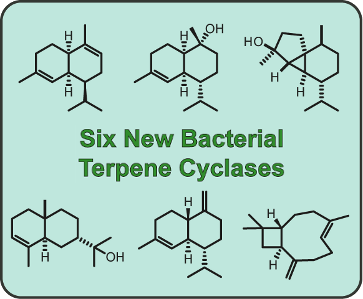
- the substrate FPP is converted with a strict stereochemical course with respect to the fate of the diastereotopic methyl groups in FPP. These findings are in agreement with those reported for several other terpene cyclases [58][59][60], while the (1R,4R,5S)-guaia-6,10(14)-diene synthase from Fusarium

Graphical Abstract

Figure 1: Structures of sesquiterpenes obtained by incubation of FPP with bacterial sesquiterpene cyclases.

Figure 2: Contiguous spin systems observed by 1H,1H-COSY (bold), key HMBC and NOE correlations for a) α-amorp...

Figure 3: Contiguous spin systems observed by 1H,1H-COSY (bold), key HMBC and NOE correlations for a) 7-epi-α...

Scheme 1: Biosynthetic pathway from FPP to 7-epi-α-eudesmol (4).

Figure 4: Incubation experiments with (6-13C)FPP and the 7-epi-α-eudesmol synthase in deuterium oxide. a) 13C...
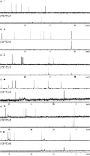
Figure 5: Incubation experiments with (13-13C)FPP. 13C NMR spectra of a) unlabelled 1 and (13-13C)-1, b) unla...
Synthesis of the C8’-epimeric thymine pyranosyl amino acid core of amipurimycin
- Pramod R. Markad,
- Navanath Kumbhar and
- Dilip D. Dhavale
Beilstein J. Org. Chem. 2016, 12, 1765–1771, doi:10.3762/bjoc.12.165
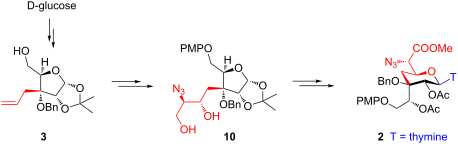
- , Garner and co-workers have exploited a cycloaddition pathway between a poly-oxygenated diene and Garner’s aldehyde for constructing the carbohydrate core of amipurimycin [9]. Recently, Datta and co-workers reported the first synthesis of a fully-functionalized thymine analogue of amipurimycin, utilizing

Graphical Abstract

Figure 1: Antifungal antibiotic amipurimycin (1).

Scheme 1: Retrosynthesis of 2.
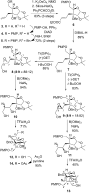
Scheme 2: Synthesis of 1,3-anhydrosugar 12 and 13.

Scheme 3: Formation of 2,7-dioxabicyclo[3.2.1]octane 12/13.

Figure 2: Conformational analysis of 13 and 14.

Figure 3: Geometrically optimized conformation of 12 and 13 respectively by DFT study.
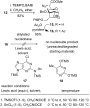
Scheme 4: Glycosylation of 16.

Scheme 5: Glycosylation attempt by changing protections.

Scheme 6: Synthesis of nucleoside 2.
Rearrangements of organic peroxides and related processes
- Ivan A. Yaremenko,
- Vera A. Vil’,
- Dmitry V. Demchuk and
- Alexander O. Terent’ev
Beilstein J. Org. Chem. 2016, 12, 1647–1748, doi:10.3762/bjoc.12.162
- ketone 265 was demonstrated by the transformation of this compound into (+)-sundiversifolide (266) (Scheme 81) [355]. The photooxidation of diene 267 followed by the base-catalyzed rearrangement of meso-endoperoxide 268 lead to (±)-trans,cis-4-hydroxy-5,6-di-O-isopropylidenecyclohex-2-en-1-one (269). The

Graphical Abstract
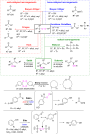
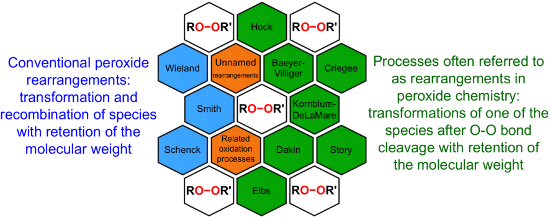
Figure 1: The named transformations considered in this review.

Scheme 1: The Baeyer–Villiger oxidation.

Scheme 2: The general mechanism of the peracid-promoted Baeyer–Villiger oxidation.

Scheme 3: General mechanism of the Lewis acid-catalyzed Baeyer–Villiger rearrangement.

Scheme 4: The theoretically studied mechanism of the BV oxidation reaction promoted by H2O2 and the Lewis aci...

Scheme 5: Proton movements in the transition states of the Baeyer–Villiger oxidation.

Scheme 6: The dependence of the course of the Baeyer–Villiger oxidation on the type of O–O-bond cleavage in t...
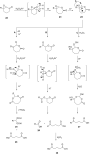
Scheme 7: The acid-catalyzed Baeyer–Villiger oxidation of cyclic epoxy ketones 22.

Scheme 8: Oxidation of isophorone oxide 29.

Scheme 9: Synthesis of acyl phosphate 32 from acyl phosphonate 31.

Scheme 10: Synthesis of aflatoxin B2 (36).

Scheme 11: The Baeyer–Villiger rearrangement of ketones 37 to lactones 38.

Scheme 12: Synthesis of 3,4-dimethoxybenzoic acid (40) via Baeyer–Villiger oxidation.

Scheme 13: Oxone transforms α,β-unsaturated ketones 43 into vinyl acetates 44.

Scheme 14: The Baeyer–Villiger oxidation of ketones 45 using diaryl diselenide and hydrogen peroxide.

Scheme 15: Baeyer–Villiger oxidation of (E)-2-methylenecyclobutanones.

Scheme 16: Oxidation of β-ionone (56) by H2O2/(BnSe)2 with formation of (E)-2-(2,6,6-trimethylcyclohex-1-en-1-...

Scheme 17: The mechanism of oxidation of ketones 58a–f by hydrogen peroxide in the presence of arsonated polys...

Scheme 18: Oxidation of ketone (58b) by H2O2 to 6-methylcaprolactone (59b) catalyzed by Pt complex 66·BF4.

Scheme 19: Oxidation of ketones 67 with H2O2 in the presence of [(dppb}Pt(µ-OH)]22+.

Scheme 20: The mechanism of oxidation of ketones 67 in the presence of [(dppb}Pt(µ-OH)]22+ and H2O2.

Scheme 21: Oxidation of benzaldehydes 69 in the presence of the H2O2/MeReO3 system.

Scheme 22: Oxidation of acetophenones 72 in the presence of the H2O2/MeReO3 system.

Scheme 23: Baeyer–Villiger oxidation of 2-adamantanone (45c) in the presence of Sn-containing mesoporous silic...

Scheme 24: Aerobic Baeyer–Villiger oxidation of ketones 76 using metal-free carbon.

Scheme 25: A regioselective Baeyer-Villiger oxidation of functionalized cyclohexenones 78 into a dihydrooxepin...

Scheme 26: The oxidation of aldehydes and ketones 80 by H2O2 catalyzed by Co4HP2Mo15V3O62.

Scheme 27: The cleavage of ketones 82 with hydrogen peroxide in alkaline solution.

Scheme 28: Oxidation of ketones 85 to esters 86 with H2O2–urea in the presence of KHCO3.

Scheme 29: Mechanism of the asymmetric oxidation of cyclopentane-1,2-dione 87a with the Ti(OiPr)4/(+)DET/t-BuO...

Scheme 30: The oxidation of cis-4-tert-butyl-2-fluorocyclohexanone (93) with m-chloroperbenzoic acid.

Scheme 31: The mechanism of the asymmetric oxidation of 3-substituted cyclobutanone 96a in the presence of chi...

Scheme 32: Enantioselective Baeyer–Villiger oxidation of cyclic ketones 98.

Scheme 33: Regio- and enantioselective Baeyer–Villiger oxidation of cyclic ketones 101.

Scheme 34: The proposed mechanism of the Baeyer–Villiger oxidation of acetal 105f.

Scheme 35: Synthesis of hydroxy-10H-acridin-9-one 117 from tetramethoxyanthracene 114.

Scheme 36: The Baeyer–Villiger oxidation of the fully substituted pyrrole 120.

Scheme 37: The Criegee rearrangement.

Scheme 38: The mechanism of the Criegee reaction of a peracid with a tertiary alcohol 122.

Scheme 39: Criegee rearrangement of decaline ethylperoxoate 127 into ketal 128.

Scheme 40: The ionic cleavage of 2-methoxy-2-propyl perester 129.

Scheme 41: The Criegee rearrangement of α-methoxy hydroperoxide 136.
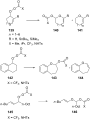
Scheme 42: Synthesis of enol esters and acetals via the Criegee rearrangement.

Scheme 43: Proposed mechanism of the transformation of 1-hydroperoxy-2-oxabicycloalkanones 147a–d.

Scheme 44: Transformation of 3-hydroxy-1,2-dioxolanes 151 into diketone derivatives 152.

Scheme 45: Criegee rearrangement of peroxide 153 with the mono-, di-, and tri-O-insertion.

Scheme 46: The sequential Criegee rearrangements of adamantanes 157a,b.

Scheme 47: Synthesis of diaryl carbonates 160a–d from triarylmethanols 159a–d through successive oxygen insert...

Scheme 48: The synthesis of sesquiterpenes 162 from ketone 161 with a Criegee rearrangement as one key step.

Scheme 49: Synthesis of trans-hydrindan derivatives 164, 165.

Scheme 50: The Hock rearrangement.

Scheme 51: The general scheme of the cumene process.

Scheme 52: The Hock rearrangement of aliphatic hydroperoxides.
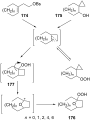
Scheme 53: The mechanism of solvolysis of brosylates 174a–c and spiro cyclopropyl carbinols 175a–c in THF/H2O2....

Scheme 54: The fragmentation mechanism of hydroperoxy acetals 178 to esters 179.

Scheme 55: The acid-catalyzed rearrangement of phenylcyclopentyl hydroperoxide 181.

Scheme 56: The peroxidation of tertiary alcohols in the presence of a catalytic amount of acid.

Scheme 57: The acid-catalyzed reaction of bicyclic secondary alcohols 192 with hydrogen peroxide.

Scheme 58: The photooxidation of 5,6-disubstituted 3,4-dihydro-2H-pyrans 196.

Scheme 59: The oxidation of tertiary alcohols 200a–g, 203a,b, and 206.

Scheme 60: Transformation of functional peroxide 209 leading to 2,3-disubstitued furans 210 in one step.

Scheme 61: The synthesis of carbazoles 213 via peroxide rearrangement.

Scheme 62: The construction of C–N bonds using the Hock rearrangement.

Scheme 63: The synthesis of moiety 218 from 217 which is a structural motif in the antitumor–antibiotic of CC-...

Scheme 64: The in vivo oxidation steps of cholesterol (219) by singlet oxygen.

Scheme 65: The proposed mechanism of the rearrangement of cholesterol-5α-OOH 220.

Scheme 66: Photochemical route to artemisinin via Hock rearrangement of 223.

Scheme 67: The Kornblum–DeLaMare rearrangement.

Scheme 68: Kornblum–DeLaMare transformation of 1-phenylethyl tert-butyl peroxide (225).

Scheme 69: The synthesis 4-hydroxyenones 230 from peroxide 229.

Scheme 70: The Kornblum–DeLaMare rearrangement of peroxide 232.

Scheme 71: The reduction of peroxide 234.

Scheme 72: The Kornblum–DeLaMare rearrangement of endoperoxide 236.

Scheme 73: The rearrangement of peroxide 238 under Kornblum–DeLaMare conditions.

Scheme 74: The proposed mechanism of rearrangement of peroxide 238.

Scheme 75: The Kornblum–DeLaMare rearrangement of peroxides 242a,b.

Scheme 76: The base-catalyzed rearrangements of bicyclic endoperoxides having electron-withdrawing substituent...

Scheme 77: The base-catalyzed rearrangements of bicyclic endoperoxides 249a,b having electron-donating substit...

Scheme 78: The base-catalyzed rearrangements of bridge-head substituted bicyclic endoperoxides 251a,b.

Scheme 79: The Kornblum–DeLaMare rearrangement of hydroperoxide 253.

Scheme 80: Synthesis of β-hydroxy hydroperoxide 254 from endoperoxide 253.

Scheme 81: The amine-catalyzed rearrangement of bicyclic endoperoxide 263.

Scheme 82: The base-catalyzed rearrangement of meso-endoperoxide 268 into 269.

Scheme 83: The photooxidation of 271 and subsequent Kornblum–DeLaMare reaction.

Scheme 84: The Kornblum–DeLaMare rearrangement as one step in the oxidation reaction of enamines.

Scheme 85: The Kornblum–DeLaMare rearrangement of 3,5-dihydro-1,2-dioxenes 284, 1,2-dioxanes 286, and tert-but...

Scheme 86: The Kornblum–DeLaMare rearrangement of epoxy dioxanes 290a–d.

Scheme 87: Rearrangement of prostaglandin H2 292.

Scheme 88: The synthesis of epicoccin G (297).

Scheme 89: The Kornblum–DeLaMare rearrangement used in the synthesis of phomactin A.

Scheme 90: The Kornblum–DeLaMare rearrangement in the synthesis of 3H-quinazolin-4-one 303.

Scheme 91: The Kornblum–DeLaMare rearrangement in the synthesis of dolabriferol (308).

Scheme 92: Sequential transformation of 3-substituted 2-pyridones 309 into 3-hydroxypyridine-2,6-diones 311 in...

Scheme 93: The Kornblum–DeLaMare rearrangement of peroxide 312 into hydroxy enone 313.

Scheme 94: The Kornblum–DeLaMare rearrangement in the synthesis of polyfunctionalized carbonyl compounds 317.

Scheme 95: The Kornblum–DeLaMare rearrangement in the synthesis of (Z)-β-perfluoroalkylenaminones 320.

Scheme 96: The Kornblum–DeLaMare rearrangement in the synthesis of γ-ketoester 322.

Scheme 97: The Kornblum–DeLaMare rearrangement in the synthesis of diterpenoids 326 and 328.

Scheme 98: The synthesis of natural products hainanolidol (331) and harringtonolide (332) from peroxide 329.

Scheme 99: The synthesis of trans-fused butyrolactones 339 and 340.

Scheme 100: The synthesis of leucosceptroid C (343) and leucosceptroid P (344) via the Kornblum–DeLaMare rearra...

Scheme 101: The Dakin oxidation of arylaldehydes or acetophenones.

Scheme 102: The mechanism of the Dakin oxidation.

Scheme 103: A solvent-free Dakin reaction of aromatic aldehydes 356.

Scheme 104: The organocatalytic Dakin oxidation of electron-rich arylaldehydes 358.

Scheme 105: The Dakin oxidation of electron-rich arylaldehydes 361.

Scheme 106: The Dakin oxidation of arylaldehydes 358 in water extract of banana (WEB).

Scheme 107: A one-pot approach towards indolo[2,1-b]quinazolines 364 from indole-3-carbaldehydes 363 through th...

Scheme 108: The synthesis of phenols 367a–c from benzaldehydes 366a-c via acid-catalyzed Dakin oxidation.

Scheme 109: Possible transformation paths of the highly polarized boric acid coordinated H2O2–aldehyde adduct 3...

Scheme 110: The Elbs oxidation of phenols 375 to hydroquinones.

Scheme 111: The mechanism of the Elbs persulfate oxidation of phenols 375 affording p-hydroquinones 376.

Scheme 112: Oxidation of 2-pyridones 380 under Elbs persulfate oxidation conditions.

Scheme 113: Synthesis of 3-hydroxy-4-pyridone (384) via an Elbs oxidation of 4-pyridone (382).

Scheme 114: The Schenck rearrangement.

Scheme 115: The Smith rearrangement.

Scheme 116: Three main pathways of the Schenck rearrangement.

Scheme 117: The isomerization of hydroperoxides 388 and 389.

Scheme 118: Trapping of dioxacyclopentyl radical 392 by oxygen.

Scheme 119: The hypothetical mechanism of the Schenck rearrangement of peroxide 394.

Scheme 120: The autoxidation of oleic acid (397) with the use of labeled isotope 18O2.

Scheme 121: The rearrangement of 18O-labeled hydroperoxide 400 under an atmosphere of 16O2.

Scheme 122: The rearrangement of the oleate-derived allylic hydroperoxides (S)-421 and (R)-425.

Scheme 123: Mechanisms of Schenck and Smith rearrangements.

Scheme 124: The rearrangement and cyclization of 433.

Scheme 125: The Wieland rearrangement.

Scheme 126: The rearrangement of bis(triphenylsilyl) 439 or bis(triphenylgermyl) 441 peroxides.

Scheme 127: The oxidative transformation of cyclic ketones.

Scheme 128: The hydroxylation of cyclohexene (447) in the presence of tungstic acid.

Scheme 129: The oxidation of cyclohexene (447) under the action of hydrogen peroxide.

Scheme 130: The reaction of butenylacetylacetone 455 with hydrogen peroxide.

Scheme 131: The oxidation of bridged 1,2,4,5-tetraoxanes.

Scheme 132: The proposed mechanism for the oxidation of bridged 1,2,4,5-tetraoxanes.

Scheme 133: The rearrangement of ozonides.

Scheme 134: The acid-catalyzed oxidative rearrangement of malondialdehydes 462 under the action of H2O2.

Scheme 135: Pathways of the Lewis acid-catalyzed cleavage of dialkyl peroxides 465 and ozonides 466.

Scheme 136: The mechanism of the transformation of (tert-butyldioxy)cyclohexanedienones 472.

Scheme 137: The synthesis of Vitamin K3 from 472a.

Scheme 138: Proposed mechanism for the transformation of 478d into silylated endoperoxide 479d.

Scheme 139: The rearrangement of hydroperoxide 485 to form diketone 486.

Scheme 140: The base-catalyzed rearrangement of cyclic peroxides 488a–g.

Scheme 141: Synthesis of chiral epoxides and aldols from peroxy hemiketals 491.

Scheme 142: The multistep transformation of (R)-carvone (494) to endoperoxides 496a–e.

Scheme 143: The decomposition of anthracene endoperoxide 499.

Scheme 144: Synthesis of esters 503 from aldehydes 501 via rearrangement of peroxides 502.

Scheme 145: Two possible paths for the base-promoted decomposition of α-azidoperoxides 502.

Scheme 146: The Story decomposition of cyclic diperoxide 506a.

Scheme 147: The Story decomposition of cyclic triperoxide 506b.

Scheme 148: The thermal rearrangement of endoperoxides A into diepoxides B.

Scheme 149: The transformation of peroxide 510 in the synthesis of stemolide (511).

Scheme 150: The possible mechanism of the rearrangement of endoperoxide 261g.

Scheme 151: The photooxidation of indene 517.

Scheme 152: The isomerization of ascaridole (523).

Scheme 153: The isomerization of peroxide 525.

Scheme 154: The thermal transformation of endoperoxide 355.

Scheme 155: The photooxidation of cyclopentadiene (529) at a temperature higher than 0 °C.

Scheme 156: The thermal rearrangement of endoperoxides 538a,b.

Scheme 157: The transformation of peroxides 541.

Scheme 158: The thermal rearrangements of strained cyclic peroxides.

Scheme 159: The thermal rearrangement of diacyl peroxide 551 in the synthesis of C4-epi-lomaiviticin B core 553....

Scheme 160: The 1O2 oxidation of tryptophan (554) and rearrangement of dioxetane intermediate 555.

Scheme 161: The Fe(II)-promoted cleavage of aryl-substituted bicyclic peroxides.

Scheme 162: The proposed mechanism of the Fe(II)-promoted rearrangement of 557a–c.

Scheme 163: The reaction of dioxolane 563 with Fe(II) sulfate.

Scheme 164: Fe(II)-promoted rearrangement of 1,2-dioxane 565.

Scheme 165: Fe(II) cysteinate-promoted rearrangement of 1,2-dioxolane 568.

Scheme 166: The transformation of 1,2-dioxanes 572a–c under the action of FeCl2.

Scheme 167: Fe(II) cysteinate-promoted transformation of tetraoxane 574.

Scheme 168: The CoTPP-catalyzed transformation of bicyclic endoperoxides 600a–d.

Scheme 169: The CoTPP-catalyzed transformation of epoxy-1,2-dioxanes.

Scheme 170: The Ru(II)-catalyzed reactions of 1,4-endoperoxide 261g.

Scheme 171: The Ru(II)-catalyzed transformation as a key step in the synthesis of elyiapyrone A (610) from 1,4-...

Scheme 172: Peroxides with antimalarial activity.

Scheme 173: The interaction of iron ions with artemisinin (616).

Scheme 174: The interaction of FeCl2 with 1,2-dioxanes 623, 624.

Scheme 175: The mechanism of reaction 623 and 624 with Fe(II)Cl2.

Scheme 176: The reaction of bicyclic natural endoperoxides G3-factors 631–633 with FeSO4.

Scheme 177: The transformation of terpene cardamom peroxide 639.
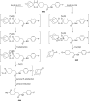
Scheme 178: The different ways of the cleavage of tetraoxane 643.

Scheme 179: The LC–MS analysis of interaction of tetraoxane 646 with iron(II)heme 647.

Scheme 180: The rearrangement of 3,6-epidioxy-1,10-bisaboladiene (EDBD, 649).

Scheme 181: Easily oxidized substrates.

Scheme 182: Biopathway of synthesis of prostaglandins.

Scheme 183: The reduction and rearrangements of isoprostanes.

Scheme 184: The partial mechanism for linoleate 658 oxidation.

Scheme 185: The transformation of lipid hydroperoxide.

Scheme 186: The acid-catalyzed cleavage of the product from free-radical oxidation of cholesterol (667).

Scheme 187: Two pathways of catechols oxidation.

Scheme 188: Criegee-like or Hock-like rearrangement of the intermediate hydroperoxide 675 in dioxygenase enzyme...

Scheme 189: Carotinoides 679 cleavage by carotenoid cleavage dioxygenases.
A T-shape diphosphinoborane palladium(0) complex
- Patrick Steinhoff and
- Michael E. Tauchert
Beilstein J. Org. Chem. 2016, 12, 1573–1576, doi:10.3762/bjoc.12.152
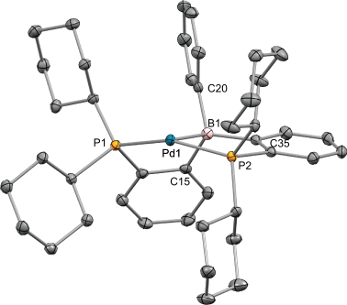
- equiv of CpPd(η3-C3H5) in benzene. Complete conversion towards complex 9 with equimolar formation of 5-allylcyclopenta-1,3-diene was reached within 18 h at 50 °C. Complex 9 showed a singlet resonance at δ 41.0 in the 31P NMR spectrum and a broad resonance at δ 22 (w1/2 = 800 ± 50 Hz) in the 11B NMR
- those observed for its aryl derivatives (PhDPBPh ((o-PPh2-C6H4)2BPh) and PhDPBMes ((o-PPh2-C6H4)2B(Mes))). For these ligands the reaction with one equivalent of CpPd(η3-C3H5) leads to 50% consumption of CpPd(η3-C3H5) with simultaneous formation of 5-allylcyclopenta-1,3-diene, but complete conversion of

Graphical Abstract

Figure 1: Selected M→B coordination modes 1–5 [6-10] and Hofmann’s Rucaphos complex 6 [11].

Scheme 1: Synthesis of diphosphinoborane CyDPBPh and complex 9.

Figure 2: Thermal ellipsoid plots of complex 9 at the 50% probability level. H atoms and one molecule of hexa...
Biosynthesis of oxygen and nitrogen-containing heterocycles in polyketides
- Franziska Hemmerling and
- Frank Hahn
Beilstein J. Org. Chem. 2016, 12, 1512–1550, doi:10.3762/bjoc.12.148
- one epoxide hydrolase in the biosynthesis of the fungal polyketide aurovertin B (118) is sufficient to form this complex structural motif starting from a polyene-α-pyrone precursor (Scheme 18) [116]. The diene between C3 and C6 in 113 is first expoxidised by the FMO AurC. The epoxide hydrolase AurD

Graphical Abstract

Scheme 1: Schematic description of the cyclisation reaction catalysed by TE domains. In most cases, the nucle...

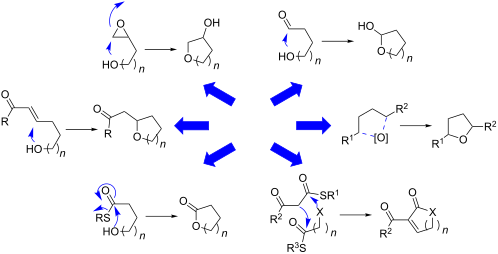
Scheme 2: Mechanisms for the formation of oxygen heterocycles. The degree of substitution can differ from tha...

Scheme 3: Pyran-ring formation in pederin (24) biosynthesis. Incubation of recombinant PedPS7 with substrate ...

Scheme 4: The domain AmbDH3 from ambruticin biosynthesis catalyses the dehydration of 25 and subsequent cycli...

Scheme 5: SalBIII catalyses dehydration of 29 and subsequent cyclisation to tetrahydropyran 30 [18].

Figure 1: All pyranonaphtoquinones contain either the naphtha[2,3-c]pyran-5,10-dione (32) or the regioisomeri...

Scheme 6: Pyran-ring formation in actinorhodin (34) biosynthesis. DNPA: 4-dihydro-9-hydroxy-1-methyl-10-oxo-3H...

Scheme 7: Pyran formation in granaticin (36) biosynthesis. DNPA: 4-dihydro-9-hydroxy-1-methyl-10-oxo-3H-napht...

Scheme 8: Pyran formation in alnumycin (37) biosynthesis. Adapted from [21].

Scheme 9: Biosynthesis of pseudomonic acid A (61). The pyran ring is initially formed in 57 after dehydrogena...

Scheme 10: Epoxidation–cyclisation leads to the formation of the tetrahydropyran ring in the western part of t...

Scheme 11: a) Nonactin (70) is formed from heterodimers of (−)(+)-dimeric nonactic acid and (+)(−)-dimeric non...

Figure 2: Pamamycins (73) are macrodiolide antibiotics containing three tetrahydrofuran moieties, which are a...

Scheme 12: A PS domain homolog in oocydin A (76) biosynthesis is proposed to catalyse furan formation via an o...

Scheme 13: Mechanism of oxidation–furan cyclisation by AurH, which converts (+)-deoxyaureothin (77) into (+)-a...

Scheme 14: Leupyrrin A2 (80) and the proposed biosynthesis of its furylidene moiety [69,70].

Scheme 15: Asperfuranone (93) biosynthesis, adapted from [75].
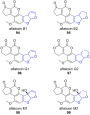
Figure 3: The four major aflatoxins produced by Aspergilli are the types B1, B2, G1 and G2 (94–97). In the di...

Scheme 16: Overview on aflatoxin B1 (94) biosynthesis. HOMST = 11-hydroxy-O-methylsterigmatocystin [78,79,82-106].

Scheme 17: A zipper mechanism leads to the formation of oxygen heterocycles in monensin biosynthesis [109-111].

Scheme 18: Formation of the 2,6-dioxabicyclo[3.2.1]octane (DBO) ring system in aurovertin B (118) biosynthesis ...

Figure 4: Structures of the epoxide-containing polyketides epothilone A (119) and oleandomycin (120) [123-125].

Scheme 19: Structures of phoslactomycin B (121) (a) and jerangolid A (122) (b). The heterocycle-forming steps ...

Scheme 20: a) Structures of rhizoxin (130) and cycloheximide (131). Model for the formation of δ-lactones (b) ...

Scheme 21: EncM catalyses a dual oxidation sequence and following processing of the highly reactive intermedia...

Figure 5: Mesomeric structures of tetronates [138,139].

Figure 6: Structures of tetronates for which gene clusters have been sequenced. The tetronate moiety is shown...

Scheme 22: Conserved steps for formation and processing in several 3-acyl-tetronate biosynthetic pathways were...

Scheme 23: In versipelostatin A (153) biosynthesis, VstJ is a candidate enzyme for catalysing the [4 + 2] cycl...

Scheme 24: a) Structures of some thiotetronate antibiotics. b) Biosynthesis of thiolactomycin (165) as propose...

Scheme 25: Aureusidine synthase (AS) catalyses phenolic oxidation and conjugate addition of chalcones leading ...

Scheme 26: a) Oxidative cyclisation is a key step in the biosynthesis of spirobenzofuranes 189, 192 and 193. b...

Scheme 27: A bicyclisation mechanism forms a β-lactone and a pyrrolidinone and removes the precursor from the ...

Scheme 28: Spontaneous cyclisation leads to off-loading of ebelactone A (201) from the PKS machinery [163].

Scheme 29: Mechanisms for the formation of nitrogen heterocycles.

Scheme 30: Biosynthesis of highly substituted α-pyridinones. a) Feeding experiments confirmed the polyketide o...

Scheme 31: Acridone synthase (ACS) catalyses the formation of 1,3-dihydroxy-N-methylacridone (224) by condensa...

Scheme 32: A Dieckmann condensation leads to the formation of a 3-acyl-4-hydroxypyridin-2-one 227 and removes ...

Scheme 33: a) Biosynthesis of the pyridinone tenellin (234). b) A radical mechanism was proposed for the ring-...

Scheme 34: a) Oxazole-containing PKS–NRPS-derived natural products oxazolomycin (244) and conglobatin (245). b...

Scheme 35: Structure of tetramic acids 251 (a) and major tautomers of 3-acyltetramic acids 252a–d (b). Adapted...

Scheme 36: Equisetin biosynthesis. R*: terminal reductive domain. Adapted from [202].

Scheme 37: a) Polyketides for which a similar biosynthetic logic was suggested. b) Pseurotin A (256) biosynthe...

Figure 7: Representative examples of PTMs with varying ring sizes and oxidation patterns [205,206].

Scheme 38: Ikarugamycin biosynthesis. Adapted from [209-211].

Scheme 39: Tetramate formation in pyrroindomycin aglycone (279) biosynthesis [213-215].

Scheme 40: Dieckmann cyclases catalyse tetramate or 2-pyridone formation in the biosynthesis of, for example, ...
Chiral cyclopentadienylruthenium sulfoxide catalysts for asymmetric redox bicycloisomerization
- Barry M. Trost,
- Michael C. Ryan and
- Meera Rao
Beilstein J. Org. Chem. 2016, 12, 1136–1152, doi:10.3762/bjoc.12.110
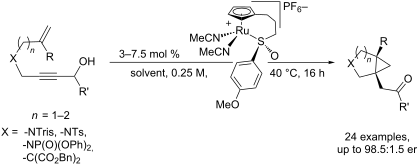
- mechanism. Whereas the palladium-catalyzed Alder–ene reaction proceeds through an initial hydrometallation of a palladium hydride intermediate, ruthenium is speculated to first form a ruthenacyclopentene prior to β-hydride elimination. Since the hydrogen leading to the 1,3-diene is inaccessible to the
- ruthenacyclopentene, it must exclusively abstract the exocyclic hydrogen, which results in 1,4-diene formation. Palladium, which is not restricted to a metallacycle, is free to choose either hydrogen, and therefore performs β-hydride elimination on the allylic hydrogen. Recognizing that enantioenriched, cyclic

Graphical Abstract

Scheme 1: Divergent behavior of the palladium and ruthenium-catalyzed Alder–ene reaction.

Scheme 2: Some asymmetric enyne cycloisomerization reactions.
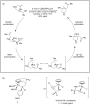
Figure 1: (a) Mechanism for the redox biscycloisomerization reaction. (b) Ruthenium catalyst containing a tet...

Scheme 3: Synthesis of p-anisyl catalyst 1.

Figure 2: Failed sulfinate ester syntheses.

Scheme 4: Using norephedrine-based oxathiazolidine-2-oxide 7 for chiral sulfoxide synthesis.

Scheme 5: (a) General synthetic sequence to access enyne bicycloisomerization substrates (b) Synthesis of 2-c...

Figure 3: Failed bicycloisomerization substrates. Reactions performed at 40 °C for 16 hours with 3 mol % of c...

Scheme 6: Deprotection of [3.1.0] bicycles and X-ray crystal structure of 76.

Scheme 7: ProPhenol-catalyzed addition of zinc acetylide to acetaldehyde for the synthesis of a chiral 1,6-en...

Figure 4: Diastereomeric metal complexes formed after alcohol coordination.

Scheme 8: Curtin–Hammitt scenario of redox bicycloisomerization in acetone.
Efficient syntheses of climate relevant isoprene nitrates and (1R,5S)-(−)-myrtenol nitrate
- Sean P. Bew,
- Glyn D. Hiatt-Gipson,
- Graham P. Mills and
- Claire E. Reeves
Beilstein J. Org. Chem. 2016, 12, 1081–1095, doi:10.3762/bjoc.12.103
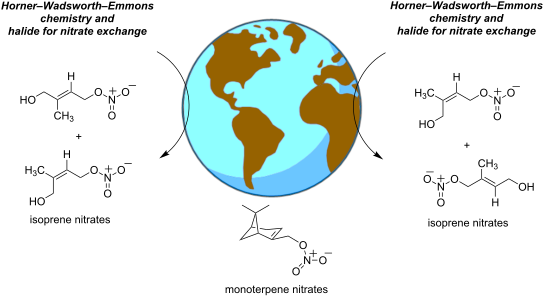
- its derivatives is largely based on chemical theory and modeling with very little verified measurements. Therefore, the impact of isoprene on air quality and climate change remains highly uncertain. Isoprene or 2-methylbuta-1,3-diene is a volatile C5-organic compound generated by plants to help

Graphical Abstract

Scheme 1: Simplified overview outlining how a small number of different IPNs are synthesised and are able to ...

Scheme 2: Protocols for the synthesis of O-nitrated alcohols using (±)-isoprene epoxide and 2° alcohols as st...

Scheme 3: Attempted synthesis of O-nitrate ester rac-19 and rac-20 synthesis.

Scheme 4: Olah et al. O-nitrated alcohol syntheses of 23–33 using N-nitro-2,4-6-trimethylpyridinium tetrafluo...

Scheme 5: O-nitration study using 22 and the alcohols 34–37.

Scheme 6: Silver nitrate mediated synthesis of 2-oxopropyl nitrate 43.

Scheme 7: Application of isoprene for the synthesis of precursors to IPNs and synthesis via ‘halide for nitra...

Scheme 8: Synthesis of (E)-3-methyl-4-chlorobut-2-en-1-ol ((E)-60) and (Z)-3-methyl-4-chlorobut-2-en-1-ol ((Z...

Scheme 9: Using NOESY interactions to establish the conformations of the C=C bonds within (E)-10 and (Z)-9.

Scheme 10: Synthesis of isoprene nitrates (E)-11 and (Z)-12 from ketone 63.

Scheme 11: Attempted synthesis of rac-8 from O-mesylate rac-71.

Scheme 12: Synthesis of O-nitrate 73 from O-mesylate 72.

Scheme 13: Attempted synthesis of 2° alcohol containing 1° nitrate ester rac-19 and the unexpected synthesis o...

Scheme 14: Synthesis of monoterpene derived (1R,5S)-(−)-myrtenol nitrate 86.
The synthesis of functionalized bridged polycycles via C–H bond insertion
- Jiun-Le Shih,
- Po-An Chen and
- Jeremy A. May
Beilstein J. Org. Chem. 2016, 12, 985–999, doi:10.3762/bjoc.12.97
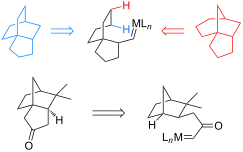
- reaction from a functionalized 1,3-diene like 2 (Figure 2) [13][14][15][16]. However, such a reaction would not be applicable to synthesize the bicyclo[3.2.1]octane core 3 of taxuspine C, as the mechanistic requirements in a Diels–Alder cycloaddition are not met with a 1,4-diene. Strategies that may access

Graphical Abstract

Figure 1: Bridged polycyclic natural products.

Figure 2: Strategic limitations.

Scheme 1: Bridged rings from N–H bond insertions.

Scheme 2: The synthesis of deoxystemodin.

Scheme 3: A model system for ingenol.

Scheme 4: Formal synthesis of platensimycin.

Scheme 5: The formal synthesis of gerryine.

Scheme 6: Copper-catalyzed bridged-ring synthesis.
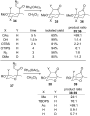
Scheme 7: Factors influencing insertion selectivity.

Scheme 8: Bridged-lactam formation.

Scheme 9: The total synthesis of (+)-codeine.

Scheme 10: A model system for irroratin.

Scheme 11: The utility of 1,6-insertion.

Scheme 12: Piperidine functionalization.

Scheme 13: Wilkinson’s catalyst for C–H bond insertion.

Scheme 14: Bridgehead insertion and the total synthesis of albene and santalene.

Scheme 15: The total synthesis of neopupukean-10-one.

Scheme 16: An approach to phomoidride B.

Scheme 17: Carbene cascade for fused bicycles.

Scheme 18: Cascade formation of bridged rings.

Scheme 19: Conformational effects.

Scheme 20: Hydrazone cascade reaction.

Scheme 21: Mechanistic studies.

Scheme 22: Gold carbene formation from alkynes.

Scheme 23: Au-catalyzed bridged-bicycle formation.

Scheme 24: Gold carbene/alkyne cascade.

Scheme 25: Gold carbene/alkyne cascade with C–H bond insertion.

Scheme 26: Platinum cascades.

Scheme 27: Tungsten cascade.



