Search results
Search for "linker" in Full Text gives 414 result(s) in Beilstein Journal of Organic Chemistry. Showing first 200.
A hemicryptophane with a triple-stranded helical structure
Beilstein J. Org. Chem. 2018, 14, 1885–1889, doi:10.3762/bjoc.14.162
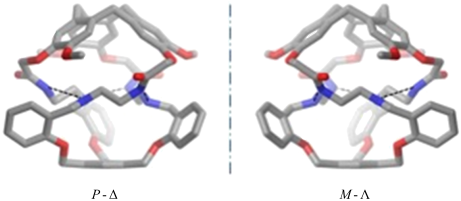
- are twisted into a triple helix with the lone pair of the amines and the amide hydrogen atoms oriented toward the cavity, while the amide oxygen atoms are oriented outwards. Intramolecular hydrogen bonding between the nitrogen of the amine function of one linker with the N–H of the amide group of


Water-soluble SNS cationic palladium(II) complexes and their Suzuki–Miyaura cross-coupling reactions in aqueous medium
Beilstein J. Org. Chem. 2018, 14, 1859–1870, doi:10.3762/bjoc.14.160
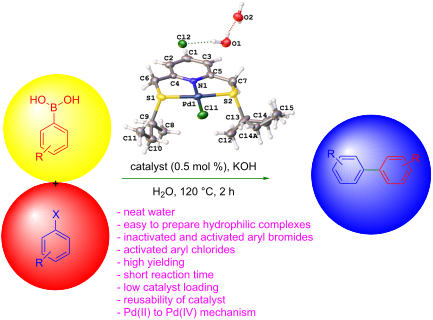
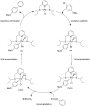
- reported SNS pincer Pd(II) complexes that were proposed to proceed via a Pd(II) to Pd(0) type of mechanism, on the basis of the study described in this article the coupling reaction is proposed to proceed via a Pd(II) to Pd(IV) mechanism. This suggests the effect of the chain length of the linker and the




Synthesis and photophysical studies of a multivalent photoreactive RuII-calix[4]arene complex bearing RGD-containing cyclopentapeptides
Beilstein J. Org. Chem. 2018, 14, 1758–1768, doi:10.3762/bjoc.14.150
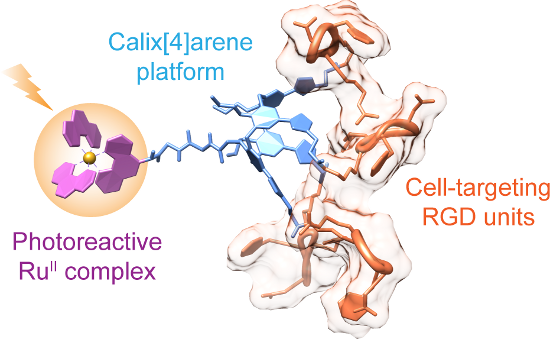
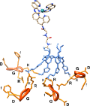
- units. The global structure has an average radius of gyration Rg of 1.25 nm ± 0.1 nm. Noteworthy, the distance between the RGDfK units largely varies along the MD simulations, ranging from 10 Å to 24 Å (average at 17 Å), as estimated from the distance between equivalent carbon atoms crossing the linker
- and the cyclic pentapeptides. This large variation in the distance is due to the flexibility of the linkers between the calixarene platform and the RGDfK units, together with the many possibilities of H-bonding between: (i) oxygen atoms at C=O in the linker and the hydrogen atoms of (N–H) of arginine





Design, synthesis and structure of novel G-2 melamine-based dendrimers incorporating 4-(n-octyloxy)aniline as a peripheral unit
Beilstein J. Org. Chem. 2018, 14, 1704–1722, doi:10.3762/bjoc.14.145
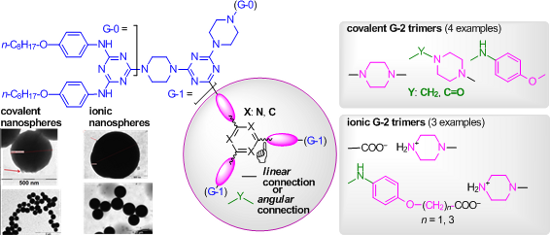
- branch-cells, (ii) basicity and conformational nature of the diaza-six-membered saturated heterocycle as linker and (iii) the global molecular shape, the resulted 4-aminophenol-based melamines displayed relevant redox properties [36] and, in some cases, selective aptitudes to produce MOFs (metal-organic
- series was examined, i.e., D-N
NH, 4, 7a, 7b, 8 and 9 (Table 4), δH resonances of the methylene protons α-to the Nsp3 nitrogen of P-1 piperazine linker (in D-N
NH vs 7b, 8 and 9) revealed minor fluctuations, between 2.97 and 3.15 ppm. These resonances were found much further upfield with respect to
- amides [64], no such vicinal effect created by a quaternary EWG of type >Nsp3H2+ [63] was detected in the piperazine P-1 linker of compounds 7b, 8 and 9, even in the case of the strongest proton donor, the trimesic acid (pKa = 3.12, 3.89 and 4.70).
In addition, only in G-1 amino-dendron D-N
NH the 1H




A conformationally adaptive macrocycle: conformational complexity and host–guest chemistry of zorb[4]arene
Beilstein J. Org. Chem. 2018, 14, 1570–1577, doi:10.3762/bjoc.14.134
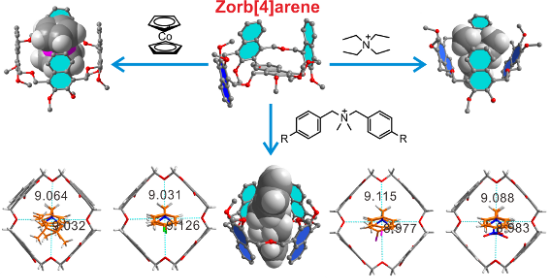
- guests and the four naphthalene rings of the host should still be the major driving force as mentioned above. However, it was noticed that the distances between diagonal linker oxygen atoms in the backbone of the host are slightly different for the four complexes. These interactions may be tuned by the


Hyper-reticulated calixarene polymers: a new example of entirely synthetic nanosponge materials
Beilstein J. Org. Chem. 2018, 14, 1498–1507, doi:10.3762/bjoc.14.127
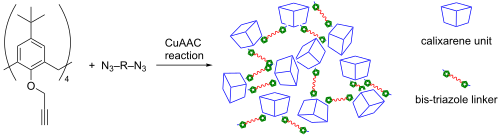
- [21][22][23][24][25][26][27]. The properties of CyNSs, in terms of physical and mechanical features, porosity, thermal stability and adsorption or release abilities, may be modulated up to a certain extent by a sensible choice of the linker unit, depending on its length and possible functionalization
- . For instance, increased porosity of the CyNS obtained has been recently claimed by the use of a rigid terephthalonitrile unit as the linker [13]. On the other hand, it has been recently shown that polyamine linkers give rise to pH-sensitive materials with tunable adsorption abilities [12]. In order to
- polymeric structure and can be subsequently subjected to further chemical transformation, opening the way to a possible post-functionalization [31]. This, in turn, largely improves the possible tunability in the properties of the materials obtained. Finally, the triazole linker present in the structure is


Novel unit B cryptophycin analogues as payloads for targeted therapy
Beilstein J. Org. Chem. 2018, 14, 1281–1286, doi:10.3762/bjoc.14.109
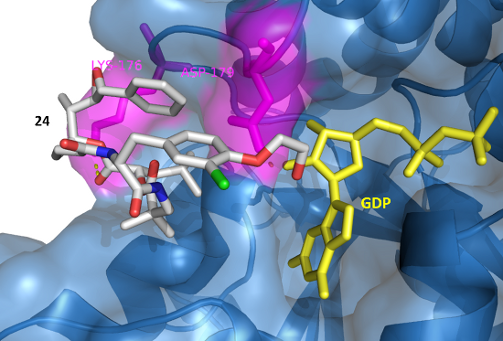
- activity of specific enzymes. The connection between the payload and the linker is of crucial importance since its stability can dramatically change the release and thus, the activity of the compound. For this reason, the included functional groups were designed with the consideration to provide
- conjugation of the novel cryptophycin analogues across an appropriate linker to an antibody or peptide. Either a virtually uncleavable triazole (introduced by CuAAC) or scissile ester, carbonate, or carbamate moieties were taken into account. The synthesis of the modified unit B (Scheme 1) started with the


A survey of chiral hypervalent iodine reagents in asymmetric synthesis
Beilstein J. Org. Chem. 2018, 14, 1244–1262, doi:10.3762/bjoc.14.107
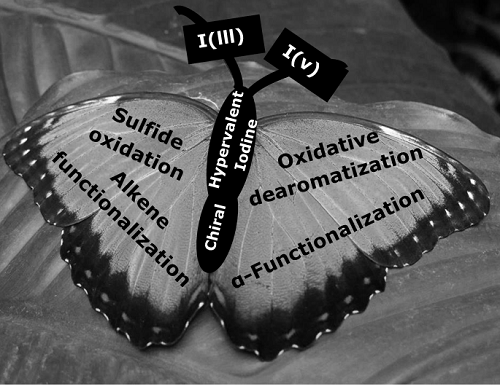
- class of C2-symmetric chiral iodoarene precatalyst 8a using (−)-ethyl lactate as a chiral linker with the aromatics attached followed by its successful conversion to the amide derivative to generate precatalyst 8a [37][38]. Application of this precatalyst 8a was employed for the Kita oxidation [32] with



London dispersion as important factor for the stabilization of (Z)-azobenzenes in the presence of hydrogen bonding
Beilstein J. Org. Chem. 2018, 14, 1238–1243, doi:10.3762/bjoc.14.106
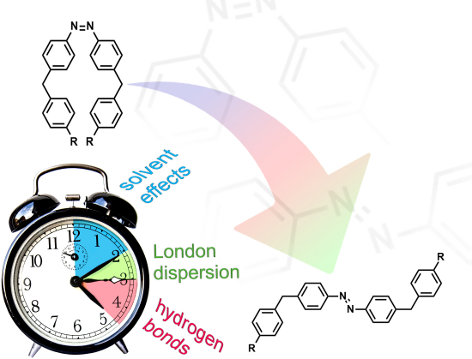
- other azobenzenes 5–7 in tert-butyl methyl ether (TBME) as solvent. This observation is surprising, since azobenzenes 4–7 are electronically very similar as the methylene linker prevents conjugation of the N-aryl and the azobenzene moieties. At first thought, the large spatial separation of the N


An overview of recent advances in duplex DNA recognition by small molecules
Beilstein J. Org. Chem. 2018, 14, 1051–1086, doi:10.3762/bjoc.14.93
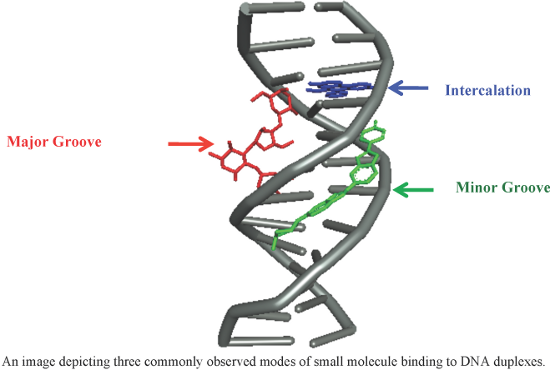
- and 10 with longer linkers exhibit relatively higher cytotoxicity in comparison to both distamycin and uramustine. The distamycin fragment directs binding to the A·T-rich sequences in the minor groove, and higher flexibility due to the longer linker allows optimal positioning of the mustard for DNA
- alkylation. In addition, longer linker imparts more lipophilicity, which in turn, favors better transportation of these compounds into the cells. Anthony et al. reported a series of short MGBs based on the lead compounds distamycin and thiazotropsins with the installation of hydrophobic aromatic head groups
- challenging tandem hairpin Py/Im polyamides which could recognize >10 base pairs with flexible linker conjugated with a fluorescent dye (either Texas Red (TR) or Cyanine 3 (Cy3)) using a Fmoc-based solid phase synthetic approach; two of the representative conjugates 23 and 24 are shown in the Figure 8 [86][87




The first Pd-catalyzed Buchwald–Hartwig aminations at C-2 or C-4 in the estrone series
Beilstein J. Org. Chem. 2018, 14, 998–1003, doi:10.3762/bjoc.14.85
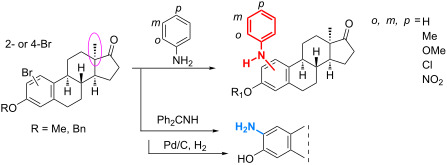
- partially or completely saturated in order to get stereochemically different compounds for structure–activity determinations. The saturated derivatives contain a phenyl moiety at C-2 attached through an ethenediyl or ethanediyl linker. Of the synthesized 2- and 4-regioisomers, solely the 2-counterparts
- derivatives, bearing a lipophilic phenyl group attached to C-2 through an amino linker. In continuation of our studies with respect to cross-coupling reactions on ring A of 13α-estrone, here we disclose the development of a Pd-catalyzed C(sp2)–N coupling methodology for the transformation of 2-bromo- and 4


On the design principles of peptide–drug conjugates for targeted drug delivery to the malignant tumor site
Beilstein J. Org. Chem. 2018, 14, 930–954, doi:10.3762/bjoc.14.80
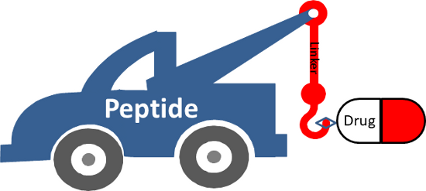
- . The general architecture of PDCs consists of three building blocks: the tumor-homing peptide, the cytotoxic agent and the biodegradable connecting linker. The aim of the current review is to provide a spherical perspective on the basic principles governing PDCs, as also the methodology to construct
- conducted via a rationally designed linker able to release the drug inside the cancer microenvironment [19]. The ideal targeting molecular device would consist of the following modules: a) the cytotoxic agent (drug), b) the transporting - drug delivery vehicle (i.e., lipid, mannan [28][29][30]), c) the
- linker tethering the transporting vehicle to the cytotoxic warhead, d) the “programmable” navigating/targeting moiety (i.e., receptor-specific ligand) and e) the “stealth” carrier (i.e., PEG) transfusing enhanced bioavailability. These modules are encoded in Figure 2A with different colors: the


Development of novel cyclic NGR peptide–daunomycin conjugates with dual targeting property
Beilstein J. Org. Chem. 2018, 14, 911–918, doi:10.3762/bjoc.14.78
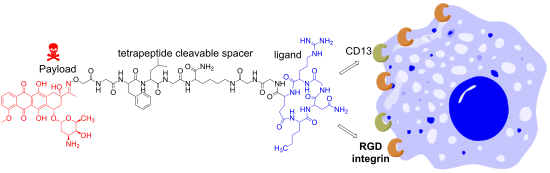
- protecting group was achieved by using 2% TFA in DCM for 6 × 4 min. The coupling of the isopropylidene protected aminooxyacetic acid [17] to the N-terminus of the linker sequence was carried out by using standard protocol DIC/HOBt coupling. The cleavage from the solid support was performed at rt in a


Synthesis and in vitro biochemical evaluation of oxime bond-linked daunorubicin–GnRH-III conjugates developed for targeted drug delivery
Beilstein J. Org. Chem. 2018, 14, 756–771, doi:10.3762/bjoc.14.64
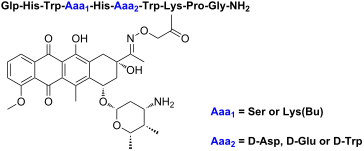
- preclinical and clinical studies, was zoptarelin-doxorubicin also known as AEZS-108 (previously AN-152) [16]. The anthracycline doxorubicin was conjugated to the ε-amino group of GnRH-I-[6D-Lys] by insertion of a glutaric acid linker. The resulting ester bond can be cleaved by carboxylesterases, leading to



Nanoreactors for green catalysis
Beilstein J. Org. Chem. 2018, 14, 716–733, doi:10.3762/bjoc.14.61
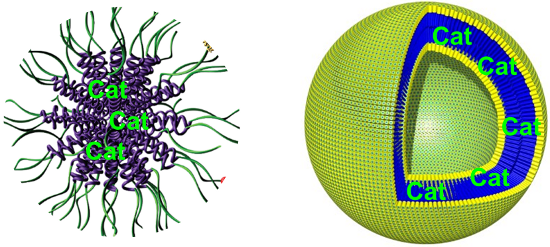
- conversion of glucose in a tandem reaction [82]. The hydrophilic block of their polymersomes was PEG, and the hydrophobic block contained both poly[2-(diethylamino)ethyl methacrylate] (PDEAEM) which is pH responsive, and poly[4-(3,4-dimethylmaleimido)butyl methacrylate] (PDMIBM) as cross-linker. The activity


Carbohydrate inhibitors of cholera toxin
Beilstein J. Org. Chem. 2018, 14, 484–498, doi:10.3762/bjoc.14.34
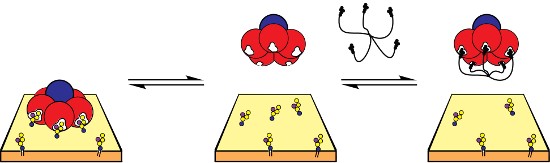
- polypeptide chain which is cleaved by a protease to give two subunits, A1 and A2, remain held together by extensive non-covalent forces and a single interchain disulfide bond [16]. The A2-subunit acts as a linker between the toxic A1-subunit and CTB which is the delivery vehicle that can transport the complex
- inhibitors Hol and Fan [46] designed and synthesised both spanning and non-spanning bivalent inhibitors. “Spanning” means the ligand has sufficient length of the linker to reach the two binding moieties of CT, whereas “non-spanning” means there is insufficient linker length for intra-pentamer chelation, but
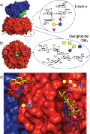
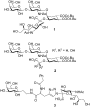
- ]. Liu et al. synthesised bivalent ligands 16 and 17, for evaluation through biophysical techniques (Figure 7) [50]. They found that the enhancement in affinity and potency was due to non-specific interactions between the linker portion, nitrophenyl group and CT. The interactions increase as linker




Stimuli-responsive oligonucleotides in prodrug-based approaches for gene silencing
Beilstein J. Org. Chem. 2018, 14, 436–469, doi:10.3762/bjoc.14.32
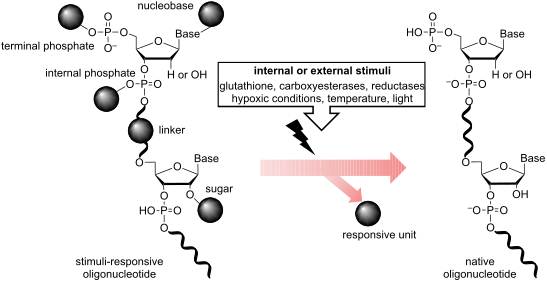
- for the use of 2’-O-RSSM-modified RNAs as prodrugs of siRNAs. Modifications at the extremities Disulfide bonds are attractive in designing drug-delivery systems. Indeed, lipophilic moieties may be attached to ONs to enhance cellular uptake. In particular, a cleavable disulfide linker has been used at
- the 3’-end of the sense strand to prepare cholesterol-conjugated siRNAs that were efficiently delivered to rat oligodendrocytes in vivo and achieved significant specific gene knockdown in these cells (Scheme 4A) [19]. The comparison with a non-cleavable alkyl linker suggests that a lipophilic siRNA
- conjugate with a disulfide linker is favorable to improve the suppression of 2’,3’-cyclic nucleotide 3’-phosphodiesterase mRNA in oligodendrocytes in vivo. This result may be attributable to increased bioavailability of siRNA in the cytoplasm. Similarly, regarding the intracellular delivery of naked peptide


Synthesis and biological evaluation of RGD and isoDGR peptidomimetic-α-amanitin conjugates for tumor-targeting
Beilstein J. Org. Chem. 2018, 14, 407–415, doi:10.3762/bjoc.14.29
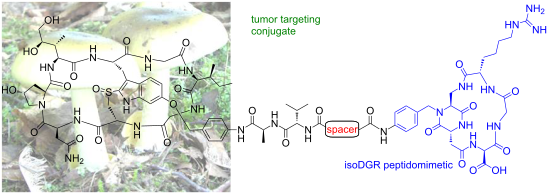
- lines, the cyclo[DKP-isoDGR]-α-amanitin conjugates bearing the lysosomally cleavable Val-Ala linker were found to be slightly more potent than α-amanitin. Apparently, for all these α-amanitin conjugates there is no correlation between the cytotoxicity and the expression of αVβ3 integrin. To determine
- disulfide linker in the cytoplasm. In another example, Perrin and co-workers conjugated the N-propargylasparagine of an amanitin analog to a cycloRGD integrin ligand (cyclo[RGDfK]) using a copper-catalyzed azide–alkyne cycloaddition [8]. The conjugates were tested in the U87 glioblastoma cell line, but only
- group (-CH2NH2) as a handle for conjugation to cytotoxic drugs (Figure 2, ligands 2 and 4) [28][29][30]. Conjugates of the functionalized ligands 2 and 4 with paclitaxel (PTX) via a 2’-carbamate with a self-immolative spacer and the lysosomally cleavable Val-Ala linker [31] were synthesized (Figure 2


Preparation of trinucleotide phosphoramidites as synthons for the synthesis of gene libraries
Beilstein J. Org. Chem. 2018, 14, 397–406, doi:10.3762/bjoc.14.28
- polystyrene support decorated with a photolabile linker and its potential use for the synthesis of siRNA duplexes under mild and neutral conditions [36]. A similar strategy was used for the synthesis of partially 2'/3'-O-acetylated RNA oligonucleotides [37]. A photo-cleavable linker would also have potential
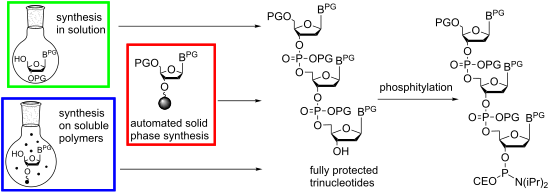
- well suited to it. Also the solution-phase synthesis of protected trinucleotide building blocks has been described in the literature [21][22][23]. In an initial attempt, thymidine as a start nucleoside was tethered to a precipitative tetrapodal soluble support via a disulfide-linker [21] (Table 1
- , the disulfide tether was replaced in a following-up study with a Q-linker (hydroquinone-O,O'-diacetic acid), to be cleaved with dilute methanolic K2CO3 for the release of trimers in fully protected form. Five different trimers were assembled at 0.5 mmol scale and released form the support as described


Recent advances on organic blue thermally activated delayed fluorescence (TADF) emitters for organic light-emitting diodes (OLEDs)
Beilstein J. Org. Chem. 2018, 14, 282–308, doi:10.3762/bjoc.14.18
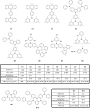
- properties of T24 revealed the HOMO and the LUMO levels are located on both the donor and acceptor part, respectively, without any contribution of the phenyl linker. Another situation was found for T25 and T26 since the LUMO predominantly extends on both the acceptor and the phenyl ring which is between the
- ° between the donor unit and the nearby phenylene linker for T29 and T30 was confirmed by quantum chemical calculations. Resulting from the almost perfect orthogonality, a good confinement of the electronic density of the two orbitals was obtained with a HOMO level predominantly located on the donor and a




Fluorogenic PNA probes
Beilstein J. Org. Chem. 2018, 14, 253–281, doi:10.3762/bjoc.14.17
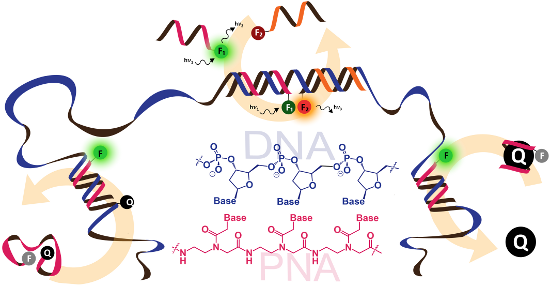
- detection of DNA by duplex [54] or triplex [69] formation have been demonstrated. Alternatively, the pyrene label can be placed onto the PNA backbone as a base replacement (in aegPNA) [55] or as a tethered label through a flexible linker (in acpcPNA) [70]. In most cases, excimer emission is predominant in
- . One promising example is the release of fluorophores by a phosphine-free photocatalyzed reduction of a self-immolative azide-based linker [105]. Single-labeled PNA probes with additional interacting partners PNA-based strand displacement probes Strand displacement probes consist of a fluorescence
- earliest PNA probes in this category are the so-called "light-up probes", which consist of a short single stranded PNA probe (ssPNA) linked to the DNA binding dye TO (Figure 18) at one end of the molecule, usually at the N-terminus, via a flexible linker [157]. The TO binds non-specifically with DNA




Aminosugar-based immunomodulator lipid A: synthetic approaches
Beilstein J. Org. Chem. 2018, 14, 25–53, doi:10.3762/bjoc.14.3
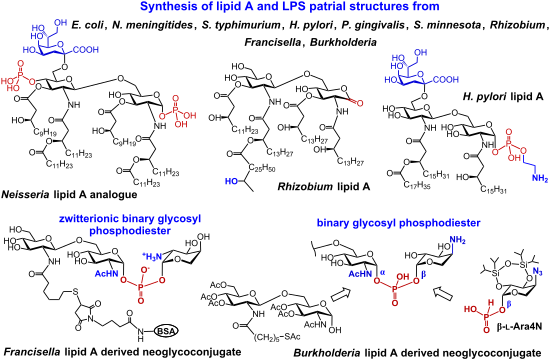
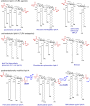
- could qualify as the site of attachment of a fluorescent label without hindering the biological activity would be position 6’ of the diglucosamine backbone of lipid A. When attached to position 6’ via a linker molecule, the fluorescent label would not interfere with the binding of lipid A to the MD-2
- owing to enhanced amphiphilicity of the hybrid molecule inflicted by the hydrophobic character of the fluorescent label and the formation of aggregates which resulted in self-quenching. To circumvent these problems, a longer hydrophilic linker and a less hydrophobic fluorescent group were required. An
- elegant solution consisted in the application of glucose attached at position 6’ via a glutaryl group as a long-chain hydrophilic linker in combination with biotin or the hydrophilic fluorescent label AlexaFluor. The appropriately protected tetraacylated disaccharide 19 was subjected to treatment with Zn




Recent applications of click chemistry for the functionalization of gold nanoparticles and their conversion to glyco-gold nanoparticles
Beilstein J. Org. Chem. 2018, 14, 11–24, doi:10.3762/bjoc.14.2
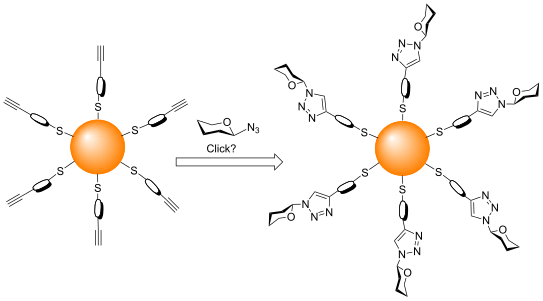
- thiol end group, which is generally attached to the reducing terminus by a linker (Figure 1a) [8][14][17][18][19][20][21][22][23][24][25][26][27]. The second method is a ligand exchange reaction involving the replacement of the ligands on pre-formed AuNPs with thiol-linked carbohydrate derivatives



The photodecarboxylative addition of carboxylates to phthalimides as a key-step in the synthesis of biologically active 3-arylmethylene-2,3-dihydro-1H-isoindolin-1-ones
Beilstein J. Org. Chem. 2017, 13, 2833–2841, doi:10.3762/bjoc.13.275
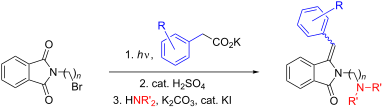
- local anesthetics: (a) a lipophilic aromatic ring, (b) an amide (or ester) linker, and (c) a terminal tertiary amine [9]. The original synthesis of these bioactive compounds involved a Perkin condensation followed by an amination reaction. An alternative pathway to AL-12B has been described by Couture


Synthetic mRNA capping
Beilstein J. Org. Chem. 2017, 13, 2819–2832, doi:10.3762/bjoc.13.274
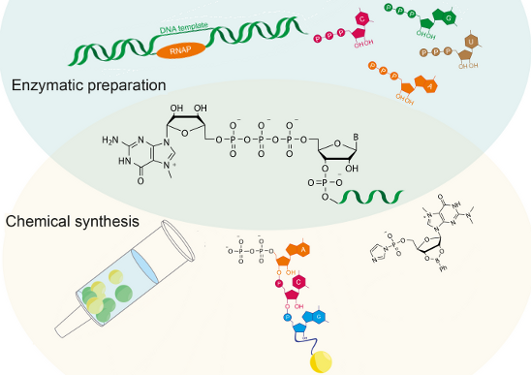
- ′-phosphorylated trimer synthesized by standard phosphoramidite chemistry. To address the problem of m7G instability under basic conditions, the TMG-capping reaction was carried out upon deprotection of all base-labile groups. Utilization of a novel, acid labile linker to the solid support allowed for subsequent