Search results
Search for "phenols" in Full Text gives 225 result(s) in Beilstein Journal of Organic Chemistry. Showing first 200.
Halogenated volatiles from the fungus Geniculosporium and the actinomycete Streptomyces chartreusis
Beilstein J. Org. Chem. 2013, 9, 2767–2777, doi:10.3762/bjoc.9.311
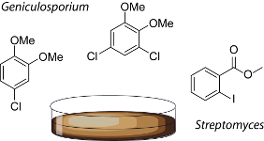
- ) [25] or the trichlorinated phenols 20–22 (Figure 5) [26]. The biological function of 4b and 10b in Geniculosporium is unknown, but the antibiotic activity of the related compound drosophilin A towards bacteria is well known [27]. A iodinated volatile from Streptomyces chartreusis During the course of




Stereoselectively fluorinated N-heterocycles: a brief survey
Beilstein J. Org. Chem. 2013, 9, 2696–2708, doi:10.3762/bjoc.9.306
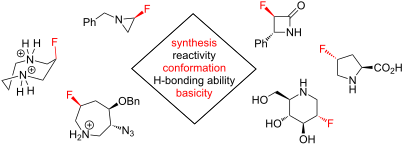
- to be successfully achieved. One such reagent, PhenoFluor (45, Figure 12), was originally developed by Ritter and co-workers for the direct fluorination of phenols [56]. Recent work showed that 45 can also be used to effect late-stage fluorination of hydroxy groups within complex molecular


New developments in gold-catalyzed manipulation of inactivated alkenes
Beilstein J. Org. Chem. 2013, 9, 2586–2614, doi:10.3762/bjoc.9.294
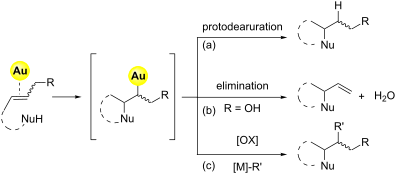
- process for the formation of new C–O bonds. In this direction numerous examples of metal and Brønsted-acid catalyzed condensations of alcohols, phenols and carboxylic acids to inactivated olefins have been reported [16]. Interestingly, He and co-workers compared the catalytic attitude of TfOH and
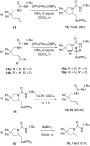
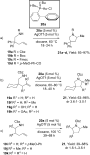
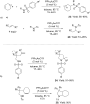
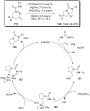
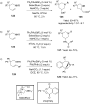
- works, Yang and He reported on the Ph3PAuOTf assisted Markovnikov-like addition of phenols and carboxylic acids to C=C under mild reaction conditions (Scheme 1) [27]. Electron-rich and electron-poor phenols reacted smoothly in toluene (85 °C) with only 1 mol % of catalyst loading (Scheme 1a). Contrarily
- , carboxylic acids required a higher loading of catalyst (5 mol %), but an acceptable yield was obtained even when sterically demanding 2-methylpropionic acid was employed as the nucleophile (Scheme 1b). Li and co-workers exploited the [Au(III)]-catalyzed addition of phenols and naphthols to conjugated dienes








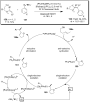
Ambient gold-catalyzed O-vinylation of cyclic 1,3-diketone: A vinyl ether synthesis
Beilstein J. Org. Chem. 2013, 9, 2537–2543, doi:10.3762/bjoc.9.288
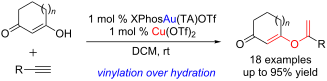
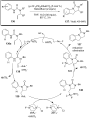
- vinyl ether synthesis using gold has been reported to date [17]. Nevertheless, there have been examples regarding the intermolecular addition of carboxylic acids [19][20], phenols [21][22] as well as phosphoric acids [23][24][25] to alkynes. In this context, we report a gold(I)-catalyzed O-vinylation of


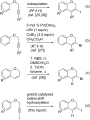
Flexible synthesis of anthracycline aglycone mimics via domino carbopalladation reactions
Beilstein J. Org. Chem. 2013, 9, 2194–2201, doi:10.3762/bjoc.9.258
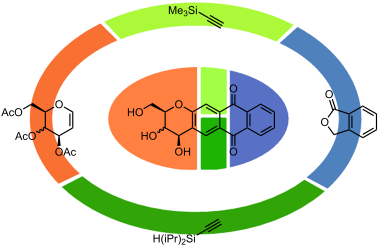
- oxidative procedures provided only the mono-oxidized products in trace amounts [40][41][42]. The oxidation of phenyl-substituted silanes to respective phenols is difficult [43][44]. However, literature precedence revealed that benzyl-substituted silane 13c or electron-deficient silane 13d [43][45] should be

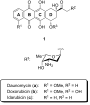


Gold(I)-catalyzed hydroarylation reaction of aryl (3-iodoprop-2-yn-1-yl) ethers: synthesis of 3-iodo-2H-chromene derivatives
Beilstein J. Org. Chem. 2013, 9, 2120–2128, doi:10.3762/bjoc.9.249
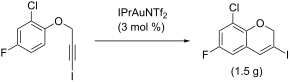
- Starting materials 1 were obtained from the corresponding phenols through a two steps synthetic route. General procedure for the propargylation of phenols To a suspension or solution of the corresponding phenol (1 equiv; 5 mmol) in DMF (20 mL), potassium carbonate was added (2 equiv; 10 mmol) followed by
- ethers from phenols and chiral non-racemic propargylic alcohols (S)-(−)-3-butyn-2-ol (5 mmol; commercially available, 464007 Sigma-Aldrich) was dissolved in THF (25 mL) in a flame dried round bottom flask, under nitrogen atmosphere, and the corresponding phenol (1.05 equiv, 5.25 mmol) and



Acid, silver, and solvent-free gold-catalyzed hydrophenoxylation of internal alkynes
Beilstein J. Org. Chem. 2013, 9, 2002–2008, doi:10.3762/bjoc.9.235
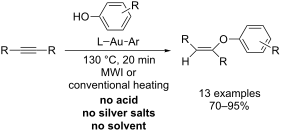
- compounds have been synthesized and investigated as single-component catalysts for the hydrophenoxylation of unactivated internal alkynes. Both carbene and phosphine-ligated compounds were screened as part of this work, and the most efficient catalysts contained either JohnPhos or IPr/SIPr. Phenols bearing
- successfully functionalized. Despite the intense interest in this chemistry the addition of phenols to internal alkenes has rarely been investigated [1][5]. Recently, Sahoo reported the hydrophenoxylation of alkynes using a multicomponent catalyst comprised of AuCl3, JohnPhos as the supporting ligand, and
- gold catalyst in these reactions is proposed to occur through a protodeauration reaction between the arylgold compounds and the phenols. The observation of tert-butylbenzene in the reaction mixture supports this proposal. Furthermore, to probe whether or not simple chlorogold-coordination compounds


Gold(I)-catalysed one-pot synthesis of chromans using allylic alcohols and phenols
Beilstein J. Org. Chem. 2013, 9, 1797–1806, doi:10.3762/bjoc.9.209
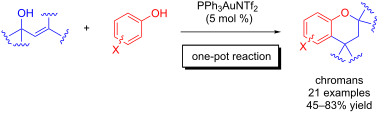
- Eloi Coutant Paul C. Young Graeme Barker Ai-Lan Lee Institute of Chemical Sciences, Heriot-Watt University, Edinburgh, EH14 1LP, United Kingdom 10.3762/bjoc.9.209 Abstract A gold(I)-catalysed reaction of allylic alcohols and phenols produces chromans regioselectively via a one-pot Friedel–Crafts
- structural motifs found in a variety of important biologically active natural products such as vitamin E and flavanoids [1][2][3][4][5]. One approach towards chromans [6][7][8][9][10][11][12], which is biosynthetically inspired, is the Friedel–Crafts allylation [13] of phenols followed by cyclisation of the
- dehydrative coupling strategy) [15][16]. To this end, the use of molybdenum catalyst CpMoCl(CO)3 together with an oxidant, o-chloranil, has been documented to catalyse the reaction of allylic alcohols with phenols to form chromans [17][18]. Strong and superacids have also been utilised in the synthesis of


A Lewis acid-promoted Pinner reaction
Beilstein J. Org. Chem. 2013, 9, 1572–1577, doi:10.3762/bjoc.9.179
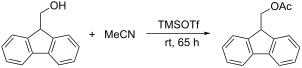
- possible. Phenols are not acylated under these reaction conditions. The method has been used for the first total synthesis of the natural product monaspilosin. In the reaction of benzyl alcohols variable amounts of amides are formed in a Ritter-type side reaction. Keywords: carbonitriles; carboxylic
- highly chemoselective; phenols were not acylated by these conditions and were re-isolated with high yields (Table 2, entries 12–14). In this context we tested 4-(2-hydroxyethyl)phenol (53) containing an aliphatic and a phenolic hydroxy function in the reaction with acetonitrile and benzyl cyanide


Practical synthesis of indoles and benzofurans in water using a heterogeneous bimetallic catalyst
Beilstein J. Org. Chem. 2013, 9, 1426–1431, doi:10.3762/bjoc.9.160
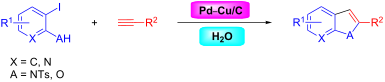
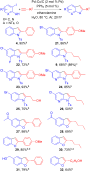
- with aryl acetylenes suggesting a strong halide effect and a sensitivity of the Pd–X bond under our reaction conditions. Indeed, the coupling of aryl acetylenes with bromo-anilines and bromo-phenols showed lower conversion compared to the iodo-congeners. We further evaluated the potential of our Pd–Cu


Metal-free aerobic oxidations mediated by N-hydroxyphthalimide. A concise review
Beilstein J. Org. Chem. 2013, 9, 1296–1310, doi:10.3762/bjoc.9.146
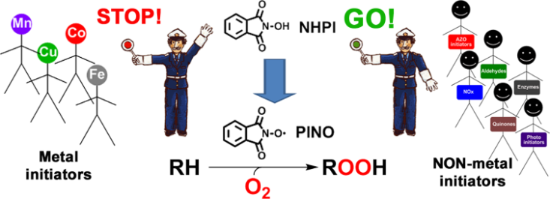
- system was also applied to the oxygenation of 1,3,5-triisopropylbenzene [17]. However, in this case the conversion of all isopropyl groups was far from being reached, with mono- and di-phenols being the major products, while the yield in benzene-1,3,5-triol was close to 1%. Sheldon and co-workers tested


Conformational analysis and intramolecular interactions in monosubstituted phenylboranes and phenylboronic acids
Beilstein J. Org. Chem. 2013, 9, 1127–1134, doi:10.3762/bjoc.9.125
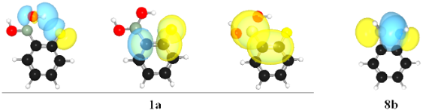
- for 2-monohalogen substituted phenols [12]. In fact, organic fluorine has been found to hardly ever participate in hydrogen bonding [13], despite the appearance of this interaction in 8-fluoro-4-methyl-1-naphthol [14], 2'-fluoroflavonols [15], 2-fluorobicyclo[2.2.1]heptan-7-ols [16] and 2


A chemist and biologist talk to each other about caged neurotransmitters
Beilstein J. Org. Chem. 2013, 9, 64–73, doi:10.3762/bjoc.9.8
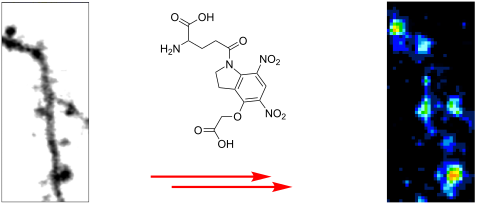
- are water stable [56]. When phenols (e.g., serotonin or capsaicin) are caged via the carbonate, they are effectively stable and released quickly [61][62]. It is also important to note that the stability of all these “acid-like” caged compounds depends on the pH of the aqueous solution. All are more


Iron-containing mesoporous aluminosilicate catalyzed direct alkenylation of phenols: Facile synthesis of 1,1-diarylalkenes
Beilstein J. Org. Chem. 2013, 9, 49–55, doi:10.3762/bjoc.9.6
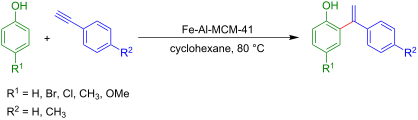
- Satyajit Haldar Subratanath Koner Department of Chemistry, Jadavpur University, Kolkata 700032, India 10.3762/bjoc.9.6 Abstract The addition of phenols to aryl-substituted alkynes to form 1,1-diarylalkenes was carried out by using the Fe-Al-MCM-41 catalyst. The catalyst showed remarkable
- improvement in time and yield in comparison to other solid catalysts. The heterogeneous catalyst can be reused at least three times without a significant loss in activity. Keywords: 1,1-diarylalkenes; heterogeneous catalysis; Fe-Al-MCM-41; Introduction The direct vinylation of phenols has received
- synthesis. Thus, the development of simple methods concerning such vinylation reactions of phenols always remains an important process. Mizoroki–Heck-type reaction could be considered as an efficient procedure for the synthesis of such vinylated phenols [18][19]. There are a number of reports available in


Reactions of salicylaldehyde and enolates or their equivalents: versatile synthetic routes to chromane derivatives
Beilstein J. Org. Chem. 2012, 8, 2166–2175, doi:10.3762/bjoc.8.244

- [28], as catalytic reagents for silylation of alcohols, phenols, and thiols using hexamethyldisilazane [29], in conversion of urazoles to triazolinediones [30], and in oxidation of 1,3,5-trisubstituted pyrazolines [31]. Molecular sieves have been used as solid-phase catalysts in the preparation of 2


New enzymatically polymerized copolymers from 4-tert-butylphenol and 4-ferrocenylphenol and their modification and inclusion complexes with β-cyclodextrin
Beilstein J. Org. Chem. 2012, 8, 2118–2123, doi:10.3762/bjoc.8.238
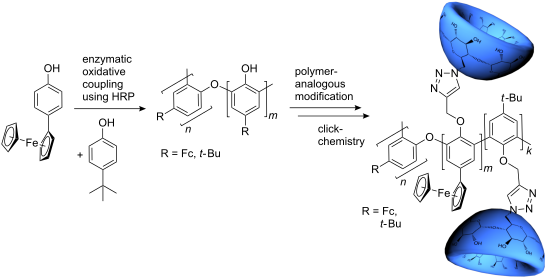
- phenols in water/organic-solvent systems in the presence of hydrogen peroxide. In recent studies it was demonstrated that several para-substituted phenols, i.e., 4-tert-butylphenol, can be polymerized with HRP in high yield and relatively high molecular weights [13]. Also several polyphenols with further
- functional groups, such as nitrones, double bonds and imides, have been synthetized and investigated in our group [14][15][16][17][18]. There are also several natural phenols such as flavonoides, or isoflavonoides, which were also polymerized successfully [19]. 4-Ferrocenylphenol (2) has been the subject of
- , the enzyme-catalytic polymerization of phenols in general with HRP as catalyst leads to the formation of a copolymer containing phenylene and oxyphenylene moieties [32][33]. Accordingly, in the range of 1024–1174 cm−1 IR signals of the C–O stretching vibration of ether functionalities can be observed


![[Graphic 2]](/bjoc/content/inline/1860-5397-8-238-i3.png?max-width=637&scale=0.59091) ).
).

Palladium-catalyzed C–N and C–O bond formation of N-substituted 4-bromo-7-azaindoles with amides, amines, amino acid esters and phenols
Beilstein J. Org. Chem. 2012, 8, 2004–2018, doi:10.3762/bjoc.8.227
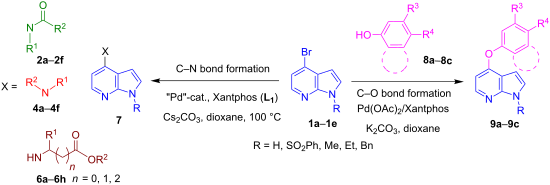
- .8.227 Abstract Simple and efficient procedures for palladium-catalyzed cross-coupling reactions of N-substituted 4-bromo-7-azaindole (1H-pyrrole[2,3-b]pyridine), with amides, amines, amino acid esters and phenols through C–N and C–O bond formation have been developed. The C–N cross-coupling reaction of
- report on coupling of amides, amino acid esters and phenols with N-protected 4-bromo-7-azaindole derivatives. Keywords: 7-azaindole; C–N bond; C–O bond; ligand; palladium catalyst; Introduction Palladium-catalyzed C–N and C–O bond-forming reactions between 4-substituted 7-azaindoles and amides, amines
- , amino acid esters or phenols have recently gained popularity among the scientific community for different drug-discovery and -development programs. Particularly, several 7-azaindoles (1H-pyrrole[2,3-b]pyridine) [1][2][3][4], including 4-substituted compounds [5][6][7][8] have found applications in


An efficient access to the synthesis of novel 12-phenylbenzo[6,7]oxepino[3,4-b]quinolin-13(6H)-one derivatives
Beilstein J. Org. Chem. 2012, 8, 1849–1857, doi:10.3762/bjoc.8.213
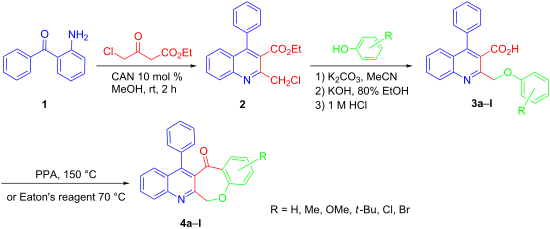
- -aminobenzophenone (1) with 4-chloroethylacetoacetate by using CAN (cerium ammonium nitrate, 10 mol %) as catalyst at room temperature. The substrates 3a–l were prepared through one-pot reaction of ethyl 2-(chloromethyl)-4-phenylquinoline-3-carboxylate (2) and substituted phenols. Our developed strategy, involving a
- with a variety of phenols with varying substituents in the presence of K2CO3 as base in MeCN under reflux as shown in Scheme 2. In this reaction, we adopted MeCN as the solvent of choice simply because of its low boiling point, bringing much convenience to the workup procedure. Thus, upon the


Organocatalytic tandem Michael addition reactions: A powerful access to the enantioselective synthesis of functionalized chromenes, thiochromenes and 1,2-dihydroquinolines
Beilstein J. Org. Chem. 2012, 8, 1668–1694, doi:10.3762/bjoc.8.191
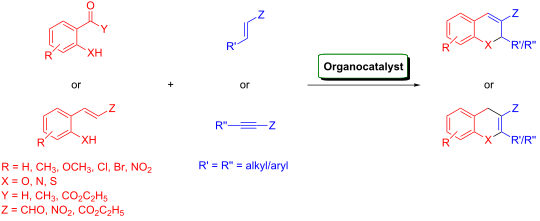
- –Michael–aldol reaction for the highly stereogenic synthesis of chromenes. Enantioselective cascade oxa-Michael–Michael reaction of alkynals with 2-(E)-(2-nitrovinyl)-phenols reported by Wang. Domino oxa-Michael–Michael–Michael–aldol reaction of 2-(2-nitrovinyl)-benzene-1,4-diol with α,β-unsaturated






Arylglycine-derivative synthesis via oxidative sp3 C–H functionalization of α-amino esters
Beilstein J. Org. Chem. 2012, 8, 1564–1568, doi:10.3762/bjoc.8.178
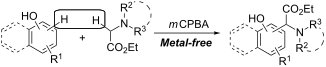
- phenols with α-amino esters proceeded smoothly in the presence of meta-chloroperoxybenzoic acid as an oxidant under ambient conditions, to produce arylglycine derivatives in satisfactory yields. Keywords: α-amino ester; arylglycine; C–H functionalization; oxidation; synthesis; Findings Arylglycine
- -(disubstituted amino)acetates with indoles to achieve indolylglycine derivatives (Scheme 2, reaction 1) [16]. In the course of our continuous research on the direct functionalization of sp3 C–H bonds, we found that this new strategy could also be applied to the coupling reaction of naphthols and phenols with
- copper catalyst could not improve the yield of 3a (Table 1, entries 3 and 4). The solvents were then screened (Table 1, entries 5–10). The best result was observed when CH2Cl2 was used as the solvent (79%, Table 1, entry 5). Therefore, the subsequent reactions of naphthols and phenols with ethyl 2


Screening of ligands for the Ullmann synthesis of electron-rich diaryl ethers
Beilstein J. Org. Chem. 2012, 8, 1105–1111, doi:10.3762/bjoc.8.122
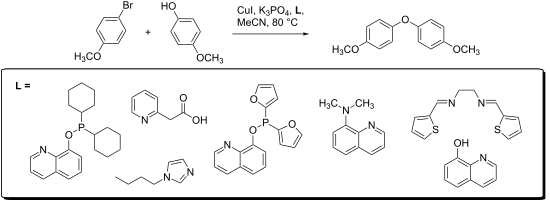
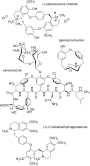
- tetramethylmagnolamine [6], and the antifungal diamine piperazinomycin [7] (Figure 1). A straightforward method for the formation of diaryl ethers is the Cu-catalyzed coupling of aryl halides with phenols, first reported by Fritz Ullmann in 1903 [8][9]. However, the classical protocol suffers from considerable
- phenols developed by Buchwald [10][11] and Hartwig [12][13] in the 1990s. Nevertheless, the use of this expensive metal in combination with sensitive and costly phosphine ligands limits the use of palladium catalysis for industrial-scale applications and economic aspects have led to a renaissance of the
- decomposition of the ligands. Conclusion A collection of 56 multidentate ligands were screened in a model system for the Ullmann diaryl ether synthesis of electron-rich phenols and aryl bromides. Structurally diverse ligands showed a catalytic activity in the coupling, but none of the ligands showed a higher


Synthesis and anion recognition properties of shape-persistent binaphthyl-containing chiral macrocyclic amides
Beilstein J. Org. Chem. 2012, 8, 967–976, doi:10.3762/bjoc.8.109
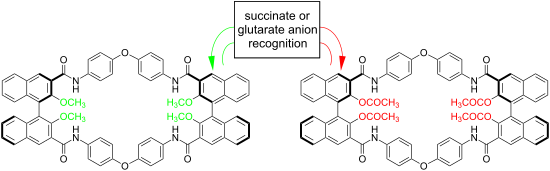
- (the naphthyl rings of the binaphthyl units and the aryl moieties of the spacing units); electronic communication between them is present (Figure 2). It is interesting to note how the spectra of macrocycle (R,R)-12, bearing methoxy protected phenols, showed the most bathochromically shifted shoulder



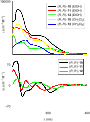


Liquid-crystalline heterodimesogens and ABA-heterotrimesogens comprising a bent 3,5-diphenyl-1,2,4-oxadiazole central unit
Beilstein J. Org. Chem. 2012, 8, 472–485, doi:10.3762/bjoc.8.54
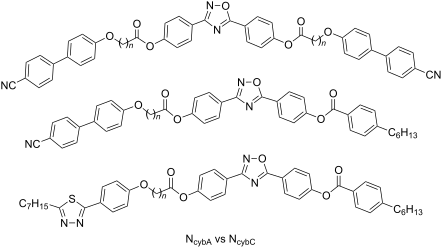
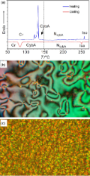
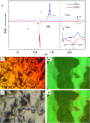
- ) [65], respectively. The syntheses of the acids 2 and 4, and the 1,2,4-oxadiazole substituted phenols 1 and 3 were reported previously in the cited references. The final compounds were purified by crystallization from ethyl acetate/ethanol mixtures. All compounds represent the first examples in their




Perhydroazulene-based liquid-crystalline materials with smectic phases
Beilstein J. Org. Chem. 2012, 8, 403–410, doi:10.3762/bjoc.8.44
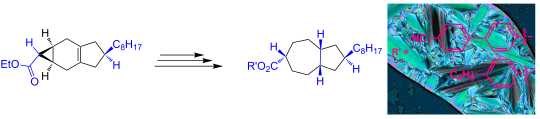
- stereochemistry on the liquid-crystalline properties in the resulting esters. We selected two different phenols for this esterification step, one with a nonpolar end group, an alkyl chain, and the other with a polar end group, a cyano moiety. The newly synthesized derivatives 8a and 8b (Scheme 4) and 10a and 10b


Derivatives of phenyl tribromomethyl sulfone as novel compounds with potential pesticidal activity
Beilstein J. Org. Chem. 2012, 8, 259–265, doi:10.3762/bjoc.8.27
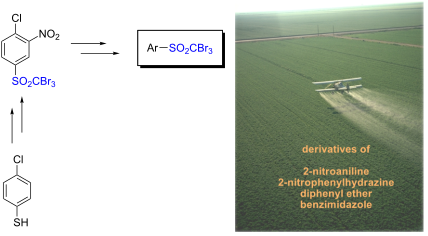
- aliphatic amines (products 7c–7h), aromatic primary amines (products 7i–7k) and phenols (products 7l–7o), with all the resulting compounds being obtained in >85% yields (Table 1; see Supporting Information File 1 for further details on products 7a–7o). At this point, two groups of the designed target