Search results
Search for "piperidine" in Full Text gives 294 result(s) in Beilstein Journal of Organic Chemistry. Showing first 200.
The synthesis of functionalized bridged polycycles via C–H bond insertion
Beilstein J. Org. Chem. 2016, 12, 985–999, doi:10.3762/bjoc.12.97
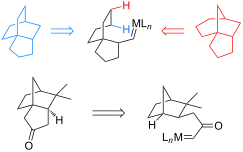
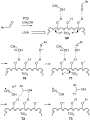
- presence of an attached ring as in 48, the 1,6-insertion produced the bridged-bicyclic product 49 (Scheme 11) [66]. The Compain group leveraged this innovation in the synthesis of functionalized piperidines (Scheme 12) [67]. By using the piperidine 50, an initial insertion into the amine-activated C–H bond
- generated the tosylamine-bridged bicycle 51. The aminal in 51 could be transformed to a methyl hemiaminal, and then later a second C–H bond insertion by another nitrene targeted the less activated C–H bond to form the ring-fused piperidine 52. Thus, the pendant sulfonamide acted as a tool for multiple
- remote functionalizations on the piperidine ring. Many examples of the sequence with different piperidines were also reported. The resulting 3-amino-2,6-disubstituted piperidines like 52 are known to display anti-allergic and anti-inflammatory activities. Rao generated a bridged polycycle via a formal C




Synthesis and in vitro cytotoxicity of acetylated 3-fluoro, 4-fluoro and 3,4-difluoro analogs of D-glucosamine and D-galactosamine
Beilstein J. Org. Chem. 2016, 12, 750–759, doi:10.3762/bjoc.12.75
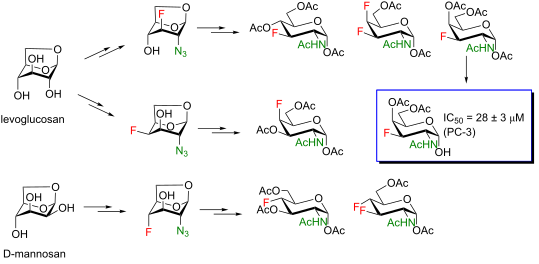
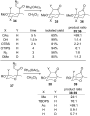
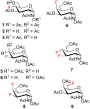
- 4–6 were subjected to anomeric deacetylation (Scheme 6). Compound 5 provided 1-O-deacetylated product 49 by treatment with BnNH2 in THF. Since acetylated 4-fluoro-D-GlcNAc 1 under these conditions did not react cleanly, we used piperidine-promoted [60] deacetylation to prepare 2 in 74% yield
- . Similarly, acetylated 4-fluoro-D-GalNAc 4 gave 50 in 60% yield. The attempted anomeric deacetylation of 3-fluoro-D-GalNAc 6 by treatment with piperidine followed by chromatography gave a fraction containing an inseparable side-product in addition to the expected deacetylated product 51. The side-product
- showed no fluorine resonance in 19F NMR and its molecular formula C17H28N2O7 assigned by LC–HRMS corresponded to a formal displacement of fluorine by piperidine, leading probably to compound 53. When pure 51 (prepared by another method, see below) was reacted with excess piperidine, high resolution ESIMS



Opportunities and challenges for direct C–H functionalization of piperazines
Beilstein J. Org. Chem. 2016, 12, 702–715, doi:10.3762/bjoc.12.70
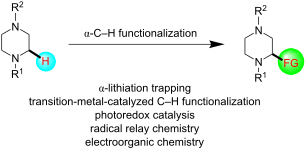
- , piperazine ranks among the top three N-heterocycles along with pyridine and piperidine in the U.S. FDA-approved pharmaceuticals [2]. Due to its broad utilization, piperazine has been considered as a privileged scaffold in drug discovery to combat various human diseases (Figure 1). For example, Imatinib (also
- -studied pyrrolidine and piperidine systems, the existence of the second ring-bound nitrogen in piperazines either causes various side reactions or inhibits or diminishes the reactivity of the C–H bond. This review summarizes the current status and challenges of direct C–H bond functionalization of
- atoms [30][31]. Corresponding enantioselective versions have also been developed using chiral diamines as ligands to allow access to enantioenriched α-substituted nitrogen heterocycles. However, most of the success has been made in the territory of N-Boc-pyrrolidine [32][33] and N-Boc-piperidine [34][35




Studies on the synthesis of peptides containing dehydrovaline and dehydroisoleucine based on copper-mediated enamide formation
Beilstein J. Org. Chem. 2016, 12, 564–570, doi:10.3762/bjoc.12.55
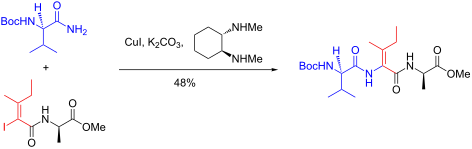
- 3). The presence of the ligand was essential and the choice of other amines such as tetramethylethylendiamine (TMEDA) (Table 1, entry 4) or piperidine-2-carboxylate did not lead to product formation (Table 1, entry 5). However, (rac)-trans-N,N-dimethyl-1,2-cyclohexanediamine (17) [9] in combination


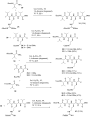

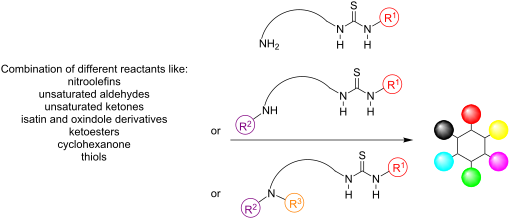
(Thio)urea-mediated synthesis of functionalized six-membered rings with multiple chiral centers
Beilstein J. Org. Chem. 2016, 12, 462–495, doi:10.3762/bjoc.12.48


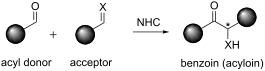
Recent advances in N-heterocyclic carbene (NHC)-catalysed benzoin reactions
Beilstein J. Org. Chem. 2016, 12, 444–461, doi:10.3762/bjoc.12.47
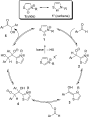
- problem was successfully addressed by using a hindered base, pentamethyl piperidine, which was inert towards the products (Scheme 24) [40]. In 2013, Ye disclosed a remarkable NHC-catalysed enantioselective aza-benzoin reaction of enals and activated ketimines leading to the formation of functionalised α



Exploring architectures displaying multimeric presentations of a trihydroxypiperidine iminosugar
Beilstein J. Org. Chem. 2015, 11, 2631–2640, doi:10.3762/bjoc.11.282

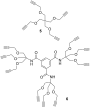
- chemistry approach involving the copper azide-alkyne-catalyzed cycloaddition (CuAAC) between suitable scaffolds bearing terminal alkyne moieties and an azido-functionalized piperidine as the bioactive moiety. A preliminary biological investigation is also reported towards commercially available and human
- glycosidases. Keywords: dendrimers; glycosidase inhibitors; iminosugars; multivalency; piperidine alkaloids; Introduction Iminosugars are well-known naturally occurring glycomimetics with a nitrogen atom replacing the endocyclic oxygen, mainly recognized as inhibitors of carbohydrate-processing enzymes
- Pd(OH)2/C in MeOH followed by reductive amination of the formed dialdehyde intermediate with 3-azidopropyl-1-amine [34] in the presence of NaBH3CN and AcOH allowed access to N-alkylated piperidine 4 in 67% yield (Scheme 2) [25]. With the key azido intermediate 4 in hands, we proceeded with the




Organocatalytic and enantioselective Michael reaction between α-nitroesters and nitroalkenes. Syn/anti-selectivity control using catalysts with the same absolute backbone chirality
Beilstein J. Org. Chem. 2015, 11, 2577–2583, doi:10.3762/bjoc.11.277
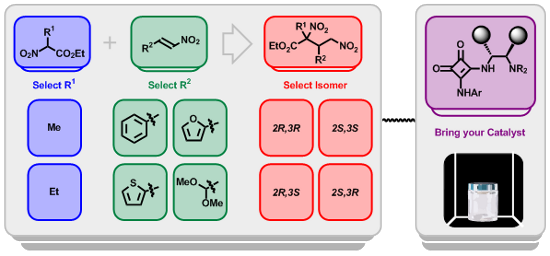
- quinuclidine moiety in catalyst 4 and the piperidine scaffold in catalyst 6) are the key parameters influencing this different arrangement for the nitroacetate pronucleophile [27]. Conclusion We have developed an asymmetric catalytic diastereodivergent route for the synthesis of 2,4-dinitro esters taking


Synthesis of Xenia diterpenoids and related metabolites isolated from marine organisms
Beilstein J. Org. Chem. 2015, 11, 2521–2539, doi:10.3762/bjoc.11.273
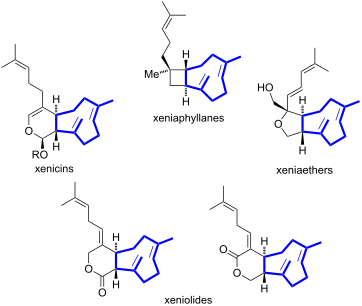
- affecting the sensitive caryophyllene-like subunit, the methoxy group was replaced with a phenylseleno moiety, which was converted to the alcohol and finally oxidized to lactone 73. In three further steps, lactone 73 was converted to aldehyde ester 74, which upon treatment with piperidine gave a β-enamino







Continuous formation of N-chloro-N,N-dialkylamine solutions in well-mixed meso-scale flow reactors
Beilstein J. Org. Chem. 2015, 11, 2408–2417, doi:10.3762/bjoc.11.262
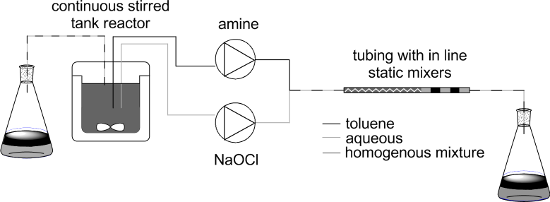
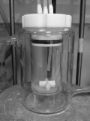
- piperidine in toluene at 0.5 mL/min. Due to the high volatility of N-chloropiperidine the product was not isolated and was instead obtained as a solution in toluene (0.94 M, 94%) by separation of the organic phase from the aqueous phase of the reaction solution. The yield of product was determined by NMR


Recent applications of ring-rearrangement metathesis in organic synthesis
Beilstein J. Org. Chem. 2015, 11, 1833–1864, doi:10.3762/bjoc.11.199
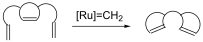
- this method by isolating the RCM product of the ROM–CM byproduct 290, which was recovered in the ROM–RCM–CM cascade (Scheme 62). Kouklovsky and co-workers [62] have described a stereoselective synthesis of 2-(2-hydroxyalkyl)piperidine alkaloids by employing a RRM of NDA adduct 293. The required




An efficient synthesis of N-substituted 3-nitrothiophen-2-amines
Beilstein J. Org. Chem. 2015, 11, 1707–1712, doi:10.3762/bjoc.11.185
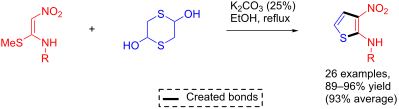
- , entry 5), pyridine (Table 1, entry 6), N,N-dimethylaminopyridine (DMAP, Table 1, entry 7), piperidine (Table 1, entry 8), L-proline (Table 1, entry 9), potassium carbonate (Table 1, entry 10), sodium carbonate (Table 1, entry 11) and caesium carbonate (Table 1, entry 12). After identifying potassium



Pyridinoacridine alkaloids of marine origin: NMR and MS spectral data, synthesis, biosynthesis and biological activity
Beilstein J. Org. Chem. 2015, 11, 1667–1699, doi:10.3762/bjoc.11.183
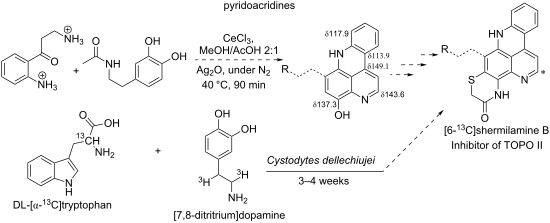
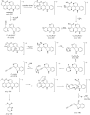
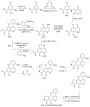
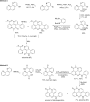
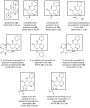
- effect [89]. Piperidinic phosphonates derivatives also showed the same enzyme inhibition (Figure 18) [90] and the only chemical resemblance with pyridoacridines is the piperidine ring. Since piperidine is related to pyridine, the dihydropyridone (C) and the pyridine (E) rings in the structure of 99 could










Preparative semiconductor photoredox catalysis: An emerging theme in organic synthesis
Beilstein J. Org. Chem. 2015, 11, 1570–1582, doi:10.3762/bjoc.11.173
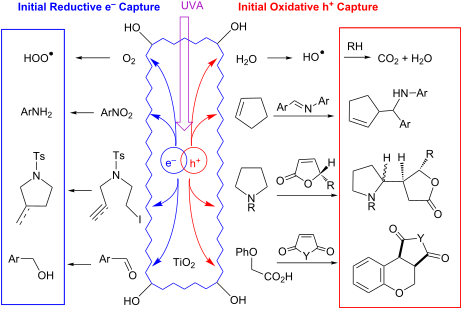
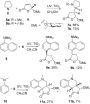
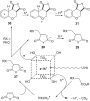
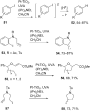
- case of benzylic amines and piperidine, but aliphatic amines and aniline exhibited poor reactivity. Carboxylic acids are available in great variety from natural and industrial sources. Green synthetic methods based around them as starting materials are undoubtedly worthy of development. That simple







Synthesis of alpha-tetrasubstituted triazoles by copper-catalyzed silyl deprotection/azide cycloaddition
Beilstein J. Org. Chem. 2015, 11, 1425–1433, doi:10.3762/bjoc.11.154
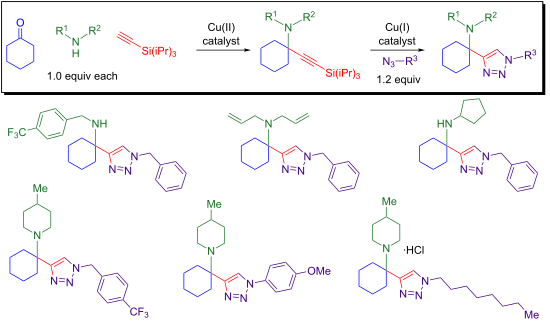
- ), [27] and this motif is also critical to the activity of drugs like ketamine and phencyclidine (1-(1-phenylcyclohexyl)piperidine, PCP) [28]. Tetrasubstituted carbons bearing amines can provide much higher levels of activity than the corresponding trisubstituted center. For example, fentanyl is an


Synthesis and evaluation of the biostability and cell compatibility of novel conjugates of nucleobase, peptidic epitope, and saccharide
Beilstein J. Org. Chem. 2015, 11, 1352–1359, doi:10.3762/bjoc.11.145
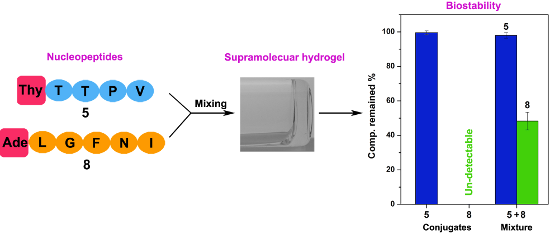
- ]. The conjugates NAS were produced by a combination of SPPS and liquid phase synthesis. Scheme 2 shows a representative synthesis route of a NAS conjugate (1). We loaded the first amino acid, Fmoc-Val-OH, on 2-chlorotrityl chloride resin, then removed the Fmoc group with 20% piperidine in
- solid-phase peptide synthesis and liquid-phase synthesis). i) Fmoc-Val-OH, DIPEA; ii) 20% piperidine; iii) Fmoc-Pro-OH, HBTU, DIPEA; iv) Fmoc-Thr(t-Bu)-OH, HBTU, DIPEA; v) thymine-1-acetic acid, HBTU, DIPEA; vi) TFE/DCM 2:8; vii) D-glucosamine hydrochloride, HBTU, DIPEA; viii) TFA/H2O 95:5


Reactions of nitroxides 15. Cinnamates bearing a nitroxyl moiety synthesized using a Mizoroki–Heck cross-coupling reaction
Beilstein J. Org. Chem. 2015, 11, 1155–1162, doi:10.3762/bjoc.11.130
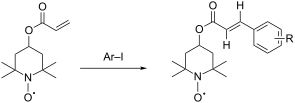
- , 109 [53][54]. The signals at m/z 124, and 109 are abundant. The signal at m/z 154 was assigned to the structure, resulting from elimination of a XOH from the position 4 and 3 of the piperidine ring. The subsequent loss of a NO group (M = 30) and a CH3 group (M = 15), respectively, generates ions at m


An intramolecular C–N cross-coupling of β-enaminones: a simple and efficient way to precursors of some alkaloids of Galipea officinalis
Beilstein J. Org. Chem. 2015, 11, 884–892, doi:10.3762/bjoc.11.99

- . Conditions: (a) piperidine, PhCOOH, toluene, reflux 4 h; (b) NaBH4, MeOH/MeCN, rt, 3.5 h; (c) KOH, H2O, reflux, 8 h; (d) H2SO4, H2O, reflux, 20 h; (e) MeOH, SOCl2, reflux, 4 h; (f) Meldum’s acid, HCOOH, Et3N, 100 °C, 4 h. The synthesis of the starting β-enaminones. Conditions: (a) H2SO4, 65 °C, 46 h; (b) 1


Thiazole formation through a modified Gewald reaction
Beilstein J. Org. Chem. 2015, 11, 875–883, doi:10.3762/bjoc.11.98
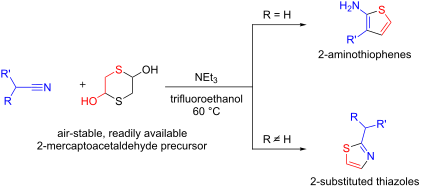
- , but generated complicated product mixtures allowing only a moderate isolated yield of 33% for the TMG and negligible recovery for the DBU (Table 1, entries 7 and 8). Interestingly, the use of piperidine led to no conversion under these reaction conditions (Table 1, entry 9), we believe this is due to


Self-assembly of heteroleptic dinuclear metallosupramolecular kites from multivalent ligands via social self-sorting
Beilstein J. Org. Chem. 2015, 11, 693–700, doi:10.3762/bjoc.11.79
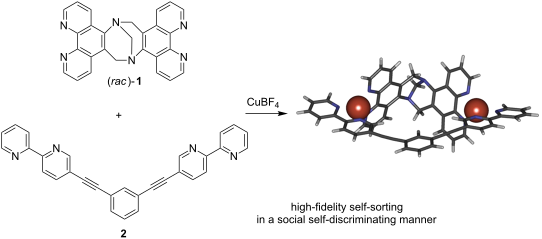
- -bottomed flask was charged with 5-ethynyl-2,2’-bipyridine (11, 109 mg, 0.6 mmol, 2 equiv), 1,3-diiodobenzene (100 mg, 0.3 mmol), [Pd(PPh3)2Cl2] (5.32 mg, 2.5 mol %), and copper(I) iodide (1.44 mg, 2.5 mol %) and flushed with argon. Dry THF (15 mL) and dry piperidine (5 mL) were added and the resulting


Sequence-specific RNA cleavage by PNA conjugates of the metal-free artificial ribonuclease tris(2-aminobenzimidazole)
Beilstein J. Org. Chem. 2015, 11, 493–498, doi:10.3762/bjoc.11.55
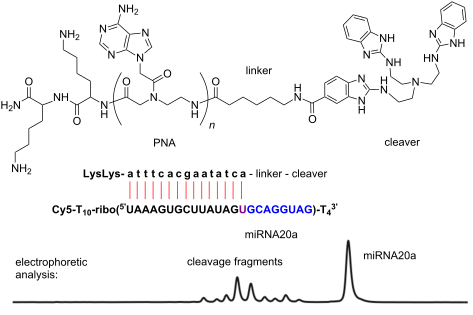
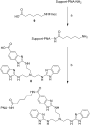
- : 45 bar H2, Pd/C (10%), MeOH sat. with NH3, 60 °C, 5 h, rt, overnight, 37%; f: Mukaiyama’s reagent, NEt3, DMF, 22 h, rt, 56%. Boc-ON: 2-(tert-butoxycarbonyloxyimino)-2-phenylacetonitrile. Synthesis of PNA conjugates. Conditions: a: 1) 9, HOBt, DIC, DMF, rt, 24 h; 2) piperidine, DMF, rt, 30 min; b: 1




Articulated rods – a novel class of molecular rods based on oligospiroketals (OSK)
Beilstein J. Org. Chem. 2015, 11, 74–84, doi:10.3762/bjoc.11.11

- terminal or lateral positions of the rods. Building blocks with lateral SEGs are called sleeves. In Figure 1 a typical sleeve D (cyan) as well as other typical building blocks of OSK rods are depicted, such as pentaerythritol C (red), cyclohexane-1,4-dione E (green), and piperidine-4-ones B (blue). An OSK
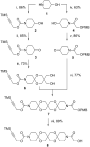
- defined a 1,2,3-triazole containing linkage between two piperidine rings as the flexible joint F, which should be easily accessible by copper-catalyzed cycloaddition between an azide G and a terminal alkyne H (CuAAC, “Click” reaction) [16]. Primary alcohols I serve as “protected” azides accessible by
- modified Appel reaction [17]. The alkynes H can be protected by silylation (J) because only primary alkynes react in the CuAAC (Figure 3). The synthesis commences with 4-hydroxypiperidine (1), which was converted to piperidine-4-one 3 bearing a protected alkyne moiety as well as to piperidin-4-one 5 with a




Enantioselective synthesis of polyhydroxyindolizidinone and quinolizidinone derivatives from a common precursor
Beilstein J. Org. Chem. 2014, 10, 3104–3110, doi:10.3762/bjoc.10.327
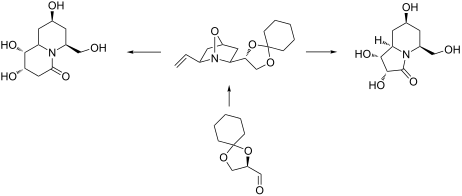
- -piperidine derivative 7 (Scheme 1) in very good yield. The 4-OH group in compound 7 was then protected as its TBDMS ether (8) wherein the use of TBS triflate was essential as the more conventional TBSCl was found to be ineffective. Treatment of the free amino group in 8 with neat acrylic acid provided the


The Shono-type electroorganic oxidation of unfunctionalised amides. Carbon–carbon bond formation via electrogenerated N-acyliminium ions
Beilstein J. Org. Chem. 2014, 10, 3056–3072, doi:10.3762/bjoc.10.323
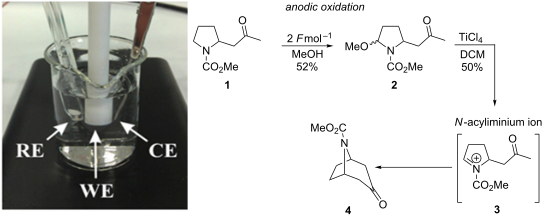
- functionalise a pyrrolidine or piperidine carbamate [86][87]. A lithium perchlorate–nitromethane system was used to prepare electrochemically azanucleoside derivatives [88]. Unactivated prolinol derivatives underwent anodic oxidation to generate N-acyliminium ions that were intercepted by nucleophilic bases


Formal total syntheses of classic natural product target molecules via palladium-catalyzed enantioselective alkylation
Beilstein J. Org. Chem. 2014, 10, 2501–2512, doi:10.3762/bjoc.10.261
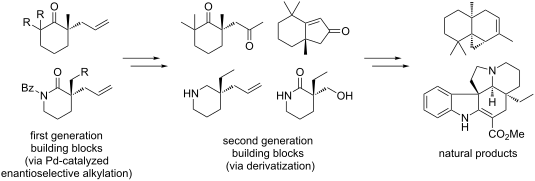
- enantioselective total synthesis of quebrachamine (Scheme 12) [92]. In their planning, disconnection at the macrocycle led to amide 52, which was prepared from 3,3-disubstituted piperidine 53. The all-carbon quaternary stereocenter in 53 was installed by double alkylation of lactam 55, using an auxiliary to
- furnished N-boc piperidine-alcohol (+)-53 [84], thus intercepting an intermediate in Amat’s synthesis of quebrachamine. G) Vincadifformine Vincadifformine (59) was isolated in both enantioenriched and racemic forms from the leaves and roots of Rhazya stricta in 1963 [93]. Not only is it a representative