Search results
Search for "proline" in Full Text gives 216 result(s) in Beilstein Journal of Organic Chemistry. Showing first 200.
Development of peptidomimetic ligands of Pro-Leu-Gly-NH2 as allosteric modulators of the dopamine D2 receptor
Beilstein J. Org. Chem. 2013, 9, 204–214, doi:10.3762/bjoc.9.24
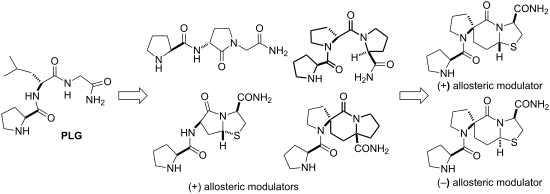
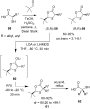
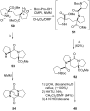
- a type II β-turn. The synthetic approach to the novel highly constrained spiro-bicyclic turn mimics found in PLG peptidomimetics 27–29 relied on α-alkylaldehyde proline derivatives (34, Scheme 1) as key starting materials [44][46]. These aldehyde intermediates were obtained from L-proline via the
- highly moisture-labile oxazolidinone 30 of Seebach's “self-regeneration of chirality” methodology [47]. Stereoselective alkylation of 30 provided alkylated oxazolidinone 31 and cleavage of this N,O-acetal provided α-alkylated proline 32, which when Boc-protected gave 33. The formation of 34a and 34b was
- , wherein 31 is converted to 32, the hydrolysis of 31 was originally carried out under rigorous acidic conditions (aqueous HCl under reflux) and purification of the resulting α-alkylated proline 32 required tedious ion-exchange chromatography [47]. It was subsequently found that simply stirring a solution




Reactions of salicylaldehyde and enolates or their equivalents: versatile synthetic routes to chromane derivatives
Beilstein J. Org. Chem. 2012, 8, 2166–2175, doi:10.3762/bjoc.8.244

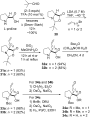
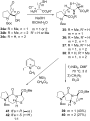
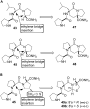
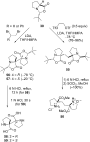
- 24 in 94% yield (Scheme 9) [22]. In 2009, Shanthi and co-workers reported the use of the amino acid L-proline as a catalyst in a three component reaction of salicylaldehyde, malononitrile and indole for the synthesis of 2-aminochromene 27 in 90% yield (Scheme 10) [23] The synthesis proceeds through a


Mechanochemistry assisted asymmetric organocatalysis: A sustainable approach
Beilstein J. Org. Chem. 2012, 8, 2132–2141, doi:10.3762/bjoc.8.240
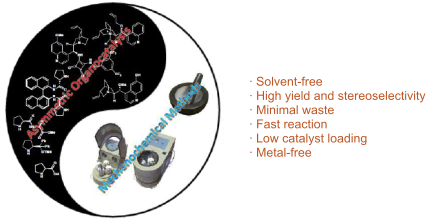
- various bioactive molecules [28]. Among different organocatalysts used for asymmetric aldol reactions, proline and its derivatives emerged as powerful catalysts for the enamine activation of donor aldehyde or ketone. Bolm’s group reported a solvent-free asymmetric organocatalytic aldol reaction under ball
- -milling conditions using L-proline (I) as catalyst (Scheme 1) [29][30]. Various five and six-membered cyclic ketones 1 were reacted with aromatic aldehydes 2 to provide anti-aldol products 3 in good to excellent yield (42–99%) and poor to high diastereoselectivity (50:50 to 99:1 dr) and moderate to
- excellent enantioselectivity (45 to >99% ee). Cyclohexanone derivatives resulted in high stereoselectivity of anti-aldol products; however, in the case of cyclopentanone poor diastereoselectivity was observed. The advantages of ball-milling technique over traditional stirring in the proline-catalysed aldol


Palladium-catalyzed C–N and C–O bond formation of N-substituted 4-bromo-7-azaindoles with amides, amines, amino acid esters and phenols
Beilstein J. Org. Chem. 2012, 8, 2004–2018, doi:10.3762/bjoc.8.227
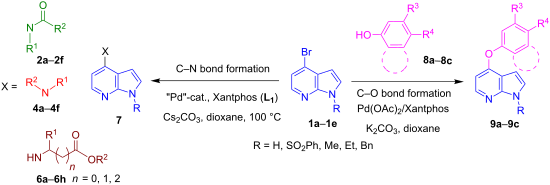
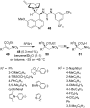
- yield of the product in 3 h (Table 6, entry 4). The catalytic system developed by us for the coupling of amino acid esters with N-protected 7-azaindoles was ineffective for L-proline (6f), L-serine (6g), and L-glutamic acid (6h) (Table 6, entries 8–10). This may be ascribed to the fact that these amino


Automated three-component synthesis of a library of γ-lactams
Beilstein J. Org. Chem. 2012, 8, 1804–1813, doi:10.3762/bjoc.8.206
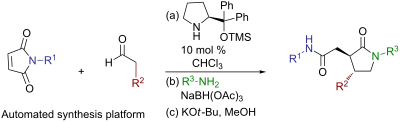
- addition of enolizable aldehydes to maleimides in the original method suggested the possibility of producing chiral γ-lactams through the use of a chiral proline-like organocatalysts. In fact, Córdova and co-workers have previously established a protocol for such a process [13]. Based on this initial


Asymmetric desymmetrization of meso-diols by C2-symmetric chiral 4-pyrrolidinopyridines
Beilstein J. Org. Chem. 2012, 8, 1778–1787, doi:10.3762/bjoc.8.203
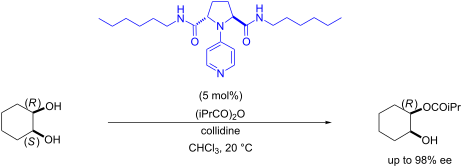
- racemic diols (s: up to 12) [8] and amino alcohol derivatives (s: up to 54) [9]. Catalyst 2, readily prepared from L-proline, could be employed for the kinetic resolution of amino alcohol derivatives (s: up to 11) [10]. Chiral PPY catalysts with dual functional side chains at C(2) and C(4) of the
- pyrrolidine ring such as 3 were prepared from trans-4-hydroxy-L-proline. These catalysts were found to be moderately effective for the asymmetric desymmetrization of meso-diols [11]. C2-Symmetric PPY-catalyst 4 was found to be effective for the chemo- and regioselective acylation of carbohydrates [12][14][16


Organocatalytic cascade aza-Michael/hemiacetal reaction between disubstituted hydrazines and α,β-unsaturated aldehydes: Highly diastereo- and enantioselective synthesis of pyrazolidine derivatives
Beilstein J. Org. Chem. 2012, 8, 1710–1720, doi:10.3762/bjoc.8.195
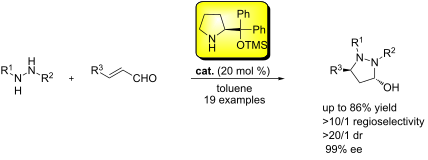
- screening results are summarized in Table 3. (S)-Proline derivatives 1g–h, 1k, 1l were found to be ineffective for the reaction, because they afford only trace products after one day (Table 3, entries 1, 2, 5 and 6). Although a moderate yield was obtained with organocatalyst 1i bearing a sulfone functional


Enantioselective total synthesis of (R)-(−)-complanine
Beilstein J. Org. Chem. 2012, 8, 1695–1699, doi:10.3762/bjoc.8.192
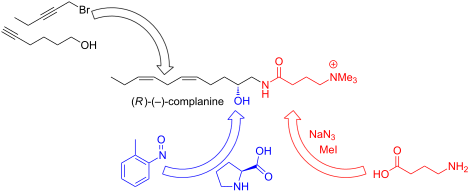
- stepwise approach to 4. The reaction of aldehydes with nitrosobenzene in the presence of proline-derived secondary amine catalysts represents the current benchmark in organocatalytic α-oxygenation strategies [9]. A known drawback of this approach is the instability of the oxyaminated products, presumably
- owing to N–O bond lability. Recent reports suggest that this O-nitrosoaldol reaction proceeds much more cleanly with 2-nitrosotoluene than with nitrosobenzene, probably owing to the suppression of N–O bond cleavage [10]. Thus, treatment of aldehyde 3 with 2-nitrosotoluene in the presence of L-proline as
- mg, 3.33 mmol) and L-proline (115 mg, 1.00 mmol) in CHCl3 (20 mL) at 0 °C was added a solution of (5Z,8Z)-undeca-5,8-dienal (3, 1.66 g, 10.0 mmol) in CHCl3 (20 mL). Following stirring at 0 °C for 3 h, a solution of NaBH4 (570 mg, 15.0 mmol) in EtOH (30 mL) was added and the reaction mixture was


Organocatalytic tandem Michael addition reactions: A powerful access to the enantioselective synthesis of functionalized chromenes, thiochromenes and 1,2-dihydroquinolines
Beilstein J. Org. Chem. 2012, 8, 1668–1694, doi:10.3762/bjoc.8.191
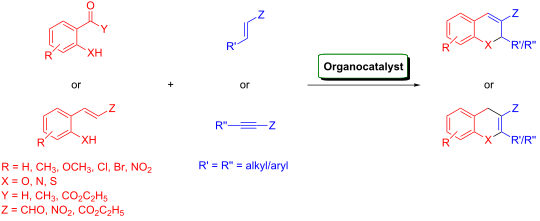
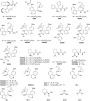
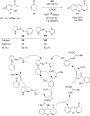
- thiochromenes; and (3) Organocatalytic aza-Michael reactions to access functionalized 1,2-dihydroquinolines, using chiral proline and its derivatives (Figure 2), chiral bifunctional thioureas, cinchona alkaloids and other organocatalysts (Figure 3). For each reaction, the initial screening result of various
- -Michael addition followed by aza-Baylis–Hillman reaction by means of an iminium-allenamine activation strategy. Later on, the same authors [49] in 2011 reported a similar tandem reaction (abnormal Baylis–Hillman) between 2-alkynals 5 and salicylaldehyde derivatives 1 catalyzed by proline derivatives
- , thiochromene or 1,2-dihydroquinolin structural motifs. Screened chiral proline and its derivatives as organocatalysts. Rb = rubidium. Screened chiral bifunctional thiourea, its derivatives, cinchona alkaloids and other organocatalysts. Diarylprolinolether-catalyzed tandem oxa-Michael–aldol reaction reported by






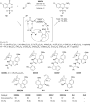
Antifreeze glycopeptide diastereomers
Beilstein J. Org. Chem. 2012, 8, 1657–1667, doi:10.3762/bjoc.8.190
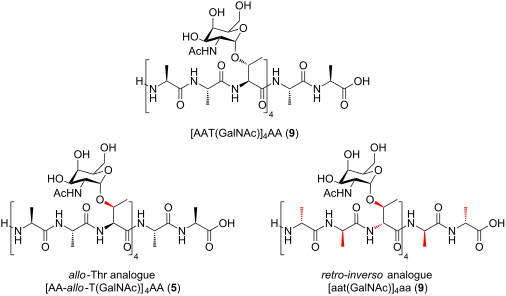
- glycosylated with the disaccharide β-D-galactosyl-(1→3)-α-N-acetyl-D-galactosamine. In spite of the fact that all AFGPs found in arctic and antarctic fish share this structural homology, minor sequence variations occur, such as the replacement of alanine by proline [9][10] or the glycosylated threonine by
- of sequential mutations on the adsorption of such synthetic AFGP analogues onto ice surfaces, and to corroborate the molecular mechanism of antifreeze activity. Recently, we published the synthesis of monosaccharide-based AFGP analogues containing glycine, proline and serine instead of alanine
- proline replacements [5]. These peptides exhibit less antifreeze activity than monosaccharide-substituted AFGP analogues without proline residues. Peptoid glycoconjugates with carbohydrate moieties attached by CuI catalyzed azide-alkyne cycloaddition (CuAAC) were devoid of antifreeze activity [17


Synthetic studies towards bottromycin
Beilstein J. Org. Chem. 2012, 8, 1652–1656, doi:10.3762/bjoc.8.189
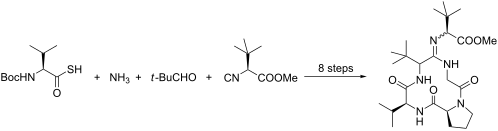
- . 3668-L2, named bottromycin A and B [13][14]. Acidic hydrolysis provided a mixture of all-(S)-configured amino acids containing 3-methylphenylalanine [15], tert-leucine, valine, β-(2-thiazolyl)-β-alanine [16] and glycine. While also proline was found in bottromycin B, cis-3-methylproline is a component
- by Schipper [20] and Kaneda [21], based on detailed NMR studies. According to them, the bottromycins are cyclic tetrapeptides, connected to a tripeptidic side chain through an amidine structure. The different bottromycins differ only in the substitution pattern of the proline (Figure 1). The three
- endothiopeptide and ring closure between proline and glycine. The same group also undertook some modifications on the natural product [26]. Results and Discussion Our group is also involved in the synthesis of peptide-based natural products [27][28][29][30][31][32], and of course the structure of bottromycin is


A quantitative approach to nucleophilic organocatalysis
Beilstein J. Org. Chem. 2012, 8, 1458–1478, doi:10.3762/bjoc.8.166
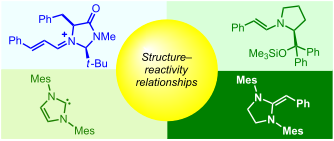
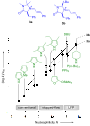
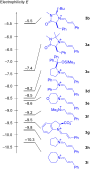
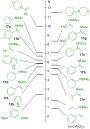
- , which leads to deprotonation of the imidazolidinium ions 1-H+ and inhibition of the formation of the iminium ions 3 (Figure 16) [64]. Enamine activated reactions When proline catalysis and related amino-acid catalyzed reactions are excluded, the catalytic cycle depicted in Figure 17 represents the
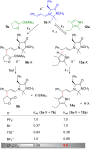
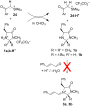
- electrophilicity scales in [4]. When proline or structurally related bifunctional catalysts are employed, the mechanism depicted in Figure 17 has to be modified. List and Houk explained the high enantioselectivity of proline catalyzed reactions of aldehydes or ketones with electrophiles by the transition state TS
- question of whether oxazolidinones, rather than being “parasitic species”, may also play a decisive role in determining the stereochemical course of proline-catalyzed reactions. In order to account for the observed stereoselectivities, it was suggested that TS-B is favored over the stereoelectronically









Synthesis of chiral sulfoximine-based thioureas and their application in asymmetric organocatalysis
Beilstein J. Org. Chem. 2012, 8, 1443–1451, doi:10.3762/bjoc.8.164
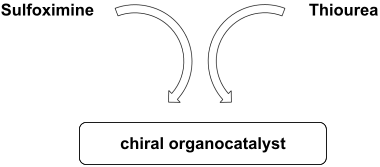
- . They involve both metal catalysis [64][65] as well as organocatalysis. In the latter field, chiral phosphoric acids [66][67], bicyclic diamines [68], bifunctional thioureas [69], proline ester salts [70], pyrrolidinyl tetrazoles [71], and a quinine-derived amine [72] were reported to catalyze the


A novel asymmetric synthesis of cinacalcet hydrochloride
Beilstein J. Org. Chem. 2012, 8, 1366–1373, doi:10.3762/bjoc.8.158

- reaction progress, i.e., n-BuLi, LDA, Cs2CO3 with dppf/PdCl2, K2CO3 with Cu(I)/L-proline, NaH and TEA. All of them failed to initiate the reaction. Only LiHMDS worked well for the regioselective N-alkylation of sulfinylamide 4a in a better yield (72% isolated pure product) than the earlier reported


Asymmetric total synthesis of smyrindiol employing an organocatalytic aldol key step
Beilstein J. Org. Chem. 2012, 8, 1112–1117, doi:10.3762/bjoc.8.123
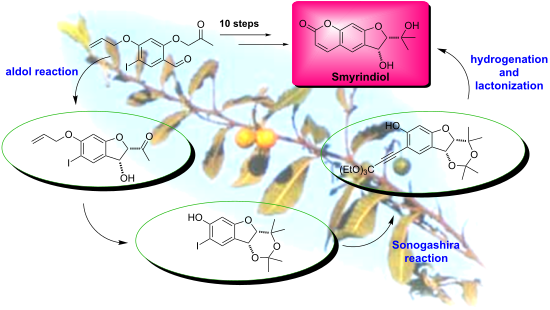
- Dieter Enders Jeanne Fronert Tom Bisschops Florian Boeck Institute of Organic Chemistry, RWTH Aachen University, Landoltweg 1, 52074 Aachen, Germany 10.3762/bjoc.8.123 Abstract The first organocatalytic asymmetric synthesis of smyrindiol, by using an (S)-proline catalyzed enantioselective
- reaction; asymmetric synthesis; organocatalysis; proline; smyrindiol; Introduction Furocoumarins are a group of compounds that are structurally derived from psoralen or angelicin (Figure 1) [1]. Naturally occurring furocoumarins are mainly found in plants of the Apiaceae and Rutaceae families [2] and are
- diastereoselectivity, with a slight preference (18% versus 15%) towards the anti-isomer xanthoarnol (Scheme 2).We now wish to present the first diastereo- and enantioselective, organocatalytic, asymmetric synthesis of smyrindiol. Results and Discussion Retrosynthetic analysis Previously the proline-catalyzed


An easily accessible sulfated saccharide mimetic inhibits in vitro human tumor cell adhesion and angiogenesis of vascular endothelial cells
Beilstein J. Org. Chem. 2012, 8, 787–803, doi:10.3762/bjoc.8.89
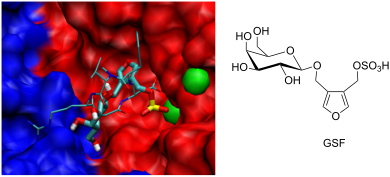
- -containing peptide: glycine–arginine–glycine–aspartic acid–serine–proline (GRGDSP) or EILDV. Neither peptide, up to 2 mM, completely inhibited adhesion of WM-115 cells to fibronectin. We then decided to combine the peptidic integrin ligands with GSF to see if an antagonism or additive effect upon cell


Thiophene-based donor–acceptor co-oligomers by copper-catalyzed 1,3-dipolar cycloaddition
Beilstein J. Org. Chem. 2012, 8, 683–692, doi:10.3762/bjoc.8.76

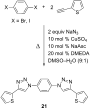
- sulfate, 10 mol % sodium ascorbate, which reduces Cu(II) to Cu(I), 10 mol % sodium carbonate and 20 mol % L-proline as ligand were reacted in the solvent system DMSO–water at 60 °C. The co-oligomeric product 5 was obtained in only 10% yield (Table 1, entry 1). When the stabilizing ligand was changed to N




A concise synthesis of 3-(1-alkenyl)isoindolin-1-ones and 5-(1-alkenyl)pyrrol-2-ones by the intermolecular coupling reactions of N-acyliminium ions with unactivated olefins
Beilstein J. Org. Chem. 2012, 8, 192–200, doi:10.3762/bjoc.8.21

- 1-alkenylboronic acid, or esters [23][24] besides allylsilane. For example, Angst reported the coupling of styrylsilanes with N-acyl-2-chloroglycine esters catalyzed by SnCl4 to give the 3-styryl glycine derivatives in 1987 [19]; Wistrand reported the coupling of methyl 1-acyl-5-methoxy-L-proline
- with 1-alkenylcoppers catalyzed by BF3·OEt2 to give methyl 1-acyl-5-(1-alkenyl)-L-proline in 1992 [20]; Menicagli reported the coupling of N-acylisoquinolium chloride with di-isobutyl 1-hexenylalanes to give 1,2-dihydro-2-acyl-1-hexenylisoquinolines in 2008 [22]; Schaus reported the coupling of 1


Continuous proline catalysis via leaching of solid proline
Beilstein J. Org. Chem. 2011, 7, 1671–1679, doi:10.3762/bjoc.7.197
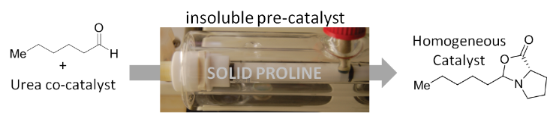
- homogeneous catalyst can be prepared continuously via reaction with a packed-bed of a catalyst precursor. Specifically, we perform continuous proline catalyzed α-aminoxylations using a packed-bed of L-proline. The system relies on a multistep sequence in which an aldehyde and thiourea additive are passed
- through a column of solid proline, presumably forming a soluble oxazolidinone intermediate. This transports a catalytic amount of proline from the packed-bed into the reactor coil for subsequent combination with a solution of nitrosobenzene, affording the desired optically active α-aminooxy alcohol after
- reduction. To our knowledge, this is the first example in which a homogeneous catalyst is produced continuously using a packed-bed. We predict that the method will not only be useful for other L-proline catalyzed reactions, but we also foresee that it could be used to produce other catalytic species in flow


Tertiary alcohol preferred: Hydroxylation of trans-3-methyl-L-proline with proline hydroxylases
Beilstein J. Org. Chem. 2011, 7, 1643–1647, doi:10.3762/bjoc.7.193
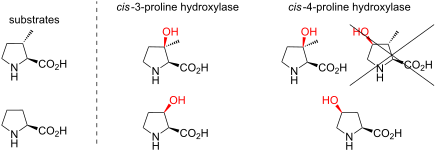
- of trans-3-methyl-L-proline with the α-ketoglutarate (α-KG) dependent oxygenases, cis-3-proline hydroxylase type II and cis-4-proline hydroxylase (cis-P3H_II and cis-P4H). With cis-P3H_II, the tertiary alcohol product (3R)-3-hydroxy-3-methyl-L-proline was obtained exclusively but in reduced yield (~7
- %) compared to the native substrate L-proline. For cis-P4H, a complete shift in regioselectivity from C-4 to C-3 was observed so that the same product as with cis-P3H_II was obtained. Moreover, the yields were at least as good as in control reactions with L-proline (~110% relative yield). This result
- stereospecific hydroxylation of trans-3-methyl-L-proline to (3R)-3-hydroxy-3-methyl-L-proline with two different proline hydroxylases. In contrast to the mechanistically related and more common prolyl hydroxylases, which accept peptide bound proline as a substrate and play a key role in collagen biosynthesis



Natural product biosyntheses in cyanobacteria: A treasure trove of unique enzymes
Beilstein J. Org. Chem. 2011, 7, 1622–1635, doi:10.3762/bjoc.7.191
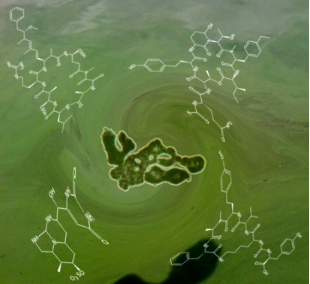
- neurotoxins produced by cyanobacteria. A gene cluster for the alkaloid was first described for the strain Oscillatoria sp. PCC 6506 [36]. Analysis of the gene cluster and feeding studies suggested a biosynthetic scheme starting from L-proline and involving three polyketide synthases, with (S)-1-pyrolline-5
- ) Formation of the guanidinoacetate starter unit for the subsequent PKS assembly line of cylindrospermopsin (4). D) Formation of the (S)-pyrroline-5-carboxylate starter unit from proline in anatoxin-a (6) synthesis. ACP: Acyl carrier protein. Structures of NRPS and PKS products in marine cyanobacteria. A


Continuous-flow enantioselective α-aminoxylation of aldehydes catalyzed by a polystyrene-immobilized hydroxyproline
Beilstein J. Org. Chem. 2011, 7, 1486–1493, doi:10.3762/bjoc.7.172
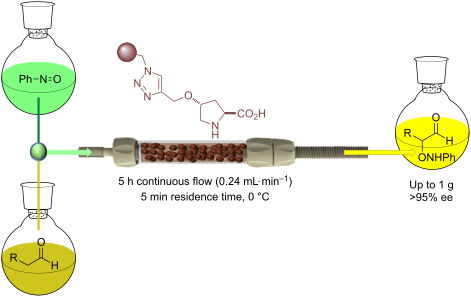
- Franqués, 1. E-08028, Barcelona, Spain 10.3762/bjoc.7.172 Abstract The application of polystyrene-immobilized proline-based catalysts in packed-bed reactors for the continuous-flow, direct, enantioselective α-aminoxylation of aldehydes is described. The system allows the easy preparation of a series of β
- -immobilized catalysts; proline; Introduction Optically active α-hydroxycarbonyl moieties are highly versatile functional synthons and are present in a wide range of biologically active natural products [1][2]. Traditional strategies for the preparation of these kinds of synthons involves the oxidation of
- organocatalytic approaches to the direct enantioselective α-aminoxylation of carbonyl compounds and, shortly after, to the implementation of the α-aminoxylation of aldehydes with proline as catalyst [14][15] (Scheme 1). In 2004, the scope of the reaction was extended to ketones [16][17] and the reaction was


PEG-embedded KBr3: A recyclable catalyst for multicomponent coupling reaction for the efficient synthesis of functionalized piperidines
Beilstein J. Org. Chem. 2011, 7, 1334–1341, doi:10.3762/bjoc.7.157
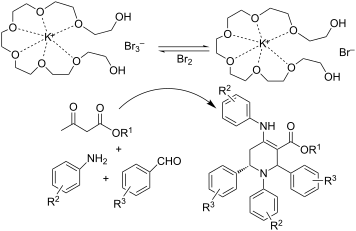
- tetrabutylammonium tribromide (TBATB) [30], bromodimethylsulfonium bromide (BDMS) [31], InCl3 [32] and L-proline/TFA [33] were reported for the one-pot syntheses of these heterocyclic compounds. However, tedious synthetic procedures, the need for high catalyst loadings, and the expense and non-recyclability of the


A practical two-step procedure for the preparation of enantiopure pyridines: Multicomponent reactions of alkoxyallenes, nitriles and carboxylic acids followed by a cyclocondensation reaction
Beilstein J. Org. Chem. 2011, 7, 962–975, doi:10.3762/bjoc.7.108

- attempts to incorporate proline-derived moieties failed. N-Benzylproline (41) turned out to be almost insoluble in ethereal solvents, which might explain why the desired β-ketoenamide was not formed [43]. To increase the solubility of the proline component, we changed the protective group from benzyl to
- the more lipophilic trityl group [44]. Surprisingly, the use of trityl-protected proline did not give the β-ketoenamide 47 as main product (Scheme 3). Instead, a diastereomeric 1:1 mixture of the β-keto-enolester 48 was isolated in 49% yield together with minor amounts of the expected product 47. The
- of β-ketoenamides 16. Reaction of proline derivative 45 and formation of β-ketoenamide 47 and enolester 48. Synthesis of pyrid-4-yl nonaflate 52. O-Methylation of pyridine derivatives 22 and 30 followed by desilylation. Formation of 5-alkoxypyrimidines from β-alkoxy-β-ketoenamides. Scope of the


Asymmetric synthesis of tertiary thiols and thioethers
Beilstein J. Org. Chem. 2011, 7, 582–595, doi:10.3762/bjoc.7.68
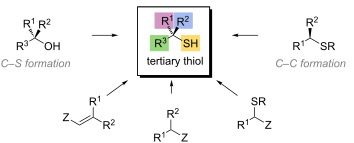
- secondary thiol derivatives. These were prepared by diastereoselective electrophilic additions in proline-derived systems [71][72] and asymmetric alkylation of thiocarbamates in the presence of a chiral ligand [73][74]. Stereospecific functionalisation of configurationally stable lithiated thiocarbamates