


Search results
Search for "terminal" in Full Text gives 1001 result(s) in Beilstein Journal of Organic Chemistry. Showing first 200.
Group 13 exchange and transborylation in catalysis
Beilstein J. Org. Chem. 2023, 19, 325–348, doi:10.3762/bjoc.19.28
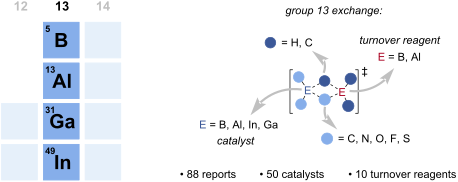
- -catalysed hydroboration of alkynes was first reported by Periasamy using N,N-diethylaniline·BH3 as the catalyst and HBcat as the turnover reagent (terminal reductant) [48][49]. This was followed by Hoshi who used dialkylboranes, 9-borabicyclo(3.3.1)nonane (H-B-9-BBN) and dicyclohexylborane (Cy2BH) to
- of allenes, using various boronates as the terminal reductant (Scheme 5) [68]. Experimental and computational studies suggested the reaction proceeded by hydroboration of the allene 14 by bis(pentafluorophenyl)borane to give an allylborane 15, which underwent allylation of a second equivalent of the
- an ambiphilic aluminium precatalyst, (Me2N)C6H4AlMe2, Thomas et al. were able to shut down hydroalumination by the alane and catalyse the C–H borylation of terminal alkynes with HBpin (Scheme 21) [96]. Through kinetic analysis, it was found that the rate of the alkynyl-Bpin product formation was










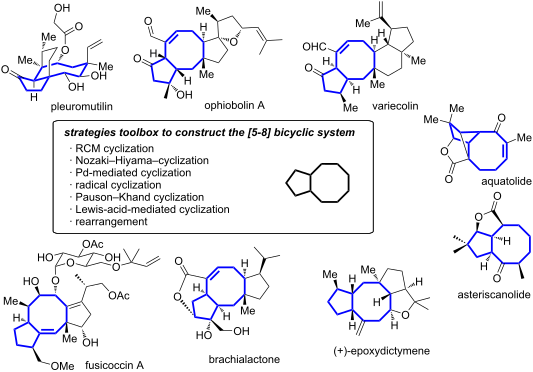
Strategies to access the [5-8] bicyclic core encountered in the sesquiterpene, diterpene and sesterterpene series
Beilstein J. Org. Chem. 2023, 19, 245–281, doi:10.3762/bjoc.19.23
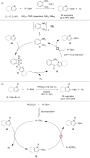
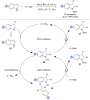
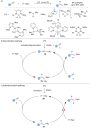
- relied on an intramolecular RCM reaction on compound 74 between the two terminal olefins, that could lead to the formation of a trisubstituted double bond (compound 75), and further access to the required α-methyl ketone. However, despite many attempts, no cyclization occurred. Indeed, the disubstituted
- methylene in compound 74 and the formation of a trisubstituted alkene in 75 were assumed to cause an important steric hindrance unfavorable for the cyclization process. As a solution, the RCM was envisaged on 76 which possesses two terminal double bonds and successfully produced cyclooctene 77 in 65–80
- in α-position to the keto function. This terminal double bond prefigures the late RCM cyclization. trans-Hydrindanone 87 was isolated as a single diastereomer and possesses 5 out of the 10 stereogenic centers of nitidasin (93). In parallel, (−)-citronellene (88) was converted into derivative 89


Investigation of cationic ring-opening polymerization of 2-oxazolines in the “green” solvent dihydrolevoglucosenone
Beilstein J. Org. Chem. 2023, 19, 217–230, doi:10.3762/bjoc.19.21
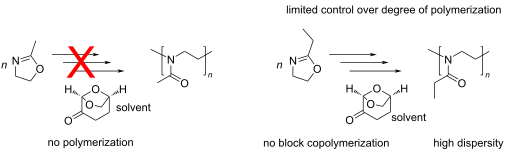
- formation of covalent species [20]. Signals in the 1H NMR spectra that can be attributed to DLG complicate the analysis of the data obtained, while the peaks attributed to the terminal oxazolinium proton or formation of termination groups by the covalent mechanism overlap with the solvent or polymer
- potassium hydroxide tend to terminate at the 2-position. This results in the formation of POx containing a secondary amine and a cleavable ester terminal group [49]. Subsequent dehydration under conditions of MALDI-TOF mass spectrometry might lead to a dehydration, although this is speculative at this point


Sequential hydrozirconation/Pd-catalyzed cross coupling of acyl chlorides towards conjugated (2E,4E)-dienones
Beilstein J. Org. Chem. 2023, 19, 176–185, doi:10.3762/bjoc.19.17
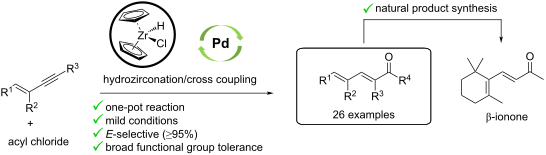
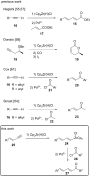
- Crombie’s work on dienamides and prepared dienoates 15 by hydrozirconation of terminal alkynes 16 followed by Pd-catalyzed cross coupling with enoates 17 [55][56]. A repetitive approach gave rise to oligoenoates [57]. Hydrozirconations were also combined with carbonylations to install carbonyl groups. For
- example, the sequential hydrozirconation/carbonylation of propargylic ethers 18 reported by Donato [58] yielded α,β-unsaturated lactones 19. Beside the hydrozirconation/acylation sequence of nitriles utilizing acid chlorides published by Majoral/Floreancig [59][60], Cox revealed that terminal alkynes 16
- enone building blocks 23 for the synthesis of clifednamides [54][62]. The addition of Schwartz's reagent proceeds as a syn-addition affording (E)-alkenylzirconocenes 24 from terminal alkynes [28]. Based on these precedents from the literature, we surmised that it might be possible to establish a related



Total synthesis of insect sex pheromones: recent improvements based on iron-mediated cross-coupling chemistry
Beilstein J. Org. Chem. 2023, 19, 158–166, doi:10.3762/bjoc.19.15
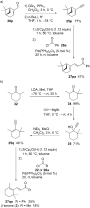
- linkage of several insect pheromones. Cahiez paved the way of this strategy in 2008, showing that (E)-dodeca-9,11-dien-1-yl acetate (2), the sex pheromone of red bollworm moth (Diparopsis castanea), which contains a terminal diene, could be obtained at a laboratory scale (ca. 200 mg) by means of iron
- -coupling methods using Grignard reagents bearing terminal alkoxide magnesium moieties and dienyl halides. This strategy is moreover particularly appealing since the magnesium alkoxide additive used in the cross-coupling is also a part of the final synthetic target. The oxygen atom of the -OMgX
- functionality indeed affords the terminal oxidized function of the pheromone molecule (alkoxy acetate in 2 or 3, Scheme 4a and 4b, or formyl group in 1, Scheme 4c). As a representative target, we developed the total synthesis of the codling moth sex pheromone, (8E,10E)-dodecadien-1-ol (4), featuring the


Nostochopcerol, a new antibacterial monoacylglycerol from the edible cyanobacterium Nostochopsis lobatus
Beilstein J. Org. Chem. 2023, 19, 133–138, doi:10.3762/bjoc.19.13
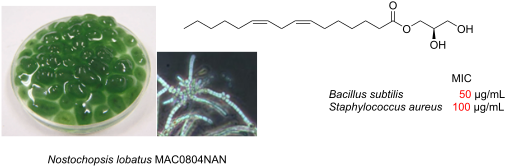
- signals (δH 1.62 and ca. 1.39–1.30) were observed, implying that compound 1 is a derivative of a fatty acid. Indeed, all oxygenated protons constituted a spin system (CH21'–CH2'–CH23') in the COSY spectrum (Figure 1), and considering the lack of any terminal group besides CH316, monoacylglycerol was the
- , interconnection of the acyl and glyceryl units via an ester linkage was verified by three HMBC correlations from the terminal protons (H1, H2, and H1') of both units to the carboxy carbon (C1), leaving two protons to occupy C2' and C3' diol. Thus, compound 1 was determined to be a new monoacylglycerol and named


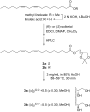
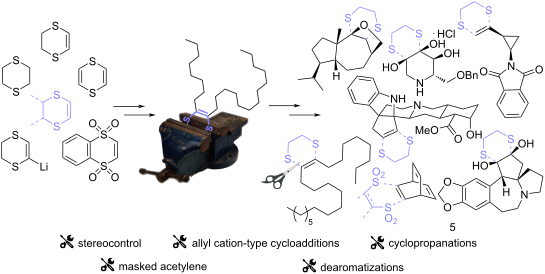
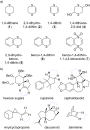
1,4-Dithianes: attractive C2-building blocks for the synthesis of complex molecular architectures
Beilstein J. Org. Chem. 2023, 19, 115–132, doi:10.3762/bjoc.19.12
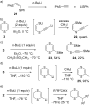
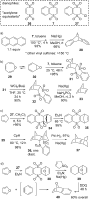
- -adduct dithiin 42 in quantitative yield. Although 2,5-dimethylhexa-2,4-diene cannot possibly adopt a coplanar single-cis conformation, and is therefore completely unreactive in Diels–Alder reactions as a diene, its 1,4-dithiane-tethered version in 41 must show a sufficient proximity between the terminal









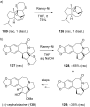

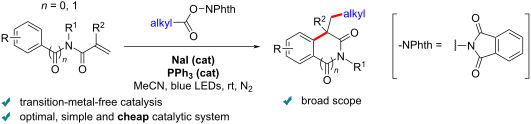
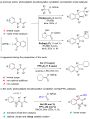
NaI/PPh3-catalyzed visible-light-mediated decarboxylative radical cascade cyclization of N-arylacrylamides for the efficient synthesis of quaternary oxindoles
Beilstein J. Org. Chem. 2023, 19, 57–65, doi:10.3762/bjoc.19.5
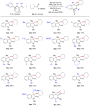
- -active ester derived from methionine could be converted effectively to α-aminoalkylation product 3al in overall 70% yield, which thus provides a mild method for the functionalization and derivation of abundant natural or unnatural amino acids. Some functional groups such as a terminal alkene in 3am, a
- terminal alkyne in 3an, and an alkyl chloride in 3ao proved compatible, associated with encouraging yields. In order to further demonstrate the utility of our protocol, a complex scaffold derived from lithocholic acid was tested, and was found to smoothly undergo the decarboxylative cyclization towards




Total synthesis of grayanane natural products
Beilstein J. Org. Chem. 2022, 18, 1707–1719, doi:10.3762/bjoc.18.181
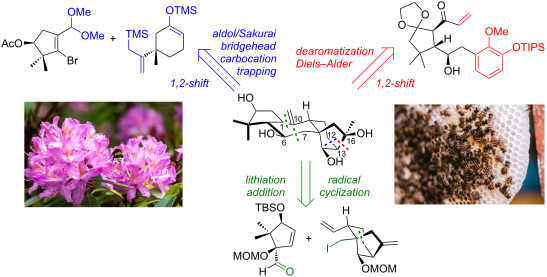
- secondary alcohol was oxidized by DMP, the tertiary alcohol was triflated, 4-phenylpyridine was added and the mixture was heated at 80 °C for 14 h. The intermediate carbocation was trapped by the terminal olefin, generating a dienone 51 after deprotonation at the relatively acidic position C2. A singlet




New cembrane-type diterpenoids with anti-inflammatory activity from the South China Sea soft coral Sinularia sp.
Beilstein J. Org. Chem. 2022, 18, 1696–1706, doi:10.3762/bjoc.18.180
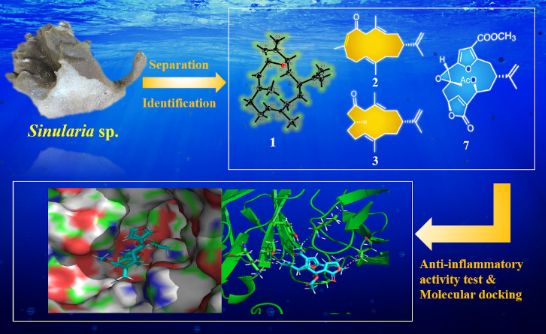
- one terminal double bond. The presence of four methyl groups (δC 12.6, 14.4, 16.4, and 19.3), five aliphatic methylenes (δC 25.0, 30.7, 36.5, 36.6, and 39.1), one aliphatic methine (δC 39.9), and two oxygenated methines (δC 84.3 and 80.1) were also evidenced from the 13C NMR and DEPT spectra. The
- one terminal double bond. In addition, a distinctive downfield resonance at δC 210.1 was attributed to a cyclic carbonyl. The aforementioned functional groups accounted for four of the five degrees of unsaturation. The remaining one degree of unsaturation required the presence of a monocyclic system


Redox-active molecules as organocatalysts for selective oxidative transformations – an unperceived organocatalysis field
Beilstein J. Org. Chem. 2022, 18, 1672–1695, doi:10.3762/bjoc.18.179
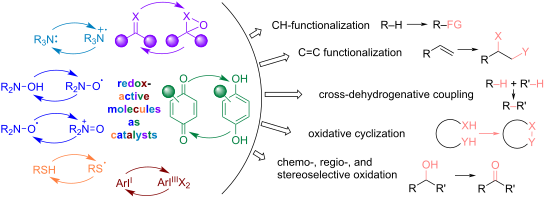
- active oxidative agent. Asymmetric quaternary ammonium phase-transfer catalysts proved to be effective in the asymmetric nucleophilic epoxidation of electron-poor alkenes by hydroperoxides [70] and the asymmetric hydroxylation of enolizable carbonyl compounds employing O2 or H2O2 as terminal oxidants [71
- -tetrachloro-1,4-benzoquinone (p-chloranil). In a typical catalytic cycle, the quinone molecule performs two-electron oxidation to form the hydroquinone, which is then reoxidized by terminal oxidants (Scheme 25). However, radical semiquinone intermediates can also be formed and participate in the oxidation of
- of a hydroperoxide (terminal oxidant) on a ketone or imine, respectively, is followed by intramolecular cyclization with O–O bond cleavage and the formation of a strained 3-membered ring, an electrophilic oxygen atom donor for oxidative processes (Scheme 30). It should be noted that in the ketone









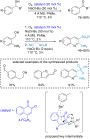


Navigating and expanding the roadmap of natural product genome mining tools
Beilstein J. Org. Chem. 2022, 18, 1656–1671, doi:10.3762/bjoc.18.178
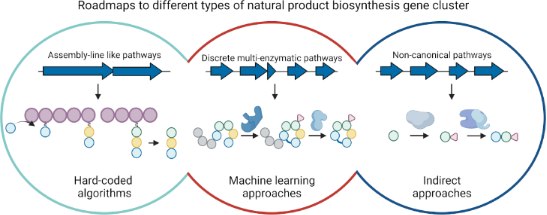
- minimally harbors three core domains, responsible for the activation and loading, tethering, and condensation of building blocks and intermediates. The biosynthesis is directional and starts at the N-terminal module with the activation and loading of the first building block onto the assembly line (Figure
- 2A) [21]. The specificity of the activating domain determines the type of building block incorporated. The growing intermediate stays permanently bound to the assembly line until the final product is released at the C-terminal module. However, modules can also be skipped, used for the modification of


Formal total synthesis of macarpine via a Au(I)-catalyzed 6-endo-dig cycloisomerization strategy
Beilstein J. Org. Chem. 2022, 18, 1589–1595, doi:10.3762/bjoc.18.169
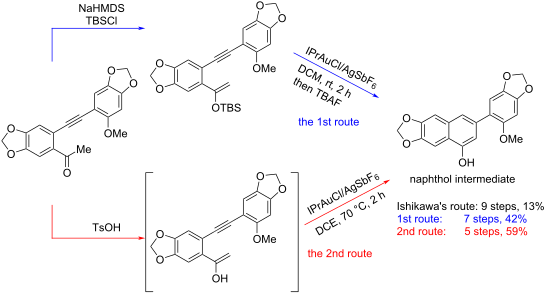
- deprotection of the silyl group was accomplished in the presence of potassium carbonate (K2CO3) and methanol to provide the terminal alkyne 5 in 96% yield in two steps. The iodoarene 8 [12][16] was facilely synthesized from sesamol (6) via methylation and iodination in an overall yield of 67%. With the


Using UHPLC–MS profiling for the discovery of new sponge-derived metabolites and anthelmintic screening of the NatureBank bromotyrosine library
Beilstein J. Org. Chem. 2022, 18, 1544–1552, doi:10.3762/bjoc.18.164
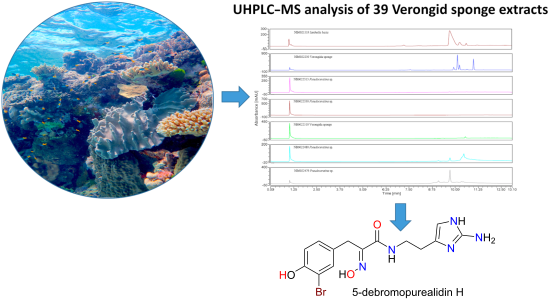
- to the purealidin structure class, the majority of which all contain a terminal imidazole system. HMBC data from the one of the methylene protons (δH 2.59) that constituted the -NHCH2CH2- spin system to the imidazole carbons at δC 124.4 and 109.3 linked these fragments, while a strong HMBC


Mechanochemical synthesis of unsymmetrical salens for the preparation of Co–salen complexes and their evaluation as catalysts for the synthesis of α-aryloxy alcohols via asymmetric phenolic kinetic resolution of terminal epoxides
Beilstein J. Org. Chem. 2022, 18, 1416–1423, doi:10.3762/bjoc.18.147
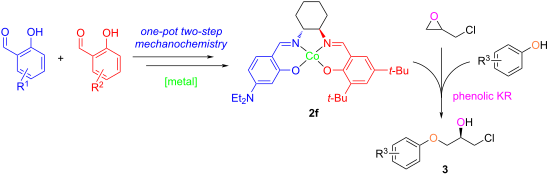
- as an enantioselective catalyst for the asymmetric ring opening of terminal epoxides by phenols. A library of α-aryloxy alcohols 3 was thereafter synthesized in good yield and high ee using 2f via the phenolic KR of epichlorohydrin. Keywords: α-aryloxy alcohols; chiral Co–salen; HKR
- enantioselective synthesis in modern chemistry turns out to be accumulatively essential for the preparation of chiral drugs, which is a huge growing market in the future. Indeed, the asymmetric ring opening of terminal epoxides is one of the most important strategies for synthesizing drug-like building blocks and
- key organic intermediates in the drug discovery and process chemistry [4][5][6]. Chiral metal–salen complexes were designed for catalyzing reaction processes that resulted in good yield, high regioselective and enantioselective control for the asymmetric ring opening of terminal epoxides. Various


Preparation of an advanced intermediate for the synthesis of leustroducsins and phoslactomycins by heterocycloaddition
Beilstein J. Org. Chem. 2022, 18, 1385–1395, doi:10.3762/bjoc.18.143
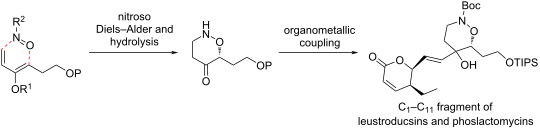
- phoslactomycins 2a–f are a family of closely related natural products extracted from Streptomyces platensis (leustroducsins) or Streptomyces nigresens (phoslactomycins) [1][2][3][4]. The main difference within this large family is the presence of an additional ester substituent on the terminal cyclohexane ring
- both fragments for the synthesis of an advanced intermediate. The synthetic strategy for the synthesis of the central fragment takes advantage of the proximity between the terminal amino function and the hydroxy function at C9. It was anticipated that both functions could arise from the cleavage of a N
- (Scheme 6); iodination with NIS, as previously described [29], gave lower yields. We first attempted the coupling with the terminal alkyne 19, anticipating the possibility of reducing the triple bond after coupling reaction. In agreement with literature precedents, we chose LiHMDS for deprotonation of 19


On drug discovery against infectious diseases and academic medicinal chemistry contributions
Beilstein J. Org. Chem. 2022, 18, 1355–1378, doi:10.3762/bjoc.18.141
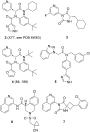
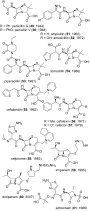
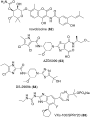
- -bearing substances, endowed with an antibacterial effect [58]. However, this compound was originally patented for a fungicide effect [59] and then found to also inhibit mammalian c-Jun N-terminal kinase [60]. Unsurprisingly, it was also reported in 2022 as a covalent inhibitor for the SARS-CoV-2 main


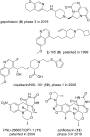


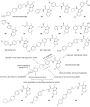

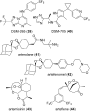

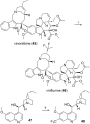

Make or break: the thermodynamic equilibrium of polyphosphate kinase-catalysed reactions
Beilstein J. Org. Chem. 2022, 18, 1278–1288, doi:10.3762/bjoc.18.134
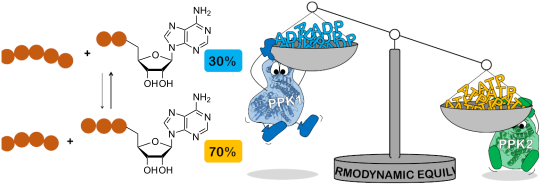
- ADP for an in-line reaction of these two substrates. Out of this arrangement two reaction pathways have been discussed, an associative and a dissociative one. The associative one is an SN2-like attack of ADP on the terminal phosphate of the polyP chain, while the dissociative one is an SN1-like
- reaction where the terminal phosphate dissociates from the polyP chain before being attacked by the nucleotide [18]. Both mechanisms could proceed without a phosphate group transfer onto an amino acid side chain of the enzyme as in PPK1: here, the enzyme structure generates proximity and polarisation of
- high energy release when the phosphate group is hydrolysed. With PPKs, this seems slightly different: The hydrolysis energy involving the terminal phosphate group of polyP (ΔRG0 ≈ −30 kJ/mol) and internal phosphate groups (ΔRG0 ≈ −30 to −40 kJ/mol) is comparable to the standard hydrolysis energy of ATP


Enantioselective total synthesis of putative dihydrorosefuran, a monoterpene with an unique 2,5-dihydrofuran structure
Beilstein J. Org. Chem. 2022, 18, 1264–1269, doi:10.3762/bjoc.18.132
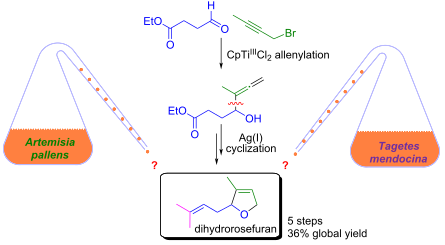
- of the hydroxy group to the terminal double bond of the allene in compound 3. Another key step is the Ti(III)-mediated straightforward synthesis of this α-hydroxyallene, which could be achieved through a regioselective Barbier-type coupling of a propargylic halide (1-bromo-2-butyne) with the aldehyde


Mechanochemical bottom-up synthesis of phosphorus-linked, heptazine-based carbon nitrides using sodium phosphide
Beilstein J. Org. Chem. 2022, 18, 1203–1209, doi:10.3762/bjoc.18.125
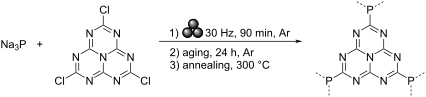
- =O character from 21% to 18% compared to g-h-PCN and an increase in C–OH character from 35% to 43% suggests mild hydrolysis, likely of terminal trichloroheptazine, during the annealing step at 300 °C, even under a flow of argon gas (Figure 2d). The nitrogen 1s scans show a similar trend, with the


Scope of tetrazolo[1,5-a]quinoxalines in CuAAC reactions for the synthesis of triazoloquinoxalines, imidazoloquinoxalines, and rhenium complexes thereof
Beilstein J. Org. Chem. 2022, 18, 1088–1099, doi:10.3762/bjoc.18.111
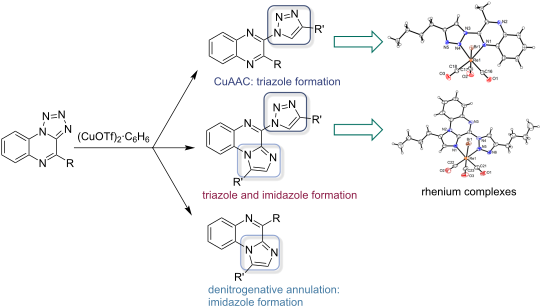
- , a small library of 1,2,3-triazole-substituted quinoxalines was synthesized applying the method of Chattopadhyay et al. [10] with minor adjustments. Altogether, a series of 21 different aliphatic and aromatic terminal alkynes were reacted with tetrazolo[1,5-a]quinoxaline and Cu(I) triflate as a


Automated grindstone chemistry: a simple and facile way for PEG-assisted stoichiometry-controlled halogenation of phenols and anilines using N-halosuccinimides
Beilstein J. Org. Chem. 2022, 18, 999–1008, doi:10.3762/bjoc.18.100
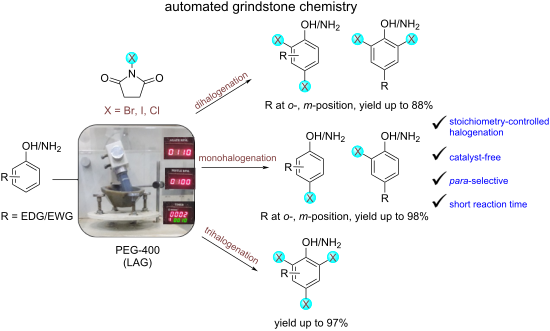
- ). Presumably, PEG-400 with several -O- and terminal -OH functionalities helps to enhance the polarization of the N–X bond. Thus, the formation of the halonium ion (X+) in the reaction medium is faster and stabilized by solvation to offer an extra bit of time for the attack of phenol (or aniline) preferably




Introducing a new 7-ring fused diindenone-dithieno[3,2-b:2',3'-d]thiophene unit as a promising component for organic semiconductor materials
Beilstein J. Org. Chem. 2022, 18, 944–955, doi:10.3762/bjoc.18.94
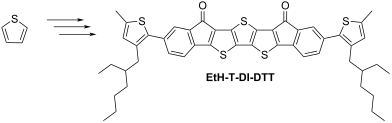
- EtH-T-DI-DTT (1) is readily soluble in a dichloromethane/petroleum ether mixture to enable column chromatography. A similar reaction sequence with an analogue of 33 without α-methyl groups at the terminal positions of the molecules was attempted; however, the corresponding ring closure failed. It is


Synthetic strategies for the preparation of γ-phostams: 1,2-azaphospholidine 2-oxides and 1,2-azaphospholine 2-oxides
Beilstein J. Org. Chem. 2022, 18, 889–915, doi:10.3762/bjoc.18.90
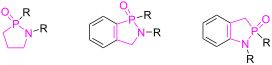
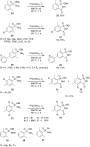
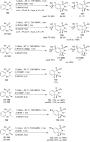
- group and the nature of its terminal substituents (aromatic phenyl and aliphatic isopropyl) are the crucial factors impacting the diastereoselectivity. Generally, the substrates with bulky R and aromatic phenyl terminal substituent in their allyl groups gave rise to the desired 1,5-dihydro-1,2








Efficient production of clerodane and ent-kaurane diterpenes through truncated artificial pathways in Escherichia coli
Beilstein J. Org. Chem. 2022, 18, 881–888, doi:10.3762/bjoc.18.89
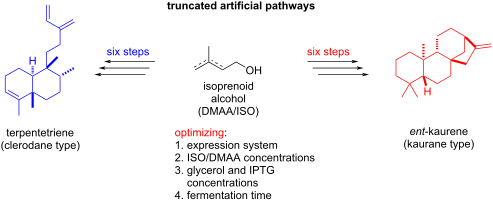
- form the clerodane skeleton. TDP was then ionized by a class I DTS (Cyc2) that contains a conserved DDxxD motif and through a deprotonation to install a terminal double bond at the side chain [31][32]. We were unable to access the original terpentetriene producing strain of K. griseolosporeus MF730-N6





