


Search results
Search for "asymmetric" in Full Text gives 954 result(s) in Beilstein Journal of Organic Chemistry. Showing first 200.
Construction of CF2 moieties in FDA-approved drugs (2016–2025): industrial routes, mechanisms, and scale-up considerations
Beilstein J. Org. Chem. 2026, 22, 1122–1150, doi:10.3762/bjoc.22.91
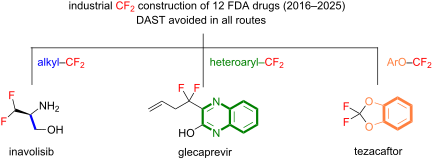
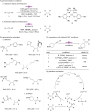
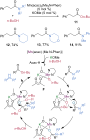
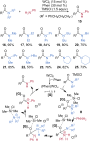
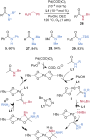
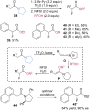
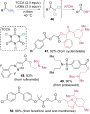
- group relies on the asymmetric Reformatsky reaction induced by the chiral substrate 45. The stereoselectivity of the product has always been a challenge in this type of synthesis, and developing more efficient asymmetric Reformatsky methods would undoubtedly improve production efficiency. Lv et al. [23
- ] reported a chromium-catalyzed asymmetric Reformatsky reaction, finding that both BrCF2COOEt (46) and ClCF2COOEt can react with aliphatic or aromatic aldehydes under this reaction system to afford chiral alcohols in moderate to high yields with high stereoselectivity. Notably, BrCF2COOEt requires blue light






Amino acid-based surfactants: sustainable synthesis and antimicrobial mechanisms
Beilstein J. Org. Chem. 2026, 22, 1067–1085, doi:10.3762/bjoc.22.85
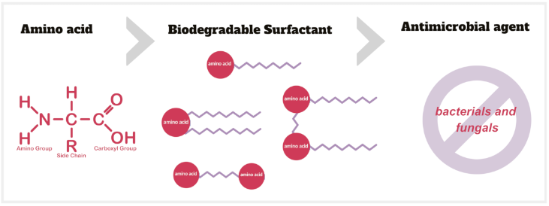
- series are commonly prepared by aminolysis of Nα-lauroylarginine methyl ester (LAM) with long-chain amines, generating asymmetric double-chain structures with tunable physicochemical and biological properties [44][45]. This dual-chain design imparts significantly higher hydrophobicity compared with


Synthesis and optical resolution of 4,5-diaminohomoadamantane: a promising scaffold for chiral ligands and bioactive compounds
Beilstein J. Org. Chem. 2026, 22, 1013–1022, doi:10.3762/bjoc.22.80
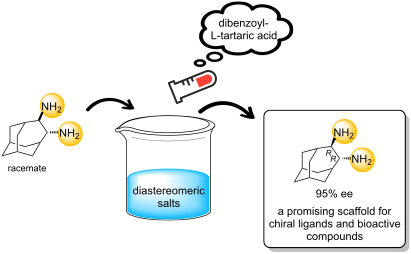
- based on a rigid polycyclic framework such as homoadamantane remain underexplored. We anticipated that the unique steric and lipophilic properties of chiral trans-4,5-diaminohomoadamantane could provide the necessary stereoinduction in metal-catalyzed asymmetric reactions. In addition, such structures
- CAM-B3LYP functional and the 6-311G++(2d,2p) basis set with solvation by CH2Cl2 in the SMD model on the base of conformational analysis. Catalytic systems based on (4R,5R)-4,5-diaminohomoadamantane derivatives exhibited low to moderate asymmetric induction in Henry and Michael reactions. These results
- suggest that further molecular design of homoadamantane-based chiral N,N-ligands is promising. Keywords: asymmetric Henry reaction; asymmetric Michael reaction; diaminohomoadamantane; enantiodivergent effect; resolution of racemate; Introduction The chemistry of organic polycyclic cage compounds has


Novel macrocycles: from synthesis to supramolecular function
Beilstein J. Org. Chem. 2026, 22, 982–985, doi:10.3762/bjoc.22.76
- functional soft materials. Asymmetric frameworks are also central to the research reported by Niemeyer and co-workers [36], who focused on the synthesis of crown ethers bearing one or two BINOL units. Their paper outlines highly practical synthetic routes to open a diverse library of chiral architectures
Electrochemical reduction of unsaturated carbon–carbon bonds via 3d transition-metal catalysis
Beilstein J. Org. Chem. 2026, 22, 955–981, doi:10.3762/bjoc.22.75
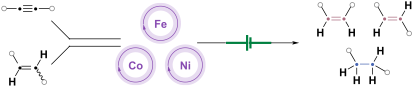
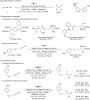
- hydrogen evolution [111][133]. On the basis of this concept, the group subsequently leveraged their previously established Ni/Co tandem electrochemical PCET (ePCET) platform together with design principles from Ni-catalyzed asymmetric hydrofunctionalization to extend mediator-assisted electrocatalysis to
- the asymmetric hydrogenation of C–C double bonds (Scheme 18A) [134]. The transformation accommodates a broad range of tertiary amides and maintains high yields and enantioselectivities across substrates bearing diverse electronic and steric profiles (Scheme 18B). These results clearly demonstrate that








Recent advances in copper-catalyzed direct hydroamination of alkenes with (hetero)aromatic amines
Beilstein J. Org. Chem. 2026, 22, 925–947, doi:10.3762/bjoc.22.73
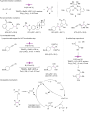
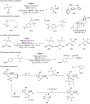
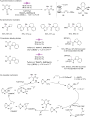
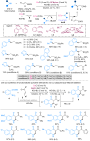
- authors also explored an asymmetric version of this reaction using chiral bisoxazoline–Cu(II) complexes. Coordination of ethenetricarboxylate substrate 16 to the chiral Lewis acid created a chiral environment that controlled the facial selectivity of the nucleophilic attack. The conjugate addition of N
- transformation, the chiral Pybox-diPh/Cu(OTf)2·C6H6 complex initially promoted imine formation followed by asymmetric alkynylation, generating the α,β-unsaturated ester intermediate 23. Subsequent treatment with LiHMDS (lithium bis(trimethylsilyl)amide) induced base-promoted intramolecular aza-Michael
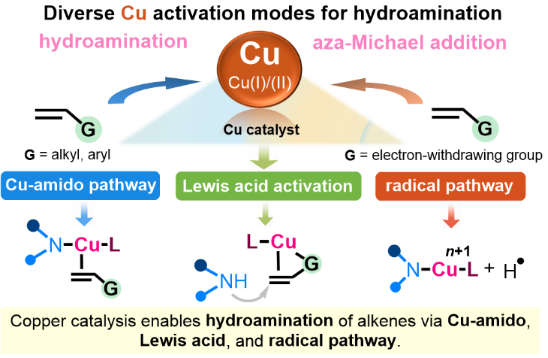
- asymmetric hydroamination of cyclopropenes involving heterocyclic amines via the copper–amido mechanism. Hydroamination via Brønsted acidic or Lewis acidic activation by Cu An alternative strategy for copper-catalyzed hydroamination of unactivated alkenes was reported by Agbossou-Niedercorn et al., who







Chiral cyclopropenimine-catalyzed enantioselective Michael reactions of phenol and benzofuran-derived α,β-unsaturated pyrazolamides with benzophenone-imine of glycine esters
Beilstein J. Org. Chem. 2026, 22, 888–896, doi:10.3762/bjoc.22.69
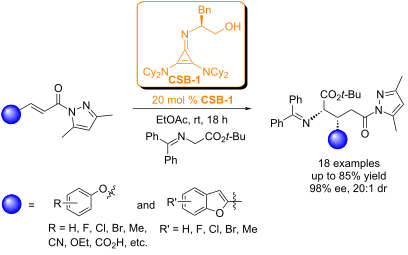
- asymmetric Michael reactions between β-substituted α,β-unsaturated ester 1a and benzophenone-imine of glycine tert-butyl ester 2a in the presence of 20 mol % of CSB-1 and other chiral tertiary amine catalysts including quinine, levamisole, (+)-sparteine (Scheme 1). To our disappointment, the results showed
- the catalytic effect of CSB-1. Based on these results, the optimal reaction conditions are listed in Table 1, entry 1. The reactions between 2 and 5 were carried out in EtOAc by using 20 mol % of CSB-1 as a catalyst at room temperature. With the optimal conditions in hand, the asymmetric Michael






Synthesis of heterocycles based on azomethine ylides from α-amino acids (or amines) and carbonyl compounds
Beilstein J. Org. Chem. 2026, 22, 705–741, doi:10.3762/bjoc.22.55
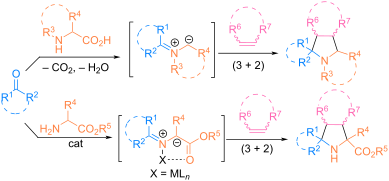
- , the importance of the formation of azomethine ylides from amino esters, amino acids, imine derivatives, aziridines or other substrates was emphasized. A review [26] demonstrates metal-catalyzed as well as metal-free asymmetric and racemic transformations of imino ethers upon interaction with various
- amines) and to demonstrate their synthetic potential using a number of examples. The main strategies for synthesizing pyrrolidine derivatives via asymmetric and non-asymmetric 1,3-dipolar cycloaddition of azomethine ylides derived from cyclic and acyclic amino acids or amino esters with various carbonyl
- enantioselectivity was observed. In a similar study, Wang et al. reported the CuI/TF-BiphamPhos (L3) complex, a new and highly efficient catalyst for the asymmetric 1,3-dipolar cycloaddition reaction [38]. The authors noted excellent reactivity, selectivity, and a wide range of structural variants for various


Kinetic resolution of racemic planar-chiral vinylcymantrenes by molybdenum-catalyzed asymmetric metathesis dimerization
Beilstein J. Org. Chem. 2026, 22, 568–574, doi:10.3762/bjoc.22.42
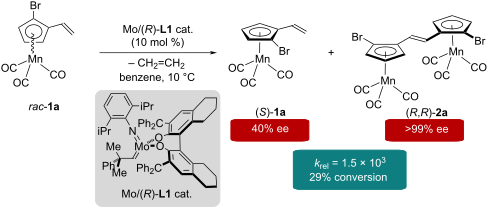
- Science Institute, Tokushima University, Tokushima 770-8501, Japan 10.3762/bjoc.22.42 Abstract Highly diastereo- and enantioselective kinetic resolution (KR) of a series of racemic planar-chiral 1-R-2-vinylcymantrenes (rac-1; R = Br, Me, I) was realized by an asymmetric metathesis dimerization (AMD
- resolution; molybdenum; olefin metathesis; planar chirality; Introduction The development of the well-defined molybdenum- [1][2] or ruthenium-alkylidene [3][4][5] catalysts has proven the olefin metathesis reaction to be a powerful tool in organic synthesis. Asymmetric extension is a recent trend in
- the excellent tolerance of the Mo-/Ru-metathesis catalysts toward the organometallic substrates. The olefin metathesis protocols could be extended to the asymmetric synthesis of diverse planar-chiral transition metal complexes either by the kinetic resolution of the racemic substrates [14][15][16] or


Molecular tweezer–peptide conjugates disrupt the protein–protein interaction between survivin and histone H3 essential in mitosis
Beilstein J. Org. Chem. 2026, 22, 557–567, doi:10.3762/bjoc.22.41
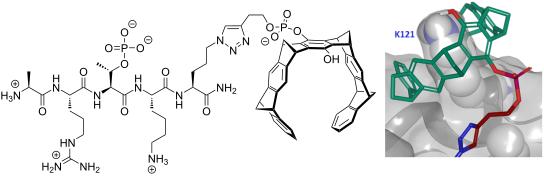
- . Crystallizations with this compound and the truncated survivin constructs 1–122 and 1–127 were finally successful and yielded high-resolution X-ray structures (Figure 4) [15]. The structures of both survivin truncation mutants look very similar, both have a survivin dimer in the asymmetric unit, and the H3 peptide




Melifoliox B, a novel phloroglucin derivative isolated from Melicope barbigera (Rutaceae) and synthesis of new oxidation products from melifoliones A and B
Beilstein J. Org. Chem. 2026, 22, 535–546, doi:10.3762/bjoc.22.39
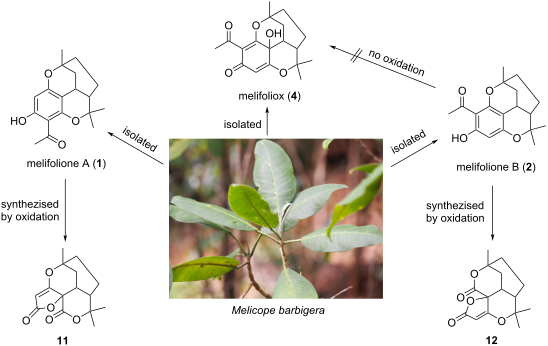
- and data acquisition. Data collection was therefore applied with seriously elongated exposure time. The crystal structure was successfully solved using methods as implemented in the SHELXT program [16], followed by refinement with SHELXL [17]. The refined asymmetric unit was found to contain about



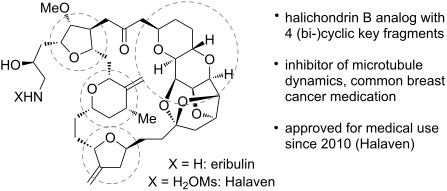
Modern synthetic pathways towards eribulin and its subunits
Beilstein J. Org. Chem. 2026, 22, 495–526, doi:10.3762/bjoc.22.37
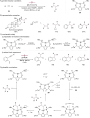
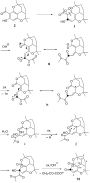
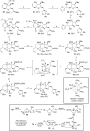
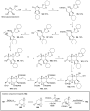
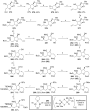
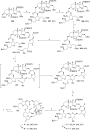
- lithiated furanyl unit took place. The so-obtained 1:1 diastereomeric mixture of 68 was treated with (PhO)3PMeI in dimethylacetamide and formed an intermediate trans-olefin, which subsequently underwent an asymmetric Sharpless dihydroxylation. The acetonide was cleaved with AcOH and the addition of NBS
- 166 via radical cyclization, then the TBDPS-protecting group was cleaved and the obtained alcohol oxidized to aldehyde 167. The Cr(II)/Co(II)-induced asymmetric NHK coupling mediated by 172 with vinyl iodide 171 led to tetrahydrofuran 168. Protection of the secondary alcohol enabled the conversion to
- thereafter, Nasam and co-workers developed a novel synthesis of 1`s fragment 272 using multiple asymmetric catalytic transformations (Schemes 29–31) [102]. 256 was synthesized from trans-crotonic acid and served as a starting material for the first building block (261, Scheme 29). Hosomi–Sakurai allylation








Recent advances in the stereoselective synthesis of distal biaxially chiral molecules
Beilstein J. Org. Chem. 2026, 22, 461–479, doi:10.3762/bjoc.22.34
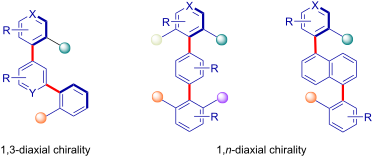
- distal axial chiralities are widely applied in chiral ligands, natural products, and anticancer agents, with their unique spatial configurations endowing them with distinctive functions and values. Although significant progress has been made in the asymmetric synthesis of distal biaxial chirality
- , Hayashizaki, and Ito reported a highly stereoselective asymmetric cross-coupling reaction of 2-methylnaphthylmagnesium bromide with bromonaphthalene, catalyzed by a nickel complex with ferrocenylphosphine as the ligand, successfully synthesizing biaxially chiral molecules, namely 1,1':5',1"- and 1,1':4',1
- one chiral axis followed by the second, and transformation from central chirality to axial chirality. We anticipate that this review will facilitate the development of novel synthetic strategies for remote biaxial chiral molecules, improve asymmetric synthesis efficiency, and expand their applications


A facile and practical method for the synthesis of trans-(±)-taxifolin and its derivatives via Darzens reaction
Beilstein J. Org. Chem. 2026, 22, 443–450, doi:10.3762/bjoc.22.31
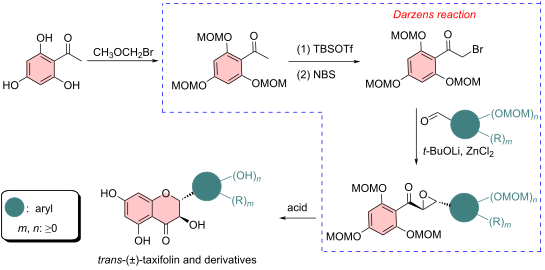
- readily available. Additionally, Xiang et al. [17] and Jew et al. [18] reported asymmetric syntheses of taxifolin, which suffer from long-step operation and the use of complicated and expensive metal-ligand catalysts. Currently, the most widely used chemical method is the synthesis of trans-(±)-taxifolin


Cone p-aminocalix[4]arenes enriched with ‘clickable’ alkyne or azide functionalities
Beilstein J. Org. Chem. 2026, 22, 399–415, doi:10.3762/bjoc.22.28
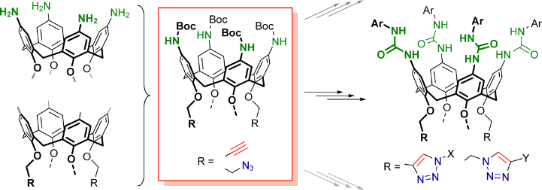
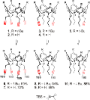
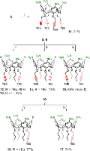
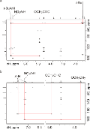
- . Indeed, the 1H NMR spectrum of the triazolated tetraurea 49 obtained from its solution in CDCl3 turned out to be overcomplicated (see Figure 4). The spectral pattern apparently arises from the superposition of signals from two asymmetric homodimers, 492 isomer 1 and 492 isomer 2 (Figure 4a), which are






Non-central chirality in organic chemistry
Beilstein J. Org. Chem. 2026, 22, 370–371, doi:10.3762/bjoc.22.24
- Ken Tanaka Naohiko Yoshikai Department of Chemical Science and Engineering, Institute of Science Tokyo, O-okayama, Meguro-ku, Tokyo 152-8550, Japan Graduate School of Pharmaceutical Sciences, Tohoku University, Aoba-ku, Sendai 980-8578, Japan 10.3762/bjoc.22.24 Keywords: asymmetric synthesis
- axial, planar, or helical chirality individually, often organized along specific molecular classes or application-driven themes such as asymmetric catalysis or chiral materials. In contrast, this Thematic Issue deliberately brings together diverse manifestations of non-central chirality under a single
- complementary roles played by non-central chiral molecules in contemporary organic chemistry. First, they continue to serve as demanding benchmarks for asymmetric synthesis, probing how far stereochemical information can be transmitted and controlled when the stereogenic element is spatially or conceptually
Recent advances in the cleavage of non-activated amides
Beilstein J. Org. Chem. 2026, 22, 352–369, doi:10.3762/bjoc.22.23
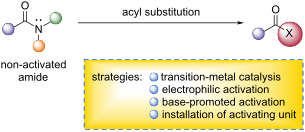
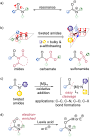
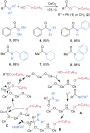
- transition-metal-catalyzed asymmetric C–H activation reactions as a directing group, thus necessitating an efficient method for the cleavage of 8-aminoquinoline-derived amides. The role of Me2SO4 in this transformation was elucidated through DFT calculations. Methylation of the carbonyl oxygen by Me2SO4








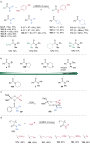


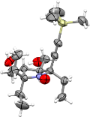
Synthesis of tricyclic fused pyrrolidine nitroxides from 2-alkynylpyrrolidine-1-oxyls
Beilstein J. Org. Chem. 2026, 22, 344–351, doi:10.3762/bjoc.22.22

- presence of DIPEA in chloroform under reflux (Scheme 2). These conditions ensured complete conversion in 30 minutes. The IR spectra of nitroxides 3a–f exhibit intense absorption bands in the ranges of 1354–1358 cm−1 and 1174–1178 cm−1, corresponding to the asymmetric and symmetric vibrations of the




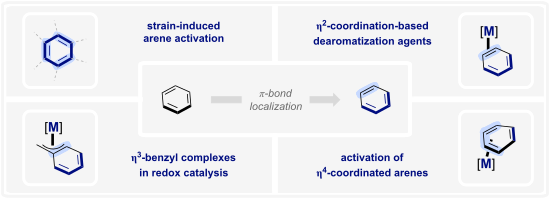
Arene activation via π-bond localization: concepts and opportunities
Beilstein J. Org. Chem. 2026, 22, 257–273, doi:10.3762/bjoc.22.19
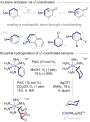
- dimension of control: chirality at the metal center. The resulting enantioenriched complexes have enabled a suite of asymmetric transformations (vide infra) [47]. Structure and properties To rationalize and predict the enhanced reactivity of η2-bound arenes, it is instructive to first examine the properties




Synthesis of diaryl phosphates using phytic acid as a phosphorus source
Beilstein J. Org. Chem. 2026, 22, 213–223, doi:10.3762/bjoc.22.15
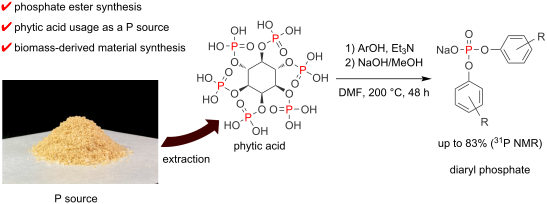
- -opening polymerization of some lactones [26][27] and are important for the syntheses of ionic liquids [28][29] and asymmetric phosphate esters. Furthermore, a novel metal extractant based on diaryl phosphate has recently been reported [30][31]. Phosphate esters are generally synthesized from phosphoryl




Screwing the helical chirality through terminal peri-functionalization
Beilstein J. Org. Chem. 2026, 22, 205–212, doi:10.3762/bjoc.22.14
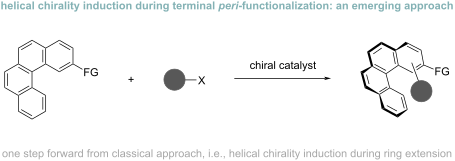
- asymmetric synthesis, where they serve as chiral ligands and organocatalysts, delivering high enantioselectivities [17][18]. Their tunable HOMO–LUMO gaps and controlled π–π interactions, is key to the use of helicenes in molecular electronics and organic semiconductors as well. Helicenes function as active
- the utility of the parent helicene in diverse areas, thereby offering a more versatile alternative to classical helicene extension strategies. Discussion Only a handful attempts have been made for the asymmetric synthesis of helical molecules using π conjugation extension [28][29][30]. This prevalent
- helical chiral entities was reported by Wang and co-workers. They reported an organocatalyzed asymmetric synthesis of phosphorus-containing chiral helicenes enabled by dynamic kinetic resolution using copper and peptide-mimetic phosphonium salts, i.e. amino acid-derived phosphonium iodide and bromide as


Circumventing Mukaiyama oxidation: selective S–O bond formation via sulfenamide–alcohol coupling
Beilstein J. Org. Chem. 2026, 22, 158–166, doi:10.3762/bjoc.22.9
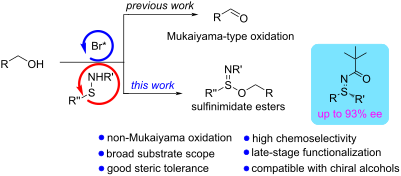
- versatile intermediates for enantioselective S–C bond formation under mild and metal-free conditions. Keywords: asymmetric synthesis; late-stage functionalization; selective oxidation; sulfenamides; sulfinimidate esters; Introduction Sulfur is a privileged heteroatom in organic chemistry, celebrated for


Asymmetric Mannich reaction of aromatic imines with malonates in the presence of multifunctional catalysts
Beilstein J. Org. Chem. 2026, 22, 151–157, doi:10.3762/bjoc.22.8
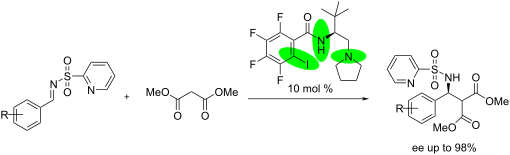
- synthesized and screened in asymmetric Mannich reaction. The reaction of aromatic imines with malonates in the presence of amino acid-derived catalysts gave Mannich adducts in very high enantiomeric purities (up to 98% ee). It is proposed that a network of hydrogen and halogen bonds with Lewis bases, together
- with the steric effect of the tert-butyl group of the catalyst, is responsible for the high stereoselectivity of the reaction. Keywords: aromatic imine; asymmetric catalysis; Mannich reaction; noncovalent interactions; organocatalysis; Introduction The Mannich reaction, i.e., the addition of an
- been used in the synthesis of numerous pharmaceuticals and natural products [7]. The application of asymmetric synthesis enables access to enantiomerically pure targets. Earlier, metal catalysis was used for Mannich reactions [8][9], but in recent years, methods of asymmetric organocatalysis have been


Symmetrical D–π–A–π–D indanone dyes: a new design for nonlinear optics and cyanide detection
Beilstein J. Org. Chem. 2026, 22, 131–142, doi:10.3762/bjoc.22.6
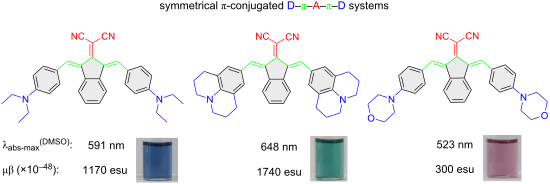
- asymmetric ones [23]. Organic dyes are also used as chemosensors, which provide economical, fast, and equipment-free analysis for the detection of environmental pollutants affecting the environment and human health [24][25]. Colorimetric detection of specific ions like cyanide, which is considered a highly


Highly electrophilic, gem- and spiro-activated trichloromethylnitrocyclopropanes: synthesis and structure
Beilstein J. Org. Chem. 2026, 22, 123–130, doi:10.3762/bjoc.22.5
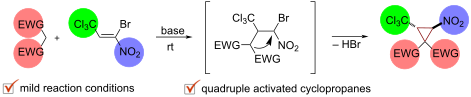
- bromine. The cyclization step from this conformation leads to trans-cyclopropanes. X-ray diffraction analysis data for compounds 2, 3, 9a, and 9b convincingly confirm the accepted structures, the position of cyclopropane protons, and the relative configurations of asymmetric atoms (Figures 2–5). It should





