


Search results
Search for "benzyl alcohol" in Full Text gives 112 result(s) in Beilstein Journal of Organic Chemistry.
Synthesis of heterocycles based on azomethine ylides from α-amino acids (or amines) and carbonyl compounds
- Ekaterina V. Berezhnaya,
- Alexander I. Ponyaev,
- Vitali M. Boitsov and
- Alexander V. Stepakov
Beilstein J. Org. Chem. 2026, 22, 705–741, doi:10.3762/bjoc.22.55
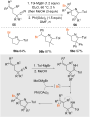
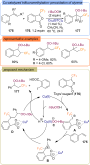
- using benzyl alcohols as aldehyde precursors to prepare fused heterocycles [84]. The authors note that the iridium-catalyzed oxidation of benzyl alcohol 108 to the corresponding aldehyde initially occurs. This is followed by condensation of the aldehyde with proline (103) and subsequent decarboxylation

Graphical Abstract

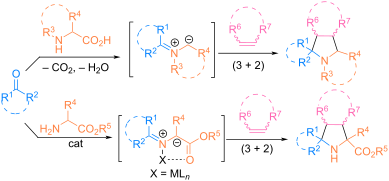
Scheme 1: Strategies for the preparation of pyrrolidine derivatives by (3 + 2) cycloaddition of azomethine yl...

Scheme 2: (3 + 2) Cycloaddition of iminoesters to dimethylmaleate.

Scheme 3: Cycloaddition of 1 with various dipolarophiles catalyzed by Ag(I)-L1.

Scheme 4: Cycloaddition of 1 with tert-butyl acrylate catalyzed by Ag(I)-L2.

Scheme 5: Cycloaddition of 1 with dimethyl maleate catalyzed by Cu(I)-L3.

Scheme 6: Cycloaddition of 1 with alkenes catalyzed by Zn(II)-t-Bu-BOX (L4).

Scheme 7: (3 + 2) Cycloaddition of iminoesters to acrylates.

Scheme 8: Catalytic double (3 + 2) cycloaddition to form pyrrolizidine derivatives.

Scheme 9: (3 + 2) Cycloaddition of iminoethers to vinyl phenyl sulfone.

Scheme 10: Regiodivergent and enantioselective synthesis of pyrrolidines 16 and 17.

Scheme 11: Substrate-controlled regioreversible "normal" and "incomplete" 1,3-dipolar cycloaddition.

Scheme 12: Enantioselective synthesis of exo-/endo-pyrrolidines.

Scheme 13: (3 + 2) Cycloaddition of iminoethers 21 to dipolarophiles 22–24.

Scheme 14: Synthesis of bicyclic pyrrolidines 29 from cyclopentene-1,3-diones.

Scheme 15: (3 + 2) Cycloaddition of aldimine esters and allyl alcohols using copper-ruthenium catalysis.

Scheme 16: Synthesis of 3,3-difluoro- and 3,3,4-trifluoropyrrolidine derivatives.

Scheme 17: Use of iminoesters from natural compounds and pharmaceuticals for reactions with 1,1-difluoro- and ...

Scheme 18: Reaction of iminoesters with 1,3-enynes.

Scheme 19: Synthesis of pyrrolidines from iminoesters and vinyl(hetero)arenes.

Scheme 20: Synthesis of exo-pyrrolidines 42 and 43.

Scheme 21: Enantioselective synthesis of heteroarylpyrrolidines 45 and 46.

Scheme 22: Catalytic reaction of (3 + 2) cycloaddition of imines 12 to benzofulvenes 47.

Scheme 23: Fullerene as a dipolarophile in (3 + 2) cycloaddition reactions.

Scheme 24: Asymmetric synthesis of optically active tetrasubstituted pyrrolidines 54.

Scheme 25: (3 + 2) Cycloaddition reaction of imines 55 and α,β-unsaturated aldehydes.

Scheme 26: Probable mechanism of enantioselective (3 + 2) cycloaddition of azomethine ylides to α,β-unsaturate...

Scheme 27: Cycloaddition between iminoesters 12 and sulfinylimines 58.

Scheme 28: (3 + 2) Cycloaddition between triarylideneacetylacetone and azomethine ylides in the presence of ti...

Scheme 29: Stereoselective synthesis of decahydropyrrolo[2,1,5-cd]indolizine 66.

Scheme 30: Synthesis of policyclic derivatives 71 and 72.

Scheme 31: Catalytic аsymmetric (3 + 2) сycloaddition of 2-pyridylimines with N-methylmaleimide.

Scheme 32: Catalytic аsymmetric (3 + 2) сycloaddition of 2-pyridylimines 1 with other dipolarophiles.

Scheme 33: Enantioselective (3 + 2) cycloaddition of silylimine with various dipolarophiles.

Scheme 34: Proposed mechanism of formation of pyrrolidines 78.

Scheme 35: Synthesis of polyheterocyclic pyrrolidines 82–91.

Scheme 36: Synthesis of spirocyclic (95) and fused (96) pyrrolidines.

Scheme 37: (3 + 2) Cycloaddition involving aromatic aldehydes 97, N-propargylmaleimide (98) and α-amino acids ...

Scheme 38: Synthesis of pyrrolizidines 106 and by-product 107.

Scheme 39: Iridium-catalyzed three-component cascade (3 + 2) cycloaddition.

Scheme 40: Intramolecular (3 + 2) cycloaddition of N-alkenylpyrrole-2-carbaldehyde 110 and α-amino acids.

Scheme 41: Three-component (3 + 2) cycloaddition involving fullerene.

Scheme 42: Four-component stereoselective one-pot synthesis of spiro-cycloadducts 119–122.

Scheme 43: Reactions of azomethine ylide 123 with cyclopropenes.

Scheme 44: Three-component reactions involving ninhydrin, cyclopropenes and acyclic α-amino acids.

Scheme 45: Reaction of cyclopropenes 138 with the N-protonated form of Ruhemann purple 137.

Scheme 46: Enantioselective (3 + 2) cycloaddition of azomethine ylides generated in situ from isatins and amin...

Scheme 47: (3 + 2) Cycloaddition of cyclohexenone 143, isatins 140 and aminomalonic diesters 141, catalyzed by...

Scheme 48: Enantioselective (3 + 2) cycloaddition of azomethine ylides generated in situ from isatins and amin...

Scheme 49: Enantioselective (3 + 2) cycloaddition of azomethine ylides generated in situ from isatins and benz...

Scheme 50: (3 + 2) Cycloaddition involving isatins, azetidine-2-carboxylic acid, maleimides or itaconimides.

Scheme 51: (3 + 2) Cycloaddition involving isatins, amino acids and tetraethylvinylidenebis(phosphonate).

Scheme 52: Synthesis of spirooxindoles 156 from triarylideneacetylacetones 155.

Scheme 53: Synthesis of spirooxindole derivatives 157–160.

Scheme 54: Synthesis of hybrid spiro-heterocycles 164–166.

Scheme 55: Formation of azomethine ylide from isatin and sarcosine.

Scheme 56: (3 + 2) Cycloaddition involving isatins, amino acids and trans-3-benzoylacrylic acid.

Scheme 57: Regioselective synthesis of spirooxindoles 170.

Scheme 58: Synthesis of hybrid spiro-heterocycles 86.

Scheme 59: (3 + 2) Cycloaddition involving acenaphthenequinones, amino acids and cyclopropenes.

Scheme 60: Synthesis of hybrid glyco-3-nitrochromane cycloadducts 179.

Scheme 61: Synthesis of spiro[indenoquinoxaline-(thia)pyrrolizidines] 90a.

Scheme 62: Three-component reactions of cyclopropenes, 11H-indeno[1,2-b]quinoxalin-11-onesand α-amino acids, s...

Scheme 63: Synthesis of hybrid glyco-3-nitrochromane cycloadducts 92.

Scheme 64: (3 + 2) Cycloaddition of 11H-benzo[4,5]imidazo[1,2-a]indol-11-one (189) with cyclopropenes and male...

Scheme 65: Diastereoselective synthesis of spiro derivatives of barbituric acid from alloxan 193, α-amino acid...

Scheme 66: Probable mechanism of formation of azomethine ylide from alloxan and ʟ-proline.

Scheme 67: Three-component reactions involving tryptanthrin 196, α-amino acids and cyclopropenes.
Advances in Zr-mediated radical transformations and applications to total synthesis
- Hiroshige Ogawa and
- Hugh Nakamura
Beilstein J. Org. Chem. 2026, 22, 71–87, doi:10.3762/bjoc.22.3
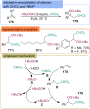
- strong affinity of zirconium for oxygen atoms [4][21]. Building on this concept, they envisioned that a similar reaction system could be applied to the homolytic cleavage of C–O bonds in alcohols and ethers. When benzyl alcohol and ether derivatives 49 were treated with zirconocene in the presence of a

Graphical Abstract

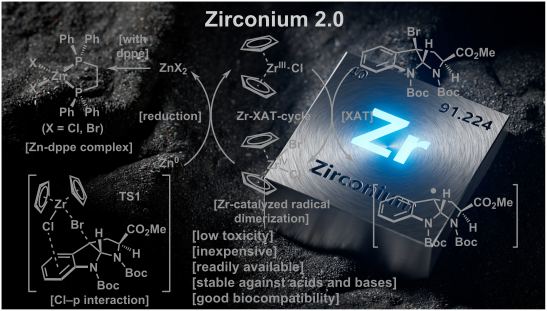
Figure 1: Historical background of zirconium and its physical properties. Image depicted in the background of ...

Scheme 1: Zr-mediated radical cyclization.
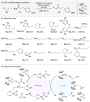
Scheme 2: Ni/Zr-mediated one-pot ketone synthesis.

Scheme 3: Zirconocene-catalyzed alkylative dimerization of 2-methylene-1,3-dithiane.

Scheme 4: Zirconium complexes as a photoredox catalyst.
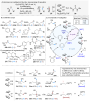
Scheme 5: Zr-catalyzed reductive ring opening of epoxides.

Scheme 6: Zr-catalyzed reductive ring opening of oxetanes. a10 mol % of Cp2Zr(OTf)2·THF was used. bPhCF3 was ...
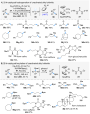
Scheme 7: Zr-catalyzed halogen atom transfer of alkyl chlorides.
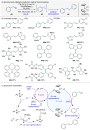
Scheme 8: Zr-catalyzed radical homo coupling of alkyl chlorides.

Scheme 9: Zr-catalyzed fluorine atom transfer.

Scheme 10: Zr-catalyzed C–O bond cleavage. aYield without the use of P(OEt)3.
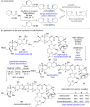
Scheme 11: Application to the total synthesis of halichondrins.
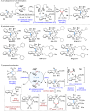
Scheme 12: Zr-catalyzed C3 dimerization of 3-bromotryptophan derivatives. aCp2ZrCl2 was used.

Scheme 13: Mechanistic studies.
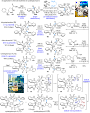
Scheme 14: Application to the total synthesis of cyctetryptomycins. A photo of compound 61b was taken by the a...
Synthesis and applications of alkenyl chlorides (vinyl chlorides): a review
- Daniel S. Müller
Beilstein J. Org. Chem. 2026, 22, 1–63, doi:10.3762/bjoc.22.1
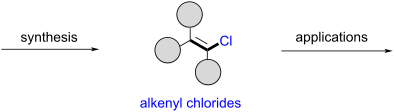

Graphical Abstract
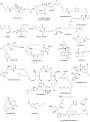
Figure 1: Representative alkenyl chloride motifs in natural products. References: Pinnaic acid [8], haterumalide ...

Figure 2: Representative alkenyl chloride motifs in pharmaceuticals and pesticides. References: clomifene [25], e...
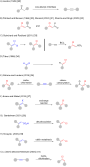
Figure 3: Graphical overview of previously published reviews addressing the synthesis of alkenyl chlorides.

Figure 4: Classification of synthetic approaches to alkenyl chlorides.

Scheme 1: Early works by Friedel, Henry, and Favorsky.

Scheme 2: Product distribution obtained by H NMR integration of crude compound as observed by Kagan and co-wo...

Scheme 3: Side reactions observed for the reaction of 14 with PCl5.

Scheme 4: Only compounds 15 and 18 were observed in the presence of Hünig’s base.

Scheme 5: Efficient synthesis of dichloride 15 at low temperatures.
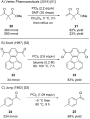
Scheme 6: Various syntheses of alkenyl chlorides on larger scale.

Scheme 7: Scope of the reaction of ketones with PCl5 in boiling cyclohexane.

Scheme 8: Side reactions occur when using excess amounts of PCl5.

Scheme 9: Formation of versatile β-chlorovinyl ketones.

Scheme 10: Mixture of PCl5 and PCl3 used for the synthesis of 49.

Scheme 11: Catechol–PCl3 reagents for the synthesis of alkenyl chlorides.

Scheme 12: (PhO)3P–halogen-based reagents for the synthesis of alkenyl halides.

Scheme 13: Preparation of alkenyl chlorides from alkenyl phosphates.

Scheme 14: Preparation of alkenyl chlorides by treatment of ketones with the Vilsmeier reagent.

Scheme 15: Preparation of electron-rich alkenyl chlorides by treatment of ketones with the Vilsmeier reagent.

Scheme 16: Cu-promoted synthesis of alkenyl chlorides from ketones and POCl3.

Figure 5: GC yield of 9 depending on time and reaction temperature.

Figure 6: Broken reaction flask after attempts to clean the polymerized residue.

Figure 7: GC yield of 9 depending on the amount of CuCl and time.

Scheme 17: Treatment of 4-chromanones with PCl3.

Scheme 18: Synthesis of alkenyl chlorides from the reaction of ketones with acyl chlorides.

Scheme 19: ZnCl2-promoted alkenyl chloride synthesis.
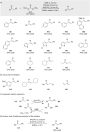
Scheme 20: Regeneration of acid chlorides by triphosgene.

Scheme 21: Alkenyl chlorides from ketones and triphosgene.
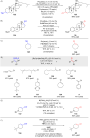
Scheme 22: Various substitution reactions.

Scheme 23: Vinylic Finkelstein reactions reported by Evano and co-workers.

Scheme 24: Challenge of selective monohydrochlorination of alkynes.

Scheme 25: Sterically encumbered internal alkynes furnish the hydrochlorination products in high yield.

Scheme 26: Recent work by Kropp with HCl absorbed on alumina.

Scheme 27: High selectivities for monhydrochlorination with nitromethane/acetic acid as solvent.

Figure 8: Functionalized alkynes which typically afford the monhydrochlorinated products.
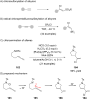
Scheme 28: Related chorosulfonylation and chloroamination reactions.
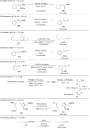
Scheme 29: Reaction of organometallic reagents with chlorine electrophiles.

Scheme 30: Elimination reactions of dichlorides to furnish alkenyl chlorides.

Scheme 31: Elimination reactions of allyl chloride 182 to furnish alkenyl chloride 183.

Scheme 32: Detailed studies by Schlosser on the elimination of dichloro compounds.

Scheme 33: Stereoselective variation caused by change of solvent.

Scheme 34: Elimination of gem-dichloride 189 to afford alkene 190.

Scheme 35: Oxidation of enones to dichlorides and in situ elimination thereof.

Scheme 36: Oxidation of allylic alcohols to dichlorides and in situ elimination thereof.

Scheme 37: Chlorination of styrenes with SOCl2 and elimination thereof.

Scheme 38: Chlorination of styrenes with SOCl2 and elimination thereof.

Scheme 39: Fluorine–chlorine exchange followed by elimination.

Scheme 40: Intercepting cations with alkynes and trapping of the alkenyl cation intermediate with chloride.

Scheme 41: Investigations by Mayr and co-workers.

Scheme 42: In situ activation of benzyl alcohol 230 with BCl3.

Scheme 43: In situ activation of benzylic alcohols with TiCl4.
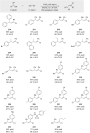
Scheme 44: In situ activation of benzylic alcohols with FeCl3.

Scheme 45: In situ activation of benzylic alcohols with FeCl3.

Scheme 46: In situ activation of aliphatic chlorides and alcohols with ZnCl2, InCl3, and FeCl3.

Scheme 47: In situ generation of benzylic cations and trapping thereof with alkynes.
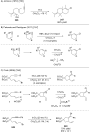
Scheme 48: Intramolecular trapping reactions affording alkenyl halides.

Scheme 49: Intramolecular trapping reactions affording alkenyl chlorides.

Scheme 50: Intramolecular trapping reactions of oxonium and iminium ions affording alkenyl chlorides.
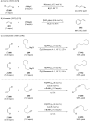
Scheme 51: Palladium and nickel-catalyzed coupling reactions to afford alkenyl chlorides.

Scheme 52: Rhodium-catalyzed couplings of 1,2-trans-dichloroethene with arylboronic esters.

Scheme 53: First report on monoselective coupling reactions for 1,1-dichloroalkenes.

Scheme 54: Negishi’s and Barluenga’s contributions.

Scheme 55: First mechanistic investigation by Johnson and co-workers.

Scheme 56: First successful cross-metathesis with choroalkene 260.

Scheme 57: Subsequent studies by Johnson.
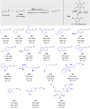
Scheme 58: Hoveyda and Schrock’s work on stereoretentive cross-metathesis with molybdenum-based catalysts.
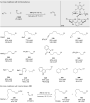
Scheme 59: Related work with (Z)-dichloroethene.
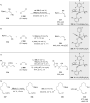
Scheme 60: Further ligand refinement and traceless protection of functional groups with HBpin.

Scheme 61: Alkenyl chloride synthesis by Wittig reaction.

Scheme 62: Alkenyl chloride synthesis by Julia olefination.

Scheme 63: Alkenyl chloride synthesis by reaction of ketones with Mg/TiCl4 mixture.

Scheme 64: Frequently used allylic substitution reactions which lead to alkenyl chlorides.
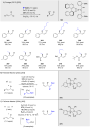
Scheme 65: Enantioselective allylic substitutions.

Scheme 66: Synthesis of alkenyl chlorides bearing an electron-withdrawing group.

Scheme 67: Synthesis of α-nitroalkenyl chlorides from aldehydes.

Scheme 68: Synthesis of alkenyl chlorides via elimination of an in situ generated geminal dihalide.

Scheme 69: Carbenoid approach reported by Pace.

Scheme 70: Carbenoid approach reported by Pace.

Scheme 71: Ring opening of cyclopropenes in the presence of MgCl2.

Scheme 72: Electrophilic chlorination of alkenyl MIDA boronates to Z- or E-alkenyl chlorides.

Scheme 73: Hydroalumination and hydroboration of alkynyl chlorides.

Scheme 74: Carbolithiation of chloroalkynes.

Scheme 75: Chlorination of enamine 420.

Scheme 76: Alkyne synthesis by elimination of alkenyl chlorides.

Scheme 77: Reductive lithiation of akenyl chlorides.

Scheme 78: Reactions of alkenyl chlorides with organolithium reagents.

Scheme 79: Reactions of alkenyl chlorides with organolithium reagents.

Scheme 80: Addition–elimination reaction of alkenyl chloride 9 with organolithium reagents.

Scheme 81: C–H insertions of lithiumcarbenoids.
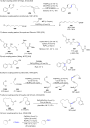
Scheme 82: Pd-catalyzed coupling reactions with alkenyl chlorides as coupling partner.

Scheme 83: Ni-catalyzed coupling of alkenylcopper reagent with alkenyl chloride 183.

Scheme 84: Ni-catalyzed coupling of heterocycle 472 with alkenyl chloride 473.

Scheme 85: Synthesis of α-chloroketones by oxidation of alkenyl chlorides.

Scheme 86: Tetrahalogenoferrate(III)-promoted oxidation of alkenyl chlorides.

Scheme 87: Chlorine–deuterium exchange promoted by a palladium catalyst.

Scheme 88: Reaction of alkenyl chlorides with thiols in the presence of AIBN (azobisisobutyronitrile).

Scheme 89: Chloroalkene annulation.
C2 to C6 biobased carbonyl platforms for fine chemistry
- Jingjing Jiang,
- Muhammad Noman Haider Tariq,
- Florence Popowycz,
- Yanlong Gu and
- Yves Queneau
Beilstein J. Org. Chem. 2025, 21, 2103–2172, doi:10.3762/bjoc.21.165
- electrocatalyst supported on nitrogen-doped carbon nanosheets (Cu/NCNSs). This catalyst exhibits high activity for the oxidation of various substrates, including GLY, gluconic acid (GLU), 5-hydroxymethylfurfural (HMF), benzyl alcohol (BA), furfuryl alcohol (FA), and ethylene glycol (EG) (Scheme 7) [35]. Park et

Graphical Abstract

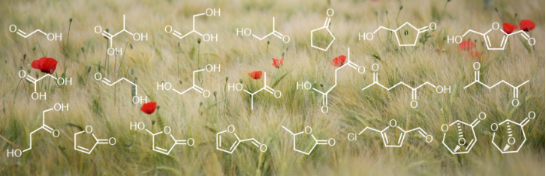
Figure 1: C2–C6 biobased carbonyl building blocks.

Scheme 1: Proposed (2 + 2) route to glycolaldehyde and glycolic acid from erythritol by Cu/AC catalyst (AC = ...

Scheme 2: Reductive amination of GCA.

Scheme 3: N-Formylation of secondary amines by reaction with GCA.

Scheme 4: Synthesis and conversion of hydroxy acetals to cyclic acetals.

Scheme 5: Synthesis of 3-(indol-3-yl)-2,3-dihydrofurans via three-component reaction of glycolaldehyde, indol...

Scheme 6: BiCl3-catalyzed synthesis of benzo[a]carbazoles from 2-arylindoles and α-bromoacetaldehyde ethylene...

Scheme 7: Cu/NCNSs-based conversion of glycerol to glycolic acid and other short biobased acids.

Scheme 8: E. coli-based biotransformation of C1 source molecules (CH4, CO2 and CO) towards C2 glycolic acid.

Scheme 9: N-Formylation of amines with C2 (a) or C3 (b) biomass-based feedstocks.

Scheme 10: Methods for the formation of propanoic acid (PA) from lactic acid (LA).

Scheme 11: Co-polymerization of biobased lactic acid and glycolic acid via a bicatalytic process.

Scheme 12: Oxidation of α-hydroxy acids by tetrachloroaurate(III) in acetic acid–sodium acetate buffer medium.

Figure 2: Selective catalytic pathways for the conversion of lactic acid (LA).

Scheme 13: Synthesis of 1,3-PDO via cross-aldol reaction between formaldehyde and acetaldehyde to 3-hydroxypro...

Scheme 14: Hydrothermal conversion of 1,3-dihydroxy-2-propane and 2,3-dihydroxypropanal to methylglyoxal.

Scheme 15: FLS-catalyzed formose reaction to synthesize GA and DHA.

Scheme 16: GCA and DHA oxidation products of glycerol and isomerization of GCA to DHA under flow conditions us...

Scheme 17: Acid-catalyzed reactions of DHA with alcohols.

Scheme 18: Synthesis of dihydroxyacetone phosphate from dihydroxyacetone.

Scheme 19: Bifunctional acid–base catalyst DHA conversion into lactic acid via pyruvaldehyde or fructose forma...

Scheme 20: Catalytic one-pot synthesis of GA and co-synthesis of formamides and formates from DHA.

Scheme 21: (a) Synthesis of furan derivatives and (b) synthesis of thiophene derivative by cascade [3 + 2] ann...

Scheme 22: Brønsted acidic ionic liquid catalyzed synthesis of benzo[a]carbazole from renewable acetol and 2-p...

Scheme 23: Asymmetric hydrogenation of α-hydroxy ketones to 1,2-diols.

Scheme 24: Synthesis of novel 6-(substituted benzylidene)-2-methylthiazolo [2,3-b]oxazol-5(6H)-one from 1-hydr...

Scheme 25: ʟ-Proline-catalyzed synthesis of anti-diols from hydroxyacetone and aldehydes.

Scheme 26: C–C-bond-formation reactions of a biomass-based feedstock aromatic aldehyde (C5) and hydroxyacetone...

Scheme 27: Ethanol upgrading to C4 bulk chemicals via the thiamine (VB1)-catalyzed acetoin condensation.

Scheme 28: One-pot sequential chemoenzymatic synthesis of 2-aminobutane-1,4-diol and 1,2,4-butanetriol via 1,4...

Scheme 29: Synthesis of 1,4-dihydroxybutan-2-one by microbial transformation.

Scheme 30: Conversion of polyols by [neocuproine)Pd(OAc)]2(OTf)2] to α-hydroxy ketones.

Scheme 31: Chemoselective oxidation of alcohols with chiral palladium-based catalyst 2.

Scheme 32: Electrochemical transformation of furfural to 5-hydroxy-2(5H)-furanone (HFO).

Scheme 33: Selective hydrodeoxygenation of HFO and oxidation to γ-butyrolactone (GBL).

Scheme 34: Photosensitized oxygenation of furan towards HFO via ozonide intermediates.

Scheme 35: Conversion of furfural to HFO and MAN by using mesoporous carbon nitride (SGCN) as photocatalyst.

Scheme 36: Synthesis of HFO from furan derivatives.

Scheme 37: Photooxidation of furfural to 5-hydroxy-2(5H)-furanone (HFO).

Scheme 38: Synthesis of Friedel–Crafts indole adduct from HFO.

Scheme 39: Conversion of HFO to α,γ-substituted chiral γ-lactones.

Scheme 40: Tautomeric transformation of HFO to formylacrylic acid.

Scheme 41: Hydrolysis of HFO to succinic acid in aqueous solution.

Scheme 42: Substitution and condensation reactions of 5-hydroxy-2(5H)-furanone (HFO).

Scheme 43: (a) Conversion of HFO towards valuable C4 chemicals and (b) anodic oxidation of 5-hydroxy-2(5H)-fur...

Figure 3: Conversion of HFO towards other natural and synthetic substances.

Scheme 44: Conversion of furfural to maleic anhydride (reaction a: VOx/Al2O3; reaction b: VPO).

Scheme 45: Conversion of furfural into succinic acid.

Scheme 46: Electro‑, photo‑, and biocatalysis for one-pot selective conversions of furfural into C4 chemicals.

Scheme 47: Production route of furfural from hemicellulose.

Scheme 48: Mechanism for xylose dehydration to furfural through a choline xyloside intermediate.

Scheme 49: Conversion of furfural to furfuryl alcohol and its derivatives.

Scheme 50: Conversion of furfural to furfuryl alcohol and 3-(2-furyl)acrolein.

Scheme 51: The aerobic oxidative condensation of biomass-derived furfural and linear alcohols.

Scheme 52: The single-step synthesis of 2-pentanone from furfural.

Scheme 53: Electrocatalytic coupling reaction of furfural and levulinic acid.

Scheme 54: Conversion of furfural to m-xylylenediamine.

Scheme 55: Conversion of furfural to tetrahydrofuran-derived amines.

Scheme 56: Formation of trans-4,5-diamino-cyclopent-2-enones from furfural.

Scheme 57: Production of pyrrole and proline from furfural.

Scheme 58: Synthesis of 1‑(trifluoromethyl)-8-oxabicyclo[3.2.1]oct-3-en-2-ones from furfural.

Scheme 59: Conversion of furfural to furfural-derived diacids.

Scheme 60: A telescope protocol derived from furfural and glycerol.

Scheme 61: A tandem cyclization of furfural and 5,5-dimethyl-1,3-cyclohexanedione.

Scheme 62: A Ugi four-component reaction to construct furfural-based polyamides.

Scheme 63: One-pot synthesis of γ-acyloxy-Cy7 from furfural.

Scheme 64: Dimerization–Piancatelli sequence toward humins precursors from furfural.

Scheme 65: Conversion of furfural to CPN.

Scheme 66: Synthesis of jet fuels range cycloalkanes from CPN and lignin-derived vanillin.

Scheme 67: Solar-energy-driven synthesis of high-density biofuels from CPN.

Scheme 68: Reductive amination of CPN to cyclopentylamine.

Scheme 69: Asymmetric hydrogenation of C=O bonds of exocyclic α,β-unsaturated cyclopentanones.

Scheme 70: Preparation of levulinic acid via the C5 route (route a) or C6 route (routes b1 and b2).

Scheme 71: Mechanism of the rehydration of HMF to levulinic acid and formic acid.

Scheme 72: Important levulinic acid-derived chemicals.

Scheme 73: Direct conversion of levulinic acid to pentanoic acid.

Scheme 74: Catalytic aerobic oxidation of levulinic acid to citramalic acid.

Scheme 75: Conversion of levulinic acid to 1,4-pentanediol (a) see ref. [236]; b) see ref. [237]; c) see ref. [238]; d) see r...

Scheme 76: Selective production of 2-butanol through hydrogenolysis of levulinic acid.

Scheme 77: General reaction pathways proposed for the formation of 5MPs from levulinic acid.

Scheme 78: Selective reductive amination of levulinic acid to N-substituted pyrroles.

Scheme 79: Reductive amination of levulinic acid to chiral pyrrolidinone.

Scheme 80: Reductive amination of levulinic acid to non-natural chiral γ-amino acid.

Scheme 81: Nitrogen-containing chemicals derived from levulinic acid.

Scheme 82: Preparation of GVL from levulinic acid by dehydration and hydrogenation.

Scheme 83: Ruthenium-catalyzed levulinic acid to chiral γ-valerolactone.

Scheme 84: Catalytic asymmetric hydrogenation of levulinic acid to chiral GVL.

Scheme 85: Three steps synthesis of ε-caprolactam from GVL.

Scheme 86: Multistep synthesis of nylon 6,6 from GVL.

Scheme 87: Preparation of MeGVL by α-alkylation of GVL.

Scheme 88: Ring-opening polymerization of five-membered lactones.

Scheme 89: Synthesis of GVL-based ionic liquids.

Scheme 90: Preparation of butene isomers from GVL under Lewis acid conditions.

Scheme 91: Construction of C5–C12 fuels from GVL over nano-HZSM-5 catalysts.

Scheme 92: Preparation of alkyl valerate from GVL via ring opening/reduction/esterification sequence.

Scheme 93: Construction of 4-acyloxypentanoic acids from GVL.

Scheme 94: Synthesis of 1,4-pentanediol (PDO) from GVL.

Scheme 95: Construction of novel cyclic hemiketal platforms via self-Claisen condensation of GVL.

Scheme 96: Copper-catalyzed lactamization of GVL.

Figure 4: Main scaffolds obtained from HMF.

Scheme 97: Biginelli reactions towards HMF-containing dihydropyrimidinones.

Scheme 98: Hantzsch dihydropyridine synthesis involving HMF.

Scheme 99: The Kabachnik–Fields reaction involving HMF.

Scheme 100: Construction of oxazolidinone from HMF.

Scheme 101: Construction of rhodamine-furan hybrids from HMF.

Scheme 102: A Groebke–Blackburn–Bienaymé reaction involving HMF.

Scheme 103: HMF-containing benzodiazepines by [4 + 2 + 1] cycloadditions.

Scheme 104: Synthesis of fluorinated analogues of α-aryl ketones.

Scheme 105: Synthesis of HMF derived disubstituted γ-butyrolactone.

Scheme 106: Functionalized aromatics from furfural and HMF.

Scheme 107: Diels–Alder adducts from HMF or furfural with N-methylmaleimide.

Scheme 108: Pathway of the one-pot conversion of HMF into phthalic anhydride.

Scheme 109: Photocatalyzed preparation of humins (L-H) from HMF mixed with spoiled HMF residues (LMW-H) and fur...

Scheme 110: Asymmetric dipolar cycloadditions on HMF.

Scheme 111: Dipolar cycloadditions of HMF based nitrones to 3,4- and 3,5-substituted isoxazolidines.

Scheme 112: Production of δ-lactone-fused cyclopenten-2-ones from HMF.

Scheme 113: Aza-Piancatelli access to aza-spirocycles from HMF-derived intermediates.

Scheme 114: Cross-condensation of furfural, acetone and HMF into C13, C14 and C15 products.

Scheme 115: Base-catalyzed aldol condensation/dehydration sequences from HMF.

Scheme 116: Condensation of HMF and active methylene nitrile.

Scheme 117: MBH reactions involving HMF.

Scheme 118: Synthesis of HMF-derived ionic liquids.

Scheme 119: Reductive amination/enzymatic acylation sequence towards HMF-based surfactants.

Scheme 120: The formation of 5-chloromethylfurfural (CMF).

Scheme 121: Conversion of CMF to HMF, levulinic acid, and alkyl levulinates.

Scheme 122: Conversion of CMF to CMFCC and FDCC.

Scheme 123: Conversion of CMF to BHMF.

Scheme 124: Conversion of CMF to DMF.

Scheme 125: CMF chlorine atom substitutions toward HMF ethers and esters.

Scheme 126: Introduction of carbon nucleophiles in CMF.

Scheme 127: NHC-catalyzed remote enantioselective Mannich-type reactions of CMF.

Scheme 128: Conversion of CMF to promising biomass-derived dyes.

Scheme 129: Radical transformation of CMF with styrenes.

Scheme 130: Synthesis of natural herbicide δ-aminolevulinic acid from CMF.

Scheme 131: Four step synthesis of the drug ranitidine from CMF.

Scheme 132: Pd/CO2 cooperative catalysis for the production of HHD and HXD.

Scheme 133: Different ruthenium (Ru) catalysts for the ring-opening of 5-HMF to HHD.

Scheme 134: Proposed pathways for preparing HXD from HMF.

Scheme 135: MCP formation and uses.

Scheme 136: Cu(I)-catalyzed highly selective oxidation of HHD to 2,5-dioxohexanal.

Scheme 137: Synthesis of N‑substituted 3‑hydroxypyridinium salts from 2,5-dioxohexanal.

Scheme 138: Ru catalyzed hydrogenations of HHD to 1,2,5-hexanetriol (a) see ref. [396]; b) see ref. [397]).

Scheme 139: Aviation fuel range quadricyclanes produced by HXD.

Scheme 140: Synthesis of HDGK from HXD and glycerol as a chain extender.

Scheme 141: Synthesis of serinol pyrrole from HXD and serinol.

Scheme 142: Synthesis of pyrroles from HXD and nitroarenes.

Scheme 143: Two-step production of PX from cellulose via HXD.

Scheme 144: Preparation of HCPN from HMF via hydrogenation and ring rearrangement.

Scheme 145: Suggested pathways from HMF to HCPN.

Scheme 146: α-Alkylation of HCPN with ethylene gas.

Scheme 147: Synthesis of 3-(hydroxymethyl)cyclopentylamine from HMF via reductive amination of HCPN.

Scheme 148: Production of LGO and Cyrene® from biomass.

Scheme 149: Synthesis of HBO from LGO and other applications.

Scheme 150: Construction of m-Cyrene® homopolymer.

Scheme 151: Conversion of Cyrene® to THFDM and 1,6-hexanediol.

Scheme 152: RAFT co-polymerization of LGO and butadienes.

Scheme 153: Polycondensation of HO-LGOL and diols with dimethyl adipate.

Scheme 154: Self-condensation of Cyrene® and Claisen–Schmidt reactions.

Scheme 155: Synthesis of 5-amino-2-(hydroxymethyl)tetrahydropyran from Cyrene®.
Ambident reactivity of enolizable 5-mercapto-1H-tetrazoles in trapping reactions with in situ-generated thiocarbonyl S-methanides derived from sterically crowded cycloaliphatic thioketones
- Grzegorz Mlostoń,
- Małgorzata Celeda,
- Marcin Palusiak,
- Heinz Heimgartner,
- Marta Denel-Bobrowska and
- Agnieszka B. Olejniczak
Beilstein J. Org. Chem. 2025, 21, 1508–1519, doi:10.3762/bjoc.21.113
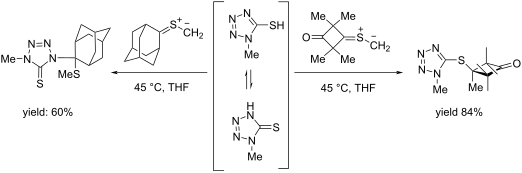
- protonate this basic fragment, undergo 1,3-addition leading to corresponding products of S,S-, O,S-, or N,S-acetal type. For example, trapping of the in situ-generated adamantanethione S-methanide (1a) with tert-butylthiol or benzyl alcohol leads to the corresponding S,S-dithioacetal and O,S-thioacetal

Graphical Abstract

Scheme 1: Typical [3 + 2] cycloaddition (above) and trapping (below) reactions of thiocarbonyl S-methanides 1a...

Scheme 2: Ambident reactivity of 5-mercapto-1H-tetrazoles 4 towards dimethyl 2-arylcyclopropane dicarboxylate...

Scheme 3: Regioselectivity of [3 + 2] cycloadditions of diazomethane with adamantanethione (7a) [22,24,25], and sterica...

Scheme 4: The in situ generation of sterically crowded thiocarbonyl S-methanides 1c,d (via a 1,3-dipolar cycl...

Scheme 5: Reactions of the in situ-generated thiocarbonyl S-methanides 1 (from 1,3,4-thiadiazolines 2) with e...

Figure 1: (a) Molecular structure of the N-insertion product (thioaminal) 9i. Atoms are represented by therma...

Scheme 6: Stepwise mechanism of the competitive N- and S-insertion reactions between the in situ-generated th...

Scheme 7: Mechanism of the isomerization of initially formed thioaminals 9 to dithioacetals 10.
High-pressure activation for the solvent- and catalyst-free syntheses of heterocycles, pharmaceuticals and esters
- Kelsey Plasse,
- Valerie Wright,
- Guoshu Xie,
- R. Bernadett Vlocskó,
- Alexander Lazarev and
- Béla Török
Beilstein J. Org. Chem. 2025, 21, 1374–1387, doi:10.3762/bjoc.21.102
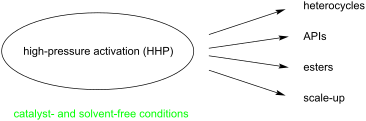
- form of catalysis from simple acids to metal catalysts [46]. Similar to the previous examples, the first step was the optimization of the conditions using the esterification of benzyl alcohol (12a) with acetic anhydride (8) and acetic acid (13), respectively. The optimization data are summarized in
- ). Optimization of the high pressure-assisted catalyst- and additional solvent-free synthesis of acetylsalicylic acid (9). Optimization of the HHP-assisted catalyst-free esterification of benzyl alcohol (12a). Molecular volumes of the reactants and products and the reaction volume (ΔV) for the reaction of o

Graphical Abstract

Figure 1: Simplified schematic rendering of a high hydrostatic pressure reactor.

Scheme 1: High pressure-initiated synthesis of 1,3-dihydrobenzimidazoles 3a–d. The yields are GC yields and t...

Figure 2: Illustration of the cyclization reaction between chalcone (4) and 3-(trifluoromethyl)phenylhydrazin...

Scheme 2: High pressure-initiated catalyst- and solvent-free synthesis of pyrazoles 6a–c from chalcone (4) an...

Figure 3: Schematic representation of the cycling experiments: the major variables are the applied pressure, ...

Scheme 3: High pressure-initiated synthesis of the active pharmaceutical ingredients in Tylenol® and Aspirin®...

Scheme 4: High pressure-initiated esterification of alcohols 12a–g in a catalyst- and additional solvent-free...

Scheme 5: High pressure-initiated large scale syntheses of N-aryl- and N-alkylpyrroles at about 100 g scale.
Beyond symmetric self-assembly and effective molarity: unlocking functional enzyme mimics with robust organic cages
- Keith G. Andrews
Beilstein J. Org. Chem. 2025, 21, 421–443, doi:10.3762/bjoc.21.30
- triad (red) was hoped to activate the benzyl alcohol nucleophile, but it does not activate (polarize) the electrophile (substrate ester group). (B) One of Rebek’s “clefts” [108][109]. The rigidly organized carboxylic acids both bind the substrate and the transition state for hydrolysis of an acetal. (A

Graphical Abstract

Figure 1: Catalytic rate enhancements from a reduction in the Gibbs free energy transition barrier can be fra...

Figure 2: Typical catalysis modes using macrocycle cavities performing (non-specific) hydrophobic substrate b...
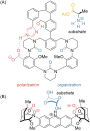
Figure 3: (A) Cram’s serine protease model system [87,88]. The macrocycle showed strong substrate binding (organizat...

Figure 4: (A) Self-assembling capsules can perform hydrophobic catalysis [116,117]. (B) Resorcin[4]arene building bloc...

Figure 5: (A) Metal-organic cages and key modes in catalysis. (B) Charged metals or ligands can result in +/−...

Figure 6: (A) Frameworks (MOFs, COFs) can be catalysts. (B) Example of a 2D-COF, assembled by dynamic covalen...

Figure 7: (A) Examples of dynamic covalent chemistry used to synthesize organic cages. (B) Organic cages are ...
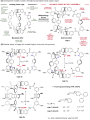
Figure 8: (A) Design and development of soluble, functionalized, robust organic cages. (B) Examples of modula...
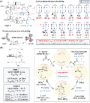
Figure 9: (A) There are 13 metastable conformers (symmetry-corrected) for cage 1 due to permutations of amide...
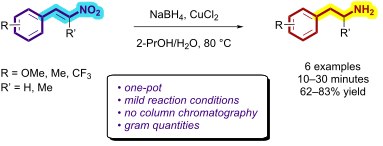
Facile one-pot reduction of β-nitrostyrenes to phenethylamines using sodium borohydride and copper(II) chloride
- Laura D’Andrea and
- Simon Jademyr
Beilstein J. Org. Chem. 2025, 21, 39–46, doi:10.3762/bjoc.21.4
- ); 13C NMR (151 MHz, D2O) δ 122.41, 124.77, 129.01, 133.06; ESI-MS m/z: [M + 1]+ 171.0; found, 171.1; mp 190–191 °C. Benzyl alcohol (9b): The product formation was monitored by TLC using Hex/EtOAc (6:1). Once cooled to room temperature, the mixture was acidified with 20% HCl solution and extracted with

Graphical Abstract

Scheme 1: Brief comparison between the main traditional synthetic routes for the preparation of substituted p...

Figure 1: The β-nitrostyrene analogues used in this work.

Scheme 2: Additional products obtained via this method: nitrobenzene and methyl benzoate are reduced in excel...

Figure 2: Numerous masses (m/z) were detected by ESI-MS at T = 0 upon mixing all the reagents to produce 1b.

Figure 3: Structures of proposed adducts. Their masses, 254.2 and 242.2, respectively, were found at T = 0 by...

Scheme 3: Proposed mechanism for the formation of the hydroxylamine side product b. N-Phenethylhydroxylamine (...
Synthesis of 2H-azirine-2,2-dicarboxylic acids and their derivatives
- Anastasiya V. Agafonova,
- Mikhail S. Novikov and
- Alexander F. Khlebnikov
Beilstein J. Org. Chem. 2024, 20, 3191–3197, doi:10.3762/bjoc.20.264
- a 4 mmol scale gave dimethyl ester 11a in 99% yield. Unexpectedly, the reaction of branched alcohols with diacyl chloride 2a failed. For example, the reaction with benzyl alcohol resulted in the formation of an overly complex mixture of products. Adding bases to trap HCl did not improve the

Graphical Abstract

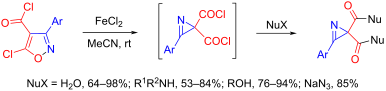
Scheme 1: Approaches to 2H-azirine-2,2-dicarboxylic acid derivatives.
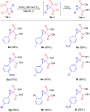
Scheme 2: Synthesis of 2H-azirine-2,2-dicarboxylic acids 6.

Scheme 3: Transformations of 3-(tert-butyl)-5-chloroisoxazole-4-carbonyl chloride (1j).

Scheme 4: Synthesis of amides 10. aFiltration through celite after reaction with amine (without aqueous worku...

Scheme 5: Synthesis of esters 11.

Scheme 6: Synthesis of dicarbonyl azide 12.
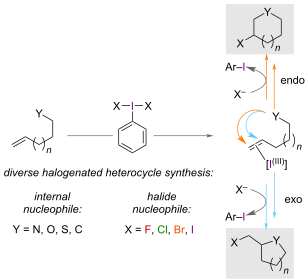
Hypervalent iodine-mediated intramolecular alkene halocyclisation
- Charu Bansal,
- Oliver Ruggles,
- Albert C. Rowett and
- Alastair J. J. Lennox
Beilstein J. Org. Chem. 2024, 20, 3113–3133, doi:10.3762/bjoc.20.258
- regeneration of 1-fluoro-3,3- dimethylbenziodoxole (12) in 91% yield from isolated benzyl alcohol after the fluorination reaction. A mechanism of the reaction was proposed (Scheme 13) in which the iodane-activated alkene is attacked by fluoride and the aromatic ring, to form a fluorinated phenonium

Graphical Abstract

Figure 1: Example bioactive compounds containing cyclic scaffolds potentially accessible by HVI chemistry.

Figure 2: A general mechanism for HVI-mediated endo- or exo-halocyclisation.

Scheme 1: Metal-free synthesis of β-fluorinated piperidines 6. Ts = tosyl.

Scheme 2: Intramolecular aminofluorination of unactivated alkenes with a palladium catalyst.

Scheme 3: Aminofluorination of alkenes in the synthesis of enantiomerically pure β-fluorinated piperidines. P...

Scheme 4: Synthesis of β-fluorinated piperidines.

Scheme 5: Intramolecular fluoroaminations of unsaturated amines published by Li.

Scheme 6: Intramolecular aminofluorination of unsaturated amines using 1-fluoro-3,3-dimethylbenziodoxole (12)...
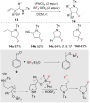
Scheme 7: 3-fluoropyrrolidine synthesis. aDiastereomeric ratio (cis/trans) determined by 19F NMR analysis.

Scheme 8: Kitamura’s synthesis of 3-fluoropyrrolidines. Values in parentheses represent the cis:trans ratio.
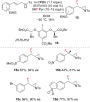
Scheme 9: Jacobsen’s enantio- and diastereoselective protocol for the synthesis of syn-β-fluoroaziridines 15.
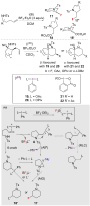
Scheme 10: Different HVI reagents lead to different diastereoselectivity in aminofluorination competing with c...
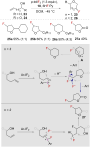
Scheme 11: Fluorocyclisation of unsaturated alcohols and carboxylic acids to make tetrahydrofurans, fluorometh...

Scheme 12: Oxyfluorination of unsaturated alcohols.
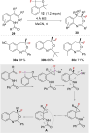
Scheme 13: Synthesis and mechanism of fluoro-benzoxazepines.
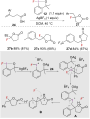
Scheme 14: Intramolecular fluorocyclisation of unsaturated carboxylic acids. Yield of isolated product within ...

Scheme 15: Synthesis of fluorinated tetrahydrofurans and butyrolactone.

Scheme 16: Synthesis of fluorinated oxazolines 32. aReaction time increased to 40 hours. Yields refer to isola...
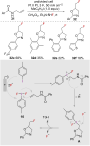
Scheme 17: Electrochemical synthesis of fluorinated oxazolines.

Scheme 18: Electrochemical synthesis of chromanes.

Scheme 19: Synthesis of fluorinated oxazepanes.
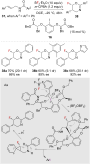
Scheme 20: Enantioselective oxy-fluorination with a chiral aryliodide catayst.
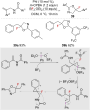
Scheme 21: Catalytic synthesis of 5‑fluoro-2-aryloxazolines using BF3·Et2O as a source of fluoride and an acti...

Scheme 22: Intramolecular carbofluorination of alkenes.

Scheme 23: Intramolecular chlorocyclisation of unsaturated amines.
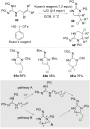
Scheme 24: Synthesis of chlorinated cyclic guanidines 44.
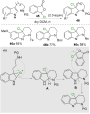
Scheme 25: Synthesis of chlorinated pyrido[2,3-b]indoles 46.

Scheme 26: Chlorolactonization and chloroetherification reactions.
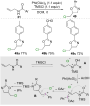
Scheme 27: Proposed mechanism for the synthesis of chloromethyl oxazolines 49.

Scheme 28: Oxychlorination to form oxazine and oxazoline heterocycles promoted by BCl3.

Scheme 29: Aminobromocyclisation of homoallylic sulfonamides 53. The cis:trans ratios based on the 1H NMR of t...
Scheme 30: Synthesis of cyclic imines 45.

Scheme 31: Synthesis of brominated pyrrolo[2,3-b]indoles 59.

Scheme 32: Bromoamidation of alkenes.

Scheme 33: Synthesis of brominated cyclic guanidines 61 and 61’.
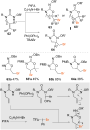
Scheme 34: Intramolecular bromocyclisation of N-oxyureas.
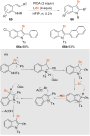
Scheme 35: The formation of 3-bromoindoles.

Scheme 36: Bromolactonisation of unsaturated acids 68.

Scheme 37: Synthesis of 5-bromomethyl-2-oxazolines.
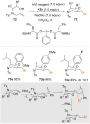
Scheme 38: Synthesis of brominated chiral morpholines.
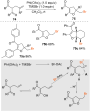
Scheme 39: Bromoenolcyclisation of unsaturated dicarbonyl groups.

Scheme 40: Brominated oxazines and oxazolines with BBr3.

Scheme 41: Synthesis of 5-bromomethtyl-2-phenylthiazoline.

Scheme 42: Intramolecular iodoamination of unsaturated amines.

Scheme 43: Formation of 3-iodoindoles.

Scheme 44: Iodoetherification of 2,2-diphenyl-4-penten-1-carboxylic acid (47’) and 2,2-diphenyl-4-penten-1-ol (...

Scheme 45: Synthesis of 5-iodomethyl-2-oxazolines.

Scheme 46: Synthesis of chiral iodinated morpholines. aFrom the ʟ-form of the amino acid starting material. Th...

Scheme 47: Iodoenolcyclisation of unsaturated dicarbonyl compounds 74.

Scheme 48: Synthesis of 5-iodomethtyl-2-phenylthiazoline (87).
Advances in radical peroxidation with hydroperoxides
- Oleg V. Bityukov,
- Pavel Yu. Serdyuchenko,
- Andrey S. Kirillov,
- Gennady I. Nikishin,
- Vera A. Vil’ and
- Alexander O. Terent’ev
Beilstein J. Org. Chem. 2024, 20, 2959–3006, doi:10.3762/bjoc.20.249
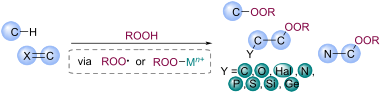
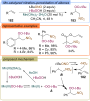
- . The oxidation of benzyl alcohol 62 with TBHP results in aldehyde C, HAT from which by tert-butoxy radical A leads to the C-centered radical D. Subsequent recombination of radicals D and B provides the target product 63. An enantioselective peroxidation method of alkylaromatics with TBHP using chiral
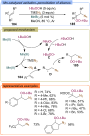
- ]. The set of tert-butoxy A and tert-butylperoxy B radicals are formed from TBHP during the Cu(I)/Cu(II) redox cycle. The Cu(II)/TBHP system also provides oxidation of benzyl alcohol 80 to the corresponding aldehyde C. The reaction of isocyanate 81 with aldehyde C generates oxazoline D, HAT from D by the

Graphical Abstract

Scheme 1: Organic peroxide initiators in polymer chemistry.

Scheme 2: Synthesis of organic peroxides.

Scheme 3: Richness of radical cascades with species formed from hydroperoxides in redox conditions.
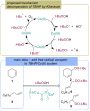
Scheme 4: Co-catalyzed allylic peroxidation of alkenes 1 and 3 by TBHP.

Scheme 5: Allylic peroxidation of alkenes 6 by Pd(II)TBHP.
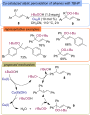
Scheme 6: Cu(I)-catalyzed allylic peroxidation.

Scheme 7: Enantioselective peroxidation of alkenes 10 with TBHP in the presence of copper(I) compounds.

Scheme 8: Oxidation of α-pinene (12) by the Cu(I)/TBHP system.

Scheme 9: Introduction of the tert-butylperoxy fragment into the α-position of cyclic ketones 15 and 17.
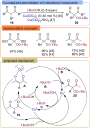
Scheme 10: α-Peroxidation of β-dicarbonyl compounds 19 using the Cu(II)/TBHP system.
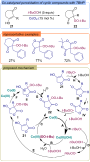
Scheme 11: Co-catalyzed peroxidation of cyclic compounds 21 with TBHP.

Scheme 12: Co-, Mn- and Fe-catalyzed peroxidation of 2-oxoindoles 23, barbituric acids 25, and 4-hydroxycoumar...

Scheme 13: Cu-catalyzed and metal-free peroxidation of barbituric acid derivatives 31 and 3,4-dihydro-1,4-benz...

Scheme 14: Electrochemical peroxidation of 1,3-dicarbonyl compounds 35.

Scheme 15: Peroxidation of β-dicarbonyl compounds, cyanoacetic esters and malonic esters 37 by the TBAI/TBHP s...
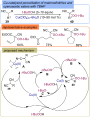
Scheme 16: Cu-catalyzed peroxidation of malonodinitriles and cyanoacetic esters 39 with TBHP.

Scheme 17: Mn-catalyzed remote peroxidation via trifluromethylation of double bond.

Scheme 18: Cu-catalyzed remote peroxidation via trifluromethylthiolation of double bond.

Scheme 19: Fe-, Mn-, and Ru-catalyzed peroxidation of alkylaromatics 45, 47, 49, and 51 with TBHP.

Scheme 20: Cu-catalyzed peroxidation of diphenylacetonitrile (53) with TBHP.
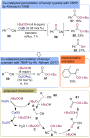
Scheme 21: Cu-catalyzed peroxidation of benzyl cyanides 60 with TBHP.
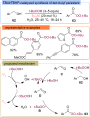
Scheme 22: Synthesis of tert-butylperoxy esters 63 from benzyl alcohols 62 using the TBAI/TBHP system.

Scheme 23: Enantioselective peroxidation of 2-phenylbutane (64) with TBHP and chiral Cu(I) complex.
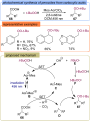
Scheme 24: Photochemical synthesis of peroxides 67 from carboxylic acids 66.
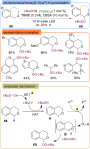
Scheme 25: Photochemical peroxidation of benzylic C(sp3)–H.

Scheme 26: Cu- and Ru-catalyzed peroxidation of alkylamines with TBHP.

Scheme 27: Peroxidation of amides 76 with the TBAI/TBHP system.
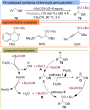
Scheme 28: Fe-catalyzed functionalization of ethers 78 with TBHP.

Scheme 29: Synthesis of 4-(tert-butylperoxy)-5-phenyloxazol-2(3H)-ones 82 from benzyl alcohols 80 and isocyana...

Scheme 30: Fe- and Co-catalyzed peroxidation of alkanes with TBHP.
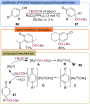
Scheme 31: Rh-catalyzed tert-butylperoxy dienone synthesis with TBHP.

Scheme 32: Rh- and Cu-catalyzed phenolic oxidation with TBHP.

Scheme 33: Metal-free peroxidation of phenols 94.

Scheme 34: Cu-catalyzed alkylation–peroxidation of acrylonitrile.

Scheme 35: Cu-catalyzed cycloalkylation–peroxidation of coumarins 99.

Scheme 36: Metal-free cycloalkylation–peroxidation of coumarins 102.

Scheme 37: Difunctionalization of indene 104 with tert-butylperoxy and alkyl groups.

Scheme 38: Acid-catalyzed radical addition of ketones (108, 111) and TBHP to alkenes 107 and acrylates 110.

Scheme 39: Cu-catalyzed alkylation–peroxidation of alkenes 113 with TBHP and diazo compounds 114.

Scheme 40: Cobalt(II)-catalyzed addition of TBHP and 1,3-dicarbonyl compound 116 to alkenes 117.

Scheme 41: Cu(0)- or Co(II)-catalyzed addition of TBHP and alcohols 120 to alkenes 119.

Scheme 42: Fe-catalyzed functionalization of allenes 122 with TBHP.

Scheme 43: Fe-catalyzed alkylation–peroxidation of alkenes 125 and 127.

Scheme 44: Fe- and Co-catalyzed alkylation–peroxidation of alkenes 130, 133 and 134 with TBHP and aldehydes as...
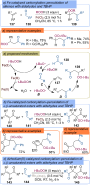
Scheme 45: Carbonylation–peroxidation of alkenes 137, 140, 143 with hydroperoxides and aldehydes.

Scheme 46: Carbamoylation–peroxidation of alkenes 146 with formamides and TBHP.

Scheme 47: TBAB-catalyzed carbonylation–peroxidation of alkenes.

Scheme 48: VOCl2-catalyzed carbonylation–peroxidation of alkenes 152.
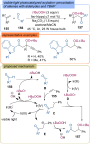
Scheme 49: Acylation–peroxidation of alkenes 155 with aldehydes 156 and TBHP using photocatalysis.
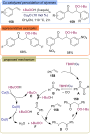
Scheme 50: Cu-catalyzed peroxidation of styrenes 158.

Scheme 51: Fe-catalyzed acylation-peroxidation of alkenes 161 with carbazates 160 and TBHP.

Scheme 52: Difunctionalization of alkenes 163, 166 with TBHP and (per)fluoroalkyl halides.

Scheme 53: Difunctionalization of alkenes 169 and 172 with hydroperoxides and sodium (per)fluoromethyl sulfina...
Scheme 54: Trifluoromethylation–peroxidation of styrenes 175 using MOF Cu3(BTC)2 as a catalyst.
Scheme 55: Difunctionalization of alkenes 178 with tert-butylperoxy and dihalomethyl fragments.

Scheme 56: Difunctionalization of alkenes 180 with the tert-butylperoxy and dihalomethyl moieties.
Scheme 57: The nitration–peroxidation of alkenes 182 with t-BuONO and TBHP.
Scheme 58: Azidation–peroxidation of alkenes 184 with TMSN3 and TBHP.

Scheme 59: Co-catalyzed bisperoxidation of butadiene 186.

Scheme 60: Bisperoxidation of styrene (189) and acrylonitrile (192) with TBHP by Minisci.

Scheme 61: Mn-catalyzed synthesis of bis(tert-butyl)peroxides 195 from styrenes 194.

Scheme 62: Bisperoxidation of arylidene-9H-fluorenes 196 and 3-arylidene-2-oxoindoles 198 with TBHP under Mn-c...

Scheme 63: Synthesis of bisperoxides from styrenes 200 and 203 using the Ru and Rh catalysis.
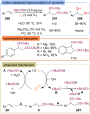
Scheme 64: Iodine-catalyzed bisperoxidation of styrenes 206.
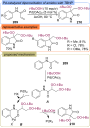
Scheme 65: Synthesis of di-tert-butylperoxyoxoindoles 210 from acrylic acid anilides 209 using a Pd(II)/TBHP o...

Scheme 66: Pinolation/peroxidation of styrenes 211 catalyzed by Cu(I).
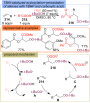
Scheme 67: TBAI-catalyzed acyloxylation–peroxidation of alkenes 214 with carboxylic acids and TBHP.

Scheme 68: Difunctionalization of alkenes 217 with TBHP and water or alcohols.

Scheme 69: TBAI-catalyzed hydroxyperoxidation of 1,3-dienes 220.

Scheme 70: Hydroxyperoxidation of 1,3-dienes 220.

Scheme 71: Iodination/peroxidation of alkenes 223 with I2 and hydroperoxides.

Scheme 72: The reactions of cyclic enol ethers 226 and 228 with I2/ROOH system.

Scheme 73: Synthesis of 1-(tert-butylperoxy)-2-iodoethanes 231.

Scheme 74: Synthesis of 1-iodo-2-(tert-butylperoxy)ethanes 233.
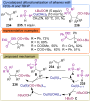
Scheme 75: Cu-catalyzed phosphorylation–peroxidation of alkenes 234.
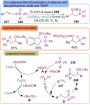
Scheme 76: Co-catalyzed phosphorylation–peroxidation of alkenes 237.
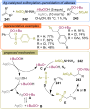
Scheme 77: Ag-catalyzed sulfonylation–peroxidation of alkenes 241.

Scheme 78: Co-catalyzed sulfonylation–peroxidation of alkenes 244.

Scheme 79: Synthesis of α/β-peroxysulfides 248 and 249 from styrenes 247.

Scheme 80: Cu-catalyzed trifluoromethylthiolation–peroxidation of alkenes 250 and allenes 252.

Scheme 81: Photocatalytic sulfonyl peroxidation of alkenes 254 via deamination of N-sulfonyl ketimines 255.

Scheme 82: Photoredox-catalyzed 1,4-peroxidation–sulfonylation of enynones 257.

Scheme 83: Cu-catalyzed silylperoxidation of α,β-unsaturated compounds 260 and enynes 261.

Scheme 84: Fe-catalyzed silyl peroxidation of alkenes.

Scheme 85: Cu-catalyzed germyl peroxidation of alkenes 267.
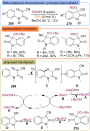
Scheme 86: TBAI-catalyzed intramolecular cyclization of diazo compounds 269 with further peroxidation.

Scheme 87: Co-catalyzed three-component coupling of benzamides 271, diazo compounds 272 and TBHP.

Scheme 88: Co-catalyzed esterification-peroxidation of diazo compounds 274 with TBHP and carboxylic acids 275.

Scheme 89: Cu-catalyzed alkylation–peroxidation of α-carbonylimines 277 or ketones 280.

Scheme 90: Mn-catalyzed ring-opening peroxidation of cyclobutanols 282 with TBHP.

Scheme 91: Peroxycyclization of tryptamines 284 with TBHP.

Scheme 92: Radical cyclization–peroxidation of homotryptamines 287.
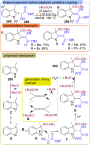
Scheme 93: Iodine-catalyzed oxidative coupling of indoles 288, cyanoacetic esters and TBHP.

Scheme 94: Summary of metal-catalyzed peroxidation processes.
Facile preparation of fluorine-containing 2,3-epoxypropanoates and their epoxy ring-opening reactions with various nucleophiles
- Yutaro Miyashita,
- Sae Someya,
- Tomoko Kawasaki-Takasuka,
- Tomohiro Agou and
- Takashi Yamazaki
Beilstein J. Org. Chem. 2024, 20, 2421–2433, doi:10.3762/bjoc.20.206
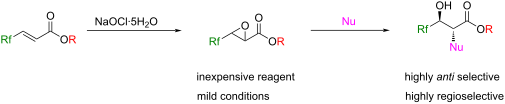
- detection of benzaldehyde which was considered to be formed by the NaClO-mediated oxidation of benzyl alcohol generated by hydrolysis. Changing the oxidizing reagent to crystalline NaClO·5H2O nicely solved the problem with the realization of 86% isolated yield of 2b by the utilization of this oxidant (2

Graphical Abstract

Scheme 1: Expectation of the regio- as well as stereoselective reactions of 2.

Scheme 2: Attempts of the present epoxidation to other α,β-unsaturated esters, 1h–j.
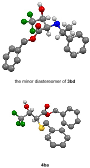
Figure 1: Crystallographic structure of the epoxy ring-opening products by PhCH(NH2)Me (3bd) and PhCH2SH (4ba...

Scheme 3: Introduction of additional halogen atoms at the 2-position of the compound 2b.
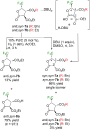
Scheme 4: Clarification of the stereochemistry of anti,syn-8a and -7b.

Figure 2: Crystallographic structure of anti,syn-8a.
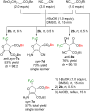
Scheme 5: Reaction of 2b with other stabilized nucleophiles.

Scheme 6: Production of 4,4,4-trifluoro-2,3-dihydroxybutanoate anti-10a.
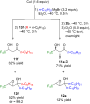
Scheme 7: Reactions of n-C10H21MgBr-based cuprate with 13f as well as 2b with/without D2O quenching.
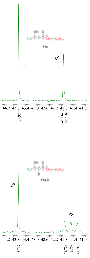
Figure 3: A part of 13C NMR spectra for the compounds 11a and 11a-D.
Efficient one-step synthesis of diarylacetic acids by electrochemical direct carboxylation of diarylmethanol compounds in DMSO
- Hisanori Senboku and
- Mizuki Hayama
Beilstein J. Org. Chem. 2024, 20, 2392–2400, doi:10.3762/bjoc.20.203
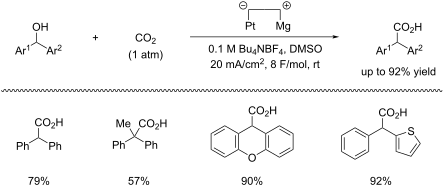
- dioxide; Introduction Electrochemical reduction of benzyl alcohol derivatives can induce reductive cleavage of a C(sp3)–O bond [1] at the benzylic position to generate the corresponding benzylic anion species. This protocol has been frequently applied to electrochemical carboxylation [2][3][4][5][6][7][8

Graphical Abstract

Scheme 1: Synthesis of diarylacetic acids 2 from diarylmethanol compounds 1 and carbon dioxide.

Scheme 2: Attempted electrochemical carboxylation of halogen-containing diphenylmethanol compounds 1b and 1c.

Scheme 3: Synthesis of diarylacetic acids 2 by electrochemical carboxylation of diarylmethanol species 1.

Scheme 4: Attempted electrochemical carboxylation of 1m and 1n.

Scheme 5: Electrolysis of 1a under a nitrogen atmosphere.

Scheme 6: Plausible reaction pathways.
Challenge N- versus O-six-membered annulation: FeCl3-catalyzed synthesis of heterocyclic N,O-aminals
- Giacomo Mari,
- Lucia De Crescentini,
- Gianfranco Favi,
- Fabio Mantellini,
- Diego Olivieri and
- Stefania Santeusanio
Beilstein J. Org. Chem. 2024, 20, 1412–1420, doi:10.3762/bjoc.20.123
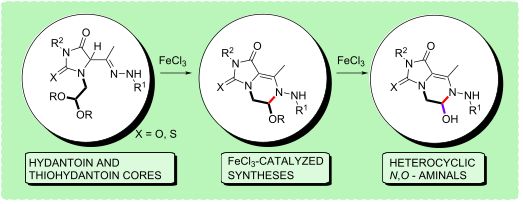
- more encumbered alcohol, such as benzyl alcohol, which is not sequestered by MS 4 Å. As a matter of fact, the new benzylated N,O-aminal 7 was successfully obtained in 70% isolated yield as the sole product (experiment D, Scheme 5). In this latter case, the benzyl alcohol presumably reacts with the

Graphical Abstract

Figure 1: Representative examples of relevant N-fused heterocycles.

Scheme 1: Different acid-catalyzed six-membered ring cyclizations.
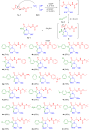
Scheme 2: Substrate scope for the assembly of suitably N-3-functionalized (thio)hydantoins 4a–r. aDCM was uti...

Scheme 3: Substrate scope of the iron(III)-catalyzed synthesis of functionalized heterocyclic N,O-aminals 5a–r...

Scheme 4: Proposed mechanism for the formation of N,O-aminals 5 and hemiaminals 6.

Scheme 5: Control mechanistic experiments.
Manganese-catalyzed C–C and C–N bond formation with alcohols via borrowing hydrogen or hydrogen auto-transfer
- Mohd Farhan Ansari,
- Atul Kumar Maurya,
- Abhishek Kumar and
- Saravanakumar Elangovan
Beilstein J. Org. Chem. 2024, 20, 1111–1166, doi:10.3762/bjoc.20.98
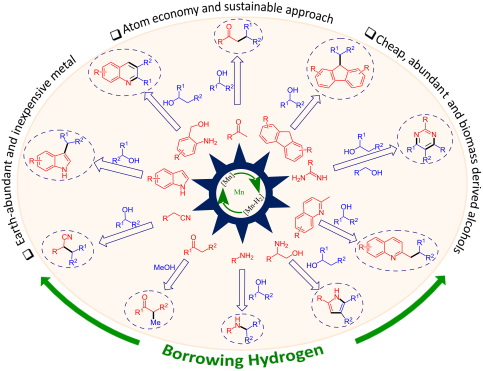
- alcohols [39]. Various ligands were screened for the N-alkylation of m-toluidine with benzyl alcohol using Mn(CO)5Br (5 mol %) and t-BuOK (1 equiv) in toluene at 140 °C (Scheme 9). Among these, L1 and L2 showed better activity for the N-alkylation reactions. Different substituted anilines and alcohols
- loading (0.5 mol %) and mild reaction conditions (60–100 °C) were employed for this transformation. Aromatic amines gave good yields with benzyl alcohol at 60 °C, but 1,1-phenylethylamine, linear aliphatic amine and benzylamine required 100 °C to achieve the good yields (Scheme 12). Similarly, the N
- ]. Symmetrical, unsymmetrical, and cyclic azoarenes were studied with benzyl alcohol using catalyst Mn9 (5 mol %) and t-BuOK (2 equiv) at 130 °C for 24 h in octane, resulting in the corresponding N-alkylated amines with up to 96% yield (Scheme 19). On the other hand, various aromatic and aliphatic primary and

Graphical Abstract

Scheme 1: General scheme of the borrowing hydrogen (BH) or hydrogen auto-transfer (HA) methodology.

Scheme 2: General scheme for C–N bond formation. A) Traditional cross-couplings with alkyl or aryl halides. B...

Figure 1: Manganese pre-catalysts used for the N-alkylation of amines with alcohols.

Scheme 3: Manganese(I)-pincer complex Mn1 used for the N-alkylation of amines with alcohols and methanol.

Scheme 4: N-Methylation of amines with methanol using Mn2.

Scheme 5: C–N-Bond formation with amines and methanol using PN3P-Mn complex Mn3 reported by Sortais et al. [36]. a...

Scheme 6: Base-assisted synthesis of amines and imines with Mn4. Reaction assisted by A) t-BuOK and B) t-BuON...

Scheme 7: Coupling of alcohols and hydrazine via the HB approach reported by Milstein et al. [38]. aReaction time...

Scheme 8: Proposed mechanism for the coupling of alcohols and hydrazine catalyzed by Mn5.

Scheme 9: Phosphine-free manganese catalyst for N-alkylation of amines with alcohols reported by Balaraman an...

Scheme 10: N-Alkylation of sulfonamides with alcohols.

Scheme 11: Mn–NHC catalyst Mn6 applied for the N-alkylation of amines with alcohols. a3 mol % of Mn6 were used....

Scheme 12: N-Alkylation of amines with primary and secondary alcohols. a80 °C, b100 °C.

Scheme 13: Manganese(III)-porphyrin catalyst for synthesis of tertiary amines.

Scheme 14: Proposed mechanism for the alcohol dehydrogenation with Mn(III)-porphyrin complex Mn7.

Scheme 15: N-Methylation of nitroarenes with methanol using catalyst Mn3.
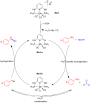
Scheme 16: Mechanism of manganese-catalyzed methylation of nitroarenes using Mn3 as the catalyst.

Scheme 17: Bidentate manganese complex Mn8 applied for the N-alkylation of primary anilines with alcohols. aOn...

Scheme 18: N-Alkylation of amines with alcohols in the presence of manganese salts and triphenylphosphine as t...

Scheme 19: N-Alkylation of diazo compounds with alcohols using catalyst Mn9.

Scheme 20: Proposed mechanism for the amination of alcohols with diazo compounds catalyzed by catalyst Mn9.

Scheme 21: Mn1 complex-catalyzed synthesis of polyethyleneimine from ethylene glycol and ethylenediamine.

Scheme 22: Bis-triazolylidene-manganese complex Mn10 for the N-alkylation of amines with alcohols.

Figure 2: Manganese complexes applied for C-alkylation reactions of ketones with alcohols.

Scheme 23: General scheme for the C–C bond formation with alcohols and ketones.

Scheme 24: Mn1 complex-catalyzed α-alkylation of ketones with primary alcohols.
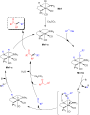
Scheme 25: Mechanism for the Mn1-catalyzed alkylation of ketones with alcohols.

Scheme 26: Phosphine-free in situ-generated manganese catalyst for the α-alkylation of ketones with primary al...
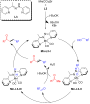
Scheme 27: Plausible mechanism for the Mn-catalyzed α-alkylation of ketones with alcohols.

Scheme 28: α-Alkylation of esters, ketones, and amides using alcohols catalyzed by Mn11.

Scheme 29: Mono- and dialkylation of methylene ketones with primary alcohols using the Mn(acac)2/1,10-phenanth...

Scheme 30: Methylation of ketones with methanol and deuterated methanol.

Scheme 31: Methylation of ketones and esters with methanol. a50 mol % of t-BuOK were used, bCD3OD was used ins...
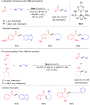
Scheme 32: Alkylation of ketones and secondary alcohols with primary alcohols using Mn4.

Scheme 33: Bidentate manganese-NHC complex Mn6 applied for the synthesis of alkylated ketones using alcohols.

Scheme 34: Mn1-catalyzed synthesis of substituted cycloalkanes by coupling diols and secondary alcohols or ket...
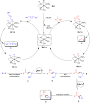
Scheme 35: Proposed mechanism for the synthesis of cycloalkanes via BH method.

Scheme 36: Synthesis of various cycloalkanes from methyl ketones and diols catalyze by Mn13. aReaction time wa...

Scheme 37: N,N-Amine–manganese complex (Mn13)-catalyzed alkylation of ketones with alcohols.

Scheme 38: Naphthyridine‑N‑oxide manganese complex Mn14 applied for the alkylation of ketones with alcohols. a...
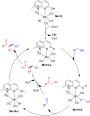
Scheme 39: Proposed mechanism of the naphthyridine‑N‑oxide manganese complex (Mn14)-catalyzed alkylation of ke...

Scheme 40: α-Methylation of ketones and indoles with methanol using Mn15.

Scheme 41: α-Alkylation of ketones with primary alcohols using Mn16. aNMR yield.

Figure 3: Manganese complexes used for coupling of secondary and primary alcohols.
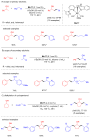
Scheme 42: Alkylation of secondary alcohols with primary alcohols catalyzed by phosphine-free catalyst Mn17. a...

Scheme 43: PNN-Manganese complex Mn18 for the alkylation of secondary alcohols with primary alcohols.
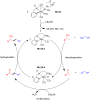
Scheme 44: Mechanism for the Mn-pincer catalyzed C-alkylation of secondary alcohols with primary alcohols.

Scheme 45: Upgrading of ethanol with methanol for isobutanol production.

Scheme 46: Mn-Pincer catalyst Mn19 applied for the β-methylation of alcohols with methanol. a2.0 mol % of Mn19...

Scheme 47: Functionalized ketones from primary and secondary alcohols catalyzed by Mn20. aMn20 (5 mol %), NaOH...
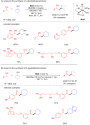
Scheme 48: Synthesis of γ-disubstituted alcohols and β-disubstituted ketones through Mn9-catalyzed coupling of...
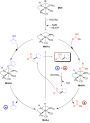
Scheme 49: Proposed mechanism for the Mn9-catalyzed synthesis of γ-disubstituted alcohols and β-disubstituted ...

Scheme 50: Dehydrogenative coupling of ethylene glycol and primary alcohols catalyzed by Mn4.

Scheme 51: Mn18-cataylzed C-alkylation of unactivated esters and amides with alcohols.

Scheme 52: Alkylation of amides and esters using Mn21.

Scheme 53: α-Alkylation of nitriles with primary alcohols using in situ-generated manganese catalyst.

Scheme 54: Proposed mechanism for the α-alkylation of nitriles with primary alcohols.

Scheme 55: Mn9-catalyzed α-alkylation of nitriles with primary alcohols. a1,4-Dioxane was used as solvent, 24 ...

Figure 4: Manganese complexes used for alkylation of heterocyclic compounds.

Scheme 56: Aminomethylation of aromatic compounds with secondary amines and methanol catalyzed by Mn22.
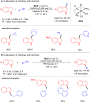
Scheme 57: Regioselective alkylation of indolines with alcohols catalyzed by Mn9. aMn9 (4 mol %), 48 h.

Scheme 58: Proposed mechanism for the C- and N-alkylation of indolines with alcohols.

Scheme 59: C-Alkylation of methyl N-heteroarenes with primary alcohols catalyzed by Mn1. aTime was 60 h.

Scheme 60: C-Alkylation of oxindoles with secondary alcohols.
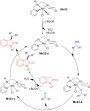
Scheme 61: Plausible mechanism for the Mn23-catalyzed C-alkylation of oxindoles with secondary alcohols.

Scheme 62: Synthesis of C-3-alkylated products by coupling alcohols with indoles and aminoalcohols.

Scheme 63: C3-Alkylation of indoles using Mn1.

Scheme 64: C-Methylation of indoles with Mn15 and methanol.

Scheme 65: α-Alkylation of 2-oxindoles with primary and secondary alcohols catalyzed by Mn25. aReaction carrie...

Scheme 66: Dehydrogenative alkylation of indolines with Mn1. aMn1 (5.0 mol %) was used.

Scheme 67: Synthesis of bis(indolyl)methane derivatives from indoles and alcohols catalyzed by Mn26. aMn26 (5....

Scheme 68: One-pot synthesis of pyrimidines via BH.

Scheme 69: Synthesis of pyrroles from alcohols and aminoalcohols using Mn4.

Scheme 70: Synthesis of pyrroles via multicomponent reaction catalyzed by Mn12.

Scheme 71: Friedländer quinoline synthesis using an in situ-generated phosphine-free manganese catalyst.

Scheme 72: Quinoline synthesis using bis-N-heterocyclic carbene-manganese catalyst Mn6.

Scheme 73: Quinoline synthesis using manganese(III)-porphyrin catalyst Mn7.

Scheme 74: Manganese-catalyzed tetrahydroquinoline synthesis via borrowing BH.

Scheme 75: Proposed mechanism for the manganese-catalyzed tetrahydroquinoline synthesis.

Scheme 76: Synthesis of C3-alkylated indoles using Mn24.

Scheme 77: Synthesis of C-3-alkylated indoles using Mn1.

Scheme 78: C–C Bond formation by coupling of alcohols and ylides.

Scheme 79: C-Alkylation of fluorene with alcohols catalyzed by Mn24.
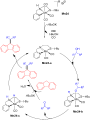
Scheme 80: Proposed mechanism for the C-alkylation of fluorene with alcohols catalyzed by Mn24.

Scheme 81: α-Alkylation of sulfones using Mn-PNN catalyst Mn28.
Synthesis of 1,4-azaphosphinine nucleosides and evaluation as inhibitors of human cytidine deaminase and APOBEC3A
- Maksim V. Kvach,
- Stefan Harjes,
- Harikrishnan M. Kurup,
- Geoffrey B. Jameson,
- Elena Harjes and
- Vyacheslav V. Filichev
Beilstein J. Org. Chem. 2024, 20, 1088–1098, doi:10.3762/bjoc.20.96
- phosphinic acid 7 was further protected with benzyl alcohol by a procedure adopted from reference [67] using TBTU and Et3N in refluxing dichloroethane. Compound 8 was obtained in 65% yield after silica gel column chromatography. To synthesise a nucleobase for nucleosides Va and Vb, we first obtained
- dichlorophosphane 9 from commercially available PCl3 and ethyl vinyl ether using a previously published procedure [68]. Compound 9 reacted with 1 equiv of benzyl alcohol in absolute Et2O and pyridine at −78 °C, followed by quenching of the reaction mixture with H2O. This procedure provided phosphinate 10 in more

Graphical Abstract

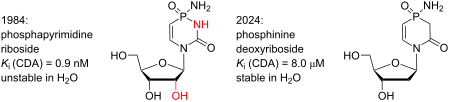
Figure 1: A) Deamination of cytosine, dC and C as individual nucleosides or as part of a polynucleotide chain...

Scheme 1: i) Boc2O, DMAP, THF, rt, overnight; ii) aq 5 M NaOH, rt, 3 h, 89% yield over two steps; iii) 3, azo...

Scheme 2: i) NaN3, n-Bu4NHSO4, NaHCO3/CHCl3 (1:1), rt, 20 min, 88% yield; ii) a) H2, Pd/C, CH2Cl2, rt, 3 h; b...

Scheme 3: i) H2, 5% Pd/CaCO3/3% Pb, Et3N, CH2Cl2, rt, 1.5 h, 34% and 21% yield for α- and β-anomer of 18, res...

Figure 2: V0 of A3A mimic-catalysed deamination of 5'-dTTTTCAT in the absence (no inhibitor) and presence of ...
Substrate specificity of a ketosynthase domain involved in bacillaene biosynthesis
- Zhiyong Yin and
- Jeroen S. Dickschat
Beilstein J. Org. Chem. 2024, 20, 734–740, doi:10.3762/bjoc.20.67
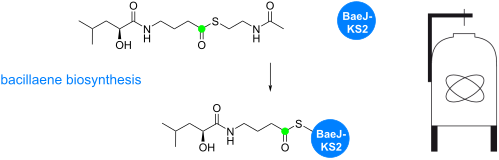
- benzyl alcohol to obtain the unlabelled ester 5 with a quantitative yield over two steps. After having established this method, (5-13C)glutamic acid (3) was converted analogously into (1-13C)-5, unfortunately with a little lower, but still very good yield of 83%. By employing Yamaguchi conditions, the

Graphical Abstract

Scheme 1: Biosynthetic model for bacillaene (1). M1–M17 indicate modules 1–17. A = adenylation domain, ACP = ...

Scheme 2: Synthesis of the BaeJ-KS2 substrate surrogates (S)-11 and (R)-11. Green dots represent 13C-labelled...

Figure 1: 13C NMR spectra of (R)-11 incubated with BaeJ-KS2 and BaeJ-KS2-C222A. A) Free 11 dissolved in incub...
Entry to new spiroheterocycles via tandem Rh(II)-catalyzed O–H insertion/base-promoted cyclization involving diazoarylidene succinimides
- Alexander Yanovich,
- Anastasia Vepreva,
- Ksenia Malkova,
- Grigory Kantin and
- Dmitry Dar’in
Beilstein J. Org. Chem. 2024, 20, 561–569, doi:10.3762/bjoc.20.48
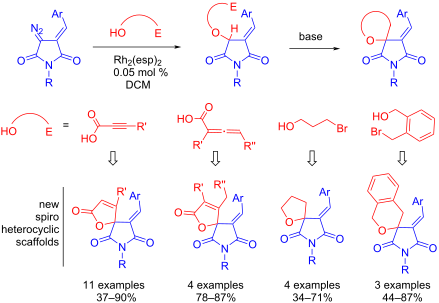
- of compound 4b has been confirmed by single crystal X-ray data. The next step was to investigate the possibility of obtaining six-membered oxygen-containing spiroheterocycles by interaction of DAS 1 with 2-(bromomethyl)benzyl alcohol (15) (Scheme 6). The synthesis was carried out under the conditions
- summarized in Scheme 8). The first pathway is realized in the formation of five-membered (in the case of 3-bromopropanol) and six-membered (in the case of 2-(bromomethyl)benzyl alcohol) cycles – the cyclization of the anion is faster than its reverse protonation. The same applies to substrates with activated
- -(bromomethyl)benzyl alcohol. Examples where a target spirocyclic product was not observed. Plausible mechanism of the transformations studied. Supporting Information Deposition numbers CCDC 2295111 (for 2a), 2308315 (for 3b), and 2305370 (for 4b) contain the supplementary crystallographic data for this paper

Graphical Abstract

Scheme 1: DAS spirocyclizations reported earlier and the synthetic methodology investigated in this work.

Figure 1: Examples of biologically active compounds and natural products based on THF/THP spiro-conjugates wi...

Scheme 2: An initial example on Rh(II)-catalyzed O–H insertion/base-promoted cyclization involving diazo comp...

Scheme 3: Tandem Rh2(esp)2-catalyzed O–H insertion/base-promoted cyclization involving DAS 1 and various prop...

Scheme 4: Tandem Rh2(esp)2-catalyzed O–H insertion/base-promoted cyclization involving DAS 1 and allenic acid...

Scheme 5: Tandem Rh2(esp)2-catalyzed O–H insertion/base-promoted cyclization involving various DAS 1 and 3-br...

Scheme 6: Tandem Rh2(esp)2-catalyzed O–H insertion/base-promoted cyclization involving DAS 1 and 2-(bromometh...

Scheme 7: Examples where a target spirocyclic product was not observed.

Scheme 8: Plausible mechanism of the transformations studied.
Non-noble metal-catalyzed cross-dehydrogenation coupling (CDC) involving ether α-C(sp3)–H to construct C–C bonds
- Hui Yu and
- Feng Xu
Beilstein J. Org. Chem. 2023, 19, 1259–1288, doi:10.3762/bjoc.19.94
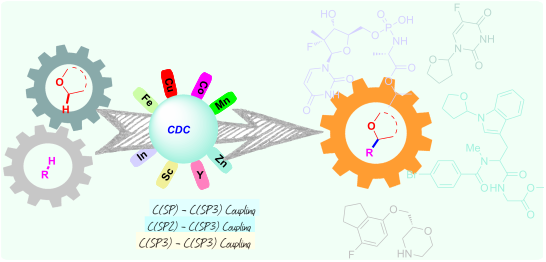
- oxidative alkylation of cyclic benzyl ethers with malonates or ketones. Oxygen is used as a terminal oxidant at atmospheric pressure. The key intermediate of this oxidative coupling reaction is benzyl alcohol intermediate C (Scheme 4) [52]. The generation of N–O radicals from NHPI in the presence of oxygen

Graphical Abstract
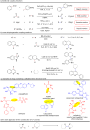
Scheme 1: Research progress of coupling reactions and active compounds containing α-C(sp3)-functionalized eth...

Scheme 2: Transition-metal-catalyzed CDC pathways.

Scheme 3: CDC of active methylene compounds in the α-C(sp3) position of ethers.

Scheme 4: InCl3/Cu(OTf)2/NHPI co-catalyzed CDC reaction.

Scheme 5: CDC of cyclic benzyl ethers with aldehydes.
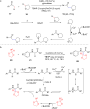
Scheme 6: Cu-catalyzed CDC of (a) unactivated C(sp3)–H ethers with simple ketones and (b) double C(sp3)−H fun...
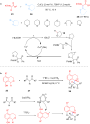
Scheme 7: Cu-catalyzed CDC of C(sp3)–H/C(sp3)–H bonds.

Scheme 8: Cu-catalyzed synthesis of chiral 2-substituted tetrahydropyrans.

Scheme 9: CDC of thiazole with cyclic ethers.

Scheme 10: Cu(I)-catalyzed oxidative alkenylation of simple ethers.

Scheme 11: Cross-dehydrogenation coupling of isochroman C(sp3)–H bonds with anisole C(sp2)–H bonds.

Scheme 12: Pd(OAc)2/Cu(OTf)2-catalyzed arylation of α-C(sp3)–H bonds of ethers.
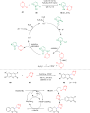
Scheme 13: Cu-catalyzed C(sp3)–H/C(sp2)–H activation strategies to construct C(sp3)–C(sp2) bonds.

Scheme 14: Cu(I)-catalyzed C(sp2)–H alkylation.
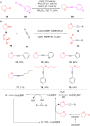
Scheme 15: Cu-catalyzed C(sp3)–H/C(sp)–H activation to construct C(sp3)–C(sp) bonds (H2BIP: 2,6-bis(benzimidaz...

Scheme 16: Fe-catalyzed CDC reaction pathways.

Scheme 17: Fe2(CO)9-catalyzed functionalization of C–H bonds.

Scheme 18: Ligand-promoted Fe-catalyzed CDC reaction of N-methylaniline with ethers.

Scheme 19: Fe-catalyzed CDC of C(sp3)–H/C(sp3)–H bonds.

Scheme 20: Fe-catalyzed hydroalkylation of α,β-unsaturated ketones with ethers.

Scheme 21: Solvent-free Fe(NO3)3-catalyzed CDC of C(sp3)–H/C(sp2)–H bonds.

Scheme 22: Alkylation of disulfide compounds to afford tetrasubstituted alkenes.

Scheme 23: Fe-catalyzed formation of 1,1-bis-indolylmethane derivatives.

Scheme 24: Alkylation of coumarins and flavonoids.

Scheme 25: Direct CDC α-arylation of azoles with ethers.

Scheme 26: CDC of terminal alkynes with C(sp3)–H bonds adjacent to oxygen, sulfur or nitrogen atoms.

Scheme 27: Alkylation of terminal alkynes.

Scheme 28: Co-catalyzed functionalization of glycine esters.
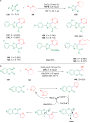
Scheme 29: Co-catalyzed construction of C(sp2)–C(sp3) bonds.

Scheme 30: Co-catalyzed CDC of imidazo[1,2-a]pyridines with isochroman.

Scheme 31: Co-catalyzed C–H alkylation of (benz)oxazoles with ethers.

Scheme 32: Cobalt-catalyzed CDC between unactivated C(sp2)–H and C(sp3)–H bonds.

Scheme 33: MnO2-catalyzed CDC of the inactive C(sp3)-H.

Scheme 34: Oxidative cross-coupling of ethers with enamides.

Scheme 35: Ni(II)-catalyzed CDC of indoles with 1,4-dioxane.

Scheme 36: Chemo- and regioselective ortho- or para-alkylation of pyridines.

Scheme 37: Asymmetric CDC of 3,6-dihydro-2H-pyrans with aldehydes.

Scheme 38: CDC of heterocyclic aromatics with ethers.

Scheme 39: Indium-catalyzed alkylation of DHPs with 1,3-dicarbonyl compounds.

Scheme 40: Rare earth-metal-catalyzed CDC reaction.

Scheme 41: Visible-light-driven CDC of cycloalkanes with benzazoles.

Scheme 42: Photoinduced alkylation of quinoline with cyclic ethers.

Scheme 43: Photocatalyzed CDC reactions between α-C(sp3)–H bonds of ethers and C(sp2)–H bonds of aromatics.
Honeycomb reactor: a promising device for streamlining aerobic oxidation under continuous-flow conditions
- Masahiro Hosoya,
- Yusuke Saito and
- Yousuke Horiuchi
Beilstein J. Org. Chem. 2023, 19, 752–763, doi:10.3762/bjoc.19.55
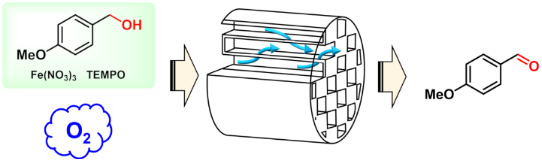
- using the standard tube reactor and the honeycomb reactor (Scheme 4 and Table 5). With benzyl alcohol and benzyl alcohols bearing various substituents such as OMe, Me, Br, CF3 and COOMe at the 4-position and OMe at the 2- or 3-position, the reaction was uniformly accelerated using the honeycomb reactor

Graphical Abstract

Figure 1: Honeycomb reactor. (a) Photograph. (b) Schematic diagram.

Scheme 1: Proposed catalytic cycle for aerobic oxidation using Fe(NO3)3/TEMPO.

Figure 2: Time course of the heat of reaction for aerobic oxidation.

Scheme 2: Flow setup for aerobic oxidation using various flow reactors.

Figure 3: Photographs of the various reactors. (a) Standard tube reactor. (b) Tube reactor with a static mixe...

Scheme 3: Flow setup for high-throughput aerobic oxidation using the honeycomb reactor.

Scheme 4: Flow setup for substrate scope and additional screening.
Nucleophile-induced ring contraction in pyrrolo[2,1-c][1,4]benzothiazines: access to pyrrolo[2,1-b][1,3]benzothiazoles
- Ekaterina A. Lystsova,
- Maksim V. Dmitriev,
- Andrey N. Maslivets and
- Ekaterina E. Khramtsova
Beilstein J. Org. Chem. 2023, 19, 646–657, doi:10.3762/bjoc.19.46
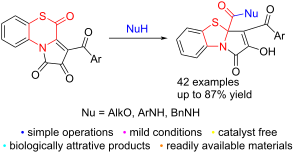
- , benzylamine, and arylamines 11, while alkylamines are unsuitable for it. Notable, the use of bulky nucleophiles (tert-butyl alcohol (16a), benzyl alcohol (16b), benzhydrol (16c), 2-aminobenzothiazole (16d), HCl) makes it possible to obtain pyrrolobenzothiazoles 17 from compounds 1, but their formation

Graphical Abstract

Figure 1: Biologically active PBTAs.
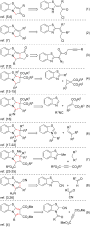
Scheme 1: Approaches to PBTAs via annulation of benzothiazoles.

Scheme 2: Approaches to PBTAs via annulation of o-aminothiophenols.

Scheme 3: Approach to PBTAs via radical substitution reaction in 1-(2-bromophenyl)-5-(butylsulfanyl)pyrrolidi...

Scheme 4: Approach to PBTAs via intramolecular cyclizations of 1-(2-thiophenyl)pyrroles.

Scheme 5: A new approach to PBTAs via nucleophile-induced ring contraction in pyrrolo[2,1-c][1,4]benzothiazin...

Figure 2: Electrophilic centers in FPDs.

Scheme 6: Reaction of APBTT 1a with methanol (2a).

Scheme 7: Derivatization of PBTA 3aa.

Scheme 8: Reaction of APBTTs 1a–h with alcohols 2a–c. Isolated yields are given; reaction scale: a mixture of ...

Scheme 9: Side-reaction of APBTTs 1 with alcohols 2.

Scheme 10: Transformations of compounds 5 in solutions.

Scheme 11: Reaction of APBTT 1a with benzylamine.

Scheme 12: Derivatization of PBTA 7a.

Scheme 13: Reaction of APBTTs 1a–h and benzylamine. Isolated yields are given; reaction scale: a mixture of 1 ...

Scheme 14: Reaction of APBTT 1a with an excess of benzylamine.

Scheme 15: Reaction of APBTT 1a with morpholine.

Scheme 16: Reaction of APBTT 1a with aniline (11a).

Scheme 17: Derivatization of PBTA 12aa.

Scheme 18: Reaction of APBTTs 1a–h and arylamines 11a–d. Isolated yields are given; reaction scale: a mixture ...

Scheme 19: Side-reaction of APBTT 1a with arylamine 11b.

Scheme 20: Reaction of APBTT 1a with compounds 16a–d.

Scheme 21: Formation of compounds 17 as an undesired process during the synthesis of APBTTs 1.
Mechanochemical solid state synthesis of copper(I)/NHC complexes with K3PO4
- Ina Remy-Speckmann,
- Birte M. Zimmermann,
- Mahadeb Gorai,
- Martin Lerch and
- Johannes F. Teichert
Beilstein J. Org. Chem. 2023, 19, 440–447, doi:10.3762/bjoc.19.34
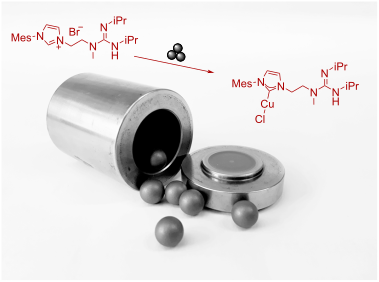
- benzoate (8) lower overall conversion to benzyl alcohol (9) and lower yield was found with 5bm (65% conv. and 53% yield with 5bm, in comparison to 100% conv. and 80% yield with 5ls; Scheme 3a). We hypothesize that the higher amount of CH2Cl2 as part of the prepared complex, which is not a suitable solvent

Graphical Abstract

Scheme 1: General synthetic routes to copper(I)/NHC complexes (X = Cl, Br).

Scheme 2: Preparation of sophisticated Cu(I)/NHC complexes: Synthesis of bifunctional catalyst 5 via transmet...

Scheme 3: Application of bifunctional catalyst 5 in copper(I)-catalyzed hydrogenations: comparison of 5 prepa...
Combretastatins D series and analogues: from isolation, synthetic challenges and biological activities
- Jorge de Lima Neto and
- Paulo Henrique Menezes
Beilstein J. Org. Chem. 2023, 19, 399–427, doi:10.3762/bjoc.19.31
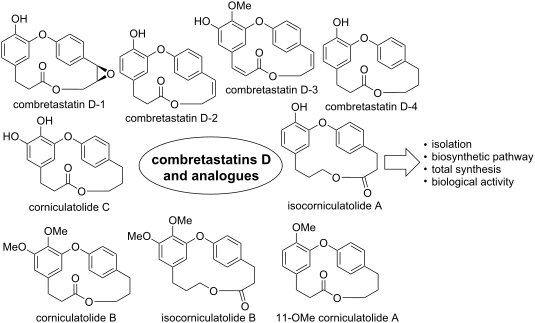
- (129) followed by the reduction [61] of the aldehyde gave the corresponding benzyl alcohol 131 in 76% yield. Deacetylation in the presence of hydrazine [62] followed by intramolecular thioetherification led to the macrocycle 133. Finally, the oxidation of the obtained thioether to the corresponding
- to both, cleavage of the Piv group and reduction of the aldehyde yielding the diol 147. Selective oxidation [67] of the benzyl alcohol with MnO2 gave the compound 148, which was esterified with S-acetylthioacetic acid (129) and reduced to the benzyl alcohol 150. Deacetylation followed by

Graphical Abstract

Figure 1: Structures of some members of the combretastatin D series, corniculatolides, and isocorniculatolide...

Scheme 1: Biosynthetic pathway proposed by Pettit and co-workers.
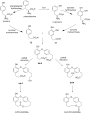
Scheme 2: Biosynthetic pathway towards corniculatolides or isocorniculatolides proposed by Ponnapalli and co-...

Scheme 3: Retrosynthetic approaches.

Scheme 4: Attempt of total synthesis of 2 by Boger and co-workers employing the Mitsunobu approach [27].

Scheme 5: Total synthesis of combretastatin D-2 (2) reported by Boger and co-workers employing an intramolecu...

Scheme 6: Formal synthesis of combretastatin D-2 (2) by Deshpande and co-workers using the Mitsunobu conditio...

Scheme 7: Total synthesis of combretastatin D-2 (2) by Rychnovsky and Hwang [36].

Scheme 8: Divergent synthesis of (±)-1 form combretastatin D-2 (2) by Rychnovsky and Hwang [36].

Scheme 9: Enantioselective synthesis of 1 by Rychnovsky and Hwang employing Jacobsen catalyst [41].

Scheme 10: Synthesis of fragment 57 by Couladouros and co-workers [43,45].

Scheme 11: Formal synthesis of compound 2 by Couladouros and co-workers [43,45].

Scheme 12: Synthesis of fragment 66 by Couladouros and co-workers [44,45].

Scheme 13: Synthesis of fragment 70 by Couladouros and co-workers [44,45].

Scheme 14: Synthesis of fragment 77 by Couladouros and co-workers [44,45].

Scheme 15: Synthesis of combretastatins 1 and 2 by Couladouros and co-workers [44,45].

Scheme 16: Formal synthesis of compound 2 by Gangakhedkar and co-workers [48].

Scheme 17: Synthesis of fragment 14 by Cousin and co-workers [50].

Scheme 18: Synthesis of fragment 91 by Cousin and co-workers [50].

Scheme 19: Formal synthesis of compound 2 by Cousin and co-workers [50].

Scheme 20: Synthesis of 2 diolide by Cousin and co-workers [50].

Scheme 21: Synthesis of combretastatin D-4 (4) by Nishiyama and co-workers [54].

Scheme 22: Synthesis of fragment 112 by Pettit and co-workers [55].

Scheme 23: Synthesis of fragment 114 by Pettit and co-workers [55].

Scheme 24: Attempt to the synthesis of compound 2 by Pettit and co-workers [55].

Scheme 25: Synthesis of combretastatin-D2 (2) starting from isovanilin (80) by Pettit and co-workers [55].

Scheme 26: Attempted synthesis of combretastatin-D2 (2) derivatives through an SNAr approach [55].

Scheme 27: Synthesis of combretastatin D-4 (4) by Pettit and co-workers [55].

Scheme 28: Synthesis of combretastatin D-2 (2) by Harras and co-workers [57].

Scheme 29: Synthesis of combretastatin D-4 (4) by Harras and co-workers [57].

Scheme 30: Formal synthesis of combretastatin D-1 (1) by Harras and co-workers [57].

Scheme 31: Synthesis of 11-O-methylcorniculatolide A (5) by Raut and co-workers [69].

Scheme 32: Synthesis of isocorniculatolide A (7) and O-methylated isocorniculatolide A 8 by Raut and co-worker...

Scheme 33: Synthesis of isocorniculatolide B (10) and hydroxyisocorniculatolide B 175 by Kim and co-workers [71].

Scheme 34: Synthesis of compound 9, 178, and 11 by Kim and co-workers [71].

Scheme 35: Synthesis of combretastatin D-2 prodrug salts [55].

Figure 2: ED50 values of the combretastatin D family against murine P388 lymphocytic leukemia cell line (appr...

Figure 3: IC50 of compounds against α-glucosidase [19].
Inline purification in continuous flow synthesis – opportunities and challenges
- Jorge García-Lacuna and
- Marcus Baumann
Beilstein J. Org. Chem. 2022, 18, 1720–1740, doi:10.3762/bjoc.18.182
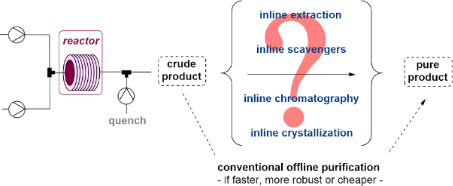
- group where an immobilized lipase (e.g., CALB) facilitated the derivatization of high-boiling benzyl alcohol in scaled Curtius rearrangement reactions. Ultimately, this approach negated the use of column chromatography in favor of a simple trituration process to isolate pure carbamate products [106

Graphical Abstract

Scheme 1: Automated in-line chromatography with the Advion puriFlash® system. The rightmost part of the schem...

Scheme 2: Purification via pH tuning and several Zaiput membranes. Redrawn from [51].

Scheme 3: Two-phase recirculating system for purifications of an immobilized enzyme-based reaction. Redrawn f...

Scheme 4: Countercurrent L–L purification using large Zaiput membranes in the presence of a phase transfer ca...

Scheme 5: General scheme of a telescoped flow process using L–L separators.

Scheme 6: Example of phase separation using a computer-vision approach. Redrawn from [68].

Scheme 7: Example of an inline purification using heterogeneous scavenging. Redrawn from [76].

Scheme 8: General scheme of a telescoped process using heterogenous cartridges.
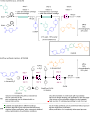
Scheme 9: Comparison of two strategies for flow-based imatinib syntheses. Redrawn from [91] and [92].

Scheme 10: General purification scheme using the catch and release strategy.

Scheme 11: Exemplar catch and release purification of a stereoselective oxidation. Redrawn from [105].

Scheme 12: Catch and release-type purification using conventional SiO2. Redrawn from [107].

Scheme 13: Schematic representation of an industrial continuous crystallization. Redrawn from [109].

Scheme 14: General scheme of an academic inline crystallization approach.

Scheme 15: Simplified overview of purification options and selected criteria.
A new route for the synthesis of 1-deazaguanine and 1-deazahypoxanthine
- Raphael Bereiter,
- Marco Oberlechner and
- Ronald Micura
Beilstein J. Org. Chem. 2022, 18, 1617–1624, doi:10.3762/bjoc.18.172
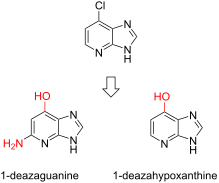
- be easily prepared from its commercially available 6-chloro derivative [16]. To enable C–O coupling with benzyl alcohol, protection of the N9 with a tetrahydropyranyl group was necessary due to limited solubility of the aryl iodide. Therefore, 6-iodo-1-deazapurine was treated with tosylic acid and
- 3,4-dihydropyran in dimethylformamide to obtain the corresponding tetrahydropyranyl-protected amine 17. Subsequently, a copper-catalyzed C–O bond formation at C6 using benzyl alcohol in the presence of caesium carbonate, copper(I) iodide, and 1,10-phenanthroline furnished benzyl ether 18 in excellent
- -(tetrahydro-2H-pyran-2-yl)-1-deazapurine (18) Compound 17 (1.72 g, 5.23 mmol), copper(I) iodide (CuI, 99.52 mg, 0.52 mmol), 1,10-phenanthroline (188.35 mg, 1.05 mmol), caesium carbonate (Cs2CO3, 2.38 g, 7.32 mmol) and benzyl alcohol (BnOH, 1.13 g, 1.07 mL, 10.45 mmol) were suspended in 2.62 mL toluene (0.5 mL

Graphical Abstract

Scheme 1: Syntheses of C4-substituted diethyl 2,6-pyridinedicarbamates 4, passing hazardous and explosive dia...

Scheme 2: Synthesis of 1-deazaguanine (11) described by Markees and Kidder in 1956 [18].

Scheme 3: Synthesis of 1-deazaguanine (11) described by Gorton and Shive in 1957 [19].

Scheme 4: Six-step synthesis of 1-deazaguanine (11). Abbreviations: p-toluenesulfonic acid (TsOH), 4-(dimethy...

Scheme 5: 1-Deazahypoxanthine (30) synthesis described by Kubo and Hirao in 2019 [29]. For reason of simplicity o...

Scheme 6: Synthesis of 1-deazahypoxanthine (30).



