Search results
Search for "photoresponsive" in Full Text gives 34 result(s) in Beilstein Journal of Organic Chemistry.
Halogenated azobenzene acrylates: from efficient solution photoswitching to stable solid-state photochromic materials
Beilstein J. Org. Chem. 2026, 22, 782–794, doi:10.3762/bjoc.22.60
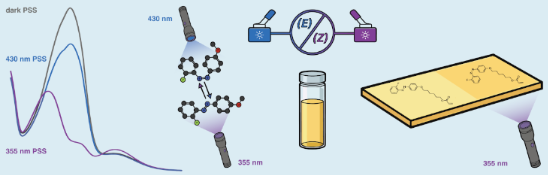
- arrangement. Kinetics studies identified the most stable Z-isomer of the difluoro derivative (τ1/2 = 3.74/6.59 h at 60 °C in DCE/CDCl3). The monofluoro derivative embedded in a polystyrene film demonstrated photoresponsive behavior and remarkable stability by maintaining a macroscopically visible color change
- for over 90 days. These findings demonstrate that ortho-halogenation is a powerful tool for tuning the properties of photoresponsive materials for potential applications in colorimetric thermal sensing and light-controlled functional systems. Keywords: azobenzene; E/Z isomerization; halogen
- to a photoresponsive polymeric material imparting unique properties. A switchable glass-transition temperature (Tg) and thus resulting self-healing ability is a typical example [6]. As reported by Yu et al. [7], the different Tg of E and Z-isomers can lead to so called surface photofluidization due


Harnessing light energy with molecules
Beilstein J. Org. Chem. 2026, 22, 680–682, doi:10.3762/bjoc.22.52
- therapies using molecular light harnessing. So-called molecular solar thermal (MOST) energy storage systems are one type of photoresponsive systems [1][2][3]. These have attracted increasing interest in the past decade for the storage of solar energy by photoisomerization of a molecular photoswitch
- between trans and cis isomers, represent another class of photoswitches, which were reviewed as mostophores in a Perspective by Wang, Wu, and co-workers [8]. Besides MOST systems, molecular photoswitches are interesting for a variety of potential applications when incorporated as photoresponsive units in
- -ray-induced isomerization within micelles generated from two different photosurfactants (containing either an azobenzene or arylazopyrazole photoswitch), thereby creating guidelines for using small-angle X-ray scattering to study photoresponsive materials of potential applications in solar energy
Rotaxanes with integrated photoswitches: design principles, functional behavior, and emerging applications
Beilstein J. Org. Chem. 2025, 21, 2345–2366, doi:10.3762/bjoc.21.179

- or upon irradiation with light at 280 nm. Azobenzene Azobenzene is one of the most widely utilized photoresponsive units in the design and synthesis of photoswitchable rotaxanes. These photoswitches undergo trans–cis isomerization and are classified as T-type, due to the thermal reversibility of the
- -driven shuttling of the cyclodextrin macrocycle was accompanied by alternations in fluorescence between two fluorescent stoppers [49]. Takashima and co-workers developed a photoresponsive polymeric actuator utilizing [2]rotaxane units as topological cross-links in a polymer network, in which the
- , achieving rapid mechanical actuation (Figure 4). This example illustrates the potential of topological cross-linking in advancing the field of stimuli-responsive materials, particularly in applications requiring efficient and durable artificial actuators. Yang and co-workers reported a photoresponsive


Pd-catalyzed dehydrogenative arylation of arylhydrazines to access non-symmetric azobenzenes, including tetra-ortho derivatives
Beilstein J. Org. Chem. 2025, 21, 2234–2242, doi:10.3762/bjoc.21.170
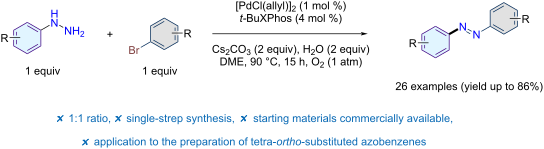
- Paris, France 10.3762/bjoc.21.170 Abstract Azobenzenes are photoresponsive compounds widely used in molecular switches, light-controlled materials, and sensors, but despite extensive studies on symmetric derivatives, efficient methods for synthesizing non-symmetric analogues remain scarce due to
- the presence of water, highlighting its robustness. Keywords: azo compounds; cross-coupling; domino catalysis; palladium; phosphine ligands; Introduction Azobenzenes are a widely studied class of compounds known for their distinctive photoresponsive properties, rendering them valuable in a variety
- valuable addition to existing methodologies and open further opportunities for applications in molecular probe design, functional materials, and photoresponsive systems, where ortho-substitution is often critical. General overview of azobenzene chemistry. a) Selected examples and photoisomerization of


Solar thermal fuels: azobenzene as a cyclic photon–heat transduction platform
Beilstein J. Org. Chem. 2025, 21, 2036–2047, doi:10.3762/bjoc.21.159
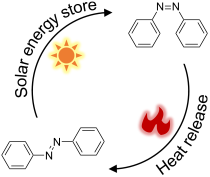
- analysis, we aim to clarify the current state of azobenzene-based solar thermal fuels, while mapping strategic pathways for future technological advancements in this rapidly evolving research field. Keywords: azobenzene; energy; photoresponsive; solar thermal fuels; Introduction Solar energy occupies a
- -conjugated polydiacetylene structures, with an energy storage density reaching 243 J/g (Figure 4b). These azobenzene-functionalized polydiacetylenes exhibit structural analogy to azobenzene-modified carbon nanotubes and graphene in terms of photoresponsive behavior. Sert et al. combined electroactive and
- light-harvesting carbazole units with photoresponsive azobenzene units in a unique macromolecular architecture (Figure 4c) [48]. The resulting cross-linked polycarbazole structure led to a high solar thermal storage capacity of 179.9 J/g and an extended half-life at 60 °C, increasing from 7 min for the




Understanding the origin of stereoselectivity in the photochemical denitrogenation of 2,3-diazabicyclo[2.2.1]heptene and its derivatives with non-adiabatic molecular dynamics
Beilstein J. Org. Chem. 2025, 21, 2007–2020, doi:10.3762/bjoc.21.156
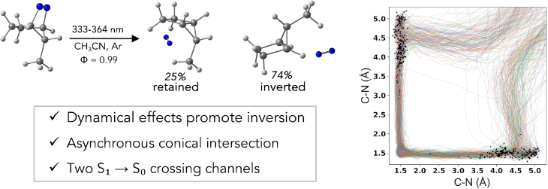
- been employed to release carbon monoxide at relatively safer doses in biological systems using photoresponsive CO-releasing molecules (photo-CORMs) [4] because these have shown anti-inflammatory activity [5][6]. Photochemical denitrogenation of azoalkanes has been utilized in the stereoselective


Thermodynamic equilibrium between locally excited and charge transfer states in perylene–phenothiazine dyads
Beilstein J. Org. Chem. 2025, 21, 1577–1586, doi:10.3762/bjoc.21.121

- development of next-generation photoresponsive materials exhibiting complex and multifunctional responses [21]. Molecular structures of Pe–PTZ, Pe–PTZ(TPA), Pe–PTZ(TPA)2, and Pe–Ph–PTZ(TPA)2. Energy diagrams around the frontier orbitals of Pe–PTZ, Pe–PTZ(TPA), Pe–PTZ(TPA)2, and Pe–Ph–PTZ(TPA)2 at the B3LYP/6


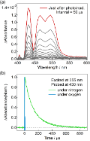

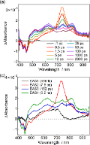

Tautomerism and switching in 7-hydroxy-8-(azophenyl)quinoline and similar compounds
Beilstein J. Org. Chem. 2025, 21, 1404–1421, doi:10.3762/bjoc.21.105
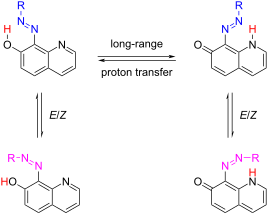
- and systems, including gels [17], metal-organic frameworks [18][19][20][21], photocatalysts [22][23], container molecules [24][25][26], drug delivery systems [27][28][29], photoresponsive polymers [30][31][32][33][34][35][36][37], photoswitches [12][13][38][39][40][41], optical storage devices [42][43


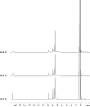


Substituent effects in N-acetylated phenylazopyrazole photoswitches
Beilstein J. Org. Chem. 2025, 21, 830–838, doi:10.3762/bjoc.21.66

- -art technologies ranging from energy-storage materials [6][7] to pharmacology [8][9][10][11], materials chemistry [12][13], control of peptides structure [14][15] or proteins [16], as antibacterial agents [17][18], smart coating [19], or multivalent photoresponsive systems [20][21], to name only a few


Effect of substitution position of aryl groups on the thermal back reactivity of aza-diarylethene photoswitches and prediction by density functional theory
Beilstein J. Org. Chem. 2025, 21, 242–252, doi:10.3762/bjoc.21.16
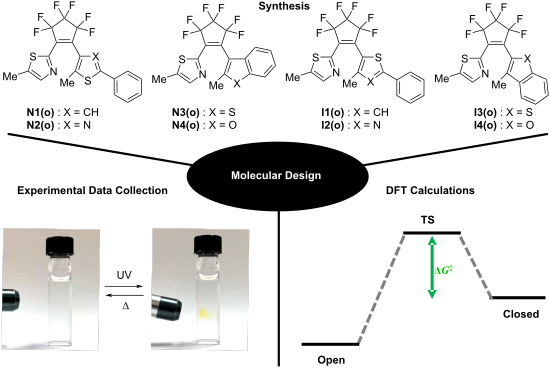
- , various application examples of molecular photoswitches have been reported so far including volumetric 3D printing [12][13], photoresponsive semiconductors [14][15][16][17], photopharmacology [18][19], energy storage materials [20][21][22][23], data storage materials [24], super-resolution microscopy [25
- ) photoswitches [33][34], in which molecules isomerize upon photoirradiation and can maintain their state for a long time in the dark, are used for optical memories [35], displays [36][37], and photoresponsive actuators [38][39]. In contrast, the thermally reversible-type (T-type) photoswitches [40][41][42], in


Supramolecular assemblies of amphiphilic donor–acceptor Stenhouse adducts as macroscopic soft scaffolds
Beilstein J. Org. Chem. 2024, 20, 1590–1603, doi:10.3762/bjoc.20.142
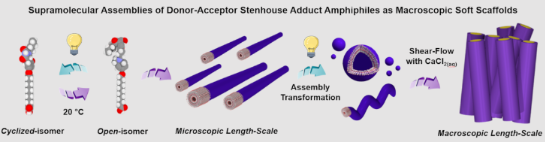
- Abstract In the design of photoharvesting and photoresponsive supramolecular systems in aqueous medium, the fabrication of amphiphilic photoswitches enables a noninvasive functional response through photoirradiation. Although most aqueous supramolecular assemblies are driven by high-energy and biodamaging
- fabrication of visible-light-controlled macroscopic scaffolds, offering the next generation of biomedical materials with visible-light-controlled microenvironments and future soft-robotic systems. Keywords: donor–acceptor Stenhouse adduct; photoresponsive molecular amphiphile; supramolecular transformation
- functionalized with photoresponsive and photoabsorbing functional motifs, serving as the counterpart of natural photosystems. This allowed to construct smart materials that harvest light energy, e.g., solar cells, photosensitizers, and photochromic materials [1][2][3][4]. Supramolecular assemblies are commonly




Switchable molecular tweezers: design and applications
Beilstein J. Org. Chem. 2024, 20, 504–539, doi:10.3762/bjoc.20.45





Radical chemistry in polymer science: an overview and recent advances
Beilstein J. Org. Chem. 2023, 19, 1580–1603, doi:10.3762/bjoc.19.116

- photocrosslinking of polymers is also feasible in the presence of photoinitiators or photoresponsive moieties [136][137][138]. Sophisticatedly designed photocrosslinking of polymers finds broad applications in modern 3D printing/additive manufacturing [139][140][141][142]. Radical chemistry has been demonstrated as




Exploring the role of halogen bonding in iodonium ylides: insights into unexpected reactivity and reaction control
Beilstein J. Org. Chem. 2023, 19, 1171–1190, doi:10.3762/bjoc.19.86
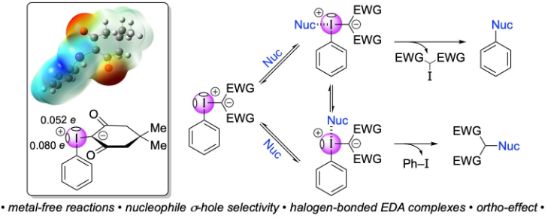
- numerous similar attributes, halogen bonding has also proven to be a viable alternative in methodologies that rely on hydrogen bond initiation. For example, both halogen- and hydrogen bonding can be used in supramolecular chemistry as the binding mechanism in photoresponsive receptors [73][74][75][76][77







Light-responsive rotaxane-based materials: inducing motion in the solid state
Beilstein J. Org. Chem. 2023, 19, 873–880, doi:10.3762/bjoc.19.64
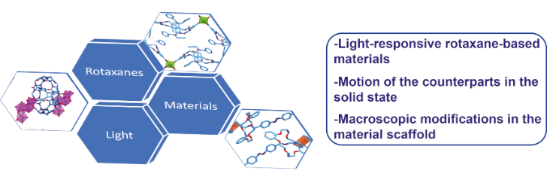
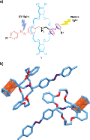
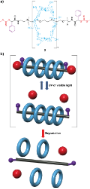
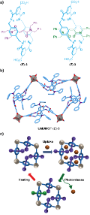
- mechanical bond, such as control over the dynamics of the components upon application of external stimuli. This perspective aims to highlight the relevance of these materials, by pointing out recent examples of photoresponsive materials prepared from a rotaxanated architecture in which motion of the
- properties and functionalities [13][14][15][16][17]. Although great strides have been made in the development of photoresponsive rotaxanes [18][19][20][21][22][23][24][25][26][27][28][29], progress on interlocked materials working via photoirradiation is less abundant in the literature. However
- dynamics of the components and/or macroscopic motion of the material are accomplished, dividing the article into three main sections: (i) photoresponsive rotaxane discrete crystals; (ii) photoresponsive rotaxane polymers; and (iii) photoresponsive metal-organic rotaxane frameworks (MORFs). Besides to

Azo-dimethylaminopyridine-functionalized Ni(II)-porphyrin as a photoswitchable nucleophilic catalyst
Beilstein J. Org. Chem. 2020, 16, 2119–2126, doi:10.3762/bjoc.16.179
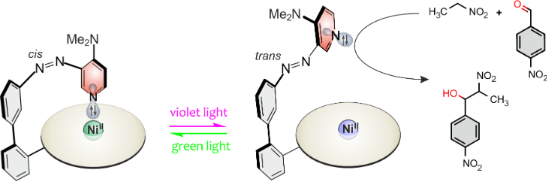
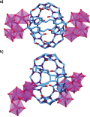
- -epoxypropane to propylene carbonate using an aluminum porphyrin and a photoresponsive ligand. The catalytic activity of the metal porphyrin depended on the axial coordination of an azostilbene and coordination of the latter ligand was controlled by photoisomerization of the stilbene unit [9]. Hecht et al


Et3N/DMSO-supported one-pot synthesis of highly fluorescent β-carboline-linked benzothiophenones via sulfur insertion and estimation of the photophysical properties
Beilstein J. Org. Chem. 2020, 16, 1740–1753, doi:10.3762/bjoc.16.146
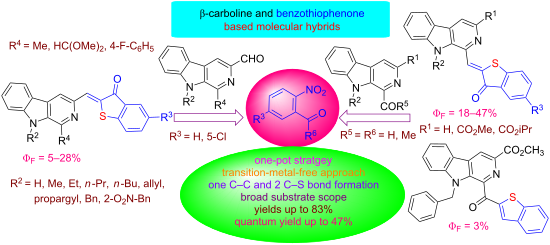
- a variety of biological activities such as anticancer [24], inhibition of tyrosine phosphatase 1B, antioxidant properties, etc. [25][26][27]. Due to their numerous applications, they have found diverse uses such as thioindigo-like dyes, photoresponsive devices, and photoswitchable biomolecules [28


Starazo triple switches – synthesis of unsymmetrical 1,3,5-tris(arylazo)benzenes
Beilstein J. Org. Chem. 2020, 16, 22–31, doi:10.3762/bjoc.16.4
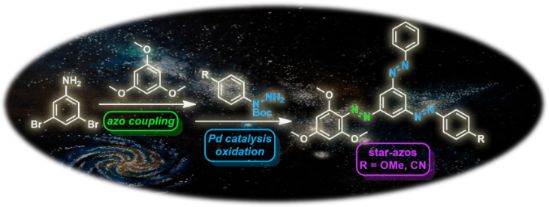
- access, this highly interesting class of multistate photoswitches would be accessible for detailed spectroscopic investigations, leading to fundamental insights applicable to the design of intelligent photoresponsive materials. Results and Discussion Initially, two different synthetic strategies were
- of novel, multi-state photoresponsive systems for smart materials. Experimental 3,5-Dibromo-2′,4′,6′-trimethoxyazobenzene (15) [24]: 3,5-Dibromoaniline (9.99 g, 39.8 mmol, 1.00 equiv) was suspended in water (20 mL) and aq HBF4 (50%, 15 mL, 119 mmol, 3.0 equiv) was added. The suspension was cooled to


A chiral self-sorting photoresponsive coordination cage based on overcrowded alkenes
Beilstein J. Org. Chem. 2019, 15, 2767–2773, doi:10.3762/bjoc.15.268
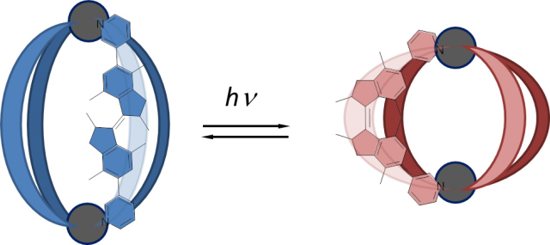
- interesting strategy to form responsive coordination complexes, as they feature a large geometric change upon switching [47]. Herein, we report a photoresponsive coordination cage with ligands based on a first generation molecular motor (Figure 1). Cages with a Pd2L4 composition are formed from bidentate
- explanation could be that the mixture of stable Z-1 and stable E-1 does not form separate well-defined cage structures, but forms mixed complexes. Conclusion In summary, a new photoresponsive supramolecular coordination complex based on overcrowded alkenes is presented, allowing switching between three
- considered to translate these geometrical changes to changes in properties such as guest binding affinity and selectivity. Schematic representation of a photoresponsive cage with ligands based on overcrowded alkenes. Aromatic region of stacked 1H NMR spectra (in CD3CN) of stable Z-1 and cage complex Pd2


In search of visible-light photoresponsive peptide nucleic acids (PNAs) for reversible control of DNA hybridization
Beilstein J. Org. Chem. 2019, 15, 2500–2508, doi:10.3762/bjoc.15.243
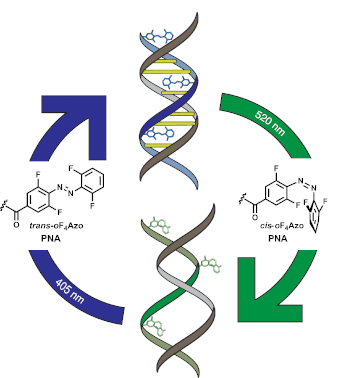
- translation [24][25]. Except a handful of current examples [22][24][26], most of these photoresponsive oligonucleotides are canonical ones where the classical azobenzene is the prominently used photoswitch; although spiropyrans [27], stilbenes [28], diarylethanes [29] and overcrowded alkenes [30] have also
- switching capacities and duplex formation were analyzed. Our group has recently demonstrated that photoresponsive peptides can affect the transcription of genes via inhibition of histone-modifying enzymes [37]. Repression of enzymes is achievable at nucleic acid level too. Therefore, in this project we
- efficiency (Figure S55, Supporting Information File 1). This would explain the low observed photoresponsivity. Conclusion We have successfully synthesized two novel types of visible-light photoresponsive PNAs by coupling on-resin the corresponding molecular transducer. In particular, we focused on the tetra

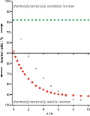


Reversible switching of arylazopyrazole within a metal–organic cage
Beilstein J. Org. Chem. 2019, 15, 2398–2407, doi:10.3762/bjoc.15.232
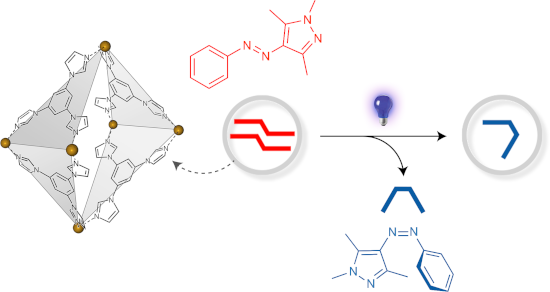
- selectivity [35][36][37][38][39][40]. Consequently, arylazopyrazoles have been employed as photoresponsive gelators [41] and adhesives [42] and for controlling antimicrobial response [43][44], cell adhesion to surfaces [45], as well as DNA [46] and microtubule [47] self-assembly using light. Here, we focused


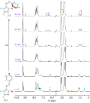
![[Graphic 1]](/bjoc/content/inline/1860-5397-15-232-i3.svg?max-width=637&scale=1.18182) 2 (500 MHz, D2O, 298 K).
2 (500 MHz, D2O, 298 K).




Targeted photoswitchable imaging of intracellular glutathione by a photochromic glycosheet sensor
Beilstein J. Org. Chem. 2019, 15, 2380–2389, doi:10.3762/bjoc.15.230
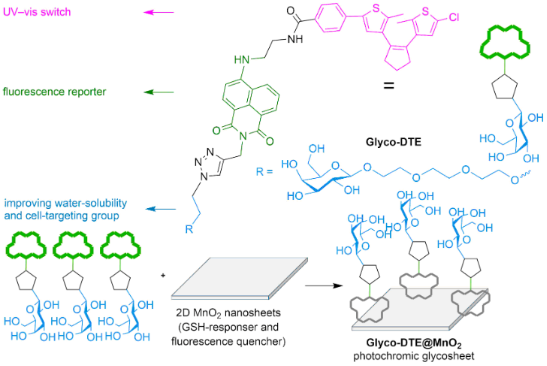
- signals has been developed, aiming at reducing interferences and improving sensing precision in complex physiological environments [9][10][11][12][13][14][15][16][17]. This photoresponsive design presents several advantages over conventional probes: 1) The light-activation mode endows the probe with light

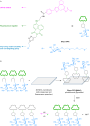


Reversible end-to-end assembly of selectively functionalized gold nanorods by light-responsive arylazopyrazole–cyclodextrin interaction
Beilstein J. Org. Chem. 2019, 15, 1407–1415, doi:10.3762/bjoc.15.140
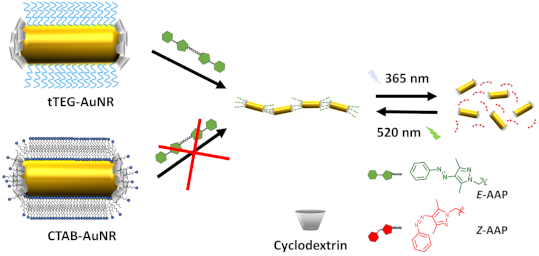
- cycles. By the introduction of AAP, previous disassembly limitations based on the photostationary states of azobenzenes could be solved. The combination photoresponsive interaction and selectively end-functionalized nanoparticles shows significant potential in the reversible self-assembly of inorganic
- nanoparticle systems [46]. This interpretation is also supported by TEM images (Figure 4a, see below) indicating significant interparticle repulsion and no aggregation-induced absorption maxima broadening. For further experiments the [tCD+tTEG]AuNR stock solution was diluted with ddH2O. For the photoresponsive


Synthesis of functionalized diazocines for application as building blocks in photo- and mechanoresponsive materials
Beilstein J. Org. Chem. 2019, 15, 727–732, doi:10.3762/bjoc.15.68
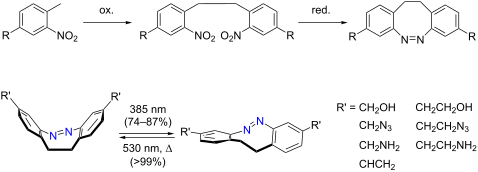
- molecular switches in photo and mechanoresponsive macromolecules and other smart materials. Keywords: bridged azobenzene; diazocine; mechanophor; oxidative C–C coupling; photochrome; reductive azo cyclization; Introduction The field of photoresponsive materials is of growing interest [1][2][3]. Several
- damage by UV light [19]. Well separated absorption bands, high switching efficiency and high quantum yields are further advantages regarding their application as switches in photoresponsive materials [19][24][26]. In contrast to spiropyrans which have been frequently used as photoswitches in materials


Olefin metathesis in multiblock copolymer synthesis
Beilstein J. Org. Chem. 2019, 15, 218–235, doi:10.3762/bjoc.15.21

- highly photoresponsive multiblock polybutadiene [61]. Initially, ROMP of 1,5-cyclooctadiene (COD) in the presence of a difunctional CTA provided dibromo-telechelic polybutadiene (PBD), which was transformed into diazido-functionalized telechelic PBD (Scheme 3). The multiblock PBD then was assembled by
- multiple click reactions of the diazido-telechelic PBD with a dialkynyl-containing azobenzene chromophore. The newly formed triazole moieties can tune and improve the photoresponsive properties of PBD. α,ω-Functional telechelic polymers also can be synthesized by acyclic diene metathesis (ADMET