


Search results
Search for "cathode" in Full Text gives 169 result(s) in Beilstein Journal of Nanotechnology.
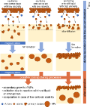
Nanoarchitectonics of the cathode to improve the reversibility of Li–O2 batteries
Beilstein J. Nanotechnol. 2022, 13, 689–698, doi:10.3762/bjnano.13.61
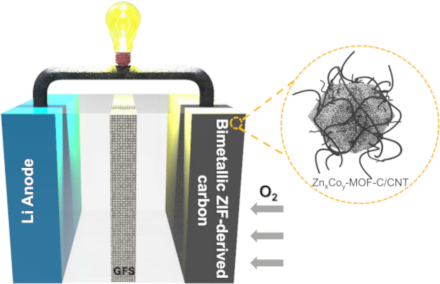
- Institute for Innovative Materials, University of Wollongong, Squires Way, North Wollongong, NSW 2500, Australia 10.3762/bjnano.13.61 Abstract The strategic design of the cathode is a critical feature for high-performance and long-lasting reversibility of an energy storage system. In particular, the round
- electrical conductivity further, ultimately leading to better electrochemical stability in the cathode. As a result, the optimized bimetallic ZIF–carbon/CNT composite exhibits a high discharge capacity of 16,000 mAh·g−1, with a stable cycling performance of up to 137 cycles. This feature is also beneficial
- for lowering the overpotential of the cathode during cycling, even at the high current density of 2,000 mA·g−1. Keywords: cathode composition; electrochemistry; Li–O2 battery; metal–organic framework; nanoarchitectonics; zeolitic imidazolate framework; Introduction Recently, lithium–oxygen batteries



Influence of thickness and morphology of MoS2 on the performance of counter electrodes in dye-sensitized solar cells
Beilstein J. Nanotechnol. 2022, 13, 528–537, doi:10.3762/bjnano.13.44
- and respectable efficiency [1]. This promising third generation of solar cells contains a dye-adsorbed TiO2 photoanode, an iodide/triiodide electrolyte, and a platinum-based cathode, also known as the counter electrode (CE). However, the high cost of platinum has prevented the real-world application of
- DSSCs, which has led researchers to explore efficient cathode materials for DSSCs beyond platinum. To date, Pt replacement materials are divided into three categories, namely carbonaceous materials [2][3][4][5], conductive polymers [5], and transition metal compounds [6][7][8]. Transition metal
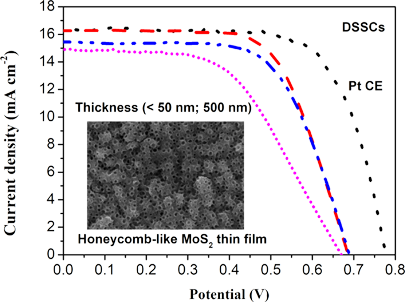
- /cathode peak potentials (EpOx1, EpRed1), peak-to-peak voltage separation (Epp), and anode/cathode peak current densities (JOx1, JRed1) were calculated and presented in Table 1. The Epp value for MoS2 CEs was slightly larger than that of Pt CE confirming their excellent electrocatalytic activity. The JRed1


Electrostatic pull-in application in flexible devices: A review
Beilstein J. Nanotechnol. 2022, 13, 390–403, doi:10.3762/bjnano.13.32
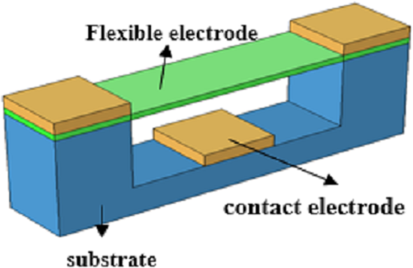
- protection based on GR NEM switch structures can be integrated into the back end of the substrate, as shown in Figure 7. The anode and cathode of the switches are connected to input/output pads and ground pad on a chip, respectively. When electrostatic discharge occurs, the suspended graphene will be pulled


The effect of metal surface nanomorphology on the output performance of a TENG
Beilstein J. Nanotechnol. 2022, 13, 298–312, doi:10.3762/bjnano.13.25
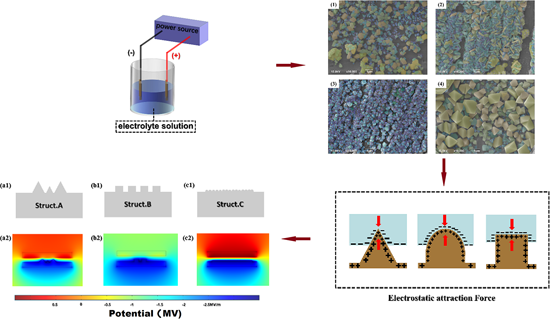
- during electrodeposition. The sample after electrodeposition was dried in a Geruida GRD220H oven. After obtaining 16 groups of experimental samples, PTFE (purchased from Bukraun) was used as the anode, and the experimental sample was used as the cathode to fabricate the TENGs. The open-circuit voltage
- the electrolyte. The deposition area was set to 9 cm2 by adjusting the position of the anode copper sheet and the cathode copper sheet immersed in the electrolyte. The distance between the anode and cathode plates was fixed at 5 cm to avoid the impact of plate spacing on the nanomorphology of the






Sputtering onto liquids: a critical review
Beilstein J. Nanotechnol. 2022, 13, 10–53, doi:10.3762/bjnano.13.2

- , the cathode of the system. A typical vacuum chamber used for coating deposition by sputtering is presented in Figure 3a where the key elements are presented: the negatively biased cathode covered by the target, that is, the source of atoms, the sample to be coated, the pumping system, the pressure
- limited number of variable parameters. Customized vacuum chambers dedicated to the detailed study and development of this particular type of PVD process are also available in research laboratories. Sputtering has become industry-relevant since permanent magnets were set inside the cathode body, underneath
- the target, to generate a magnetic field in the target vicinity thus promoting magnetron sputtering (MS) cathode systems. Typical MS cathodes consist of a magnet placed at the center of the target and magnets with opposite poles on the target periphery. This configuration is schematically presented in




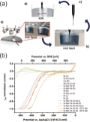


The effect of cobalt on morphology, structure, and ORR activity of electrospun carbon fibre mats in aqueous alkaline environments
Beilstein J. Nanotechnol. 2021, 12, 1173–1186, doi:10.3762/bjnano.12.87
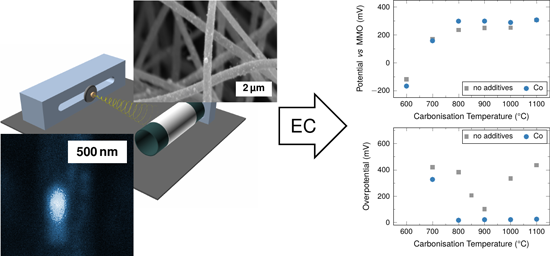
- overall performance [3]. The lack of discharge performance is attributed to the sluggish kinetics of the oxygen reduction reaction (ORR) at the air cathode [4], which reduces the practical power density. Further improvements of the cathode are essential for the long-term success of metal–air batteries
- , especially the lithium and silicon systems, on account of their different mechanism involving the cathode as an explicit reaction site of the metal redox chemistry [7][8][9]. From a scientific point of view, in aqueous systems, an air electrode needs to allow gas to diffuse in appropriate amounts towards the
- ). The open-circuit potential is an indicator for the cell potential of a full cell system. In the ORR case, a higher potential is sought for the air cathode, to increase the overall cell potential. The current density of the system is of relevance to the desired application in terms of available power


Assessment of the optical and electrical properties of light-emitting diodes containing carbon-based nanostructures and plasmonic nanoparticles: a review
Beilstein J. Nanotechnol. 2021, 12, 1078–1092, doi:10.3762/bjnano.12.80
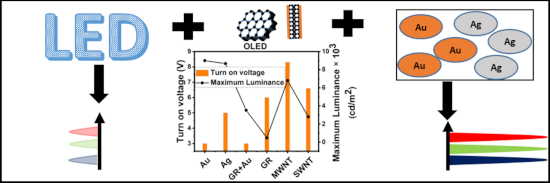
- as the emissive layer (EML), the hole transport layers (HTL), the electron transport layers (ETL), the cathode, and the anode [17][18][19][20][21]. Enhancement in LED properties via surface plasmon resonance (SPR) of metal nanoparticles (MNP) such as Au and Ag have also been reported [22][23]. This
- , EML, ETL, and cathode) is analyzed. Subsequently, various characteristics of LED containing carbon nanostructures and plasmonic NP are discussed in terms of EQE, internal quantum efficiency, luminance, EL, and current–voltage (I–V) characteristics. A list of various abbreviations employed in this
- should be injected from the low-work-function metal cathode surface. Therefore, HTL should possess excellent charge mobility and maintain morphological stability. Moreover, it should have an appropriate highest occupied molecular level (HOMO), ensuring a low energy barrier for hole injection from the


Progress and innovation of nanostructured sulfur cathodes and metal-free anodes for room-temperature Na–S batteries
Beilstein J. Nanotechnol. 2021, 12, 995–1020, doi:10.3762/bjnano.12.75
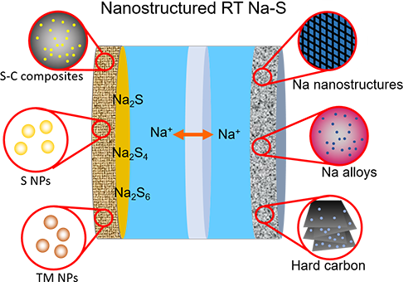
- , Na dendrite growth, and slow reaction kinetics by nanostructuring both the sulfur cathode and the Na anode. Moreover, a survey of recent patents on room temperature (RT) Na–S batteries revealed that nanostructured sulfur and sodium electrodes are still in the minority, which suggests that much
- available anode and cathode materials are sought. Table 1 lists some abundant metals as anode materials with high capacity and reduction potential values that are explored in metal-ion batteries [7][8][9]. Besides sodium as alternative anode material, also sulfur as abundant cathode material has emerged due
- batteries. As a result of scientific investigations and technological innovations, room-temperature sodium–sulfur (RT Na–S) batteries have been gaining importance since the mid-2000s [3][10][14]. A lot of effort is focused on the development of different cathode materials in order to produce commercial high





The role of deep eutectic solvents and carrageenan in synthesizing biocompatible anisotropic metal nanoparticles
Beilstein J. Nanotechnol. 2021, 12, 924–938, doi:10.3762/bjnano.12.69

- surface coating with nanoparticles through electrodeposition. A general electrodeposition setup consists of three electrodes, that is cathode, anode, and a reference electrode [78]. The solvation property and the conductivity of DESs also play a critical role in determining the physical structure, yield


Electromigration-induced formation of percolating adsorbate islands during condensation from the gaseous phase: a computational study
Beilstein J. Nanotechnol. 2021, 12, 694–703, doi:10.3762/bjnano.12.55
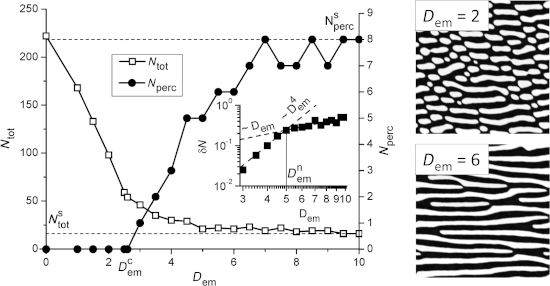
- neighboring vacancies in the direction of electron flow leading to an accumulation of atoms at the anode and vacancies at the cathode [1][2]. Current trends in computer technology, namely, reducing the size of integrated circuits, increasing their power, and increasing the density of elements, have led to an
- between anode and cathode); e is the electron charge. The direction of the force Fel is defined by the effective valence Z, which is negative for most metals. Thus, the adsorbed atoms move in the opposite direction to the electric field. In the general case if the electric field is applied across the
- induced by an electric field: ±kem∇xx(r), where it is taken into account that the electric field is directed along the direction x, and the sign ± is determined by the relative position of the cathode and anode. The rate of directed motion kem is proportional to the strength E of the electric field. A


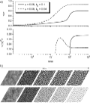


![[Graphic 29]](/bjnano/content/inline/2190-4286-12-55-i36.svg?max-width=637&scale=1.18182) on the adsorption coefficient α ...
on the adsorption coefficient α ...

Stability and activity of platinum nanoparticles in the oxygen electroreduction reaction: is size or uniformity of primary importance?
Beilstein J. Nanotechnol. 2021, 12, 593–606, doi:10.3762/bjnano.12.49
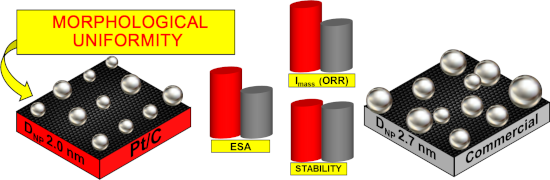
- behavior in the ORR, since it is at the cathode that strong polarization and pronounced degradation of the catalyst take place. Such а degradation occurs as a result of both the operation at high anodic potentials and the effect of aggressive oxygen-containing intermediates, which are formed during the



Paper-based triboelectric nanogenerators and their applications: a review
Beilstein J. Nanotechnol. 2021, 12, 151–171, doi:10.3762/bjnano.12.12
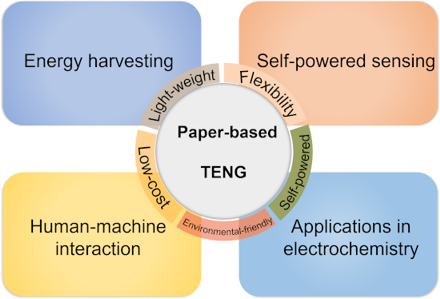
- square-shaped A3 steel piece was connected to the cathode and a carbon electrode was connected to the anode, with a P-TENG paired with a rectifier and a capacitor connected in parallel with the electrochemical system. The P-TENG, in this case, was composed of PVDF and paper as the friction layers. The
- (Dunaliella and Navicula) were used as typical indicators to simulate the ecological environment of the marine fouling organisms. Two stainless steel pieces were connected to the anode and to the cathode with a rectifier, and another piece of stainless steel was directly immersed into the algae medium as the
- blank sample. After introducing the TENG-powered antifouling system, the stainless steel pieces on both the anode and cathode showed good antifouling properties, as indicated by algae density. An electrochemical reaction is an electron-transferring or flowing process between an electrode and a substance






A review on the green and sustainable synthesis of silver nanoparticles and one-dimensional silver nanostructures
Beilstein J. Nanotechnol. 2021, 12, 102–136, doi:10.3762/bjnano.12.9
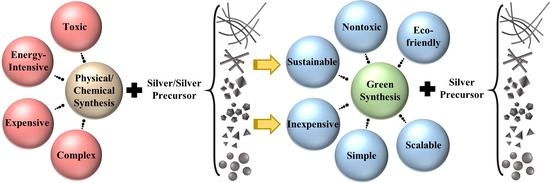
- . Another physical method widely used for the synthesis of AgNPs is the arc discharge method. In this method, two electrodes – a cathode and an anode – are connected in a high current DC circuit and submerged in a solvent – mostly deionized water – to run the process [129][131]. These electrodes can be
- either composed of an inert metal, such as titanium, or any metal of interest of which the nanoparticles will be produced, for instance, silver for the synthesis of AgNPs [129][131]. In the case of titanium electrodes, AgNO3 is used as the precursor, an electric discharge takes place between cathode and


Piezotronic effect in AlGaN/AlN/GaN heterojunction nanowires used as a flexible strain sensor
Beilstein J. Nanotechnol. 2020, 11, 1847–1853, doi:10.3762/bjnano.11.166
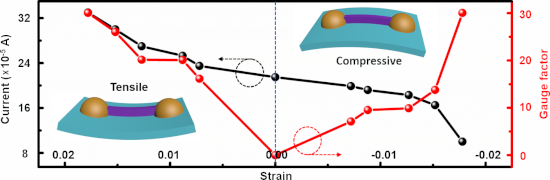
- silver paste and connected to the anode of the electrolytic cell, and the cathode was the Pt sheet. Oxalic solution (0.3 M) was used as the electrolyte. The applied voltage was 20 V and the duration of its application was 10 min. After selective EC wet etching, the sample with suspended NWs was placed in


Self-standing heterostructured NiCx-NiFe-NC/biochar as a highly efficient cathode for lithium–oxygen batteries
Beilstein J. Nanotechnol. 2020, 11, 1809–1821, doi:10.3762/bjnano.11.163
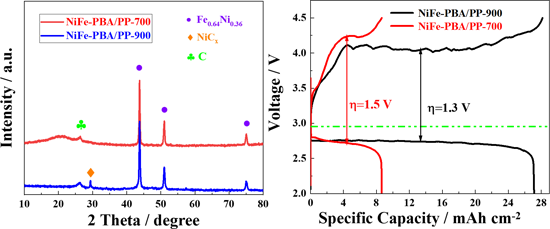
- , Norway Shanghai Time Shipping CO., LTD, Shanghai, 200126, China 10.3762/bjnano.11.163 Abstract Lithium–oxygen batteries have attracted research attention due to their low cost and high theoretical capacity. Developing inexpensive and highly efficient cathode materials without using noble metal-based
- catalysts is highly desirable for practical applications in lithium–oxygen batteries. Herein, a heterostructure of NiFe and NiCx inside of N-doped carbon (NiCx-NiFe-NC) derived from bimetallic Prussian blue supported on biochar was developed as a novel self-standing cathode for lithium–oxygen batteries. The
- . The structure of NiCx-NiFe-NC efficiently improved the electron and ion transfer between the cathode and the electrolyte during the electrochemical processes, resulting in superior electrocatalytic properties in lithium–oxygen batteries. This study indicates that nickel carbide supported on N-doped






Mapping of integrated PIN diodes with a 3D architecture by scanning microwave impedance microscopy and dynamic spectroscopy
Beilstein J. Nanotechnol. 2020, 11, 1764–1775, doi:10.3762/bjnano.11.159
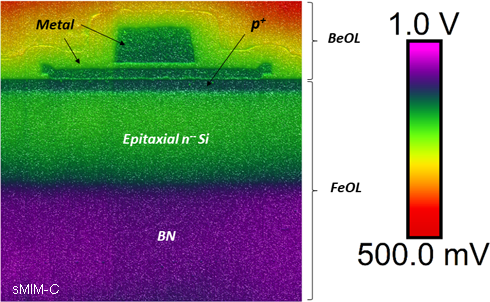
- ) have a slightly different polishing rate, which results in the observed topography. In the AFM topography image, one can localize the two deep trench isolation structures in the silicon wafer, as well as the anode and cathode contacts. It is important to note that a low roughness is required for a
- mappings are shown in Figure 7c and Figure 7d, respectively. Complementary information from the FEOL layers and details of the BEOL layers (metallization, trench dielectric, and isolation) are obtained. It is important to note that the architecture of the metallic contacts (anode and cathode) is also
- revealed in detail. For this PIN diode switch, the deep trench structures, designed originally for 3D capacitors with a dielectric surface enhancement, are also used to connect the buried layer below the thick lightly doped epitaxial layer. The diffused doping around the deep trenches, used as a cathode to


Fabrication of nano/microstructures for SERS substrates using an electrochemical method
Beilstein J. Nanotechnol. 2020, 11, 1568–1576, doi:10.3762/bjnano.11.139
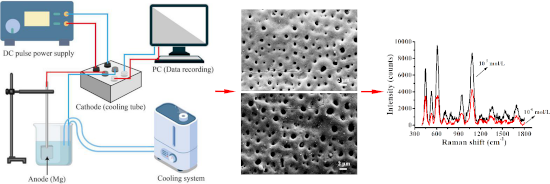
- succession. No further purification was carried out. A customized DC power supply was used to conduct the PEO. Figure 1 shows the schematic diagram of nanopore formation using PEO processing. The specimens and carbon tubes were utilized as the anode and cathode, respectively, and the electrolyte solution was


Structure and electrochemical performance of electrospun-ordered porous carbon/graphene composite nanofibers
Beilstein J. Nanotechnol. 2020, 11, 1280–1290, doi:10.3762/bjnano.11.112
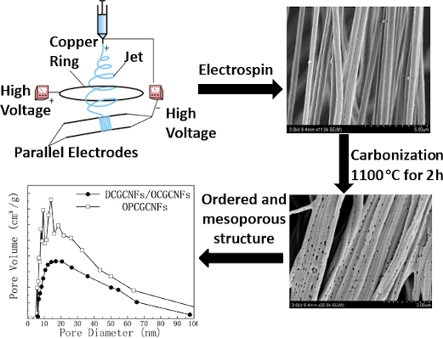
- -voltage power supply, whereas the parallel electrodes were connected to the cathode [24]. According to our previous work [33], electrospun-ordered PAN/graphene CNFs (PGCNFs) were prepared by MPEM at room temperature and 50 ± 5% relative humidity. The spinning solution was placed in the syringe and


Gas sorption porosimetry for the evaluation of hard carbons as anodes for Li- and Na-ion batteries
Beilstein J. Nanotechnol. 2020, 11, 1217–1229, doi:10.3762/bjnano.11.106
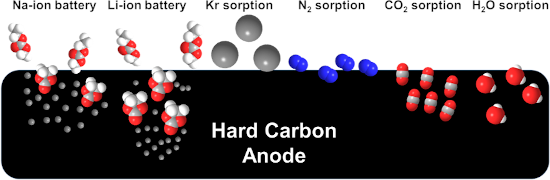
- , sodium-ion batteries (SIBs) become interesting [1][2]. Compared to Co, which is still an essential component for state-of-the-art LIB cathode materials, Li is much more abundant in the earth’s crust [3][4]. Nevertheless, the market for mobile applications is increasing, especially for new BEVs, and thus


Nickel nanoparticles supported on a covalent triazine framework as electrocatalyst for oxygen evolution reaction and oxygen reduction reactions
Beilstein J. Nanotechnol. 2020, 11, 770–781, doi:10.3762/bjnano.11.62
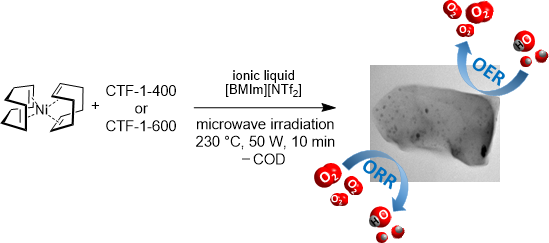
- electron microscope with a LaB6 cathode at 5–20 keV and a Bruker Xflash 410 silicon drift detector for energy-dispersive X-ray spectrometric (EDX) elemental composition analysis. M/CTF-IL suspension samples for transmission electron microscopy (TEM) were dripped on a carbon-coated copper grid and excess IL


Hexagonal boron nitride: a review of the emerging material platform for single-photon sources and the spin–photon interface
Beilstein J. Nanotechnol. 2020, 11, 740–769, doi:10.3762/bjnano.11.61
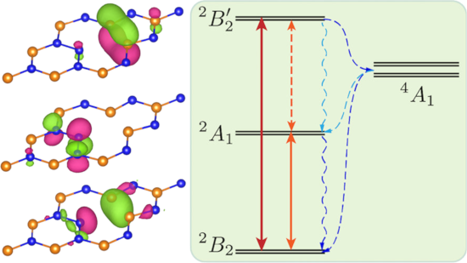
- on PL in h-BN. Very likely, this spreading of shapes and positions possibly originates from the many relevant parameters that are not fully under control in the preparation of the material and the way the experiments are conducted. In the first experiments, ensemble measurements using cathode
- [112] and is thus a candidate for a spin qubit. Other modeling based on DFT and constrained DFT attributes the SPE to a VNCB defect [104]. In [97] few layers of exfoliated h-BN were studied under cathode-luminescence (CL) combined with a Hanbury Brown and Twiss interferometer to identify their SPE in





Comparison of fresh and aged lithium iron phosphate cathodes using a tailored electrochemical strain microscopy technique
Beilstein J. Nanotechnol. 2020, 11, 583–596, doi:10.3762/bjnano.11.46
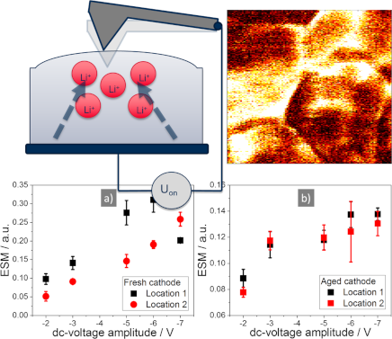
- ionic concentration in the material volume under the AFM tip. The ageing of the cathode is found to be governed by a decrease of the electrochemical activity and the loss of available lithium for cycling, which can be stored in the cathode. Keywords: activity; ageing; cathode; electrochemical strain
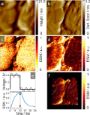
- solid electrolyte interface (SEI) on graphite anodes and HOPG [14][15][16], Li metal [17] and on cathode materials [18][19] as well as the changes in particle size during ageing [19][20]. Other AFM modes used for the analysis of ageing are, for example, Kelvin probe force microscopy (KPFM) and
- and aged LiMnO2 cathodes and found a decrease of the diffusion coefficient in the aged sample due to structural degradation of the material [30]. Zhu et al. studied the degradation of LiNi0.3Co0.3Mn0.3O2 by ESM and showed a decrease in the ESM amplitude over the ageing of the cathode material, which



Implementation of data-cube pump–probe KPFM on organic solar cells
Beilstein J. Nanotechnol. 2020, 11, 323–337, doi:10.3762/bjnano.11.24
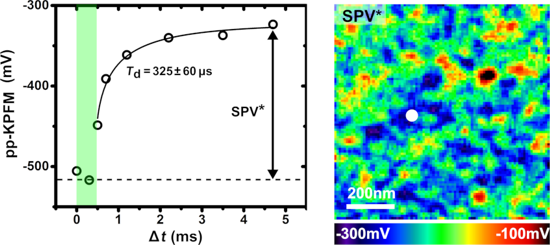
- PTB7 and PC71BM is subsequently investigated by recording point-spectroscopy curves as a function of the optical power at the cathode and by mapping 2D time-resolved images of the surface photovoltage of the bare organic active layer. Keywords: bulk heterojunctions; Kelvin probe force microscopy (KPFM
- is validated by carrying out test measurements by electrical pumping of reference substrates. Moreover, the technique is applied to characterize BHJ solar cells by optical pumping. To this end, point-spectroscopy curves are recorded on the device cathode as a function of the optical power using
- device upon optical pumping was investigated by point spectroscopy at the cathode. This experimental configuration is labeled “1” in Figure 3b. It was chosen for an initial examination of the pp-KPFM operation using optical pumping, because the S/N ratio could be increased at will by averaging several





Polyvinylpyrrolidone as additive for perovskite solar cells with water and isopropanol as solvents
Beilstein J. Nanotechnol. 2019, 10, 2374–2382, doi:10.3762/bjnano.10.228
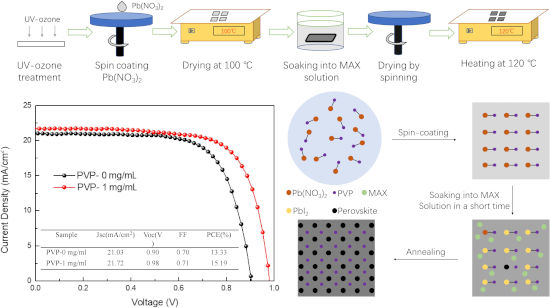
- primarily due to the suitability of PVP as an additive to enhance the photoelectric performance. Using PVP as an interlayer between the [6,6]-phenyl-C61-butyric acid methyl ester (PCBM) electron transport layer (ETL) and the Ag cathode in a high-performance inverted planar heterojunction perovskite solar




Design and facile synthesis of defect-rich C-MoS2/rGO nanosheets for enhanced lithium–sulfur battery performance
Beilstein J. Nanotechnol. 2019, 10, 2251–2260, doi:10.3762/bjnano.10.217
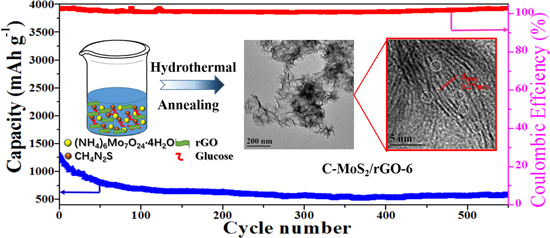
- overlap, indicating the superior electrochemical reversibility of the C-MoS2/rGO-6-S cathode. The electrochemical impedance spectroscopy results of MoS2-S, C-MoS2/rGO-S, C-MoS2/rGO-6-S electrodes are shown in Figure 6b. Obviously, the C-MoS2/rGO-S and C-MoS2/rGO-6-S electrodes have the minor semicircles
- in the high-frequency range, suggesting a smaller charge transfer resistance than MoS2-S. Since every cathode holds the same amount of sulfur, the distinct charge transfer resistance could be ascribed to the conductivity of the different host materials. Benefiting from the synergistic encapsulation





