Search results
Search for "damping" in Full Text gives 196 result(s) in Beilstein Journal of Nanotechnology.
A distributed active patch antenna model of a Josephson oscillator
Beilstein J. Nanotechnol. 2023, 14, 151–164, doi:10.3762/bjnano.14.16
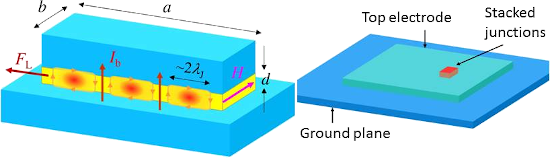
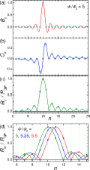
- sine-Gordon equation, It follows from Equation 1 and Equation 2, taking into account the ac-Josephson relation, V = (Φ0/2π)∂η/∂t. Equation 3 is written in a dimensionless form with space, = x/λJ, normalized by λJ,and time, = ωpt, by the Josephson plasma frequency, ωp. Here α is the QP damping factor
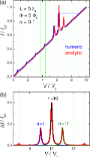
- saturation of the amplitude for α→0, although at a value of 4 instead of π. Thus, Equation 30 provides a simple and sufficiently good approximation for a significantly broader range of damping parameters than Equation 25. Input resistance For the practically most important velocity matching mode, kn = k
- radiative losses, Using definitions of α and Q, we can introduce a total damping factor where the total resistance is Thus, to include radiative losses, α and RQP in the equations above should be replaced by αtot and Rtot. For the n-th cavity mode resonance we obtain, For the most important velocity


Nonlinear features of the superconductor–ferromagnet–superconductor φ0 Josephson junction in the ferromagnetic resonance region
Beilstein J. Nanotechnol. 2022, 13, 1155–1166, doi:10.3762/bjnano.13.97
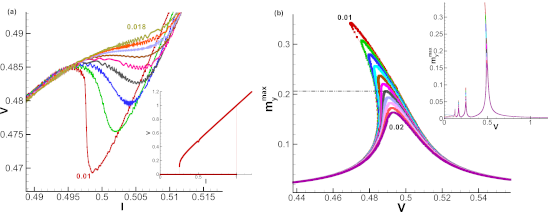
- characteristics of a φ0 Josephson junction in the ferromagnetic resonance region. We show that at small values of the system parameters damping, spin–orbit interaction, and Josephson-to-magnetic energy ratio, the magnetic dynamics is reduced to the dynamics of a scalar Duffing oscillator driven by the Josephson
- oscillations. The role of the increasing superconducting current in the resonance region is clarified. Shifting of the ferromagnetic resonant frequency and the reversal of its damping dependence due to nonlinearity are demonstrated by the full Landau–Lifshitz–Gilbert–Josephson system of equations and in its
- oscillator describes several effects in other models, too [17]. One example are the resonance effects in the antiferromagnetic bimeron in response to an alternating current, which has applications in the detection of weak signals [15][18][19]. The Gilbert damping term is added phenomenologically to the


![[Graphic 14]](/bjnano/content/inline/2190-4286-13-97-i38.svg?max-width=637&scale=1.18182) at differ...
at differ...


![[Graphic 18]](/bjnano/content/inline/2190-4286-13-97-i42.svg?max-width=637&scale=1.18182) (V) on α in the damping parameter interval [0.001–0.12]....
(V) on α in the damping parameter interval [0.001–0.12]....

A cantilever-based, ultrahigh-vacuum, low-temperature scanning probe instrument for multidimensional scanning force microscopy
Beilstein J. Nanotechnol. 2022, 13, 1120–1140, doi:10.3762/bjnano.13.95
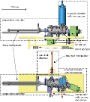
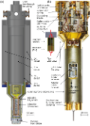
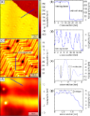
- suspension springs that reach through cylindrical tubes running through the LHe tank and are mounted on top of the tank. Together with the Eddy current damping system mounted at the bottom of the cryostat, this provides excellent vibration isolation such that a tip–sample gap stability better than 1 pm can





Influence of water contamination on the sputtering of silicon with low-energy argon ions investigated by molecular dynamics simulations
Beilstein J. Nanotechnol. 2022, 13, 986–1003, doi:10.3762/bjnano.13.86
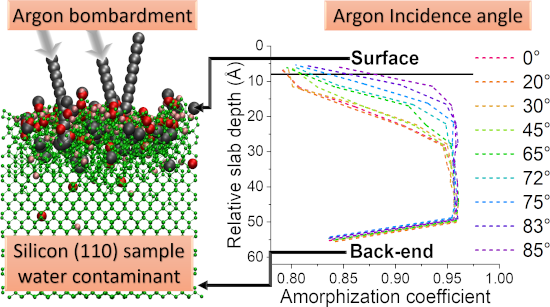
- below the sample in the z-direction. The different axes are defined in Figure 2. The simulations for sample preparation were run in an NVT ensemble using the Langevin thermostat with a damping parameter set to 100 time steps and the temperature set to 300 K [53]. The pristine sample was equilibrated




Comparing the performance of single and multifrequency Kelvin probe force microscopy techniques in air and water
Beilstein J. Nanotechnol. 2022, 13, 922–943, doi:10.3762/bjnano.13.82
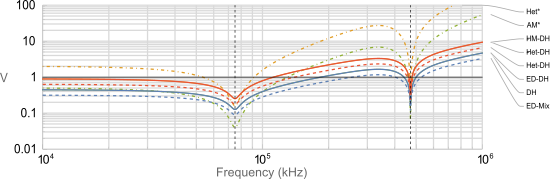
- addition, the positioning of the cantilever close to the surface will increase the damping on the cantilever and alter the transfer function accordingly [103]. Under conditions where the tip starts tapping the surface, the linearity of the amplitude signal in response to VAC and/or VCPD may be disrupted
Ultrafast signatures of magnetic inhomogeneity in Pd1−xFex (x ≤ 0.08) epitaxial thin films
Beilstein J. Nanotechnol. 2022, 13, 836–844, doi:10.3762/bjnano.13.74
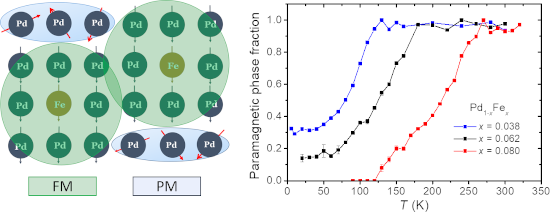
- inhomogeneities cause spin-flip and pairing wave function damping, thus, reducing the magnitude of the Josephson critical current. Small-scale inhomogeneities are difficult to detect with either conventional neutron-scattering methods [34] or with the stationary magneto-optical Kerr/Faraday effect and


A superconducting adiabatic neuron in a quantum regime
Beilstein J. Nanotechnol. 2022, 13, 653–665, doi:10.3762/bjnano.13.57
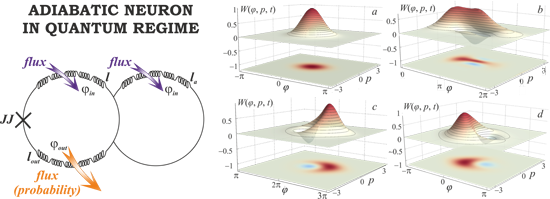
- activation function is especially noticeable for the case of a superposition of basic states. We have also shown how dissipation suppresses “quantum” oscillations on the activation function, just as damping suppresses plasma oscillations in classical Josephson systems. The obtained results pave the way for a


Quantitative dynamic force microscopy with inclined tip oscillation
Beilstein J. Nanotechnol. 2022, 13, 610–619, doi:10.3762/bjnano.13.53
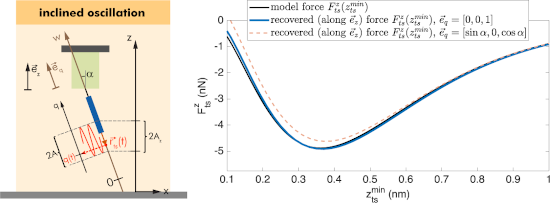
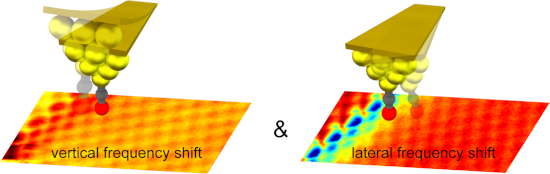
- equations that link the physical interaction parameters force and damping with the measurement observables static deflection qs, oscillation amplitude A, and phase φ as well as the excitation parameters frequency fexc and force Fexc. This theory specifically predicts the distant-dependent frequency shift
- of a viscous damping layer, in-plane dissipation mechanisms have been found to cause systematic changes of the phase shift in amplitude-modulation AFM depending on the cantilever inclination [15]. Furthermore, it has been proposed to use the presence of a lateral component in the tip oscillation path
- whereby the vectorial damping coefficient and the damping coefficient along the oscillation path have been introduced to write the odd force as Force response for the inclined sampling path By reinterpreting the cup and cap averaging functionals as line integrals along the inclined tip sampling path


![[Graphic 38]](/bjnano/content/inline/2190-4286-13-53-i79.svg?max-width=637&scale=1.18182) and the axis w....
and the axis w....


Approaching microwave photon sensitivity with Al Josephson junctions
Beilstein J. Nanotechnol. 2022, 13, 582–589, doi:10.3762/bjnano.13.50
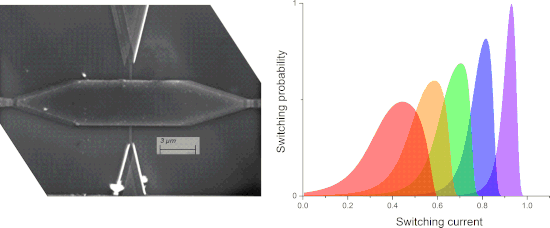
- damping values [48][49]: The used notations are the following: i = Ibias/Ic is the dimensionless bias current with the bias current Ibias and the critical current Ic, is the potential barrier height, γ = IT/Ic is the noise intensity, and IT = 2ekT/ℏ is the fluctuational current which can be calculated as


Electrostatic pull-in application in flexible devices: A review
Beilstein J. Nanotechnol. 2022, 13, 390–403, doi:10.3762/bjnano.13.32
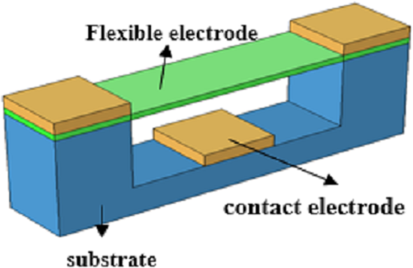
- structure of perforated parallel plates supported by four serpentine springs. The elastic coefficient can be significantly reduced by the serpentine meander structure. Also, the capacitance and viscous air damping can be effectively reduced by the perforated structure, thus reducing the pull-in voltage


Nanoscale friction and wear of a polymer coated with graphene
Beilstein J. Nanotechnol. 2022, 13, 63–73, doi:10.3762/bjnano.13.4
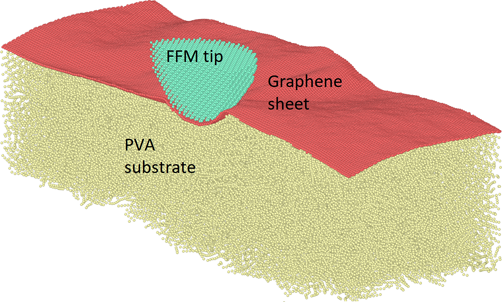
- particles of the AFM tip. This leads to a fairly small total tip mass. While this is not entirely physical, such a low mass will help speed up the dynamics and damping of the tip and save computation time without compromising the results [32]. We simulate the system with a time step of 1 fs. Substrate
- ensemble. The temperature of the melt at this point is extremely high. To obtain a realistic semicrystalline substrate structure, we cool down the sample using a Nosé–Hoover thermostat with a linearly decreasing temperature, starting at 5000 K down to 220 K with a cooling rate of 75 K/ns. The damping time
- 300 K and a damping time of 0.1 ps. This thermostat is applied only to the bottom quarter of the PVA molecules, and later to the graphene sheet. To prevent the polymer slab from moving as a result of the external forces during deposition of the graphene, indentation, and sliding, the centers of mass


Heating ability of elongated magnetic nanoparticles
Beilstein J. Nanotechnol. 2021, 12, 1404–1412, doi:10.3762/bjnano.12.104
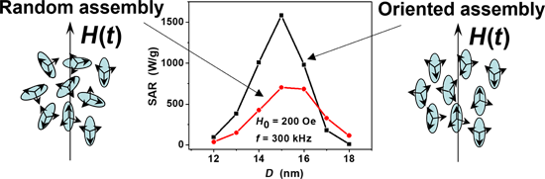
- ]: Here kB is the Boltzmann constant, γ is the gyromagnetic ratio, κ is phenomenological damping constant, δαβ is the Kronecker delta, and δ(t) is the delta function. The calculations of the low-frequency hysteresis loops are carried out at room temperature, T = 300 K. Results and Discussion SAR of dilute


Alteration of nanomechanical properties of pancreatic cancer cells through anticancer drug treatment revealed by atomic force microscopy
Beilstein J. Nanotechnol. 2021, 12, 1372–1379, doi:10.3762/bjnano.12.101
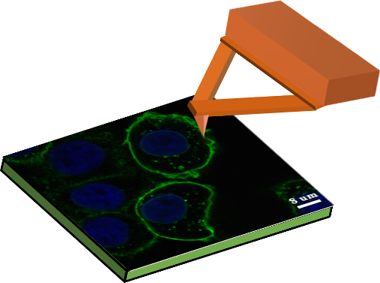
- smaller than that of the three PCCs. This could be caused by the difference of the internal friction and/or vicious damping [26][27] between the normal and the cancer cells. The relative Young’s modulus distributions of different kinds of cells, according to the nanomechanical mapping (Figure 3a–d) and


Cantilever signature of tip detachment during contact resonance AFM
Beilstein J. Nanotechnol. 2021, 12, 1286–1296, doi:10.3762/bjnano.12.96
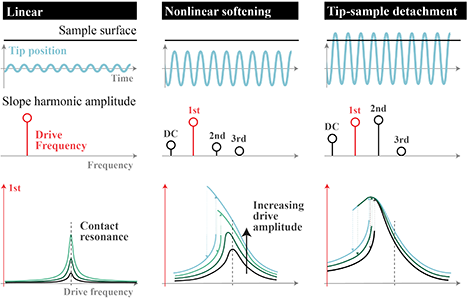
- shape of the cantilever, ρA is the mass per unit length, ccantilever is the linear viscous damping coefficient, and EI is the cantilever flexural rigidity. Dots over variables refer to time derivatives, while primes denote partial derivatives with respect to the position along the cantilever length
- parameter results allow for the calculation of the sample stiffness ksample and the mass per unit length ρA. Next, combining the latter term with the quality factor Q of the first contact mode, the linear viscous cantilever damping is defined as: Remaining system parameters relating to the tip–sample


Irradiation-driven molecular dynamics simulation of the FEBID process for Pt(PF3)4
Beilstein J. Nanotechnol. 2021, 12, 1151–1172, doi:10.3762/bjnano.12.86
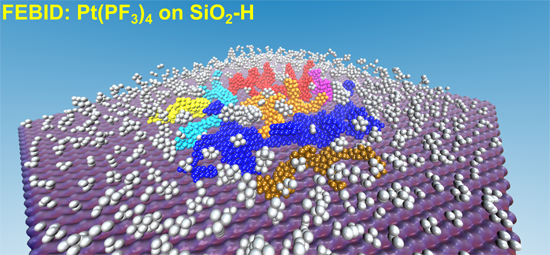
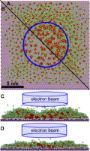
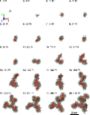
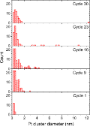
- moving in space. In this study a sub-monolayer of Pt(PF3)4 with the size of 20 nm × 20 nm is optimized, adsorbed on a SiO2-H substrate and thermalized at 300 K for 0.1 ns using the Langevin thermostat with a damping time of 0.2 ps. The constructed layer consists of approximately 370 molecules that








Reducing molecular simulation time for AFM images based on super-resolution methods
Beilstein J. Nanotechnol. 2021, 12, 775–785, doi:10.3762/bjnano.12.61
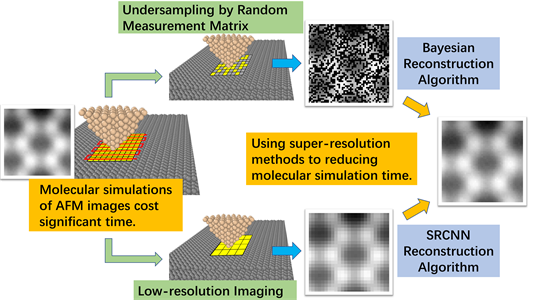
- virtual atom is added above the tip apex and they are connected with a spring in the z-direction. The virtual atom is excited by a sinusoidal signal, mimicking the acoustic excitation of AM-AFM. The excited frequency is adjusted by the spring stiffness. A damping force is applied on the tip to ensure the
- correct damping of the tip oscillation. In the simulation, the initial distance between the virtual atom and the sample surface Zc remains unchanged at a suitable distance. Then we employ the raster scanning method to construct the average interplay energy map of the sample surface in a calculation period




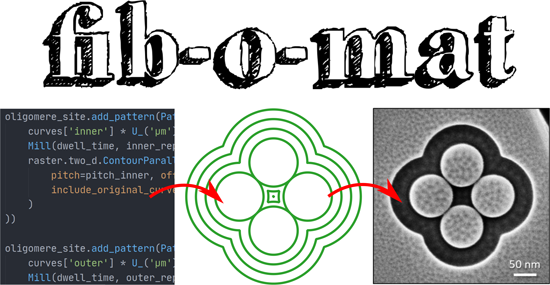
The patterning toolbox FIB-o-mat: Exploiting the full potential of focused helium ions for nanofabrication
Beilstein J. Nanotechnol. 2021, 12, 304–318, doi:10.3762/bjnano.12.25
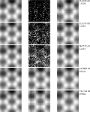
- feature dipole-forbidden eigenmodes [58] with low damping when being excited by the incidence of structured light [59]. First, we focus on comparable tetramer geometries to assess the influence on geometric fidelity and possible ion-beam induced material/substrate modifications on the plasmonic response


Numerical analysis of vibration modes of a qPlus sensor with a long tip
Beilstein J. Nanotechnol. 2021, 12, 82–92, doi:10.3762/bjnano.12.7
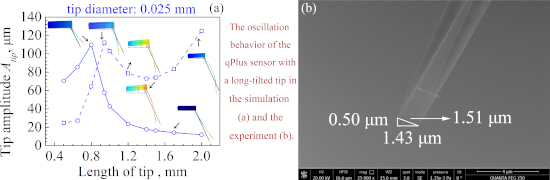
- . Table 1 summarizes the parameters used, including Young’s modulus, Poisson’s ratio, mass density, and damping coefficients for all materials considered. The values for Torr seal epoxy were chosen as in the papers by Dennis van Vörden et al. [25] and Omur E. Dagdeviren and co-workers [26]. The parameters
- for quartz, gold, and tungsten were taken from the materials library of the simulation software, except for the damping coefficient for quartz, which was chosen based on our experimental results. According to [26], it is also worth noting that (i) due to the comparatively low internal damping
- occurring inside gold and tungsten, we did not assign a damping coefficient to any of these materials to reduce the computational cost, and that (ii) the sensor is oscillating in vacuum. Observation by scanning electron microscope (SEM) Firstly, in this paper, the whole assembly consisting of tuning fork






Application of contact-resonance AFM methods to polymer samples
Beilstein J. Nanotechnol. 2020, 11, 1714–1727, doi:10.3762/bjnano.11.154
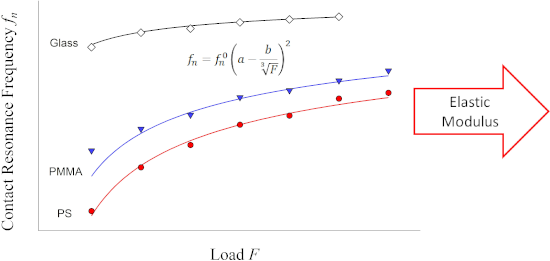
- –sample system as a vertical spring ignores lateral forces (and related torsion) and damping [8][26]. The models do not represent satisfactorily the complex situation of a CR measurement on a polymer. In other words, different values of γ for different samples “compensate” for the lack of parameters
- structure, tip mass, plastic deformations, viscoelastic behavior, adhesion, lateral forces, and damping increases significantly the number of free parameters, so that the practical use of such complex models is very limited. The dependence of γ on the sample is a severe limitation for measurements on thin
- , adhesion, and damping should be accounted for in models of the system. Unfortunately, especially in case of polymers, this would drastically increase the number of parameters needed for the description of the cantilever–sample system. The inadequacy of simple models for the description of polymer samples


Design of V-shaped cantilevers for enhanced multifrequency AFM measurements
Beilstein J. Nanotechnol. 2020, 11, 1525–1541, doi:10.3762/bjnano.11.135
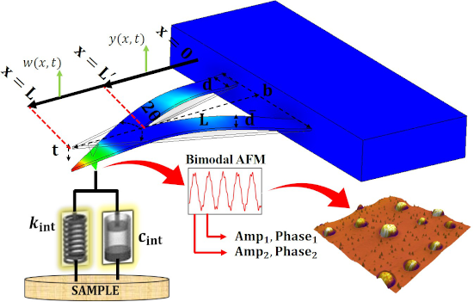
- , y(x,t), ϕ(x,t), ρ, I, E and c are shear coefficient, shear modulus, area of cross section, transverse deflection of the beam, bending angle of the beam, mass density of the beam, moment of inertia of cross section, Young’s modulus, and internal damping of the cantilevers, respectively. The cross
- force of two fundamental cantilever resonant frequencies as Fexc = F01 cos ω1t + F02 cos ω2t where ω1 and ω2 are the first and second resonant frequencies. This form of EOM can express the internal damping coefficient as proportional damping model in terms of the mass and stiffness matrices. Therefore
- , the internal damping factor, which is written in Equation 1 through Equation 4 is found by Equation 16: where M is the mass matrix, K is the stiffness matrix, a0 is the mass damping coefficient, and a1 is the stiffness damping coefficient. Based on the Rayleigh’s proportional damping shown in Equation


![[Graphic 4]](/bjnano/content/inline/2190-4286-11-135-i26.svg?max-width=637&scale=1.18182) = 15 µm, bref = 8...
= 15 µm, bref = 8...


![[Graphic 17]](/bjnano/content/inline/2190-4286-11-135-i39.svg?max-width=637&scale=1.18182) ) of V-shaped cantilevers for...
) of V-shaped cantilevers for...


Adsorption and self-assembly of porphyrins on ultrathin CoO films on Ir(100)
Beilstein J. Nanotechnol. 2020, 11, 1516–1524, doi:10.3762/bjnano.11.134
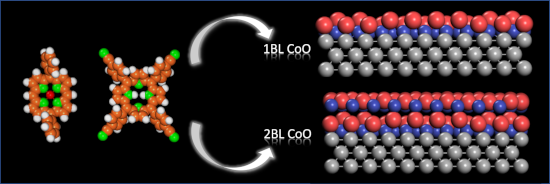
- -PAW general gradient approximation [33]. To account for dispersion forces the zero damping DFT-D3 correction of Grimme et al. was used [34]. Slabs were constructed from two layers of iridium and one or two bilayers of cobalt oxide. For the iridium lattice the relaxed DFT-D3 parameter (a = 3.835 Å) was

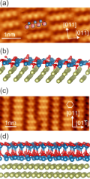
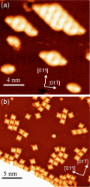

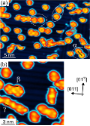


Influence of the magnetic nanoparticle coating on the magnetic relaxation time
Beilstein J. Nanotechnol. 2020, 11, 1207–1216, doi:10.3762/bjnano.11.105
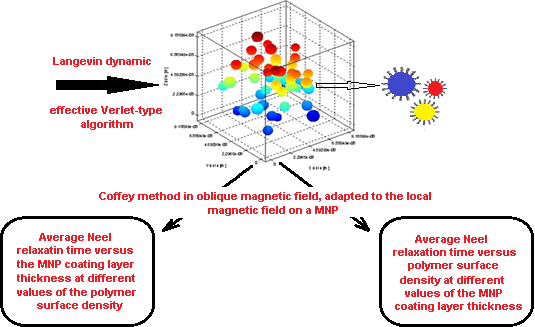
- nanoparticle Néel relaxation time in oblique magnetic fields is given by [21][22] where ΔEi12 and ΔEi21 are the normalized energy barriers for the magnetic moment reorientations. The magnetisation-free diffusion time (τi0N) for low damping is [21][22] where vi is the volume of the i-th nanoparticle, Ms is the
- spontaneous magnetisation, kB is the Boltzmann constant, T is the temperature, α is the damping constant, and γ is the gyromagnetic ratio. In Equation 1, where Ψi is the angle between and the easy anisotropy axis of the i-th nanoparticle. θip are the solutions of the following transcendental equation: In


Nonadiabatic superconductivity in a Li-intercalated hexagonal boron nitride bilayer
Beilstein J. Nanotechnol. 2020, 11, 1178–1189, doi:10.3762/bjnano.11.102
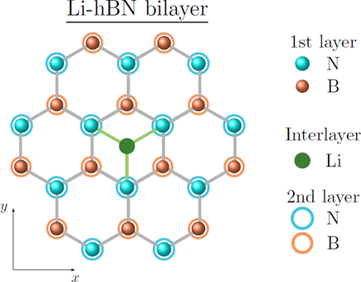
- imaginary part of Δ(ω) determines the damping effects. One can see that at low frequencies, where Im[Δ(ω)] = 0, these effects do not occur. From the physical point of view, this means the infinite lifetime of the Cooper pairs. Above the frequency ω ≈ 15 meV, both the real and imaginary part of the order


![[Graphic 34]](/bjnano/content/inline/2190-4286-11-102-i54.svg?max-width=637&scale=1.18182) for Li-hBN. The results were obta...
for Li-hBN. The results were obta...
Vibration analysis and pull-in instability behavior in a multiwalled piezoelectric nanosensor with fluid flow conveyance
Beilstein J. Nanotechnol. 2020, 11, 1072–1081, doi:10.3762/bjnano.11.92
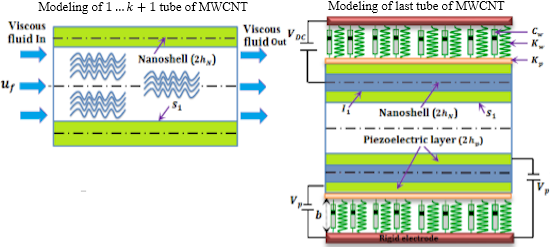
- . investigated the effect of nonzero initial conditions, the nonlinear coefficient of squeeze film air damping, and the van der Waals effect on the stability of torsional nanomirrors for the obtained dynamic pull-in instability voltage using the size effect [14]. Fakhrabadi et al. utilized the modified couple


![[Graphic 46]](/bjnano/content/inline/2190-4286-11-92-i46.svg?max-width=637&scale=1.18182) on DNF of FC-MWPENS.
on DNF of FC-MWPENS.


![[Graphic 50]](/bjnano/content/inline/2190-4286-11-92-i50.svg?max-width=637&scale=1.18182) on DNF of SS FC-MWPENS.
on DNF of SS FC-MWPENS.


![[Graphic 54]](/bjnano/content/inline/2190-4286-11-92-i54.svg?max-width=637&scale=1.18182) on DNF of SS FC-MWPENS.
on DNF of SS FC-MWPENS.


![[Graphic 59]](/bjnano/content/inline/2190-4286-11-92-i59.svg?max-width=637&scale=1.18182) for fluid velocity
for fluid velocity ![[Graphic 60]](/bjnano/content/inline/2190-4286-11-92-i60.svg?max-width=637&scale=1.18182) on DNF of SS FC-MWPENS.
on DNF of SS FC-MWPENS.

![[Graphic 61]](/bjnano/content/inline/2190-4286-11-92-i61.svg?max-width=637&scale=1.18182) for pull-in voltage on DNF of SS FC-MWPENS.
for pull-in voltage on DNF of SS FC-MWPENS.

![[Graphic 67]](/bjnano/content/inline/2190-4286-11-92-i67.svg?max-width=637&scale=1.18182) for fluid velocity
for fluid velocity ![[Graphic 68]](/bjnano/content/inline/2190-4286-11-92-i68.svg?max-width=637&scale=1.18182) on DNF of SS FC-MWPENS.
on DNF of SS FC-MWPENS.

![[Graphic 69]](/bjnano/content/inline/2190-4286-11-92-i69.svg?max-width=637&scale=1.18182) for pull-in voltage on DNF of SS FC-MWPENS.
for pull-in voltage on DNF of SS FC-MWPENS.

![[Graphic 73]](/bjnano/content/inline/2190-4286-11-92-i73.svg?max-width=637&scale=1.18182) on DNF of SS FC-MWPENS.
on DNF of SS FC-MWPENS.


![[Graphic 75]](/bjnano/content/inline/2190-4286-11-92-i75.svg?max-width=637&scale=1.18182) on DNF of SS FC-MWPENS.
on DNF of SS FC-MWPENS.

Excitonic and electronic transitions in Me–Sb2Se3 structures
Beilstein J. Nanotechnol. 2020, 11, 1045–1053, doi:10.3762/bjnano.11.89
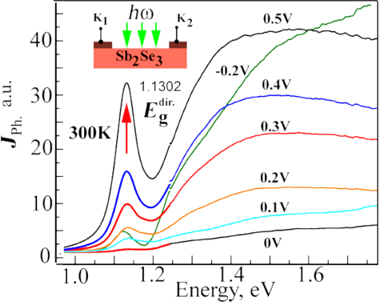
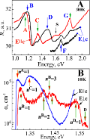
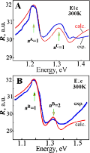
- damping factor (γ) is 110 and the translational mass of the exciton (M) is 3.5m0 (Table 2). For the excitonic series С the following parameters were calculated: ωТ = 1.310 eV, ωLT = 17 meV, γ = 150 and M = 3.9m0. For the E⟂c polarization case the calculations of the reflection spectra profiles gave the