


Search results
Search for "nanofabrication" in Full Text gives 127 result(s) in Beilstein Journal of Nanotechnology.
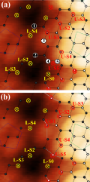
Thermal oxidation process on Si(113)-(3 × 2) investigated using high-temperature scanning tunneling microscopy
Beilstein J. Nanotechnol. 2022, 13, 172–181, doi:10.3762/bjnano.13.12
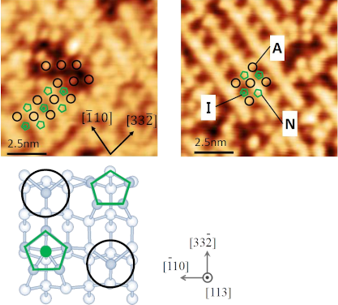
- . Funding This work was supported by JSPS KAKENHI (25286016 to M. Tanaka,17H02777 to K. Miki) and the NIMS Nanofabrication Platform in the Nanotechnology Platform Project from the Ministry of Education, Culture, Sports, Science and Technology, Japan (MEXT).


Irradiation-driven molecular dynamics simulation of the FEBID process for Pt(PF3)4
Beilstein J. Nanotechnol. 2021, 12, 1151–1172, doi:10.3762/bjnano.12.86
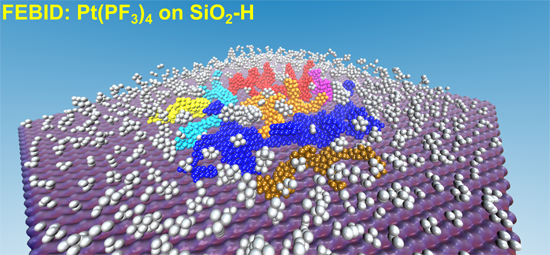
- fragmentation and the related mechanism of nanostructure formation and growth using FEBID, which are essential for the further advancement of FEBID-based nanofabrication. The developed computational methodology is general and applicable to different precursor molecules, substrate types, and irradiation regimes
- . The methodology can also be adjusted to simulate the nanostructure formation by other nanofabrication techniques using electron beams, such as direct electron beam lithography. In the present study, the methodology is applied to the IDMD simulation of the FEBID of Pt(PF3)4, a widely studied precursor
- of the fabricated nanostructures is still a technological challenge [7], mainly originating from the lack of molecular-level understanding of the irradiation-driven chemistry (IDC) underlying formation and growth of nanostructures. Further advances in FEBID-based nanofabrication require a deeper








Is the Ne operation of the helium ion microscope suitable for electron backscatter diffraction sample preparation?
Beilstein J. Nanotechnol. 2021, 12, 965–983, doi:10.3762/bjnano.12.73
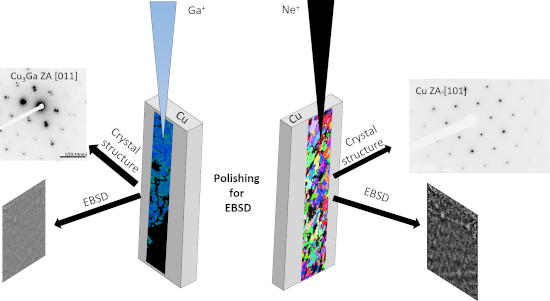
- century [1]. From its beginnings as primarily an imaging tool [2][3][4][5][6][7][8][9] it was established as a key tool in nanofabrication [10][11][12][13][14][15], defect engineering [16][17], and recently for material analysis [18][19]. The extended range of applications in which the second-generation



A review of defect engineering, ion implantation, and nanofabrication using the helium ion microscope
Beilstein J. Nanotechnol. 2021, 12, 633–664, doi:10.3762/bjnano.12.52
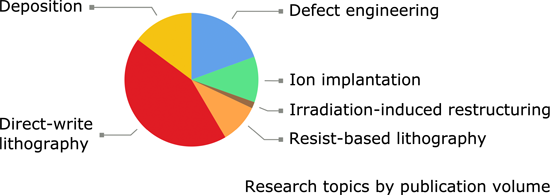
- multifaceted instrument enabling a broad range of applications beyond imaging in which the finely focused helium ion beam is used for a variety of defect engineering, ion implantation, and nanofabrication tasks. Operation of the ion source with neon has extended the reach of this technology even further. This
- irradiation effects, such as defect formation and ion implantation, are used to locally change the properties of the material, and at higher doses, nanofabrication is performed using localized material removal (by sputtering) or addition (by gas-assisted deposition). Sometimes, lower-dose irradiation effects
- also lead to a nanofabrication outcome. For example, localized swelling by ion implantation can be used to pattern nanoscale surface topographies, ion-induced collisional mixing can restructure buried interfaces, and ion-induced chemical changes can be used for resist-based lithography. In the


The patterning toolbox FIB-o-mat: Exploiting the full potential of focused helium ions for nanofabrication
Beilstein J. Nanotechnol. 2021, 12, 304–318, doi:10.3762/bjnano.12.25
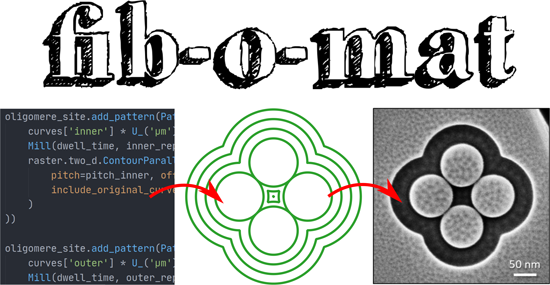
- geometry and raster settings. It also offers low-level beam path creation, providing full control over the beam movement and including sophisticated optimization tools. Three applications showcasing the potential of He ion beam nanofabrication for two-dimensional material systems and devices using FIB-o
- nanometer range is heavily sought after. One promising candidate for ultraprecise nanofabrication is focused ion beam (FIB) machining. Focused ion beams locally remove material based on physical sputtering with a large degree of flexibility due to advanced beam control. FIB patterning is a direct single
- ranging from several days to one or two months. For imaging and nanofabrication, only one of the three atoms is selected. This nearly ideal point source allows not only for high-resolution imaging but also for the milling of smallest geometric features [5][6][7]. Furthermore, large-area machining is


Gold(I) N-heterocyclic carbene precursors for focused electron beam-induced deposition
Beilstein J. Nanotechnol. 2021, 12, 257–269, doi:10.3762/bjnano.12.21
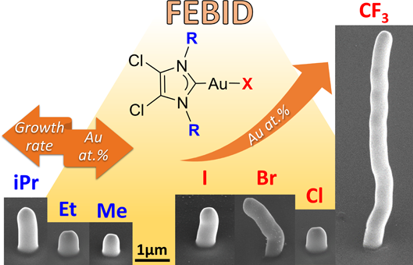
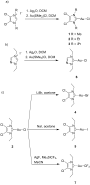
- −. Keywords: Au(I) precursors; focused electron beam-induced deposition (FEBID); gold-NHC; gold precursors; nanofabrication; N-heterocyclic carbene; Introduction Focused electron beam-induced deposition (FEBID) is a nanofabrication technique that allows for the growth of three-dimensional free-standing
- nanostructures [1][2][3][4]. This mask-less nanofabrication technique uses gaseous molecules as precursors. The gas molecules are introduced in the specimen chamber of a scanning electron microscope (SEM), adsorb onto a substrate, and dissociate upon electron irradiation, leaving a solid deposit on the substrate





Scanning transmission helium ion microscopy on carbon nanomembranes
Beilstein J. Nanotechnol. 2021, 12, 222–231, doi:10.3762/bjnano.12.18
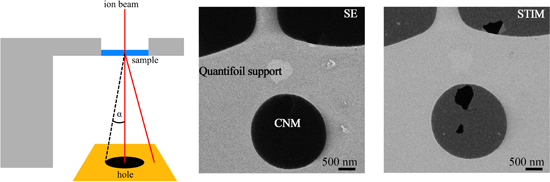
- established as a key nanofabrication tool for milling [7][8][9], defect engineering [10][11], and resist-based lithography [12][13], overcoming the resolution limitations of other FIB techniques [14][15]. Both bulk samples as well as thin membranes have been structured using the HIM. On membranes, the sputter


Imaging of SARS-CoV-2 infected Vero E6 cells by helium ion microscopy
Beilstein J. Nanotechnol. 2021, 12, 172–179, doi:10.3762/bjnano.12.13
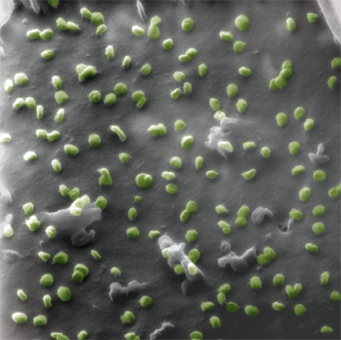
- of its sub-nanometer imaging and ion-beam nanofabrication capabilities in materials science and engineering [1]. Although HIM soon proved to be a promising tool in the life sciences, the examination of biological samples by HIM proceeded at a much slower pace. In recent years, it has been used in the


Bio-imaging with the helium-ion microscope: A review
Beilstein J. Nanotechnol. 2021, 12, 1–23, doi:10.3762/bjnano.12.1
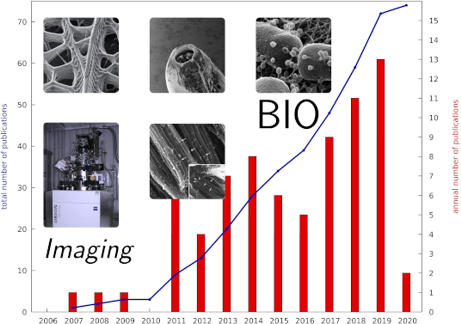
- study regarding biological HIM imaging of a whole variety of biological samples, including plants, bacteria, cancer cells, and a nematode worm, Pristionchus pacificus. The imaging of that worm will be discussed later in the section “Nanofabrication” regarding its innovative use of the combination of


Scanning transmission imaging in the helium ion microscope using a microchannel plate with a delay line detector
Beilstein J. Nanotechnol. 2020, 11, 1854–1864, doi:10.3762/bjnano.11.167
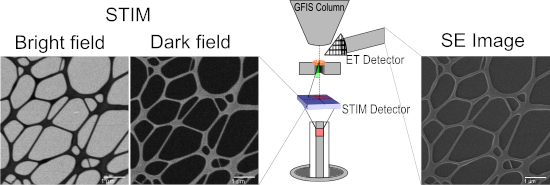
- microscopy; scanning transmission ion microscopy; Introduction The helium ion microscope (HIM) is an instrument that has already proven its value for high-resolution imaging, compositional analysis, nanofabrication, and materials modification [1][2]. It generates a focused helium (or neon) ion beam with sub


Electron beam-induced deposition of platinum from Pt(CO)2Cl2 and Pt(CO)2Br2
Beilstein J. Nanotechnol. 2020, 11, 1789–1800, doi:10.3762/bjnano.11.161
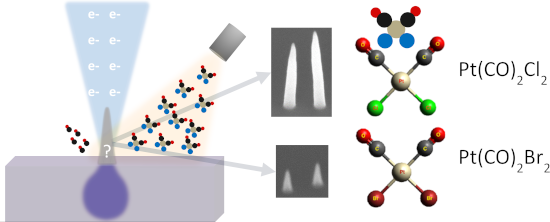
- -dispersive X-ray spectroscopy (EDX); focused electron beam-induced deposition (FEBID); nanofabrication; platinum precursors; scanning electron microscopy (SEM); thermogravimetric analysis (TGA); Introduction Focused electron beam-induced deposition (FEBID) is a direct-write nanopatterning technique. FEBID


Direct observation of the Si(110)-(16×2) surface reconstruction by atomic force microscopy
Beilstein J. Nanotechnol. 2020, 11, 1750–1756, doi:10.3762/bjnano.11.157
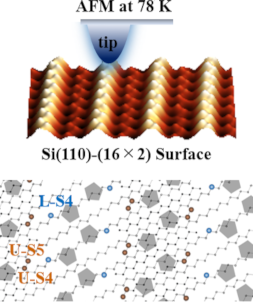
- ) Phase A shows an actual phase relationship of the 16×2 reconstruction. (b) In phase B, pentagon pairs on the lower terrace are shifted by a half cycle (16×1) along the zig-zag row. Acknowledgements A part of this study was supported by NIMS Nanofabrication Platform in Nanotechnology Platform Project



Out-of-plane surface patterning by subsurface processing of polymer substrates with focused ion beams
Beilstein J. Nanotechnol. 2020, 11, 1693–1703, doi:10.3762/bjnano.11.151
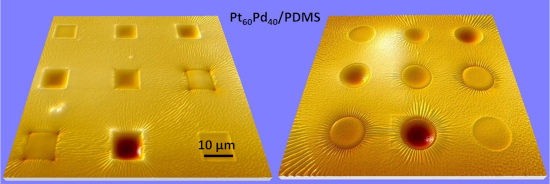
- irradiation-induced mechanical strain in the patterning process are elaborated and discussed. Keywords: direct patterning; focused helium ion beam; out-of-plane nanopatterning; polymers; thin films; Introduction Micro- and nanofabrication with focused ion beams (FIBs) is currently a subject of strong


Optically and electrically driven nanoantennas
Beilstein J. Nanotechnol. 2020, 11, 1542–1545, doi:10.3762/bjnano.11.136

- , Germany 10.3762/bjnano.11.136 Keywords: active plasmonics; electrically driven nanoantenna; gap antenna; nanoantenna; nanofabrication; nanospectroscopy; nano-photonics; optical antenna; second harmonic generation; sensing; scanning tip; surface-enhanced infrared absorption (SEIRA); surface-enhanced Raman
- , etc. (a few nanometers to below 1 nm). Nanoantennas have been under examination for the past few decades in view of their attractive fundamental properties, while the rapid development of nanofabrication techniques has opened up possibilities to create more and more sophisticated shapes and
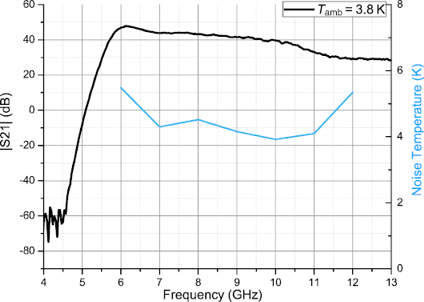
A wideband cryogenic microwave low-noise amplifier
Beilstein J. Nanotechnol. 2020, 11, 1484–1491, doi:10.3762/bjnano.11.131
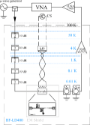
- coupled to a single qubit. The sample was made at the BMSTU Nanofabrication Facility (FMN Laboratory, FMNS REC, ID 74300) using Al technology [29][30]. The X-mon qubit was made of two Al/AlxOy/Al parallel Josephson junctions forming a SQUID-type structure coupled to the main ground plane. The standard




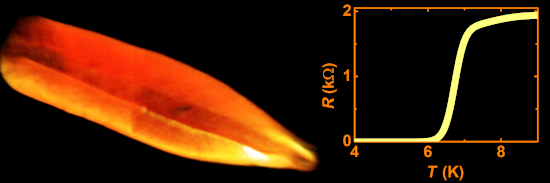
3D superconducting hollow nanowires with tailored diameters grown by focused He+ beam direct writing
Beilstein J. Nanotechnol. 2020, 11, 1198–1206, doi:10.3762/bjnano.11.104
- that gave rise to these results received the support of a fellowship from ”la Caixa” Foundation (ID 100010434). The fellowship code is LCF/BQ/PR19/11700008. The French RENATECH network (French national nanofabrication platform).



Electrochemical nanostructuring of (111) oriented GaAs crystals: from porous structures to nanowires
Beilstein J. Nanotechnol. 2020, 11, 966–975, doi:10.3762/bjnano.11.81
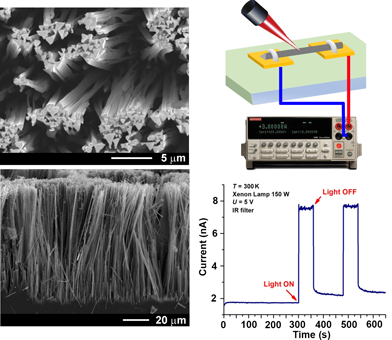
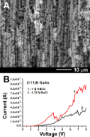
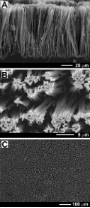
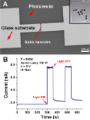
- Electrochemical technology became an established and cost-effective approach for the preparation of porous semiconductor matrices and arrays of nanowires with tailored architecture at the submicrometer scale [1][2][3]. Semiconductor nanotemplates provide many possibilities for nanofabrication through





Integrated photonics multi-waveguide devices for optical trapping and Raman spectroscopy: design, fabrication and performance demonstration
Beilstein J. Nanotechnol. 2020, 11, 829–842, doi:10.3762/bjnano.11.68
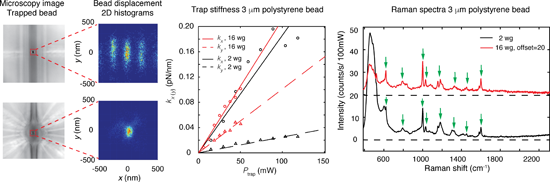
- waveguides. Keywords: Brownian motion; integrated optics devices; lab-on-a-chip; optical trapping; nanofabrication; Raman spectroscopy; ridge waveguides; Introduction Photonic lab-on-a-chip (LOC) techniques strongly attract attention for the manipulation and measurement of biological particles such as


Deterministic placement of ultra-bright near-infrared color centers in arrays of silicon carbide micropillars
Beilstein J. Nanotechnol. 2019, 10, 2383–2395, doi:10.3762/bjnano.10.229
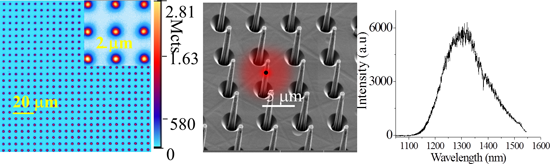
- platform for the integration of these quantum systems in large-scale complementary metal-oxide semiconductor (CMOS)-compatible wafers. Also, SiC is suitable for nanofabrication [18][19], and can be controlled through its electronic and piezoelectric properties. Further, it has great potentials for


The importance of design in nanoarchitectonics: multifractality in MACE silicon nanowires
Beilstein J. Nanotechnol. 2019, 10, 2094–2102, doi:10.3762/bjnano.10.204
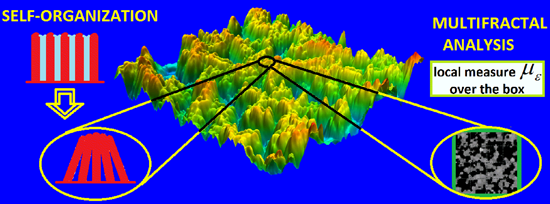
- nanoarchitectures generated by NWs or other elemental nanobjects the self-assembly/self-organization mechanisms are pivotal to generate the assembled structures. In fact, the direct fabrication of such structures by microfabrication or even nanofabrication approaches would be challenging or impossible, given the




Review of advanced sensor devices employing nanoarchitectonics concepts
Beilstein J. Nanotechnol. 2019, 10, 2014–2030, doi:10.3762/bjnano.10.198
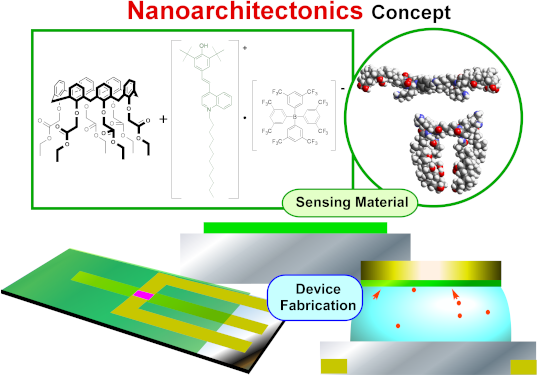
- advancements in sensor technology are no longer limited by progress in microfabrication and nanofabrication of device structures – opening a new avenue for highly engineered, high performing sensor systems through the application of nanoarchitectonics concepts. Keywords: interface; molecular recognition
- on advancements in microfabrication and nanofabrication of device structures. These so-called nanotechnological advancements enable us to prepare sensing devices with various advantageous features with an ultrasmall device size (thus requiring an ultrasmall amount of the target sample), highly





Precise local control of liquid crystal pretilt on polymer layers by focused ion beam nanopatterning
Beilstein J. Nanotechnol. 2019, 10, 1691–1697, doi:10.3762/bjnano.10.164
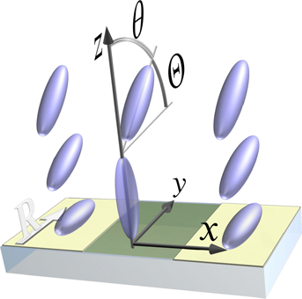
- : The possibility of nanofabrication of polymer substrates supporting an arbitrary (from planar to vertical) spatially inhomogeneous liquid crystal alignment opens up prospects of “imprinting” electrically tunable versatile metasurfaces constituting lenses, prisms and q-plates. Keywords: focused ion


Development of a new hybrid approach combining AFM and SEM for the nanoparticle dimensional metrology
Beilstein J. Nanotechnol. 2019, 10, 1523–1536, doi:10.3762/bjnano.10.150
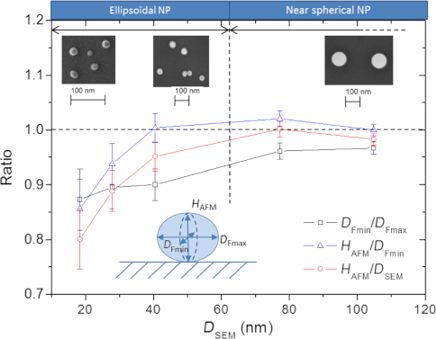
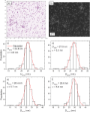
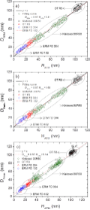
- letters) compatible with AFM and SEM. These chips were produced in collaboration with the nanofabrication laboratory CNRS/C2N. They enable the quick identification of an area of interest with a set of NPs to be measured with both techniques. The marks are etched in silicon wafer, so the surface is



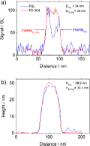
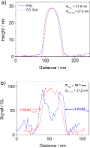

Fabrication of phase masks from amorphous carbon thin films for electron-beam shaping
Beilstein J. Nanotechnol. 2019, 10, 1290–1302, doi:10.3762/bjnano.10.128
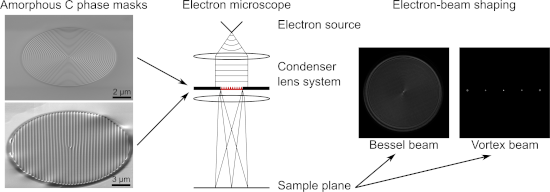
- ; Bessel beam; electron-beam shaping; nanofabrication; vortex beam; Introduction The possibility to shape electron beams has gained much interest since the first observation of electron vortex beams, i.e., beams that carry a defined orbital angular momentum [1][2][3]. Various other beam shapes, e.g., non


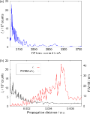

A silver-nanoparticle/cellulose-nanofiber composite as a highly effective substrate for surface-enhanced Raman spectroscopy
Beilstein J. Nanotechnol. 2019, 10, 1270–1279, doi:10.3762/bjnano.10.126
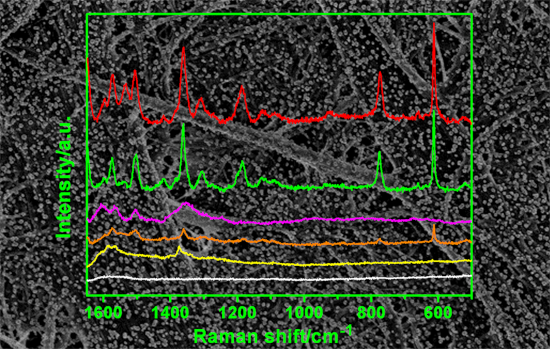
- stepping up from “nanofabrication” to “nanoarchitectonics” [1]. Nanoarchitectonics as a novel paradigm to create specific materials by assembling the corresponding nanoscale building blocks was first proposed by M. Aono and co-workers in the year 2000 [2][3]. The concept has been recently extended





