Search results
Search for "photodetectors" in Full Text gives 55 result(s) in Beilstein Journal of Nanotechnology.
Band tail state related photoluminescence and photoresponse of ZnMgO solid solution nanostructured films
Beilstein J. Nanotechnol. 2020, 11, 899–910, doi:10.3762/bjnano.11.75
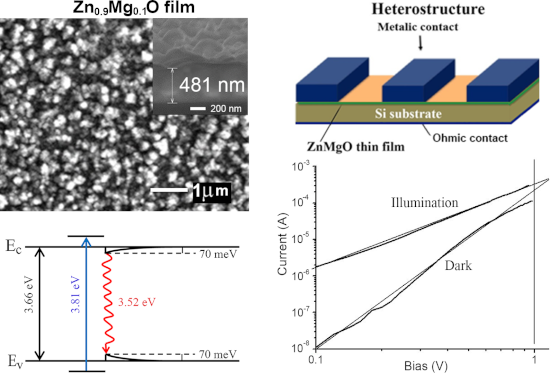
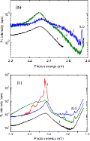
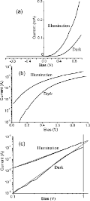
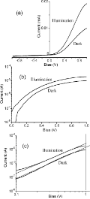
- ][25][26][27][28][29][30][33][34]. The choice of the substrate is determined by the application. In particular, glass, quartz or sapphire substrates are usually used for photodetectors in the metal–semiconductor–metal (MSM) configuration, including Schottky photodetectors [1][19][24][25][28][29][30][31
- ][32]. A comparison of MSM photodetectors based on ZnMgO films prepared by spin coating and spray pyrolysis performed recently revealed that the sensitivity of the structures prepared by spin coating is higher as compared to those obtained by spray pyrolysis, while the photoresponse to UV irradiation
- is faster in devices based on spray pyrolysis films [29]. Solar-blind UV photodetectors with the highest responsivity to date were demonstrated on sapphire substrates by introducing ZnO or Al2O3 buffer layers [11][16]. With respect to photodetectors with p–n junctions, some photodetectors have been

Evolution of Ag nanostructures created from thin films: UV–vis absorption and its theoretical predictions
Beilstein J. Nanotechnol. 2020, 11, 494–507, doi:10.3762/bjnano.11.40
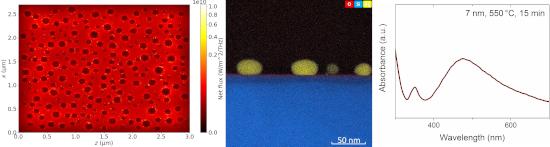
- nanoparticles. For instance, Ag nanoparticles can be used successfully in light emitting diodes, solar cells and photodetectors [11][12][13]. That is why understanding the relationship between the size and shape of nanostructures and the distribution of the electromagnetic field around the structures is




Simple synthesis of nanosheets of rGO and nitrogenated rGO
Beilstein J. Nanotechnol. 2020, 11, 68–75, doi:10.3762/bjnano.11.7
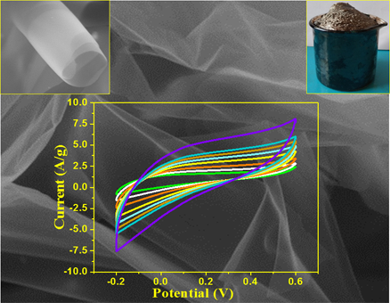
- hybrid systems such as batteries [6], electrodes [7] and photodetectors [8]. In 1958, Hummer and Offeman developed a chemical method to synthesize graphene oxide by acid treatment of graphite [9]. The graphene oxide thus obtained contains oxygen functional groups (–CO–, –COC–) on the surface and edges of


Recent progress in perovskite solar cells: the perovskite layer
Beilstein J. Nanotechnol. 2020, 11, 51–60, doi:10.3762/bjnano.11.5

- been developed into solar cells, photodetectors and light-emitting diodes (Figure 1). In OIHP photovoltaics, perovskite solar cells (PSCs) have entered our field of vision. With their high efficiency and low cost, they are expected to be highly influential in next-generation photovoltaic technology. In
- , light-emitting diodes and photodetectors. Reproduced with permission from [63], copyright 2019 Royal Society of Chemistry. Scanning electron microscopy images of perovskite films prepared by the antisolvent deposition method treated with different solvents: (a) without antisolvent, (b) toluene, (c


Polyvinylpyrrolidone as additive for perovskite solar cells with water and isopropanol as solvents
Beilstein J. Nanotechnol. 2019, 10, 2374–2382, doi:10.3762/bjnano.10.228
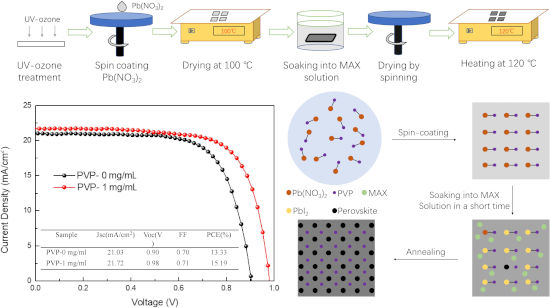
- remarkable light absorption capacity [5] and the tunable band gap [6] of inorganic–organic lead halide perovskite crystals make them suitable for the production of organic semiconductors [7], photodetectors [8], and photovoltaics [5]. In 2009, Kojima et al. achieved a breakthrough in using mesoporous TiO2 as




Remarkable electronic and optical anisotropy of layered 1T’-WTe2 2D materials
Beilstein J. Nanotechnol. 2019, 10, 1745–1753, doi:10.3762/bjnano.10.170
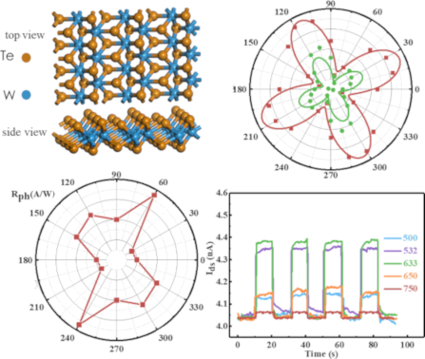
- photodetectors. Conclusion In summary, with the combination of XPS spectroscopy, HR-TEM, Raman spectroscopy, ADRDM and angle-resolved electrical measurements, we successfully revealed the in-plane optical and electrical anisotropy of 2D layered 1T’-WTe2. Furthermore, we presented the highly anisotropic
- its semi-metal bandgap structure and high anisotropy. In addition to angle-dependent photodetectors, its angle-resolved photoelectric properties may permit the development of plasmonic devices in which the surface plasmon polariton frequency has a highly directional dependence on the wave vector


Materials nanoarchitectonics at two-dimensional liquid interfaces
Beilstein J. Nanotechnol. 2019, 10, 1559–1587, doi:10.3762/bjnano.10.153
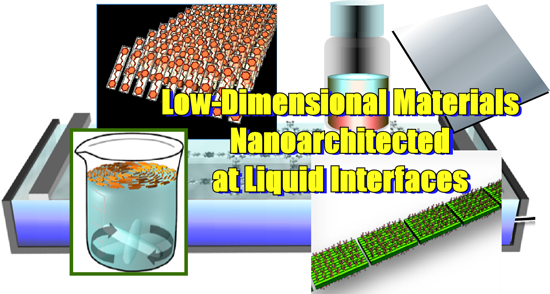
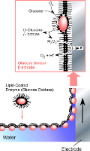
- . The nanoarchitecture materials can be used for various applications such as molecular recognition, sensors, photodetectors, supercapacitors, supramolecular differentiation, enzyme reactors, cell differentiation control, and hemodialysis. Keywords: film; interface; low-dimensional material
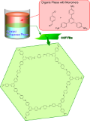
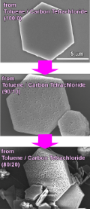
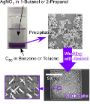
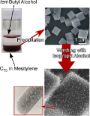
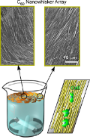
- -dimensional C60 crystals prepared through liquid–liquid interfacial precipitation between m-xylene and isopropyl alcohol for visible-spectrum photodetectors [248]. Additional materials or two metal contacts are not necessary in the fabricated photodetectors. These devices made solely from carbon can be used
- -workers [249]. Photoluminescence of the one-dimensional Lu2@C82 nanorods was remarkably enhanced compared to the pristine Lu2@C82 powder. The increased charge carrier transport would be also useful for applications with photoelectric purposes such as photodetectors. 4.3 Two- and three-dimensional, and













Electronic properties of several two dimensional halides from ab initio calculations
Beilstein J. Nanotechnol. 2019, 10, 823–832, doi:10.3762/bjnano.10.82
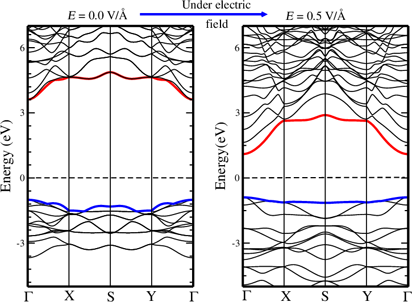
- , as it was done with MoS2 [51] and phosphorene monolayers [52]. At the same time, the compounds studied could be relevant in optics and optoelectronics, to design new photodetectors, polarizing filters, or modulating devices, as has already been done with other two-dimensional compounds [53][54]. Also


Ultrasonication-assisted synthesis of CsPbBr3 and Cs4PbBr6 perovskite nanocrystals and their reversible transformation
Beilstein J. Nanotechnol. 2019, 10, 666–676, doi:10.3762/bjnano.10.66
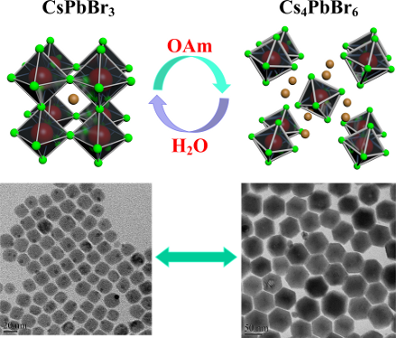
- ; ultrasonication; Introduction Metal halide perovskite nanocrystals (PNCs) are promising candidates for application in the fields of light-emitting diodes (LEDs) [1][2], high-efficiency solar cells [3], low-threshold lasers [4], and photodetectors [5]. Compared to traditional semiconductors, colloidal PNCs



Review of time-resolved non-contact electrostatic force microscopy techniques with applications to ionic transport measurements
Beilstein J. Nanotechnol. 2019, 10, 617–633, doi:10.3762/bjnano.10.62
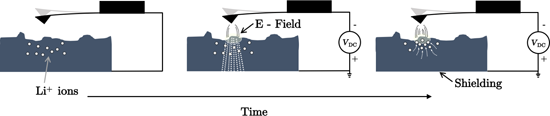
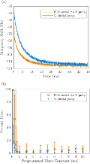
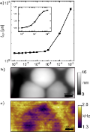
- . The only limitation on standard AFM systems are the photodetectors, which typically have bandwidths of 1–2 MHz, although faster photodiodes are available. The raw signal can then be filtered and postprocessed using a Hilbert transform to extract the analytical signal and what is known as the






Temperature-dependent Raman spectroscopy and sensor applications of PtSe2 nanosheets synthesized by wet chemistry
Beilstein J. Nanotechnol. 2019, 10, 467–474, doi:10.3762/bjnano.10.46
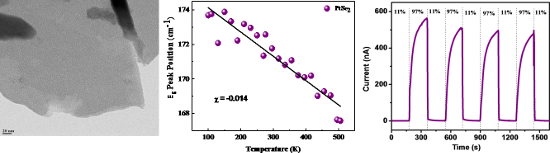
- due to its extraordinary optical, electrical, mechanical, magnetic and chemical properties [2][3][4][5]. Like graphene and its organic analogues [6], inorganic 2D metal dichalcogenides also exhibit outstanding performance in many applications including transistors, sensors, photodetectors, solar cells


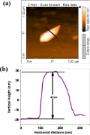
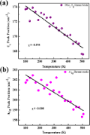

Advanced scanning probe lithography using anatase-to-rutile transition to create localized TiO2 nanorods
Beilstein J. Nanotechnol. 2019, 10, 412–418, doi:10.3762/bjnano.10.40
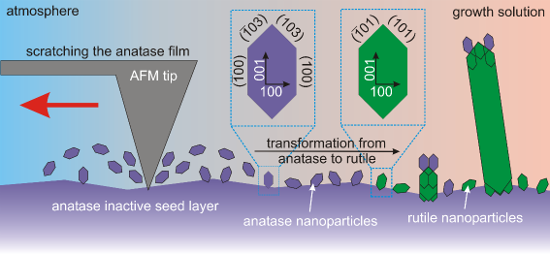
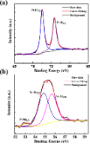
- optoelectronic characteristics. The fabrication of nanostructured TiO2 is inexpensive and hence employed in many applications such as photodetectors [2], photovoltaics [3][4][5][6], photocatalysis [7][8][9][10][11], surficial disinfection [12], biosensing [13], gas sensing [14][15][16], dewetting [17][18][19


Variation of the photoluminescence spectrum of InAs/GaAs heterostructures grown by ion-beam deposition
Beilstein J. Nanotechnol. 2018, 9, 2794–2801, doi:10.3762/bjnano.9.261
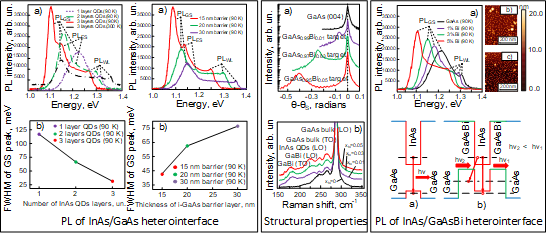
- . It is shown that isovalent doping of GaAs potential barriers by bismuth was accompanied by a red-shift of the photoluminescence peak of InAs quantum dots of 121 meV. Keywords: infrared photodetectors; ion-beam deposition; nanoheterostructures; photoluminescence; quantum dot; semiconductors
- ; Introduction The formation of III–V nanoheterostructures with quantum dots (QDs) raises the possibility of developing a new generation of photodetectors in the infrared range [1][2][3]. The significant problems of existing HgCdTe detectors are low yield and high cost in comparison with quantum-well infrared
- photodetectors (QWIPs) [4]. The QWIPs, in turn, have a simpler technology but a low quantum efficiency and require cooling. One way to solve these problems is to grow semiconductor heterostructures in which QDs are embedded. The localization of photogenerated charge carriers in a quantum dot along three


Optimization of the optical coupling in nanowire-based integrated photonic platforms by FDTD simulation
Beilstein J. Nanotechnol. 2018, 9, 2248–2254, doi:10.3762/bjnano.9.209
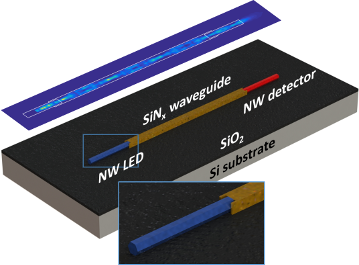
- [19]. Single NW photodetectors based on the photoconductive operation principle [20] or p–n junction photodiodes [21] have demonstrated high sensitivity. For these reasons, single NW components are considered as promising building blocks for integration with SiN photonic platforms. For the wafer-scale


Lead-free hybrid perovskites for photovoltaics
Beilstein J. Nanotechnol. 2018, 9, 2209–2235, doi:10.3762/bjnano.9.207
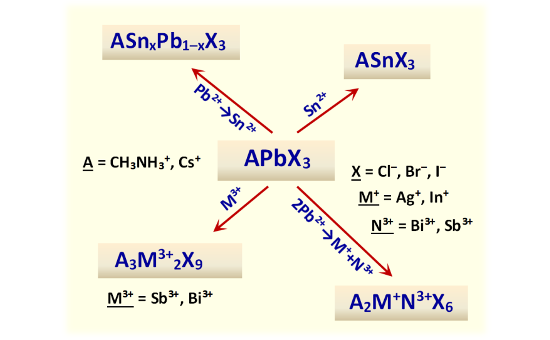
- other areas, in particular as light emitters for LEDs, laser applications and in photodetectors [28][29][30][31][35][43][47][50][52][53][54]. The versatility of the possible optoelectronic applications of Pb-HPs has stimulated an explosive progress in preparative chemistry and photophysics of HP
- UV photodetectors than for the photovoltaic applications. The organo–inorganic iodobismuthates C5H6NBiI4, C6H8NBiI4 and (C6H13N)2BiI5 displayed bandgaps of around 2 eV and stability under the ambient conditions [171][172]. Aromatic cations were found to contribute to the conduction band of these
- photodetectors [174]. The search for new lead-free HPs based on M3+ cations continues on. It often starts from the theoretical estimation of the stability, structure and optoelectronic properties of various HPs and selection of the most promising ones, stimulating further experimental work. For example, a broad


Multimodal noncontact atomic force microscopy and Kelvin probe force microscopy investigations of organolead tribromide perovskite single crystals
Beilstein J. Nanotechnol. 2018, 9, 1695–1704, doi:10.3762/bjnano.9.161
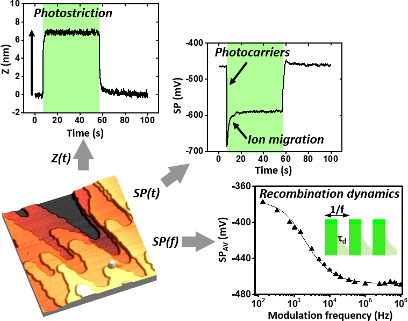
- conversion efficiencies exceeding 20% and several kinds of optoelectronic devices, including efficient light-emitting diodes [3], laser devices [4] and high-gain photodetectors [5]. Recently, Kelvin probe force microscopy (KPFM) has been used to investigate the impact of grain boundaries (GBs) on the


New 2D graphene hybrid composites as an effective base element of optical nanodevices
Beilstein J. Nanotechnol. 2018, 9, 1321–1327, doi:10.3762/bjnano.9.125
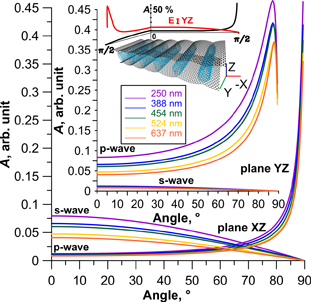
- little investigated modifications of graphene is a 2D-hybrid composite composed of graphene monolayers and CNTs covalently bonded to them [5][6][7][8]. The hybrid 2D film exhibits high performance as photosensitive element of photodetectors in the range of 100–700 nm. It was found that a single photon


Theoretical study of strain-dependent optical absorption in a doped self-assembled InAs/InGaAs/GaAs/AlGaAs quantum dot
Beilstein J. Nanotechnol. 2018, 9, 1075–1084, doi:10.3762/bjnano.9.99
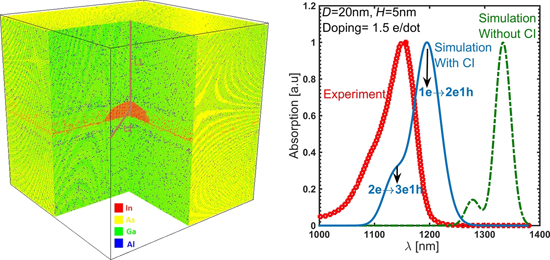
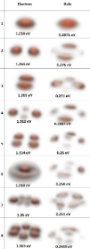
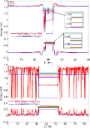
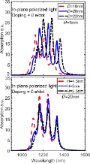
- absorption; quantum qot filling; self-assembled quantum dots; semi-empirical tight-binding; sp3d5s* with spin–orbit coupling (sp3d5s*_SO); Introduction Self-assembled quantum dots are employed as light absorbers in many optoelectronic devices, such as quantum-dot infrared photodetectors (QDIPs) [1][2], and




Optical contrast and refractive index of natural van der Waals heterostructure nanosheets of franckeite
Beilstein J. Nanotechnol. 2017, 8, 2357–2362, doi:10.3762/bjnano.8.235
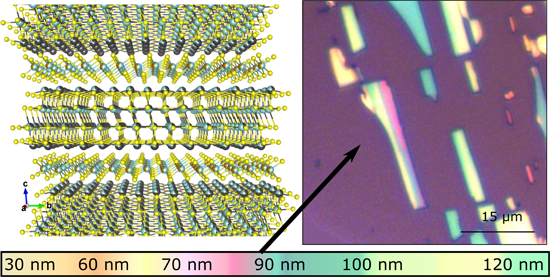
- adsorbates between the layers. Very recently Molina-Mendoza et al. demonstrated mechanical and liquid-phase exfoliation of franckeite down to 3–4 unit cells and they fabricated field-effect devices, near infrared photodetectors and PN junctions [15]. Also, Velický et al. isolated single unit cell nanosheets


Optical response of heterogeneous polymer layers containing silver nanostructures
Beilstein J. Nanotechnol. 2017, 8, 1065–1072, doi:10.3762/bjnano.8.108
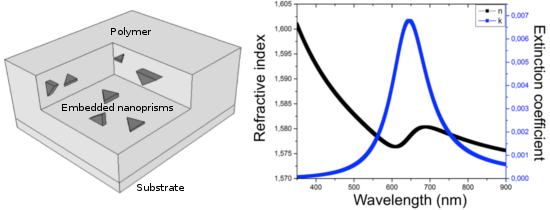
- NPs, the thin film layers will absorb in the visible wavelength range. This leads to applications of plasmonic thin film layers for photodetectors [10], photovoltaics [6][11] or nonreflective coatings [12][13][14]. In this works, silver NPs were chosen for their high electric field enhancement in the


Nanostructured germanium deposited on heated substrates with enhanced photoelectric properties
Beilstein J. Nanotechnol. 2016, 7, 1492–1500, doi:10.3762/bjnano.7.142
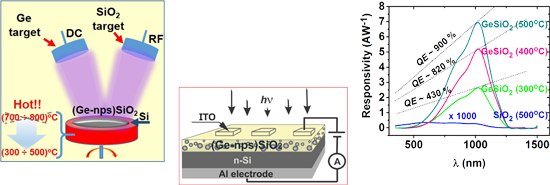
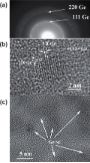
- devices individually or with other materials, hence the possibility of fabricating various heterojunctions on Si, glass or flexible substrates for future development of Si-based integrated optoelectronics. Keywords: germanium nanoparticle; photocurrent; photodetectors; response time; transport mechanism
- be fully described only through Ge-nps size. Ge-nps embedded in different dielectric matrices (e.g., SiO2, Si3N4 or HfO2) have been already used for fabrication of high-efficiency photodetectors [15], multilayer memory devices [16] and other applications as solar photoconversion cells [17], batteries
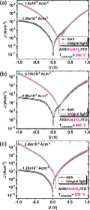
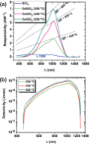
- dark current and dark current density, respectively. The detectivity (D*) value is estimated in the range of 1015 Jones at about 1040 nm, which is comparable with that of ZnO nanoparticles-based photodetectors (D* ≈ 3.4 × 10¹⁵ Jones at 360 nm) [47]. The broad wavelength range (from about 450 to 1300 nm




Blue and white light emission from zinc oxide nanoforests
Beilstein J. Nanotechnol. 2015, 6, 2463–2469, doi:10.3762/bjnano.6.255
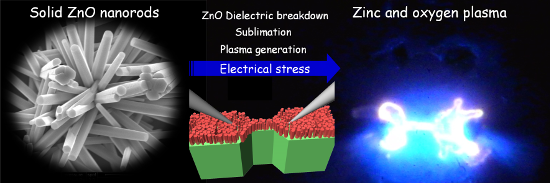
- gap semiconductor (≈3.4 eV) with large exciton binding energy (60 meV). ZnO nanowires have been shown to yield stimulated emission with optical pumping (e.g., nanowire laser) [4] and have been demonstrated as photodetectors [5]. ZnO films have also been used in transparent thin film transistors [6


Formation of pure Cu nanocrystals upon post-growth annealing of Cu–C material obtained from focused electron beam induced deposition: comparison of different methods
Beilstein J. Nanotechnol. 2015, 6, 1508–1517, doi:10.3762/bjnano.6.156
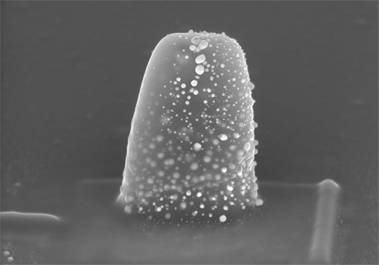
- ], thermal sensors [8], photodetectors [9], and mode stabilizers for vertical surface emitting lasers [10]. Other deposits were used as ferromagnetic wires [11][12], superconducting wires [13], plasmonic structures [14], or as electrode nanocontacts [15][16]. The feasibility of obtaining 3D nanostructures




The Kirkendall effect and nanoscience: hollow nanospheres and nanotubes
Beilstein J. Nanotechnol. 2015, 6, 1348–1361, doi:10.3762/bjnano.6.139
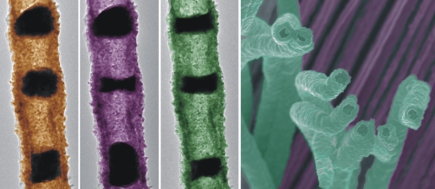
- biotechnology [8], batteries [9][10][11][12][13], sensors [14][15][16], catalysis [17][18][19], photodetectors [20], electrochromic devices [21] and supercapacitors [22]. Three years after the pioneering work of Yin et al. [7], the progress in the synthesis of nanotubes and hollow nanoparticles using the



Graphene quantum interference photodetector
Beilstein J. Nanotechnol. 2015, 6, 726–735, doi:10.3762/bjnano.6.74
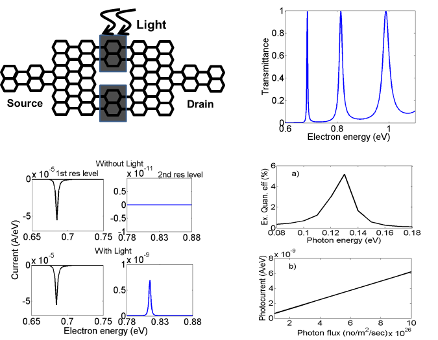
- flux in one or both of the interferometer arms in the same MZI structure. Graphene QI photodetectors have several distinct advantages: they are of very small size, they do not require p- and n-doped regions, and they exhibit a high external quantum efficiency. Keywords: decoherence; graphene
- states. In this paper we investigate for the first time the interaction of light in a graphene nanoribbon MZI structure and specifically we study the coupling of light between longitudinal resonant modes for both zigzag and armchair structures. Graphene photodetectors have been studied in detail [2][3
- ][17][18][19]. The primary distinguishing features of graphene photodetectors are: photodetection over a wide spectral range from infrared to ultraviolet wavelengths, a transit-time-limited bandwidth of approximately 1.5 THz and a high internal quantum efficiency of 15–30% [2][3][19]. The photocurrent