


Search results
Search for "rGO" in Full Text gives 77 result(s) in Beilstein Journal of Nanotechnology.
Morphology-driven gas sensing by fabricated fractals: A review
Beilstein J. Nanotechnol. 2021, 12, 1187–1208, doi:10.3762/bjnano.12.88
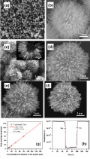
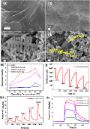
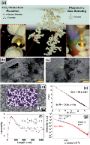
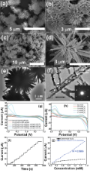
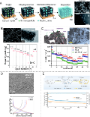
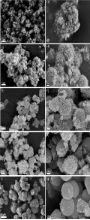
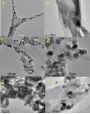
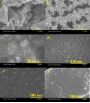
- hydrothermal method to synthesize reduced graphene oxide and pine dendritic BiVO4 composite with an average length of 1–1.5 μm and about 0.6 μm width [82]. In the hybrid composite rGO nanosheets were draped with a pine dendritic morphology. Figure 20 shows the SEM images of GO (Figure 20a), rGO (Figure 20b
- ), pure pine dendritic BiVO4 (Figure 20c), and the BiVO4/rGO hybrid structure (Figure 20d). The hybrid material was used for the detection of triethylamine (TEA) gas. A detection of 10 ppm TEA with the highest response (5.91) was achieved with the hybrid composition of BiVO4 and rGO at 180 °C working
- temperature, in comparison to pure BiVO4 (1.2) and other compositions of BiVO4 and rGO at different temperatures (80–200 °C). The outstanding enhancement in the response of the hybrid material with quick response and recovery times was attributed to the formation of p–n heterojunctions between rGO nanosheets










Progress and innovation of nanostructured sulfur cathodes and metal-free anodes for room-temperature Na–S batteries
Beilstein J. Nanotechnol. 2021, 12, 995–1020, doi:10.3762/bjnano.12.75
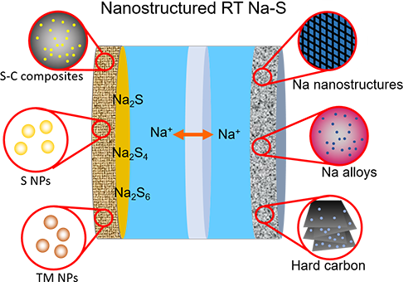
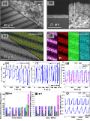
- research. Qu et al. [60] precipitated 15 nm sized S NPs on V2O5 by acid hydrolysis of Na2S2O3. After encapsulation with graphene sheets the cathode had a discharge capacity of 215 mAh·g−1 at 2C after 2000 cycles. In another chemical method, S NPs were precipitated on rGO from a deep eutectic solvent




Nickel nanoparticle-decorated reduced graphene oxide/WO3 nanocomposite – a promising candidate for gas sensing
Beilstein J. Nanotechnol. 2021, 12, 343–353, doi:10.3762/bjnano.12.28
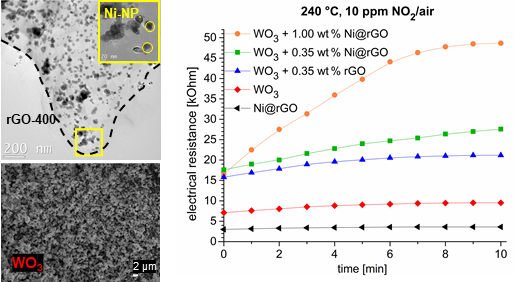
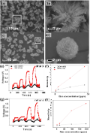
- –carbon composite (Ni@rGO). Previous work with WO3 had used either NiO (as part of the WO3 lattice), solely carbon, Pd-surface decorated WO3 (Pd@WO3), or Pd or Pt@carbon@WO3. We demonstrate the gas response for pure WO3, rGO/WO3 and Ni@rGO/WO3 sensing elements towards NO2 and acetone in air as well as
- towards CO in N2. The addition of 0.35 wt % Ni@rGO composite to WO3 enables the increase of the sensory response by more than 1.6 times for NO2 vapors. The gas response towards acetone using 0.35 wt % Ni@rGO/WO3 composite was 1.5 times greater for 3500 ppm than for 35,000 ppm acetone. For 0.35 wt % Ni@rGO
- graphene oxide, rGO) chemically or thermally. Through the partial removal of oxygen groups, the conductivity can be restored. Additionally, defects and vacancies are created [26]. Because of the ultra-high surface area per atom and the high electron transport along the graphene plane, rGO has a rapid and


ZnO and MXenes as electrode materials for supercapacitor devices
Beilstein J. Nanotechnol. 2021, 12, 49–57, doi:10.3762/bjnano.12.4
- applications that offer high power density, stability, and safety. A specific capacitance of 366 F·g−1 was achieved at 2 mVs-1 [18]. In addition, Li et al. designed an asymmetric pseudosupercapacitor of wavy-Ti3C2Tx/reduced graphene oxide (rGO)/CNT/polyaniline(PANI), in which the Ti3C2Tx MXene is used as
- positive and rGO/CNT/PANI as negative electrode. In this design, both electrodes are pseudocapacitive and compact. Thus, high volumetric capacitances are achievable. The designed wavy-Ti3C2Tx/rGO/CNT/PANI asymmetric pseudosupercapacitor yielded 116 F·g−1 at a scan rate of 10 mV·s−1 [27]. Halim et al
- abundant raw materials. Also, it is less harmful to the environment [19]. Miao et al. fabricated 3D porous MXene-rGO films by using a self-propagating approach, which involves great enthalpy change, chain reactions, and drastically propagates onto the entire film in seconds. As a result, a specific
Cu2O nanoparticles for the degradation of methyl parathion
Beilstein J. Nanotechnol. 2020, 11, 1546–1555, doi:10.3762/bjnano.11.137
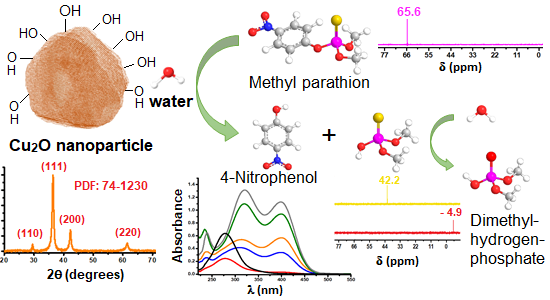
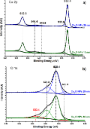
- form on its surface. Consequently, both 16 nm and 29 nm NPs have a similar active surface size and the degradation percentage of MP is similar between 16 nm Cu2O (87%) and 29 nm Cu2O (83%). In order to avoid oxidation of Cu2O NPs, reduced graphene oxide (rGO) can be used as a support [54]. Finally, XPS


Antimicrobial metal-based nanoparticles: a review on their synthesis, types and antimicrobial action
Beilstein J. Nanotechnol. 2020, 11, 1450–1469, doi:10.3762/bjnano.11.129

- et al. produced coated sheets of reduced graphene oxide (rGO) which formed a composite compound containing ZnO [24][25]. One method that facilitates the large-scale production of nanoparticles is the MCP technique. This method is based on a chemical exchange reaction that occurs due to the heat and


Triboelectric nanogenerator based on Teflon/vitamin B1 powder for self-powered humidity sensing
Beilstein J. Nanotechnol. 2020, 11, 1394–1401, doi:10.3762/bjnano.11.123
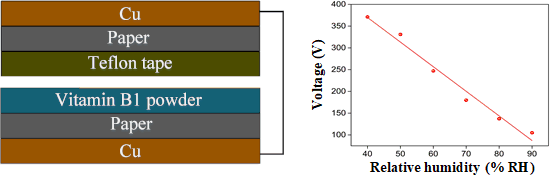
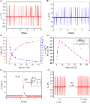
- -free humidity sensors by using biocompatible collagen nanofibrils [43]. More recently, Zhang et al. developed a TENG-driven self-powered flexible humidity sensor based on a tin disulfide nanoflower/reduced graphene oxide (SnS2/rGO) hybrid nanomaterial [44]. However, the large-scale application of TENGs




Ultrasensitive detection of cadmium ions using a microcantilever-based piezoresistive sensor for groundwater
Beilstein J. Nanotechnol. 2020, 11, 1242–1253, doi:10.3762/bjnano.11.108
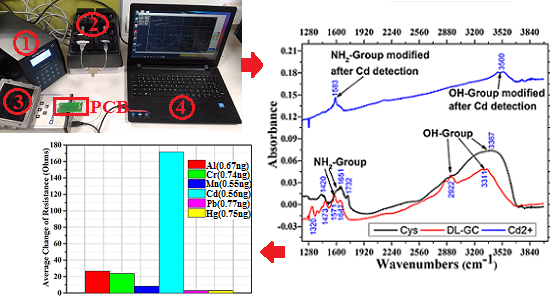
- graphene oxide (RGO)-based sensor and a microfluidic platform fabricated by [25][26][27] can be used with some surface modification for HMIs, but it is mostly capable of detecting in the micromolar range. A polymer-based microcantilever using an encapsulated piezoresistor has been proposed by Kale et al




A few-layer graphene/chlorin e6 hybrid nanomaterial and its application in photodynamic therapy against Candida albicans
Beilstein J. Nanotechnol. 2020, 11, 1054–1061, doi:10.3762/bjnano.11.90
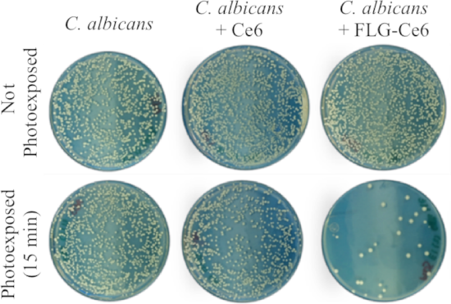
- GO (rGO) [22]. GO and rGO have been conjugated to several photosensitizers to enhance their performance in PDT [15][17][23][24][25]. However, for enhancing the characteristics of a Ps, the properties of graphene, such as electrical conductivity and chemical stability are very important, and these
- properties are significantly hindered in GO and rGO [26][27][28][29]. Thus, the conjugation of pristine graphene with photosensitizer molecules might result in a more efficient and stable material for PDT. In this work, FLG combined with Ce6 was used as a photosensitizer in PDT as an antifungal treatment


Electrochemically derived functionalized graphene for bulk production of hydrogen peroxide
Beilstein J. Nanotechnol. 2020, 11, 432–442, doi:10.3762/bjnano.11.34
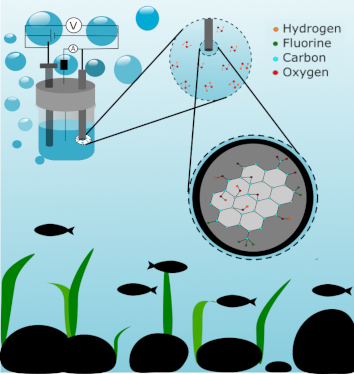
- (Se) edge functionalized graphene (reduced graphene oxide (rGO)) was found to undergo a direct four-electron path ORR process in alkaline medium, where rGO undergoes a two-electron path peroxide route ORR [35]. In this process, Se acts as a single atom site catalyst. In a nutshell, depending on the
- defects along sheet edges are the most active sites for peroxide production in rGO [3]. They also showed that the performance of these rGO-based catalysts in alkaline conditions under low overpotential outperform the existing state-of-the-art catalysts. However, a large extent of oxidation may hamper the


Simple synthesis of nanosheets of rGO and nitrogenated rGO
Beilstein J. Nanotechnol. 2020, 11, 68–75, doi:10.3762/bjnano.11.7
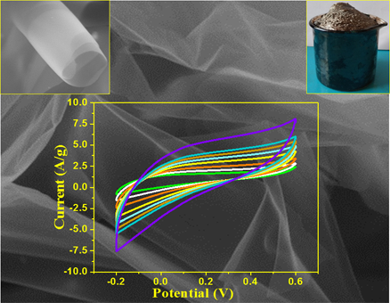
- , 560064, India 10.3762/bjnano.11.7 Abstract A green and facile approach has been developed for the large-scale synthesis of nanosheets of reduced graphene oxide (rGO) and nitrogenated reduced graphene oxide (N-rGO). This has been achieved by direct thermal decomposition of sucrose and glycine at 475 °C
- in ca. 7 minutes, respectively. The present protocols for synthesizing rGO and N-rGO are simple and environmentally friendly as we do not use any harmful reagents, metal catalysts and solvents. Along with that, this method offers an inexpensive route with high yields to prepare rGO with a high
- nitrogen content (20–25 atom %). To further improve the properties of the synthesized rGO sheets, hydrogen treatment has been carried out to reduce the oxygen functional groups. Cyclic voltammograms and charge–discharge experiments have been carried out to understand the supercapacitor behavior of rGO and


Synthesis and acetone sensing properties of ZnFe2O4/rGO gas sensors
Beilstein J. Nanotechnol. 2019, 10, 2516–2526, doi:10.3762/bjnano.10.242
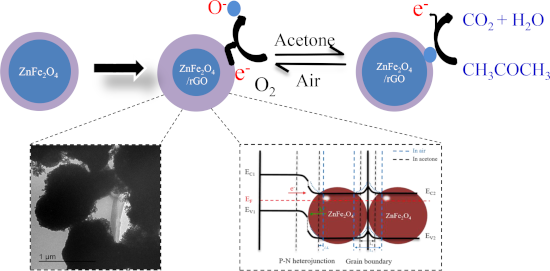
- of ZnFe2O4 and reduced graphene oxide (rGO) with different rGO content were prepared via a simple solvothermal method followed by a high-temperature annealing process in an inert atmosphere. The X-ray diffraction analysis confirmed that the introduction of rGO had no effect on the spinel structure of
- ZnFe2O4. In addition, the results of field-emission scanning electron microscopy and (high-resolution) transmission electron microscopy indicated that the synthesized samples had the structure of hollow spheres distributed uniformly onto rGO nanosheets. The diameters of the spheres were determined as
- about 600–1000 nm. The gas sensing test revealed that the introduction of rGO improved the performance of the sensing of acetone to low concentration, and the ZnFe2O4/rGO composite gas sensor containing 0.5 wt % of rGO exhibited a high sensitivity in sensing test using 0.8–100 ppm acetone at 200 °C. The




Design and facile synthesis of defect-rich C-MoS2/rGO nanosheets for enhanced lithium–sulfur battery performance
Beilstein J. Nanotechnol. 2019, 10, 2251–2260, doi:10.3762/bjnano.10.217
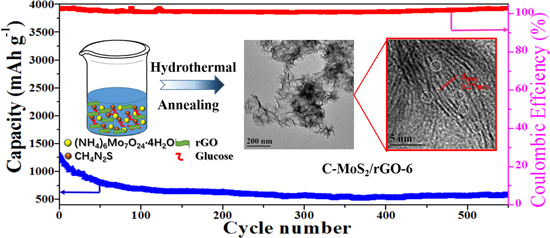
- Chengxiang Tian Juwei Wu Zheng Ma Bo Li Pengcheng Li Xiaotao Zu Xia Xiang School of Physics, University of Electronic Science and Technology of China, Chengdu 610054, China 10.3762/bjnano.10.217 Abstract We report a simple one-step hydrothermal strategy for the fabrication of a C-MoS2/rGO
- composite with both large surface area and high porosity for the use as advanced electrode material in lithium–sulfur batteries. Double modified defect-rich MoS2 nanosheets are successfully prepared by introducing reduced graphene oxide (rGO) and amorphous carbon. The conductibility of the cathodes can be
- improved through the combination of amorphous carbon and rGO, which could also limit the dissolution of polysulfides. After annealing at different temperatures, it is found that the C-MoS2/rGO-6-S composite annealed at 600 °C yields a noticeably enhanced performance of lithium–sulfur batteries, with a high


Trapping polysulfide on two-dimensional molybdenum disulfide for Li–S batteries through phase selection with optimized binding
Beilstein J. Nanotechnol. 2019, 10, 774–780, doi:10.3762/bjnano.10.77
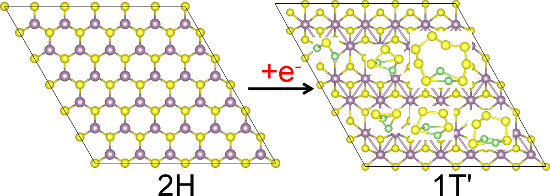
- Mo by Re atoms [28], electron-beam irradiation [31] and hot-electron injection [32]. Recently, it was reported that MoS2/reduced graphene oxide (rGO)/S cathodes for Li–S batteries exhibit outstanding performance. X-ray photoelectron spectroscopy and Raman spectroscopy showed that few-layered MoS2 is


A porous 3D-RGO@MWCNT hybrid material as Li–S battery cathode
Beilstein J. Nanotechnol. 2019, 10, 514–521, doi:10.3762/bjnano.10.52
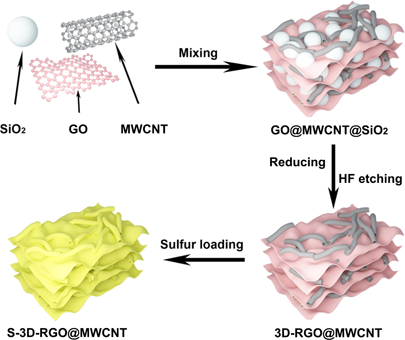
- , Geelong, Vic 3216, Australia 10.3762/bjnano.10.52 Abstract In this work, a unique three-dimensional (3D) structured carbon-based composite was synthesized. In the composite, multiwalled carbon nanotubes (MWCNT) form a lattice matrix in which porous spherical reduced graphene oxide (RGO) completes the 3D
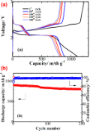
- structure. When used in Li–S batteries, the 3D porous lattice matrix not only accommodates a high content of sulfur, but also induces a confinement effect towards polysulfide, and thereby reduces the “shuttle effect”. The as-prepared S-3D-RGO@MWCNT composite delivers an initial specific capacity of 1102
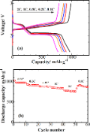
- mAh·g−1. After 200 charging/discharge cycles, a capacity of 805 mAh·g−1 and a coulombic efficiency of 98% were maintained, implying the shuttle effect was greatly suppressed by the composite matrix. In addition, the S-3D-RGO@MWCNT composite also exhibits an excellent rate capability. Keywords: carbon



Reduced graphene oxide supported C3N4 nanoflakes and quantum dots as metal-free catalysts for visible light assisted CO2 reduction
Beilstein J. Nanotechnol. 2019, 10, 448–458, doi:10.3762/bjnano.10.44
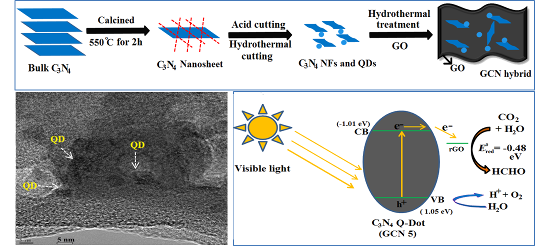
- , we report the synthesis of novel reduced graphene oxide (rGO)-supported C3N4 nanoflake (NF) and quantum dot (QD) hybrid materials (GCN) for visible light induced reduction of CO2. The C3N4 NFs and QDs are prepared by acid treatment of C3N4 nanosheets followed by ultrasonication and hydrothermal
- distributed on the rGO surface within the GCN hybrid material. Among the as-prepared GCN hybrid materials, GCN-5 QDs exhibit excellent CO2 reductive activity for the generation of formaldehyde, HCHO (10.3 mmol h−1 g−1). Therefore, utilization of metal-free carbon-based GCN hybrid materials could be very
- conduction band (CB) and valence band (VB) edge positions, exhibit efficient charge separation, have a large surface area, and it must be cost effective. Considering the above factors, nontoxic metal-free catalysts, such as graphitic carbon nitride (g-C3N4) and reduced graphene oxide (rGO) have received wide





Zn/F-doped tin oxide nanoparticles synthesized by laser pyrolysis: structural and optical properties
Beilstein J. Nanotechnol. 2019, 10, 9–21, doi:10.3762/bjnano.10.2
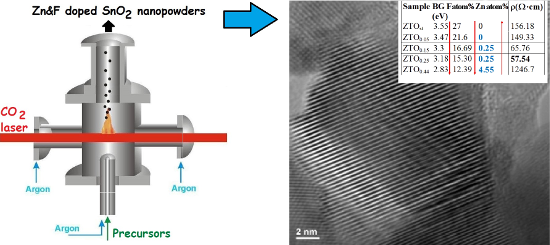
- values. A clear optical behavior influence of the presence of carbon layers on tin dioxide can be observed for the SnO2@C and SnO2@SiO2@C nanostructured microspheres (C symbolizing here reduced graphene oxide, rGO) reported in [53], where the UV–vis spectra show a clear increase in absorbance (mostly in



Ternary nanocomposites of reduced graphene oxide, polyaniline and hexaniobate: hierarchical architecture and high polaron formation
Beilstein J. Nanotechnol. 2018, 9, 2936–2946, doi:10.3762/bjnano.9.272
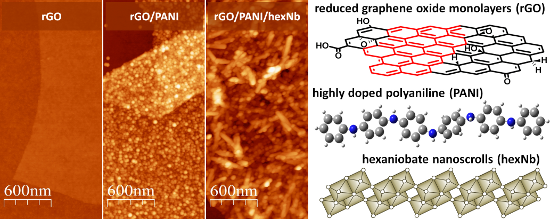
- nanocomposite composed of polyaniline (PANI), reduced graphene oxide (rGO) and hexaniobate (hexNb) nanoscrolls. Atomic force microscopy images show an interesting architecture of rGO flakes coated with PANI and decorated by hexNb. Such features are attributed to the high stability of the rGO flakes prepared at
- room temperature. Detailed characterisation by X-ray photoelectron and Raman spectroscopies indicates an intermediate reduction degree for the rGO component and high doping degree of the PANI chains compared to the neat polymer. The latter feature can be attributed to cooperative effects of PANI chains
- with rGO flakes and hexNb nanoscrolls, which promote conformational changes of the polymer backbone (secondary doping). Spectroscopic and electrochemistry data indicate a synergetic effect on the ternary nanocomposite, which is attributed to interactions between the components resulting from the


Nanostructure-induced performance degradation of WO3·nH2O for energy conversion and storage devices
Beilstein J. Nanotechnol. 2018, 9, 2845–2854, doi:10.3762/bjnano.9.265
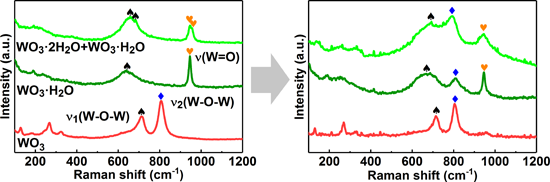
- to fabricate WO3·2H2O electrochemical energy storage electrodes with a higher rate capability than annealed WO3 [38]. The investigation of 2D sheets of WO3 and a rGO–WO3 composite prepared via a one-pot hydrothermal method suggested that the rGO–WO3 composite could be a promising material for


Graphene-enhanced metal oxide gas sensors at room temperature: a review
Beilstein J. Nanotechnol. 2018, 9, 2832–2844, doi:10.3762/bjnano.9.264
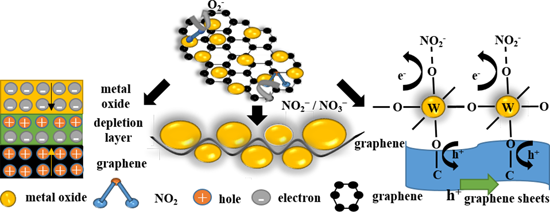
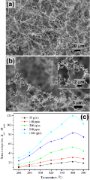
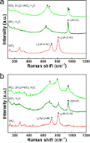
- -sensing material. Therefore, further reduction of GO is necessary and the product after reduction is called reduced graphene oxide (rGO). Some oxygen functional groups remain after the reduction, some defects and vacancies are generated during the reduction, which are beneficial for the gas adsorption [13
- ]. The oxygen functional groups that locate on the surface of rGO lead to an electron transfer from rGO to oxygen functional groups, and holes become the main charge carriers, indicating that rGO acts as a p-type semiconductor [14][15][16]. Zhang et al. [17] prepared rGO room-temperature gas sensor with
- porous structure and defects for detecting NO2. The sensor showed high sensitivity to NO2 at low concentrations. In another work, Hu et al. [18] fabricated an ultra-sensitive rGO gas sensor, which reached a response of 2.4% to 1 ppb NH3 with an ultra-fast response time of 1.4 s at room temperature. The



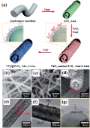
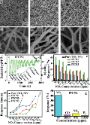
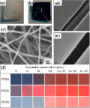
Electrospun one-dimensional nanostructures: a new horizon for gas sensing materials
Beilstein J. Nanotechnol. 2018, 9, 2128–2170, doi:10.3762/bjnano.9.202






Metal-free catalysis based on nitrogen-doped carbon nanomaterials: a photoelectron spectroscopy point of view
Beilstein J. Nanotechnol. 2018, 9, 2015–2031, doi:10.3762/bjnano.9.191
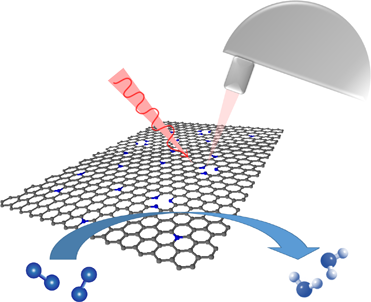
- underwent different temperature treatments, yielding different surface compositions of nitrogen functionalities, as observed by XPS [114]. They produced N-graphene either by the annealing of graphene oxide (GO) in NH3 or by annealing a composite of N-containing polymer (polyaniline or polypyrrole) and rGO




Sheet-on-belt branched TiO2(B)/rGO powders with enhanced photocatalytic activity
Beilstein J. Nanotechnol. 2018, 9, 1550–1557, doi:10.3762/bjnano.9.146
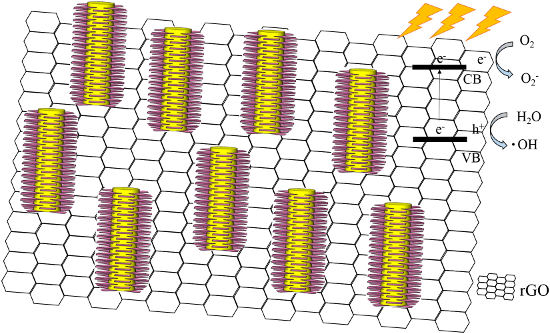
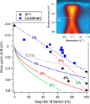
- -on-belt branched TiO2(B) powder was synthesized with the simultaneous incorporation of reduced graphene oxide (rGO). The monophase, hierarchically nanostructured TiO2(B) exhibited a reaction rate constant 1.7 times that of TiO2(B)/rGO and 2.9 times that of pristine TiO2(B) nanobelts when utilized to
- harvesting efficiency, which also contributes to increased photocatalytic activity [22][27]. Herein, we report a novel approach to synthesize branched TiO2(B) nanobelts incorporated at the same time with reduced graphene oxide (rGO). The unique sheet-on-belt nanostructure demonstrates a high specific surface
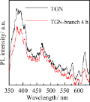
- area and a favored charge separation, and hence, improved photocatalytic activity. Results and Discussion Figure 1 shows the X-ray diffraction (XRD) patterns of TiO2(B)/rGO nanobelt (designated as TGN for simplicity) and branched TiO2(B)/rGO nanobelt (TGN-branch 4 h, refer to the Experimental section


Cr(VI) remediation from aqueous environment through modified-TiO2-mediated photocatalytic reduction
Beilstein J. Nanotechnol. 2018, 9, 1448–1470, doi:10.3762/bjnano.9.137
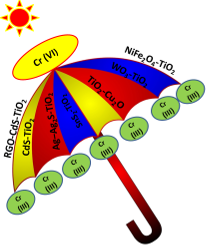
- six sections. The optical and electrochemical characteristics of modified TiO2 photocatalysts are discussed in the first section. In the second section, we have reviewed how carbon-based advanced materials like reduced graphene oxide (RGO), carbon nanotubes (CNTs) and carbon dots (CDs) improve the
- electrons from TiO2 are efficiently transported to graphene, leading to enhanced photocatalytic activity (Figure 7). Liu et al. reported that TiO2–RGO composites exhibited enhanced photocatalytic performance for the reduction of Cr(VI) by UV light illumination as compared to pure TiO2 and commercial P25
- [125]. The enhancement in the photocatalytic activity is mainly due to two reasons: (i) inhibition in recombination of electron–hole pairs by the effective transport of photoinduced electrons from the CB of TiO2 to RGO [126][127], and (ii) higher light absorption due to the development in surface


Electrodeposition of reduced graphene oxide with chitosan based on the coordination deposition method
Beilstein J. Nanotechnol. 2018, 9, 1200–1210, doi:10.3762/bjnano.9.111
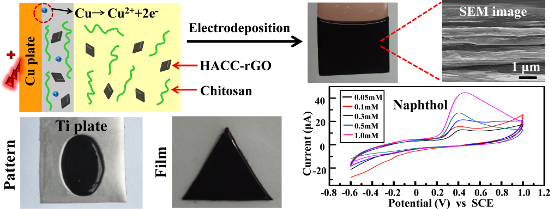
- attention due to its appealing applications for sensors, supercapacitors and lithium-ion batteries. However, there are still some limitations in the current electrodeposition methods for graphene. Here, we present a novel electrodeposition method for the direct deposition of reduced graphene oxide (rGO
- ) with chitosan. In this method, a 2-hydroxypropyltrimethylammonium chloride-based chitosan-modified rGO material was prepared. This material disperses homogenously in the chitosan solution, forming a deposition solution with good dispersion stability. Subsequently, the modified rGO material was
- deposited on an electrode through codeposition with chitosan, based on the coordination deposition method. After electrodeposition, the homogeneous, deposited rGO/chitosan films can be generated on copper or silver electrodes or substrates. The electrodeposition method allows for the convenient and





