Search results
Search for "cantilever" in Full Text gives 315 result(s) in Beilstein Journal of Nanotechnology. Showing first 200.
Measurement of polarization effects in dual-phase ceria-based oxygen permeation membranes using Kelvin probe force microscopy
Beilstein J. Nanotechnol. 2021, 12, 1380–1391, doi:10.3762/bjnano.12.102
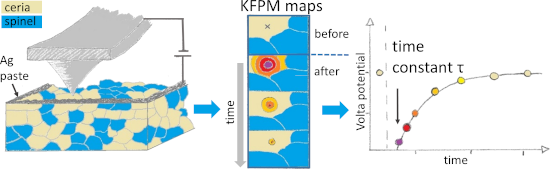
- were performed in a single-pass experiment. For this kind of measurements, the surface potential and the sample topography are mapped in a single pass in intermittent contact mode with the cantilever vibrating at its resonance frequency (i.e., the cantilever is not in lift mode during this experiment


Alteration of nanomechanical properties of pancreatic cancer cells through anticancer drug treatment revealed by atomic force microscopy
Beilstein J. Nanotechnol. 2021, 12, 1372–1379, doi:10.3762/bjnano.12.101
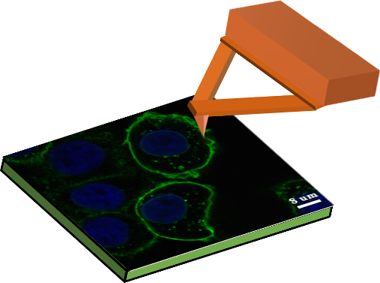
- characterized by AFM is shown in Figure 1. For the mechanical mapping, the AFM cantilever needs to be calibrated first. During the scanning process, the applied force should be less than 3 nN to prevent cell destruction. For force mapping, 400 force curves were collected for each selected area and at least 30


Cantilever signature of tip detachment during contact resonance AFM
Beilstein J. Nanotechnol. 2021, 12, 1286–1296, doi:10.3762/bjnano.12.96
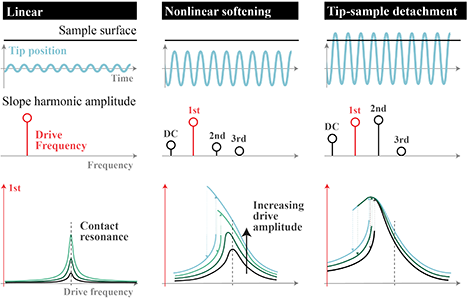
- atomic force microscopy modes in which the cantilever is held in contact with the sample at a constant average force while monitoring the cantilever motion under the influence of a small, superimposed vibrational signal. Though these modes depend on permanent contact, there is a lack of detailed analysis
- on how the cantilever motion evolves when this essential condition is violated. This is not an uncommon occurrence since higher operating amplitudes tend to yield better signal-to-noise ratio, so users may inadvertently reduce their experimental accuracy by inducing tip–sample detachment in an effort
- to improve their measurements. We shed light on this issue by deliberately pushing both our experimental equipment and numerical simulations to the point of tip–sample detachment to explore cantilever dynamics during a useful and observable threshold feature in the measured response. Numerical


Enhancement of the piezoelectric coefficient in PVDF-TrFe/CoFe2O4 nanocomposites through DC magnetic poling
Beilstein J. Nanotechnol. 2021, 12, 1262–1270, doi:10.3762/bjnano.12.93
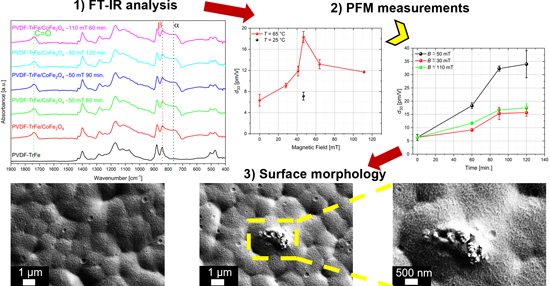
- through PFM [1][5][27] using a commercial Bruker-Veeco Dimension Icon AFM with a Co/Cr-coated-tip silicon cantilever (MESP-RC-V2, Bruker). Following the procedure described in [2][3], we scanned three different areas, 5 × 5 μm2 in size, of each sample, with 256 × 256 acquisition points per scanning area


Two dynamic modes to streamline challenging atomic force microscopy measurements
Beilstein J. Nanotechnol. 2021, 12, 1226–1236, doi:10.3762/bjnano.12.90
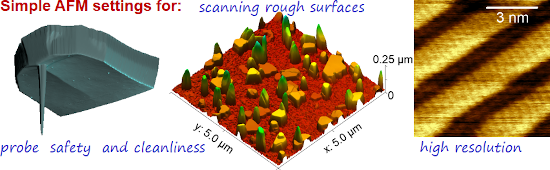
- tip and to visualize the contamination there. Such a sample is available in any AFM laboratory and allows one to demonstrate some of the features that make it difficult to work in standard modes. On the one hand, next to the scan area, there is a high console of the cantilever; on the other hand
- parameters: 256 by 256 points, A0 = 10 nm, Tline = 0.5 s, Tdir = 0.4 s, Vup = 5 µm/s, Vdown = 2 µm/s, p1 = 70%, p2 = p1 + 4%. We used a Mikromasch NSC15 cantilever with a nominal force constant 46 N/m and resonance frequency of 328 kHz. This scan took Tscan = 6 min. Figure 3b shows the time spent on the


Open-loop amplitude-modulation Kelvin probe force microscopy operated in single-pass PeakForce tapping mode
Beilstein J. Nanotechnol. 2021, 12, 1115–1126, doi:10.3762/bjnano.12.83
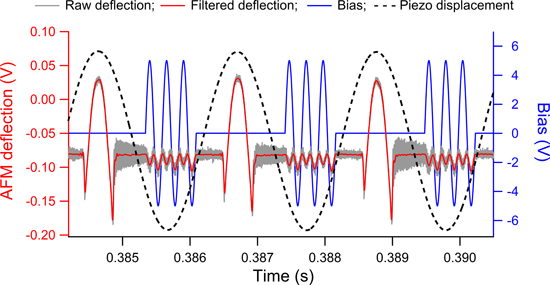
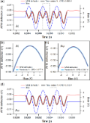
- the measured electrical tip–sample interaction is directly affixed to the topography rendered by the mechanical PFT modulation at each tap. Furthermore, because the detailed response of the cantilever to the bias stimulation was recorded, it was possible to analyze and separate an average contribution
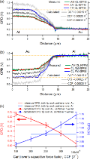
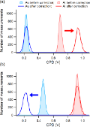
- of the cantilever to the determined local contact potential difference between the AFM probe and the imaged sample. The removal of this unwanted contribution greatly improved the accuracy of the AM-KPFM measurements to the level of the FM-KPFM counterpart. Keywords: electrostatic interaction; Kelvin
- -excitation OL BE-KPFM [37][38][39], intermodulation electrostatic force microscopy [40], and dual-harmonic KPFM (DH-KPFM) [34][41][42]. In DH-KPFM, the CPD is obtained from the ratio of the amplitudes of the first two harmonics of the cantilever response to an AC bias modulation and requires a prior





A new method for obtaining model-free viscoelastic material properties from atomic force microscopy experiments using discrete integral transform techniques
Beilstein J. Nanotechnol. 2021, 12, 1063–1077, doi:10.3762/bjnano.12.79
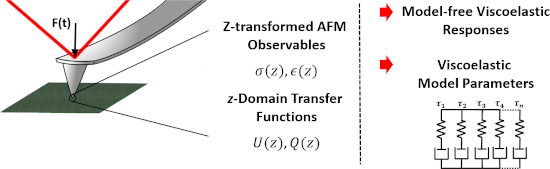
- unbounded inputs traditionally used to acquire force–distance relationships in AFM, such as ramp functions, in which the cantilever position is displaced linearly with time for a finite period of time. Keywords: atomic force microscopy; force spectroscopy; material properties; viscoelasticity
- force–distance curve, where the cantilever position above the sample follows a ramp function. In the case of intermittent-contact methods (e.g., tapping-mode AFM), the cantilever tip oscillates nearly sinusoidally, but since tip–sample contact is intermittent, the sample does not experience purely
- experiments one observes the deflection of the AFM cantilever as a function of the cantilever base position instead of directly observing stress and strain. From the available observables, one can calculate the tip–sample force and the indentation. In order to account for the AFM probe and sample geometry and


Local stiffness and work function variations of hexagonal boron nitride on Cu(111)
Beilstein J. Nanotechnol. 2021, 12, 559–565, doi:10.3762/bjnano.12.46
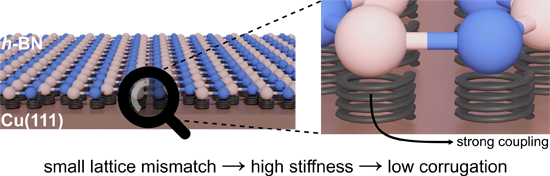
- , independent method to detect the variation in Φ. For this we record the frequency shift, Δf, of the resonance frequency of the cantilever oscillating perpendicular to the surface as a function of the bias voltage (see Figure 3b). At the extrema of the parabolic Δf curves, the electrostatic force is minimised
- . Experimental We employ a custom-built ultrahigh-vacuum (below 10−10 mbar) low-temperature (T = 1.4 K) nc-AFM operated in frequency-modulated mode. A stiff qPlus cantilever design [49] (k0 = 1800 N·m−1, f0 = 29077 Hz, Q = 60000) at an oscillation amplitude Aosc = 50 pm enables the nc-AFM functionality. We


Determining amplitude and tilt of a lateral force microscopy sensor
Beilstein J. Nanotechnol. 2021, 12, 517–524, doi:10.3762/bjnano.12.42
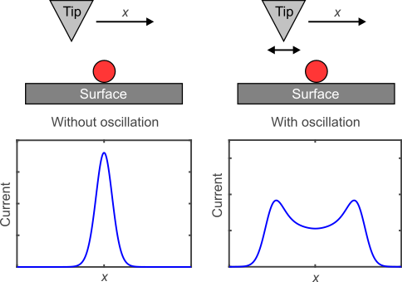
- have to be subtracted in order to isolate the short-range contributions from the surface feature [2]. If the cantilever is rotated by 90° so that the tip oscillates lateral to the surface, long-range forces with large vertical components do not contribute to the Δf signal [3]. This microscopy technique
- setup) or biaxial AFM with normal force detection is required. Experimentally, there are several methods for performing frequency-modulation lateral force microscopy, what we refer to as LFM in this manuscript. In 2002, Pfeiffer and co-workers excited a silicon cantilever in the first torsional mode [4
- method developed by Giessibl [15], a Laplace transform method developed by Sader and Jarvis [16], and a Fourier method developed by Seeholzer and co-workers [17]. All of these methods require the knowledge of the oscillation amplitude A of the cantilever. Amplitude determination means determining a


Mapping the local dielectric constant of a biological nanostructured system
Beilstein J. Nanotechnol. 2021, 12, 139–150, doi:10.3762/bjnano.12.11
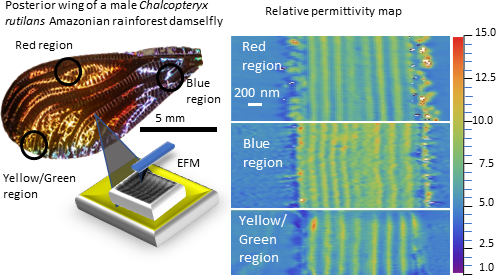
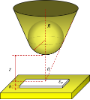
- oscillate, during the second pass, at the resonance frequency of the cantilever, f0. Variations in the local relative permittivity properties of the sample will lead to different tip–sample force gradients, which promote a shift Δf0 in the tip oscillation frequency [21][22] which is, approximately, where dF
- /dz is the tip–sample force gradient and K is the spring constant of the cantilever. The tip–sample-substrate system constitutes a capacitor with the sample (wing) as part of the relative permittivity region, so the force between tip and substrate can be modeled as where C is the system capacitance
- sample and the conductive substrate need to be present within the AFM image. This is a key condition since the conductive substrate establishes a reference level in the analysis. Having both in the imaged region guarantees that the cantilever amplitude and, consequently, the effective radius of the tip




Numerical analysis of vibration modes of a qPlus sensor with a long tip
Beilstein J. Nanotechnol. 2021, 12, 82–92, doi:10.3762/bjnano.12.7
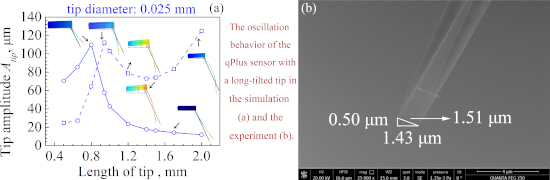
- . The vibration modes of a qPlus sensor with a long tip are quite different from those of a cantilever with a short tip. Flexural vibration of the tungsten tip will occur. The tip can no longer be considered as a rigid body that moves with the prong of the tuning fork. Instead, it oscillates both
- which one prong is fixed onto a substrate and the other prong with an attached tip serves as a self-sensing cantilever [2]. In 1996, F. J. Giessibl et al. first used the qPlus sensor to measure the morphology of a grating and a CD at room temperature [3]. Since then, this technique has been used
- of the cantilever is utilized to detect the forces between tip and sample. The shift Δf induced by the vertical force gradient is tan|φ| times as large as that induced by the lateral force gradient [17]. In other words, in the range from 0 to 90°, if φ > 45°, mainly the vertical force gradient






Bulk chemical composition contrast from attractive forces in AFM force spectroscopy
Beilstein J. Nanotechnol. 2021, 12, 58–71, doi:10.3762/bjnano.12.5
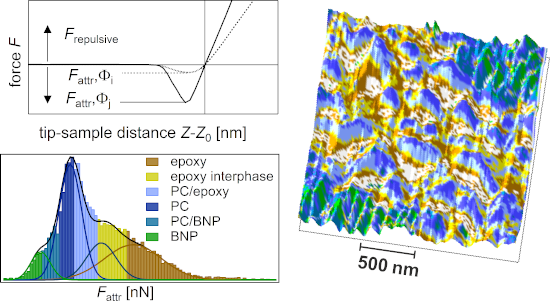
- mode: The AFM probe, a paraboloid-shaped tip with a typical radius 4 nm < R < 40 nm is held at a defined x,y position while it approaches the sample surface by using a Z-piezo positioner. The tip is attached to a cantilever which can be described as an elastic spring following Hooke’s law: with force F
- , spring constant of the cantilever kc, and cantilever deflection δ. In this way, the forces acting on the tip are measured by recording the deflection δ of the cantilever. While decreasing the distance between the tip and the sample, the cantilever deflects toward the sample (attractive forces Fattr, −δ
- depicted in Figure 1. Figure 1(I) zero line: when the tip and the sample are far away from each other. Interacting forces are not detectable and δ is zero which equals the free equilibrium position of the cantilever. Figure 1(II) regime of attractive forces: upon further approach of the sample and the tip


Atomic layer deposited films of Al2O3 on fluorine-doped tin oxide electrodes: stability and barrier properties
Beilstein J. Nanotechnol. 2021, 12, 24–34, doi:10.3762/bjnano.12.2
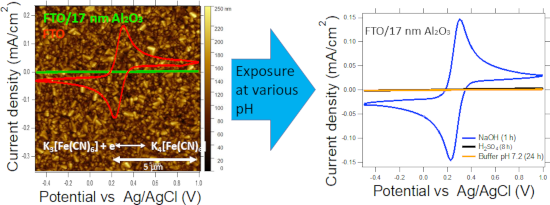
- cantilever (TESPA-V2) with a resonant frequency fres of approx. 300 kHz, a spring constant k of 0.42 N·m−1, and a nominal tip radius of 8 nm (Bruker, USA) was employed. The Gwyddion software (v. 2.53) was utilized for processing AFM image data. Results and Discussion AFM was used to compare the morphology of


Mapping of integrated PIN diodes with a 3D architecture by scanning microwave impedance microscopy and dynamic spectroscopy
Beilstein J. Nanotechnol. 2020, 11, 1764–1775, doi:10.3762/bjnano.11.159
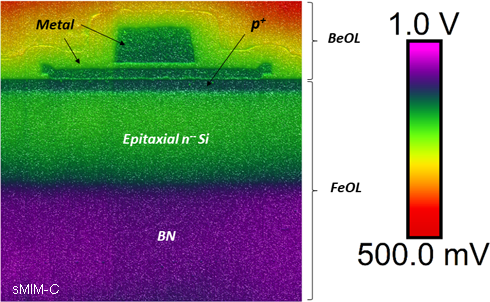
- capacitor in parallel with a resistance (Figure 1). The incident microwave signal interacts with the sample resulting in a transmitted wave and a reflected wave. Since the probe is shielded, the stray capacitance formed by the cantilever and the sample can be neglected. After a calibration step and
- 9 represents a force curve recorded as function of time for one pixel. In the first step (1) the tip approaches the surface until the force on the cantilever reaches the setpoint force of 50 nN. During the dwell segment, the sMIM tip is maintained in contact (2). During this time, the voltage sweep


Direct observation of the Si(110)-(16×2) surface reconstruction by atomic force microscopy
Beilstein J. Nanotechnol. 2020, 11, 1750–1756, doi:10.3762/bjnano.11.157
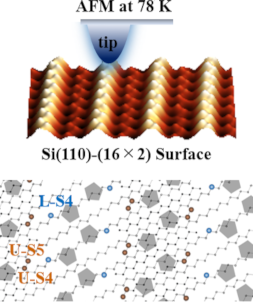
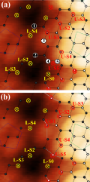
- cantilever was used, which was cleaned by Ar+ sputtering to remove the oxide and contamination on the tip. The deflection of the cantilever was measured by the optical beam deflection method. The topography of the surface was imaged while feedback electronics were used to adjust the tip–sample distance to



Application of contact-resonance AFM methods to polymer samples
Beilstein J. Nanotechnol. 2020, 11, 1714–1727, doi:10.3762/bjnano.11.154
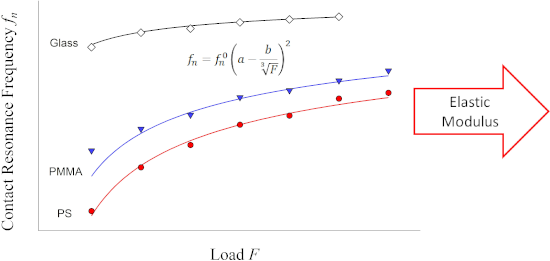
- analysis, it is concluded that CR measurements are not appropriate for polymer samples. Major drawbacks are the bad resolution for moduli lower than ca. 10 GPa and the lack of a comprehensive physical model accounting for many factors affecting the dynamic response of a cantilever in contact with a sample
- phase image. The resulting contrast is, however, hard to analyze quantitatively. Contact-resonance AFM (CR-AFM) [4][5] is a dynamic contact technique that makes use of the vibrational behavior of the cantilever while the tip is in permanent contact with the sample. Generally, an increase in sample
- stiffness prompts an increase of the contact-resonance frequency (CR frequency). The CR frequency can be obtained from single-point measurements or tracked during scanning with techniques such as dual AC resonance tracking (DART) [6][7]. The vibrational motion of the cantilever is usually described using


Fabrication of nano/microstructures for SERS substrates using an electrochemical method
Beilstein J. Nanotechnol. 2020, 11, 1568–1576, doi:10.3762/bjnano.11.139
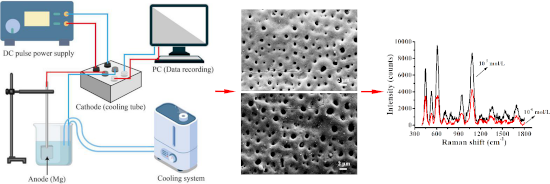
- three-dimensional topographies of the nanopores. Imaging was performed in contact mode and an elastic constant of 0.2 N/m was selected for the silicon cantilever. The scanning area was 50 × 50 μm2. In addition, a scanning electron microscopy (SEM) system (Zeiss, Germany) was employed to characterize the


Design of V-shaped cantilevers for enhanced multifrequency AFM measurements
Beilstein J. Nanotechnol. 2020, 11, 1525–1541, doi:10.3762/bjnano.11.135
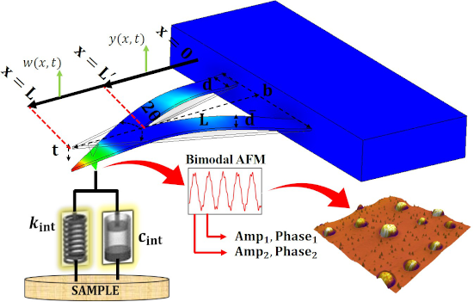
- dimensions, the optimum V-shaped cantilever that can provide the maximum phase contrast in bimodal AFM between gold (Au) and polystyrene (PS) is found. Based on this study, it is found that as the length of the cantilever increases the 2nd eigenmode phase contrast decreases. However, the base width exhibits
- the opposite relationship. It is also found that the leg width does not have a monotone relationship similar to length and base width. The phase contrast increases for the range of 14 to 32 µm but decreases afterwards. The thickness of a V-shaped cantilever does not play a major role in defining the
- dynamics of the cantilever compared to other parameters. This work shows that in order to maximize the phase contrast, the ratio of second to first eigenmode frequencies should be minimized and be close to a whole number. Additionally, since V-shaped cantilevers are mostly used for soft matter imaging


![[Graphic 4]](/bjnano/content/inline/2190-4286-11-135-i26.svg?max-width=637&scale=1.18182) = 15 µm, bref = 8...
= 15 µm, bref = 8...


![[Graphic 17]](/bjnano/content/inline/2190-4286-11-135-i39.svg?max-width=637&scale=1.18182) ) of V-shaped cantilevers for...
) of V-shaped cantilevers for...


On the frequency dependence of viscoelastic material characterization with intermittent-contact dynamic atomic force microscopy: avoiding mischaracterization across large frequency ranges
Beilstein J. Nanotechnol. 2020, 11, 1409–1418, doi:10.3762/bjnano.11.125
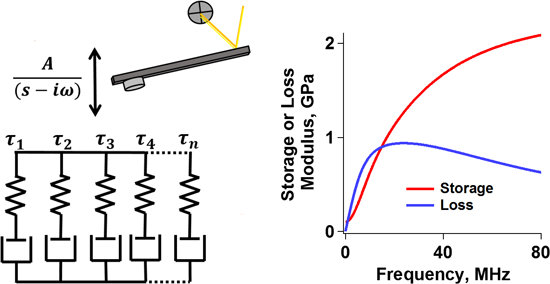
- response of the cantilever with respect to the excitation, within amplitude-modulation AFM (AM-AFM)), which generally yields high-contrast images for dissipative materials [22]. Dynamic contact-mode techniques such as contact-resonance AFM [11][12][13][28], dual-amplitude resonance tracking AFM (DART [10
- -static force spectroscopy (i.e., using force–distance curves acquired at frequencies much lower than the resonance frequency of the cantilever). Specifically, we have introduced a methodology based on the Generalized Voigt (Kelvin) or Maxwell viscoelastic model (Figure 1), including an arbitrary number
- performed with different types of cantilevers (short high-frequency cantilevers as well as traditional cantilevers) and with different methods, involving wide frequency ranges and different cantilever eigenmodes. In general, this is routinely done without considering the types of viscoelastic behavior


An atomic force microscope integrated with a helium ion microscope for correlative nanoscale characterization
Beilstein J. Nanotechnol. 2020, 11, 1272–1279, doi:10.3762/bjnano.11.111
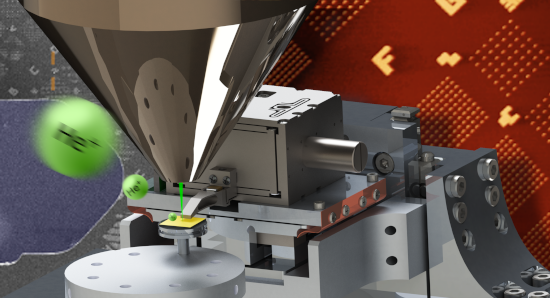
- correlative imaging on electrically insulating samples. In this first attempt, the readout of cantilever deflection was achieved using the electron beam itself. Shortly after, better performing combined setups were described utilizing more conventional self-sensing [5] and optical [6] techniques for the
- readout of cantilever deflection. Since then, more advanced and versatile combined instruments have been proposed for a broad spectrum of applications in nanoscale characterization and nanoscale fabrication inside SEM and focused ion beam (FIB) setups [7][8][9][10][11]. Given the extent of the interest
- depicted in Figure 1. The prototype tip-scanning AFM scan head is designed explicitly for correlative analysis inside electron and ion-beam microscopes. Unlike sample scanning solutions [9][16], where the sample is raster-scanned relative to a stationary cantilever, a tip-scanning configuration [10][17


Ultrasensitive detection of cadmium ions using a microcantilever-based piezoresistive sensor for groundwater
Beilstein J. Nanotechnol. 2020, 11, 1242–1253, doi:10.3762/bjnano.11.108
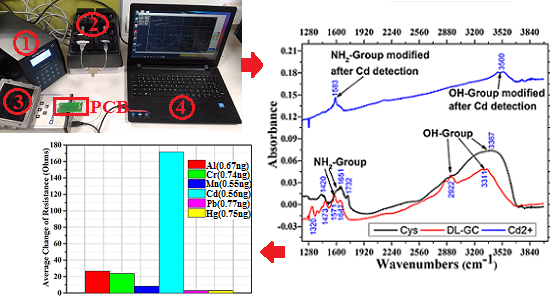
- . [28], but it is not suitable for other high-temperature sputtering processes. Microcantilevers based on SiO2 have been manufactured by Tang et al. [29] to enhance the sensitivity of cantilever sensors. Many authors use optical setups for microcantilevers. However, an optical output has several
- cantilever sensors. Moreover, the proposed piezoresistive device has capabilities to directly capture the surface stress make this a better option for HMI applications. Microfluidic Platform with Piezosensor In the proposed method, the benefits of three different technologies are combined, namely thin film
- the fabricated MEMS-based sensor is capable of selective Cd(II) detection using SAMs of cysteamine with cross-linked ᴅʟ-glyceraldehyde (Cys-DL-GC). To characterize the SAM on the microcantilever device only a few analytical techniques are available because of the fragile nature of the cantilever




Extracting viscoelastic material parameters using an atomic force microscope and static force spectroscopy
Beilstein J. Nanotechnol. 2020, 11, 922–937, doi:10.3762/bjnano.11.77
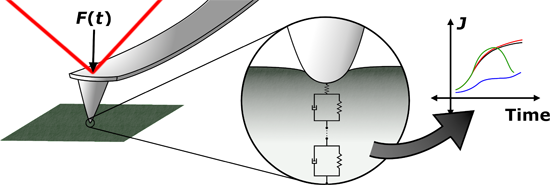
- materials. AFM static force spectroscopy (SFS) is one approach commonly used in pursuit of this goal. It is capable of acquiring rich temporal insight into the behavior of a sample. During AFM-SFS experiments the cantilever base approaches samples with a nearly constant velocity, which is manipulated to
- cantilever, and the time-derivative of the Z-Sensor data should be equal to the experimental approach velocity. To perform the fit procedure, only the deflection and Z-Sensor datasets are necessary. Figure 2a illustrates the shape of a common result as read from a force–distance curve output file. Because
- using the cantilever stiffness (kc), the minimum deflection offsets (z0, d0), the deflection (d(t)), and the following relations: where kc in Equation 14 is the AFM cantilever stiffness. This data is not used directly in the fit, but can be useful for showing the indentation and force during the


Measurement of electrostatic tip–sample interactions by time-domain Kelvin probe force microscopy
Beilstein J. Nanotechnol. 2020, 11, 911–921, doi:10.3762/bjnano.11.76
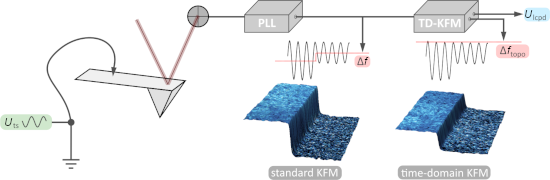
- conventional frequency-modulated (FM-) KFM, the contributions at ωm and 2ωm are detected via lock-in techniques, either at the Δf output of a phase-locked loop (PLL) [12] or by detecting the sidebands of the cantilever oscillation [13]. In closed-loop FM-KFM, a feedback loop is employed to nullify the
- response of the cantilever at the modulation frequency ωm (not visible in Figure 1 since Udc ≈ Ulcpd) and at 2ωm [13][26][27]. A feedback loop is used to adjust Udc in order to nullify the component at ωm. If this is achieved, the resulting Δfmean, which is used for the topography control, is independent
- PLL is used, its transfer function, which is known for a given cantilever and given PI gains, can be approximated by the transfer function of a low-pass filter. Using the relationship shown in Equation 10 and the transfer function of the detection system, the sample properties, the expected error


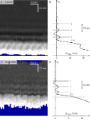
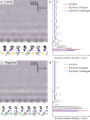
Three-dimensional solvation structure of ethanol on carbonate minerals
Beilstein J. Nanotechnol. 2020, 11, 891–898, doi:10.3762/bjnano.11.74
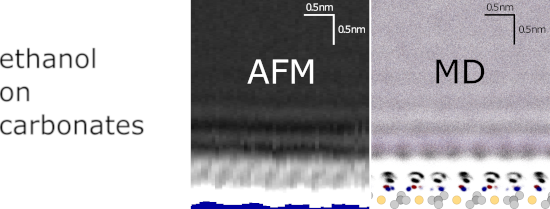
- nature. Experimental and Theoretical Methods Atomic force microscopy For the AFM experiments we used a modified commercial atomic force microscope [22] with custom photothermal cantilever excitation [23] and a custom three-dimensional scanning and data acquisition mode [24] in the frequency-modulation

Hexagonal boron nitride: a review of the emerging material platform for single-photon sources and the spin–photon interface
Beilstein J. Nanotechnol. 2020, 11, 740–769, doi:10.3762/bjnano.11.61