Search results
Search for "in situ" in Full Text gives 552 result(s) in Beilstein Journal of Nanotechnology. Showing first 200.
Preferential enrichment and extraction of laser-synthesized nanoparticles in organic phases
Beilstein J. Nanotechnol. 2025, 16, 254–263, doi:10.3762/bjnano.16.20
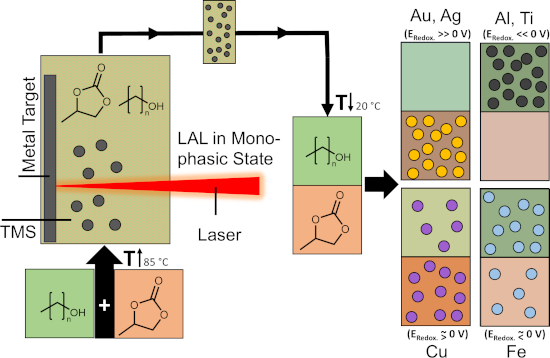
- modify the nanomaterials in situ via chemical reactions of the nanoparticles with the molecules or solutes of the liquid. Particularly when organic solvents are used as liquids, photothermally induced C–C cleavage, addition or dehydrogenation reactions of the solvents, as well as (carbon




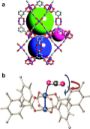
A review of metal-organic frameworks and polymers in mixed matrix membranes for CO2 capture
Beilstein J. Nanotechnol. 2025, 16, 155–186, doi:10.3762/bjnano.16.14
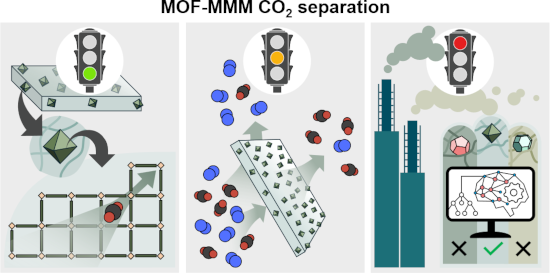
- cross-linking [126] or MOF geometry tuning [127] are needed to address this issue properly. Furthermore, the study by Maleh and Raisi found that in situ MOF-based MMM synthesis resulted in negligible plasticization compared to ex situ MMM fabrication [91], suggesting that MOF distribution and MOF
- functionalization, Figure 7c,d, reducing filler sizes, in situ MOF growth, or applying annealing treatments. Interfacial adhesion can also be improved using ionic liquids (Figure 7e). MOF functionalization is commonly employed in MMM research. For example, in the study by Katayama et al. [113] mentioned earlier
- -case basis. An entirely different approach to improving the MOF–polymer interface is shown in the study by Maleh and Raisi [91], where ZIF-8 MOFs were grown in situ in a Pebax® 2533 polymer matrix. The authors prepared a polymer solution in ethanol containing well-dispersed zinc nitrate hexahydrate and


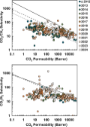


Nanocarriers and macrophage interaction: from a potential hurdle to an alternative therapeutic strategy
Beilstein J. Nanotechnol. 2025, 16, 97–118, doi:10.3762/bjnano.16.10



Heterogeneous reactions in a HFCVD reactor: simulation using a 2D model
Beilstein J. Nanotechnol. 2024, 15, 1627–1638, doi:10.3762/bjnano.15.128
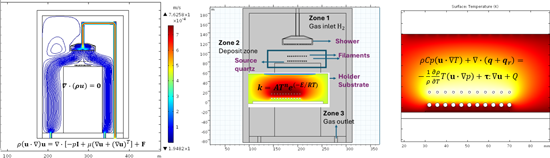
- give rise to the surface reactions for the growth of the films. In the reaction mechanisms reported for the growth of SiO2 films, the role of intermediate •H and •OH and •O2 radicals has been pointed out through in situ Fourier-transform infrared spectroscopy. These species react with silane-derived


Facile synthesis of size-tunable L-carnosine-capped silver nanoparticles and their role in metal ion sensing and catalytic degradation of p-nitrophenol
Beilstein J. Nanotechnol. 2024, 15, 1576–1592, doi:10.3762/bjnano.15.124
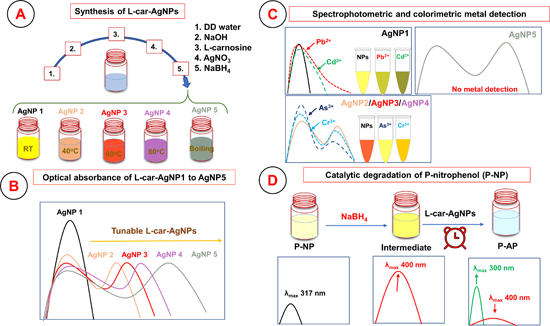
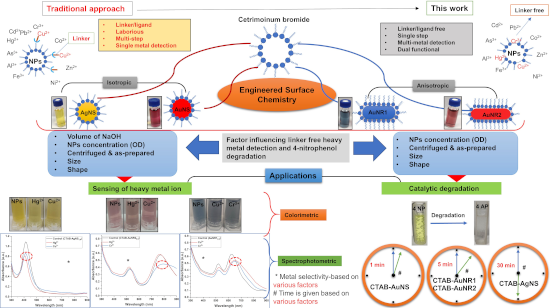
- +, Pb2+, and Cd2+ was achieved via ʟ-carnosine–metal interaction [20][21]. With this study, an attempt has been made to address the issues associated with traditional environmental monitoring and remediation systems. This article aims to develop a metal ion sensing and catalyst platform with in situ




Effect of radiation-induced vacancy saturation on the first-order phase transformation in nanoparticles: insights from a model
Beilstein J. Nanotechnol. 2024, 15, 1453–1472, doi:10.3762/bjnano.15.117

- film through in situ ion irradiation, observed using atomic-resolution transmission electron microscopy [16]. The gold sample was irradiated with 2.8 MeV Au4+ ions at 200 °C with a fluence of approximately 1014 ions·cm−2 (equivalent to a dose of 10 dpa). A combination of surface- and radiation-induced


Nanotechnological approaches for efficient N2B delivery: from small-molecule drugs to biopharmaceuticals
Beilstein J. Nanotechnol. 2024, 15, 1400–1414, doi:10.3762/bjnano.15.113
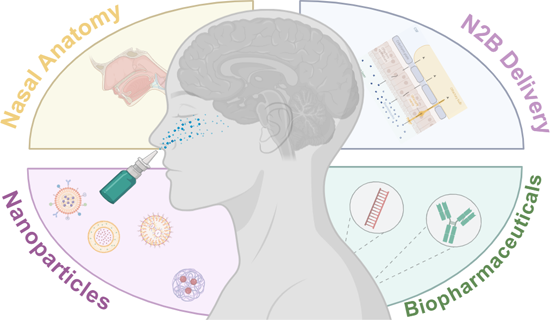
- approximately 30% compared to non-coated counterparts, where this derivative was chosen because of its solubility at physiological nasal pH [97]. Additionally, the powder form of the formulation showed stronger mucin adhesion and better enzymatic degradation protection [98]. Moreover, researchers developed in
- situ esculin-loaded nanoliposomes for intranasal administration for treating Parkinson’s disease. Ex vivo studies further confirmed the enhanced permeation of the nanoliposomal formulation compared to the suspension form by approximately 40% [99]. Solid lipid NPs and nanostructured lipid carriers Solid


Nanoarchitectonics with cetrimonium bromide on metal nanoparticles for linker-free detection of toxic metal ions and catalytic degradation of 4-nitrophenol
Beilstein J. Nanotechnol. 2024, 15, 1312–1332, doi:10.3762/bjnano.15.106




Enhanced catalytic reduction through in situ synthesized gold nanoparticles embedded in glucosamine/alginate nanocomposites
Beilstein J. Nanotechnol. 2024, 15, 1227–1237, doi:10.3762/bjnano.15.99
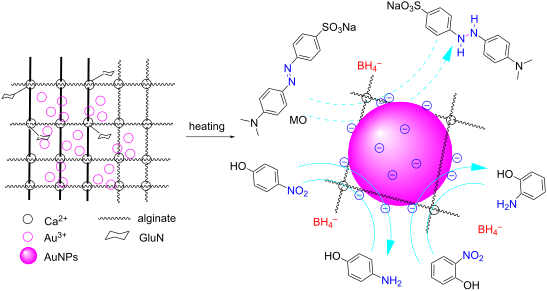
- metallic ions onto the nanogel and the subsequent reduction [22][23]. In recent studies, in situ reduction of metal nanoparticles (MNPs) has been explored to enhance synthetic efficiency and streamline procedures by employing disaccharides such as lactose [24][25]. However, the potential of monosaccharides
- (e.g., glucose, fructose, and glucosamine (GluN)) for the in situ synthesis of metallic nanoparticles onto alginate-based nanogels remains unexplored. Toxic organic dyes, including nitrophenols and methyl orange (MO), pose a significant environmental threat because of their persistence in water. This
- excess of NaBH4. Initially, 3.0 mg of the AuNPs@GluN/Alg solid was placed in a quartz cell with 1 cm path length, along with an aqueous solution of the organic dyes (2.5 mL, 0.1 mM). Then, 0.5 mL of NaBH4 solution (0.06 M) was added to start the reaction. The reduction process of the dyes was in situ



Photocatalytic methane oxidation over a TiO2/SiNWs p–n junction catalyst at room temperature
Beilstein J. Nanotechnol. 2024, 15, 1132–1141, doi:10.3762/bjnano.15.92
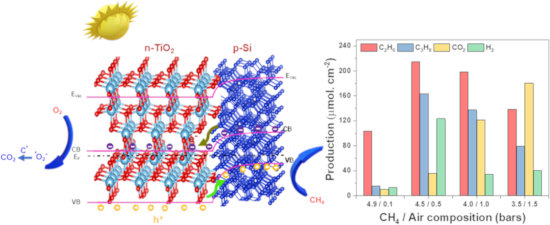
- Information File 1, Figure S2. The contact angle between horizontal sample surface and the perimeter of the water drop was measured after 10 s of interaction. The in situ photocurrent measurements were carried out in the presence of gaseous reactants (CH4/air = 4.5/0.5) ranging from −2 V to +3 V under dark


Recent updates in applications of nanomedicine for the treatment of hepatic fibrosis
Beilstein J. Nanotechnol. 2024, 15, 1105–1116, doi:10.3762/bjnano.15.89
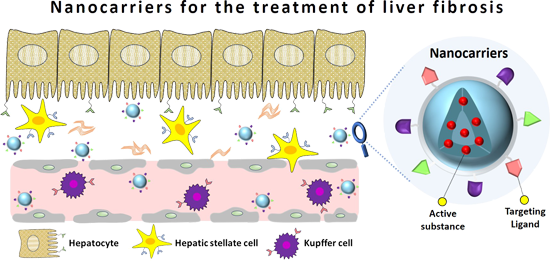
- the FDA up to 2019 [46]. They consist of PLGA microparticles, solid implants, and in situ gels; none of them is a PLGA NP formulation. This fact indicates that there are some challenges, including poor drug entrapment efficiency and drug release kinetics from PLGA nanoformulations [47]. Regarding


Unveiling the potential of alginate-based nanomaterials in sensing technology and smart delivery applications
Beilstein J. Nanotechnol. 2024, 15, 1077–1104, doi:10.3762/bjnano.15.88

- -aminophenyl boronic acid)/sodium alginate nanogel (Ag@PABA-SA) was synthesized using a green, in situ chemical oxidative polymerization approach for detecting hydrogen peroxide in lake water [115]. When this experiment was carried out without alginate, it showed unsuccessful results. Importantly, with


Interface properties of nanostructured carbon-coated biological implants: an overview
Beilstein J. Nanotechnol. 2024, 15, 1041–1053, doi:10.3762/bjnano.15.85
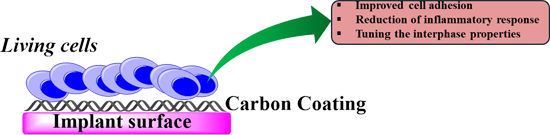
- deposition (PVD), and in situ formation through laser treatments. CVD offers several advantageous features such as a high degree of control over the deposition process. CVD involves the deposition of a thin film of material onto a substrate through homogeneous or heterogeneous reactions [79]. Homogeneous



Atomistic insights into the morphological dynamics of gold and platinum nanoparticles: MD simulations in vacuum and aqueous media
Beilstein J. Nanotechnol. 2024, 15, 995–1009, doi:10.3762/bjnano.15.81
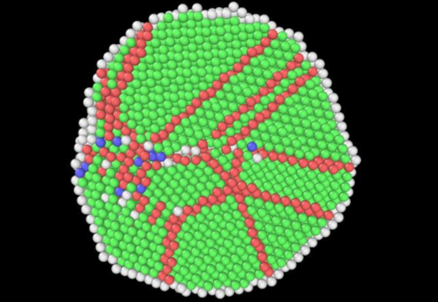
- cooling, is still hindered by several factors. For instance, observing NPs under real working conditions remains a challenge for experimentalists, as the capability to conduct in situ experiments has not yet been fully realized [21]. Experimental methods, such as confocal microscopy [22], laser light
- have been some promising theoretical models [27] and in situ observations [28], crucial elements that can harmonize thermodynamic and kinetic controls remain unclear at the nanoscale. The plentiful theoretical efforts to understand and interpret structural modifications in metals upon thermal treatment


Recent progress on field-effect transistor-based biosensors: device perspective
Beilstein J. Nanotechnol. 2024, 15, 977–994, doi:10.3762/bjnano.15.80
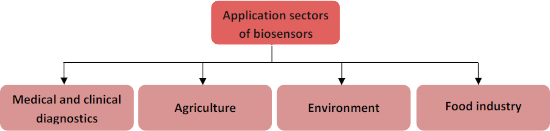
- good sensitivity detection via a label-free procedure, real-time electrical signal in situ amplification, and cost-effective mass production, achieved through microelectronic manufacturing processes and a small size for portable point-of-care testing [34][35]. Additionally, the application of




Level set simulation of focused ion beam sputtering of a multilayer substrate
Beilstein J. Nanotechnol. 2024, 15, 733–742, doi:10.3762/bjnano.15.61
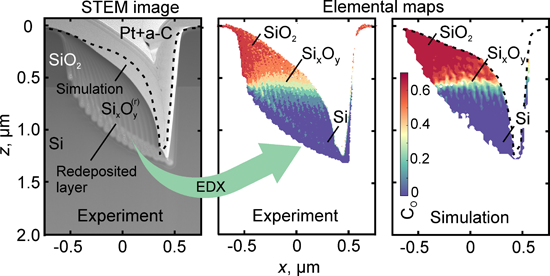
- structures to protect the surface. Cross section specimens for transmission electron microscopy investigation were prepared using in situ lift-out [39]. Final polishing was performed at the glancing incidence angles of the ion beam through the gradual decrease of the accelerating voltage from 30 to 2 kV. The

![[Graphic 55]](/bjnano/content/inline/2190-4286-15-61-i68.svg?max-width=637&scale=1.18182)


Simultaneous electrochemical determination of uric acid and hypoxanthine at a TiO2/graphene quantum dot-modified electrode
Beilstein J. Nanotechnol. 2024, 15, 719–732, doi:10.3762/bjnano.15.60
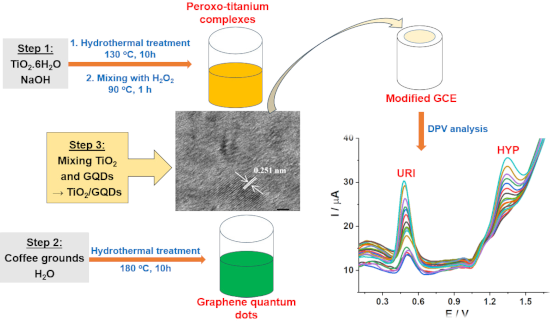
- composite (TiO2/GQDs) obtained by in situ synthesis of GQDs, derived from coffee grounds, and peroxo titanium complexes was used as electrode modifier in the simultaneous electrochemical determination of uric acid and hypoxanthine. The TiO2/GQDs material was characterized by photoluminescence, X-ray


Elastic modulus of β-Ga2O3 nanowires measured by resonance and three-point bending techniques
Beilstein J. Nanotechnol. 2024, 15, 704–712, doi:10.3762/bjnano.15.58
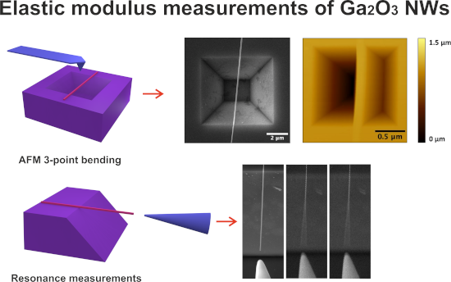
- the mechanical properties of Ga2O3 nanowires (NWs). In this work, we investigated the elastic modulus of individual β-Ga2O3 NWs using two distinct techniques – in-situ scanning electron microscopy resonance and three-point bending in atomic force microscopy. The structural and morphological properties
- for studying the mechanical properties of NWs, such as nanoindentation [15], three-point bending tests using an atomic force microscope (AFM) [16], and in-situ scanning electron microscope (SEM) resonance [17]. However, challenges of obtaining consistent and comparable elastic modulus values across
- ]. Different growth mechanisms could potentially lead to variations in the NW structural properties, as was also indicated by the TEM study. The mechanical characteristics of Ga2O3 NWs were first examined using in-situ SEM resonance tests. Figure 3a–c presents a series of SEM images depicting an excitation of


Laser synthesis of nanoparticles in organic solvents – products, reactions, and perspectives
Beilstein J. Nanotechnol. 2024, 15, 638–663, doi:10.3762/bjnano.15.54
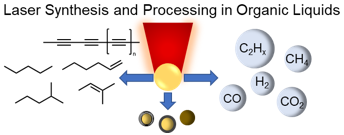
- laser ablation, fragmentation, or melting in liquids (RLAL, RLFL, or RLML), which refers to the synthesis of nanoparticles wherein molecular or galvanic replacement precursors, such as metal salts, are added to react in situ [7]. The added precursors take part in chemical reactions leading to the
- ., will not be listed here [43]. Overall, LSPC in aqueous liquids is characterized by in situ water splitting. More precisely, highly reactive radicals and free electrons are formed, which act as reducing agents for metal precursor salts during LRL, as well as molecular hydrogen, oxygen, and hydrogen
- at a given fluence, which decreases afterward because of faster graphitization steps or in situ destruction of the generated polyyne structure. Marabotti et al. performed ablation processes at different fluences, quantified the concentration of different C8 polyynes and found the previously mentioned





Stiffness calibration of qPlus sensors at low temperature through thermal noise measurements
Beilstein J. Nanotechnol. 2024, 15, 580–602, doi:10.3762/bjnano.15.50
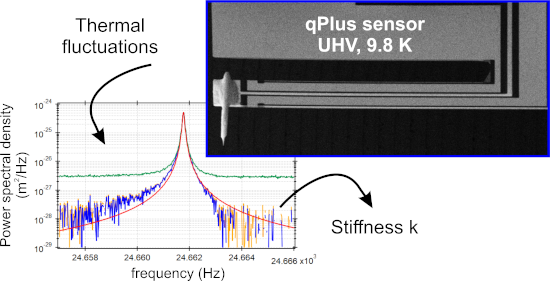
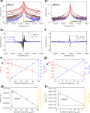
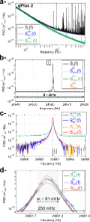
- temperature has never been reported. Furthermore, because the force sensitivity in nc-AFM critically depends on the mechanical stability of both probe and tip, it seems crucial to perform the probe stiffness calibration in situ, that is, within the LT UHV system, by means of a non-destructive method. In UHV
- and at room temperature, nc-AFM experiments are mostly carried out with silicon cantilevers, similar to those used during AFM experiments in air or in liquid. Their stiffness rarely exceeds 100 N/m. In UHV and at low temperature, the use of cantilevers is more tedious because of the required in situ
- equivalence, and they put in relation the fitted electrical parameters with those of an equivalent mechanical SHO. This approach is valuable as it is performed in situ (however here not in UHV) and is non-destructive. However, it requires the precise knowledge of the piezoelectric constant of the quartz, and

Sidewall angle tuning in focused electron beam-induced processing
Beilstein J. Nanotechnol. 2024, 15, 447–456, doi:10.3762/bjnano.15.40
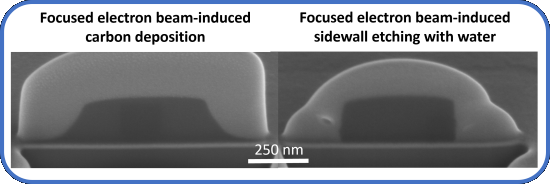
- sidewall. This suggests that etching can be carried out at any position on the sidewall if the right dose can be applied to make it vertical. From a practical point of view, it would be advantageous if this entire process, etching as well as imaging, could be implemented in situ in the SEM. The above
- also been carried out in situ in an SEM. Making use of the phenomenon of enhanced SE emission from an edge, the evolution of the sidewall angle during etching was continuously monitored using the SE signal. It has been demonstrated that this technique is sufficiently sensitive to determine the dose at




On the mechanism of piezoresistance in nanocrystalline graphite
Beilstein J. Nanotechnol. 2024, 15, 376–384, doi:10.3762/bjnano.15.34
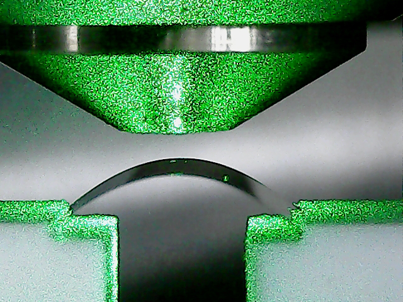
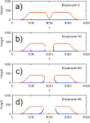
- . However, a hysteresis is observed between forward and reverse sweeps, indicating that structural changes in the films occur, which are in part irreversible. To gain insights into the strain distribution in the strained NCG, we performed in situ Raman measurements with strain as shown in Figure 3a. The
- , and parameters were extracted. While the paper offers an overview of piezoresistance in NCG, a more in-depth study is imperative for a complete comprehension of the system’s complexity. In situ FTIR measurements could provide additional insights into changes in doping and defects with strain
- from Elsevier. This content is not subject to CC BY 4.0.) (a) Piezoresistance measurement setup enabling in situ Raman measurements under strain. (b) Raman spectra of NCG on glass with increasing strain from 0% (bottom) to 0.36% (top). Curves were shifted for clarity. (c) Comparison of full-range Raman


Modulated critical currents of spin-transfer torque-induced resistance changes in NiCu/Cu multilayered nanowires
Beilstein J. Nanotechnol. 2024, 15, 360–366, doi:10.3762/bjnano.15.32
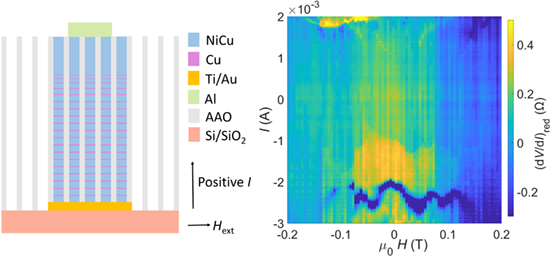
- around 1 µm. The electrodeposition of multilayered nanowires was carried out in situ using a three-electrode potentiostat in the pulsed mode [20] at 25 °C. Note that the nanowires were selectively deposited in the pores on the top of the Ti/Au bottom electrodes as shown in Figure 1a. Therefore, most of


Design, fabrication, and characterization of kinetic-inductive force sensors for scanning probe applications
Beilstein J. Nanotechnol. 2024, 15, 242–255, doi:10.3762/bjnano.15.23
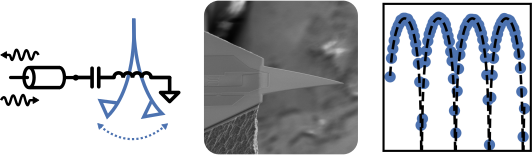
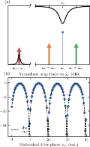
- equilibrium. With AFM, this is typically done by optoelectronic means, using either interferometry [9][10][11] or beam deflection [12][13][14]. These optical methods often require delicate in situ alignment of the detector to the mechanical force transducer. An integrated detector requiring no alignment is



Quantitative wear evaluation of tips based on sharp structures
Beilstein J. Nanotechnol. 2024, 15, 230–241, doi:10.3762/bjnano.15.22
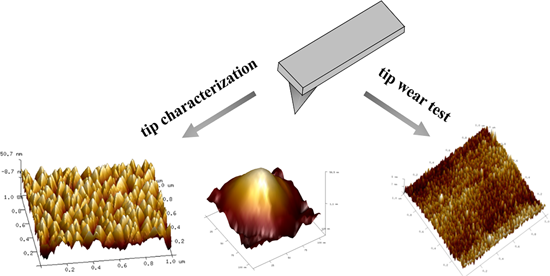
- , electron microscope methods have limitations in that they only provide a projected two-dimensional (2D) view of the tip, making in situ measurements impossible. Installation and removal of the AFM tip are time-consuming processes, rendering them unsuitable for widespread use in quantitative tip wear
- . Additionally, the use of sharp structures allows for in-situ characterization of the tip, overcoming the disadvantage of needing to disassemble the tip for examination with a scanning electron microscope. Furthermore, this study investigates how scanning parameters, such as free amplitude, scanning frequency