Search results
Search for "noise" in Full Text gives 490 result(s) in Beilstein Journal of Nanotechnology. Showing first 200.
Hymenoptera and biomimetic surfaces: insights and innovations
Beilstein J. Nanotechnol. 2024, 15, 1333–1352, doi:10.3762/bjnano.15.107
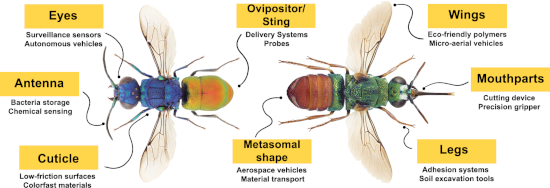
- signals in other individuals [178]. Moreover, the precise control over vibration frequencies observed in stridulation can inspire advancements in industrial applications where vibration control is essential. This includes machinery that operates more quietly and efficiently, reducing noise pollution and




New design of operational MEMS bridges for measurements of properties of FEBID-based nanostructures
Beilstein J. Nanotechnol. 2024, 15, 1273–1282, doi:10.3762/bjnano.15.103
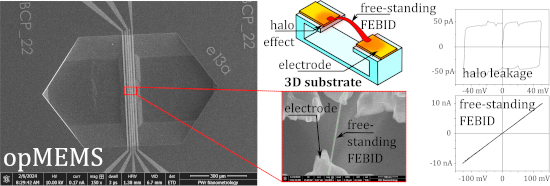
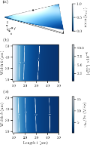
- analyser to assess the properties of the active device. The measured level of vibration of the MEMS bridge at a known temperature allows its stiffness to be determined with an accuracy of 5% [38]. First, the thermomechanical noise of the structure vibration was measured, then the displacement of the
- spectral analysis of vibrations [49]. The thermomechanical noise analysis approximates the bridge as a simple harmonic oscillator with one DOF, as has been used for determining the spring constant of AFM cantilevers [50]. This approach provides an approximation for the stiffness k in terms of the measured
- ranging from 200 μA (lower limit of the current source used in the experiment) to 3 mA (the assumed limit). It has been shown that achievable actuation deflections are as low as 28 pm. However, the deflection is limited by the noise of the actuation signal, which can be observed as a shift in the noise


Realizing active targeting in cancer nanomedicine with ultrasmall nanoparticles
Beilstein J. Nanotechnol. 2024, 15, 1208–1226, doi:10.3762/bjnano.15.98
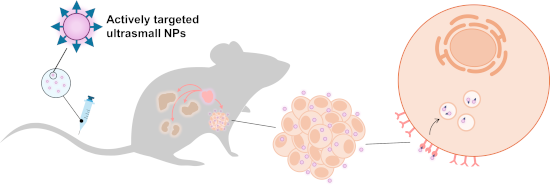
- -noise ratio for MM detection, surpassing levels achievable with other clinically approved imaging modalities. As early as 30 min post-administration, animals treated with the targeted usNPs demonstrated a ≈3-fold improvement in SNR for plasmacytomas in the spine. Song et al. synthesized AuNCs protected


Signal generation in dynamic interferometric displacement detection
Beilstein J. Nanotechnol. 2024, 15, 1070–1076, doi:10.3762/bjnano.15.87
- a reflectivity of Rf = 0.04. The fourth end of the 3 dB coupler is connected to the detector, which is a photoreceiver (model HBPR-200M-30K-SI-FC, FEMTO Messtechnik, Berlin, Germany) converting the incoming light power into a voltage signal. The photoreceiver allows for high-sensitivity low-noise
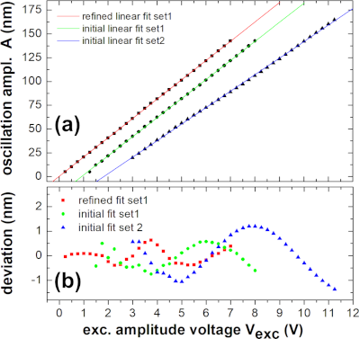
- , which is a voltage between 0 and 10 mVpp with a typical noise level of less than 150 μVRMS. Time traces with a length of 4 μs at a sampling rate of 250 MS/s are taken and quantized with a resolution of 10 bits. Each experiment comprises a set of 20 to 30 measurements with the excitation voltage
- amplitude Vexc ramped from 0 to 7 V. This voltage is reduced by a 100:1 voltage divider before it is applied to the excitation piezo. For each amplitude, 512 traces of Vsig are taken and averaged, where the start of sampling is triggered by the zero crossing of the low-noise sinusoidal cantilever excitation


Bolometric IR photoresponse based on a 3D micro-nano integrated CNT architecture
Beilstein J. Nanotechnol. 2024, 15, 1030–1040, doi:10.3762/bjnano.15.84
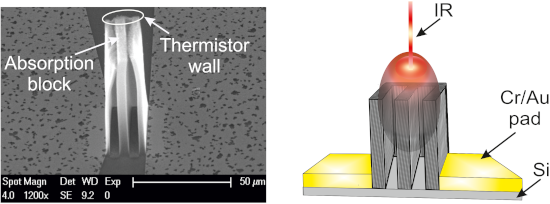
- measurements. The true performance of the original M-shaped CNT block with higher TCR, higher voltage, and higher current responsivity could be demonstrated. In this work, new noise measurements were performed and compared for both configurations. The new configuration 2 is superior regarding the optimization
- temperature coefficient of resistance (TCR), effective thermal conductance (Gth), current responsivity ℜI = ΔI/Pin, which is the output current change per incident power, voltage responsivity ℜV = ΔV/Pin, which is the output voltage change per incident power, and noise equivalent power (NEP), which is the
- minimum power that can be detected by the bolometer for a 1 Hz detection bandwidth. The experimental setups for the responsivity and noise measurements included several devices, such as a DC power supply, an IR laser source, an optical chopper (Thorlabs MC2000B), a low-noise transimpedance amplifier (TIA


Beyond biomimicry – next generation applications of bioinspired adhesives from microfluidics to composites
Beilstein J. Nanotechnol. 2024, 15, 965–976, doi:10.3762/bjnano.15.79
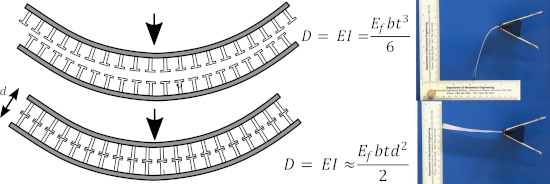
- film sheets combine under vacuum, offers more resilience and strength. However, vacuum jamming can present problems due to leaks, power consumption, noise from pumps, and the ultimate strength of the parts being limited by coefficients of friction and applied vacuum pressure. My interest in stiffness


Functional fibrillar interfaces: Biological hair as inspiration across scales
Beilstein J. Nanotechnol. 2024, 15, 664–677, doi:10.3762/bjnano.15.55
- together to prevent gaps between feathers [74]. Beyond forming the aerodynamic surfaces necessary for flight, feathers often exhibit species-specific adaptations. For example, owls have serrations on their leading-edge primary feathers, which are known to reduce noise during flight by mitigating flow


AFM-IR investigation of thin PECVD SiOx films on a polypropylene substrate in the surface-sensitive mode
Beilstein J. Nanotechnol. 2024, 15, 603–611, doi:10.3762/bjnano.15.51
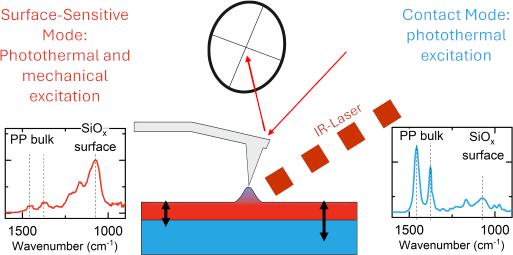
- deeper bulk phase of the substrate and more information of the near-surface region. In samples with a thicker layer of SiOx, this results in an improved signal-to-noise ratio. Even though the spectra of the sample with a low SiOx thickness still show sizable peaks originating from the substrate


Stiffness calibration of qPlus sensors at low temperature through thermal noise measurements
Beilstein J. Nanotechnol. 2024, 15, 580–602, doi:10.3762/bjnano.15.50
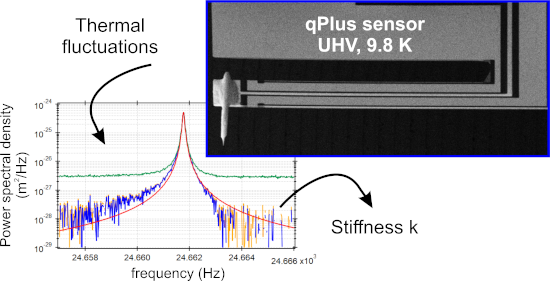
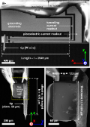
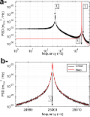
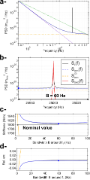
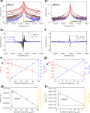
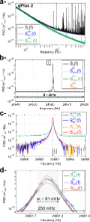
- stiffness calibration of a particular type of qPlus sensor in UHV and at 9.8 K by means of thermal noise measurements. The stiffness calibration of such high-k sensors, featuring high quality factors (Q) as well, requires to master both the acquisition parameters and the data post-processing. Our approach
- relies both on numerical simulations and experimental results. A thorough analysis of the thermal noise power spectral density of the qPlus fluctuations leads to an estimated stiffness of the first flexural eigenmode of ≃2000 N/m, with a maximum uncertainty of 10%, whereas the static stiffness of the
- ; thermal noise; ultrahigh vacuum; Introduction Since the 2000s, non-contact atomic force microscopy (nc-AFM) has established itself as a scanning probe method for the topographical, chemical, and electrical mapping of the surface of a sample down to the atomic scale [1][2][3]. When used in an ultrahigh

Directed growth of quinacridone chains on the vicinal Ag(35 1 1) surface
Beilstein J. Nanotechnol. 2024, 15, 556–568, doi:10.3762/bjnano.15.48
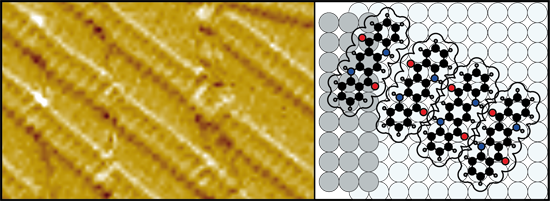
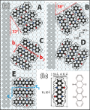
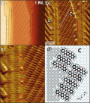
- SPIP [29], which included filtering out noise and an adjustment of the contrast. Additionally, to some images, a Prewitt or Roberts filter for edge enhancement was applied in order to enhance the visibility of the step edges. The structure models were drawn with the free software Graphics Layout Engine


Comparative electron microscopy particle sizing of TiO2 pigments: sample preparation and measurement
Beilstein J. Nanotechnol. 2024, 15, 317–332, doi:10.3762/bjnano.15.29
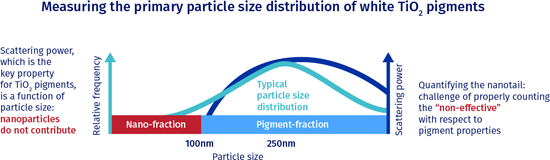
- thresholding. While the former detection methods do not require any pre-processing of the image filtering of the obtained results, the automated detection methods require both noise reduction and contrast–brightness unification prior to the automated grey-value thresholding, and a shape- and grey value-based
- implemented definition. The new software package does not support the previously used watershed transform; instead, a morphological shape separator must be used. The better image quality allows one to reduce the size of the rank filter for noise reduction from five to two pixels. The differences are


Design, fabrication, and characterization of kinetic-inductive force sensors for scanning probe applications
Beilstein J. Nanotechnol. 2024, 15, 242–255, doi:10.3762/bjnano.15.23
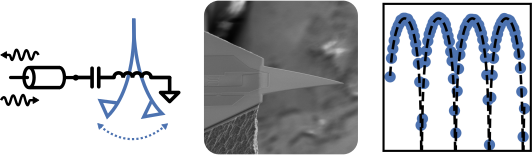
- interferometric and beam-deflection detectors of motion are sufficient to resolve the thermal noise force determined by the damping of the cantilever eigenmode in thermal equilibrium with its environment. Operation in high vacuum and at cryogenic temperatures reduces this force noise, improving sensitivity to the
- point where motion detection becomes the limiting source of noise. In this context, the principles of cavity optomechanics may improve the sensitivity of AFM force sensors. Cryogenic AFM further enables the use of superconducting microwave resonators in a cavity optomechanical detection scheme [4][5][6
- kinetic inductance also comes with intrinsic nonlinearity, or current dependence of the inductance, which enables low-noise microwave parametric amplification [20]. Different materials studied in the literature include niobium nitride (Nb-N) [21][22], titanium nitride (Ti-N) [23][24], niobium titanium



Enhanced feedback performance in off-resonance AFM modes through pulse train sampling
Beilstein J. Nanotechnol. 2024, 15, 134–143, doi:10.3762/bjnano.15.13
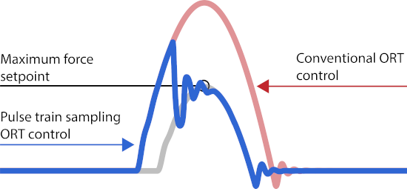
- the proposed method, the reference curve is calculated by averaging multiple recorded waveforms to reduce the noise level. However, this reference only represents the tip–sample interaction for one given material, which can lead to over- or undercorrection of the interaction when the tip touches a


Measurements of dichroic bow-tie antenna arrays with integrated cold-electron bolometers using YBCO oscillators
Beilstein J. Nanotechnol. 2024, 15, 26–36, doi:10.3762/bjnano.15.3
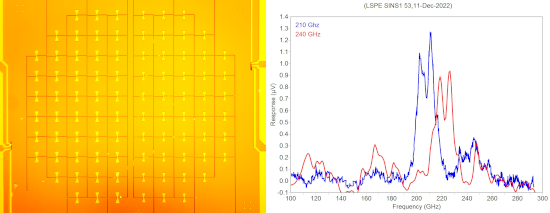
- measured with YBCO Josephson Junction oscillators show narrow peaks at 205 GHz for the 210 GHz array and at 225 GHz for the 240 GHz array; the separation of these two frequency bands is clearly visible. The noise equivalent power level at an operating point in the current bias mode is 5 × 10⁻¹⁶ W/√Hz
- [8]. The estimated photon noise equivalent power (NEP) for the auxiliary channels is about 2 × 10⁻¹⁶ W/√Hz. The LiteBIRD is a satellite mission that investigates the B mode polarization of the CMB radiation to test the hypothesis of an expanding universe. This mission is carried out by the Japanese
- . But because of aliasing in the SQUID readout system and microphonic noise, the NEP in first QUBIC tests was limited to 2 × 10⁻¹⁶ W/√Hz. The Simons Observatory [6] is a four-telescope ground-based system, including one large-aperture telescope and three small-aperture telescopes. It will be built in


unDrift: A versatile software for fast offline SPM image drift correction
Beilstein J. Nanotechnol. 2023, 14, 1225–1237, doi:10.3762/bjnano.14.101
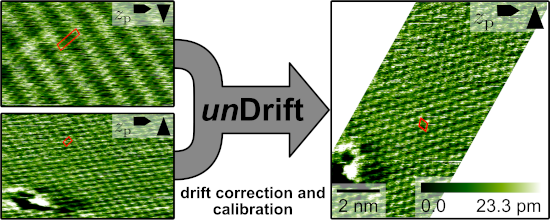
- software to three examples where the drift correction is especially challenging. Namely, we drift-correct SPM images with a very high drift velocity exceeding the slow scan rate, only partly usable images, and images with an overall weak contrast and high noise level. Moreover, we show that unDrift is
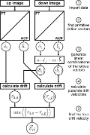
- experimental noise and a small non-linearity in the drift. Instead, we use the two drift velocities with the smallest difference. Finally, the true drift velocity is calculated by averaging over the individual drift velocities. For the selection of the drift velocity in step 5, unDrift provides an alternative
- second selection procedure tends to work better for images with low signal-to-noise ratio. Images without periodic structures As discussed before, unDrift features two algorithms to drift-correct SPM images without periodic structures based on the apparent movement of stationary features in consecutive


Determination of the radii of coated and uncoated silicon AFM sharp tips using a height calibration standard grating and a nonlinear regression function
Beilstein J. Nanotechnol. 2023, 14, 1200–1207, doi:10.3762/bjnano.14.99
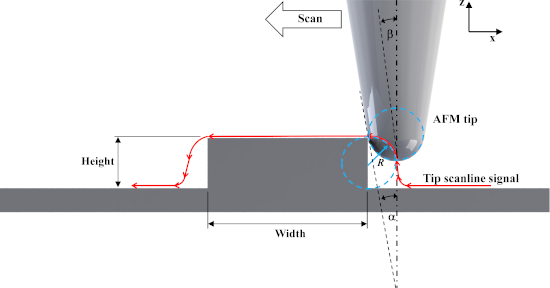
- mode with very light loading (0.01 nN) to prevent the tips from wear. The noise effect was not considered here, because the measurement was conducted inside the hood of a MFP-3D Origin (Asylum Research) with noise filter system. Considering the geometry of the nanostructure and the scanline signal


A multi-resistance wide-range calibration sample for conductive probe atomic force microscopy measurements
Beilstein J. Nanotechnol. 2023, 14, 1141–1148, doi:10.3762/bjnano.14.94
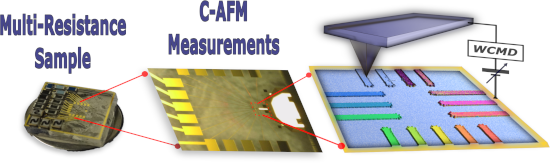
- electronics [24][25][26][27][28][29], organic and biological systems [30][31][32][33][34], and quantum devices [35][36][37]. Various technical methods have been developed in C-AFM to cope with the diversity of its applications, including advanced sensors and low-noise preamplifiers [2][38][39][40
- ammeters were used depending on the range of the expected resistance values. As shown in Figure 1, a digital voltage multimeter (DVM) (Keysight 3458A) was used for the resistance range between 100 Ω and 1 GΩ, while a very low noise (fA/Hz1/2) current amplifier (Femto DDPCA-300) was associated with the same
- measurement instruments (particularly the current amplifier gain), the leakage resistances, and the measurement noise (see Supporting Information File 1, sections S3 and S4). Resistance values in C-AFM imaging mode Following the calibration of the SMD resistors, C-AFM imaging measurements were conducted by


A bifunctional superconducting cell as flux qubit and neuron
Beilstein J. Nanotechnol. 2023, 14, 1116–1126, doi:10.3762/bjnano.14.92
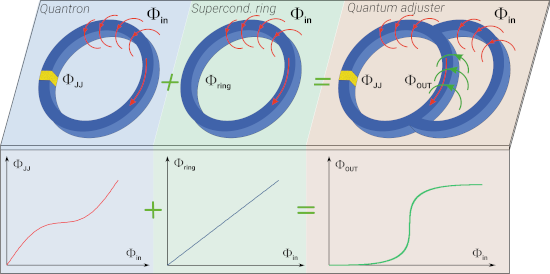
- aspect to consider is the investigation of the impact of dissipative and temperature effects on the nonlinear dynamics of quantum interferometers. Quantum noise can result in the breakdown of coherence in the system and affect the operation of the parametron within coupling circuits and tuning schemes



Dual-heterodyne Kelvin probe force microscopy
Beilstein J. Nanotechnol. 2023, 14, 1068–1084, doi:10.3762/bjnano.14.88
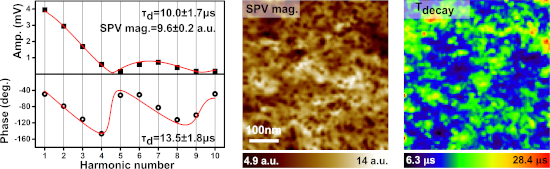
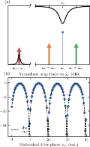
- spectroscopic images displayed in this figure have been treated by applying a Gaussian smooth filter. The raw data are shown in Supporting Information File 1, Figure S8, they display the same features, but with a higher noise level. Remember also that the reference phase (Φ0) is now measured for each pixel
- the phase signal obviously shows a higher noise level for the harmonics with the smallest magnitude (e.g., n = 5, see the phase image in Supporting Information File 1, Figure S9). The question also arises as to whether a better adjustment could be achieved, by taking into account the photocharging




Spatial mapping of photovoltage and light-induced displacement of on-chip coupled piezo/photodiodes by Kelvin probe force microscopy under modulated illumination
Beilstein J. Nanotechnol. 2023, 14, 1059–1067, doi:10.3762/bjnano.14.87
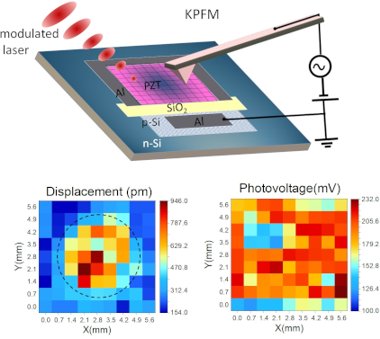
- of the light-driven piezo/photodiode device over time. Employing modulated illumination enabled us to quantify precisely the device displacement due to improved signal-to-noise ratio, which could not be achieved by continuous illumination. The configuration of the hybrid piezo/photodiode device has
- leading to a better signal-to-noise ratio. The feedback applies a DC bias (VDC) matching the potential difference between the tip and the sample, which compensates for the electrostatic force. Therefore, the sidebands disappear. The value of VDC corresponds to the contact potential difference


Isolation of cubic Si3P4 in the form of nanocrystals
Beilstein J. Nanotechnol. 2023, 14, 971–979, doi:10.3762/bjnano.14.80
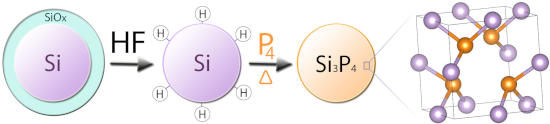
- observed, while other signals, weaker than the (311) reflex by at least a factor of two, were ill-defined because of an overlap of the broadened reflections and a low signal-to-noise ratio. As no systematic effect of the synthesis temperature on the cell parameter was observed (Table 1), all samples were


A wearable nanoscale heart sound sensor based on P(VDF-TrFE)/ZnO/GR and its application in cardiac disease detection
Beilstein J. Nanotechnol. 2023, 14, 819–833, doi:10.3762/bjnano.14.67
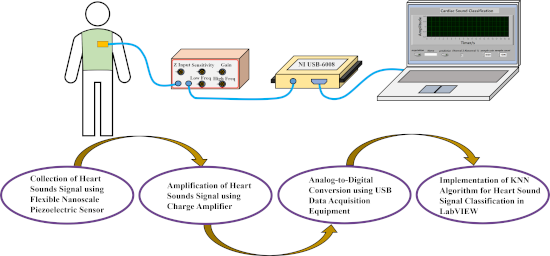
- susceptible to noise, and relies heavily on the practitioner’s experience, new stethoscope technologies have emerged as contemporary research fields, including electronic stethoscopes [4][5], Doppler stethoscopes [6][7], and Bluetooth heart sound stethoscopes [8]. Piezoelectric materials, which can convert
- normal heart sounds are labeled “−1”, and all abnormal heart sounds are labeled “1”. As the heart sound acquisition environment in the database is different, the collected heart sound signal may contain electromagnetic interference, lung sounds, and other noise. In the experiment, a 20 to 200 Hz band
- the time domain diagram of the preprocessed heart sound signal. Comparing the waveforms of the two figures, it can be observed that the characteristics of the first heart sound and the second heart sound of the preprocessed heart sound signal are more apparent, the noise removal is better, and the


Cross-sectional Kelvin probe force microscopy on III–V epitaxial multilayer stacks: challenges and perspectives
Beilstein J. Nanotechnol. 2023, 14, 725–737, doi:10.3762/bjnano.14.59
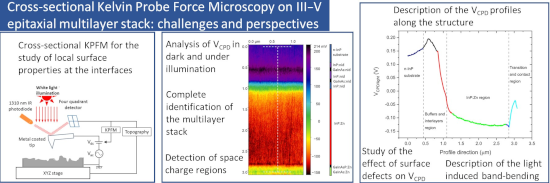
- under ambient conditions, where typical tip–surface distances are of the order of tens of nanometres because of the vibrating tip amplitude necessary to achieve an acceptable signal-to-noise ratio. Finally, it is well documented in the literature [20] that the cleavage procedure produces surface defects


Metal-organic framework-based nanomaterials as opto-electrochemical sensors for the detection of antibiotics and hormones: A review
Beilstein J. Nanotechnol. 2023, 14, 631–673, doi:10.3762/bjnano.14.52


Thermal transport in kinked nanowires through simulation
Beilstein J. Nanotechnol. 2023, 14, 586–602, doi:10.3762/bjnano.14.49
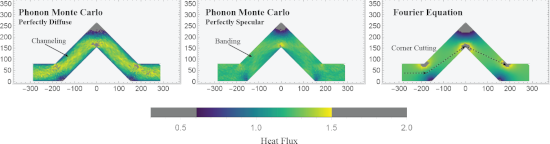
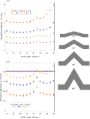
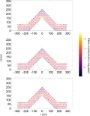
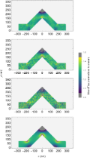
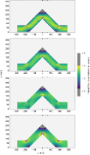
- noise, and that the heat flux is overall less smoothly varying than the other systems. Looking to a more easily assessed visualization, namely a colour map, distinct kinds of behaviour can be seen in the PMC result when compared to the Fourier solution. Figure 7 shows colour maps of the (normalized
- reduced conductances seen in the PMC simulations in Figure 5 when compared to the solution of the Fourier equation. In addition to the shadowing effects, the variation of the flux within the angled segments in the PMC solution appears to be predominantly due to random noise resulting from the simulation
- method. This is in contrast with the solution of the Fourier equation, which varies much more smoothly in the angled segments. This is further emphasized by the centre two colour maps for systems with increased scattering rate, which show an increase in the noise throughout PMC systems. The presence of