


Search results
Search for "heterostructures" in Full Text gives 138 result(s) in Beilstein Journal of Nanotechnology.
High-temperature resistive gas sensors based on ZnO/SiC nanocomposites
Beilstein J. Nanotechnol. 2019, 10, 1537–1547, doi:10.3762/bjnano.10.151
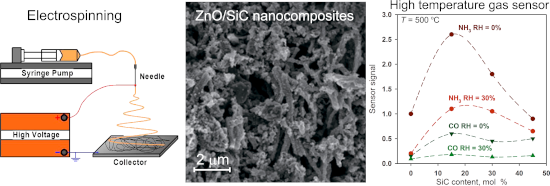
- heterostructures were intensively studied as sensitive elements of field-effect or Schottky diode gas sensors. These materials have a high sensitivity to hydrogen and hydrocarbons in the temperature range of 200–600 °C [9][10][11][12][13][14]. The resistive-type sensors based on MO/SiC composite materials have not



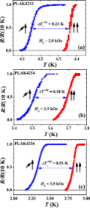
Superconducting switching due to a triplet component in the Pb/Cu/Ni/Cu/Co2Cr1−xFexAly spin-valve structure
Beilstein J. Nanotechnol. 2019, 10, 1458–1463, doi:10.3762/bjnano.10.144
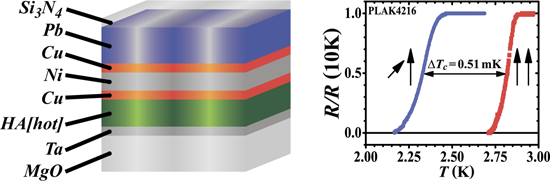
- , 5, 021019, in achieving large values of the switching effect. Keywords: ferromagnet; proximity effect; superconductor; Introduction For decades, metallic thin-film heterostructures have been in the in the focus of fundamental research in condensed matter physics and materials science. They show
- novel fundamental physical phenomena that are absent in the initial materials from which the heterostructures are made. Moreover, those phenomena can also be of remarkable technological relevance. A very prominent example is the discovery, in 1988, of the giant magnetoresistance (GMR) effect in
- heterostructures composed of alternating layers of ferromagnetic and nonmagnetic metallic layers, which opened a new era of electronics, the so-called spin electronics or, in short, spintronics [1][2][3]. A new, more recent development in spintronics was based on the idea of integrating superconducting layers into



Construction of a 0D/1D composite based on Au nanoparticles/CuBi2O4 microrods for efficient visible-light-driven photocatalytic activity
Beilstein J. Nanotechnol. 2019, 10, 1360–1367, doi:10.3762/bjnano.10.134
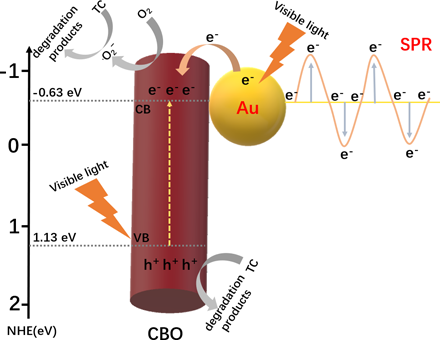
- , respectively. The photocatalytic experiments and characterizations are given in Supporting Information File 1. Results and Discussion In this work, we prepared 0D/1D Au/CBO heterostructures via a simple thermal reduction–precipitation method (Figure 1). The rod-like CBO was synthesized through a hydrothermal


Pure and mixed ordered monolayers of tetracyano-2,6-naphthoquinodimethane and hexathiapentacene on the Ag(100) surface
Beilstein J. Nanotechnol. 2019, 10, 1188–1199, doi:10.3762/bjnano.10.118
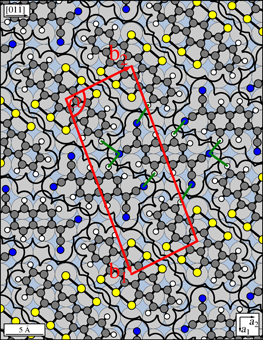
- have a “great potential for use in next-generation textile and wearable electronics” [22]. HTPEN was investigated as a material for organic solar cells [23], for which purpose it was combined with lead(II) phthalocyanine and pentacene. These heterostructures exhibit a greater range of photosensitivity


Photoactive nanoarchitectures based on clays incorporating TiO2 and ZnO nanoparticles
Beilstein J. Nanotechnol. 2019, 10, 1140–1156, doi:10.3762/bjnano.10.114
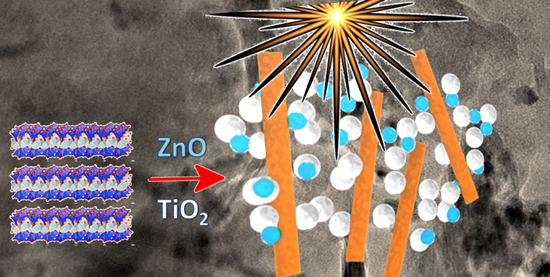
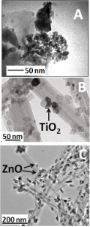
- nanoarchitectures have been prepared by in situ generation of ZnO NPs using Zn acetylacetonate precursor in isopropanol under reflux in the presence of the organoclays, leading to intermediate ZnO@clay organo-heterostructures. After calcination, the organic matter (alkyl groups from the organoclay) is eliminated and



Synthesis of novel C-doped g-C3N4 nanosheets coupled with CdIn2S4 for enhanced photocatalytic hydrogen evolution
Beilstein J. Nanotechnol. 2019, 10, 912–921, doi:10.3762/bjnano.10.92
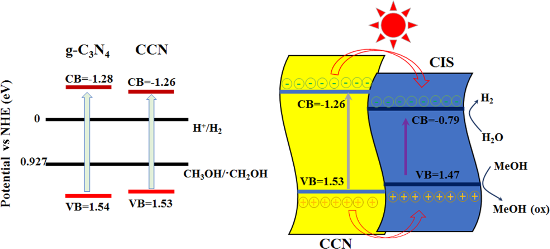
- ]. In addition, hierarchical CdIn2S4/graphene nano-heterostructures have been fabricated as efficient photocatalysts for solar H2 evolution [33]. In this study, synergy can be obtained by combining the two strategies, self-doped C-atom g-C3N4 (CCN) and hybridization with another semiconductor, to


Electronic properties of several two dimensional halides from ab initio calculations
Beilstein J. Nanotechnol. 2019, 10, 823–832, doi:10.3762/bjnano.10.82
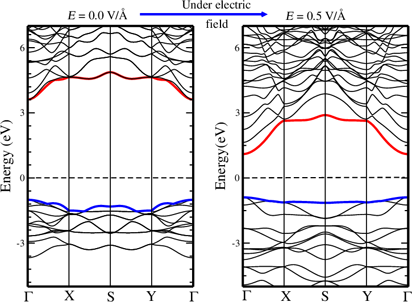
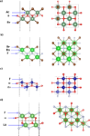
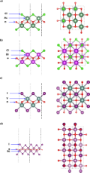
- earlier studies [42] that 2D materials can display a much larger sunlight absorption than commonly employed semiconductors. Also, the materials studied here can be employed in heterostructures to complement or replace other large-bandgap 2D materials, such as hexagonal boron nitride, or to dissociate


Integration of LaMnO3+δ films on platinized silicon substrates for resistive switching applications by PI-MOCVD
Beilstein J. Nanotechnol. 2019, 10, 389–398, doi:10.3762/bjnano.10.38
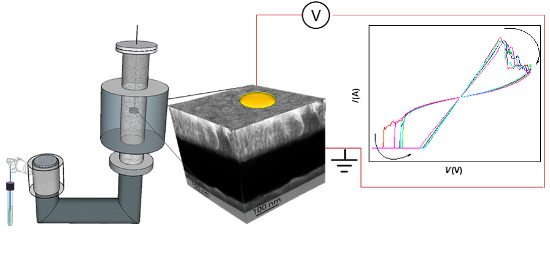
- -based devices fabricated using optimized growth strategies. Keywords: manganite; metal organic chemical vapour deposition (MOCVD); resistive switching; thin film; valence-change memory; Introduction Resistive switching (RS) denotes the phenomena occurring in capacitor-like heterostructures (metal
- substrate surface. The main issues were Pt dewetting, the formation of pinholes at the LMO film, and/or LMO film cracking due to Pt grain evolution. The surface and the cross section of the heterostructures showing cracking of the sample, holes and Pt percolating to the surface are presented in Figure S1
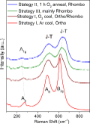
- , cracking or dewetting. Furthermore, TEM cross-section observation of the LMO films was performed for strategies I and III, which correspond to the extreme cases (Figure 4). The cross-section images corroborated that in both heterostructures the Pt layer is continuous and stable as required; neither




Surface plasmon resonance enhancement of photoluminescence intensity and bioimaging application of gold nanorod@CdSe/ZnS quantum dots
Beilstein J. Nanotechnol. 2019, 10, 22–31, doi:10.3762/bjnano.10.3
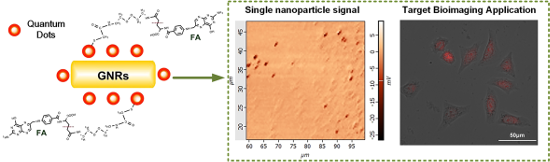
- with them [6][7][8][9][10][11][12]. Research conducted to date shows that the fluorescence intensity of QDs changes when other chemical materials or ions are added. The CdSe/ZnS heterostructures of QDs are of interest due to their high quantum efficiency [13][14][15]. Furthermore, the heterostructure


Variation of the photoluminescence spectrum of InAs/GaAs heterostructures grown by ion-beam deposition
Beilstein J. Nanotechnol. 2018, 9, 2794–2801, doi:10.3762/bjnano.9.261
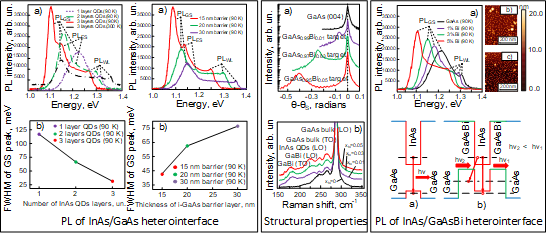
- their isovalent doping with bismuth on the photoluminescence properties of InAs/GaAs heterostructures. The experimental samples were grown by ion-beam deposition. We showed that using three vertically stacked layers of InAs quantum dots separated by thin GaAs barrier layers was accompanied by a red
- -shift of the photoluminescence peak of InAs/GaAs heterostructures. An increase in the thickness of the GaAs barrier layers was accompanied by a blue shift of the photoluminescence peak. The effect of isovalent Bi doping of the GaAs barrier layers on the structural and optical properties of the InAs/GaAs
- heterostructures was investigated. It was found that the Bi content up to 4.96 atom % in GaAs decreases the density of InAs quantum dots from 1.53 × 10¹⁰ to 0.93 × 1010 cm−2. In addition, the average lateral size of the InAs quantum dots increased from 14 to 20 nm, due to an increase in the surface diffusion of In


Two-dimensional semiconductors pave the way towards dopant-based quantum computing
Beilstein J. Nanotechnol. 2018, 9, 2668–2673, doi:10.3762/bjnano.9.249
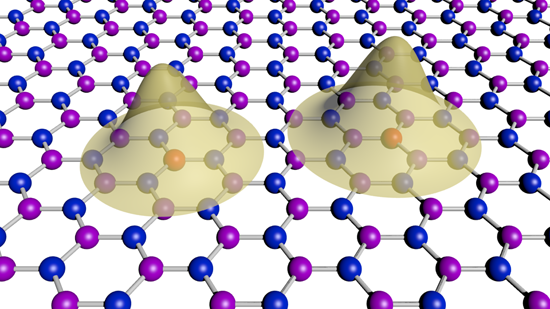
- band gaps range from millielectronvolts to a few electronvolts. They can also be stacked in van der Waals heterostructures [22][24][25] favoring miniaturization and device integration. Incorporation of dopants affects the properties of isolated or stacked monolayers [26][27], as they do in bulk systems


![[Graphic 7]](/bjnano/content/inline/2190-4286-9-249-i7.svg?max-width=637&scale=1.18182) and energy for one electron bound to a donor pair
and energy for one electron bound to a donor pair ![[Graphic 8]](/bjnano/content/inline/2190-4286-9-249-i8.svg?max-width=637&scale=1.18182) as a function of R. For R = 2a*, ...
as a function of R. For R = 2a*, ...

Pattern generation for direct-write three-dimensional nanoscale structures via focused electron beam induced deposition
Beilstein J. Nanotechnol. 2018, 9, 2581–2598, doi:10.3762/bjnano.9.240
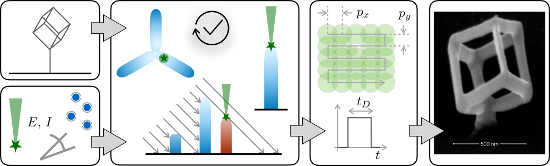
- shown in Figure 9, to appear later. 2.3.3 Deposition of 3D heterostructures A whole range of new applications becomes feasible if the patterning algorithm is extended to fabricate 3D heterostructures. This, however, introduces additional complexity in the deposition process, which we briefly discuss
- especially challenging to get nicely connected edges. 3.4.1 Two-material heterostructures In section 2.3.3 the possibility to deposit 3D heterostructures using different precursors in sequence has been alluded to. In Figure 13 we present an example of a 2 × 2 array of nanotrees, where the edges consist of




Hierarchical heterostructures of Bi2MoO6 microflowers decorated with Ag2CO3 nanoparticles for efficient visible-light-driven photocatalytic removal of toxic pollutants
Beilstein J. Nanotechnol. 2018, 9, 2297–2305, doi:10.3762/bjnano.9.214
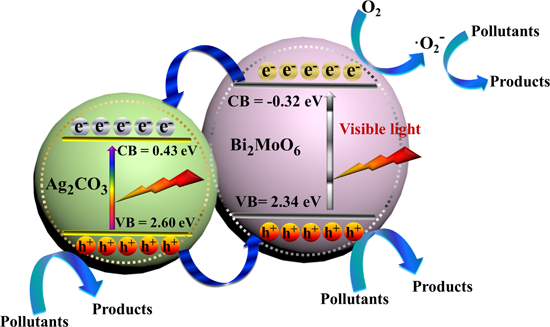
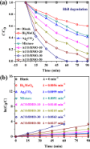
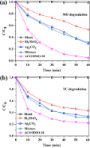
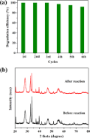
- . Herein, Ag2CO3 nanoparticles were in situ formed on Bi2MoO6 microflowers to produce Ag2CO3/Bi2MoO6 heterostructures via a facile procedure. The morphologies, phases, chemical compositions, and optical properties of Ag2CO3/Bi2MoO6 were examined by multiple characterization techniques. The Ag2CO3/Bi2MoO6
- heterostructures exhibited substantially improved performance in the removal of industrial dyes (rhodamine B (RhB), methyl orange (MO), and methyl blue (MB)), and the antibiotic tetracycline hydrochloride (TC), compared with bare Bi2MoO6 and Ag2CO3 under visible-light irradiation. The enhancement of activity was
- . Herein, we synthesized flower-like Ag2CO3/Bi2MoO6 heterostructures, in which Ag2CO3 nanoparticles were evenly anchored on Bi2MoO6 microflowers to construct novel hierarchical heterojunction photocatalysts by via in situ precipitation. The photocatalytic properties of Ag2CO3/Bi2MoO6 was measured regarding




Influence of the thickness of an antiferromagnetic IrMn layer on the static and dynamic magnetization of weakly coupled CoFeB/IrMn/CoFeB trilayers
Beilstein J. Nanotechnol. 2018, 9, 2198–2208, doi:10.3762/bjnano.9.206
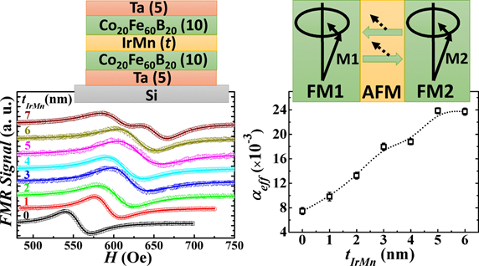
- . There are theoretical studies that suggest the possibility of manipulating the AF moment by spin transfer torque [12][13][14]. Only recently, FM/AF (NiO, IrMn)/heavy metal heterostructures have been extensively studied to demonstrate the efficient spin current transfer across the AF layer mediated by AF
- transport through metallic IrMn layers of up to 3 nm of thickness via AF spin excitations has also been previously reported in Pt/IrMn/YIG heterostructures using spin-torque FMR [17]. Also, a highly efficient spin current transfer from Y3Fe5O12 (YIG) into NiO and subsequent spin propagation in NiO with spin


Electrospun one-dimensional nanostructures: a new horizon for gas sensing materials
Beilstein J. Nanotechnol. 2018, 9, 2128–2170, doi:10.3762/bjnano.9.202






The role of the Ge mole fraction in improving the performance of a nanoscale junctionless tunneling FET: concept and scaling capability
Beilstein J. Nanotechnol. 2018, 9, 1856–1862, doi:10.3762/bjnano.9.177
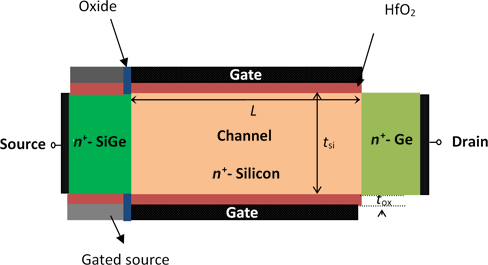
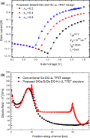
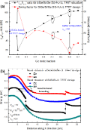
- limitations by proposing new designs based on heterostructures, gate engineering and high-k dielectrics [9][10][11][12]. Nanoscale DG TFETs are believed to face an upward amendment to meet the difficulty of decreasing the huge thermal budget required for the formation of the gated p-i-n diode structure



Increasing the performance of a superconducting spin valve using a Heusler alloy
Beilstein J. Nanotechnol. 2018, 9, 1764–1769, doi:10.3762/bjnano.9.167
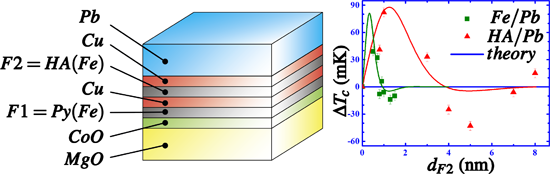
- Abstract We have studied superconducting properties of spin-valve thin-layer heterostructures CoOx/F1/Cu/F2/Cu/Pb in which the ferromagnetic F1 layer was made of Permalloy while for the F2 layer we have taken a specially prepared film of the Heusler alloy Co2Cr1−xFexAl with a small degree of spin
- polarization of the conduction band. The heterostructures demonstrate a significant superconducting spin-valve effect, i.e., a complete switching on and off of the superconducting current flowing through the system by manipulating the mutual orientations of the magnetization of the F1 and F2 layers. The
- field acting on the superconducting Cooper pairs as compared to the Fe layer of the same thickness. This opens a possibility to grow heterostructures where the theoretically desired parameters for the maximum SSV effect could be practically realized yielding the doubling of the magnitude of the SSV
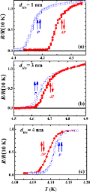

![[Graphic 4]](/bjnano/content/inline/2190-4286-9-167-i9.svg?max-width=637&scale=1.18182) on the thickness of layer F2, dF2 in the SSV heterostructures AFM/F1/N1/F2/N2/S. Tri...
on the thickness of layer F2, dF2 in the SSV heterostructures AFM/F1/N1/F2/N2/S. Tri...
Robust topological phase in proximitized core–shell nanowires coupled to multiple superconductors
Beilstein J. Nanotechnol. 2018, 9, 1512–1526, doi:10.3762/bjnano.9.142
- stability of the Majorana modes [28]. Proximitized core–shell nanowires are slightly more complex systems recently shown [29] to have interesting Majorana physics that is practically immune to orbital effects. With a conductive shell and an insulating core, such heterostructures become tubular conductors


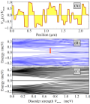
![[Graphic 30]](/bjnano/content/inline/2190-4286-9-142-i36.svg?max-width=637&scale=1.18182) ) = 0 and
) = 0 and ![[Graphic 31]](/bjnano/content/inline/2190-4286-9-142-i37.svg?max-width=637&scale=1.18182) = 0. The white areas are t...
= 0. The white areas are t...


![[Graphic 40]](/bjnano/content/inline/2190-4286-9-142-i46.svg?max-width=637&scale=1.18182) ) ≠ 0 and
) ≠ 0 and ![[Graphic 41]](/bjnano/content/inline/2190-4286-9-142-i47.svg?max-width=637&scale=1.18182) = 0. The white areas are topol...
= 0. The white areas are topol...

![[Graphic 50]](/bjnano/content/inline/2190-4286-9-142-i56.svg?max-width=637&scale=1.18182) ) ≠ 0 and
) ≠ 0 and ![[Graphic 51]](/bjnano/content/inline/2190-4286-9-142-i57.svg?max-width=637&scale=1.18182) 1 = 0,
1 = 0, ![[Graphic 52]](/bjnano/content/inline/2190-4286-9-142-i58.svg?max-width=637&scale=1.18182) 3 = π/2,
3 = π/2, ![[Graphic 53]](/bjnano/content/inline/2190-4286-9-142-i59.svg?max-width=637&scale=1.18182) 5 = −π/2. T...
5 = −π/2. T...

![[Graphic 65]](/bjnano/content/inline/2190-4286-9-142-i71.svg?max-width=637&scale=1.18182) ) ≠ 0 and
) ≠ 0 and ![[Graphic 66]](/bjnano/content/inline/2190-4286-9-142-i72.svg?max-width=637&scale=1.18182) 1 = π/2,
1 = π/2, ![[Graphic 67]](/bjnano/content/inline/2190-4286-9-142-i73.svg?max-width=637&scale=1.18182) 3 = −π/2,
3 = −π/2, ![[Graphic 68]](/bjnano/content/inline/2190-4286-9-142-i74.svg?max-width=637&scale=1.18182) 5 = π/2, and ...
5 = π/2, and ...


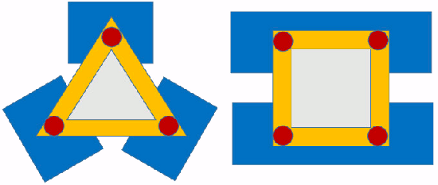
![[Graphic 79]](/bjnano/content/inline/2190-4286-9-142-i85.svg?max-width=637&scale=1.18182) = 3 of a triangular wi...
= 3 of a triangular wi...


Interplay between pairing and correlations in spin-polarized bound states
Beilstein J. Nanotechnol. 2018, 9, 1370–1380, doi:10.3762/bjnano.9.129
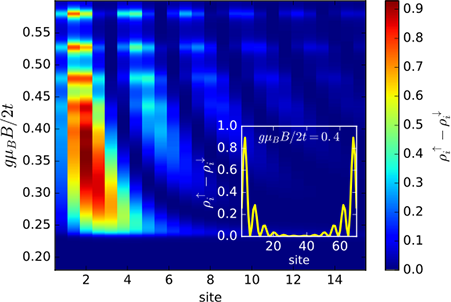
- the Kondo and the leaking Majorana quasiparticle can be confronted with each other. These magnetically polarized YSR and Majorana quasiparticles as well as the subgap Kondo effect can be experimentally verified using tunneling heterostructures with ferromagnetic lead (STM tip). Results and Discussion


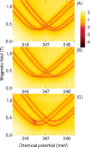
![[Graphic 23]](/bjnano/content/inline/2190-4286-9-129-i39.svg?max-width=637&scale=1.18182) obtained for |J| < Jc in the absence of spin–orbit coupling (le...
obtained for |J| < Jc in the absence of spin–orbit coupling (le...

![[Graphic 26]](/bjnano/content/inline/2190-4286-9-129-i42.svg?max-width=637&scale=1.18182) as a function of the r...
as a function of the r...


Heterostuctures of 4-(chloromethyl)phenyltrichlorosilane and 5,10,15,20-tetra(4-pyridyl)-21H,23H-porphine prepared on Si(111) using particle lithography: Nanoscale characterization of the main steps of nanopatterning
Beilstein J. Nanotechnol. 2018, 9, 1211–1219, doi:10.3762/bjnano.9.112
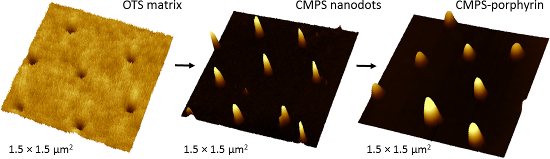
- Phillip C. Chambers Jayne C. Garno Department of Chemistry, Louisiana State University, 232 Choppin Hall, Baton Rouge, LA 70803, USA 10.3762/bjnano.9.112 Abstract Nanostructures of 4-(chloromethyl)phenyltrichlorosilane (CMPS) were used as a foundation to attach and grow heterostructures of
- solution for selective binding to produce heterostructures. The attachment of porphyrins was evidenced by increases in the height and width of the CMPS nanopatterns. The measurements of size indicate that multiple layers of porphyrins were added. Through each step of the surface reaction the surrounding
- matrix of OTS showed minimal areas of nonspecific adsorption. The AFM studies provide insight into the mechanism of the self-polymerization of CMPS as a platform for constructing porphyrin heterostructures. Keywords: atomic force microscopy (AFM); nanostructures; particle lithography; porphyrin; self


Theoretical study of strain-dependent optical absorption in a doped self-assembled InAs/InGaAs/GaAs/AlGaAs quantum dot
Beilstein J. Nanotechnol. 2018, 9, 1075–1084, doi:10.3762/bjnano.9.99
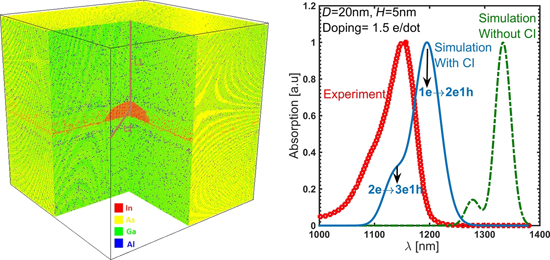
- strain behavior in self-assembled quantum dots has been presented. Self-assembled quantum dots are highly strained heterostructures and a rigorous atomistic strain model is needed to accurately calculate the electronic states in the system. In addition, many-particle configuration interaction has been




Non-equilibrium electron transport induced by terahertz radiation in the topological and trivial phases of Hg1−xCdxTe
Beilstein J. Nanotechnol. 2018, 9, 1035–1039, doi:10.3762/bjnano.9.96
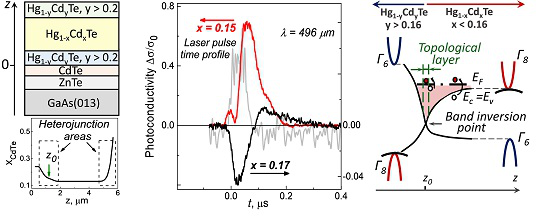
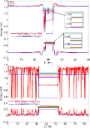
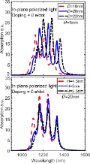
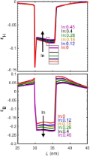
- . 53, 119991 Moscow, Russia 10.3762/bjnano.9.96 Abstract Terahertz photoconductivity in heterostructures based on n-type Hg1−xCdxTe epitaxial films both in the topological phase (x < 0.16, inverted band structure, zero band gap) and the trivial state (x > 0.16, normal band structure) has been studied
- focus on the study of terahertz photoconductivity in the spectral range of 90–496 µm of Hg1−xCdxTe solid solutions in close vicinity of the band inversion point. This is done to determine possible effects of the topological states on the non-equilibrium transport. The Hg1−xCdxTe heterostructures were
- photoconductivity in heterostructures under study. As it was mentioned earlier, 2D Dirac states are formed at the position z0 corresponding to the bottom of the 3D heterojunction potential well. Heating of electrons by the incident terahertz radiation in the 3D well leads to two competing effects. The first one is


Facile synthesis of a ZnO–BiOI p–n nano-heterojunction with excellent visible-light photocatalytic activity
Beilstein J. Nanotechnol. 2018, 9, 789–800, doi:10.3762/bjnano.9.72
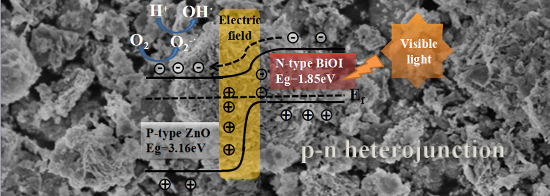
- photocatalysts which showed higher activity than single-phase BiOI or TiO2 and 50% BiOI possessed the best performance [32]. Jiang and co-workers used a chemical bath to produce ZnO/BiOI heterostructures. By tuning the ratio of Zn/Bi, they could rationally control the morphology, constituents and optical
- . described the synthesis of p–n heterostructures where p-type BiOI nanoplates decorated on n-type ZnO nanorod arrays which were synthesized through a solvothermal route. The high-contact areas provided by the fast charge transfer channel of BiOI and ZnO create the efficient photocatalyst [35]. Tong et al


Combined pulsed laser deposition and non-contact atomic force microscopy system for studies of insulator metal oxide thin films
Beilstein J. Nanotechnol. 2018, 9, 686–692, doi:10.3762/bjnano.9.63
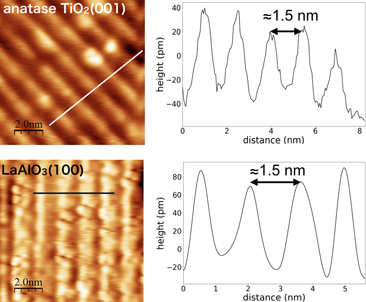
- grown on substrate materials have been studied for correlated electron heterostructures and devices. One of the most important and common uses of epitaxial LaAlO3 is its interface with SrTiO3 for studies of electrical conductivity [4], superconductivity [59], photoconductivity [60], and


Au nanostructure fabrication by pulsed laser deposition in open air: Influence of the deposition geometry
Beilstein J. Nanotechnol. 2017, 8, 2438–2445, doi:10.3762/bjnano.8.242
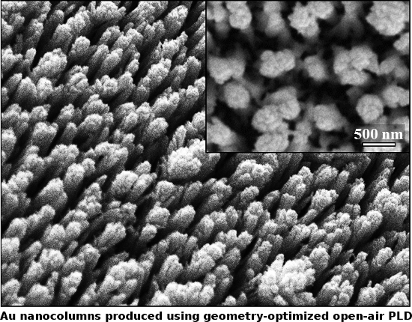
- deposition conditions [11][12][13]. The possibility to control the morphological and structural characteristics of the ultimate structure by precisely manipulating the experimental parameters makes PLD one of the most promising techniques for formation of complex oxide heterostructures and nanostructures [14





