Search results
Search for "switching" in Full Text gives 260 result(s) in Beilstein Journal of Nanotechnology. Showing first 200.
Fe3O4 nanoparticles as a saturable absorber for giant chirped pulse generation
Beilstein J. Nanotechnol. 2019, 10, 1065–1072, doi:10.3762/bjnano.10.107
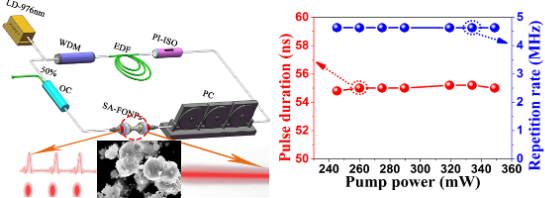
- pulse duration of 55 ns, which is the shortest pulse duration published to date. It is well-established that the RPR will increase with the increase in pump power when the device is in the Q-switching state [40][41][43][44][45][46]. In our results, we demonstrate that as the pump power is increased, the


Rapid, ultraviolet-induced, reversibly switchable wettability of superhydrophobic/superhydrophilic surfaces
Beilstein J. Nanotechnol. 2019, 10, 866–873, doi:10.3762/bjnano.10.87
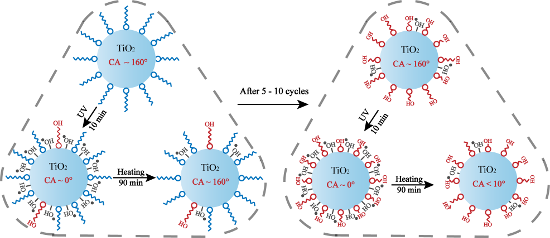
- and Biomimetics (NLBB), The Ohio State University, 201 W. 19th Avenue, Columbus, OH 43210-1142, USA 10.3762/bjnano.10.87 Abstract Controllable wettability is important for a wide range of applications, including intelligent switching, self-cleaning and oil/water separation. In this work, rapid
- switching and extreme wettability changes upon ultraviolet (UV) illumination were investigated. TiO2 nanoparticles were modified in solutions of trimethoxy(alkyl)silane, and the suspensions were sprayed on glass substrates. For such samples, the water contact angle (WCA) was shown to transition from a
- surfaces in a suspension of TiO2 modified with trimethoxypropyl saline. In this work, the wettability transition time from superhydrophobic (WCA ≈ 158°) to superhydrophilic (WCA ≈ 0°) occurred within 120 min of UV illumination. Although large range wettability switching can be achieved in many ways, the



Co-doped MnFe2O4 nanoparticles: magnetic anisotropy and interparticle interactions
Beilstein J. Nanotechnol. 2019, 10, 856–865, doi:10.3762/bjnano.10.86
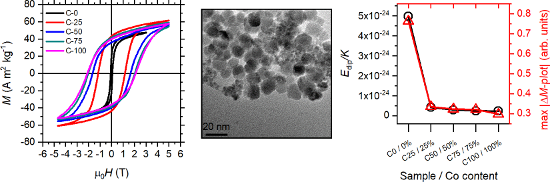
- provided additional information about the magnetization reversal of each sample. The derivative of MDCD with respect to the reversal field, χirr = dMDCD/dµ0H, represents the irreversible component of the susceptibility. This quantity is generally defined as the switching field distribution (SFD) [47][48
- . Only sample C0 is fully superparamagnetic at room temperature, while the only blocked sample is C100. (a) Magnetization vs field curves and (b) switching field distribution measured at 5 K for sample C0 (black squares), C25 (red circles), C50 (blue triangles), C75 (dark cyan reversed triangles), and


Novel reversibly switchable wettability of superhydrophobic–superhydrophilic surfaces induced by charge injection and heating
Beilstein J. Nanotechnol. 2019, 10, 840–847, doi:10.3762/bjnano.10.84
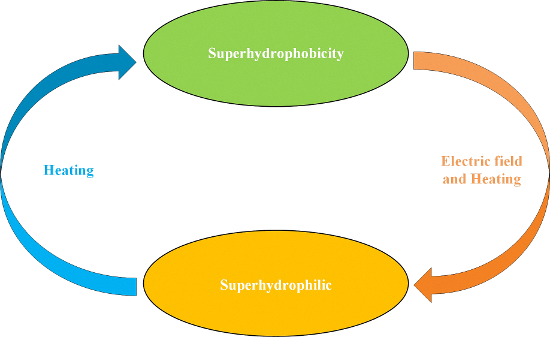
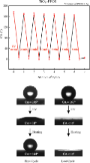
- Xiangdong Ye Junwen Hou Dongbao Cai School of Mechanical and Electrical Engineering, Shaanxi Key Laboratory of Nano Materials and Technology, Xi’an University of Architecture and Technology, Xi’an 710055, China 10.3762/bjnano.10.84 Abstract Reversibly switching wettability between
- for converting superhydrophobic surfaces into superhydrophilic surfaces after only 10 min of ultraviolet irradiation. Gao et al. [6] prepared 18 alkyltrichlorosilane-modified TiO2 films for the reversible switching between superhydrophilicity and superhydrophobicity of a wood surface. Feng et al. [7
- contact angle of 0°. Li et al. [8] prepared a superhydrophobic and superhydrophilic zinc oxide film on a bamboo surface. The surface was irradiated by ultraviolet radiation/darkroom for 12 h. A storage period of ten days induced the reversible switching between superhydrophilicity and superhydrophobicity


Periodic Co/Nb pseudo spin valve for cryogenic memory
Beilstein J. Nanotechnol. 2019, 10, 833–839, doi:10.3762/bjnano.10.83
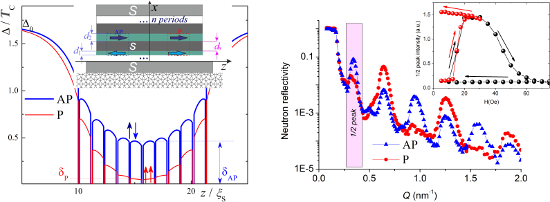
- memory applications. As a basis for a weak link we propose to use a periodic structure composed of ferromagnetic (F) layers spaced by thin superconductors (s). Our calculations based on the Usadel equations show that switching from parallel (P) to antiparallel (AP) alignment of neighboring F layers can
- the feasibility of controllable switching between AP and P states through the whole periodic structure, we prepared a superlattice [Co(1.5 nm)/Nb(8 nm)/Co(2.5 nm)/Nb(8 nm)]6 between two superconducting layers of Nb(25 nm). Neutron scattering and magnetometry data showed that parallel and antiparallel
- ], and also due to compatibility with a number of quantum and neuromorphic computers under development [2][3][4]. However the lack of cryogenic memory elements (including synapses) with sufficiently fast switching between stable states and sufficiently small energy dissipation is still the main obstacle


Coexisting spin and Rabi oscillations at intermediate time regimes in electron transport through a photon cavity
Beilstein J. Nanotechnol. 2019, 10, 606–616, doi:10.3762/bjnano.10.61
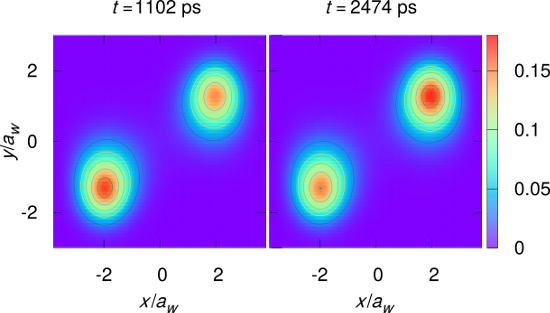
- transport in the far-infrared (FIR) regime. The time-dependent electronic transport through a two-dimensional (2D) nanosystem patterned in a GaAs heterostructure, which is in turn embedded in a three-dimensional (3D) FIR photon cavity, generally displays three regimes: i) The switching transient regime in


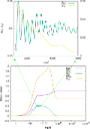
![[Graphic 40]](/bjnano/content/inline/2190-4286-10-61-i49.svg?max-width=637&scale=1.418184) and photon
and photon ![[Graphic 41]](/bjnano/content/inline/2190-4286-10-61-i50.svg?max-width=637&scale=1.418184) content in the open central system as a function of time. In additio...
content in the open central system as a function of time. In additio...
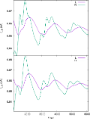
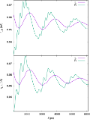
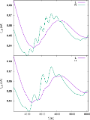
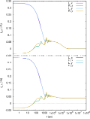

![[Graphic 60]](/bjnano/content/inline/2190-4286-10-61-i69.svg?max-width=637&scale=1.418184)
![[Graphic 61]](/bjnano/content/inline/2190-4286-10-61-i70.svg?max-width=637&scale=1.418184)
![[Graphic 62]](/bjnano/content/inline/2190-4286-10-61-i71.svg?max-width=637&scale=1.418184) and
and ![[Graphic 63]](/bjnano/content/inline/2190-4286-10-61-i72.svg?max-width=637&scale=1.418184) i...
i...
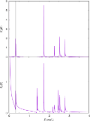
![[Graphic 76]](/bjnano/content/inline/2190-4286-10-61-i85.svg?max-width=637&scale=1.418184) in the steady state. The cavity pho...
in the steady state. The cavity pho...
Temperature-dependent Raman spectroscopy and sensor applications of PtSe2 nanosheets synthesized by wet chemistry
Beilstein J. Nanotechnol. 2019, 10, 467–474, doi:10.3762/bjnano.10.46
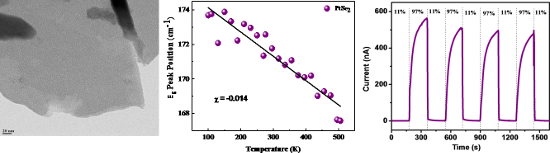
- function of temperature. PtSe2 nanosheet based humidity sensor: (a) Typical resistance versus relative humidity plot and (b) current–time (I–t) plot taken after switching 11% RH and 97% RH. The photodetector application of PtSe2 nanosheets: (c) I–V in dark conditions and with green LED light and (d



Integration of LaMnO3+δ films on platinized silicon substrates for resistive switching applications by PI-MOCVD
Beilstein J. Nanotechnol. 2019, 10, 389–398, doi:10.3762/bjnano.10.38
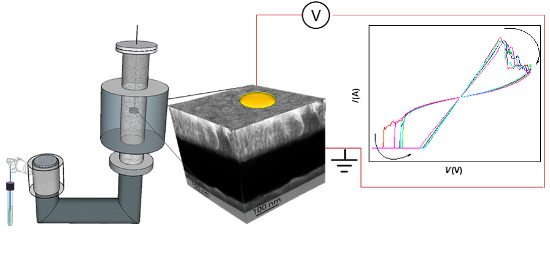
- and reduction of the power consumption. In this context, resistive switching memory chips emerge as promising candidates for developing new non-volatile memory modules. Manganites have received increasing interest as memristive material as they exhibit a remarkable switching response. Nevertheless
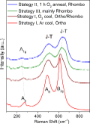
- technique. We have developed three different growth strategies with which we are able to tune the oxygen content and Mn oxidation state moving from an orthorhombic to a rhombohedral structure for the active LaMnO3+δ material. Furthermore, a good resistive switching response has been obtained for LaMnO3+δ
- -based devices fabricated using optimized growth strategies. Keywords: manganite; metal organic chemical vapour deposition (MOCVD); resistive switching; thin film; valence-change memory; Introduction Resistive switching (RS) denotes the phenomena occurring in capacitor-like heterostructures (metal




Threshold voltage decrease in a thermotropic nematic liquid crystal doped with graphene oxide flakes
Beilstein J. Nanotechnol. 2019, 10, 71–78, doi:10.3762/bjnano.10.7
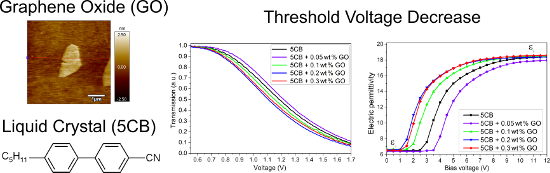
- , electric anisotropy, splay elastic constant, switch-on time, and switch-off time. The shape and dimensions of the GO flakes were studied using atomic force microscopy (AFM) and scanning electron microscopy (SEM). The influence of the GO concentration on the physical properties and switching process in the
- presence of the electric field was discussed. Keywords: graphene oxide; liquid crystal; nematic phase; switching; threshold voltage; Introduction Liquid crystals (LCs) are classified as a type of soft matter which are characterized by anisotropic molecules and a liquid-like fluidity behavior. Of all LC
- composites [11][12][13][14]. NLCs doped with graphene or carbon nanotubes show a faster response in electro-optical switching than pure liquid crystal compounds. This effect is caused by trapping of some free ion concentrations [15][16] or reduction in the rotational viscosity [17]. Furthermore, due to



Electrostatic force microscopy for the accurate characterization of interphases in nanocomposites
Beilstein J. Nanotechnol. 2018, 9, 2999–3012, doi:10.3762/bjnano.9.279
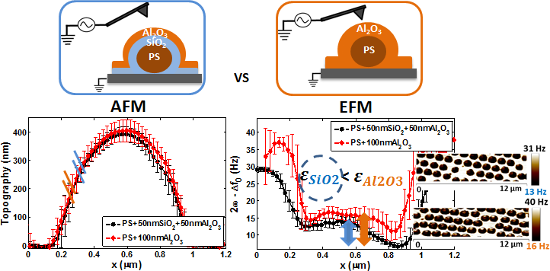
- lock-in amplifier (EG&G Instruments – Model 5302), locked at the double frequency of the AC-electrical excitation and an arbitrary function generator (Sony Tektronic – AFG310). A custom-made switching device was used to extract the 2ω component from the signal obtained during the second pass. A 5 V AC




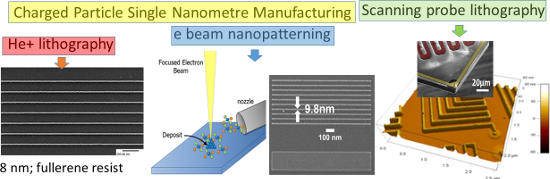
Charged particle single nanometre manufacturing
Beilstein J. Nanotechnol. 2018, 9, 2855–2882, doi:10.3762/bjnano.9.266


Contactless photomagnetoelectric investigations of 2D semiconductors
Beilstein J. Nanotechnol. 2018, 9, 2741–2749, doi:10.3762/bjnano.9.256
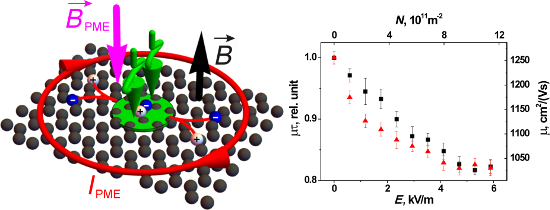
- . Results and Discussion Figure 5a shows the induced VPME response to the switching on and switching off of the sinusoidally modulated illumination of single-layer graphene with and without a magnetic field. The measured VPME responses are proportional to the magnetic field induction (Figure 5b) and to the
- electrostatically tunable carrier density. The charge carriers can change from electrons to holes with the application of an electrostatic gate. The switching takes place at the Dirac point, where the carriers have a minimum density. The gate voltage, Vg, induces a sheet carrier concentration approximated by [33
- the energy position of Fermi level and the switching between 2D electron and hole gases by changing the gate voltage. Taking into account the proportionality of the PME magnetic flux to the square of carrier mobility and lifetime presented above (Figure 2) (i.e., in the case of small values of μτ and

![[Graphic 1]](/bjnano/content/inline/2190-4286-9-256-i2.svg?max-width=637&scale=1.18182) evoked by the PME circulating current in a point-illuminated 2D...
evoked by the PME circulating current in a point-illuminated 2D...

![[Graphic 7]](/bjnano/content/inline/2190-4286-9-256-i8.svg?max-width=637&scale=1.18182) vs the illumination intensity for differe...
vs the illumination intensity for differe...

![[Graphic 15]](/bjnano/content/inline/2190-4286-9-256-i16.svg?max-width=637&scale=1.18182) vs the carrier lifetime for different values ...
vs the carrier lifetime for different values ...


Oriented zinc oxide nanorods: A novel saturable absorber for lasers in the near-infrared
Beilstein J. Nanotechnol. 2018, 9, 2730–2740, doi:10.3762/bjnano.9.255
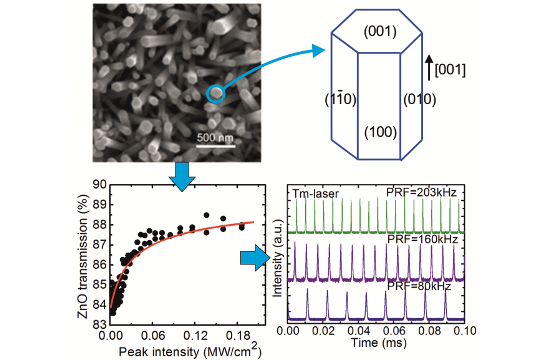
- nanorods; Q-switching; saturable absorption; solid-state lasers; zinc oxide; Introduction Zinc oxide (ZnO) is a well-known II–IV group wide-bandgap semiconductor (Eg = 3.37 eV), possessing a hexagonal wurtzite-type (sp. gr. P63mc) structure with unit cell parameters a = 3.25 Å, c = 5.20 Å. In recent years
- with picosecond pulses resulting in Isat = 16 kW/cm2, which is close to our observations. Passive Q-switching by ZnO nanorods The laser experiments were performed with the NRs grown for 5 h, because they exhibited minimum insertion loss. Stable Q-switching was also observed for the NRs grown for 10 h
- scaling of the laser in the PQS regime was limited by the Q-switching instabilities arising for Pabs > 3.2 W due to the heating of the SA by the residual (non-absorbed) pump [22]. The pulse duration Δτ, determined as full width at half maximum (FWHM) and the pulse repetition frequency (PRF) for the PQS



Size-selected Fe3O4–Au hybrid nanoparticles for improved magnetism-based theranostics
Beilstein J. Nanotechnol. 2018, 9, 2684–2699, doi:10.3762/bjnano.9.251
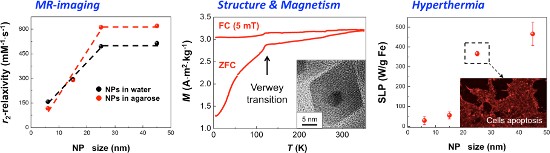
- magnetic heating contribution by using where C is the volumetric specific heat capacity of the sample, mf the dispersion mass, mMNPs is the iron mass diluted in the dispersion and ΔΤ/Δt is the maximal slope at initial time after switching on the heating AC field. In vitro experiments Cell culture. 4T1


Nanoantenna structures for the detection of phonons in nanocrystals
Beilstein J. Nanotechnol. 2018, 9, 2646–2656, doi:10.3762/bjnano.9.246
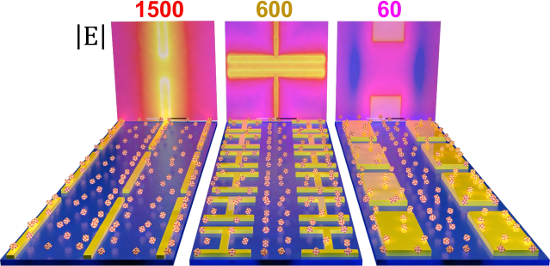
- obtained for three different angles of incidence θ = 0, 25, and 50°. Since the longitudinal LSPR mode can be excited either by TE- (E0 II X) or TM-polarized (H0 II Y) waves, both geometries are considered in the simulations. Note that switching to the second derivative of d instead of the dipole moment


Effective sensor properties and sensitivity considerations of a dynamic co-resonantly coupled cantilever sensor
Beilstein J. Nanotechnol. 2018, 9, 2546–2560, doi:10.3762/bjnano.9.237
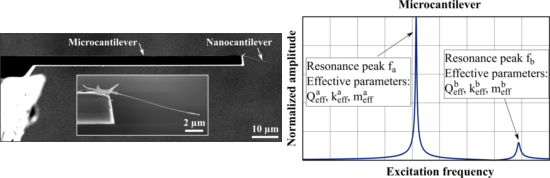
- magnetic properties. This led to the first time observation of magnetic switching of these individual Heusler nanoparticles at room temperature and with a comparatively simple setup (laser-deflection detection) [16]. Other experiments in magnetic force microscopy showed a likewise increase in sensitivity
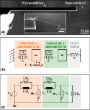


![[Graphic 7]](/bjnano/content/inline/2190-4286-9-237-i43.svg?max-width=637&scale=1.18182) ...
...


Evidence of friction reduction in laterally graded materials
Beilstein J. Nanotechnol. 2018, 9, 2443–2456, doi:10.3762/bjnano.9.229
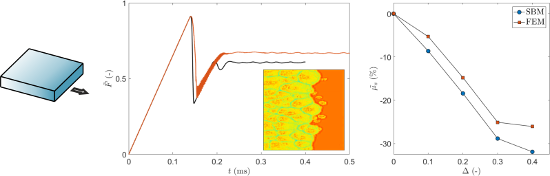
- coefficient of friction when switching from the 0° to the 90° direction, and this is evident especially for large values of Δ. The dependence of µs on the angle, instead, is more complex for Δ < 0.3, especially for the 3D FEM, where the interaction with the vertical stress distribution must also be taken into


![[Graphic 5]](/bjnano/content/inline/2190-4286-9-229-i10.svg?max-width=637&scale=1.18182) as function of time for the non-graded material: SBM solution for dif...
as function of time for the non-graded material: SBM solution for dif...


Pinning of a ferroelectric Bloch wall at a paraelectric layer
Beilstein J. Nanotechnol. 2018, 9, 2356–2360, doi:10.3762/bjnano.9.220
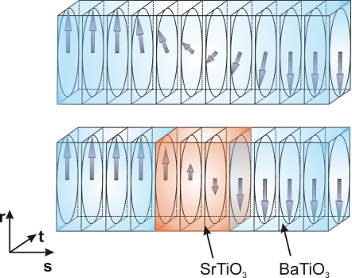
- loop demonstrating switching of the Pt component of the Bloch wall located at a 1 nm thin SrTiO3 layer. The indicated value of the polarization Pt is averaged over the whole supercell shown in Figure 1b. Acknowledgements This work was supported by the Czech Science Foundation (project no. 15-04121S

![[Graphic 2]](/bjnano/content/inline/2190-4286-9-220-i2.svg?max-width=637&scale=1.18182) -oriented 180-degree domain walls in a) pure BaTiO3, b) BaTiO3–SrTiO3 superla...
-oriented 180-degree domain walls in a) pure BaTiO3, b) BaTiO3–SrTiO3 superla...


Magnetism and magnetoresistance of single Ni–Cu alloy nanowires
Beilstein J. Nanotechnol. 2018, 9, 2345–2355, doi:10.3762/bjnano.9.219
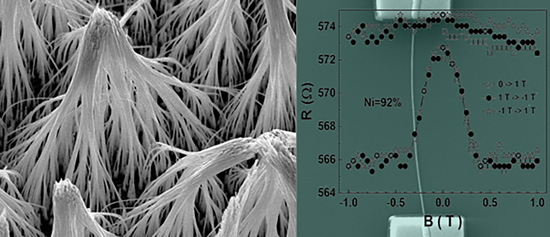
- , the magnetization reversal canb be described using the Stoner–Wohlfarth model [29][30]. Thus, if the field is applied along the easy axis (EA), the magnetization changes steeply its orientation along the EA at a switching field proportional to the anisotropy constant and inversely proportional to the
- decrease of the magnetization from positive to negative saturation, with the saturation field equating the switching field in parallel geometry. If the current flows along the EA, the resistivity is above the saturation field (θ = 90°) and at zero field (where the magnetization lies along the EA, due to
- perpendicular to the easy axis. The saturation field (approaching the switching field in case of the S–W model) decreases very slowly with the Ni composition, contrary to what would be expected from the composition dependence of the saturation magnetization and inverse proportionality of the switching field


Intrinsic ultrasmall nanoscale silicon turns n-/p-type with SiO2/Si3N4-coating
Beilstein J. Nanotechnol. 2018, 9, 2255–2264, doi:10.3762/bjnano.9.210
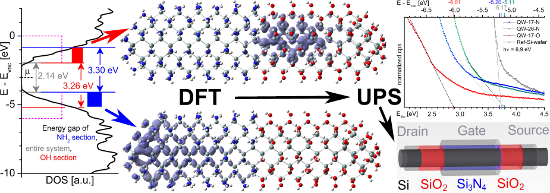
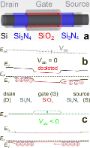
- the electrostatic integrity of the devices causes conventional doping to fail. Metal–Si contacts formed by, e.g., silicide formation [36] result in rather high Schottky-barriers at the source/drain-channel interfaces that deteriorate the switching behaviour and on-state performance. h-DFT calculations





Optimization of the optical coupling in nanowire-based integrated photonic platforms by FDTD simulation
Beilstein J. Nanotechnol. 2018, 9, 2248–2254, doi:10.3762/bjnano.9.209
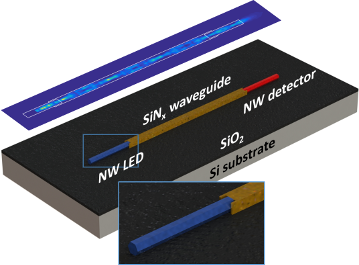
- between an LED and a photoconductive detector both based on GaN NWs [29]. The communication took place in free space. Using NWs located close to each other, the authors demonstrated a correlation between the LED on/off switching and the photodetector current variations. A waveguide for light channeling is


The role of adatoms in chloride-activated colloidal silver nanoparticles for surface-enhanced Raman scattering enhancement
Beilstein J. Nanotechnol. 2018, 9, 2236–2247, doi:10.3762/bjnano.9.208
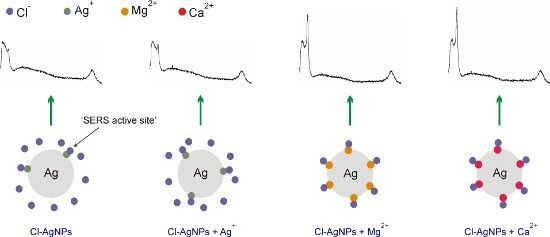
- addition of MgSO4 or Ca(NO3)2 in concentrations ranging from 10−4 –10−3 M to a cit-AgNP solution which already contains 1 mM NaCl, led to the switching on of the SERS effect and the recording of very intense SERS spectra of 10−9 M crystal violet. Accordingly, the intense SERS spectra of crystal violet



Influence of the thickness of an antiferromagnetic IrMn layer on the static and dynamic magnetization of weakly coupled CoFeB/IrMn/CoFeB trilayers
Beilstein J. Nanotechnol. 2018, 9, 2198–2208, doi:10.3762/bjnano.9.206
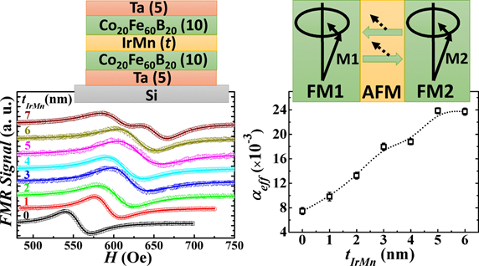
- lowering the spin torque critical current switching density [22][23]. For various other applications a fast relaxation is favored, e.g., in magnetoresistive heads [24][25]. The FM/AF exchange coupling is one of the approaches to tune the magnetization relaxation by enhancing the field linewidth ΔH and


High-throughput synthesis of modified Fresnel zone plate arrays via ion beam lithography
Beilstein J. Nanotechnol. 2018, 9, 2049–2056, doi:10.3762/bjnano.9.194
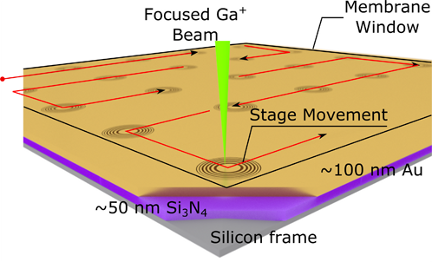
- redirected to higher orders including the 2nd and 3rd diffraction orders. 2nd order DE, which is almost 0 for a perfect 1:1 duty cycle (Supporting Information File 1, Figure S2), increases if the L:S ratio deviates from 1:1. The situation can be remedied relatively easily by switching to an SP-E process for


Recent highlights in nanoscale and mesoscale friction
Beilstein J. Nanotechnol. 2018, 9, 1995–2014, doi:10.3762/bjnano.9.190
- process and the task of the related functional molecular groups. Then, the frictional properties of these films in the different conformations (e.g., trans and cis) will be intensively studied to understand how this conformation switching affects energy dissipation. Multiscale bridging The current