Search results
Search for "penetration" in Full Text gives 375 result(s) in Beilstein Journal of Nanotechnology. Showing first 200.
Sputtering onto liquids: a critical review
Beilstein J. Nanotechnol. 2022, 13, 10–53, doi:10.3762/bjnano.13.2






Biocompatibility and cytotoxicity in vitro of surface-functionalized drug-loaded spinel ferrite nanoparticles
Beilstein J. Nanotechnol. 2021, 12, 1339–1364, doi:10.3762/bjnano.12.99
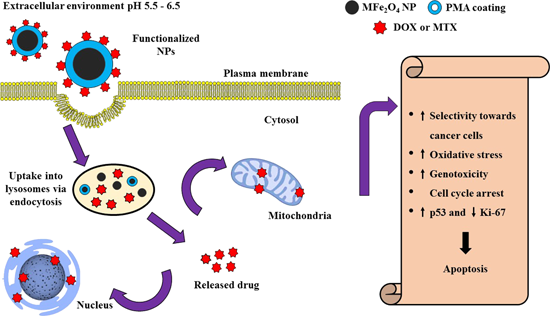
- penetration and hemocompatibility which can be useful for biomedical applications [12][17]. Furthermore, in order to be exploited in biomedical applications, NPs need to fulfill certain criteria which include water solubility, excellent colloidal stability, biocompatibility, and high saturation magnetization







Identifying diverse metal oxide nanomaterials with lethal effects on embryonic zebrafish using machine learning
Beilstein J. Nanotechnol. 2021, 12, 1297–1325, doi:10.3762/bjnano.12.97
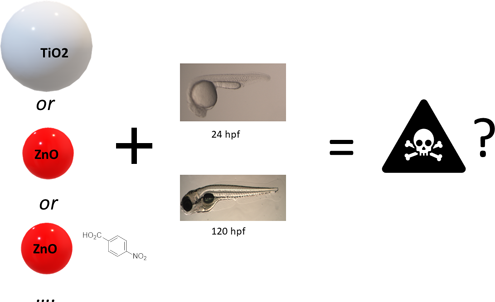
- associated with modelling the 24 hpf endpoint might possibly reflect different systemic exposure routes and the failure of the descriptors to properly account for factors affecting dermal penetration. Whilst the experimental setup involved continuous waterborne exposure of the embryonic zebrafish to the ENMs
- dispersed in fish water medium and dermal penetration is typically observed as the main route of systemic exposure up to 120 hpf, the appearance of swallowing around 72 hpf allows for toxicity via an oral exposure route to manifest prior to 120 hpf but not at 24 hpf [31]. However, it is also possible that
- models developed here for excess lethality at 120 hpf and improved models for mortality at 24 hpf.) It is possible that our findings reflect the fact that toxicity up to 24 hpf requires dermal penetration to reach the site of biological action, since swallowing does not start until around 72 hpf [31


Nonmonotonous temperature dependence of Shapiro steps in YBCO grain boundary junctions
Beilstein J. Nanotechnol. 2021, 12, 1279–1285, doi:10.3762/bjnano.12.95
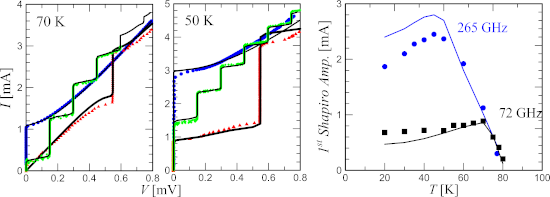
- temperature. Figure 1 also shows the change in the Josephson junction characteristic length L/λJ, where is the Josephson penetration depth, which determines the size of a fluxon in the junction. Here μ0 is the vacuum permeability, Jc is the critical current density, and d = t + 2λL is the effective magnetic
- thickness with the junction barrier thickness t = 1.5 nm and the London penetration depth λL = 250–150 nm [38]. It can be seen from the figure that, for nitrogen temperatures, the Josephson junction can generally be considered as a short JJ. With the decrease in the temperature, its characteristic dimension


A new method for obtaining model-free viscoelastic material properties from atomic force microscopy experiments using discrete integral transform techniques
Beilstein J. Nanotechnol. 2021, 12, 1063–1077, doi:10.3762/bjnano.12.79
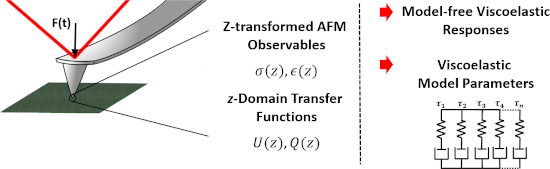
- sinusoidal stresses and strains. To analyze the case of an AFM tip penetrating a viscoelastic surface we need an equation relating force with sample penetration (indentation). Equation 1 and Equation 2 relate stress and strain but do not consider the geometrical aspects of our boundary value problem


An overview of microneedle applications, materials, and fabrication methods
Beilstein J. Nanotechnol. 2021, 12, 1034–1046, doi:10.3762/bjnano.12.77
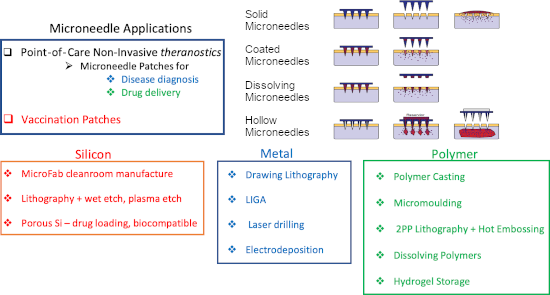
- microelectromechanical systems (MEMS) and provided a platform for microfabrication of compact miniaturized medical devices for human health screening, monitoring, and diagnostic purposes. Microneedles are microstructures that are sharp and robust enough for skin penetration, made using MEMS technology. The application
- micromoulding [5]. In addition to microneedles for skin penetration, these microstructures have also been used in other sites of the body including the delivery of bioactive drugs into the eyes [6] and the insertion of molecules into cells using nanoneedles [7][8]. The present article reviews applications
- and causing discomfort to the patient. Human skin penetration experiments have demonstrated the reduced pain associated with microneedle penetration and the effect has been quantified using the visual analogue scale (VAS), showing an approximately 90% reduction in pain for a microneedle penetrating


Progress and innovation of nanostructured sulfur cathodes and metal-free anodes for room-temperature Na–S batteries
Beilstein J. Nanotechnol. 2021, 12, 995–1020, doi:10.3762/bjnano.12.75
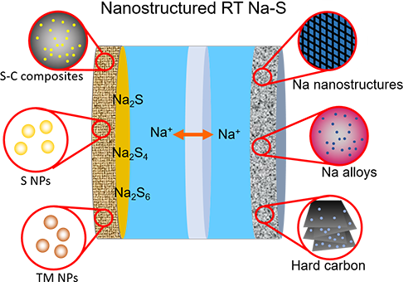
- had important security and corrosion issues since sodium and sulfur are both liquid under the working conditions. Therefore, the applicability of HT Na–S batteries is limited to stationary deployment, and the operation temperature needs to be reduced in order to improve market penetration of Na–S




In situ transport characterization of magnetic states in Nb/Co superconductor/ferromagnet heterostructures
Beilstein J. Nanotechnol. 2021, 12, 913–923, doi:10.3762/bjnano.12.68
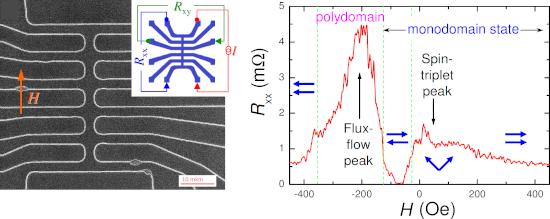
- -linear flux-flow Hall effect Resistivity in type-II superconductors with sizes larger than the London penetration depth, λ, is caused by motion of Abrikosov vortices, that is, it has a flux-flow (FF) nature [50][51][52][53]. Since our micrometer-size bridges are significantly larger than λ ≈ 100 nm of Nb


Comprehensive review on ultrasound-responsive theranostic nanomaterials: mechanisms, structures and medical applications
Beilstein J. Nanotechnol. 2021, 12, 808–862, doi:10.3762/bjnano.12.64
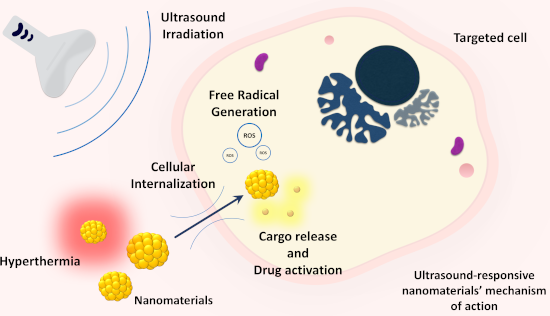
- several review articles [3][7][10][11]. Endogenous or internal stimuli can be hard to control because of the heterogeneous disease environment. On the other hand, the use of exogenous or external stimuli may cause tissue damage and the depth of penetration may not be sufficient to trigger drug release
- generation are recognized as the mechanism of action of US-responsive nanomaterials. These nanomaterials can act through at least one of the mechanisms. Cargo release, drug activation, cell damage, and enhanced cargo penetration, in addition to contrast enhancement, are the clinically practical consequences
- are involved in US contrast imaging and can provide a way to improve the penetration capability of large particles, genes, and cells. They can trigger local drug release and provide better in vivo spatial control by applying mechanical forces of oscillation, expansion, and inertial cavitation from ADV


Recent progress in magnetic applications for micro- and nanorobots
Beilstein J. Nanotechnol. 2021, 12, 744–755, doi:10.3762/bjnano.12.58
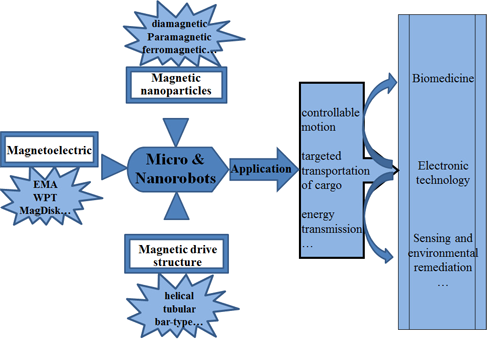
- other forms [21]. As a biofriendly approach, the penetration of biological tissues without damage and free movement in the microbial environment can be achieved with magnetic fields, which has become a highlight of research in the field of MNRs. A magnetic microrobot (MMR) [14] is a micro-/nanoscale


A review of defect engineering, ion implantation, and nanofabrication using the helium ion microscope
Beilstein J. Nanotechnol. 2021, 12, 633–664, doi:10.3762/bjnano.12.52


A review on nanostructured silver as a basic ingredient in medicine: physicochemical parameters and characterization
Beilstein J. Nanotechnol. 2021, 12, 440–461, doi:10.3762/bjnano.12.36
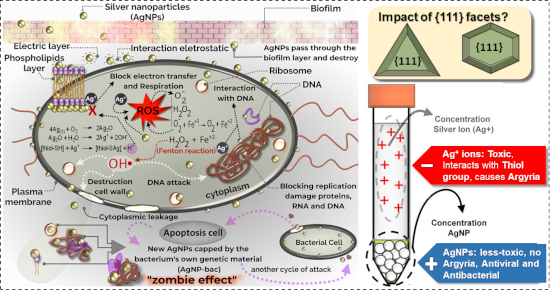
- binding between the virus and the host cell [109]. A viral infection begins with the adhesion or binding of the virus to the host receptors, followed by penetration, replication, and budding. The main antiviral strategies are to effectively block the binding of the virus to the host receptors (i.e, the
- prophylactic effect) and to inhibit viral replication and budding (i.e, the therapeutic effect) [75][76][110]. In vitro studies reveal that AgNPs can act as inhibitors of viral entry by blocking viral attachment and penetration into cells [109][111][112]. They also inhibit the synthesis of viral negative


The impact of molecular tumor profiling on the design strategies for targeting myeloid leukemia and EGFR/CD44-positive solid tumors
Beilstein J. Nanotechnol. 2021, 12, 375–401, doi:10.3762/bjnano.12.31


Structural and optical characteristics determined by the sputtering deposition conditions of oxide thin films
Beilstein J. Nanotechnol. 2021, 12, 354–365, doi:10.3762/bjnano.12.29
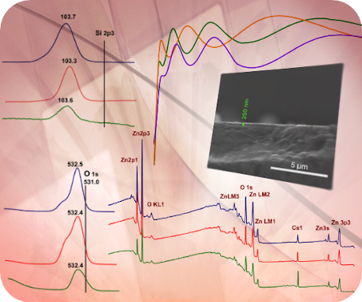
- films, as depicted in the SEM images (Figure 7a–c). The morphology of these samples was verified using the depth penetration technique of SEM, where it was evidenced that the analyzed films were compact. We could also observe an increase in granulation of the samples with an increase in thickness. The


Intracranial recording in patients with aphasia using nanomaterial-based flexible electronics: promises and challenges
Beilstein J. Nanotechnol. 2021, 12, 330–342, doi:10.3762/bjnano.12.27
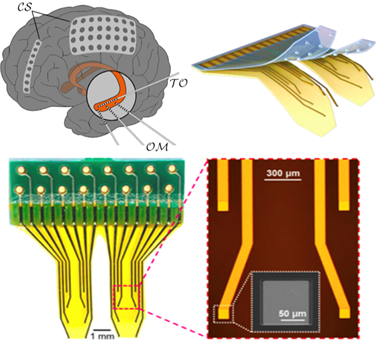
- µm PI layers. The bifurcated flap shape was used to achieve good penetration and attachment to the cortical surface and avoid injuring blood vessels on the brain midline (Figure 5c, left). The width of the Au lines was designed to be 100 µm to reach a low impedance value and enhance the signal-to


The patterning toolbox FIB-o-mat: Exploiting the full potential of focused helium ions for nanofabrication
Beilstein J. Nanotechnol. 2021, 12, 304–318, doi:10.3762/bjnano.12.25
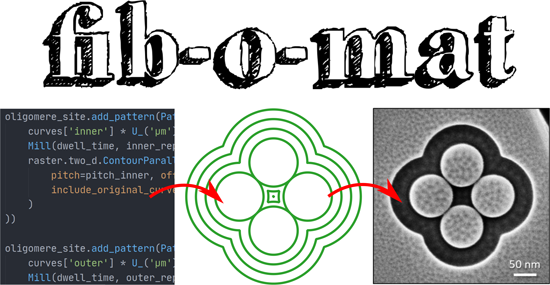
- for focused beams of light ions are still under exploration. This is a consequence of the novelty of the technique and of several significant peculiarities in the behaviour of light ions upon interaction with a solid. First, light ions exhibit a large interaction volume in the solid. The penetration
- depth of 30 keV He ions in silicon is more than five times larger than the penetration depth of Ga ions of the same energy [21]. The consequently large collision cascade may create a significant amount of heat. Even for small ion doses deformation of the manufactured structures can be observed when
- the varying crystal orientations cause a variation in the local sputter rate due to ion channeling [24]. If one of the symmetry axes of the crystal lattice is oriented along the beam direction, the ion penetration depth is larger, which, in turn, reduces the sputter rate. The resulting surface


Doxorubicin-loaded gold nanorods: a multifunctional chemo-photothermal nanoplatform for cancer management
Beilstein J. Nanotechnol. 2021, 12, 295–303, doi:10.3762/bjnano.12.24
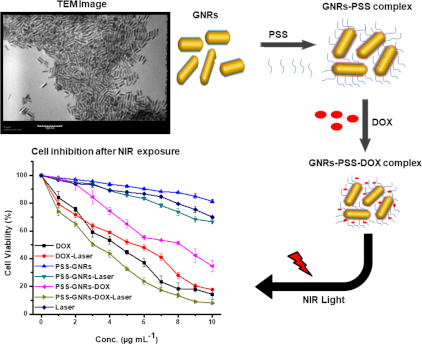
- conversion of absorbed NIR light to heat. In cancer intervention, NIR-mediated photothermal therapy is gaining more attention due to the deep tissue penetration with minimal absorbance by healthy tissues [15][16]. Gold nanorods are potential delivery carriers for sustained drug release in response to an


Differences in surface chemistry of iron oxide nanoparticles result in different routes of internalization
Beilstein J. Nanotechnol. 2021, 12, 270–281, doi:10.3762/bjnano.12.22
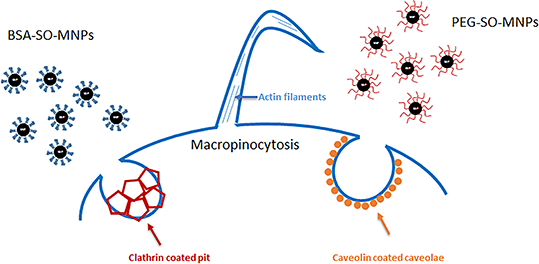
- of a pulmonary disease, where the airway–mucus barrier is difficult to penetrate, nanoparticles in the size range of 200 nm are more effective in mucus penetration [20][37]. The effect of surface chemistry on the mechanism of NPs uptake is, however, not sufficiently understood yet. Understanding the



Determination of elastic moduli of elastic–plastic microspherical materials using nanoindentation simulation without mechanical polishing
Beilstein J. Nanotechnol. 2021, 12, 213–221, doi:10.3762/bjnano.12.17
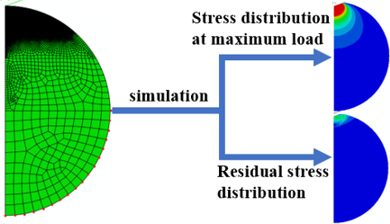
- case of pileup and too low in the case of sink-in [10]. Nix and Gao deduced the theory of strain gradient plasticity to interpret the “size effect” of indentation as an increase in physical quantity with the decreasing depth of penetration [11]. Experimental results show that the size effect of
- indentation for pyramidal and spherical indenters can be correlated [12]. For a spherical (parabolic) indenter, hardness does not depend on depth, but on the radius of the indenter. Therefore, for spherical indentation, the radius of the impression rather than the depth of penetration determines the size


ZnO and MXenes as electrode materials for supercapacitor devices
Beilstein J. Nanotechnol. 2021, 12, 49–57, doi:10.3762/bjnano.12.4
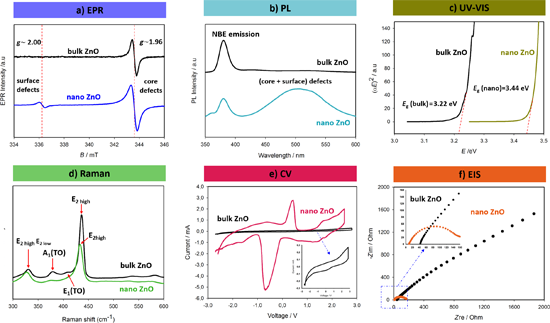
- layered thick solids and, thus, do not contain spaces for the penetration of Li ions into the electrode [15]. Therefore, to enhance the performance of MXene supercapacitors an increased ion transfer rate is needed [18][23]. MXenes exhibit two major changes due to the removal of the A layer from the
Effect of different silica coatings on the toxicity of upconversion nanoparticles on RAW 264.7 macrophage cells
Beilstein J. Nanotechnol. 2021, 12, 35–48, doi:10.3762/bjnano.12.3
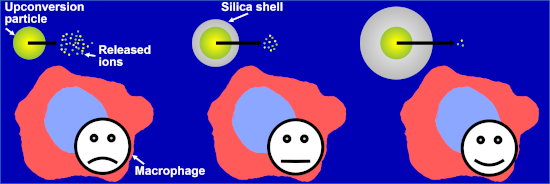
- with UCNPs avoids autofluorescence. Besides, UCNPs have further advantages for applications in life science, such as deep penetration depth, minimal photodamage, and high resistance to photobleaching [1][2][3][4][5][6][7][8][9]. Moreover, high thermal and photochemical stability, as well as high


Bio-imaging with the helium-ion microscope: A review
Beilstein J. Nanotechnol. 2021, 12, 1–23, doi:10.3762/bjnano.12.1
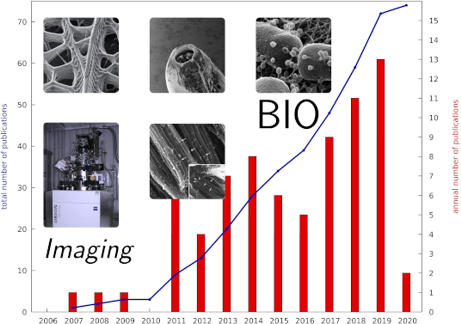
- Bdellovibrio and prey, for example, Escherichia coli, and stopped the experiment by chemical fixation at specific points during incubation. This allowed for the study of the attachment of the predator to its prey, followed by penetration of the membrane, and the entering into the cytoplasm. After that, the


Scanning transmission imaging in the helium ion microscope using a microchannel plate with a delay line detector
Beilstein J. Nanotechnol. 2020, 11, 1854–1864, doi:10.3762/bjnano.11.167
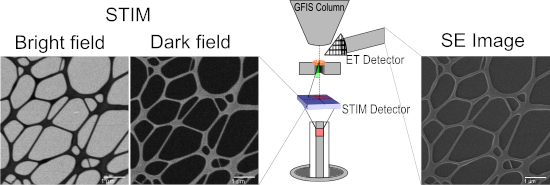
- , thereby creating easier directions for the penetration of the projectile atom. If the projectile atom reaches the crystal at an angle smaller than the critical angle for such an axial or planar channeling direction, the projectile will be steered along this direction and will experience a reduced


Molecular dynamics modeling of the influence forming process parameters on the structure and morphology of a superconducting spin valve
Beilstein J. Nanotechnol. 2020, 11, 1776–1788, doi:10.3762/bjnano.11.160
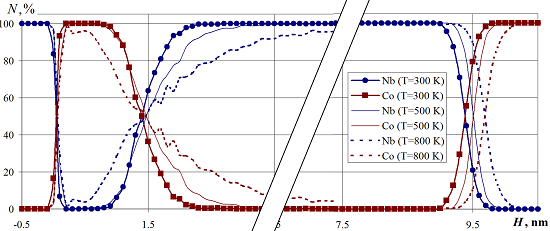
- system is not perfectly flat. The surface has noticeable irregularities that penetrate into adjacent layers. The figures also show that there is a mutual penetration of one contact layer into another. Therefore, the layer interface has a certain quantifiable thickness. It should be noted that the atomic
- lead–iron, is small: TF ≈ 0.4. This reduces the probability of penetration of Cooper pairs from the superconductor into the ferromagnetic material and requires smaller thicknesses of superconducting layers in order to obtain a significant effect of ferromagnetism on superconductivity. In turn, the
- formation. An increase in temperature leads to an increase in the total thickness of the nanosystem (at 800 K, this value is increased by 0.3 nm compared with a temperature of 300 K). The region of mutual penetration of Nb atoms into the Co layers (and vice versa) also increases, which is clearly seen in


PEG/PEI-functionalized single-walled carbon nanotubes as delivery carriers for doxorubicin: synthesis, characterization, and in vitro evaluation
Beilstein J. Nanotechnol. 2020, 11, 1728–1741, doi:10.3762/bjnano.11.155
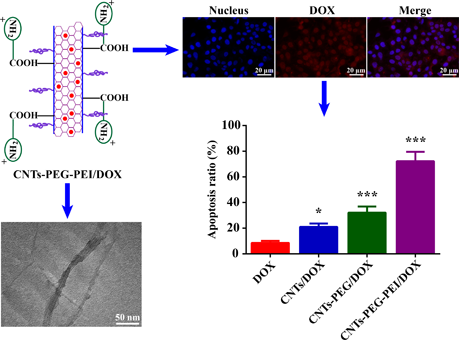
- molecules enter cells only by mobility or diffusion, while the individually dispersed nanotubes are more easily internalized by cells via direct penetration and endocytosis [38][43]. This can explain the above results. The fluorescence intensity of CNTs-PEG/DOX and CNTs-PEG-PEI/DOX increases further (Figure