Search results
Search for "zeta potential" in Full Text gives 238 result(s) in Beilstein Journal of Nanotechnology. Showing first 200.
Preservation of rutin nanosuspensions without the use of preservatives
Beilstein J. Nanotechnol. 2019, 10, 1902–1913, doi:10.3762/bjnano.10.185
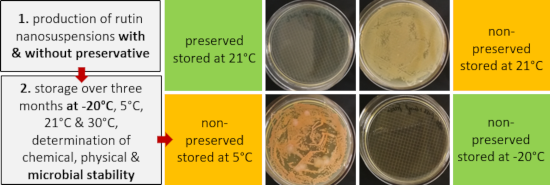
- changes the charge of the particles (zeta potential) and forces agglomeration of the nanocrystals. To avoid instabilities of nanosuspensions only very hydrophilic and non-charged preservatives, which will not interact with the nanocrystals, should be used. Due to the above-mentioned reasons, only a few
- stability than the Plantacare-stabilized formulations. Upon the addition of the preservatives only very minor changes in size were observed for both formulations (Table 1) and for the Plantacare-stabilized formulation even a slight deagglomeration was determined (Table 2). Also the zeta potential values did
- should become visible in the zeta potential values. However, this was not the case in this study (Figure 8). Therefore, the observed destabilization at elevated temperatures of the non-preserved nanosuspensions might be more related to Ostwald ripening. The assumption is also underlined by the fact that


Engineered superparamagnetic iron oxide nanoparticles (SPIONs) for dual-modality imaging of intracranial glioblastoma via EGFRvIII targeting
Beilstein J. Nanotechnol. 2019, 10, 1860–1872, doi:10.3762/bjnano.10.181
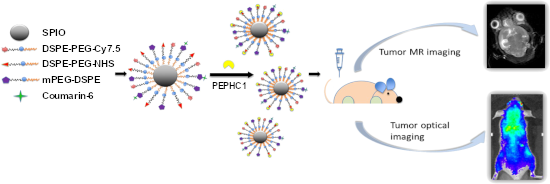
- ), followed by negative staining with 2% phosphotungstic acid. The mean hydrodynamic diameter and zeta potential of the nanoprobes were measured with a Malvern Zetasizer Nano ZS (Malvern, UK) instrument. The quantitative measurement of the Fe content in PNPs was conducted by inductively coupled plasma
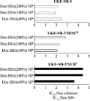
- accumulate in tumor tissue under the influence of enhanced permeability and retention (EPR) as previously discussed in the literature [43][44]. The zeta potential of the NPs and PNPs was found to be around −35.6 mV and −26.2 mV, respectively. The less negative value of the PNP zeta potential as compared to
- the NP zeta potential confirmed the successful conjugation of the positive-valued targeting peptide PEPHC1 (Figure 1d). High-performance liquid chromatography (HPLC) determination (results not shown) further supported the successful conjugation of PEPHC1 where the conjugation efficiency of the PEPHC1




Nanoarchitectonics meets cell surface engineering: shape recognition of human cells by halloysite-doped silica cell imprints
Beilstein J. Nanotechnol. 2019, 10, 1818–1825, doi:10.3762/bjnano.10.176
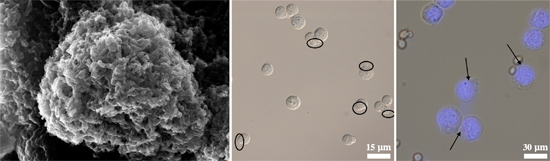
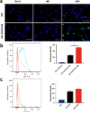
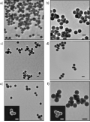
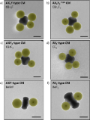
- media supplemented with yeast cells. HeLa cells (having originally a negative zeta potential of ca. −10 mV) were first coated with a single layer of poly(acrylamide-co-diallyldimethylammonium chloride (P(AAm-co-DADMAC)) to reverse the surface charge of HeLa cells (the zeta potential after P(AAm-co


Toxicity and safety study of silver and gold nanoparticles functionalized with cysteine and glutathione
Beilstein J. Nanotechnol. 2019, 10, 1802–1817, doi:10.3762/bjnano.10.175
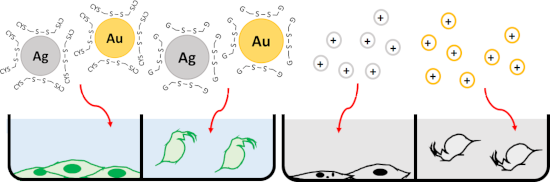
- biothiols (GSH and CYS) bind to the NP surfaces in their oxidized form, which supports some earlier reports [51][69]. A detailed characterization of the prepared NPs dispersed in ultrapure water (UPW) revealed a negative surface charge. The observed zeta-potential values (Table 1) were indicative of a high
- NP stability, as the NPs are generally considered electrostatically stabilized when the absolute values of the zeta potential exceed 30 mV [70]. The size distribution of all NPs was bimodal and the AgNPs were generally smaller than the AuNPs (Table 1). TEM experiments showed a spherical shape for all
- measuring the electrophoretic mobility, which was converted to zeta potential (ζ) values using the Henry equation with the Smoluchowski approximation. The measurements were repeated five times. The DLS and ELS data processing was performed using Zetasizer software 6.32 (Malvern Instruments, Malvern, UK


Doxorubicin-loaded human serum albumin nanoparticles overcome transporter-mediated drug resistance in drug-adapted cancer cells
Beilstein J. Nanotechnol. 2019, 10, 1707–1715, doi:10.3762/bjnano.10.166
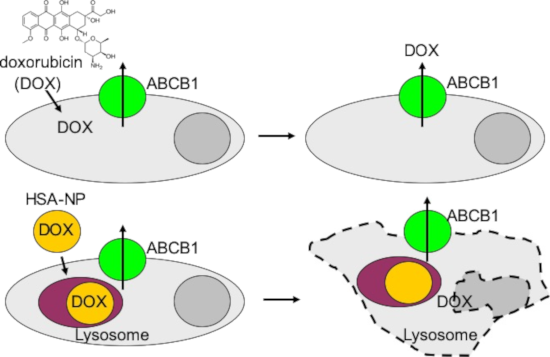
- stabilised by a 100% cross-linking degree (Figure 1). For these nanoparticles a zeta potential of −12.5 ± 1.8 mV (n = 6) was detected, indicating only a moderate stabilisation by electrostatic repulsion. While HSA (40%), HSA (100%), and HSA (200%) nanoparticles displayed similar drug loads between 152 and
- suspensions were diluted 1:100 with purified water and measured at a temperature of 22 °C using a backscattering angle of 173°. The zeta potential was measured in the same instrument by laser Doppler microelectrophoresis to provide information about the surface charge of the nanoparticles. Thus, the


Effects of surface charge and boundary slip on time-periodic pressure-driven flow and electrokinetic energy conversion in a nanotube
Beilstein J. Nanotechnol. 2019, 10, 1628–1635, doi:10.3762/bjnano.10.158
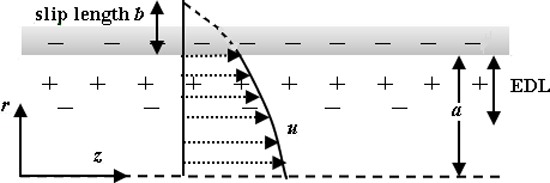
- concentration and z is the valence of ions. Taking the Debye–Hückel approximation for low zeta potential, i.e., sinh(ezφ/(kBT)) ≈ ezφ/(kBT), and utilizing Equation 3 and Equation 4 we obtain the linearized Poisson–Boltzmann equation The electric potential distribution φ satisfies where ρe = −εκ2φ is used, ζ is
- the zeta potential, and κ = [εkBT/(2z2e2n0)]−1/2 is the Debye–Hückel parameter and represents the inverse of the characteristic EDL thickness. A unidirectional flow along the z-direction is generated by a time-periodic pressure gradient cos(ωt)dp0/dz independent of position, where ω is the frequency
- governing equations and their boundary conditions: where λ = εζ2/(µD), B2 = iRe, and Re = ωa2ρ/μ is the nondimensional frequency. Using numerical methods, Erickson and Li [32] verified that the linearized Equation 17 and Equation 19 are also valid for large zeta potential values up to 100 mV. Analytical


Janus-micromotor-based on–off luminescence sensor for active TNT detection
Beilstein J. Nanotechnol. 2019, 10, 1324–1331, doi:10.3762/bjnano.10.131
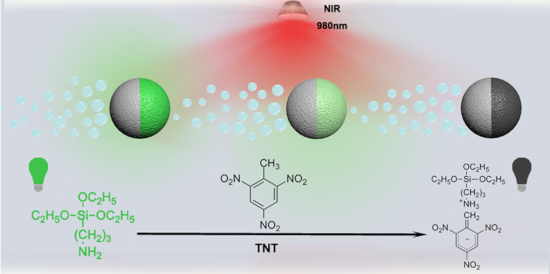
- surface charge of the UCNPs before and after modification was measured. As shown in Figure 1d, the zeta potential changed from −22.08 to 17.3 mV, indicating the successful surface amine group functionalization. Moreover, the fluorescence emission spectrum shows that the surface functionalization did not
- spectra, (d) zeta potential and (e) fluorescence emission spectrum of UNCPs with different surface functional groups. TEM images of UCNP-modified capsule (f) and Janus UCNP capsule motor (g). (h) SEM image of the Janus UCNP capsule motor. (i) Fluorescence microscope image of the Janus UCNP capsule motors


Tailoring the stability/aggregation of one-dimensional TiO2(B)/titanate nanowires using surfactants
Beilstein J. Nanotechnol. 2019, 10, 1024–1037, doi:10.3762/bjnano.10.103
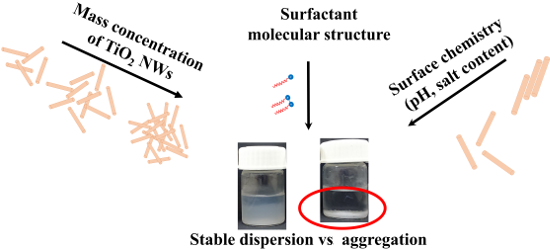
- point, pHiep of the TNWs determined from the zeta potential measurements was found to be pH 3.2, as shown in Figure 2. This means that in the investigated pH region (pH > 3.2) bare TNWs are negatively charged. Stability of TNWs and TNW/surfactant dispersions The stability of the materials is of utmost
- repulsive double layer interaction potential (overlapping EDL) and the attractive van der Walls force [53][54]. The average hydrodynamic diameter can be reduced as the zeta potential increases, due to enhanced repulsive electrostatic force and particle stabilization. Effect of TNW concentration on the
- stability of TNW dispersions In this study the stability was followed in dispersions at three different TNW concentrations (γ/g dm−3 = 1 × 10⁻² (CS1), 5 × 10⁻² (CS2), 1 × 10⁻¹ (CS3)) by monitoring changes in size (dh) and zeta potential (ζ) over 24 h as represented in Table 1 and Figure S8a–d, Supporting


Serum type and concentration both affect the protein-corona composition of PLGA nanoparticles
Beilstein J. Nanotechnol. 2019, 10, 1002–1015, doi:10.3762/bjnano.10.101
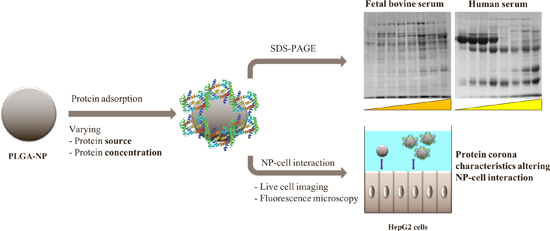
- assay, zeta potential measurements, and liquid chromatography–mass spectrometry/mass spectrometry (LC–MS/MS). Additionally, the time-dependent cell interaction of PLGA NPs in the absence or presence of a preformed protein corona was assessed by in vitro incubation experiments with the human liver cancer
- complexes from excess serum proteins we used sodium dodecylsulfate polyacrylamide gel electrophoresis (SDS-PAGE), zeta potential measurements, and liquid chromatography–mass spectrometry/mass spectrometry (LC–MS/MS) to study the composition of adsorbed proteins in detail. A quantitative analysis of corona
- easily trackable in cell culture experiments. Prior to NP incubation with increasing amounts of serum (FBS, human serum) and protein corona analysis the NPs were characterized accurately by PCS and zeta potential measurements. The obtained NPs showed a diameter of approximately 200 nm and a monodisperse



Effects of gold and PCL- or PLLA-coated silica nanoparticles on brain endothelial cells and the blood–brain barrier
Beilstein J. Nanotechnol. 2019, 10, 941–954, doi:10.3762/bjnano.10.95
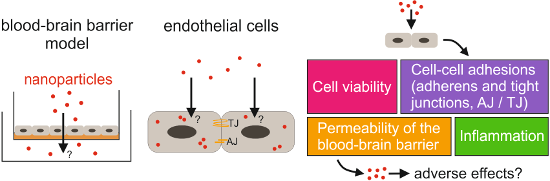
- enter the brain and cause or worsen diseases of the central nervous system [16] that NPs might contribute to [17]. Coated or uncoated mesoporous Si-NPs of different size and zeta potential did not elicit considerable cytotoxicity in MDCK II kidney epithelial cells or RBE4 rat brain ECs but were taken up
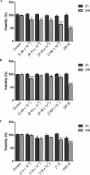
- different shape, size (50 to 240 nm) and zeta potential (negative to neutral) did not elicit cytotoxicity in MDCK II kidney epithelial cells and RBE4 ECs at concentrations of up to [50 µg/mL] [18]. As the highest concentration for polymer-coated Si-NPs used in our study was half ([24.9 µg/mL]), the
- of a silica-core doped with rhodamine to enable visualization via fluorescence microscopy, followed by a layer of PCL/ICG and a surface coating with either PCL or PLLA. Characterization of these particle types showed a size of 90 nm for PCL-NPs and 95 nm for PLLA-NPs. The zeta potential was −25.4 mV



Tungsten disulfide-based nanocomposites for photothermal therapy
Beilstein J. Nanotechnol. 2019, 10, 811–822, doi:10.3762/bjnano.10.81
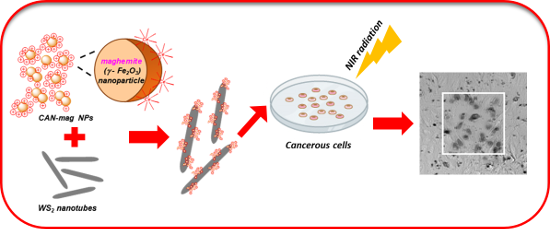
- sample on a square piece of a clean silicon wafer and drying overnight at ambient temperature. Zeta potential measurements were performed using a Zetasizer Nano-ZS device (Malvern Instruments Ltd., Worcestershire, UK). Samples for zeta potential measurements were dispersed in water (ca. 0.5 mg/mL
- in TEM, and bright in SEM. A possible reason for this is that CAN-mag composite has a strong positive surface charge (see zeta potential results below in Figure 7), causing electrostatic repulsion forces that prevent a denser coverage. Another point that the electron microscope images show (see
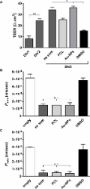
- , namely increased cancerous-cell death and better targeting. Figure 7 shows zeta potential averages and distribution curves for WS2-NTs, CAN-mag, and their composites. The values for WS2-NT and CAN-mag are consistent with previous works [52][65][66]. For each composite, the zeta values reflect the






Polydopamine-coated Au nanorods for targeted fluorescent cell imaging and photothermal therapy
Beilstein J. Nanotechnol. 2019, 10, 794–803, doi:10.3762/bjnano.10.79
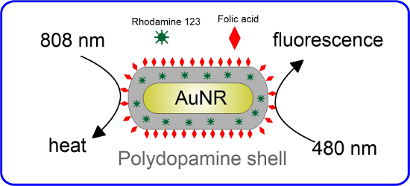
- applications, the stability of nanocomposites under ambient conditions is a key factor. Here, we measured zeta potential and the particle-size distribution for all stages of nanocomposite synthesis. The measurements were made in citric buffer (pH 4.4), in water (pH 6.2), and Tris buffer (pH 8.5) (Figure 1E
- ). The CTAB-coated AuNRs were positively charged (zeta potential of about +45 mV) independently of the pH value. The replacement of CTAB with PEG at the first synthetic stage resulted in an almost neutral particle charge (zeta potential varied from −2 to −4 mV). PDA-coated particles have a strong
- negative zeta potential of about −40 mV at neutral and alkaline pH values, whereas resuspension in acidic buffer leads to a recharging of particles, up to +35 mV. This process can be accompanied by particle aggregation when their charge is close to zero (see Figure S2 in Supporting Information File 1


Characterization and influence of hydroxyapatite nanopowders on living cells
Beilstein J. Nanotechnol. 2018, 9, 3079–3094, doi:10.3762/bjnano.9.286
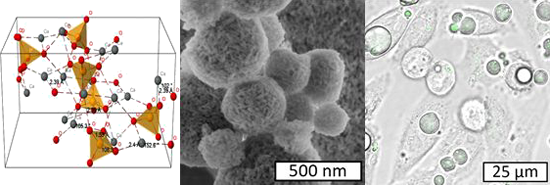
- , specific surface area, crystallinity, phase purity, stoichiometry, zeta potential and pH value were chosen for correlating the parameters with biological activity. Density measurements Density (ρ) measurements were performed using a helium pycnometer (AccuPyc II, model 1340; Micromeritics, Australia) using
- The average size of HAp nanoobjects in water (L), pH value and zeta potential (ζ) of particles were determined by using dynamic light scattering (DLS, Malvern Instruments Zetasizer Ltd, Spectris). Samples were prepared in 0.02% water solutions with addition of 0.1% Pluronic (used in cell assays, Sigma
- setting of an arbitrary phase-contrast base value for one sample image size. Physicochemical evaluation of nanoparticles Interactions between particles in suspension depend strongly on their zeta potential. Particles having zeta potential values below ±10 mV are considered neutral, with a strong tendency

![[Graphic 1]](/bjnano/content/inline/2190-4286-9-286-i2.svg?max-width=637&scale=1.18182) .
.



Colloidal chemistry with patchy silica nanoparticles
Beilstein J. Nanotechnol. 2018, 9, 2989–2998, doi:10.3762/bjnano.9.278
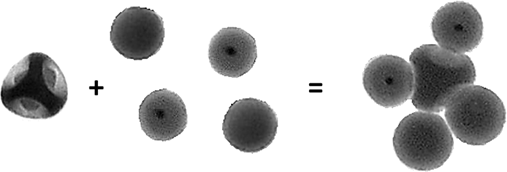
- carboxylic acid groups. The grafting efficiency was evidenced by zeta potential measurements and diffuse reflectance infrared Fourier-transform (DRIFT) spectroscopy. Figure 2b shows that after treatment of the silica surface by APTES, the so-aminated nanoparticles display a quite high zeta potential value of
- about 23 mV at pH 7.0. The isoelectric point (IEP) at pH 8.4 is close to the pKa value of the primary amine groups attesting to their efficient grafting and correct orientation on the silica surface. The carboxylated particles possess a zeta potential of about −43 mV at pH 7.0 and an isoelectric point
- potential of the multipods before and after the chloromethylation/amination of the PS chains (Figure 2e). The comparison of the zeta potential curves shows that the modification stages of the PS residues induce a shift of the IEP to pH 5.3 attesting to the efficient grafting of amine groups. Assembly of


The nanoscaled metal-organic framework ICR-2 as a carrier of porphyrins for photodynamic therapy
Beilstein J. Nanotechnol. 2018, 9, 2960–2967, doi:10.3762/bjnano.9.275
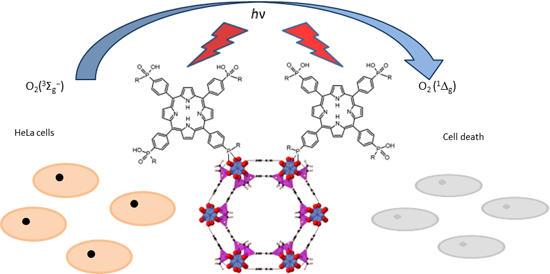
- dynamic light scattering (DLS, Figure S3A, Supporting Information File 1). In water, nanoICR-2 forms aggregates with a mean value of the size distribution of 87 ± 31 nm (by number, Z-average = 136 nm, PDI = 0.12). The zeta potential of nanoICR-2 in water is slightly positive with an average of 5 ± 5 mV
- (Figure S3, Supporting Information File 1). These values are somewhat bigger than the size of the parent nanoICR-2 aggregates in water (87 ± 31 nm). Importantly, the zeta potential of the nanoICR-2/porphyrin aggregates switched to negative values: −20 ± 4 mV, −25 ± 5 mV, and −28 ± 5 mV for TPPPi(Me


Hybrid Au@alendronate nanoparticles as dual chemo-photothermal agent for combined cancer treatment
Beilstein J. Nanotechnol. 2018, 9, 2947–2952, doi:10.3762/bjnano.9.273
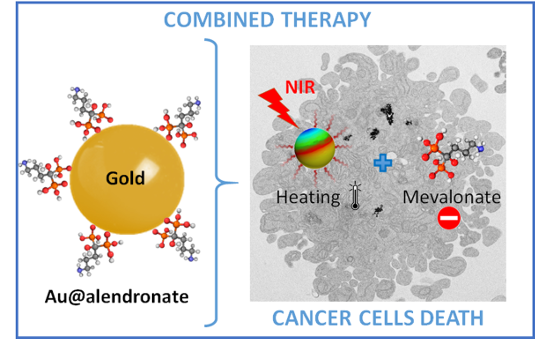
- negative zeta potential, equal to −37.5 ± 9.1 mV confirms the presence of alendronate on the surface providing negative charges, which allow colloid stabilization despite the presence of ammonium cations. Au@alendronate NPs as NIR photothermal nano-heater Since gold NPs bring their own therapeutic asset
- ) Hydrodynamic diameter distribution (in volume, left) and zeta potential (right) of Au@alendronate NPs. (a) Temperature increase and corresponding typical IR image and (b) SAR (W/g) as a function of the gold concentration under laser irradiation (1.7 W/cm2, 680 nm). Metabolic activity of PC3 cells incubated (a


Comparative biological effects of spherical noble metal nanoparticles (Rh, Pd, Ag, Pt, Au) with 4–8 nm diameter
Beilstein J. Nanotechnol. 2018, 9, 2763–2774, doi:10.3762/bjnano.9.258
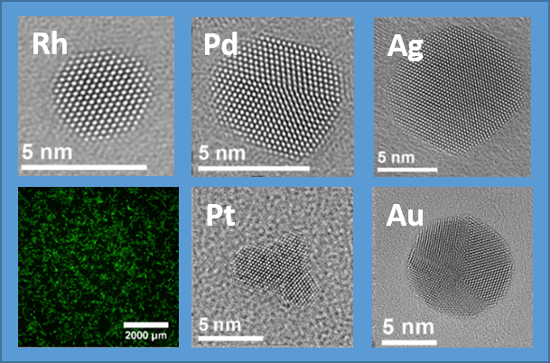
- to each run. A sample volume of 100 μL was used. Dynamic light scattering (DLS) for particle size analysis and zeta potential determination was carried out on a Malvern Zetasizer Nano ZS ZEN 3600 instrument (25 °C, laser wavelength 633 nm). The scattering was monitored at a fixed angle of 173° in
- ), analytical disc centrifugation (differential centrifugal sedimentation, DCS), ultraviolet (UV) spectroscopy, and high-resolution transmission electron microscopy (HRTEM). All characterization data are summarized in Table 2. All nanoparticles have a neutral or negative zeta potential. This is probably due to


Non-agglomerated silicon–organic nanoparticles and their nanocomplexes with oligonucleotides: synthesis and properties
Beilstein J. Nanotechnol. 2018, 9, 2516–2525, doi:10.3762/bjnano.9.234
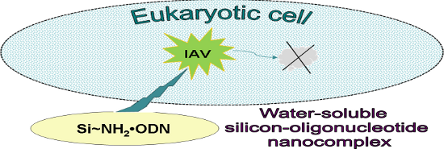
- groups in oligonucleotides. The Si–NH2 nanoparticles and Si–NH2·ODN nanocomplexes were characterized by transmission electron microscopy, atomic force microscopy and IR and electron spectroscopy. The size and zeta potential values of the prepared nanoparticles and nanocomplexes were evaluated
- agglomeration of the particles). The zeta potential of the studied samples was evaluated by phase analysis light scattering. The value of zeta potential of Si–NH2 is positive due to positively charged amino groups in neutral medium. When the nanoparticles were bound to an oligonucleotide, the zeta potential
- . The spectrum was recorded with absorption compensation relative to water in the range 11000–54000 cm−1 in a quartz cuvette with an optical path length of 1 mm (Figure 2b). The size and zeta potential values of Si–NH2 and Si–NH2·ODN were measured at 5–50 mM concentration (for Si) in physiological


Enhanced antineoplastic/therapeutic efficacy using 5-fluorouracil-loaded calcium phosphate nanoparticles
Beilstein J. Nanotechnol. 2018, 9, 2499–2515, doi:10.3762/bjnano.9.233
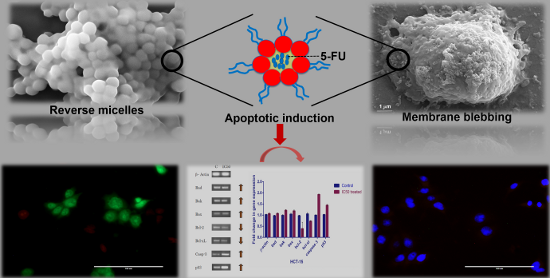
- TEM and SEM analysis. Zeta potential analysis The magnitude of the surface charge of the synthesized CaP@5-FU NPs was characterized by zeta potential analysis. The increased electrostatic repulsion between particles corresponding to a higher magnitude of the zeta potential results in reduced
- agglomeration and enhanced colloidal stability [29]. Since the particle stability mainly depends on the electrical charge of the surface, properties such as cellular uptake, rate of drug release, and blood retention time are directly correlated with the zeta potential value. Furthermore, the zeta potential
- value of calcium phosphate nanoparticles was found to have a direct association with Ca/P molar ratio [30]. The molar ratio of the formed nanoparticles in the current study was 3.88. The synthesized CaP@5-FU NPs were found to have a zeta potential of −25.5 mV (Figure 2B). This confirms the nanoparticle


Nanocellulose: Recent advances and its prospects in environmental remediation
Beilstein J. Nanotechnol. 2018, 9, 2479–2498, doi:10.3762/bjnano.9.232


Droplet-based synthesis of homogeneous magnetic iron oxide nanoparticles
Beilstein J. Nanotechnol. 2018, 9, 2413–2420, doi:10.3762/bjnano.9.226
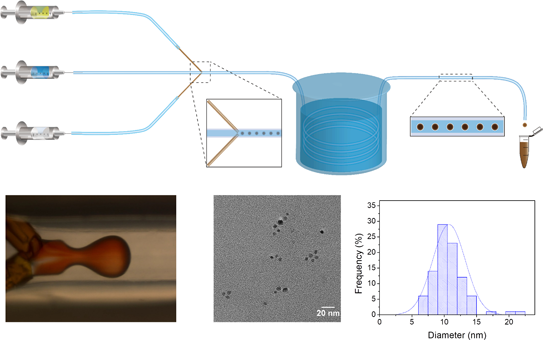
- potential of 20.2 ± 0.25 mV, and particles synthesized in droplets had a zeta potential of 16.9 ± 0.5 mV. The two measured potentials are in the same range, indicating a relative colloid stability of the particle solutions [33]. To test the advantages of droplet synthesis over batch synthesis, particle size
- concentration is increased by more than one order of magnitude in droplet reactions, the fast precipitation of large amounts of nanoparticles could lead to the buildup of nanoparticle deposits on the fused silica capillaries in some cases and to a blocking of the capillaries. The batch particles showed a zeta


The role of adatoms in chloride-activated colloidal silver nanoparticles for surface-enhanced Raman scattering enhancement
Beilstein J. Nanotechnol. 2018, 9, 2236–2247, doi:10.3762/bjnano.9.208
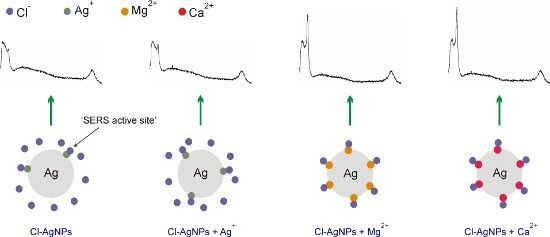
- with the distance from the metal surface. Chloride ions, when used at concentrations higher than 0.1 M, induce the aggregation of the metal colloids. The addition of Cl− ions to the colloidal solution reduces the absolute zeta potential value of the nanoparticles, leading to a decrease in the stability



Nanoconjugates of a calixresorcinarene derivative with methoxy poly(ethylene glycol) fragments for drug encapsulation
Beilstein J. Nanotechnol. 2018, 9, 2057–2070, doi:10.3762/bjnano.9.195
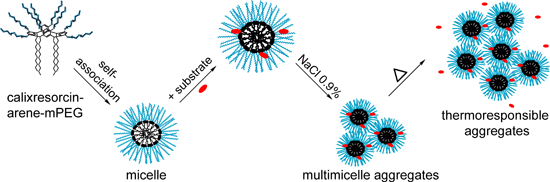
- ] software packages. DLS, SLS, and zeta-potential measurements were carried out by employing a Zetasizer nano ZS with Dispersion Technology Software 5.00. The measurements were carried out at 25 °C in polystyrene cells, for temperature-dependent DLS measurements (25–65 °C) and SLS measurement, a glass
- cuvette PCS8501 (Malvern) was utilized. The SLS measurements were carried out in ethanol solution. Zeta-potential measurements were carried out in folded capillary cells DTS1061 (Malvern). Zeta-potential values were calculated from electrophoretic mobilities by using the Hückel approximation for solutions


Controllable one-pot synthesis of uniform colloidal TiO2 particles in a mixed solvent solution for photocatalysis
Beilstein J. Nanotechnol. 2018, 9, 1715–1727, doi:10.3762/bjnano.9.163
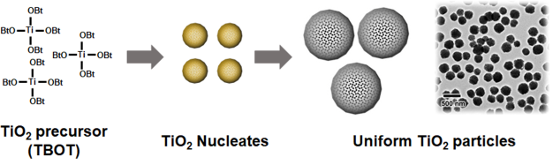
- carbon remained in the particle. However, TiO2-500 and TiO2-800 showed a negligible weight loss, indicating no obvious carbon species in the particle (Supporting Information File 1, Figure S3b). In addition, we measured the zeta potential of the calcined TiO2 samples for estimating the surface charge
- . Although zeta potential values of TiO2 samples do not exactly represent quantitative analysis of surface functional groups, it is a useful method to estimate the surface charge which is highly related with the surface OH group. The results show that the zeta potential values are estimated to be
- approximately −40, −23.8 and −24.9 mV nm for TiO2-350, TiO2-500, and TiO2-800, respectively. It means that the TiO2 sample calcined at low temperature (350 °C) should have a relatively large amount of surface OH groups. Once the calcination temperature is higher than a certain point (e.g., 500 °C), the zeta




Surface characterization of nanoparticles using near-field light scattering
Beilstein J. Nanotechnol. 2018, 9, 1228–1238, doi:10.3762/bjnano.9.114
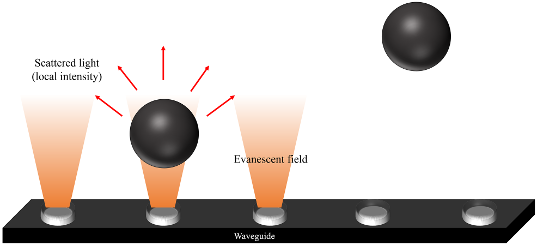
- )-coated superparamagnetic iron oxide nanoparticles (PEG-SPIOs) with the synthetic pseudotannin polygallol via interpolymer complexation (IPC). Changes in particle size and zeta potential were indirectly assessed via differences between PEG-SPIOs and IPC-SPIOs in particle velocity and scattering intensity
- using near-field light scattering. The local scattering intensity is correlated with the distance between the particle and waveguide, which is affected by the size of the particle (coating thickness) as well as the interactions between the particle and waveguide (related to the zeta potential of the
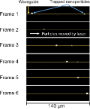
- the attraction between the nanoparticle and waveguide. Researchers attributed the increased diffusion of PEGylated particles towards the waveguide to the slight reduction in particle surface charge (zeta potential) after PEGylation [24]. This study provided evidence that the nanophotonic force