Search results
Search for "low energy" in Full Text gives 295 result(s) in Beilstein Journal of Nanotechnology. Showing first 200.
Pattern generation for direct-write three-dimensional nanoscale structures via focused electron beam induced deposition
Beilstein J. Nanotechnol. 2018, 9, 2581–2598, doi:10.3762/bjnano.9.240
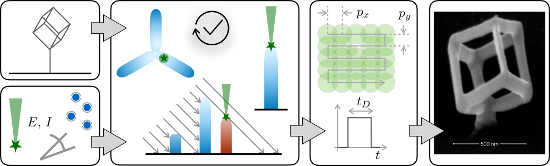
- surface. As the focused electron beam is directed to predefined positions, chemical bonds of precursor molecules at these positions break, mainly via the generated low-energy secondary electrons (SE) [11]. The nonvolatile precursor fragments remain as deposits. Depending on the precursor used, and also on




Directional light beams by design from electrically driven elliptical slit antennas
Beilstein J. Nanotechnol. 2018, 9, 2361–2371, doi:10.3762/bjnano.9.221
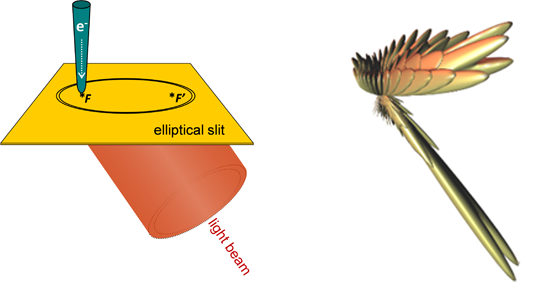
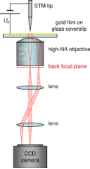
- Grenoble, France and CNRS, Institut NEEL, F-38042 Grenoble, France Laboratoire Charles Fabry, Institut d’Optique, 91127 Palaiseau, France 10.3762/bjnano.9.221 Abstract We report on the low-energy, electrical generation of light beams in specific directions from planar elliptical microstructures. The
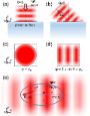
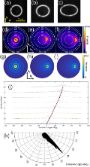
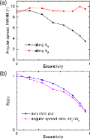
- by design. Inspired by this work, we investigate in the present paper the low-energy (below 3 eV) electrical excitation and the resulting light beams from single elliptical antennas consisting of an elliptical slit etched in a gold film. We theoretically and experimentally show that when the
- symmetry of the system with respect to the yz-plane). Conclusion We have introduced the working principle of an electrically driven elliptical slit antenna, which is a highly directive, low-energy, electrical microsource of light beams emitting in controlled directions. The emission direction is tailored





Nanoscale characterization of the temporary adhesive of the sea urchin Paracentrotus lividus
Beilstein J. Nanotechnol. 2018, 9, 2277–2286, doi:10.3762/bjnano.9.212
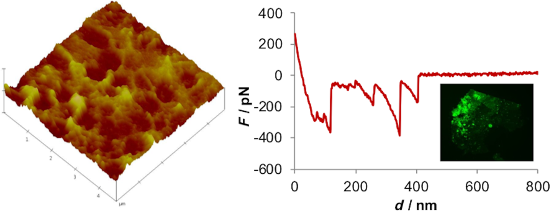
- (two high-energy surfaces) than on teflon (a low-energy surface) [7]. In order to understand the topography, P. lividus footprints were imaged using different probing methods (peak force tapping in air and fluid) and in various environments: dry, moist and under native conditions (ASW). In all the


Interaction-induced zero-energy pinning and quantum dot formation in Majorana nanowires
Beilstein J. Nanotechnol. 2018, 9, 2171–2180, doi:10.3762/bjnano.9.203
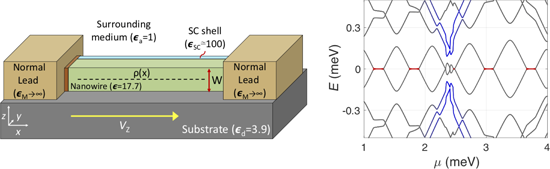
- -dimensional model of the dielectric surroundings, here we show that, under certain circumstances, these interactions lead to a suppression of the Majorana oscillations predicted by simpler theoretical models, and to the formation of low-energy quantum-dot states that interact with the Majorana modes. Both
- electrostatic solution (i.e., the intrinsic electron–electron interaction part of the problem), treated at the Hartree–Fock level, has a negligible effect on the low-energy spectrum in the topological regime. We may therefore concentrate only on the self-consistency with . In Section 2 of Supporting Information
- electrostatic potential has direct consequences on the spectral properties of the wire, as we analyze below in Figure 4, but for comparison, let us first see what happens in the non-interacting case. The spectrum of the wire is shown in Figure 3a. There we can observe the emergence of low-energy subgap states



Metal-free catalysis based on nitrogen-doped carbon nanomaterials: a photoelectron spectroscopy point of view
Beilstein J. Nanotechnol. 2018, 9, 2015–2031, doi:10.3762/bjnano.9.191
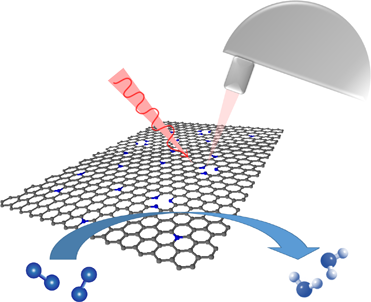
- temperatures up to 950 °C the amount of pure substitutional nitrogen (graphitic) and the DOS increase (Figure 3). As mentioned, the low-energy electronic excitation and the selectivity for oxygen dissociation strongly depend on the type of nitrogen dopant present in the sample, as we will discuss in the next




Defect formation in multiwalled carbon nanotubes under low-energy He and Ne ion irradiation
Beilstein J. Nanotechnol. 2018, 9, 1951–1963, doi:10.3762/bjnano.9.186
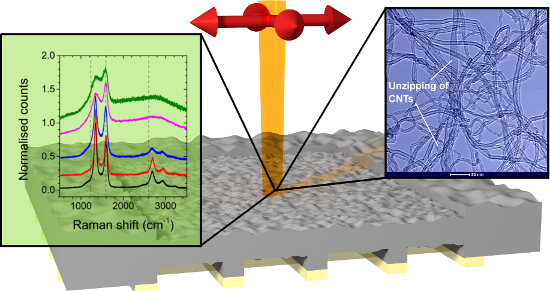
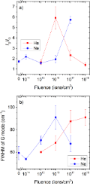
- modifications of MWCNTs by low energy He+ and Ne+ ion irradiation for fluences of 1014 to 1018 ions/cm2, i.e., for imaging conditions found on the HIM [44][45][46]. We present a correlative approach in which ion-irradiation-induced modifications are characterised by Raman spectroscopy and TEM imaging, and the



Synthesis of carbon nanowalls from a single-source metal-organic precursor
Beilstein J. Nanotechnol. 2018, 9, 1895–1905, doi:10.3762/bjnano.9.181
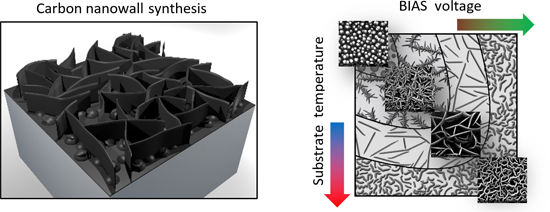
- growing tightly next to each other on the surface and that they are of dense structure. Due to their low energy, the growth species cannot migrate far on the substrate surface and are therefore incorporated into the rather dense graphitic structure of the carbon nanorods. At higher energies, the diffusion


Synthesis of hafnium nanoparticles and hafnium nanoparticle films by gas condensation and energetic deposition
Beilstein J. Nanotechnol. 2018, 9, 1868–1880, doi:10.3762/bjnano.9.179
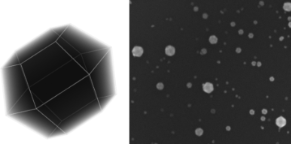
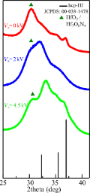
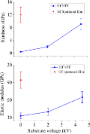
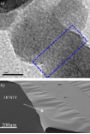
- landing energy can be controlled via a bias on the substrate. The substrate bias voltage (Vs) enables the NPs either to “soft land” (low-energy deposition) preserving their size and shape, or to land with high-energy impact (high-energy deposition), which depending on the landing energy leads to different
- aggregation and deposition chamber. In this case of low-energy deposition the energy per atom Eat is about 0.1 eV/atom, which is far below the cohesive energy of the atoms constituting the NPs and nanoparticles do not undergo significant distortion of their shape and size [42][43]. Nanoparticles of different






Numerical analysis of single-point spectroscopy curves used in photo-carrier dynamics measurements by Kelvin probe force microscopy under frequency-modulated excitation
Beilstein J. Nanotechnol. 2018, 9, 1834–1843, doi:10.3762/bjnano.9.175
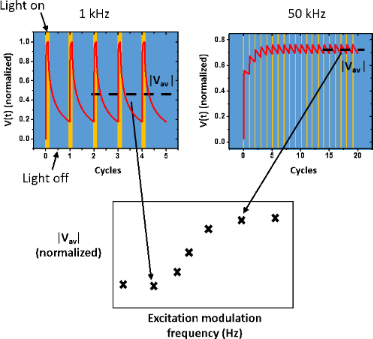
- dynamics are governing the SPV behavior of the sample, as it is the case for instance for OPV samples exhibiting a high density of low-energy states (traps). Nonetheless, we stress that even if the calculated photo-carrier lifetime values do not fully agree with those reported in [4], the ratio between the


SO2 gas adsorption on carbon nanomaterials: a comparative study
Beilstein J. Nanotechnol. 2018, 9, 1782–1792, doi:10.3762/bjnano.9.169

- , monochromated Al Kα X-ray source (30–400 µm spot size). The K-Alpha charge compensation system was employed during analysis, using electrons of 8 eV energy and low-energy argon ions to prevent any localized charge build-up. The spectra were fitted with one or more Voigt profiles (binding energy uncertainty


Controllable one-pot synthesis of uniform colloidal TiO2 particles in a mixed solvent solution for photocatalysis
Beilstein J. Nanotechnol. 2018, 9, 1715–1727, doi:10.3762/bjnano.9.163
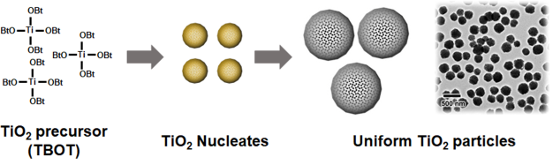
- photocatalyst must be narrow in order to facilitate the facile adsorption of the low energy photon and high harvesting efficiency under visible-light irradiation conditions [11]. To enhance charge separation efficiency and extend the lifetime of photoexcited electron–hole pairs, properties such as a crystalline
- anatase/rutile phase with high anatase crystallinity. As shown in both a previous study and our later discussion, a mixed crystalline phase of anatase and rutile in P25 TiO2 can have several beneficial effects such as improved light adsorption in the low energy UV range and separation of photoexcited




Josephson effect in junctions of conventional and topological superconductors
Beilstein J. Nanotechnol. 2018, 9, 1659–1676, doi:10.3762/bjnano.9.158
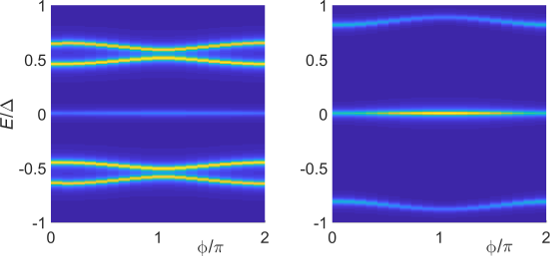
- end states. Using Green’s function techniques, the topological superconductor is alternatively described by the low-energy continuum limit of a Kitaev chain or by a more microscopic spinful nanowire model. We show that for the simplest S–TS tunnel junction, only the s-wave pairing correlations in a
- boundary fermion fields representing the S lead and the effectively spinless TS lead, respectively. For the S lead, we assume the usual BCS model [62], where the operator ψσ annihilates an electron with spin σ at the junction. The TS wire will, for the moment, be described by the low-energy Hamiltonian of
- , the low-energy limit of a Kitaev chain yields the bGF [40] The matrices τ0,x here act in the Nambu space defined by the spinor ΨTS. Later on we will address how our results change when the TS wire is modeled as spinful nanowire [2][3], where the corresponding bGF has been specified in [43]. We


![[Graphic 75]](/bjnano/content/inline/2190-4286-9-158-i137.svg?max-width=637&scale=1.18182) = 1 in Figure 6, for different bulk Zeeman fields Vx (in meV) near the crit...
= 1 in Figure 6, for different bulk Zeeman fields Vx (in meV) near the crit...


Friction force microscopy of tribochemistry and interfacial ageing for the SiOx/Si/Au system
Beilstein J. Nanotechnol. 2018, 9, 1647–1658, doi:10.3762/bjnano.9.157
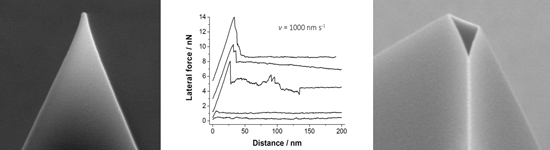
- cantilevers before use. A Au(111) single crystal (MaTeck GmbH, Jülich, Germany) was prepared by repeating a sputter–heating cycle (20 min Ar sputtering at 25 μA/1 keV followed by 1 h annealing at 850 °C) until a sharp (111) pattern was observed by low-energy electron diffraction (LEED). The n-Si(100) sample




Spatial Rabi oscillations between Majorana bound states and quantum dots
Beilstein J. Nanotechnol. 2018, 9, 1527–1535, doi:10.3762/bjnano.9.143
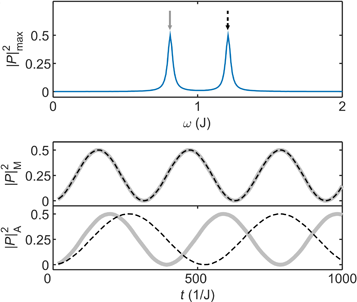
- energy splitting that exponentially decays as the length of the island increases. The low-energy physics of the island can be described by an effective Hamiltonian [2][3], where and γM and γM′ represent the two Majorana bound states, and δ represents the exponentially protected splitting energy. The


Robust topological phase in proximitized core–shell nanowires coupled to multiple superconductors
Beilstein J. Nanotechnol. 2018, 9, 1512–1526, doi:10.3762/bjnano.9.142
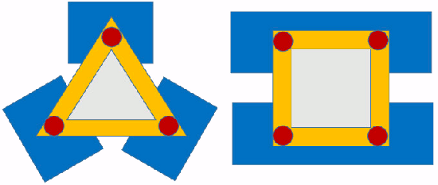
- between 50–100 meV [29][37]. In this case the corner states are extremely robust to orbital effects of the magnetic field and the low-energy subspace is well separated from higher-energy states. Another interesting aspect of a prismatic shell is that it can host several Majorana states at each end of the
- hosts the zero-energy Majorana modes and one can obtain an additional experimental knob for exploring a rich phase diagram and observing potentially interesting low-energy physics. The rest of this article is organized as follows. We first describe the coupled-chains tight binding model that we use in
- model that describes the low-energy physics of a core–shell nanowire with n edges. The model has already been introduced for triangular core–shell nanowires in [29] (Appendix), and also previously considered by other authors, in different forms, for ladder systems [38][39]. A “coarse-grained” shell is


![[Graphic 30]](/bjnano/content/inline/2190-4286-9-142-i36.svg?max-width=637&scale=1.18182) ) = 0 and
) = 0 and ![[Graphic 31]](/bjnano/content/inline/2190-4286-9-142-i37.svg?max-width=637&scale=1.18182) = 0. The white areas are t...
= 0. The white areas are t...


![[Graphic 40]](/bjnano/content/inline/2190-4286-9-142-i46.svg?max-width=637&scale=1.18182) ) ≠ 0 and
) ≠ 0 and ![[Graphic 41]](/bjnano/content/inline/2190-4286-9-142-i47.svg?max-width=637&scale=1.18182) = 0. The white areas are topol...
= 0. The white areas are topol...

![[Graphic 50]](/bjnano/content/inline/2190-4286-9-142-i56.svg?max-width=637&scale=1.18182) ) ≠ 0 and
) ≠ 0 and ![[Graphic 51]](/bjnano/content/inline/2190-4286-9-142-i57.svg?max-width=637&scale=1.18182) 1 = 0,
1 = 0, ![[Graphic 52]](/bjnano/content/inline/2190-4286-9-142-i58.svg?max-width=637&scale=1.18182) 3 = π/2,
3 = π/2, ![[Graphic 53]](/bjnano/content/inline/2190-4286-9-142-i59.svg?max-width=637&scale=1.18182) 5 = −π/2. T...
5 = −π/2. T...

![[Graphic 65]](/bjnano/content/inline/2190-4286-9-142-i71.svg?max-width=637&scale=1.18182) ) ≠ 0 and
) ≠ 0 and ![[Graphic 66]](/bjnano/content/inline/2190-4286-9-142-i72.svg?max-width=637&scale=1.18182) 1 = π/2,
1 = π/2, ![[Graphic 67]](/bjnano/content/inline/2190-4286-9-142-i73.svg?max-width=637&scale=1.18182) 3 = −π/2,
3 = −π/2, ![[Graphic 68]](/bjnano/content/inline/2190-4286-9-142-i74.svg?max-width=637&scale=1.18182) 5 = π/2, and ...
5 = π/2, and ...


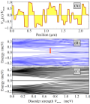
![[Graphic 79]](/bjnano/content/inline/2190-4286-9-142-i85.svg?max-width=637&scale=1.18182) = 3 of a triangular wi...
= 3 of a triangular wi...


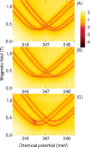
Interplay between pairing and correlations in spin-polarized bound states
Beilstein J. Nanotechnol. 2018, 9, 1370–1380, doi:10.3762/bjnano.9.129
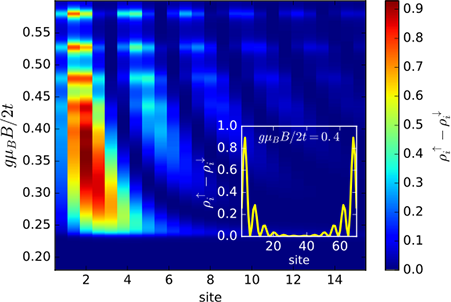
- μN↑ − μN↓. Individual atoms of the nanochain are coupled with such STM tip through For simplicity, we assume constant couplings The low-energy physics of such proximitized Rashba nanowire can be described by [44] where annihilates (creates) an electron of spin σ at site i with energy εi, and tij
- effect shows up only in the correlated limit (U > ΓS), but its spectroscopic signatures are qualitatively different for each of the spins. Leakage of the Majorana quasiparticle suppresses the low-energy states of ↑ electrons. We notice that the initial density (for tm = 0) is reduced by half, whereas we


![[Graphic 23]](/bjnano/content/inline/2190-4286-9-129-i39.svg?max-width=637&scale=1.18182) obtained for |J| < Jc in the absence of spin–orbit coupling (le...
obtained for |J| < Jc in the absence of spin–orbit coupling (le...

![[Graphic 26]](/bjnano/content/inline/2190-4286-9-129-i42.svg?max-width=637&scale=1.18182) as a function of the r...
as a function of the r...


Disorder-induced suppression of the zero-bias conductance peak splitting in topological superconducting nanowires
Beilstein J. Nanotechnol. 2018, 9, 1358–1369, doi:10.3762/bjnano.9.128
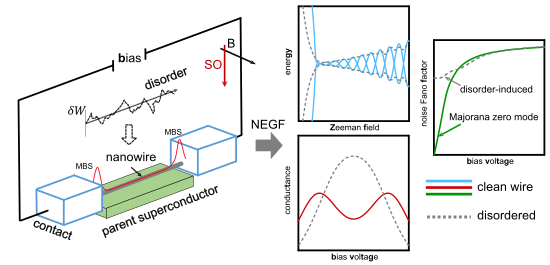
- ], among which some possible reasons have been proposed, such as the combining effect of high temperature and multisubband occupancy in a Coulomb-blocked nanowire where the non-topological low-energy Andreev bound states and MBSs simultaneously exist [53], the zero-energy pinning effect induced by the
- wire, respectively. Following the Bogoliubov–de Gennes formalism the Hamiltonian describing the low-energy physics for our one-dimensional superconducting wire is given by where is the Nambu spinor for which cσ(x) annihilates (creates) electrons with spin σ at position x. For numerical calculations
- not simply neglect the role played by disorder in detecting Majorana energy oscillation experimentally through transport measurements since for some values of Zeeman field the disorder-induced effects can broaden the Majorana energy splitting of the low-energy states while simultaneously narrows the


![[Graphic 20]](/bjnano/content/inline/2190-4286-9-128-i39.svg?max-width=637&scale=1.18182) (das...
(das...


Andreev spectrum and supercurrents in nanowire-based SNS junctions containing Majorana bound states
Beilstein J. Nanotechnol. 2018, 9, 1339–1357, doi:10.3762/bjnano.9.127
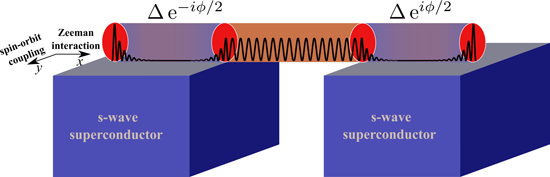
- states (MBSs) in engineered topological superconductors. We perform a systematic numerical study of the low-energy Andreev spectrum and supercurrents in short and long superconductor–normal–superconductor junctions made of nanowires with strong Rashba spin–orbit coupling, where an external Zeeman field
- . In section “Results and Discussion” we discuss how nanowire-based SNS junctions can be readily modeled using the tools of section “Nanowire model”. Then, we describe the low-energy Andreev spectrum and its evolution from the trivial into the topological phase with the emergence of MBSs. In the same
- the low-energy spectrum of the superconducting nanowire. This spectrum can be numerically obtained by discretising the Hamiltonian given by Equation 1 into a tight-binding lattice: where the symbol means that v couples the nearest-neighbor sites i, j; h = (2t − μ)σ0 + Bσx and v = −tσ0 + itSOσy are


![[Graphic 44]](/bjnano/content/inline/2190-4286-9-127-i52.svg?max-width=637&scale=1.18182) in a short SNS j...
in a short SNS j...


![[Graphic 73]](/bjnano/content/inline/2190-4286-9-127-i81.svg?max-width=637&scale=1.18182) = 0 (a,b)...
= 0 (a,b)...


![[Graphic 84]](/bjnano/content/inline/2190-4286-9-127-i92.svg?max-width=637&scale=1.18182) ), fo...
), fo...


![[Graphic 119]](/bjnano/content/inline/2190-4286-9-127-i127.svg?max-width=637&scale=1.18182) at B = 1.5Bc. Contributions to the supercurrent for (a,b) short and ...
at B = 1.5Bc. Contributions to the supercurrent for (a,b) short and ...

![[Graphic 163]](/bjnano/content/inline/2190-4286-9-127-i171.svg?max-width=637&scale=1.18182) ), in (a,b) a short and (c,d) a long junction. (a,...
), in (a,b) a short and (c,d) a long junction. (a,...

![[Graphic 175]](/bjnano/content/inline/2190-4286-9-127-i183.svg?max-width=637&scale=1.18182) ), in (a,b) a...
), in (a,b) a...

![[Graphic 186]](/bjnano/content/inline/2190-4286-9-127-i194.svg?max-width=637&scale=1.18182) ) in (a,b) a short and (c,d) a long ...
) in (a,b) a short and (c,d) a long ...
Circular dichroism of chiral Majorana states
Beilstein J. Nanotechnol. 2018, 9, 1194–1199, doi:10.3762/bjnano.9.110
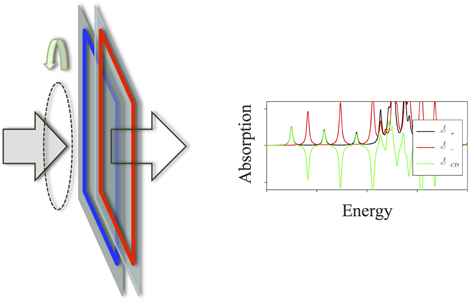
- a 2D grid for x and y. When ΔB is increased, the spectrum of low-energy eigenvalues evolves from a gapped (void) spectrum around zero energy at low values of ΔB, to the emergence of chiral near-zero-energy modes for sufficiently large values of ΔB. When the pairing parameters for each layer are
- gap that tends to close with increasing ΔB by the appearance of a quasi-continuum distribution of eigenvalues. These low-energy states are indicating the presence of propagating Majorana states, energy-discretized due to the finite size of the system. When Δt = Δb (Figure 1a,c) the degeneracy is such
- distribution between a square and a rectangle (upper vs lower panels). It is remarkable that when a Majorana phase is well developed the low-energy states are equally spaced in energy. This is particularly clear for 2 < ΔB/EU < 4 in Figure 1a and Figure 1c, corresponding to the phases with two Majorana states


![[Graphic 14]](/bjnano/content/inline/2190-4286-9-110-i18.svg?max-width=637&scale=1.18182) . Panels a) and b) correspond to the phases in Figure 1d with one (ΔB = 2...
. Panels a) and b) correspond to the phases in Figure 1d with one (ΔB = 2...
![[Graphic 15]](/bjnano/content/inline/2190-4286-9-110-i19.svg?max-width=637&scale=1.18182) ,
, ![[Graphic 16]](/bjnano/content/inline/2190-4286-9-110-i20.svg?max-width=637&scale=1.18182) and
and ![[Graphic 17]](/bjnano/content/inline/2190-4286-9-110-i21.svg?max-width=637&scale=1.18182) defined in the main text. The shown results correspond to the spe...
defined in the main text. The shown results correspond to the spe...

![[Graphic 19]](/bjnano/content/inline/2190-4286-9-110-i23.svg?max-width=637&scale=1.18182) ,
, ![[Graphic 20]](/bjnano/content/inline/2190-4286-9-110-i24.svg?max-width=637&scale=1.18182) and
and ![[Graphic 21]](/bjnano/content/inline/2190-4286-9-110-i25.svg?max-width=637&scale=1.18182) for (a) a square of Lx = Ly = 20 LU), and for (b) a rectangle of L...
for (a) a square of Lx = Ly = 20 LU), and for (b) a rectangle of L...
Non-equilibrium electron transport induced by terahertz radiation in the topological and trivial phases of Hg1−xCdxTe
Beilstein J. Nanotechnol. 2018, 9, 1035–1039, doi:10.3762/bjnano.9.96
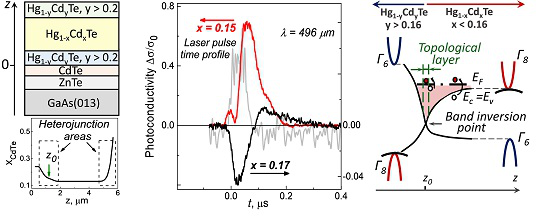
- . We show that both the positive photoresponse in films with x < 0.16 and the negative photoconductivity in samples with x > 0.16 have no low-energy threshold. The observed non-threshold positive photoconductivity is discussed in terms of a qualitative model that takes into account a 3D potential well


Cyclodextrin inhibits zinc corrosion by destabilizing point defect formation in the oxide layer
Beilstein J. Nanotechnol. 2018, 9, 936–944, doi:10.3762/bjnano.9.86
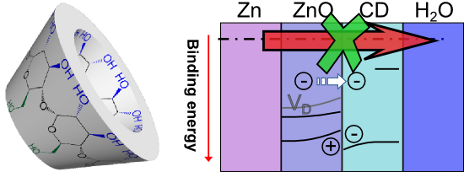
- shift for all energy regions [35], as opposed to what is observed. Since the XPS was not sensitive for the region of the highest occupied molecular orbital (HOMO) of β-CD, this region was analyzed by UPS. Figure 3f presents the magnification of the low-energy onset of the UP spectra, which allows for


Towards the third dimension in direct electron beam writing of silver
Beilstein J. Nanotechnol. 2018, 9, 842–849, doi:10.3762/bjnano.9.78
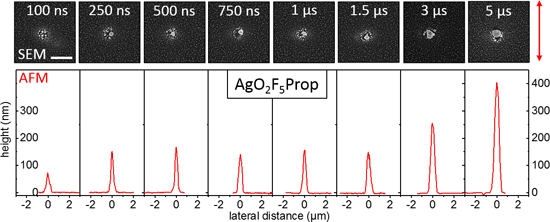
- break [3][4]. The used primary electrons of energies in the kiloelectronvolt range have a focal spot of several nanometers or even less. Secondary electrons are generated by both primary and back-scattered electrons and hence escape in a radius of up to several micrometers [5]. Mainly these low-energy
- occurring during deposition can be elucidated by surface-science studies in which low-energy electrons dissociate monolayers of precursors under ultra-high vacuum conditions [4]. Based on these results the design of precursors for new materials and enhanced purity of the deposits is conceivable [15][16


A review of carbon-based and non-carbon-based catalyst supports for the selective catalytic reduction of nitric oxide
Beilstein J. Nanotechnol. 2018, 9, 740–761, doi:10.3762/bjnano.9.68
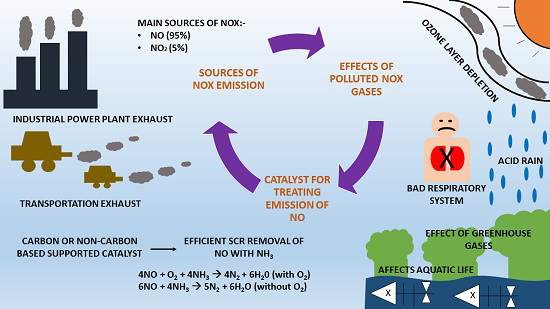
- temperature window of 150–500 °C in a diesel engine as well as the low energy consumption and economy of NH3-SCR [9]. In the literature, abundant catalysts at low temperature have been explored such as transitional metals (Mn, Cu, Ce, Fe, Co, Mo) [10][11][12][13], novel metals (Pt, Pd) [14], and metal ion
- impregnation removed NO at a reaction temperature of 25 °C with a high conversion of 88%. This suggests that the NO removal by AC and ACF could be a serious contributor to sustainable economic growth by offering cost-effective low energy consumption. Although AC and ACF are extremely
Combined pulsed laser deposition and non-contact atomic force microscopy system for studies of insulator metal oxide thin films
Beilstein J. Nanotechnol. 2018, 9, 686–692, doi:10.3762/bjnano.9.63
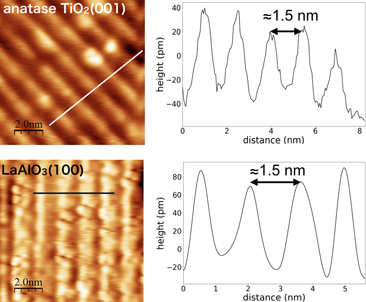
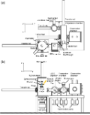
- 1 shows a schematic diagram of the combined NC-AFM and PLD system that was developed. It includes UHV chambers for sample preparation, low-energy electron diffraction (LEED), and load locking. It is also designed to allow for adding surface analysis capabilities such as reflection high-energy


Mechanistic insights into plasmonic photocatalysts in utilizing visible light
Beilstein J. Nanotechnol. 2018, 9, 628–648, doi:10.3762/bjnano.9.59
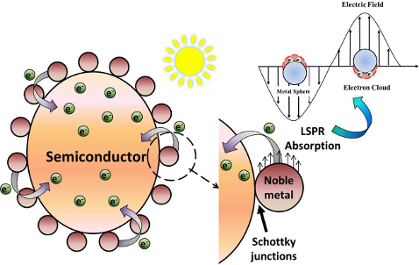
- sustainable photocatalysts that can collectively harvest visible light. However, the bottleneck in utilising the low energy photons has led to the discovery of plasmonic photocatalysts. The presence of noble metal on the plasmonic photocatalyst enables the harvesting of visible light through the unique