


Search results
Search for "nanowires" in Full Text gives 335 result(s) in Beilstein Journal of Nanotechnology. Showing first 200.
Josephson effect in junctions of conventional and topological superconductors
Beilstein J. Nanotechnol. 2018, 9, 1659–1676, doi:10.3762/bjnano.9.158
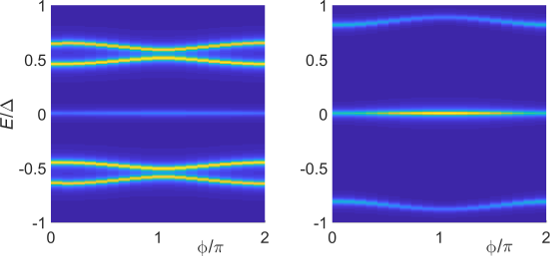
- ] have pointed out that the physics of the Kitaev chain could be realized in spin–orbit coupled nanowires with a magnetic Zeeman field and in the proximity to a nearby s-wave superconductor. The spinful nanowire model of references [2][3] indeed features p-wave pairing correlations for appropriately
- matrices σx,y,z and σ0 refer to spin. In the figures shown below, we choose the model parameters in Equation 34 as discussed in [43]. The lattice spacing is set to a = 10 nm, which results in a nearest-neighbor hopping t = 2/(2m*a2) = 20 meV and the spin–orbit coupling strength α = 4 meV for InAs nanowires


![[Graphic 75]](/bjnano/content/inline/2190-4286-9-158-i137.svg?max-width=637&scale=1.18182) = 1 in Figure 6, for different bulk Zeeman fields Vx (in meV) near the crit...
= 1 in Figure 6, for different bulk Zeeman fields Vx (in meV) near the crit...


Sheet-on-belt branched TiO2(B)/rGO powders with enhanced photocatalytic activity
Beilstein J. Nanotechnol. 2018, 9, 1550–1557, doi:10.3762/bjnano.9.146
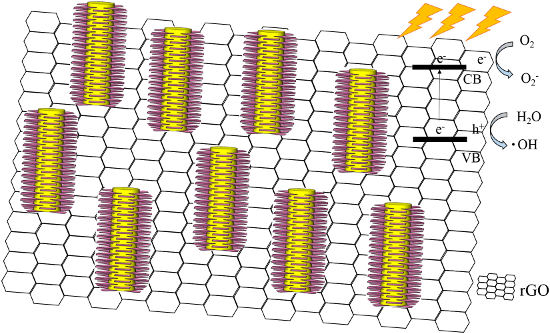
- common but still draws much attention. Many types of TiO2(B) nanostructures have been synthesized, such as nanowires [9][10], nanotubes [11], nanobelts [12][13][14], nanofibers [15] and nanosheets [16]. TiO2(B) is mostly used in lithium-ion batteries due to its relatively open crystal structure, superior


Robust topological phase in proximitized core–shell nanowires coupled to multiple superconductors
Beilstein J. Nanotechnol. 2018, 9, 1512–1526, doi:10.3762/bjnano.9.142
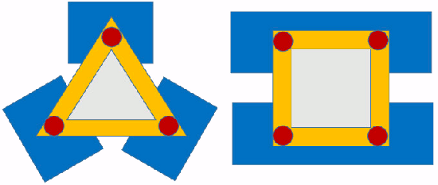
- Science and Engineering, Reykjavik University, Menntavegur 1, IS-101 Reykjavik, Iceland 10.3762/bjnano.9.142 Abstract We consider core–shell nanowires with prismatic geometry contacted with two or more superconductors in the presence of a magnetic field applied parallel to the wire. In this geometry, the
- the value of the critical field associated with the topological quantum phase transition. Keywords: core–shell nanowires; Majorana states; multiple 1D chains; prismatic geometry; topological superconducting phase; Introduction The intense ongoing search for Majorana zero modes (MZMs) in solid states
- . However, the experimental realization and detection of these modes involve 3D nanowires [26]. The most common materials are InSb and InAs due to their large g-factor and strong SOC. The wires are grown by bottom-up methods and have usually a prismatic shape with a hexagonal cross section, as determined by


![[Graphic 30]](/bjnano/content/inline/2190-4286-9-142-i36.svg?max-width=637&scale=1.18182) ) = 0 and
) = 0 and ![[Graphic 31]](/bjnano/content/inline/2190-4286-9-142-i37.svg?max-width=637&scale=1.18182) = 0. The white areas are t...
= 0. The white areas are t...


![[Graphic 40]](/bjnano/content/inline/2190-4286-9-142-i46.svg?max-width=637&scale=1.18182) ) ≠ 0 and
) ≠ 0 and ![[Graphic 41]](/bjnano/content/inline/2190-4286-9-142-i47.svg?max-width=637&scale=1.18182) = 0. The white areas are topol...
= 0. The white areas are topol...

![[Graphic 50]](/bjnano/content/inline/2190-4286-9-142-i56.svg?max-width=637&scale=1.18182) ) ≠ 0 and
) ≠ 0 and ![[Graphic 51]](/bjnano/content/inline/2190-4286-9-142-i57.svg?max-width=637&scale=1.18182) 1 = 0,
1 = 0, ![[Graphic 52]](/bjnano/content/inline/2190-4286-9-142-i58.svg?max-width=637&scale=1.18182) 3 = π/2,
3 = π/2, ![[Graphic 53]](/bjnano/content/inline/2190-4286-9-142-i59.svg?max-width=637&scale=1.18182) 5 = −π/2. T...
5 = −π/2. T...

![[Graphic 65]](/bjnano/content/inline/2190-4286-9-142-i71.svg?max-width=637&scale=1.18182) ) ≠ 0 and
) ≠ 0 and ![[Graphic 66]](/bjnano/content/inline/2190-4286-9-142-i72.svg?max-width=637&scale=1.18182) 1 = π/2,
1 = π/2, ![[Graphic 67]](/bjnano/content/inline/2190-4286-9-142-i73.svg?max-width=637&scale=1.18182) 3 = −π/2,
3 = −π/2, ![[Graphic 68]](/bjnano/content/inline/2190-4286-9-142-i74.svg?max-width=637&scale=1.18182) 5 = π/2, and ...
5 = π/2, and ...


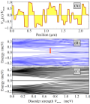
![[Graphic 79]](/bjnano/content/inline/2190-4286-9-142-i85.svg?max-width=637&scale=1.18182) = 3 of a triangular wi...
= 3 of a triangular wi...


Absence of free carriers in silicon nanocrystals grown from phosphorus- and boron-doped silicon-rich oxide and oxynitride
Beilstein J. Nanotechnol. 2018, 9, 1501–1511, doi:10.3762/bjnano.9.141
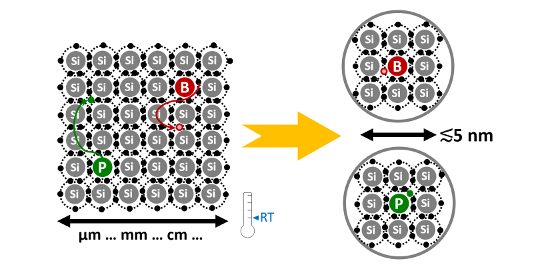
- deactivate P-donors and B-acceptors in heavily doped Si nanowires [47] and in the bulk [48][49][50]. However, this type of dopant passivation solely relies on very reactive atomic hydrogen (rather than molecular H2 gas) and requires much lower temperatures of 100–150 °C to be efficient. When considering H2
- offsets created by locally Si3N4 and SiO2 embedded Si-nanowires [61]). P- and B-concentrations as measured by MCs+-SIMS as function of PH3 to SiH4 gas flow ratio, or respectively, as function of B2H6 to SiH4 gas flow ratio for both SRO and SRON PECVD-recipes. The lines are just a guide to the eye to


Cathodoluminescence as a probe of the optical properties of resonant apertures in a metallic film
Beilstein J. Nanotechnol. 2018, 9, 1491–1500, doi:10.3762/bjnano.9.140
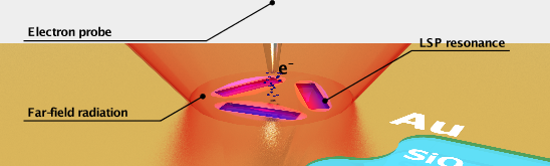
- GaAs nanowires [46], modes of single and pairs of AlGaAs disks [47], the optical properties of quantum discs of GaN/AlN in GaN nanowires [48] and various modes of gold nanodecahedra [49]. The potential of CL used in transmission to observe various colour centres in nanodiamonds has also been


Interplay between pairing and correlations in spin-polarized bound states
Beilstein J. Nanotechnol. 2018, 9, 1370–1380, doi:10.3762/bjnano.9.129
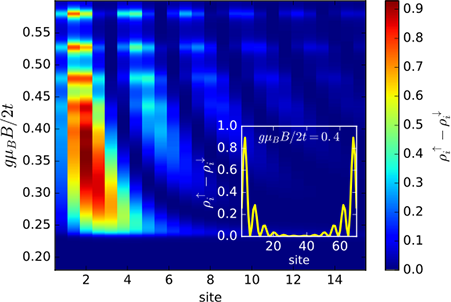
- –orbit coupling (usually meaningful at boundaries, e.g., surfaces) [20][21][22]. Such interaction in one-dimensional magnetic nanowires can induce the topologically nontrivial superconducting phase, in which the YSR states undergo mutation to Majorana (zero-energy) quasiparticles. Coulomb repulsion
- unit vector shows the direction of the spin–orbit field, which can be arbitrary. Here we restrict our considerations to the in-plane = (1, 0, 0) polarization, which will be important for nontrivial superconductivity in nanowires discussed in the subsection ’Magnetically polarized Majorana
- attempting to braid the Majorana end modes, e.g., in T-shape nanowires upon turning on and off the topological superconducting phase in its segments. We briefly analyse here the polarized zero-energy Majorana modes leaking into the multi-site quantum dot (comprising ten lattice sites) side-attached to the


![[Graphic 23]](/bjnano/content/inline/2190-4286-9-129-i39.svg?max-width=637&scale=1.18182) obtained for |J| < Jc in the absence of spin–orbit coupling (le...
obtained for |J| < Jc in the absence of spin–orbit coupling (le...

![[Graphic 26]](/bjnano/content/inline/2190-4286-9-129-i42.svg?max-width=637&scale=1.18182) as a function of the r...
as a function of the r...


Disorder-induced suppression of the zero-bias conductance peak splitting in topological superconducting nanowires
Beilstein J. Nanotechnol. 2018, 9, 1358–1369, doi:10.3762/bjnano.9.128
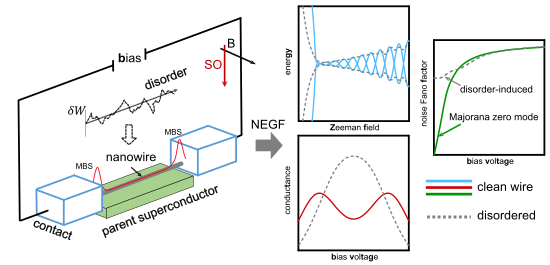
- -Dimensional Quantum Physics, Tsinghua University, Beijing 100084, China 10.3762/bjnano.9.128 Abstract We investigate the effect of three types of intrinsic disorder, including that in pairing energy, chemical potential, and hopping amplitude, on the transport properties through the superconducting nanowires
- several experiments since 2012 [23][24][25][26][27][28][29][30]. As an important signature of MBSs in the semiconductor nanowires which are proximity-coupled to s-wave superconductors, the zero-bias conductance peak has been observed in the tunneling spectra in the presence of a finite magnetic field [23
- direct evidence for the presence of MBSs, and its emergence is often associated with the resonant Andreev reflection [41]. However, for realistic Majorana nanowires, the observed conductance peaks are often much smaller than 2e2/h. In Figure 6, we show the disorder-induced effects on the zero-bias


![[Graphic 20]](/bjnano/content/inline/2190-4286-9-128-i39.svg?max-width=637&scale=1.18182) (das...
(das...


Andreev spectrum and supercurrents in nanowire-based SNS junctions containing Majorana bound states
Beilstein J. Nanotechnol. 2018, 9, 1339–1357, doi:10.3762/bjnano.9.127
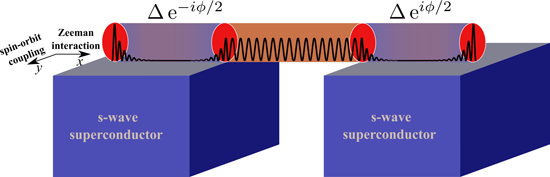
- Madrid, E-28049 Madrid, Spain Instituto de Ciencia de Materiales de Madrid (ICMM-CSIC), Cantoblanco, 28049 Madrid, Spain 10.3762/bjnano.9.127 Abstract Hybrid superconductor–semiconductor nanowires with Rashba spin–orbit coupling are arguably becoming the leading platform for the search of Majorana bound
- states (MBSs) in engineered topological superconductors. We perform a systematic numerical study of the low-energy Andreev spectrum and supercurrents in short and long superconductor–normal–superconductor junctions made of nanowires with strong Rashba spin–orbit coupling, where an external Zeeman field
- –superconductor junctions; Josephson effect; Majorana bound states; nanowires; spin–orbit coupling; Zeeman interaction; Introduction A semiconducting nanowire with strong Rashba spin–orbit coupling (SOC) with proximity-induced s-wave superconducting correlations can be tuned into a topological superconductor by


![[Graphic 44]](/bjnano/content/inline/2190-4286-9-127-i52.svg?max-width=637&scale=1.18182) in a short SNS j...
in a short SNS j...


![[Graphic 73]](/bjnano/content/inline/2190-4286-9-127-i81.svg?max-width=637&scale=1.18182) = 0 (a,b)...
= 0 (a,b)...


![[Graphic 84]](/bjnano/content/inline/2190-4286-9-127-i92.svg?max-width=637&scale=1.18182) ), fo...
), fo...


![[Graphic 119]](/bjnano/content/inline/2190-4286-9-127-i127.svg?max-width=637&scale=1.18182) at B = 1.5Bc. Contributions to the supercurrent for (a,b) short and ...
at B = 1.5Bc. Contributions to the supercurrent for (a,b) short and ...

![[Graphic 163]](/bjnano/content/inline/2190-4286-9-127-i171.svg?max-width=637&scale=1.18182) ), in (a,b) a short and (c,d) a long junction. (a,...
), in (a,b) a short and (c,d) a long junction. (a,...

![[Graphic 175]](/bjnano/content/inline/2190-4286-9-127-i183.svg?max-width=637&scale=1.18182) ), in (a,b) a...
), in (a,b) a...

![[Graphic 186]](/bjnano/content/inline/2190-4286-9-127-i194.svg?max-width=637&scale=1.18182) ) in (a,b) a short and (c,d) a long ...
) in (a,b) a short and (c,d) a long ...
Proximity effect in a two-dimensional electron gas coupled to a thin superconducting layer
Beilstein J. Nanotechnol. 2018, 9, 1263–1271, doi:10.3762/bjnano.9.118
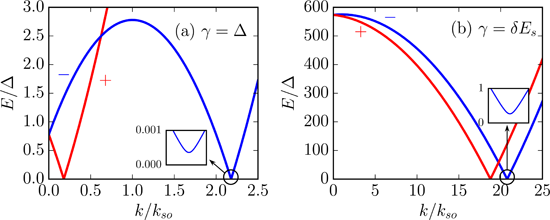
- advances of the past few years was the successful epitaxial growth of thin layers of superconducting Al on InAs and InSb nanowires [38][39][40][41][42]. The intimate contact between the semiconductor and superconductor in these devices ensures a hard induced superconducting gap. Recently, this epitaxial
- phase. However, for most devices, the large band shift makes it very challenging to realize a topological phase. Increasing thickness of superconducting layer The self-energy appearing most frequently in the literature to describe proximitized nanowires and 2DEGs [55][56][57][58][59][60], which also has


![[Graphic 15]](/bjnano/content/inline/2190-4286-9-118-i42.svg?max-width=637&scale=1.18182) in the absence of tunneling, assuming
in the absence of tunneling, assuming ![[Graphic 16]](/bjnano/content/inline/2190-4286-9-118-i43.svg?max-width=637&scale=1.18182) an...
an...


Circular dichroism of chiral Majorana states
Beilstein J. Nanotechnol. 2018, 9, 1194–1199, doi:10.3762/bjnano.9.110
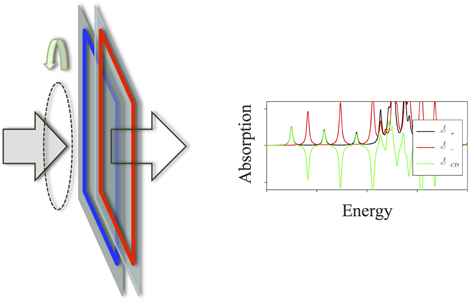
- condensed matter devices may be of a localized nature, such as in hybrid semiconductor/superconductor nanowires, or chirally propagating along the edges such as in hybrid 2D quantum-anomalous Hall/superconductor structures. Results: We calculate the circular dichroism due to chiral Majorana states in a
- states in condensed matter devices is attracting strong interest for a few years now [1][2][3][4][5][6][7][8]. The measured zero-bias conductance peaks in hybrid semiconductor/superconductor nanowires have been attributed to the presence of localized Majorana modes on the two ends of the nanowires [9][10
- them from other normal states lying at finite energies. Besides the zero energy of the Majorana state, also the conductance peak height was recently seen to coincide with the expected value 2e2/h [15]. Majorana end states in (quasi) 1D nanowires are inherently localized, i.e., their wave function


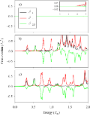
![[Graphic 14]](/bjnano/content/inline/2190-4286-9-110-i18.svg?max-width=637&scale=1.18182) . Panels a) and b) correspond to the phases in Figure 1d with one (ΔB = 2...
. Panels a) and b) correspond to the phases in Figure 1d with one (ΔB = 2...
![[Graphic 15]](/bjnano/content/inline/2190-4286-9-110-i19.svg?max-width=637&scale=1.18182) ,
, ![[Graphic 16]](/bjnano/content/inline/2190-4286-9-110-i20.svg?max-width=637&scale=1.18182) and
and ![[Graphic 17]](/bjnano/content/inline/2190-4286-9-110-i21.svg?max-width=637&scale=1.18182) defined in the main text. The shown results correspond to the spe...
defined in the main text. The shown results correspond to the spe...

![[Graphic 19]](/bjnano/content/inline/2190-4286-9-110-i23.svg?max-width=637&scale=1.18182) ,
, ![[Graphic 20]](/bjnano/content/inline/2190-4286-9-110-i24.svg?max-width=637&scale=1.18182) and
and ![[Graphic 21]](/bjnano/content/inline/2190-4286-9-110-i25.svg?max-width=637&scale=1.18182) for (a) a square of Lx = Ly = 20 LU), and for (b) a rectangle of L...
for (a) a square of Lx = Ly = 20 LU), and for (b) a rectangle of L...
Inverse proximity effect in semiconductor Majorana nanowires
Beilstein J. Nanotechnol. 2018, 9, 1184–1193, doi:10.3762/bjnano.9.109
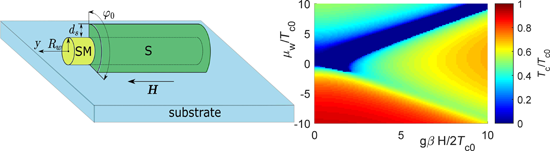
- Novgorod, 23 Gagarina, 603950 Nizhny Novgorod, Russia 10.3762/bjnano.9.109 Abstract We study the influence of the inverse proximity effect on the superconductivity nucleation in hybrid structures consisting of semiconducting nanowires placed in contact with a thin superconducting film and discuss the
- ; semiconducting nanowires; Introduction The transport phenomena in semiconducting wires with induced superconducting ordering and strong spin–orbit interaction are in the focus of current experimental and theoretical research in field of nanophysics and quantum computing [1][2][3][4][5][6][7][8][9][10]. The
- ratio of mode numbers as Nw/Ns ≈ 10−5–10−4 for typical Majorana nanowires [11][12][13][14][15][16]. Taking into account the decrease of the υ0 value close to the van Hove singularity (/υ0 ≈ 102–103), we get Γw/Γs ≈ 10−3–10−1. Assuming strong coupling between the nanowire and superconducting shell with


Thermoelectric current in topological insulator nanowires with impurities
Beilstein J. Nanotechnol. 2018, 9, 1156–1161, doi:10.3762/bjnano.9.107
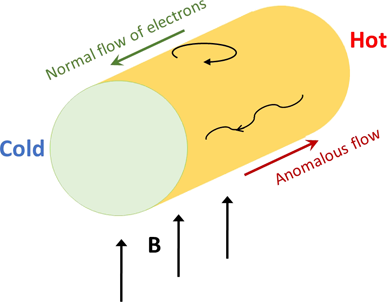
- charge current generated by maintaining a temperature difference over a nanowire at zero voltage bias. For topological insulator nanowires in a perpendicular magnetic field the current can change sign as the temperature of one end is increased. Here we study how this thermoelectric current sign reversal
- impurity concentration the sign reversal persists. Keywords: topological insulators, nanowires, thermoelectric current; Introduction It has been known for quite some time now that the efficiency of thermoelectric devices can be increased by reducing the system size. The size reduction can improve
- properties is not always straightforward [3]. Even though few experimental studies exist on thermoelectric properties in topological insulator nanowires (TIN), many studies have reported magnetoresistance oscillations, both in longitudinal and transversal fields for TINs [4][5][6][7][8][9][10]. In its


Field-controlled ultrafast magnetization dynamics in two-dimensional nanoscale ferromagnetic antidot arrays
Beilstein J. Nanotechnol. 2018, 9, 1123–1134, doi:10.3762/bjnano.9.104
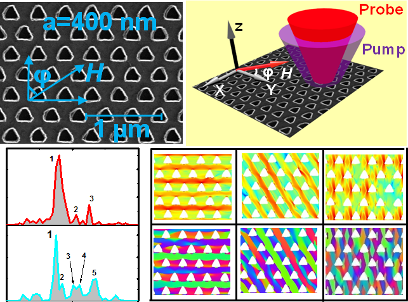
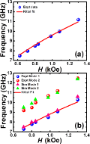
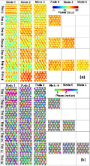
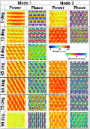
- magnetic metamaterials, known as magnonic crystals (MCs), which have great potential for technological applications and fundamental research [1][2]. Investigation and tailoring of the magnetization dynamics in ferromagnetic nanodots [3][4], nanowires [5] and antidots [6][7][8] have fuelled considerable



Review on nanoparticles and nanostructured materials: history, sources, toxicity and regulations
Beilstein J. Nanotechnol. 2018, 9, 1050–1074, doi:10.3762/bjnano.9.98

- external nanoscale dimension or having internal nanoscale surface structure” [4]. Nanofibers, nanoplates, nanowires, quantum dots and other related terms have been defined based on this ISO definition [5]. Likewise, the term nanomaterial is described as “a manufactured or natural material that possesses


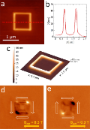
Magnetic characterization of cobalt nanowires and square nanorings fabricated by focused electron beam induced deposition
Beilstein J. Nanotechnol. 2018, 9, 1040–1049, doi:10.3762/bjnano.9.97
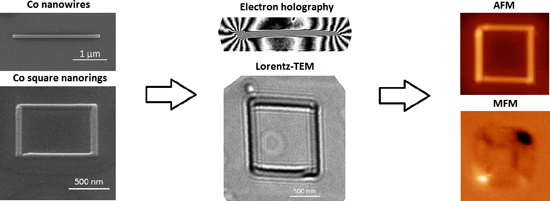
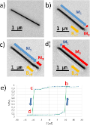
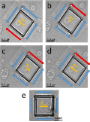
- nanowires (NWs) and square nanorings, which were deposited by focused electron beam induced deposition (FEBID) of a Co carbonyl precursor, are studied using off-axis electron holography (EH), Lorentz transmission electron microscopy (L-TEM) and magnetic force microscopy (MFM). EH shows that NWs deposited
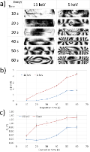
- used was a Veeco MESP probe, which was made from Sb-doped (n) Si covered by CoCr. The tip was magnetized out-of-plane in a 0.32 T field. Results and Discussion Electron holography of nanowires A first magnetic analysis was carried out on the NWs using off-axis electron holography. The measurements were
- ]. Following this argument, the B value measured in our nanowires should be 15% higher than that for vertical nanopillars with the same Co purity. This turns out to be in perfect agreement with our recent work [39], where a B value of 1.1 T was measured for vertical Co nanopillars having the same composition
Single-crystalline FeCo nanoparticle-filled carbon nanotubes: synthesis, structural characterization and magnetic properties
Beilstein J. Nanotechnol. 2018, 9, 1024–1034, doi:10.3762/bjnano.9.95
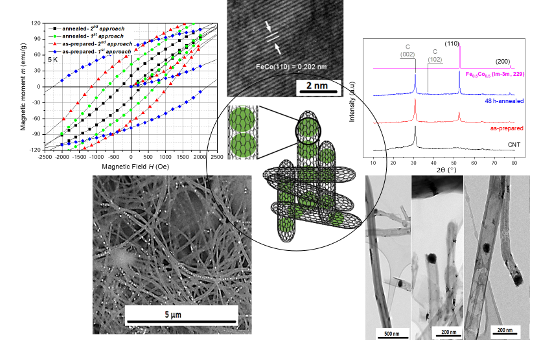
- ][20], and are thus highly suitable for high-temperature applications. However, reducing the size of these materials down to the nanoscale to produce nanowires and nanoparticles results in a robust enhancement in the coercivity [21][22], which make them good candidates for high-density magnetic storage


Tuning adhesion forces between functionalized gold colloidal nanoparticles and silicon AFM tips: role of ligands and capillary forces
Beilstein J. Nanotechnol. 2018, 9, 660–670, doi:10.3762/bjnano.9.61
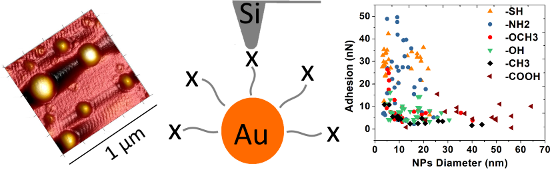
- accurate control of their intrinsic properties. For instance, Au nanospheres, nanocubes, nanorods and nanowires [10] have been routinely synthesized. Their physico-chemical and especially optical properties [11] of NPs strongly depend on their shape, size and spatial arrangement [12][13][14][15]. All these


Electron interaction with copper(II) carboxylate compounds
Beilstein J. Nanotechnol. 2018, 9, 384–398, doi:10.3762/bjnano.9.38
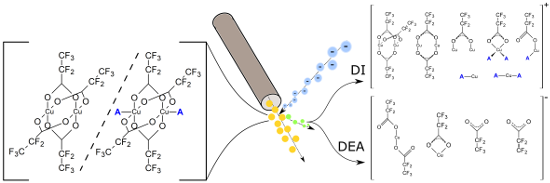
- -induced deformation, and electromigration resistance which is higher than for aluminum [24][25][26][27]. Copper nanostructures, especially nanowires, are applied in opto-electronic devices, solar cells, field-emission displays, catalysis, electronic skins, and sensor devices. Moreover, they can find


Review: Electrostatically actuated nanobeam-based nanoelectromechanical switches – materials solutions and operational conditions
Beilstein J. Nanotechnol. 2018, 9, 271–300, doi:10.3762/bjnano.9.29
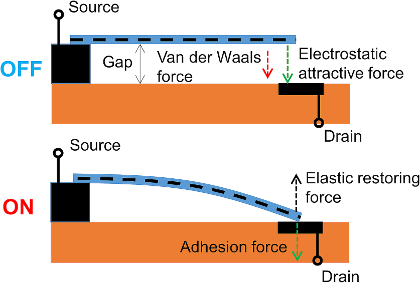
- : nanocontacts; nanoelectromechanical switches; nanowires; NEM; reliability; Review Introduction Nanoelectromechanical (NEM) switches represent a class of nanoscale devices, integrating both electrical and mechanical functionality of nanostructures to process external stimuli applied to the device and
- nanostructures (e.g., thin films [5][6][7], nanobundles [8], nanowires [9][10][11][12][13][14], nanotubes [15][16]) fabricated from different materials (e.g., metals [17][18][19], semiconductors [9][10][20][21][22][23], carbon allotropes, including graphene [24][25][26][27][28][29][30][31] and carbon nanotubes
- nanostructures (nanowires, nanotubes, nanorods, graphene) with a good uniformity and desired properties. The microfabrication routine may be supplemented with some bottom-up approaches. Dielectrophoresis [33], controlled nanomaterial growth [34], and nanomanipulation [9] have been demonstrated as useful methods


Synthesis and characterization of electrospun molybdenum dioxide–carbon nanofibers as sulfur matrix additives for rechargeable lithium–sulfur battery applications
Beilstein J. Nanotechnol. 2018, 9, 262–270, doi:10.3762/bjnano.9.28
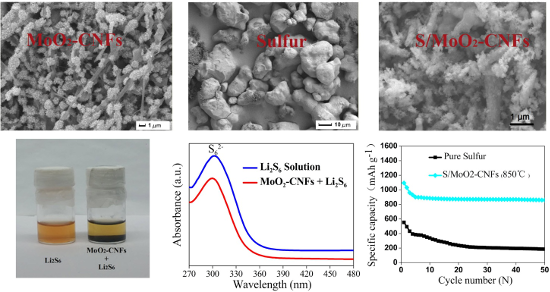
- (1D) MoO2–CNFs nanocomposites, especially with secondary MoO2 nanostructures, are difficult to achieve due to lack of appropriate and generalized synthetic methodologies. Recently, hierarchical MoO2/C microspheres and hierarchical MoO2/Mo2C/C hybrid nanowires were fabricated using organic–inorganic


Dopant-stimulated growth of GaN nanotube-like nanostructures on Si(111) by molecular beam epitaxy
Beilstein J. Nanotechnol. 2018, 9, 146–154, doi:10.3762/bjnano.9.17
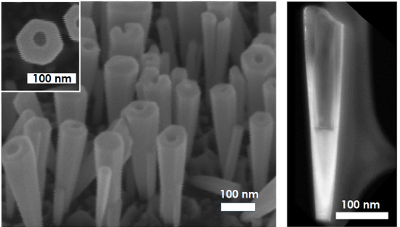
- , Institut d’Electronique Fondamentale, UMR 8622 CNRS, University Paris Sud, University Paris-Saclay, 91405 Orsay cedex, France 10.3762/bjnano.9.17 Abstract In this paper we study growth of quasi-one-dimensional GaN nanowires (NWs) and nanotube (NT)-like nanostructures on Si(111) substrates covered with a
- concentration in the nanostructures exceeds 5∙1019 cm−3. Keywords: A3B5 on Si; epitaxy; GaN; MBE; nanowires; nanotubes; nanotube-like nanostructures; Si; Introduction Gallium nitride quasi-one-dimensional nanostructures such as nanowires (NWs) and nanotubes (NTs) synthesized by means of plasma-assisted
- defect-free structures on highly mismatched substrates, e.g., GaN NWs on Si [7][8]. NWs usually possess high crystal quality due to the effective mechanical stress relaxation at a distance of about one NW base diameter from the substrate. Nanowires synthesized on Si are very promising nanostructures in


Combined scanning probe electronic and thermal characterization of an indium arsenide nanowire
Beilstein J. Nanotechnol. 2018, 9, 129–136, doi:10.3762/bjnano.9.15
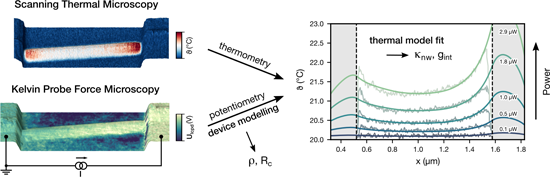
- S3), confirming the reduction of long-range effects due to detection of the force gradient. Being sensitive to the electrostatic force instead, AM-KFM measurements of similar nanowires [4][28][29][30] have previously shown pronounced lateral averaging, reducing both accuracy and resolution of the
- temperature beneath them inaccessible to SThM.) The thermal conductivity of the InAs nanowire, κ = (3.0 ± 1.4) W·m−1·K−1, is in good agreement with measurements of similar InAs nanowires in microelectromechanical heater/sensor setups [31][32], or with measurements of a 40 nm thick InAs nanofilm [33]. Note
- that stacking faults perpendicular to the growth direction limit the thermal conductivity of our nanowire [31][34], compared to higher-quality crystalline InAs nanowires [35]. We calculate the interfacial thermal conductivity to the substrate and electrodes along the perimeter of the nanowire from the


Comparative study of post-growth annealing of Cu(hfac)2, Co2(CO)8 and Me2Au(acac) metal precursors deposited by FEBID
Beilstein J. Nanotechnol. 2018, 9, 91–101, doi:10.3762/bjnano.9.11
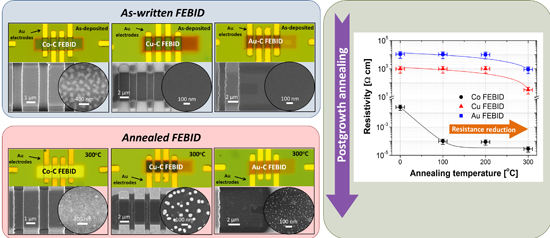
- ], ferromagnetic nanostructures for magnetic logic and memory [23][24][25], as well as functional core–shell ferromagnetic nanowires with improved magnetic properties [26] have already been realised through this technique. It is worth mentioning that the superior conductivity of Cu, compared to other non-noble


Gas-sensing behaviour of ZnO/diamond nanostructures
Beilstein J. Nanotechnol. 2018, 9, 22–29, doi:10.3762/bjnano.9.4
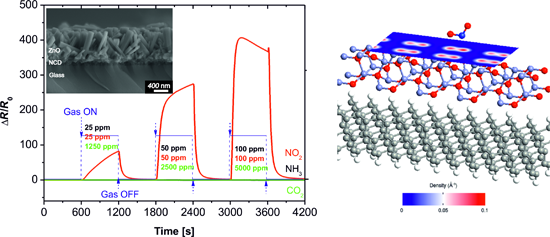
- ]. Sadek et al. fabricated a ZnO nanobelt sensor and tested it for NO2 gas at operating temperatures between 150 and 450 °C. The optimum operating temperature for NO2 detection was in the range between 300 °C and 350 °C [25]. The sensing properties of various ZnO nanostructures (ZnO nanowires and ZnO–SnO2
- core–shell nanowires) were investigated by Hwang and co-workers. The gas response of ZnO–SnO2 core–shell nanowires to 10 ppm NO2 at 200 °C and 300 °C were 66.3 and 12.4, respectively, which is ca. 33- and ca. 8.9-times higher than the respective values of 2.0 and 1.4 for ZnO nanowires [26]. Presently


The rational design of a Au(I) precursor for focused electron beam induced deposition
Beilstein J. Nanotechnol. 2017, 8, 2753–2765, doi:10.3762/bjnano.8.274
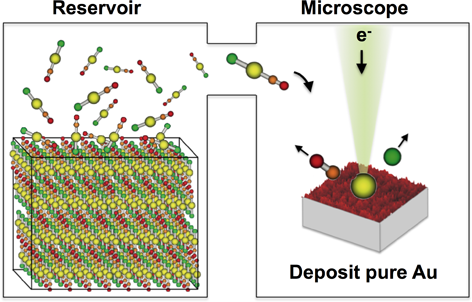
- contacting of nanowires [21]. Furthermore, as electron beams can be focused to sub-nanometer-sized spots, the reactions can be limited to very small areas. Features as small as 0.6 nm have been written using FEBIP [22] and the deposition can be followed molecule by molecule [23]. One of the main challenges





