


Search results
Search for "sensor" in Full Text gives 446 result(s) in Beilstein Journal of Nanotechnology. Showing first 200.
Atomic force acoustic microscopy reveals the influence of substrate stiffness and topography on cell behavior
Beilstein J. Nanotechnol. 2019, 10, 2329–2337, doi:10.3762/bjnano.10.223
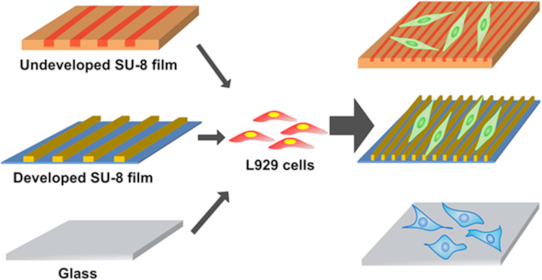
- using the same parameters. The Young’s moduli of the fabricated substrates were evaluated by fitting the force–distance curves with a Hertzian cone. A probe sensor (ContAl-G, Budget Sensors) was used in the force modulation mode for measuring the Young’s moduli. The cantilever spring constant was 0.2 N
- surfaces [29][33]. When the probe sensor is in contact with the sample surface, the AFM cantilever directly reflects the vibrations. By modulating the drive frequency and the excitation amplitude used for AFAM imaging, the cantilever is set to adopt to the feedback signal. Finally, by analyzing the


Use of data processing for rapid detection of the prostate-specific antigen biomarker using immunomagnetic sandwich-type sensors
Beilstein J. Nanotechnol. 2019, 10, 2171–2181, doi:10.3762/bjnano.10.210

- treatment for determining biomarkers in real samples. In this paper, we report an immunomagnetic nanoparticle-based microfluidic sensor (INμ-SPCE) for the amperometric detection of the prostate-specific antigen (PSA) biomarker, the data of which were treated with information visualization methods. The INμ
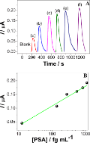
- electrochemical responses for all immunosensors. The detection mechanism for the immunosensors is likely an adsorption process, which is common for this type of sensor. We verified this hypothesis by modeling the amperometric responses for PSA antigen at concentrations from 12.5 to 1111 fg·mL−1 in Figure 2, where
- procedure for a sandwich-type immunomagnetic sensor. Electrochemical immunoassays with disposable microfluidic devices led to excellent linearity, reproducibility, and fast detection at low-cost, while showing excellent agreement with the standard method ELISA. Importantly, the approach for the immunoassays


Nitrogen-vacancy centers in diamond for nanoscale magnetic resonance imaging applications
Beilstein J. Nanotechnol. 2019, 10, 2128–2151, doi:10.3762/bjnano.10.207
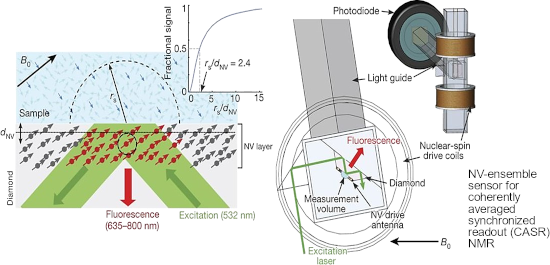
- ) centers in diamond as sensors. The NV centers in diamond are one example of a sensor for nano-MRI. Optical measurements with NV centers combined with electron paramagnetic resonance (EPR) were established at the end of the 1970s [6], although it was only in 1991 that EPR was also observed without
- detected time window is optimized to obtain a better SNR and dynamical decoupling sequences are used to increase the coherence time of the spin sensor by suppressing spin decoherence due to the environment. This increases the sensitivity in the magnetic field amplitude measurements. Dynamical decoupling
- using complex spin manipulation sequences. This approach results in the best achievable sensitivity of magnetic field sensing based on this atomic sensor. Alternatively, a high concentration of NV centers are formed close to the surface of bulk diamond using delta-doping techniques, and in this case


Ion mobility and material transport on KBr in air as a function of the relative humidity
Beilstein J. Nanotechnol. 2019, 10, 2084–2093, doi:10.3762/bjnano.10.203
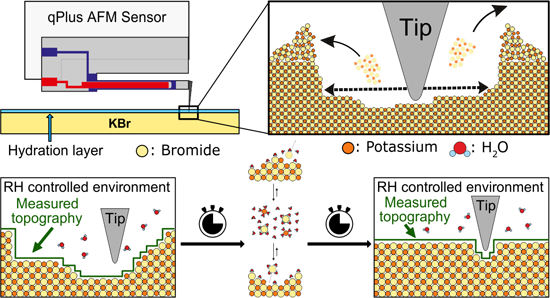
- relationship between humidity, water coverage and movement speed, however, is complex. In this study we investigated the surface of KBr, a salt crystal, by using frequency-modulation atomic force microscopy (FM-AFM) using a qPlus sensor [9][10][11]. The aim of our experiments is a qualitative and quantitative
- range for each experiment. Experimental For the experiments we used a custom-designed AFM equipped with a qPlus sensor. The qPlus sensor is a stiff (k = 1800 N/m) self-sensing quartz sensor with a resonance frequency around f0 = 32 kHz. It has enabled unprecedented results in low-temperature AFM, such
- per hour. The humidity was continuously measured and, if needed, adjusted during the measurement process. All AFM experiments were performed in the frequency-modulation mode with a qPlus sensor with a resonance frequency of 29 to 33 kHz and a stiffness of k = 1.8 kN/m. Typical image parameters were an


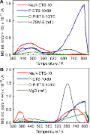
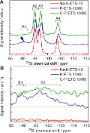
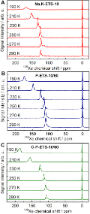
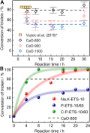
Synthesis of highly active ETS-10-based titanosilicate for heterogeneously catalyzed transesterification of triglycerides
Beilstein J. Nanotechnol. 2019, 10, 2039–2061, doi:10.3762/bjnano.10.200








Review of advanced sensor devices employing nanoarchitectonics concepts
Beilstein J. Nanotechnol. 2019, 10, 2014–2030, doi:10.3762/bjnano.10.198
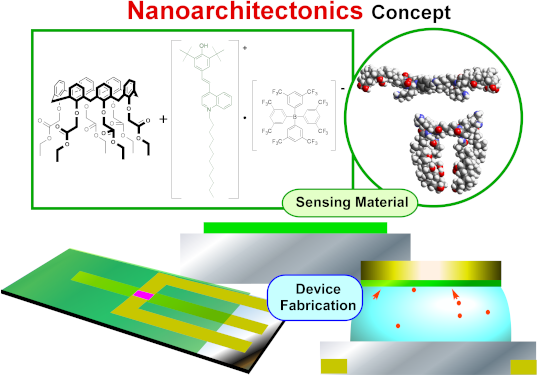
- , Kashiwa 277-8561, Japan 10.3762/bjnano.10.198 Abstract Many recent advances in sensor technology have been possible due to nanotechnological advancements together with contributions from other research fields. Such interdisciplinary collaborations fit well with the emerging concept of nanoarchitectonics
- advancements in sensor devices and sensor materials that take advantage of advanced nanoarchitectonics concepts for improved performance. In the first part, recent progress on sensor systems are roughly classified according to the sensor targets, such as chemical substances, physical conditions, and biological
- phenomena. In the following sections, advancements in various nanoarchitectonic motifs, including nanoporous structures, ultrathin films, and interfacial effects for improved sensor function are discussed to realize the importance of nanoarchitectonic structures. Many of these examples show that





First principles modeling of pure black phosphorus devices under pressure
Beilstein J. Nanotechnol. 2019, 10, 1943–1951, doi:10.3762/bjnano.10.190
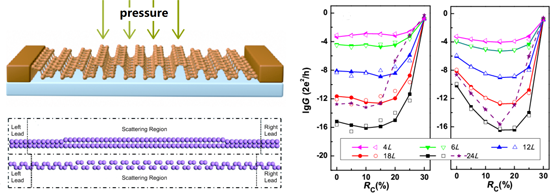
- .10.190 Abstract Black phosphorus (BP) has a pressure-dependent bandgap width and shows the potential for applications as a low-dimensional pressure sensor. We built two kinds of pure BP devices with zigzag or armchair conformation, and explored their pressure-dependent conductance in detail by using
- avoidable lattice mismatch. We want to address the following questions of pure BP devices. 1) How does the conformation of pure BP devices influence the pressure-dependent quantum transport? Is either the zigzag or the armchair device suitable for pressure sensor applications? 2) How does the magnitude of
- found that the armchair BP device can be used as a pressure sensor, while the zigzag BP device cannot be used in that way when the pressure ratio is less than 15%. This is the core conclusion of this work. To examine the influence of structural relaxation, the conductance of two fully relaxed zigzag and




Lipid nanostructures for antioxidant delivery: a comparative preformulation study
Beilstein J. Nanotechnol. 2019, 10, 1789–1801, doi:10.3762/bjnano.10.174
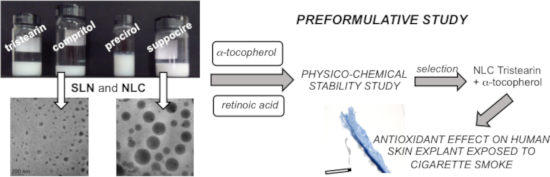
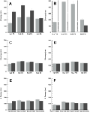
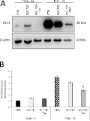
- suggest that NLC T10-TOC can effectively reduce the induction of cutaneous HO-1, which is a sensor of tissue stress, suggesting the ability of this topical application to prevent CS-induced skin damage. Further studies will be required to investigate the dose and type-dependent manner of action of TOC

Growth dynamics and light scattering of gold nanoparticles in situ synthesized at high concentration in thin polymer films
Beilstein J. Nanotechnol. 2019, 10, 1768–1777, doi:10.3762/bjnano.10.172
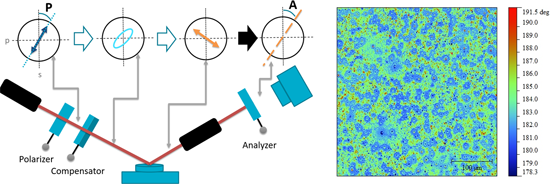
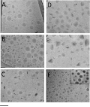
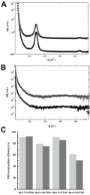
- constitute a set of coordinates for the emergence directions. Each direction is mapped to a point on a disk on the Fourier plane, before the image is transferred to a CCD sensor. The sensor measures therefore all the intensities in the disk-shaped map, which contains a planar projection of the intensity


Remarkable electronic and optical anisotropy of layered 1T’-WTe2 2D materials
Beilstein J. Nanotechnol. 2019, 10, 1745–1753, doi:10.3762/bjnano.10.170
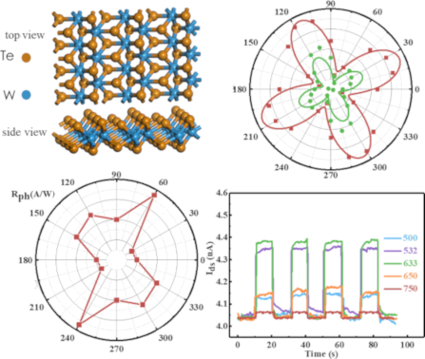
- great promise for future photodetector applications. Angle- and wavelength-dependent photodetector To evaluate the potential application of 1T’-WTe2 as a photoelectric sensor we also performed another angle-resolved photoelectric measurement. In this test, we first fixed the incident wavelength at 633


Materials nanoarchitectonics at two-dimensional liquid interfaces
Beilstein J. Nanotechnol. 2019, 10, 1559–1587, doi:10.3762/bjnano.10.153
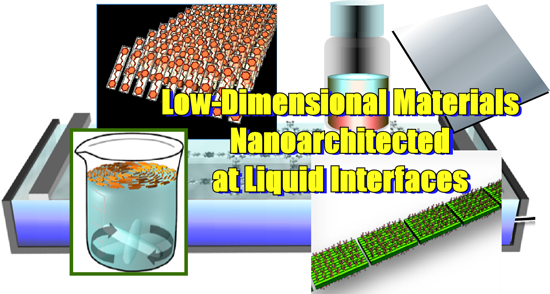
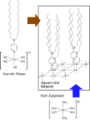
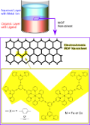
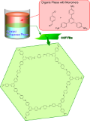
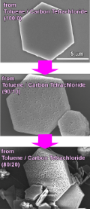
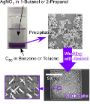
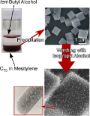
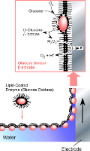
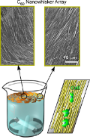
- with platinum interdigitated electrodes. An excellent sensor capability for H2 gas in humid air at room temperature was observed for a film of 10 layers of the aligned one-dimensional W18O49 nanowires. Various additional techniques to fabricate two-dimensional structures have been proposed. Advincula













High-temperature resistive gas sensors based on ZnO/SiC nanocomposites
Beilstein J. Nanotechnol. 2019, 10, 1537–1547, doi:10.3762/bjnano.10.151
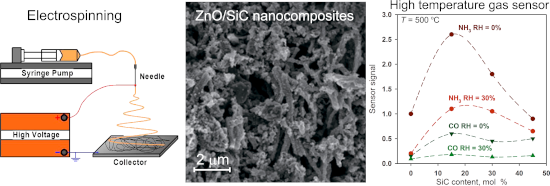
- °C. The ZnO/SiC nanocomposites were characterized by a higher concentration of chemisorbed oxygen, higher activation energy of conductivity, and higher sensor response towards CO and NH3 as compared with ZnO nanofibers. The obtained experimental results were interpreted in terms of the formation of
- an n–n heterojunction at the ZnO/SiC interface. Keywords: electrospinning; high temperature gas sensor; n–n heterojunction; ZnO/SiC nanocomposite; Introduction The risk of air pollution is growing due to the development of new technologies in the chemical, metallurgical and food industries, the use
- oxides, such as SnO2, ZnO, WO3, and In2O3, that have been widely used in resistive gas sensors cannot be applied directly, primarily due to the drift of the sensor parameters at temperatures above 500 °C. The stability of nanostructured semiconductor oxides at high temperature can be enhanced by creating



Selective gas detection using Mn3O4/WO3 composites as a sensing layer
Beilstein J. Nanotechnol. 2019, 10, 1423–1433, doi:10.3762/bjnano.10.140
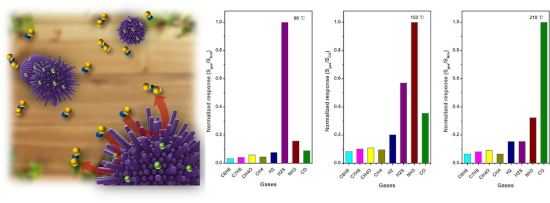
- between the two metal oxides. The sensor based on the Mn3O4/WO3 composite with 3 atom % Mn showed a high selective response to hydrogen sulfide (H2S), ammonia (NH3) and carbon monoxide (CO) at working temperatures of 90 °C, 150 °C and 210 °C, respectively. The demonstrated superior selectivity opens the
- to enhance the selectivity of WO3-based gas sensors. Previous studies found that the gas sensing response of pure phase WO3 is usually low and improving this response for a particular gas could simultaneously enhance their selectivity [7][8][9]. Kabcum et al. developed a sensor based on PdO
- Cr2O3-functionalzied WO3 nanorod sensor had better selectivity toward ethanol than that of pristine WO3 [11]. From previous reports, it is almost certainly clear that catalytic Mn3O4 attached to WO3 should promote the gas sensing reactions, and the Mn3O4/WO3 composite is expected to be a more effective


Gas sensing properties of individual SnO2 nanowires and SnO2 sol–gel nanocomposites
Beilstein J. Nanotechnol. 2019, 10, 1380–1390, doi:10.3762/bjnano.10.136
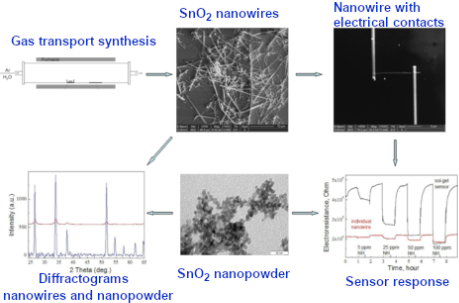
- sensor response due to the unlikelihood of sample recrystallization. The results from the ammonia detection experiments showed that the ratio of the sensor response to the surface area exhibits similar values for both the individual nanowire and nanopowders-based sensor materials. Keywords: gas sensors
- ; gas transport method; nanowires; quasi-one-dimensional materials; sol–gel synthesis; tin dioxide; X-ray absorption near edge structure (XANES); X-ray photoelectron spectroscopy (XPS); Introduction Semiconductor sensor functionality relies on heterogeneous catalytic chemical processes, which makes the
- mainstream process in sensor development, because researchers have reached the limits of this method. For this reason, the interest in the development of nanowire devices (i.e., quasi-1-dimensional objects) has increased. Their surface-to-volume ratio can be as high as that of nanopowders obtained from




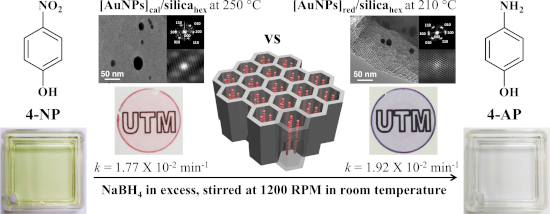
Highly ordered mesoporous silica film nanocomposites containing gold nanoparticles for the catalytic reduction of 4-nitrophenol
Beilstein J. Nanotechnol. 2019, 10, 1368–1379, doi:10.3762/bjnano.10.135
- complex ([Au3Pz3]C10TEG) as a self-assembled template. Indeed, the resulting mesostructured silica nanocomposites not only exhibited perfect self-repairing properties, but also worked as a metal ion sensor [26] with excellent phosphorescent sensing and temperature imaging capabilities [27]. Hence, it is


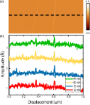
Nanoscale spatial mapping of mechanical properties through dynamic atomic force microscopy
Beilstein J. Nanotechnol. 2019, 10, 1332–1347, doi:10.3762/bjnano.10.132
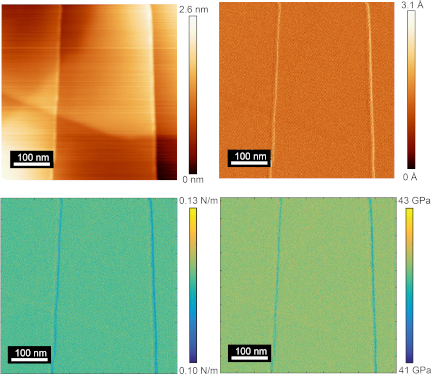
- the force sensor were determined under ultrahigh vacuum using the beam-geometry method, involving the measurement of the frequency of the first normal oscillation mode to determine the thickness of the cantilever [26]. The normal stiffness of the cantilevers was determined to be in the range of 0.25




Janus-micromotor-based on–off luminescence sensor for active TNT detection
Beilstein J. Nanotechnol. 2019, 10, 1324–1331, doi:10.3762/bjnano.10.131
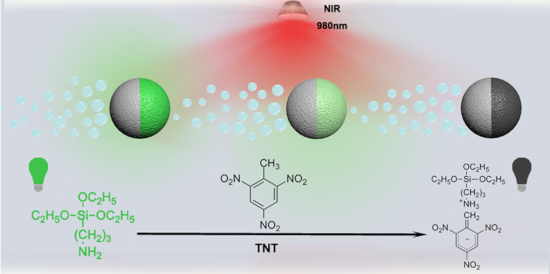
- Kuang Jie 2, Harbin 150080, China 10.3762/bjnano.10.131 Abstract An active TNT (2,4,6-trinitrotoluene) catalytic sensor based on Janus upconverting nanoparticle (UCNP)-functionalized micromotor capsules, displaying “on–off” luminescence with a low limit of detection has been developed. The Janus
- developed a micromotor-based active sensor for the detection of TNT based on the on–off luminescence of a Janus UCNP capsule motor. The Janus UCNP capsule motors were fabricated by layer-by-layer assembly combined with vacuum deposition. These Janus motors with a catalytic Pt layer can be propelled by


A biomimetic nanofluidic diode based on surface-modified polymeric carbon nitride nanotubes
Beilstein J. Nanotechnol. 2019, 10, 1316–1323, doi:10.3762/bjnano.10.130
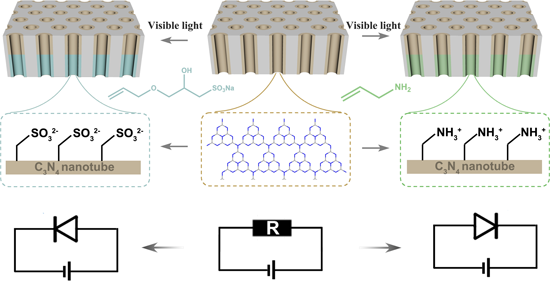
- with ion rectification have the potential to be used in salinity-gradient energy conversion and ion sensor systems. Keywords: carbon nitride; ion transport; nanochannel; nanofluidic system; photofunctionalization; Introduction Ion transport is the basis of energy and sensory systems in living
- simple fabrication process, the CNNM with ion rectification has the potential to be used in the energy generation through salinity gradients and ion sensor system. Experimental Materials: Unless otherwise noted, all of the commercial reagents were used as received. Allylamine (98%, Sigma-Aldrich), 3


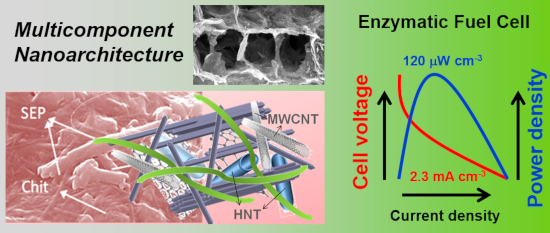
Multicomponent bionanocomposites based on clay nanoarchitectures for electrochemical devices
Beilstein J. Nanotechnol. 2019, 10, 1303–1315, doi:10.3762/bjnano.10.129
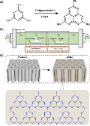
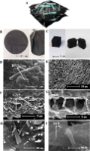
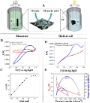
- nanocomposite interface. B) Effect of glucose on the Film-GOx sample in CV measurement in PBS, pH 7 and 0.1 mM of potassium ferricyanide at a scan rate of 5 mV·s−1. C) Sensor response as a function of the glucose concentration. The red line is a linear fit. ΔI = steady-state current at 0.45 V. D) LSV



A silver-nanoparticle/cellulose-nanofiber composite as a highly effective substrate for surface-enhanced Raman spectroscopy
Beilstein J. Nanotechnol. 2019, 10, 1270–1279, doi:10.3762/bjnano.10.126
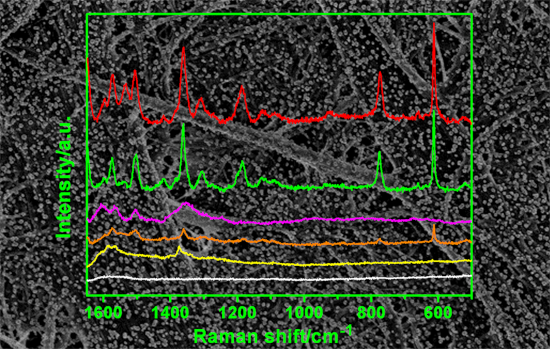
- bacterial nanocellulose adsorbed with gold nanoparticles in the form of a hydrogel had a detection limit of 1 × 10⁻⁹ M for R6G [54], the Au–Ag bimetallic microfluidic SERS sensor had a detection limit of 1 × 10⁻¹³ M for the same analyte [64]; and a detection limit of 1 × 10⁻⁶ M was offered by a hybrid


Angle-dependent structural colors in a nanoscale-grating photonic crystal fabricated by reverse nanoimprint technology
Beilstein J. Nanotechnol. 2019, 10, 1211–1216, doi:10.3762/bjnano.10.120
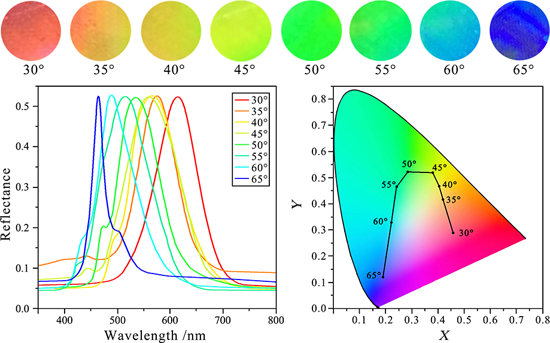
- , there is a blue-shift of the peak wavelength when the observation angle is increased. An equation for the observed wavelength as a function of the observation angle is proposed. Keywords: observation angle; photonic crystal; reverse nanoimprint lithography; structural color; visualized sensor
- ][17][18][19]. Duempelmann et al. fabricated asymmetric periodic nanostructures to explore the effects of the optical properties on the structural color [20]. Then, they used the photonic crystal as a strain sensor by mechanically changing the structural period to achieve the different structural
- experimental results, a function for reflection wavelength and observation angle is proposed. These results are useful for a possible application as visual sensor. Results and Discussion Figure 1 shows scanning electron microscopy (SEM) images of the photonic crystal with nanoscale grating pattern. The top


Direct growth of few-layer graphene on AlN-based resonators for high-sensitivity gravimetric biosensors
Beilstein J. Nanotechnol. 2019, 10, 975–984, doi:10.3762/bjnano.10.98
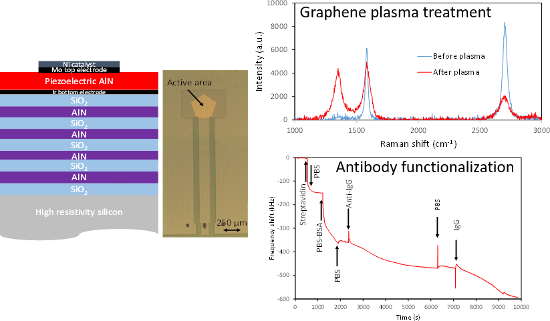
- quartz crystal microbalances (QCMs), and can be configured in sensor arrays and integrated (on-wafer or in-package) along with their driving electronics and microfluidic arrangements, offering compact and inexpensive measurement systems [5][6]. Among the wide variety of thin-film resonators exploiting
- sensor with the desired selectivity and sensitivity to the targeted species. Selectivity mainly depends on the specificity of the receptor (e.g., for proteins, aptamers or antibodies) to the targeted species and the non-specific binding degree of other species that can be achieved; effective
- also account for the observed trend. The response of the SMR-based gravimetric sensor is comparable to that obtained in similar biosensors subjected to a silane-based functionalization [24]. Non-covalent functionalization According to previous studies [25], non-covalent binding is possible on pristine


Experimental study of an evanescent-field biosensor based on 1D photonic bandgap structures
Beilstein J. Nanotechnol. 2019, 10, 967–974, doi:10.3762/bjnano.10.97
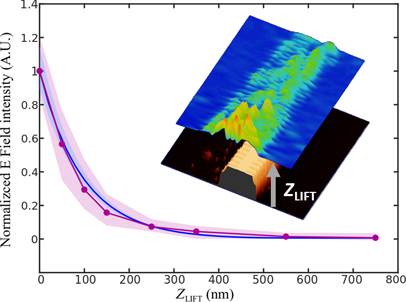
- sites towards the target sample. Then, the biofunctionalized PBG biosensor has been used to perform a direct and real-time detection of the target BSA antigen. Keywords: evanescent field; half-antibodies; light-assisted immobilization; photonic bandgap sensor; SNOM characterization; Introduction The
- that part of the optical mode going into the cladding, it is important to maximize that interaction. This is achieved for distances closer to the sensor surface, where the intensity of the evanescent field is higher. Therefore, to achieve an optimum biodetection performance, it is important to consider
- optical microscopy (SNOM) in order to determine how the interaction will vary with the distance to the sensor surface. This near-field characterization has demonstrated the importance of having biorecognition layers being as thin as possible in order to reach optimal sensitivities. Taking this requirement


On the transformation of “zincone”-like into porous ZnO thin films from sub-saturated plasma enhanced atomic layer deposition
Beilstein J. Nanotechnol. 2019, 10, 746–759, doi:10.3762/bjnano.10.74
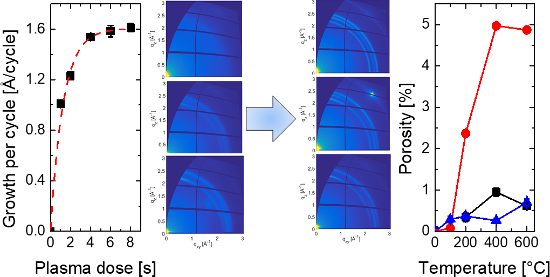
- layers, the THMS600 temperature stage was equipped with a custom-made humidity pump, and the principles of ellipsometric porosimetry (EP) were used. The relative humidity was monitored via a sensor in the measurement chamber (Sparkfun SHT-15) and tuned in the range of 0–95% [44]. In this way, pores with


Commercial polycarbonate track-etched membranes as substrates for low-cost optical sensors
Beilstein J. Nanotechnol. 2019, 10, 677–683, doi:10.3762/bjnano.10.67
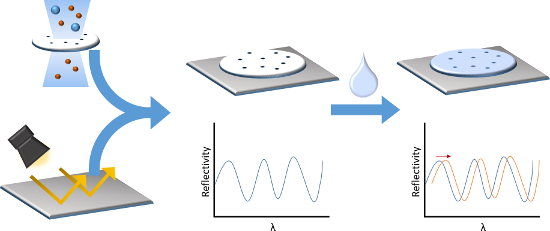
- porous sensors with such easily available mesoporous material. Keywords: chemical sensor; Fabry–Pérot interferometer; optical sensor; polycarbonate; track-etched membrane; Introduction Sensors are present in our daily life in order to detect and monitor chemical, biological and physical agents of
- an evanescent field with the target substance are the best known [2]. However, this kind of optical sensor presents a limited sensitivity, as only part of the light interacts with the substances of interest. To overcome this limitation, porous materials are a good option. Since they allow the
- shift registered for the first FTIR measurement after the deposition of the drop is the maximum shift achieved by the spectrum, as the liquid could have slightly evaporated during this time lapse [16] allowing the air to refill the pores. To check this, we calculated the sensitivity of our sensor





