Search results
Search for "dose" in Full Text gives 320 result(s) in Beilstein Journal of Nanotechnology. Showing first 200.
Sputtering of silicon nanopowders by an argon cluster ion beam
Beilstein J. Nanotechnol. 2019, 10, 135–143, doi:10.3762/bjnano.10.13
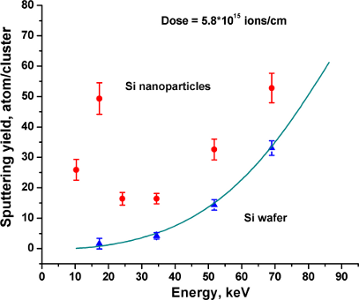
- (CeFITec), Dept. de Física da Faculdade de Ciências e Tecnologia (FCT), Universidade Nova de Lisboa, Caparica, 2829-516, Portugal 10.3762/bjnano.10.13 Abstract In this work an Ar+ cluster ion beam with energy in the range of 10–70 keV and dose of 7.2 × 10¹⁴–2.3 × 10¹⁶ cluster/cm2 was used to irradiate
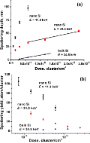
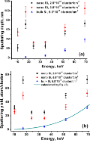
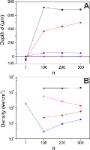
- pressed Si nanopowder targets consisting of particles with a mean diameter of 60 nm. The influence of the target density and the cluster ion beam parameters (energy and dose) on the sputtering depth and sputtering yield was studied. The sputtering yield was found to decrease with increasing dose and
- near 17 keV. The dose and energy dependence of the sputtering yield was explained by the competition of the finite size effect and the effect of debris formation. Keywords: finite size effect; gas cluster ion beam; silicon nanoparticles; smoothing effect; sputtering; Introduction Etching using gas





Wet chemistry route for the decoration of carbon nanotubes with iron oxide nanoparticles for gas sensing
Beilstein J. Nanotechnol. 2019, 10, 105–118, doi:10.3762/bjnano.10.10
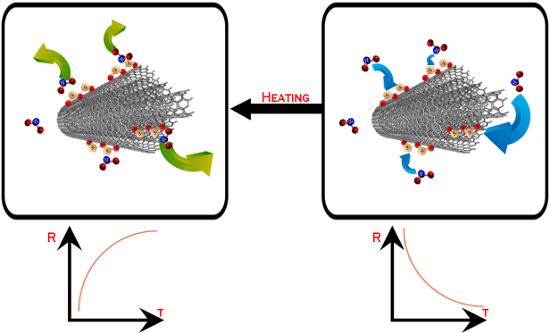
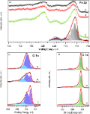
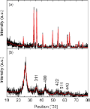
- particle size was not affected. Statistical analysis for the three samples shows that the average particle size of the NP does not increase when increasing the decoration dose. The mean particle size was found to be 3.44, 3.46 and 3.31 nm for decoration ratios of 1:1, 1:1.3 and 1:1.5, respectively (size
- ratio of 1:1 which is considered to be the optimum decoration ratio. By comparing these results to other results in the literature, we can conclude that there is an optimum decoration ratio which gives us the highest response, as the response increases with increasing decoration ratio dose until an




A comparison of tarsal morphology and traction force in the two burying beetles Nicrophorus nepalensis and Nicrophorus vespilloides (Coleoptera, Silphidae)
Beilstein J. Nanotechnol. 2019, 10, 47–61, doi:10.3762/bjnano.10.5
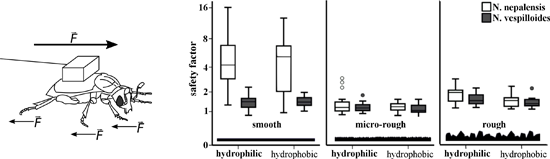
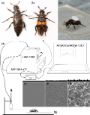
- local release might support shear-induced adhesion [46] and help to dose the secretion economically. In terms of the biological role, the higher attachment force in the pull direction might help the animals to climb effectively on a variety of structures such as plants and fur and might enable the males



Characterization and influence of hydroxyapatite nanopowders on living cells
Beilstein J. Nanotechnol. 2018, 9, 3079–3094, doi:10.3762/bjnano.9.286
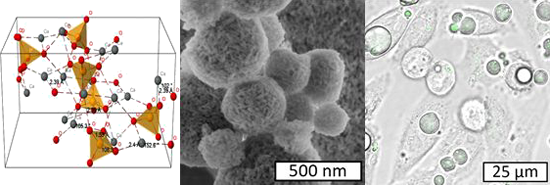
- studied cells. CHO cells are the most sensitive to HAp particles, which is visible in the large viability differences between the samples treated low and high HAp concentrations. The effect strongly depends on the dose and the type of hydroxyapatite. For example, HAp F202 and GoHAP600s differ greatly in
- , densities, pH value, NOAA size and stoichiometry was scrutinized for a better understanding of the interactions between nanoscale hydroxyapatite and cells. The biological impact depends on dose and physicochemical properties of the HAp particles and the cell nature. Toxic effects occur only in the case of a

![[Graphic 1]](/bjnano/content/inline/2190-4286-9-286-i2.svg?max-width=637&scale=1.18182) .
.



Size limits of magnetic-domain engineering in continuous in-plane exchange-bias prototype films
Beilstein J. Nanotechnol. 2018, 9, 2968–2979, doi:10.3762/bjnano.9.276
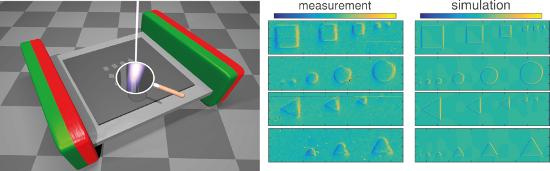
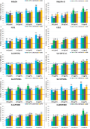
- regions, see Appendix) and therefore smaller thermally stable domains. The limitations correlated to the patterning process when using shadow masks, however, cause spatial broadening of the ion dose gradient. Since the concerned regions correspond to the DW regions, there is a strong impact on the actual
- separate points. To do so, the ion beam was defocused, leading to a probe diameter of 8 nm. The resolution was determined by the knife-edge method from the image sharpness [46]. The ion dose was chosen to be 1 × 10¹⁵ ions·cm−2 to induce a maximum change of HEB [47]. A Raith Elphy multibeam pattern
- bombarded and non-bombarded regions individually. Here, γ ≈ 0.577 is the Euler constant, μ0 = 4π × 10−7 N·A−2 is the vacuum permeability, and tf is the thickness of the FM layer. The saturation magnetization Ms as a function of the ion dose was measured in [35] for a similar material system (Ms,NB = 1226




![[Graphic 63]](/bjnano/content/inline/2190-4286-9-276-i63.svg?max-width=637&scale=1.18182) .
. ![[Graphic 64]](/bjnano/content/inline/2190-4286-9-276-i64.svg?max-width=637&scale=1.18182) is the angle between the domain wall (DW) normal vector
is the angle between the domain wall (DW) normal vector ![[Graphic 65]](/bjnano/content/inline/2190-4286-9-276-i65.svg?max-width=637&scale=1.18182) and the local unidirectio...
and the local unidirectio...
The nanoscaled metal-organic framework ICR-2 as a carrier of porphyrins for photodynamic therapy
Beilstein J. Nanotechnol. 2018, 9, 2960–2967, doi:10.3762/bjnano.9.275
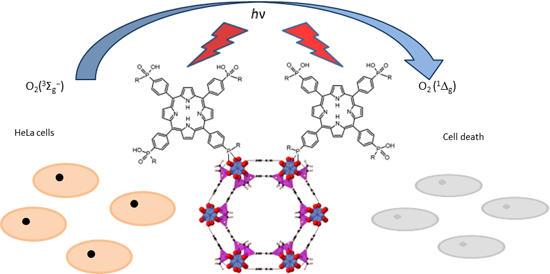
- photobiological experiments were performed after 4 h of incubation with the nanoparticles. The cellular uptake upon incubation with different concentrations of the nanoparticles yielded almost linear dose dependence (Figure 6C). Furthermore, the intracellular localization of nanoICR-2/TPPPi(Ph) was investigated
- identical conditions (e.g., irradiation wavelength, time, dose). We can compare the activity of nanoICR-2/TPPPi(Ph) with the activity of previously studied PCN-222 nanoparticles where both systems display comparable activity [22]. Conclusion In the context of photodynamic therapy, we present composite


Hybrid Au@alendronate nanoparticles as dual chemo-photothermal agent for combined cancer treatment
Beilstein J. Nanotechnol. 2018, 9, 2947–2952, doi:10.3762/bjnano.9.273
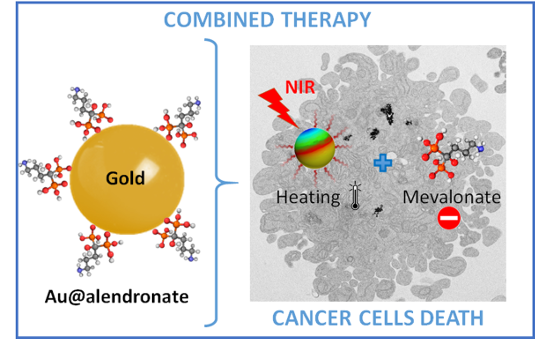
- under irradiation within the first biological window (650–900 nm). The Au@alendronate nanoplatform thus provided a combined antitumor activity through drug delivery and photothermal therapy. Au@alendronate NPs inhibited in vitro the proliferation of prostate cancer cells (PC3) in a dose-dependent manner
- observed in absence or presence of laser irradiation. This could be related to the low dose of internalized gold NPs and indicates that the laser power is sufficiently low to avoid nonspecific biological damage. At extracellular concentrations of alendronate over 1 µM, cell viability was considerably


Charged particle single nanometre manufacturing
Beilstein J. Nanotechnol. 2018, 9, 2855–2882, doi:10.3762/bjnano.9.266
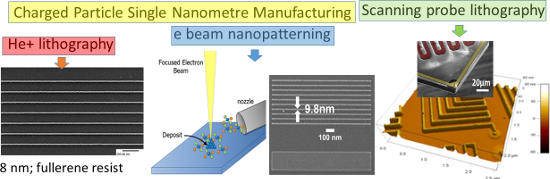
- : HM-01A using anisole solvent and HM-01C using chlorobenzene. The spin-coatability of the two formulations is shown in Figure 4a. Figure 5 shows 8 nm isolated lines written with a line dose of 0.08 nC·cm−1 in a 10 nm layer of HM-01A negative tone fullerene resist [41]. (Many novel resists require
- beam energy are shown in Figure 7 for dense features [41]. Figure 7a shows dense single-pixel features exposed at a line dose of 0.09 nC·cm−1. The SE contrast measurement reveals continuous lines with 8.5 nm line width and 17 nm pitch. Figure 7b shows that 6 nm lines on 12 nm pitch were resolvable but
- the lines were broken at a line dose of 0.04 nC·cm−1, which is equivalent to 25 ions per nanometre, i.e., a signal-to-noise ratio of 5:1. The line discontinuity is caused by shot noise producing missing pixels. Thus 6 nm represents the current limit of 1:1 dense features using SHIBL to expose HM-01A


Biomimetic surface structures in steel fabricated with femtosecond laser pulses: influence of laser rescanning on morphology and wettability
Beilstein J. Nanotechnol. 2018, 9, 2802–2812, doi:10.3762/bjnano.9.262
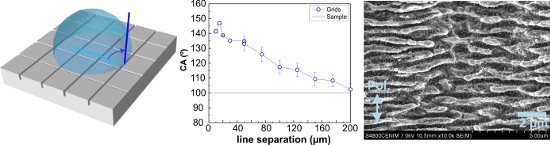
- , Neff_2D = 407), which are self-organized cone structures distributed over the irradiated surface. A higher fluence with a higher number of pulses evolves into nonuniform structures without any visible order, indicating an excessive energy dose and resulting in severe damage of the material ( = 2.3 J/cm2



Disorder in H+-irradiated HOPG: effect of impinging energy and dose on Raman D-band splitting and surface topography
Beilstein J. Nanotechnol. 2018, 9, 2708–2717, doi:10.3762/bjnano.9.253
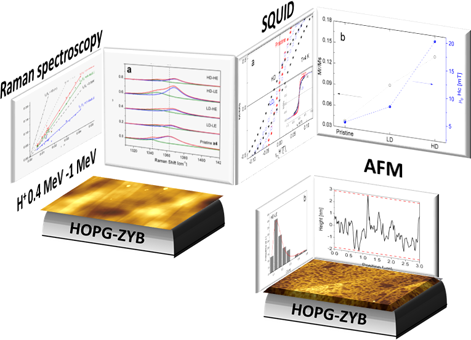
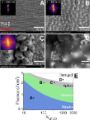
- technique to characterize different samples and gain new insights on the splitting of the D band into two components (D1 and D2), trying to correlate this feature of the vibrational spectrum with the impinging energy and dose. An increased ID2/IG ratio in comparison with ID1/IG was observed in the
- irradiated samples. This behavior indicates that the impinging energy mainly affects the D1 component, while the D2 component is strongly dominated by the dose. We expect a larger contribution of defects (originating from the rupture of C–C sp2 symmetry through the formation of C–H sp3 bonds) to the D2
- density of HOPG. Now, we intend to contribute to the understanding of structural changes in graphitic materials generated by intentional ion irradiation of HOPG surfaces. In this work we analyze the effect of dose and impinging energy of H+ ions on the D band of irradiated HOPG, which exhibits a double


Pattern generation for direct-write three-dimensional nanoscale structures via focused electron beam induced deposition
Beilstein J. Nanotechnol. 2018, 9, 2581–2598, doi:10.3762/bjnano.9.240




Cytotoxicity of doxorubicin-conjugated poly[N-(2-hydroxypropyl)methacrylamide]-modified γ-Fe2O3 nanoparticles towards human tumor cells
Beilstein J. Nanotechnol. 2018, 9, 2533–2545, doi:10.3762/bjnano.9.236
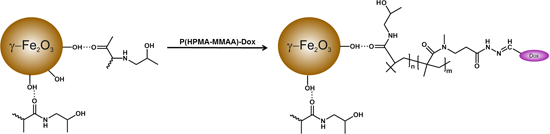
- induction of apoptosis [2][3]. However, its main shortcomings include dose-dependent cardio-, myelo-, and nephrotoxicity [4]. Moreover, Dox quickly disappears after intravenous administration from blood and concentrates in liver, kidneys, myocardium, spleen and lungs even if these organs are not the target
- normalized to blank controls, containing the equivalent volume of culture medium. Cytotoxicity was expressed as IC50 value calculated from full dose-response curves as drug concentration inducing 50% reduction in cell survival compared to the control cultured in parallel without the particles. The uptake
- , internalization of PHPMA-modified γ-Fe2O3 particles by the cells was restricted and the particles were localized mostly on the cell surface and in the perimembranous space, where Dox retained its activity. To get comparable dose-dependent data, the amount of Dox in P(HPMA-MMAA)-Dox added to the γ-Fe2O3@PHPMA


Phosphorus monolayer doping (MLD) of silicon on insulator (SOI) substrates
Beilstein J. Nanotechnol. 2018, 9, 2106–2113, doi:10.3762/bjnano.9.199
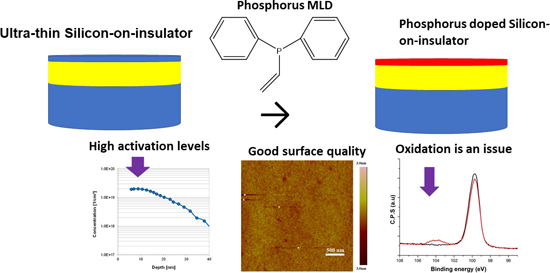
- comprehensive data set available in Table S1 (Supporting Information File 1). The sheet carrier concentration (CC, dose) values, from ac mode, are virtually the same for both the 13 and 66 nm substrates. This is due to the overall dose available being limited by surface coverage of the ADP dopant molecule
- . Consistent dose values produced by MLD are desirable when compared with fluctuations seen using other techniques. However, the volume of the 13 nm samples is significantly less than that of the 66 nm sample, which leads to a higher carrier concentration (CC, n; concentration = dose/thickness). This is a very
- to an increased dose with maximum active carrier concentration levels remaining at 2 × 1019 cm−3. This leads us to believe that the presence of SiO2 near the sample surface may be inhibiting the in-diffusion of the P dopant atoms. The final noteworthy aspect of this SIMS profile is the peak seen at




High-throughput synthesis of modified Fresnel zone plate arrays via ion beam lithography
Beilstein J. Nanotechnol. 2018, 9, 2049–2056, doi:10.3762/bjnano.9.194
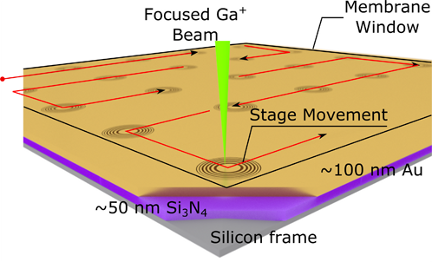
- cases, the drift correction can be unnecessary, but the MP-E can still be desired when a better dose distribution or a well-defined wall geometry is aimed for in structures with higher aspect ratio [38]. We have shown that a much faster process can be devised by employing a single-pass-exposure (SP-E


Defect formation in multiwalled carbon nanotubes under low-energy He and Ne ion irradiation
Beilstein J. Nanotechnol. 2018, 9, 1951–1963, doi:10.3762/bjnano.9.186
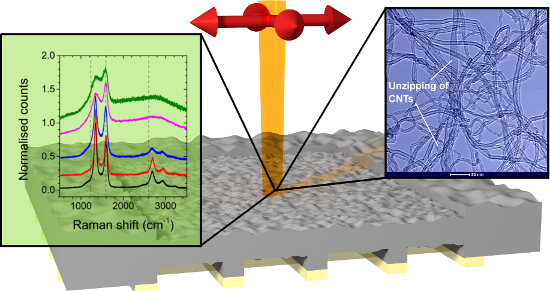
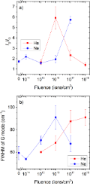
- samples and corresponding Raman spectra are shown in Figure 3. The images were acquired after He+ irradiation with a fluence of 1018 ions/cm2 (Figure 3A,B) and after Ne+ irradiation with a dose of 1017 ions/cm2 (Figure 3D,E). For both He+ and Ne+ irradiation, thin areas (Figure 3A,D) show that the



A differential Hall effect measurement method with sub-nanometre resolution for active dopant concentration profiling in ultrathin doped Si1−xGex and Si layers
Beilstein J. Nanotechnol. 2018, 9, 1926–1939, doi:10.3762/bjnano.9.184
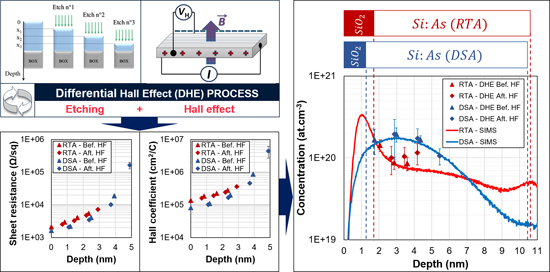
- ultrathin layers The Hall effect measurement is a well-known technique that allows one to access three important physical parameters for material characterization: the sheet resistance Rs, the active Hall dose NH and the Hall mobility µH. At first, a Van der Pauw technique is used to determine the sheet
- discontinuity throughout the two measurement runs. On the other hand, the sheet resistance RS constantly increases (while the Hall dose NH decreases) and exhibits a discontinuity between the two runs. Indeed, as the doping concentration is uniform throughout the doped layer, the associated carrier mobility is
- expected to remain invariant in the entire layer. In contrast, as the layer becomes thinner and thinner, the active Hall dose decreases and, for a fixed carrier concentration (and hence mobility), the increase of the sheet resistance is predicted by Equation 1: with Xj being the layer thickness, q the


Magnetic properties of Fe3O4 antidot arrays synthesized by AFIR: atomic layer deposition, focused ion beam and thermal reduction
Beilstein J. Nanotechnol. 2018, 9, 1728–1734, doi:10.3762/bjnano.9.164
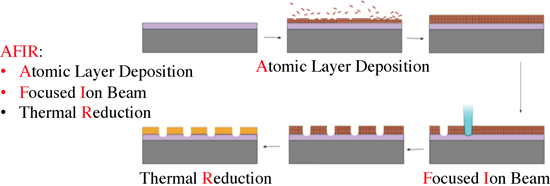
- dose of 30 mC/cm2. The dwell time was chosen to be sure that the ion beam completely perforated the Fe2O3 film and that the hole diameter was quite homogeneous, so at least 20 nm of the substrate were also etched. These antidot arrays are then placed into a furnace GSL-1100X from MTI Corporation, which
- of 40 μm diameter that allows one to isolate the magnetic signal from the rest of the magnetic film. The trench was etched using a 20 mC/cm2 ion beam dose. Moreover, for the sake of comparison, regions confined by a trench but without any pattering, i.e., Fe2O3 disks with 40 μm diameter, were also




Cathodoluminescence as a probe of the optical properties of resonant apertures in a metallic film
Beilstein J. Nanotechnol. 2018, 9, 1491–1500, doi:10.3762/bjnano.9.140
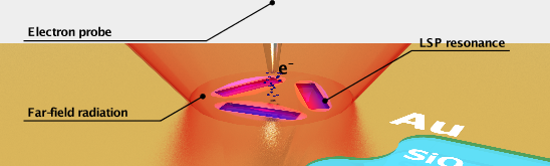
- different transverse parameters were milled using a helium ion microscope (Nanofab Orion, Zeiss) operating at an accelerating voltage of 30 kV and a beam current of 0.1 to 100 pA. A Fibics NPVE pattern generator was used to control the milling parameters such as dose, beam step size and dwell time. Test
- writing was performed on a 100 nm thick Au film on a borosilicate glass substrate. Initial exposures indicated a dose of 15 nC/cm2 as the optimal initial setting for the ion beam with a 1 µs dwell time and 50% beam overlap. The optimised ion beam current selected for milling was 1.5–2.4 pA, producing the


Cr(VI) remediation from aqueous environment through modified-TiO2-mediated photocatalytic reduction
Beilstein J. Nanotechnol. 2018, 9, 1448–1470, doi:10.3762/bjnano.9.137
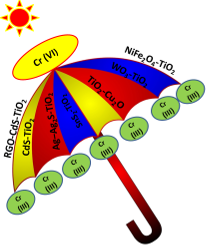
- increased by increasing the photocatalyst dose [154]. Ku et al. reported that the combination of ZnO on the surface of TiO2 at a higher calcination temperature (>500 °C) prevents the transformation of anatase to rutile phase. It also enhances the specific surface area of the ZnO/TiO2 composite by inhibiting


Nanoporous silicon nitride-based membranes of controlled pore size, shape and areal density: Fabrication as well as electrophoretic and molecular filtering characterization
Beilstein J. Nanotechnol. 2018, 9, 1390–1398, doi:10.3762/bjnano.9.131
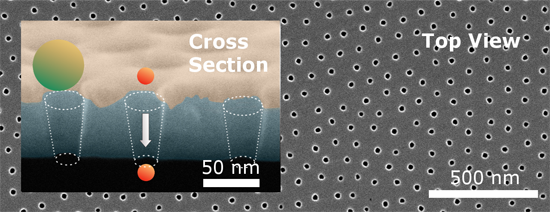
- allows for the optimization of the molecule-specific illumination dose. Typically, with a sampling time between 0.5 and 2 min, the total measurement time was varied from 1 to 4 h. The intensity of the fluorescent emission signal was determined by summing up the 16-bit signals of three different pixel


Review on nanoparticles and nanostructured materials: history, sources, toxicity and regulations
Beilstein J. Nanotechnol. 2018, 9, 1050–1074, doi:10.3762/bjnano.9.98



Graphene composites with dental and biomedical applicability
Beilstein J. Nanotechnol. 2018, 9, 801–808, doi:10.3762/bjnano.9.73
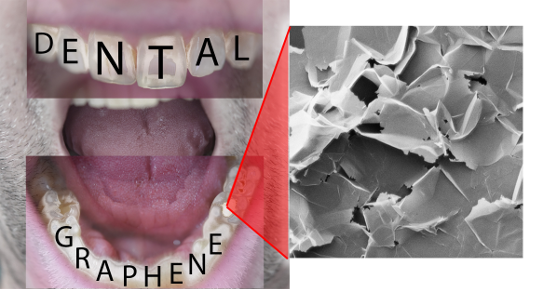
- and thought to be non-cytotoxic [9][10][11][12][13], but as toxicity depends on many factors such as size, shape, concentration and dose further studies with regard to specific applications are needed. Therefore, the aim of these experiments was to assess the use of graphene with a glass-ionomer (GI


Electron interactions with the heteronuclear carbonyl precursor H2FeRu3(CO)13 and comparison with HFeCo3(CO)12: from fundamental gas phase and surface science studies to focused electron beam induced deposition
Beilstein J. Nanotechnol. 2018, 9, 555–579, doi:10.3762/bjnano.9.53
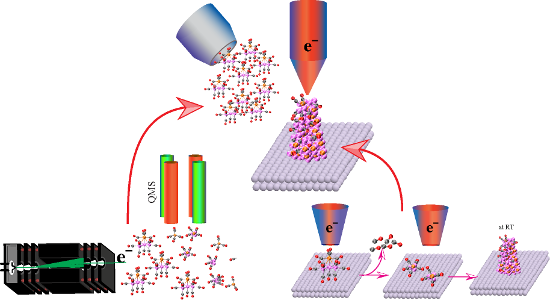
- monitored in situ by X-ray photoelectron spectroscopy (XPS) and mass spectrometry. Figure 9 shows the evolution of the O 1s, Fe 2p and Ru 3d/C 1s XPS regions of a nanometer-thick film of H2FeRu3(CO)13 adsorbed onto a gold substrate at 213 K, plotted as a function of increasing electron dose. Area analysis
- low intensity. Upon electron irradiation, the Ru 3d3/2 and Ru 3d5/2 peak positions shift measurably towards a lower binding energy, and the CO peak decreases in intensity. Spectral fitting of the Ru 3d/C 1s XPS region measured after an electron irradiation of a dose of 1.4 × 10¹⁸ e−/cm2 reveals an
- changes as electron irradiation, but at a much slower rate. Based on the variation in the O 1s area we estimate that the time taken to acquire one XPS scan of the O 1s, Fe 2p and C 1s/Ru 3d regions corresponds to an electron dose of ≈6.3 × 10¹⁴ e−/cm2. Consequently, the effect of X-ray irradiation during


Single-step process to improve the mechanical properties of carbon nanotube yarn
Beilstein J. Nanotechnol. 2018, 9, 545–554, doi:10.3762/bjnano.9.52
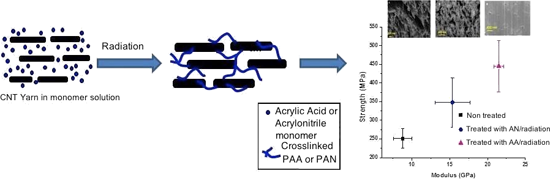
- , Acros Organics, 99+%). All chemical reagents were used as received. The irradiation process was carried out in an industrial accelerator operated by NEO Beam – Mercury Plastics, Inc – Middlefield-OH, 3.8 MeV beam energy, pulse current 38.3 mA, 27 kGy/pass with dose rate of 5 kGy/s. Sample preparation A
- a dose of 27 kGy. The low dose of 27 kGy was chosen for this preliminary investigation because only functionalization on the MWNT powder surface was desired. The aim of this preliminary study was to verify the conversion of AN to PAN on the MWNT powder surface under e-beam irradiation. An aqueous
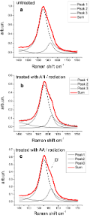
- electronic band structure of the graphitic material. There was a decrease of the G′ peak FWHM from 117.51 cm−1 (untreated sample) to 109.51 cm−1 (treated with 80% AN and irradiated with a dose of 108 kGy) and 105 cm−1 (treated with 80% AA and irradiated with a dose of 108 kGy) (Figure 3). This happens




Green synthesis of fluorescent carbon dots from spices for in vitro imaging and tumour cell growth inhibition
Beilstein J. Nanotechnol. 2018, 9, 530–544, doi:10.3762/bjnano.9.51
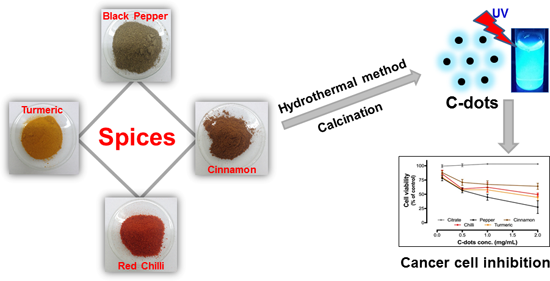
- -dots in the cancer cultures compared to the non-cancerous cells. Results showed that the spice-derived C-dots inhibited cell viability dose-dependently after a 24 h incubation period, displaying a higher toxicity in LN-229, than in HK-2 cells. As a control, C-dots synthesized from citric acid did not
- effect of the same concentration of C-dots on LN-229 cells, the cinnamon C-dots were the least toxic. For instance, at a dose of 2 mg·mL−1 cinnamon C-dots induced around 35% reduction in cell viability, followed by both red chilli and turmeric C-dots, which induced nearly 50% reduction in cell viability