


Search results
Search for "electrode" in Full Text gives 612 result(s) in Beilstein Journal of Nanotechnology. Showing first 200.
Atomic layer deposition for efficient oxygen evolution reaction at Pt/Ir catalyst layers
Beilstein J. Nanotechnol. 2020, 11, 952–959, doi:10.3762/bjnano.11.79
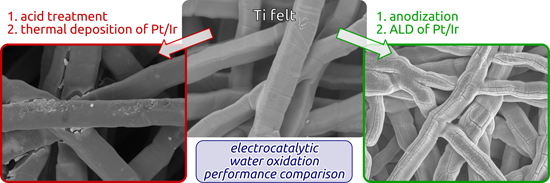
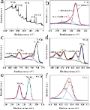
- , Universitetskii pr. 26, 198504 St. Petersburg, Russia 10.3762/bjnano.11.79 Abstract We provide a direct comparison of two distinct methods of Ti felt surface treatment and Pt/Ir electrocatalyst deposition for the positive electrode of regenerative fuel cells and vanadium–air redox flow batteries. Each method is
- of some RFBs (such as the vanadium–air RFB). The positive electrode of these devices has to perform the challenging OER and ORR on one material system. A bimetallic Pt/Ir electrocatalyst is used most commonly as it provides minimal overpotentials under strongly acidic conditions [3][8][9][10]. The
- methods [12] as well as particles of various sizes [13] and shapes [14]. However, each study is presented as a self-sufficient piece of work with limited critical comparison to the state of the art. The conditions under which electrochemical performance is quantified (electrode substrate, electrolyte


Templating effect of single-layer graphene supported by an insulating substrate on the molecular orientation of lead phthalocyanine
Beilstein J. Nanotechnol. 2020, 11, 814–820, doi:10.3762/bjnano.11.66
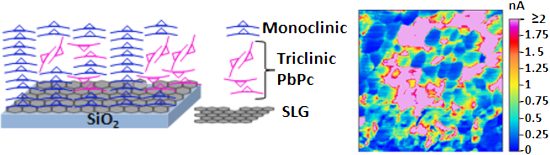
- materials [10][11]. A single-layer of graphene can serve as a transparent conducting electrode and function as donor or acceptor when combined with suitable organic counterparts [12][13]. However, graphene itself is supported on a rigid substrate for device integration and, hence, it is important to
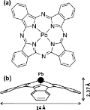
- the PbPc layer is sandwiched between the conductive graphene layer, which served as a bottom electrode, and the Cr/Au tip (diameter < 35 nm and k = 0.18 N·m−1, MikroMasch, USA), serving as a top electrode. Chemical structure of lead phthalocyanine. (a) Top view and (b) side view of a Pb(II)Pc molecule


Nickel nanoparticles supported on a covalent triazine framework as electrocatalyst for oxygen evolution reaction and oxygen reduction reactions
Beilstein J. Nanotechnol. 2020, 11, 770–781, doi:10.3762/bjnano.11.62
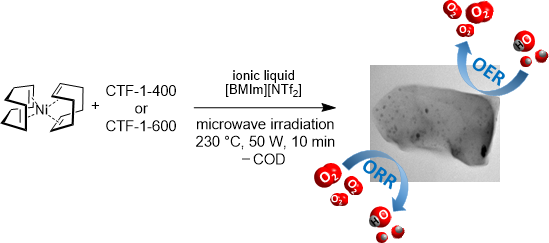
- group of Prof. Fan, Co3O4/CTF1-700-1:1 has been studied as ORR catalyst and showed a half-wave potential of 0.84 V vs a reversible hydrogen electrode (RHE) [20]. Kamiya et. al. synthesized a Pt-atom-modified CTF hybridized with conductive carbon nanoparticles and used it as an ORR catalyst [36]. The
- /CTF-1-400-20, whereas 7 atom % N is involved in bonding to Ni for Ni/CTF-1-600-22. Electrochemical catalysis In order to investigate the activity of the synthesized materials in the OER, rotating disc electrode (RDE) experiments were conducted in 1 mol/L KOH solution in a three-electrode cell. Figure
- confirm the reproducibility. The obtained materials were designated as Ni/CTF-1-400-X and Ni/CTF-1-600-X, where X represents the weight percentage of nickel in the composite materials according to AAS. Electrochemical measurements A three-electrode cell was used for the electrochemical measurements on a


Structural optical and electrical properties of a transparent conductive ITO/Al–Ag/ITO multilayer contact
Beilstein J. Nanotechnol. 2020, 11, 695–702, doi:10.3762/bjnano.11.57
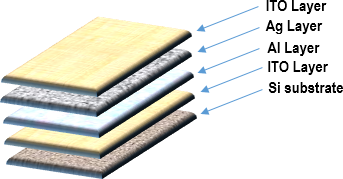
- indium metal is needed [9][10][11]. The insertion of a metal layer reduces the transparency of the ITO electrode due to opaqueness of the metal, but selecting an optimal metal thickness can effectively decrease the reflection from the metal film and thus enhance the transmittance. Furthermore, it gives
- of an ITO sandwich electrode with Ag alloy against heat treatment at 450 °C was carried out by Roh et al. [30]. An appreciable durability and stability of the Ag films was observed. In the present work, the structural, optical and electrical properties of an Al–Ag bilayer between ITO layers (ITO/Al


A novel dry-blending method to reduce the coefficient of thermal expansion of polymer templates for OTFT electrodes
Beilstein J. Nanotechnol. 2020, 11, 671–677, doi:10.3762/bjnano.11.53
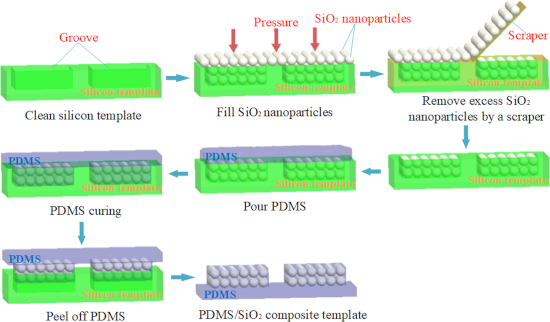
- Telecommunications, Xi’an 710121, China 10.3762/bjnano.11.53 Abstract Among the patterning technologies for organic thin-film transistors (OTFTs), the fabrication of OTFT electrodes using polymer templates has attracted much attention. However, deviations in the electrode alignment occur because the coefficient of
- silver target of 60 × 5 mm in size and purity of 99.99% as the OTFT electrode material was purchased from ZHNOGNUO New Material Co., Ltd., (Beijing, China). Pentacene as the semiconductor layer was used as purchased from Sigma-Aldrich and dissolved to a concentration of 5% in 1,2-dichlorobenzene
- gate and source–drain through a printing process [3][23]. The same experiment was performed using the 20 wt % wet-blended template, as shown in Figure 6. Figure 6a shows the electrode alignment of the PDMS/SiO2 composite template (20 wt %) prepared via wet blending. There are deviations in the


Exfoliation in a low boiling point solvent and electrochemical applications of MoO3
Beilstein J. Nanotechnol. 2020, 11, 662–670, doi:10.3762/bjnano.11.52

- , the MoO3 dispersion in 2-butanone retains its intrinsic nature even after exposure to sunlight for 24 h. The composites of MoO3 nanosheets were used as an electrode material for supercapacitors and showed a high specific capacitance of 201 F·g−1 in a three-electrode configuration at a scan rate of 50
- was not altered after exposure to sunlight (UV radiation) for 24 h. The exfoliated MoO3 was used as electrode material for supercapacitor applications. The specific capacitance values were as high as 221 F·g−1 at 5 mV·s−1 with good rate capability and capacitance retention in a three-electrode system
- Zetasizer NanoZS. All electrochemical measurements were carried out using Autolab PGSTAT302N. Electrode preparation and electrochemical testing Three-electrode system: A glassy carbon electrode (GCE, 0.3 cm diameter) as the working electrode, Pt wire as counter electrode and a saturated calomel electrode

Comparison of fresh and aged lithium iron phosphate cathodes using a tailored electrochemical strain microscopy technique
Beilstein J. Nanotechnol. 2020, 11, 583–596, doi:10.3762/bjnano.11.46
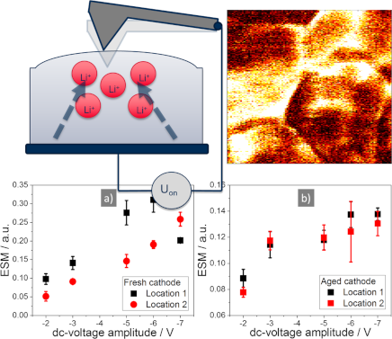
- characterization The ESM analysis was conducted inside of particles of the cross-sections of the fresh and aged cathodes. Two examples of the cross-section structure of the cathodes are given in Figure 1. In Figure 1a the fresh and in 1b the aged cathode cross-section is shown. The electrode consists of particles
- the aged full cell after cycling. Due to the anode contribution to the capacity loss in the commercial full cell setup, the cathode was additionally analysed separately. The cathode ageing is observed in the Nyquist plot in Figure S2 from the fresh and aged cathode vs lithium metal reference electrode
- in a three-electrode test cell. More information about the experimental setup is given in Supporting Information File 1. Following the approach proposed in the literature, the first semi-circle at high frequencies is assigned to the cathode and the second semi-circle at mid frequencies to the lithium



Electrochemically derived functionalized graphene for bulk production of hydrogen peroxide
Beilstein J. Nanotechnol. 2020, 11, 432–442, doi:10.3762/bjnano.11.34
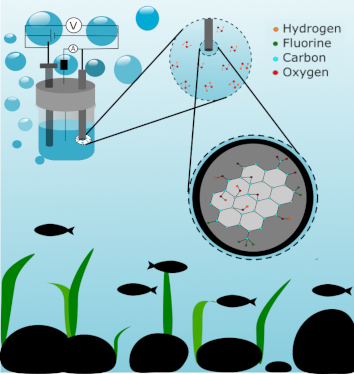
- , and hence their economic viability for the future technologies is highly questionable [10][24][25][26][27]. Hence new metal-free electrode materials for H2O2 generation are highly sought after for future technologies. Recently, carbon-based catalysts have emerged as an alternate material for existing
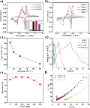
- electrolyte concentration also determines the extent of functionalization of graphene. The presence of the C=O groups is further confirmed by cyclic voltammetry (CV) measurements in alkaline and acidic electrolyte. The CV profiles of the EEG samples (EEG-modified glassy carbon electrode (GCE) as the working
- electrode in a three-electrode set up) in the acidic and alkaline medium between −0.2 to 1.2 V vs RHE at 100 mV/s scan rate are shown in Figure 2. Two distinct features observed in the CV profiles are: the difference in the area under the curve of the different EEG samples, which indicates the difference in


Implementation of data-cube pump–probe KPFM on organic solar cells
Beilstein J. Nanotechnol. 2020, 11, 323–337, doi:10.3762/bjnano.11.24
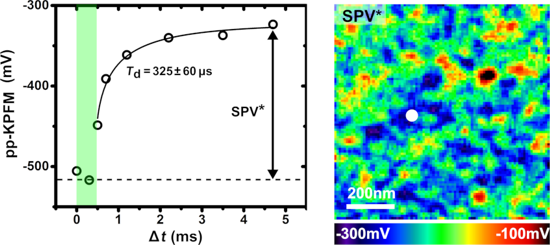
- drain electrode of the transistor. In a later study, Schumacher et al. [24] used optical pumping in a pp-KPFM approach to probe the photocarrier lifetime in GaAs samples grown at low temperature. In organic BHJ solar cells, electron donor and acceptor materials are processed to form two interpenetrated
- of the photocarriers [36]. We now focus on the photoresponse of the phase-segregated organic blend, i.e., the photoactive layer of the device without the cathode electrode, given by configuration 2 in Figure 3b. The surface morphology of the PTB7:PC71BM blend (Figure 7a) is consistent with that
- levels of holes and electrons upon illumination, symbolized by dotted lines. (b) Organic BHJ solar cell and experimental configuration. The sample is illuminated in backside geometry. The transparent anode, the hole collecting electrode made of indium tin oxide coated with PEDOT:PSS, is grounded. The





High-performance asymmetric supercapacitor made of NiMoO4 nanorods@Co3O4 on a cellulose-based carbon aerogel
Beilstein J. Nanotechnol. 2020, 11, 240–251, doi:10.3762/bjnano.11.18
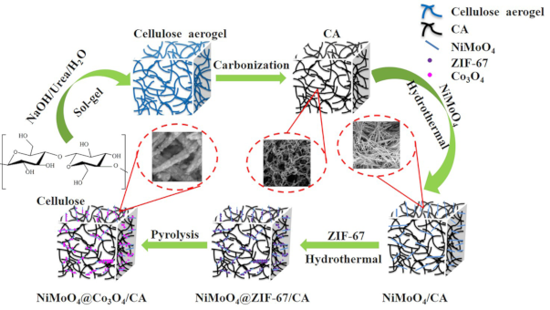
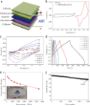
- the NiMoO4@Co3O4/CA ternary composite as the positive electrode and activated carbon as the negative electrode. The ASC device exhibits a large capacitance of 125.4 F/g at 0.5 A/g, a maximum energy density of 34.1 Wh/kg at a power density of 208.8 W/kg as well as a good cyclic stability (84% after
- ), the capacitance of which originates from the electrostatic adsorption of reversible ions at the electrode/electrolyte interface, and pseudocapacitors, for which the capacitance arises from reversible Faradaic reactions correlating with electroactive species [7][8]. Compared to EDLCs, pseudocapacitors
- can provide a much higher specific capacitance as a result of rapid reversible redox reactions [9][10]. Recently, advanced electrode materials based on transition metal molybdates such as NiMoO4 [11], CoMoO4 [12], MnMoO4 [13] and FeMoO4 [14] with suitable oxidation states and unique electrochemical




Nonequilibrium Kondo effect in a graphene-coupled quantum dot in the presence of a magnetic field
Beilstein J. Nanotechnol. 2020, 11, 225–239, doi:10.3762/bjnano.11.17
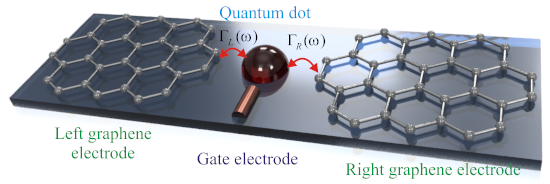
- Kondo temperature. In a recent study, the thermoelectric properties of a noninteracting QD coupled to massless Dirac fermions have been analyzed using the EOM technique [38]. At low temperature, by tuning the voltage of the metallic gate electrode, this QD system reaches large values of thermopower and
- heterostructure consisting of a two dimensional electron gas. The energy of the confined electrons can be changed using a gate electrode [30]. The Coulomb repulsion energy in the QD is assumed to be U ≈ 480 meV, i.e., U/D = 0.069, an acceptable value for magnetic impurities in graphene [56][57][58]. To estimate
- between the nonequilibrium Kondo resonances is equal to the difference of the values of the chemical potentials, eV = Δμ. The suppression of the peak amplitudes is caused by the dissipative transitions of electrons between the electrode of high chemical potential and the electrode of low chemical


Molecular architectonics of DNA for functional nanoarchitectures
Beilstein J. Nanotechnol. 2020, 11, 124–140, doi:10.3762/bjnano.11.11

- of the advantages of this system was that the DNA–multichromophore organization could be aligned vertically over the gold electrode, which facilitated exothermic charge separation and suppressesed the ground-state charge transfer (CT) complexation between DPP and NDI, followed by the generation of a
- photocurrent (Figure 7b). However, the randomly assembled array of DPPNDI–dT40 immobilized across the gold electrode was unable to generate any photocurrent response owing to ground-state CT complexation of DPP with NDI in their random arrangement (Figure 7c). Tanaka, Ono, and co-workers reported the


Nanosecond resistive switching in Ag/AgI/PtIr nanojunctions
Beilstein J. Nanotechnol. 2020, 11, 92–100, doi:10.3762/bjnano.11.9
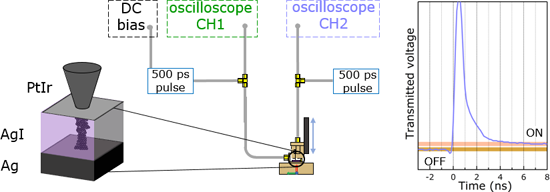
- ][27] have been promoted in terms of the “atomic switch” by K. Terabe et al. utilizing Ag2S as the ionic conductor medium [28]. The roles of the matrix, the electrode, and their interfaces in the filament formation have been extensively investigated covering a broad range of materials systems [4
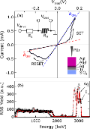
- memristor was determined numerically as Vbias = Vdrive − I·RS. As a polarity convention, a positive bias corresponds to a higher potential applied on the planar Ag electrode with respect to the PtIr tip. A representative I(V) trace acquired within 400 ms is exemplified in Figure 1a. Bipolar resistive



Simple synthesis of nanosheets of rGO and nitrogenated rGO
Beilstein J. Nanotechnol. 2020, 11, 68–75, doi:10.3762/bjnano.11.7
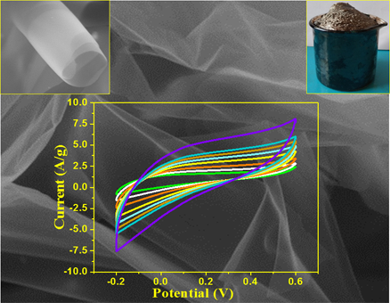
- voltammetry and CD experiments with three-electrode system using 1 M H2SO4 as electrolyte (Figure 8). CV curves of rGO and H-rGO at different scan rates from 5 to 200 mV·s−1 vs Hg/Hg2SO4 are shown in Figure 8a and Figure 8b, respectively. These curves show increase in current density with decreasing scan rate
- , respectively. We have checked the rate capability of the working electrode at different scan rates of 10, 20, 40, 60, 80, 100, and 200 mV·s−1 and observed that the specific capacitance values were 96, 64, 43, 35, 30, 27 and 19 F·g−1, respectively (Figure 8c). For comparison, the charge–discharge (CD) curves
- stability (Figure 9). We compared our result with other materials reported recently (Table 1). For conductivity measurements, the H-rGO sample was dispersed in ethanol and drop-cast on a gold gap electrode. The average resistance measured using a Keithley source meter is ca. 4 MΩ. The corresponding


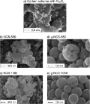
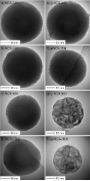
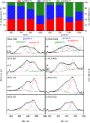
Synthesis of amorphous and graphitized porous nitrogen-doped carbon spheres as oxygen reduction reaction catalysts
Beilstein J. Nanotechnol. 2020, 11, 1–15, doi:10.3762/bjnano.11.1
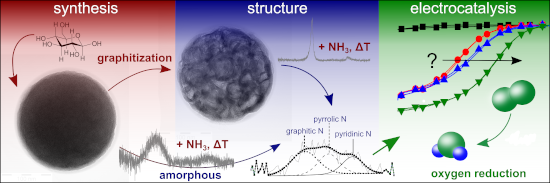
- measurements under controlled electrolyte transport, employing a rotating ring disk electrode (RRDE) setup (section 2 in “Results and Discussion”). We will compare the ORR performance with those of the previously reported TiON@NCS and TaON@NCS composite materials. A more detailed account of the electrochemical
- resolution of 5 cm−1 (50 µm slit-like pinhole) with an exposure time of 5 s (10 accumulations). Electrode preparation and electrochemical measurements The catalyst thin-film electrode (catalyst loading of 0.285 mg·cm−2 for Pt-free catalyst, 140 μg·cm−2 loading (Pt loading: 28 μg·cm−2) for the 20 wt % Pt/C E
- a N2 stream. With these loadings we could form homogeneous, thin and stable catalyst layers on the electrode. The resulting film was covered with the same volume of a 1 wt % aqueous Nafion solution and dried again to ensure the mechanical stability of the catalyst layer on the glassy carbon without




Antimony deposition onto Au(111) and insertion of Mg
Beilstein J. Nanotechnol. 2019, 10, 2541–2552, doi:10.3762/bjnano.10.245
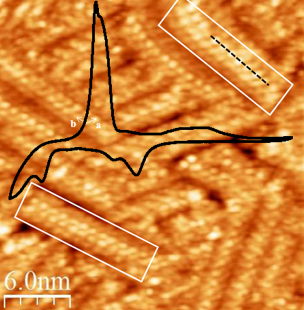
- ) electrolyte into/from a Sb-modified electrode shows a positive shift (400 mV) of the onset potential of Mg deposition compared to that of a bare Au electrode. From the charge of the Mg deposition, we find that the ratio of Mg to Sb is 1:1, which is somewhat less than expected for the Mg3Sb2 alloy. Keywords
- electrodeposited Bi0.88Sb0.12 alloy by Arthur et al. [7]. However, the capacity declines to 215 mAh/g after 100 cycles with an electrolyte mixture of ethylmagnesium chloride, diethylaluminum chloride and anhydrous THF. A detailed, fundamental study of magnesium deposition/dissolution at a Sb-modified Au electrode
- deposition on a Au electrode was carried out by Jung [8], who found that antimony deposition on Au(100) and Au(111) in acid electrolyte undergoes two electrochemical processes involving an irreversible adsorption and underpotential deposition. This irreversible adsorption was attributed to oxygenous Sb(III






Mobility of charge carriers in self-assembled monolayers
Beilstein J. Nanotechnol. 2019, 10, 2449–2458, doi:10.3762/bjnano.10.235
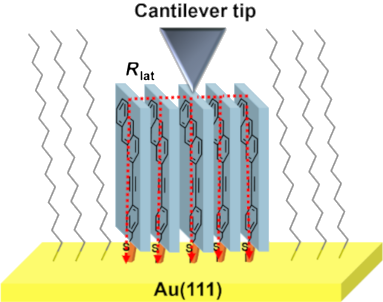
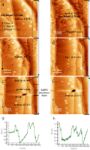
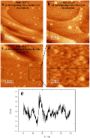
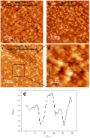
- a top electrode. We were able to determine a relationship between island size and electrical conductivity, and from this dependence, we could obtain information on the lateral charge transport and charge carrier mobility within the thin OSC layers. Our study demonstrates that AFM nanografting of
- determination of apparent heights of islands from STM data is somewhat indirect, the conductivities of the patterned areas were determined directly by means of highly sensitive current measurements, where the conductive tip of the AFM is used as a top electrode. This setup allows determining the topography and


Semitransparent Sb2S3 thin film solar cells by ultrasonic spray pyrolysis for use in solar windows
Beilstein J. Nanotechnol. 2019, 10, 2396–2409, doi:10.3762/bjnano.10.230
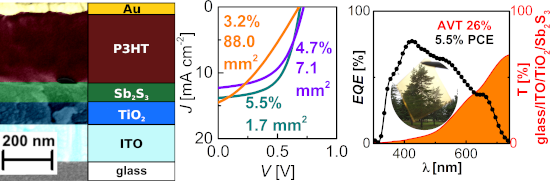
- particular case, however, the spacer effect also occurs in the EQE spectra at wavelengths above 600 nm, for which the light reaches deepest into Sb2S3 and closer to the back electrode. Hence, more sophisticated analyses might be appropriate for the complete depiction of the impact of Sb2S3 thickness on
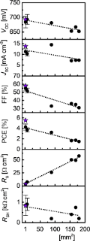
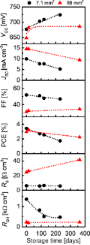
- (99.5% v/v), then dried at 50 °C for 10 min in air, and further dried in vacuum (≤4 × 10⁻⁶ torr) for 5 min. The solar cells were completed by depositing the Au counter electrode by thermal evaporation in vacuum (<2 × 10⁻⁴ torr). The cells with areas of 1.7 mm2 and 7.1 mm2 were prepared with the use of



Polyvinylpyrrolidone as additive for perovskite solar cells with water and isopropanol as solvents
Beilstein J. Nanotechnol. 2019, 10, 2374–2382, doi:10.3762/bjnano.10.228
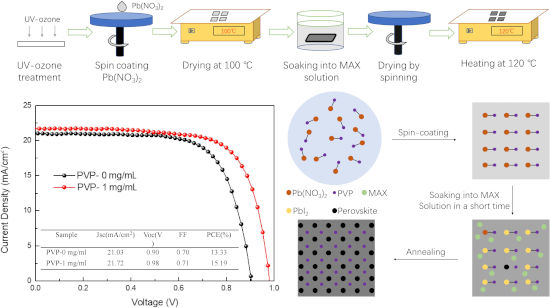
- cell (iPSC), Pengcheng Zhou et al. managed to achieve a signifanct boost in efficiency [30]. The photovoltaic properties of inverted polymer solar cells using a PVP-modified indium tin oxide (ITO) layer as the electron-collecting electrode were reported on by J. W. Shim and co-workers [31]. In this
- chlorobenzene) at 4500 rpm for 20 s. The above preparation process was carried out under ambient conditions. Finally, the devices were completed by using thermal evaporation and deposited on an Au electrode. Characterization Field-emission scanning electron microscopy (FESEM) images were obtained with a ZEISS
- cm2. All samples were measured in air (25 °C). Results and Discussion Figure 1 illustrates how the PSCs were prepared. The PSCs of this study comprises a SnO2 electron transfer layer (ETL), a MAPbI3 coating, a Spiro-OMeTAD HTL as well as a gold electrode. In a first step, the perovskite layer was




Multiwalled carbon nanotube based aromatic volatile organic compound sensor: sensitivity enhancement through 1-hexadecanethiol functionalisation
Beilstein J. Nanotechnol. 2019, 10, 2364–2373, doi:10.3762/bjnano.10.227
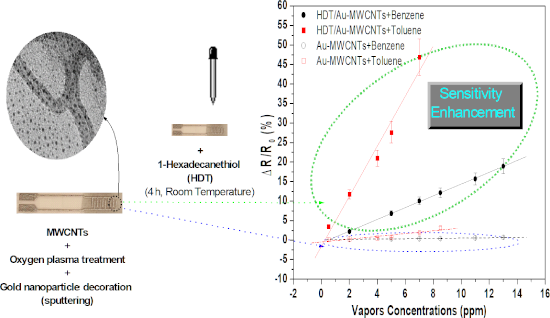
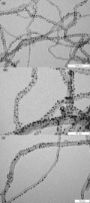
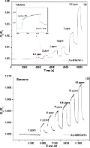
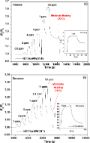
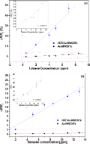
- of trace concentrations of toluene in exhaled breath is associated with lung cancer and can therefore be considered as a biomarker for this pathology [2][3][4]. A gas sensor is generally composed of an active sensing film or material deposited on an electrode. The sensing performance is strongly
- decoration of MWCNTs Prior to their deposition on the interdigitated electrode surface, the MWCNTs were treated by oxygen plasma to create oxygen vacancies on the walls of the CNTs in order to enhance their surface reactivity [14][15]. The detailed description of the experimental steps undertaken is
- presented in Supporting Information File 1 [16][17][18]. The MWCNTs were then dispersed in dimethylformamide (DMF) (0.1 mg MWCNTs in 1 mL of DMF) using an ultrasonic bath for 20 minutes at room temperature. Then, they were air-brush deposited over the platinum interdigitated electrode area of alumina




Adsorption and desorption of self-assembled L-cysteine monolayers on nanoporous gold monitored by in situ resistometry
Beilstein J. Nanotechnol. 2019, 10, 2275–2279, doi:10.3762/bjnano.10.219
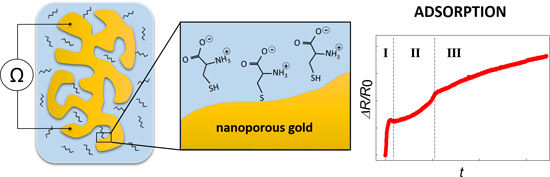
- an Autolab PGSTAT204 potentiostat, the others for four-point resistance measurements with a Keithley 2400 Source Meter. For a more detailed description of the resistometry setup, the reader is referred to our previous work [9]. An electrochemical cell was set up in three-electrode geometry, using a
- commercial Ag/AgCl reference electrode (saturated KCl with a 3 M KNO3 salt bridge), relative to which all potentials will be stated in the following. Whenever the cell electrolyte was changed, the setup was immersed in distilled water for several hours for rinsing. Dealloying was performed in 0.1 M HClO4
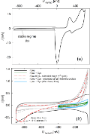
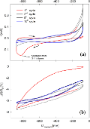
- with a Pt-wire counter electrode under chronoamperometric conditions at UAg/AgCl = 1100 mV until the current had fallen below 50 μA. For all following procedures, a carbon fabric served as the counter electrode. After dealloying, the sample was cleaned from the primary oxide [10] by cyclic voltammetry

Four self-made free surface electrospinning devices for high-throughput preparation of high-quality nanofibers
Beilstein J. Nanotechnol. 2019, 10, 2261–2274, doi:10.3762/bjnano.10.218
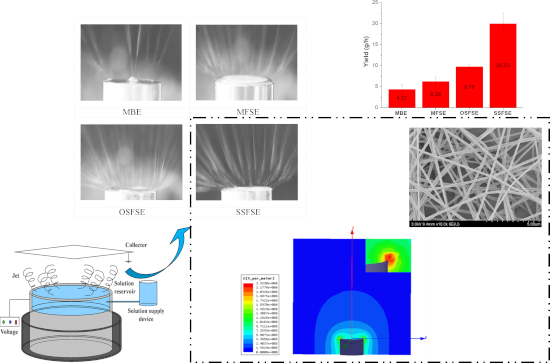
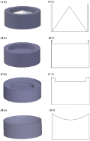
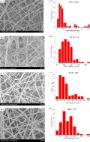
- high-throughput tipless electrospinning via a circular cylindrical electrode. Shin et al. [19] used a multiple vertical rod setup for needleless ES to fabricate submicrometer polymer fibers. Moon et al. developed a syringeless electrospinning technique with a helically probed rotating cylinder for








Design and facile synthesis of defect-rich C-MoS2/rGO nanosheets for enhanced lithium–sulfur battery performance
Beilstein J. Nanotechnol. 2019, 10, 2251–2260, doi:10.3762/bjnano.10.217
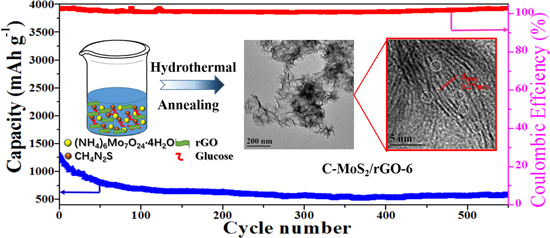
- composite with both large surface area and high porosity for the use as advanced electrode material in lithium–sulfur batteries. Double modified defect-rich MoS2 nanosheets are successfully prepared by introducing reduced graphene oxide (rGO) and amorphous carbon. The conductibility of the cathodes can be
- specific capacity of 572 mAh·g−1 at 0.2C after 550 cycles, and 551 mAh·g−1 even at 2C, much better than that of MoS2-S nanosheets (249 mAh·g−1 and 149 mAh·g−1) and C-MoS2/rGO-S composites (334 mAh·g−1 and 382 mAh·g−1). Our intended electrode design protocol and annealing process may pave the way for the
- . However, the capacity of carbon and sulfur composite cathodes generally fades rapidly during long-term cycling, because the carbon materials can provide only inferior physical adsorption to the polar Li2Sn [16]. Once Li2Sn is solvated, it dissolves easily in the electrolyte from the electrode surface and


Nontoxic pyrite iron sulfide nanocrystals as second electron acceptor in PTB7:PC71BM-based organic photovoltaic cells
Beilstein J. Nanotechnol. 2019, 10, 2238–2250, doi:10.3762/bjnano.10.216
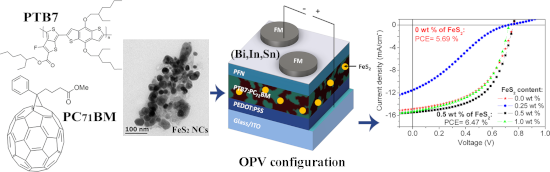
- electrodes in dye-sensitized solar cells (DSSCs) [9][12][13], as electron acceptors or donors in inorganic or hybrid solar cells [10][14][15][16][17] and as second electron acceptors in organic photovoltaic cells (OPVs) [18]. An iron pyrite thin film used as a counter electrode showed a conversion efficiency
- (8%) similar to that of a Pt counter electrode in DSSC [9], which could be due to the high catalytic activity of pyrite. When the film is doped with ethanedithiol (EDT), the conversion efficiency is increased by about 20% as compared to the pure pyrite thin film [12]. Also, FeS2 NPs of 30 nm size
- an alternative top electrode, which we attached by free vacuum deposition. The FM is composed of 32.5% Bi, 51% In and 16.5% Sn and is characterized by a melting point of around 62 °C. It was deposited on the active layer/PFN by drop casting (or doctor blade) at low temperature (≈95 °C) and


A novel all-fiber-based LiFePO4/Li4Ti5O12 battery with self-standing nanofiber membrane electrodes
Beilstein J. Nanotechnol. 2019, 10, 2229–2237, doi:10.3762/bjnano.10.215
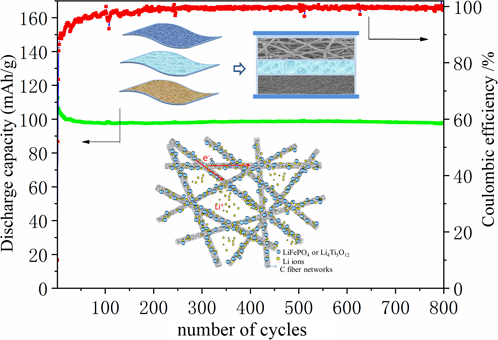
- environmental friendliness [11][12][13][14]. The electrode materials of conventional lithium-ion batteries (LIBs) are generally based on transition metal oxides containing lithium mixed evenly with conductive agents and adhesives. The electrode materials are then coated on metal current collectors [15][16][17
- . Researchers have found that two-dimensional (2D) or 3D free-standing electrode materials [18][19][20][21] can significantly improve the electrochemical performance while also offering light weight and superior mechanical properties [22][23]. LiFePO4 and Li4Ti5O12 have been widely developed and applied in LIBs
- electrodes [18][21][28]. In recent years, an increasing number of reports on the preparation of fiber electrode materials by electrospinning were published [18][21][28][34][35]. In this paper, we describe the preparation of LiFePO4 and Li4Ti5O12 nanofiber membrane materials by a modified electrospinning





