Search results
Search for "interfaces" in Full Text gives 471 result(s) in Beilstein Journal of Nanotechnology. Showing first 200.
Biomimetic synthesis of Ag-coated glasswing butterfly arrays as ultra-sensitive SERS substrates for efficient trace detection of pesticides
Beilstein J. Nanotechnol. 2019, 10, 578–588, doi:10.3762/bjnano.10.59
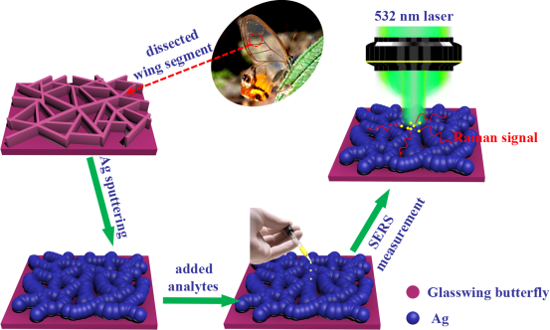
- signal intensity [3]. When incident light interacts with the free conduction electrons near the metallic plasmonic nanostructures, the collective oscillation of these electrons is significantly enhanced at metal–dielectric interfaces, which is known as localized surface plasmon resonance (LSPR). Namely


Nanocomposite–parylene C thin films with high dielectric constant and low losses for future organic electronic devices
Beilstein J. Nanotechnol. 2019, 10, 428–441, doi:10.3762/bjnano.10.42
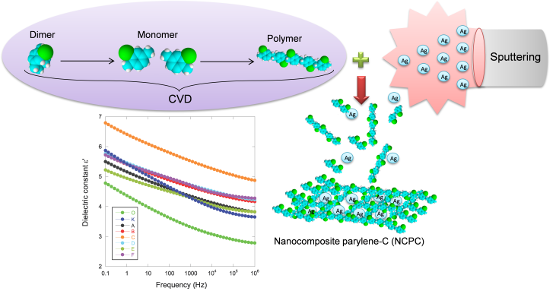
- –dielectric interface in contrast to polymers containing hydroxyl groups such as poly(vinyl phenol) and polyimides (due to residual COOH groups) [18][19][20]. The stability of the devices, which is impacted by this charge trapping at the interfaces, is improved when parylene C is integrated in the device [21




Geometrical optimisation of core–shell nanowire arrays for enhanced absorption in thin crystalline silicon heterojunction solar cells
Beilstein J. Nanotechnol. 2019, 10, 322–331, doi:10.3762/bjnano.10.31
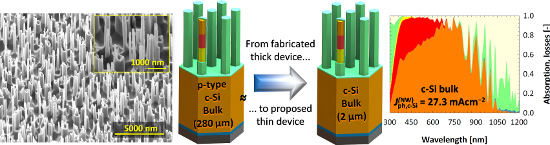
- light trapping schemes is of paramount importance for the development of high-efficiency thin silicon solar cells. The most common approach is the texturing of interfaces, to increase the path length of light inside the absorber. This allows for the use of thinner absorbers, which can decrease
- -th layer, m = 0, 1, 2,…, and are the (wavelength-dependent) phase shifts taking place when light is reflected at the front and back interfaces, respectively, and is the (wavelength-dependent) phase shift happening during transmission at the j-th interface (between layer i and i + 1). The


Electromagnetic analysis of the lasing thresholds of hybrid plasmon modes of a silver tube nanolaser with active core and active shell
Beilstein J. Nanotechnol. 2019, 10, 294–304, doi:10.3762/bjnano.10.28
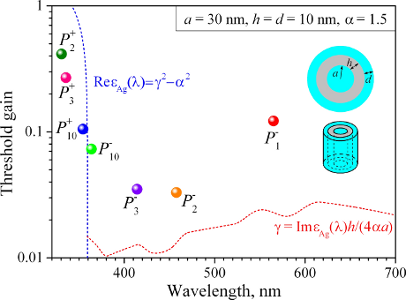
- –dielectric interfaces or thin metal layers, and their standing-wave counterparts, localized surface plasmon (LSP) modes on metal particles and wires of deeply sub-wavelength (sub-λ) size. This phenomenon occurs due to the specific properties of the complex dielectric functions of metals in the optical range


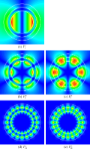
![[Graphic 29]](/bjnano/content/inline/2190-4286-10-28-i46.svg?max-width=637&scale=1.18182) λ = 565.03...
λ = 565.03...

![[Graphic 36]](/bjnano/content/inline/2190-4286-10-28-i53.svg?max-width=637&scale=1.18182) ...
...


A Ni(OH)2 nanopetals network for high-performance supercapacitors synthesized by immersing Ni nanofoam in water
Beilstein J. Nanotechnol. 2019, 10, 281–293, doi:10.3762/bjnano.10.27
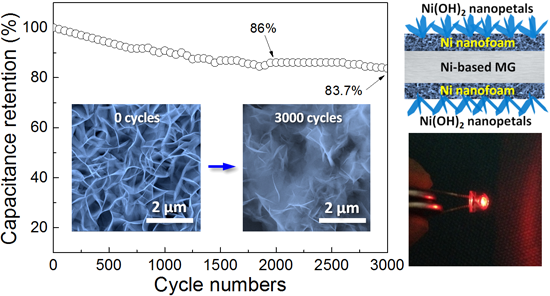
- nm, as plotted in Figure 2i. This structural characteristic of an “ion reservoir” would bring about fast ion/electron transfer, short ion transport distances and sufficient contact at active material/electrolyte interfaces, which might improve the electrochemical performance [33]. Figure 2j shows
- interconnected nanopetals grown on the 3D Ni nanofoam can play the role of an “ion reservoir”, yielding fast ion transfer, short ion transport distances and sufficient contact at active material/electrolyte interfaces. Finally, a complete integrated electrode is formed by the close bonding between the Ni(OH)2




Interaction of Te and Se interlayers with Ag or Au nanofilms in sandwich structures
Beilstein J. Nanotechnol. 2019, 10, 238–246, doi:10.3762/bjnano.10.22
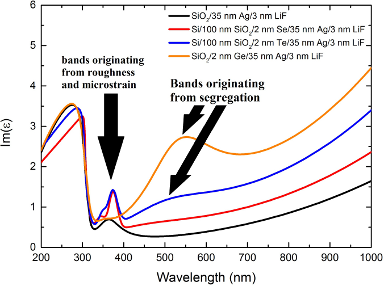
- the Ag layer grown on Ge [26], Te segregates towards both Ag/dielectric interfaces. This is probably due to the fact that in a sandwich-like sample, Ge is surrounded by two different Ag layers – the one below it has flat density profile, while the one on top has a gradient density profile. This
- directs the segregation of Ge atoms towards the surface of the film deposited on top [12]. Tellurium, however, is surrounded by two very similar layers – both have almost flat density profile (Figure 1a). With two similar interfaces to migrate to, and similar crystalline structure of both, there is no
- implicit benefit to prefer one of the interfaces over the other, and thus, Te atoms segregate towards both of them. We do not report on the concentration curves of similar structures containing selenium, since the XPS signal from selenium is very weak. The relative sensitivity factor (RSF) of the main


Thermal control of the defunctionalization of supported Au25(glutathione)18 catalysts for benzyl alcohol oxidation
Beilstein J. Nanotechnol. 2019, 10, 228–237, doi:10.3762/bjnano.10.21
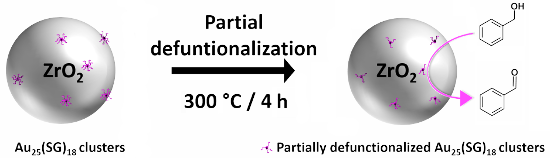
- des Multimatériaux et Interfaces (LMI), Villeurbanne, France 10.3762/bjnano.10.21 Abstract Au25(SG)18 (SG – glutathione) clusters deposited on ZrO2 nanoparticles have been used as a catalyst for benzyl alcohol oxidation. Calcination was performed at different temperatures to study the ligand and




Uniform Sb2S3 optical coatings by chemical spray method
Beilstein J. Nanotechnol. 2019, 10, 198–210, doi:10.3762/bjnano.10.18
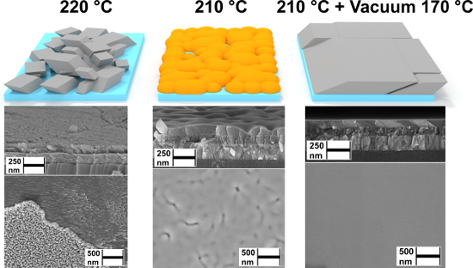
- (structured) window layer, Sb2S3 absorber layer, and hole transport material layer, and their respective interfaces, is a tremendous undertaking [4]. Attention has surged toward planar heterojunction Sb2S3 solar cells due to their simpler structure, less intricate production, and enhanced repeatability vs




Scanning probe microscopy for energy-related materials
Beilstein J. Nanotechnol. 2019, 10, 132–134, doi:10.3762/bjnano.10.12

- , investigated and optimized. Energy-related materials often include electrochemical reactions and (opto-)electronic transport phenomena at their interfaces. In particular, material properties on the nanometer scale play a major role. The understanding of these nanoscale phenomena occurring at material
- interfaces is therefore essential. Furthermore, these interface phenomena are strongly linked to material properties such as grain size, roughness, mechanical properties and work function. In an attempt to address the diversity of phenomena on the nanoscale, scanning probe microscopy (SPM) methods play an
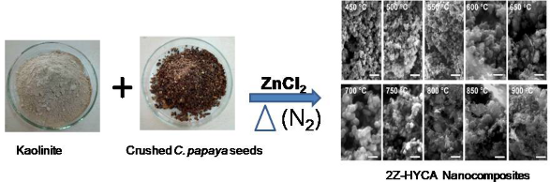
New micro/mesoporous nanocomposite material from low-cost sources for the efficient removal of aromatic and pathogenic pollutants from water
Beilstein J. Nanotechnol. 2019, 10, 119–131, doi:10.3762/bjnano.10.11
- Colloids and Interfaces, University of Potsdam, Alexander von Humboldt Foundation, and Chinese Academy of Sciences are also appreciated for financial support.




Graphene–graphite hybrid epoxy composites with controllable workability for thermal management
Beilstein J. Nanotechnol. 2019, 10, 95–104, doi:10.3762/bjnano.10.9
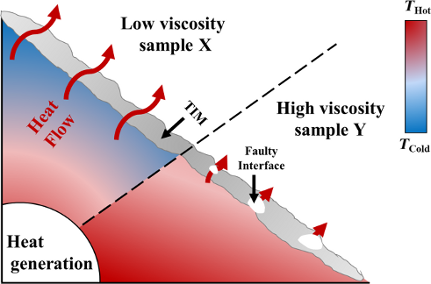
- Interfaces, Weizmann Institute of Science, Rehovot 7610001, Israel, Ilse Katz Institute for Nanoscale Science and Technology, Ben-Gurion University of the Negev, Beer-Sheva 84105, Israel 10.3762/bjnano.10.9 Abstract The substantial heat generation in highly dense electronic devices requires the use of
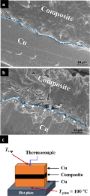
- the copper–composite interfaces in (a) the lower viscosity system (sample X, 2 vol % GNP and 16 vol % graphite) and (b) the higher viscosity system (sample Y, 6 vol % GNPs and 6 vol % graphite), both with the same TC (see Figure 5). The defects at the interface are indicated with white arrows in (b



Electrolyte tuning in dye-sensitized solar cells with N-heterocyclic carbene (NHC) iron(II) sensitizers
Beilstein J. Nanotechnol. 2018, 9, 3069–3078, doi:10.3762/bjnano.9.285
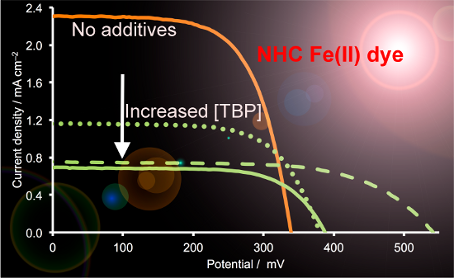
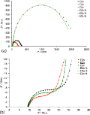
- impedance spectroscopy (EIS) is an important technique for the investigation of interfaces in DSCs [49][50]. Fitting of the Nyquist and Bode plots, which are used to describe the EIS results, leads to parameters including the recombination resistance (Rrec), electron/hole transport resistance (Rtr), charge



A new bioinspired method for pressure and flow sensing based on the underwater air-retaining surface of the backswimmer Notonecta
Beilstein J. Nanotechnol. 2018, 9, 3039–3047, doi:10.3762/bjnano.9.282
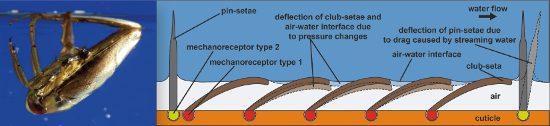
- . Keywords: mechanoreceptor; Notonecta sensor; pressure sensor; Salvinia effect; superhydrophobic surfaces; Introduction The surfaces of animals and plants are interfaces between the organisms and the environment. Since animals and plants inhabit many different environments, it is not surprising that over


Hydrogen-induced plasticity in nanoporous palladium
Beilstein J. Nanotechnol. 2018, 9, 3013–3024, doi:10.3762/bjnano.9.280
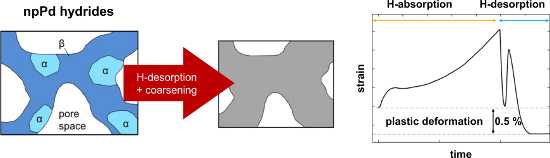
- (or coherent-to-semicoherent) is energetically favoured, which has been studied experimentally via small-angle neutron scattering [39]. The transition is expected not only to relief the stresses at the coherent α–β interfaces, but also the internal compressive stresses found in the α-phase, leading to
- compressive straining cannot be a result of these coherent interfaces. Internal-stress plasticity – strain offset The irreversible contractions after each absorption/desorption cycle observed in Figure 3 (−0.5%) and Figure 5 (e.g., cycle 13, −6.5%) are a result of the internal-stress plasticity mechanism that
- produced in this work phase coherency is only partly possible upon hydrogen desorption for our nanoporous samples indicated, e.g., by serrations in the strain (see next section). As the transition from coherent-to-incoherent (or coherent-to-semicoherent) interfaces of PdHα and PdHα phases is supposed to


Site-controlled formation of single Si nanocrystals in a buried SiO2 matrix using ion beam mixing
Beilstein J. Nanotechnol. 2018, 9, 2883–2892, doi:10.3762/bjnano.9.267
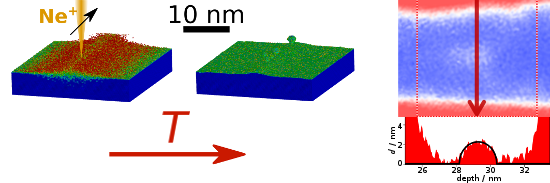
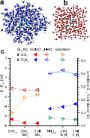
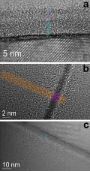
- are formed close to the Si/SiO2 interfaces. The NCs in the 7 nm case have a diameter of 2.5 ± 0.4 nm. Considering the thickness of the SiO2 layer, the distance between the NCs and the Si/SiO2 interfaces is approximately 2 nm. Taking into account the thickness of the classically prepared TEM lamella
- layer (see Figure 1a). However, experimentally a more homogeneous size distribution and a clear separation in two bands of NCs is observed. In contrast, for the case of a thinner oxide, the stoichiometry does not only change close to the interfaces, but also in the middle of the oxide layer. After a
- the excess Si will be incorporated into the top and bottom Si/SiO2 interfaces. Two-dimensional (area), 1D (line) and 0D (point-like) irradiations have been carried out using a focused 25 keV Ne+ beam on the aforementioned layer stack. The thicknesses of the layers are 6.5 nm for the buried SiO2 and 25


Graphene-enhanced metal oxide gas sensors at room temperature: a review
Beilstein J. Nanotechnol. 2018, 9, 2832–2844, doi:10.3762/bjnano.9.264
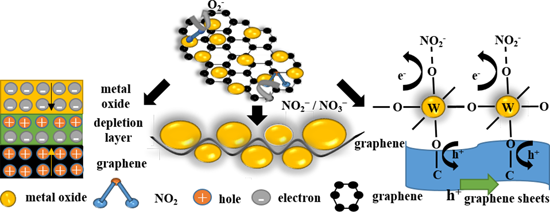
- many aspects, such as sensitivity, response/recovery times and the operating temperature. There are numerous mechanisms for the enhanced gas-sensing performance according to different views of scholars. The most widely accepted mechanisms are: the formation of semiconductor interfaces, a synergetic
- of semiconductor interfaces Reduced graphene oxide (rGO), which plays the role of a p-type semiconductor, can form heterojunctions when forming composites with most metal-oxide semiconductors. In the example of a SnO2–rGO sensor [45], SnO2 and rGO formed p–n heterojunctions. The enhancement mechanism
- summary, the SnO2–rGO sensor allow for the transition of electrons even at room temperature because of its low Schottky barrier. When exposed to air at room temperature, oxygen molecules obtain electrons from n-type SnO2–rGO hybrids to form O2−. The electron depletion layers generated on the interfaces of



Magnetic and luminescent coordination networks based on imidazolium salts and lanthanides for sensitive ratiometric thermometry
Beilstein J. Nanotechnol. 2018, 9, 2775–2787, doi:10.3762/bjnano.9.259
- [32] and is part of the research activity supported by the European COST action MP1202: HINT (Rational design of hybrid organic–inorganic interfaces: the next step towards advanced functional materials. http://www.cost-hint.cnrs.fr). This work was also developed within the scope of the project CICECO



Polarization-dependent strong coupling between silver nanorods and photochromic molecules
Beilstein J. Nanotechnol. 2018, 9, 2657–2664, doi:10.3762/bjnano.9.247
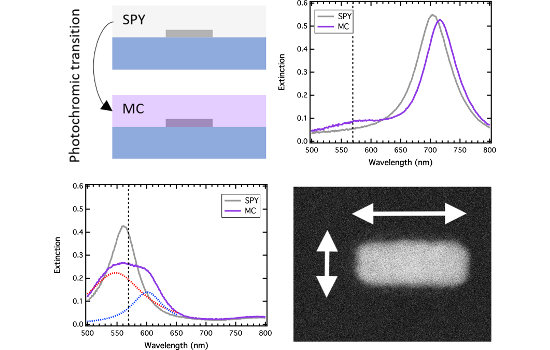
- Ciencias e Ingeniera, Universidad San Francisco de Quito, Quito, Ecuador Laboratoire Interfaces, Traitements, Organisation et Dynamique des Systèmes (ITODYS), UMR CNRS 7086, Université Paris-Diderot, Sorbonne Paris Cité, 15 rue Jean-Antoine de Baïf, 75205 Paris Cedex 13, France 10.3762/bjnano.9.247



Exploring the photoleakage current and photoinduced negative bias instability in amorphous InGaZnO thin-film transistors with various active layer thicknesses
Beilstein J. Nanotechnol. 2018, 9, 2573–2580, doi:10.3762/bjnano.9.239
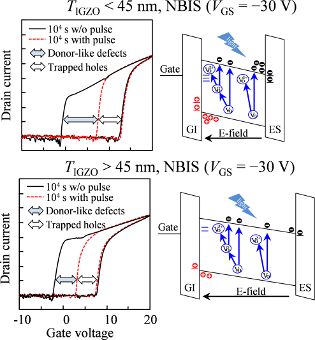
- bulk traps because of the identical a-IGZO/GI interfaces. Figure 2a–d shows the variation in the transfer characteristics of a-IGZO TFTs with various TIGZO under monochromatic light irradiation at the excitation wavelengths of 400, 430, 460, 490, and 530 nm. The transfer characteristics measured in the
- channel layer is totally depleted under the negative VGS bias since the TIGZO is less than the Debye length. Therefore, the photoexcited electrons and holes will be respectively accumulated and trapped at the IGZO/etch-stopper and the GI/IGZO interfaces. Meanwhile, the defect states are generated, which
- TIGZO is increased to 45 nm, which is close to the Debye length, the whole channel layer is almost depleted under the negative VGS bias. During the NBIS duration, more electrons and holes are excited and trapped at the back-channel and the front-channel interfaces. Simultaneously, the high-density


High-temperature magnetism and microstructure of a semiconducting ferromagnetic (GaSb)1−x(MnSb)x alloy
Beilstein J. Nanotechnol. 2018, 9, 2457–2465, doi:10.3762/bjnano.9.230
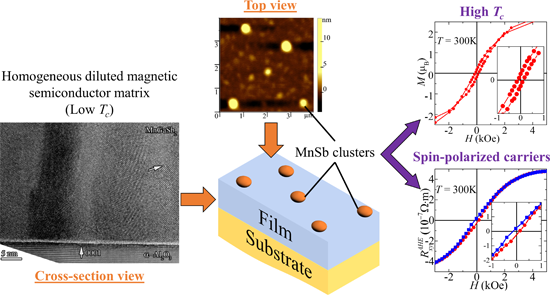
- interaction is affected by the appearance of Schottky barriers at the MnSb/GaSb boundaries. Basically, these type of barriers appear on the semiconductor/metal interfaces providing a tunneling charge transfer across the boundary, if the barrier is high enough. In the present case, Schottky barriers may appear



Evidence of friction reduction in laterally graded materials
Beilstein J. Nanotechnol. 2018, 9, 2443–2456, doi:10.3762/bjnano.9.229
- Roberto Guarino Gianluca Costagliola Federico Bosia Nicola Maria Pugno Laboratory of Bio-Inspired & Graphene Nanomechanics, Department of Civil, Environmental and Mechanical Engineering, University of Trento, Via Mesiano 77, 38123 Trento, Italy Department of Physics and Nanostructured Interfaces
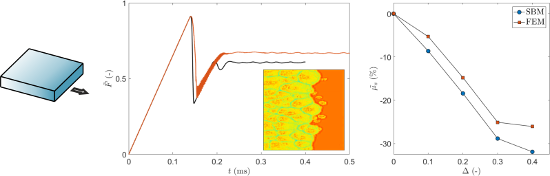
- compared to those derived by explicit finite-element simulations. This provides useful insights to understand the frictional properties of graded materials, with the aim of designing smart tribo-materials and innovative solutions for sliding interfaces. Methods Introduction In this work, we investigate the
- nature, or in the local frictional properties, e.g., by controlling the roughness or the microstructure, for the design of advanced sliding interfaces. A reduction in the static friction up to almost 30%, with respect to the corresponding non-graded material, can thus be achieved. Schematic of the


![[Graphic 5]](/bjnano/content/inline/2190-4286-9-229-i10.svg?max-width=637&scale=1.18182) as function of time for the non-graded material: SBM solution for dif...
as function of time for the non-graded material: SBM solution for dif...


Pinning of a ferroelectric Bloch wall at a paraelectric layer
Beilstein J. Nanotechnol. 2018, 9, 2356–2360, doi:10.3762/bjnano.9.220
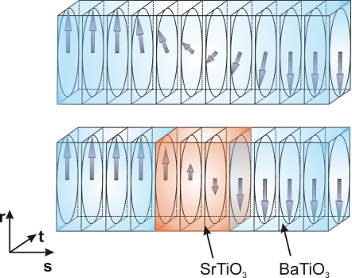
- phenomena as the parent ferroelectric materials. For example, in the case of BaTiO3–SrTiO3 superlattices with only a few atomic layers of SrTiO3, the domain walls are simply expected to penetrate through BaTiO3/SrTiO3 interfaces [1][2][3][4][5]. In general, it can be expected that a small amount of

![[Graphic 2]](/bjnano/content/inline/2190-4286-9-220-i2.svg?max-width=637&scale=1.18182) -oriented 180-degree domain walls in a) pure BaTiO3, b) BaTiO3–SrTiO3 superla...
-oriented 180-degree domain walls in a) pure BaTiO3, b) BaTiO3–SrTiO3 superla...


Performance analysis of rigorous coupled-wave analysis and its integration in a coupled modeling approach for optical simulation of complete heterojunction silicon solar cells
Beilstein J. Nanotechnol. 2018, 9, 2315–2329, doi:10.3762/bjnano.9.216
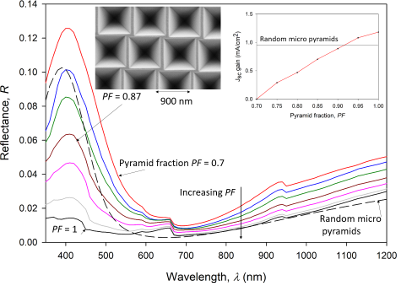
- . Besides the optical properties, proper passivation techniques of textured interfaces are crucial to keep surface recombination velocities as low as possible and thus to maintain the good electrical properties of the device [8][9]. To design and optimize textures applied to the front and/or rear side of
- lateral dependence of E and H, while eigenvalues describe their vertical dependence. Finally, boundary conditions at the interfaces of sublayers are defined considering that tangential components of E and H need to be conserved for conservation of momentum. When solving the system, an S-matrix algorithm
- can change from TE to TM or vice versa. This is unlike in (locally) flat interfaces considered with ray optics or TMM, where local TE and TM polarization persist after reflection or refraction. This difference in 3D wave simulations is caused by the diffracted waves, which may not propagate in the


Metal–dielectric hybrid nanoantennas for efficient frequency conversion at the anapole mode
Beilstein J. Nanotechnol. 2018, 9, 2306–2314, doi:10.3762/bjnano.9.215
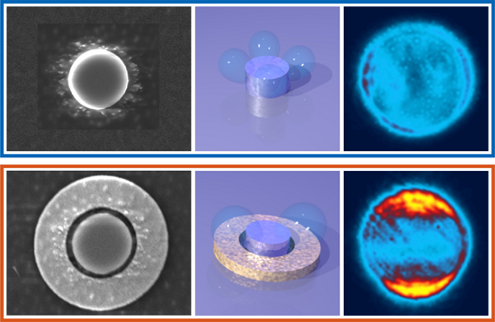
- properties of molecules at liquid–liquid interfaces [7]. The ability to downscale nonlinear optical processes, such as SHG, in extremely confined spatial regions opens many fascinating opportunities in light manipulation and multiplexing [8] as well as in optical sensing and spectroscopy [9][10]. Yet, to




Intrinsic ultrasmall nanoscale silicon turns n-/p-type with SiO2/Si3N4-coating
Beilstein J. Nanotechnol. 2018, 9, 2255–2264, doi:10.3762/bjnano.9.210
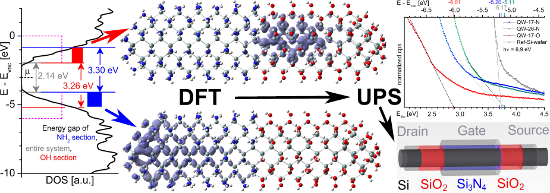
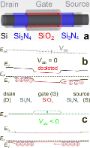
- the electrostatic integrity of the devices causes conventional doping to fail. Metal–Si contacts formed by, e.g., silicide formation [36] result in rather high Schottky-barriers at the source/drain-channel interfaces that deteriorate the switching behaviour and on-state performance. h-DFT calculations
- ) in particular at the gate-channel/gate-underlap interface and at the Ni–contact–Si interfaces, both depending on lcon (see Supporting Information File 1). Without the energy shift caused by Si3N4-coatings in source/drain, we obtain substantially higher Schottky-barriers for device II, resulting in