


Search results
Search for "NMR" in Full Text gives 3257 result(s) in Beilstein Journal of Organic Chemistry. Showing first 200.
Electrochemical reduction of unsaturated carbon–carbon bonds via 3d transition-metal catalysis
Beilstein J. Org. Chem. 2026, 22, 955–981, doi:10.3762/bjoc.22.75
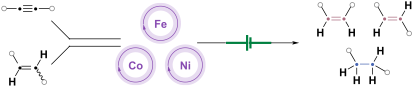
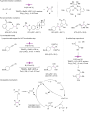
- substrates were subjected to the electroreductive conditions in the absence of the nickel complex. Under these conditions, both a ring-opening product and a hydrogenation product were detected by NMR spectroscopy. These observations provide compelling experimental evidence that Fe–H species, formed in situ








Synthesis of sterically shielded piperidine nitroxides via acid-catalyzed heterocyclization of β-aminoketone derivatives with ketones
Beilstein J. Org. Chem. 2026, 22, 948–954, doi:10.3762/bjoc.22.74
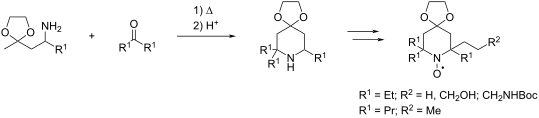
- proteins by the PELDOR method at room temperature [2]. Piperidine nitroxyl biradicals form the basis of the most efficient commercial agents for dynamic nuclear polarization (DNP) in NMR studies of biomolecules and solid samples [3]. They are also employed as contrast agents for magnetic resonance imaging
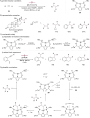
- formation, and hydrazinolysis (Scheme 1). The target 2-(2-aminoalkyl)-1,3-dioxolanes 4a,b were obtained in pure form after vacuum distillation. Conversion of α,β-unsaturated ketones 1a,b to aminodioxolanes 4a,b proceeded in 49% and 69% overall yield, respectively. In the 1H NMR spectrum of 4a
- -tripropyl-substituted piperidines 5a,b were isolated in approximately 50% yield (Scheme 2). The full-line shape analysis of the 1H NMR spectrum of piperidine 5a was simulated using the gNMR software (version 5.0) [32] and the extracted spin-system parameters were consistent with the proposed structure (see


Recent advances in copper-catalyzed direct hydroamination of alkenes with (hetero)aromatic amines
Beilstein J. Org. Chem. 2026, 22, 925–947, doi:10.3762/bjoc.22.73
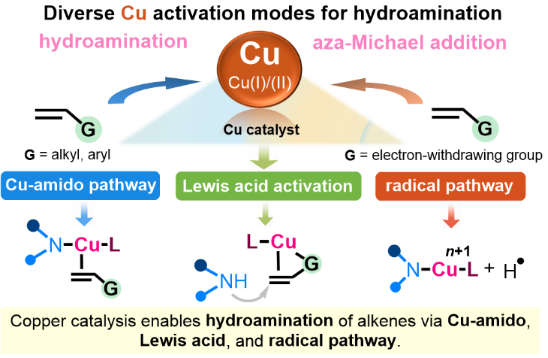
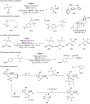
- ). In particular, NMR analysis indicated the formation of the organocopper species (IPr)Cu(N(Ph)CH2CH2CN) (VII), a key intermediate consistent with the nucleophilic addition mechanism. These early mechanistic studies established that copper-bound amido species act as key nucleophilic intermediates in






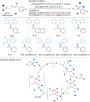

A practical CO2-mediated synthesis of 5,6-carboxylated silicon-rhodamines for targeted probe development
Beilstein J. Org. Chem. 2026, 22, 915–924, doi:10.3762/bjoc.22.72
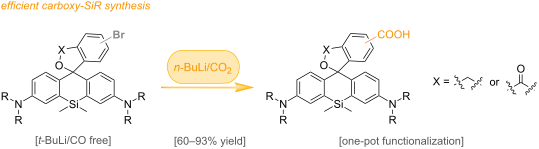
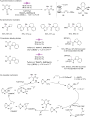
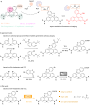
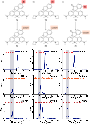
- carboxylated SiR derivatives while delivering good to excellent yields. Sequential one-pot functionalization of brominated silicon-rhodamine In the carboxylation of 1b, a prominent side peak was observed in addition to the desired product peak (Figure 3b). NMR (Supporting Information File 1, Figure S17) and
- with 4c in live HeLa cells. Scale bars: 5.0 μm. Supporting Information Supporting Information File 8: Experimental details and characterization of compounds by NMR and ESIMS. Funding This work is supported by the National Natural Science Foundation of China (22541705, U25A20620, 22225806, 22522816



Palladium-catalyzed benzocyclization reactions of quinoline-2-carboxamides via sequential C–H/N–H functionalization
Beilstein J. Org. Chem. 2026, 22, 905–914, doi:10.3762/bjoc.22.71
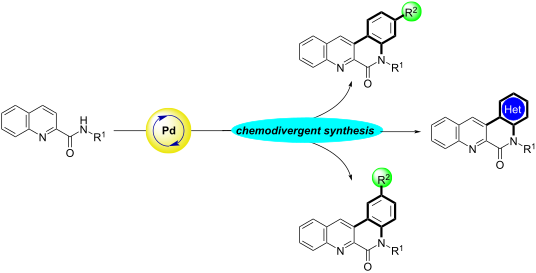
- confirmed by 1H NMR and mass spectra (Scheme 3; see also Supporting Information File 1). This result indicated that the C–C bond was formed first in the reaction. The structures of other products were inferred from their 1H NMR spectra, while the structures of products 3aj and 3ak were also determined by
- for the C–H/N–H functionalization reaction. Supporting Information Supporting Information File 6: Experimental details and copies of 1H and 13C{1H} NMR spectra. Acknowledgements We thank Suzanne Adam, Ph.D, from Edanz (https://jp.edanz.com/ac) for editing a draft of the manuscript. Funding This




Cascade transformation of 2-(diazoacetyl)-2H-azirines to 2-aroyl-3-hydroxy-1H-pyrroles via condensation with aromatic aldehydes
Beilstein J. Org. Chem. 2026, 22, 897–904, doi:10.3762/bjoc.22.70
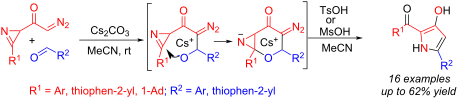
- -methoxyphenyl)-2H-azirine 1b with 4-iodobenzaldehyde (2b) turned out to be well crystallized and precipitated from the reaction medium as a solid (Scheme 2). Although it was also unstable, it was possible to record 1H,1H 2D NOESY and 13C NMR spectra, an IR spectrum in KBr as well as to obtain the accurate mass
- of the molecular ion by HRMS for this crude product. The IR spectrum of the compound contains a band of the diazo group at 2087 cm−1. According to the 1H NMR spectrum, the product consists of more than 90% of one diastereoisomer, the spatial structure of which was established using a 2D NOESY
- Information File 1). In the 1H NMR spectrum of the crude compound 4b, in addition to the signals of the main isomer 4b, there is a set of low-intensity proton signals: 1.34 (d), 2.59 (d), 3.27 (s), 5.16 (s), formally corresponding to the set of signals of the main diastereoisomer 4b: (1.26 (d), 2.85 (d), 3.24


Chiral cyclopropenimine-catalyzed enantioselective Michael reactions of phenol and benzofuran-derived α,β-unsaturated pyrazolamides with benzophenone-imine of glycine esters
Beilstein J. Org. Chem. 2026, 22, 888–896, doi:10.3762/bjoc.22.69
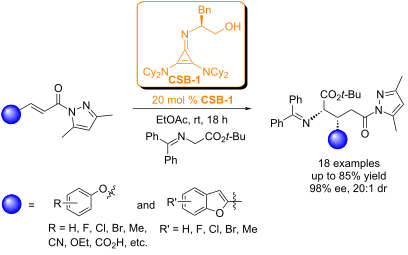
- Supporting Information File 42: Detailed experimental procedures, characterization data of all new compounds with NMR, HRMS, HPLC charts, and X-ray single crystal diffraction data. Funding The authors thank the National Science Foundation of China (no. 21372259) for providing financial support for this work.






The trans-influence in gold chemistry from a catalytic perspective
Beilstein J. Org. Chem. 2026, 22, 838–856, doi:10.3762/bjoc.22.66
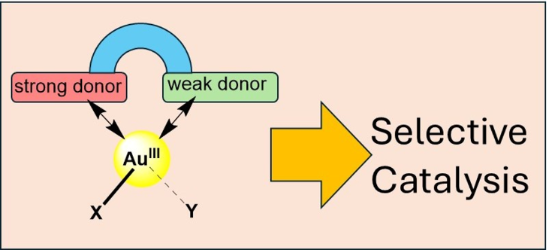
- applications based on gold(III) bidentate and tridentate cyclometallated ligands have developed into a large field which has recently been comprehensively reviewed [44][45]. Ligand effects and the route to gold hydrides Given the ease of recording 1H NMR data and the absence of steric effects on the Au–H bond
- , the hydride ligand is an ideal system for assessing the influence of a trans-ligand. Likewise, 1H NMR chemical shifts are amenable to high-level computations, which provide evidence for the molecular orbital changes that underly the observed chemical shifts. Kaupp and co-workers employed quasi
- -relativistic computations on hydride complexes of heavy metals with 5d10 and 5d8 electron configuration to show that the 1H NMR chemical shift is dominated by relativistic spin–orbit (SO) effects. Weak trans-influence ligands, such as NO3−, Cl− or pyridine are strongly shielding, leading to negative values on


Unsymmetrical sulfoxides with sterically hindered catechol fragment: synthesis, structure, electrochemical properties, and antiradical activity
Beilstein J. Org. Chem. 2026, 22, 828–837, doi:10.3762/bjoc.22.65
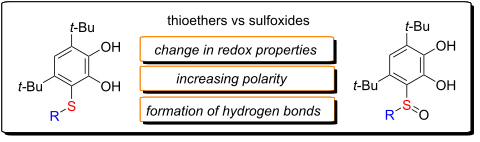
- catechol moiety were detected. The yields of the target sulfoxides ranged from 42% to 89%. Compounds 3–6 were prepared and characterized as described previously (3, 4, and 6 [23], 5 [42]). The structures of new thioethers 1, 2, 7 and sulfoxides 1a–7a were confirmed by the spectral methods IR-, 1H NMR, 13C
- {1H} NMR spectroscopy (Figures S1–S20), HRMS (Figures S21–S26) in Supporting Information File 1, and elemental analysis. X-ray data The X-ray suitable crystals of 1a, 4a–7a were grown by slow recrystallization of the compounds from acetonitrile or chloroform (for 7a) solutions at room temperature. The
- distance, indicating the formation of π contacts (Cg···Cg 3.676(9)–3.769(9) Å). In the 1H NMR spectra of all synthesized sulfoxides, the signal corresponding to the proton of the hydroxy group at position 1 of the aromatic ring is significantly shifted downfield relative to that in the corresponding


Total synthesis of the capsular polysaccharide repeating unit towards the development of a glycoconjugate vaccine against Klebsiella pneumoniae ST512
Beilstein J. Org. Chem. 2026, 22, 821–827, doi:10.3762/bjoc.22.64
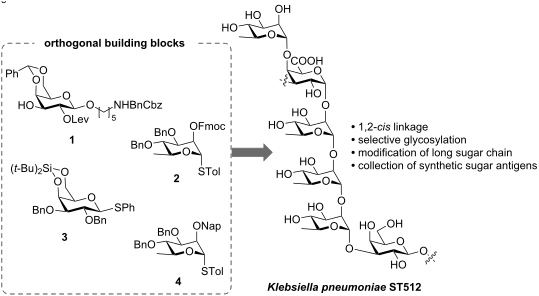
- repeating unit 20. Synthesis of the analogues 21–24. Supporting Information Supporting Information File 34: Experimental procedures and NMR spectra. Funding We gratefully acknowledge the Max-Planck Society for generous financial support. Conflict of Interest The authors declare no conflicts of interest.


Synthesis and structural elucidation of a novel bis-spirooxindole from isatin and ethylenediamine
Beilstein J. Org. Chem. 2026, 22, 813–820, doi:10.3762/bjoc.22.63
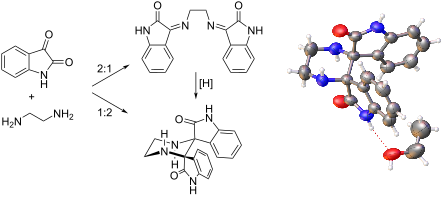
- :1 isatin-to-diamine ratio provides the diiminoisatin, whereas a 1:2 ratio leads to the formation of a highly symmetric bis-spirooxindole scaffold. The new spirocyclic product was fully characterized by HRMS, IR and extensive 1D/2D NMR analysis, and its structure was unequivocally established by
- -diamine ratio (Scheme 4a,b). When isatin was reacted with ethylenediamine in a 2:1 molar ratio in methanol, the expected diiminoisatin 24 was obtained in 66% yield. The ¹H NMR spectrum displayed a diagnostic singlet at δ 4.45 ppm (4H) corresponding to the two =NCH₂ groups, together with the characteristic
- aromatic pattern of the isatin core. The IR spectrum showed a strong imine C=N band at 1610 cm−1, and the absence of the C-3 carbonyl stretching band confirmed complete condensation. The 13C NMR spectrum revealed multiple sets of closely related signals, consistent with the presence of three C=N


Knoevenagel condensation of 4,5- and 1,8-diazafluorenes
Beilstein J. Org. Chem. 2026, 22, 803–812, doi:10.3762/bjoc.22.62
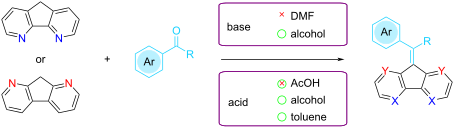
- 2A/2A’) and the iminium cation can be considered, and this effect should be stronger for 1,8-diazafluorene (2) because the nitrogen atoms are located near the reaction center. To evaluate the possible protonation effect of 1,8- and 4,5-diazafluorenes we utilized 1H NMR experiments performed
- diazafluorenylidenes were characterized by NMR, HRMS, elemental analysis, cyclic voltammetry (CV), UV–vis spectroscopy (Figure 1) and X-ray data (Figure 2 and Figure S4 in Supporting Information File 1). Figure 1a demonstrates the cyclic voltammograms of DPDAFs in CH2Cl2 solution. Both compounds demonstrated
- -diazafluorene may be carried out in pure acetic acid. According to NMR studies, 4,5-diazafluorene has a lower nitrogen basicity as compared to 1,8-diazafluorene. This basicity plays a key role in the reaction of 1,8-diazafluorene condensation because of electrostatic repulsion of the protonated tautomer and the




Synthetic study of vic-bromination of diarylacetylenes, easy purification and separation
Beilstein J. Org. Chem. 2026, 22, 795–802, doi:10.3762/bjoc.22.61
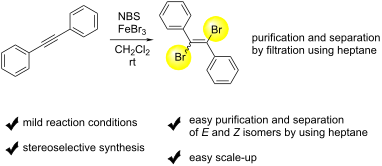
- crude product was purified three times with heptane to obtain (E)-1,2-dibromo-1,2-diphenylethylene (E-2a, 132.6 mg, 0.392 mmol, 78% yield) of high-purity. (E)-1,2-Dibromo-1,2-diphenylethylene (E-2a) [4]: White solid. 1H NMR (400 MHz, CDCl3) δ 7.34–7.46 (m, 6H), 7.50–7.57 (m, 4H) ppm; 13C NMR (100 MHz
- CDCl3) δ 118.0, 128.4, 128.9, 129.1, 140.7 ppm; HRMS (ESI) m/z: [M + Na]+ calcd for C14H10Br2Na, 358.9041; found, 358.9028. (Z)-1,2-Dibromo-1,2-diphenylethylene (Z-2a) [7]: Yellow solid. 1H NMR (300 MHz, CDCl3) δ 7.10–7.22 (m, 10H) ppm; 13C NMR (75 MHz, CDCl3) δ 125.7, 128.0, 128.3, 129.8, 139.4 ppm
- of compounds, and copies of 1H and 13C NMR spectra. Acknowledgements We appreciate Kazuki Miyamoto, Junya Kikuzawa and Ryoichi Tomiyama at Kindai University for useful advice and the cooperation related to this paper. We also thank Akiko Kuwabara and Dr. Masafumi Kobayashi at Kanto Denka Kogyo Co



Halogenated azobenzene acrylates: from efficient solution photoswitching to stable solid-state photochromic materials
Beilstein J. Org. Chem. 2026, 22, 782–794, doi:10.3762/bjoc.22.60
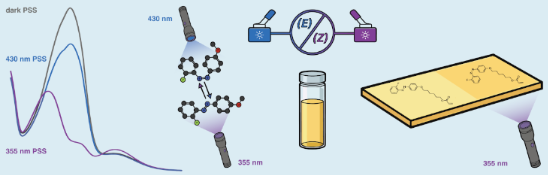
- calorimetry (DSC), thermogravimetric analysis (TGA), cyclic voltammetry (CV), UV–vis absorption spectroscopy, 1H and 13C NMR, and theoretical DFT calculations were employed. Furthermore, the target compounds are designed for incorporation as photoactive copolymers into the structure of functionalized
- molar ratios corresponding to the appropriate photostationary state (PSS), the half-lives of the Z-isomer in the dark () and the rate constants of the thermal relaxation in the dark (k) were determined by UV–vis absorption and 1H NMR spectroscopies and are summarized in Table 4. Due to very slow thermal
- Z → E relaxation at laboratory temperature (20 °C), the and k were measured at 60 °C. The method for its determination is described in our previous article [3]. Figure 7 compares the 1H NMR spectra of the dark-adapted and 355 nm-adapted photostationary states of compound 1e, while Figure 8 show an


Preparation of 3-(alkylamino)imidazo[1,2-a]pyridine-2-carbaldehydes via Kornblum oxidation and unexpected ring-opening reactions of the corresponding alcohols under oxidative conditions
Beilstein J. Org. Chem. 2026, 22, 763–770, doi:10.3762/bjoc.22.58
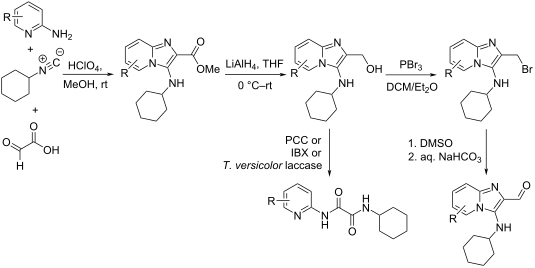
- ) did not lead to the anticipated aldehyde derivatives. Although a cursory inspection of the 1H NMR spectrum seemed to indicate that an aldehyde had been formed, with a single proton signal appearing at 9.8 ppm (Figure S24, in Supporting Information File 1), on closer inspection it became clear that
- 8. Yield optimisation using varying amounts of acid catalyst.a Supporting Information Supporting Information File 16: Experimental procedures, copies of NMR spectra and X-ray data of compound 18a. Acknowledgements The authors thank Matthew Bracken for the acquisition of the X-ray data. This work


Synthesis and biological evaluation of new brassinosteroid analogs with C-22 benzoate function
Beilstein J. Org. Chem. 2026, 22, 753–762, doi:10.3762/bjoc.22.57
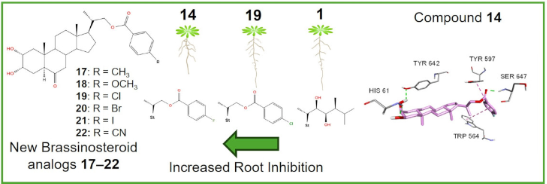
- be possible to evaluate the contribution of different functions attached to ring A. Thus, herein the synthesis of analogs 17–22, starting from the precursor 16, is described. All compounds have been fully characterized by spectroscopic techniques (IR, 1D, 2D NMR and HRMS). The biological activities
- %). All compounds have been characterized by IR, NMR (1D and 2D) and HRMS spectroscopy techniques (see Supporting Information File 1, Figures S1–S30). Thus, in the 1H NMR spectrum of compound 23, the presence of signals at δ = 7.91 ppm (2H, d, J = 8.1 Hz) and 7.21 ppm (2H, d, J = 8.1 Hz) are assigned to
- 7.2 Hz, H-22b), are assigned to carbinolic hydrogens H-22a and H-22b, respectively. In the 13C NMR spectrum, the signals observed at δ = 166.57, 143.31, 129.40, 128.93, 127.65, and 21.52 ppm, are assigned to carbon ArCOO, C-4’, C-2’, C-3’, C-1’, and CH3-Ar of the benzoate group, respectively. All


Rongalite addition to dienones: diastereoselectivity in cyclic sulfone synthesis; stereochemical rationalization and prospects as a general conjugate nucleophile
Beilstein J. Org. Chem. 2026, 22, 742–752, doi:10.3762/bjoc.22.56

- sulfide oxidation. In that early work, the stereochemical analysis was dependent on conformational analysis and comparison of coupling constants in the 1H NMR spectra. Experiments discussed in our inital report confirmed that the reaction proceeded under kinetic control [21]. Closer examination of the
- 1995 paper [22] revealed a slight ambiguity – the 1H NMR signals that were discussed and used to assign relative stereochemistry in the main text were found to be swapped over in the experimental section. We had no reason to think that this was anything but a typographical error, but we nevertheless
- (chiral) diastereomer of the products 3 and 4 in each case – reaction of the nucleophile with either face of the iminium ion or ketone gives the same diastereomer, as illustrated. By contrast, hydride reduction of 1b gave an approx. 9:1 mixture of products 5 and 6, as judged by the crude 1H NMR spectrum




Anti-invasive and cytotoxic evaluation of a (+)-pinoresinol-based semisynthetic library against glioblastoma
Beilstein J. Org. Chem. 2026, 22, 691–704, doi:10.3762/bjoc.22.54
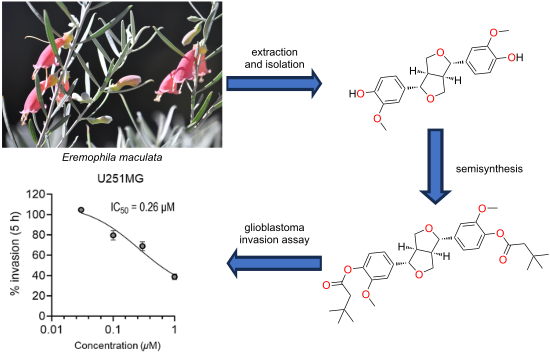
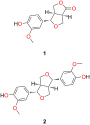
- and MeOH. Subsequent purifications of these two extracts afforded the two known natural products (+)-salicifoliol (1) [15][16] and (+)-pinoresinol (2, Figure 1) [17]. Their structures were determined by 1D (1H and 13C) and 2D (COSY, HMBC, HSQC, and ROESY) NMR spectroscopy together with MS data
- and were also fully characterized following NMR, UV–vis, [α]D, ECD, and ESIMS data analyses. An example of our structure elucidation studies is described below, which focuses on the brominated pinoresinol enantiomer (+)-5,5'-dibromopinoresinol (5). HRESIMS data revealed an ion at m/z 536.9519 [M + Na
- ]+ that indicated the molecular formula C20H20Br2O6. The 1H NMR spectrum of 5 in CDCl3 (Table 1) indicated that the symmetry of the reaction starting material (+)-pinoresinol (2) had been retained in the brominated product. This resulted in the presence of two signals corresponding to aromatic protons (δH



Synthesis of depressin, cryptomeridiol and 4-epi-cryptomeridiol enabled by a terpenoid chiral pool-producing platform
Beilstein J. Org. Chem. 2026, 22, 683–690, doi:10.3762/bjoc.22.53
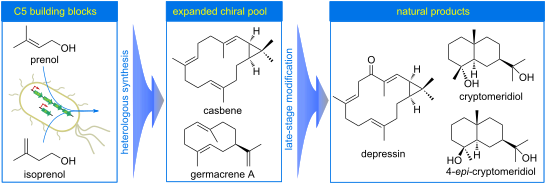
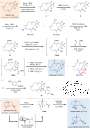
- conditions, affording 9-hydroxy-13-ketocasbene (10, 21%) and 5-hydroxy-13-ketocasbene (11, 20%), respectively, as single diastereomers. Although the orientation of the newly introduced hydroxy group could not be assigned solely based on NMR analysis, the 5-hydroxy group of 11 will be transformed into a
- ). Supporting Information Supporting Information File 5: Materials, synthetic methods and copies of NMR spectra for all compounds. Supporting Information File 6: X-ray crystal structure of 16. Funding We are grateful to the National Natural Science Foundation of China (No. 82574274) for the financial support.


Harnessing light energy with molecules
Beilstein J. Org. Chem. 2026, 22, 680–682, doi:10.3762/bjoc.22.52

- -workers [4], the π-system of monoaryl-substituted NBDs was synthetically extended by acetylenic bridges. In addition, Hebborn, Ihmels, and co-workers [5] show that 19F NMR spectroscopy enables unambiguous identification of mono- and bisQC intermediates in the sequential photoreactions of a fluorinated
- trisNBD-benzene, overcoming the signal overlap that limits conventional 1H NMR analysis. Further, the consequences on the absorption properties, photoisomerization, and QC lifetime were studied. In another article by Krappmann and Hirsch [6], the implications of replacing the methylene bridge of the NBD
Photoorganocatalytic trifluoromethylation of (het)arenes in green conditions
Beilstein J. Org. Chem. 2026, 22, 662–671, doi:10.3762/bjoc.22.50
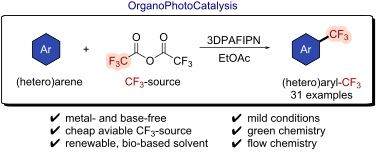
- analyzed by q19F NMR spectroscopy. Only trace amounts of the trifluoromethylated product were detected, whereas the TEMPO adducts of the trifluoromethyl and trifluoroacetyl radicals were observed in 16% and 22% yield, respectively (Scheme 3). Stern–Volmer studies of the quenching of the photocatalyst
- Information Supporting Information File 2: Experimental part, copies of NMR spectra and computational data. Acknowledgements We thank Dr. Y.B. Malysheva for registration of NMR spectra and S.A. Churkin for technical support. Funding The research was carried out in Laboratory “Chemistry of natural products




Hydrogen production from formic acid catalyzed by NHC–Cu complexes
Beilstein J. Org. Chem. 2026, 22, 620–627, doi:10.3762/bjoc.22.48
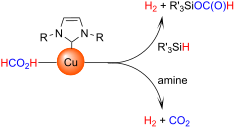
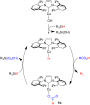
- (Scheme 1). To support these working hypotheses, the reaction of 1 equiv [Cu(OH)(IPr)] with 2 equiv of formic acid in a sealed tube was followed by 1H NMR spectroscopy in deuterated toluene (C7D8). After 16 h at 110 °C, the formation of 1b was observed while no excess of formic acid was detected
- . Interestingly, by adding to the reaction mixture a further equivalent of FA, evolution of gas was observed and H2 was detected by NMR spectroscopy (see Supporting Information File 1, Figure S1). This highlighted the formation in situ of the Cu–H species by decarboxylation of 1b. To quantify the amount of gas
- Information File 16: Detailed description of the procedure for the gas evolution experiments, NMR spectra of isotopic labeling experiments. Acknowledgements The authors gratefully acknowledge Sasol Technology (UK) Ltd. for GC analyses. Funding The authors gratefully acknowledge the UGent BOF, the Royal



Towards the targeted protein degradation of CK2: design and synthesis of CAM4066-based PROTACs
Beilstein J. Org. Chem. 2026, 22, 611–619, doi:10.3762/bjoc.22.47
- = dimethylformamide; HATU = O-(7-azabenzotriazol-1-yl)-N,N,N′,N′-tetramethyluronium hexafluorophosphate; THPTA = tris(3-hydroxypropyltriazolylmethyl)amine; TFA = trifluoroacetic acid; VHL = von Hippel–Lindau. Supporting Information Supporting Information File 14: Experimental part and copies of NMR spectra
- . Acknowledgements The authors are grateful to Kristina Kostadinova and Dr Marc de la Roche for the help with the Western Blot analysis, to Dr Eleanor Atkinson and Dr Jessica Iegre for their prior work on CK2 inhibitors, and to Dr Michal Malon for his help with several NMR assignments. We are grateful for the

Regioselective approach to 5-arylsulfonylisoxazoles and their antimicrobial activity
Beilstein J. Org. Chem. 2026, 22, 592–602, doi:10.3762/bjoc.22.45
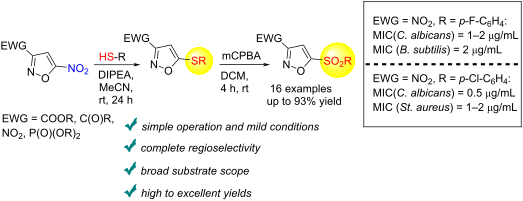
- using 1H NMR (Figure S1 in Supporting Information File 1). The results revealed that the oxidation of isoxazole 2a to sulfoxide 4a proceeds quickly, and complete conversion of isoxazole 2a is achieved within 5 min. In contrast, the subsequent reaction of 4a to 3a proceeds is much slower, and only after
- 4 hours does the C(4)–H signal of compound 4a at δ 7.05 ppm in the 1H NMR spectra finally disappear. With optimized conditions in hand, we turned our attention to examine the substrate scope. As shown in Scheme 3, isoxazole derivatives bearing different electron-withdrawing groups in position 3 such
- conditions. MIC (μg/mL) against bacterial and fungal lines. Supporting Information Supporting Information File 8: General synthetic and biological procedures, characterization data and copies of 1H, 13C{1H}, 19F, 31P, 1H-13C HSQC, 1H-13C HMBC NMR spectra, HRMS spectra and the results of the elemental


Continuous-flow carbonyl hydrogenation under subatmospheric to atmospheric hydrogen pressure enabled by robust heterogeneous Pt–Fe catalysts
Beilstein J. Org. Chem. 2026, 22, 575–582, doi:10.3762/bjoc.22.43
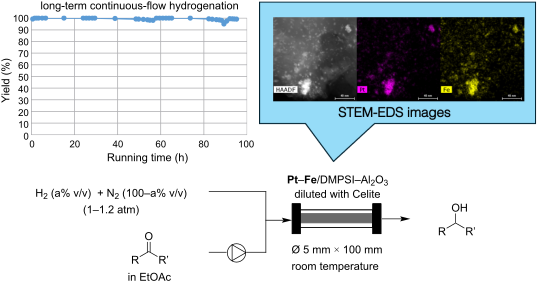
- ) was converted to the corresponding alcohol 2d in 89% yield under continuous-flow conditions at room temperature (Table 2, entry 3). The desired product 2d was obtained quantitatively at 50 °C (Table 2, entry 4). It is noteworthy that an analytically pure compound (confirmed by 1H and 13C NMR) was
- : Additional experimental details, materials, and methods including photographs of reactor systems, STEM-EDS images and XPS spectra of heterogeneous catalysts, and copies of 1H and 13C NMR spectra for isolated compounds. Acknowledgements H. M. also thanks the Joint Usage/Research Center for Catalysis





